Tag: Doordarshan

  • Law ministry likely to give opinion on DTH guidelines review

    Law ministry likely to give opinion on DTH guidelines review

    MUMBAI: Even as the government admitted in Parliament yesterday that it has granted six companies licences to operate DTH services in India, the Ministry of Information and Broadcasting (MIB) has, reportedly, referred to the Law Ministry a long-pending proposal to review DTH guidelines in the country.

    Replying to a question in Lok Sabha or Lower House on the DTH sector, Minister of Information and Broadcasting Smriti Irani, in written statement, said Dish TV, Tata Sky, Sun Direct, Reliance BIG TV, Bharti Telemedia and Videocon d2h are licenced to provide services in India under the DTH guidelines issued on 15 March 2001, which is amended from time to time.

    She said that in addition to the private players, pubcaster Doordarshan too operated a free to air DTH services in the country and there was no restriction on the total number of DTH licences.

    According to the minister, a licencee, in addition to an initial non-refundable entry fee of Rs 10 crore (Rs 100 million), is required to pay an annual licence fee that amounts to 10 per cent of its gross revenue.

    In the meanwhile, the DTH players who had been lobbying for the last 24 months or so for another review of the DTH guidelines, aimed at bringing down the annual revenue sharing percentage to between 6-8 per cent amongst other things, may have to wait for relief.

    MIB, which was studying a proposal to review the DTH guidelines based also on some past recommendations of the Telecom Regulatory Authority of India, has already referred or is in the process of referring the matter to the Law Ministry for an opinion, if government sources are to be believed.

    Amongst the six DTH licencees, a few are operating on the basis of temporary extension of their licences as the DTH guidelines do not spell out clearly the modalities for licence renewal once the initial 10-year period is over, DTH industry sources explained.

    MIB’s indecision on the regulatory review process hasn’t helped the industry much as the sector is witnessing consolidation — for example, the ongoing Dish TV-Videocon d2h merger and the sale of Reliance’s DTH business to a set of new investors — apart from the expiry of the 10-year licence period.

    Also Read:

    DTH’s year of consolidation

    Recalibrating India’s DTH sector after Airtel DTH-Warburg Pincus deal

    Dish TV-Videocon d2h deal on course

  • MIB mulls broadcast of DD News to 100 countries

    MIB mulls broadcast of DD News to 100 countries

    MUMBAI: The Ministry of Information and Broadcasting is contemplating its expansion of Doordarshan’s 24-hour news broadcast to around 100 countries with a view to reaching out to the world and putting forth India’s viewpoint on domestic and international issues, according to an Economic Times report. 

    Primarily, DD India is into producing various cultural and general entertainment programmes for broadcast in overseas countries. 

    The channel also produces 24-hour news and current affairs programmes that are limited to Nepal, Bangladesh, Sri Lanka, the UAE and China. 

    The decision to start broadcast of news in a particular country will depend on financial implications such as cost of engaging a local cable for carrying the Indian channel as well as stationing correspondents in that particular country, according to a senior official. 

    The factors that would also be considered for starting a news broadcast in a country include the percentage of the Indian diaspora in the total population of that nation, foreign direct investment inflow and outflow, remittance and tourists arrival from that country, the official said.

    The ministry will also look at whether India has strategic partnership with that nation, number of visits of the prime minister to that country, whether the Ministry of External Affairs has a joint secretary level officer there and proximity of that nation to multilateral agencies. 

    Also Read:

    MIB has no data on OTTs; not under regulation: Minister

    MIB, DoS nudge TV channel to use Indian satellites

    MIB categorises all non-Hindi and non-Eng TV channels as regional

  • Doordarshan’s R-Day broadcast notches up record TV viewership

    Doordarshan’s R-Day broadcast notches up record TV viewership

    NEW DELHI: Pubcaster Doordarshan notched up record viewership of 38.3 million for the live telecast of India’s Republic Day celebrations, including the impressive parade by armed forces and civilian organisations, in the presence of special guests from 10 Asean countries, apart from bigwigs of the country’s political system.

    Not only did DD record high audience data for the R-Day telecast shown simultaneously across its 22 terrestrial and satellite TV channels, but the gross figure, too, stood at 45.4 million. The 90-minute odd show, conceptualised to celebrate the Indian republic and its evolution through the years since 1950, was captured via 38 cameras this year.

    According to DD’s parent Prasar Bharati Chairman A Surya Prakash, six cameras were deployed beyond central Delhi’s India Gate (the parade passes through some of the arterial roads from the India Gate roundabout) to capture a panoramic view for the telecast that was also beamed in HD format apart from the regular SD broadcast.

    After BARC India released its weekly audience data last week highlighting the pubcaster’s R-Day broadcast, DD Director-General Supriya Sahu in a series of tweets said: “India trusts Doordarshan, the Public Service Broadcaster with events of national importance. Undeniable proof of people’s faith and confidence. Thanks to all our viewers. Million thanks dear viewers for watching and appreciating DD coverage of the Republic Day parade. It’s your love and affection which drives our team to do their best. We are nothing without you.”

    Republic Day telecasts not only helped DD viewership soar, but also shored up audience data of English and Hindi-language TV news channels as many private channels re-telecast DD-generated feeds from various locations of the official celebrations.

    The impressive show by DD, which pulled out all the stops for the coverage and telecast of the R-Day 2018 celebrations beamed live on digital platforms, including YouTube, too, once again highlighting the pubcaster’s massive reach that continues to remain under-exploited and is reflected in the annual revenues generated by the national network.

    Over the last 24 months, however, under chief executive Shashi S Vempati, and Sahu, DD has been attempting a series of initiatives to not only modernise itself, but also infuse fresh programming ideas for the network channels to up generation of revenue too, apart from living up to its objectives as a pubcaster. 

    Also Read :

    TV channels ready Republic Day programming line-up

    Celebrate Republic Day special with ‘Beats of India’ only on MTV Beats

    Ensure full use of funds for schemes, house panel tells MIB


  • 2017 was a regulatory roller coaster and the ride continues

    2017 was a regulatory roller coaster and the ride continues

    NEW DELHI: The year 2017 for the media industry certainly couldn’t be called easy from the point of doing business despite efforts and claims by the federal government that significant progress had been made in the regard.

    The downside of demonetisation of high-value currency notes not only continued to be felt well into 2017, but the introduction of the GST (goods and services tax) in July and its compliance added to the woes as it increased paperwork and investment in human resources for the entire media sector. The cascading effect of the tax and monetary policies on the general economy of the country had a telling effect on the media and entertainment industry as companies, big and small, struggled to keep up with compliance (and sliding revenue) and changing guidelines owing to teething problems.

    2017 began with broadcast and telecoms regulator TRAI’s new set of guidelines relating to tariff, QoS and inter-connection, issued in the second half of 2016, being challenged by one of the biggest broadcasting companies (in terms of reach and revenue), Star India, and its ally Vijay TV in a Chennai court. Separately, two other DTH companies filed a similar challenge in a Delhi court.

    Over a year later, the regulator’s guidelines-touted to be an effort in creating fair ground rules for all stakeholders leaving them free to take commercial decisions-remain in suspended animation as the Chennai court is yet to deliver its final verdict till the time of writing this piece though the arguments and other legal processes have been completed.

    And, then Ministry of Information and Broadcasting (MIB) got in Smriti Irani as minister, a person with a background in the media and TV industry and as someone with strong views on issues. The sudden cancellation of a programming contract to Balaji Telefilms, awarded by pubcaster Doordarshan after a tendering process, could be cited as Irani’s aggressive stand on matters relating to her ministry and the media sector. Ditto for Doordarshan’s parent company Prasar Bharati deciding suddenly during the year not to renew contracts of some private sector TV channels that rode piggyback on DD’s free-to-air DTH platform Free Dish. The latter case is now being debated at the disputes tribunal.

    Over the 12 months in 2017, the MIB came out with a series of regulations, ranging from advisories on condom ads (the flip-flop was surprising) to a sharp hike in processing fees for clearances without clear definitions on some matters to the dos and don’ts of covering sensitive developments, all of which have left most industry players uneasy.

    A section of the industry also feels that the government has cleverly fired the gun, at times, keeping it on the shoulder of TRAI. Even while the regulator is in the process of wrapping up a consultation on various points of ease of doing business in the broadcast and cable sector, towards the fag end of the year, the MIB requested the regulator to examine whether TV channel permissions to beam into the 183-odd million TV homes in the country could be auctioned and the entry-level threshold increased-all aimed at arresting the spiralling number of applications seeking permissions to start a new channel. If legislated, it would be a sort of first where TV channel permissions, and not spectrum, would be auctioned.

    Another directive causing concerns for broadcasters is an MIB order making provision for processing fees on account of change of satellite, channel name/logo, language of channel, category of channel, mode of transmission, teleport, teleport location and change in the category of a channel from a GEC to a news channel for temporary uplink of a live event. The regulation stipulates that a processing fee of Rs 100,000 would have to be paid by a TV channel if seeking temporary uplink permission for, say, a cricket match. Nothing wrong in putting an amount to undertake processing.

    But what is troubling the TV channels is that the fee of Rs 100,000 is for each channel. So, for example, if a broadcaster having four sports channels proposes to telecast live a test cricket match for five days, then the amount for processing of temporary uplink permission by MIB would be Rs 100,000 each for five days for each of the four sports channels (100,000x5x4). That, stakeholders point out, is quite a large sum of money for a five-day match telecast in different languages over several TV channels.

    The MIB also, for the first time, introduced new categories of channels, namely regional and national. As per the extant uplinking and downlinking guidelines of 2011, however, all the licences, whether it is an Assamese or a Tamil language channel, are for pan-India channels and can be distributed throughout India. In fact, many broadcasters obtain multi-language permission for their channels to be able to run in multiple language feeds. The ministry later had to come out with clarifications defining what constitutes a national channel and what is a regional channel, which makes things a bit more complicated in sharp contrast to the federal government’s claim of having created a more conducive business environment in India, a senior executive of a broadcast company opined. What’s more, some experts pointed out, it was surprising that the MIB took the decision on re-classification of TV channels because such policy decisions would ideally need to be ratified by the federal cabinet of ministers.

    The TRAI, however, was banking on its ground rules for the broadcast and cable sectors to herald a new era that is not to be–not at least in 2017. But the regulator’s earnestness to hold a dialogue with stakeholders cannot be faulted despite questions being raised on some of its consultation papers; the one on STB inter-operability, for example. The TRAI should be lauded for upholding principles of net neutrality, in general, and giving thumbs down to content availability in a walled-garden environment, while in the US the FCC is preparing ground to dismantle net neutrality regulations that claimed to be protecting consumer interest.

    What comes out quite clearly in the year of disruptions and a clear change in the ways media, especially TV news, functions is that the thin line blurred between ethics and the dance-on-the-unethical-side-while-remaining- technically-correct.

    The all’s-fair-in-love-and-war thinking was written all over the audience measurement controversy that broke out involving a new news channel that debuted with a bang and the incumbents of the news genre in 2017. Accused by a section of news channels of using dual LCN or frequency strategy to increase sampling and snacking to up audience ratings, the new news channel hit back saying all other players too had sometime used the same strategy. Subesequently, the regulator had to step in directing stakeholders to desist from using practices that were not allowed in the TRAI’s books.

    Such instances-apart from the now-contested TRAI directive barring use of the `landing page’ by TV channels-highlight one thing: if the industry craves for a light-touch regulatory regime, restraint and maturity is needed from the industry, too. For example, despite the TRAI cracking the whip on dual LCNs, many TV channels, including the not-so-new-news-channel-on-the-block, were repeatedly accused by competition of continuing to use the dual LCN strategy throughout 2017.

    If the TRAI-and the government-hoped its guidelines and advisories would reduce litigation in the broadcast and cable sectors, the dream is yet to be fulfilled. The website of broadcast and telecoms disputes tribunal TDSAT states there are approximately 800 cases (in both sectors) still pending till 22 December 2017 if statistics from January 2017 were considered. The high pendency was despite the fact that TDSAT disposed of hundreds of other cases in 2017.

    The broadcast and cable industry would hope that 2018 would be less challenging, at least from the point of view of regulations. Some issues (like the consultation paper on uplink/downlink of TV channels, online video piracy and lack of any guideline for M&As for the media sector), however, continue to rankle even as we all enter 2018, not to mention that a proposal to review DTH guidelines, involving issues like rationalising revenue sharing with the government and renewing of licenses have been seemingly put in the cold storage by the government.

  • BARC ratings: DD Sports in top 5 after 37 weeks

    BARC ratings: DD Sports in top 5 after 37 weeks

    MUMBAI: Pubcaster DD Sports surprisingly garnered third position in broadcast audience research council’s (BARC) all India ratings for week 50 in the sports genre. The live feed of India versus Sri Lanka’s second ODI match helped the channel to climb up.

    Star Sports 1 Hindi leads the chart with 20855 impressions (000s) sum followed by Star Sports 1 with 110690 impressions (000s) sum. DD Sports made an entry after 37 weeks in BARC all India ratings with 81011 impressions (000s) sum. Sony Ten 1 is in fourth position with 80695 impressions (000s) sum. We have second FTA channel in the list, Star Sports First with 57528 impressions (000s) sum.

    DD Sports’ last appearance was in week 12 at the time of India versus Australia live test series. At that time DD Sports was at fifth slot with 26973 impressions (000s) sum. Private broadcasters are up in arms against sharing their live feed with the public broadcaster.

    The Supreme Court on 22 August 2017 said that shared feed of sporting events can only be carried on the terrestrial network of Doordarshan or DD FreeDish and cannot be retransmitted to private cable and DTH operators. After this, in the month of September Prasar Bharti CEO Shashi Shekhar Vempati through a tweet directed all the private DTH and cable operators not to telecast the sporting events’ live feed from Doordarshan that have originally been shared by the rights-holding private broadcasters.

    In December some reports surfaced in the media that Star India would have to share the IPL telecasts with the pubcaster DD that will air the cricket matches on its terrestrial network and FTA DTH platform. This would be made possible as and when the government formally issues a directive as both the law and information & broadcasting ministries were being consulted under a regulation called the Sports Broadcasting Signals (Mandatory Sharing with Prasar Bharati) Act, 2007.

    If the IPL is being shared between the private broadcaster and the pubcaster, we’ll have to see which one bowls us over with higher viewership.

    Star India wins: SC disallows Prasar from retransmitting shared sports feed live

    Prasar CEO reiterates implementation of SC verdict on DD’s shared sports feed retransmission

    Comment: Does Star stand to gain or lose by sharing IPL with DD?

  • Comment: Does Star stand to gain or lose by sharing IPL with DD?

    Comment: Does Star stand to gain or lose by sharing IPL with DD?

    MUMBAI: On a balmy September afternoon, while some reps from bidding companies blew smoke in the air (and the tensions, too, probably) at a five-star hotel in South Mumbai’s Colaba, some senior executives of Star India were lounging in a room in the same hotel-not as anxious as some of the smokers outside, a person familiar with the settings chirped. Soon, the Indian cricket board, BCCI, announced that Star had won the broadcast rights to the money-spinning IPl cricket tournament for five years for Rs 16,3475 million (Rs 16347.5 crore) or approximately $ 2.55 billion.  

    Cut to a fortnight or so earlier to New Delhi where the August summer was refusing to relent and the temperature fluctuated in a room in Supreme Court where the learned judges observed that India’s pubcaster Prasar Bharati cannot freely re-transmit TV signals of sports or cricketing events to other distribution platforms where the rights were held by a private broadcaster or a TV channel and was being shared with Doordarshan under a legislation of the country.

    In both the cases cited above the common factor was Star India (a subsidiary of Rupert Murdoch-controlled News Corp/21st Century Fox), probably the biggest broadcasting company in India in terms of revenues.

    Champagne should have been popped on both the occasions. Probably it was, but privately. And, the public reactions were cautious. Even in his interview to indiantelevision.com mid-September, Star India chairman and CEO Uday Shankar was cautiously optimistic about IPL win and India’s regulations relating to the media sector.

    Almost 70 days after winning the IPL rights — somewhere in between hectic consultations would have happened between Star India top leadership and company’s promoters — reports surfaced in media that Star India probably would have to share the IPL telecasts with pubcaster DD that will air the cricket matches on its terrestrial network and FTA DTH platform, DD FreeDish.

    What’s the gist of these reports in the media? IPL cricket matches would be telecast live on Star Sports channels and also a DD channel that would be available terrestrially and on DD FreeDish. This would be made possible — as and when the government formally issues a directive as both the law  and information & broadcasting ministries were being consulted — under a regulation called the Sports Broadcasting Signals (Mandatory Sharing with Prasar Bharati) Act, 2007. Some tweaks would have to be made and IPL categorized as a tournament of national importance at par with other sporting events like Olympics, Commonwealth Games and Wimbledon for the sharing to be mandated.

    Indiantelevision.com must admit, though, till the time of writing this piece everything’s in the realm of conjectures and possibilities. While Star and BCCI did not comment on emails on the issue sent to them by us, even the government sources quoted in the media as having articulated on the possible development were unnamed.

    It makes one thing clear: that nothing is clear as of now or set in stone. It’s also possible that as a trade-off for the Supreme Court directive barring  free re-transmission of shared TV signals of sporting events where rights were held by a private broadcaster, Star India could be mulling sharing IPL matches with DD — and also part of the advertising revenue.

    According to Financial Express newspaper, which quoted industry estimates, Sony Pictures Networks India (SPN), the official broadcaster (till 2017) of the T20 tournament since its inception, had crossed the Rs. 1,300 crore (Rs. 13,000 million)-mark in terms of ad revenue. The newspaper also stated that IPL’s season 10 garnered 1.25 billion impressions as per BARC data, gaining 24 per cent more viewership (compared to last year) on Sony channels.

    Writing a guest column in indiantelevision.com after Star won the IPL bid in September, senior business journalist and author of two books on IPL, Alam Srinivas, observed: “In 2009, when the IPL rights were renegotiated, Sony agreed to pay Rs 82,000 million for a nine-year period or Rs 9,111 million a year. At a simple inflation rate of 10 per cent, the figure will escalate to Rs 17,311 million over nine seasons. At a compounded rate of 10 per cent, the figure will be Rs 21,483 million. Star agreed to pay Rs 32,695 million per year, or a sizeable over 50 per cent higher than the 10 per cent compounded figure. This indicates that the IPL’s valuation has shot up, or at least the stakeholders think so.”

    Given this scenario, the following questions arise:

    Question No. 1: Is IPL that crucial (versus Test cricket, for example) to be designated as a sports of national importance to be shared with the pubcaster?

    Question No. 2: If that’s made possible, how will the technicalities of different TV feeds play out?

    Question No. 3: Will Star gain or lose financially having dished out $ 2.5 billion for a five -year rights?

    Question 4: Will sharing of the IPl matches with DD impede or affect Star’s usual high-octane marketing campaigns aimed at monetization of high-value events and will it set a precedent?

    The answers are not easy to frame as possible explanations are not forthcoming in the absence of any formal and official confirmations or denials.

    If we have to answer Q. 1, then prima facie, the answer would be ‘no’. IPL is a domestic cricket tournament having played out for 10 years with DD showing (officially) minimum interest. That IPL’s popularity has increased shouldn’t be reason for it to be shared with pubcaster, especially when the pubcaster has mostly shied away from airing Test cricket, which is a five-day affair over seven hours daily, and even when India featured in such matches.

    But then in an age of social media, when many games are played on the basis of perceptions, giving a huge swathe of Indian population easy and practically free access to IPL matches on DD could also mean scoring points with a big voting bank. After all, TV services or even entertainment are not categorized under essential services (like some utility services) that need not be subsidized by the government or access made free. Still in India, politics and sports have had a history of an intricate and, at times, incestuous interplay.

    Question 2 and 4 are easier to attempt. Simply because if Q1 and Q3 are sorted out — amicably — then these issues don’t matter much. TV feeds have been shared with DD and AIR by private broadcasters in the past on few occasions. What would be important is that DD adheres to the Supreme Court verdict and ensures that its free signals are not illegally carried by any unauthorized distribution platform(s) in the case of IPL matches.

     This brings us to Q.3 on which hinges Star’s fortunes despite being mandated by a regulation that can smack of strong-arm tactics by the government.

    However, it has to be admitted, again, that DD’s reach is tantalizing — at least theoretically. The FreeDish FTA DTH platform has an estimated 22 million subscribers, mostly in non-urban areas, while DD channels on the terrestrial network supposedly cover over 80 per cent of the approximate 1.26 billion Indian population.

    Given these numbers — clamour amongst private TV channels to be on the FTA DTH platform could be an indication — sharing of IPL matches with the pubcaster may not be such a big loss for Star.

    In an imagined world, Star could agree to share the IPl matches, forced under a regulation, but insist that it would retain the rights for marketing and ad sales of the matches  shown on DD channel too, sharing 25 per cent of the ad revenue— again as per stated law.

    This move could help Star not only increase the reach of IPL matches by at least 25 per cent, but also do some imaginative and aggressive ad sales with sponsors on digital and linear TV spaces. A marketing guru did admit in private that most FMCGs and big global spenders are now more looking at non-urban markets, which DD’s platform guarantees.

    In conclusion, we might say there are too many straws in the wind presently. A word of caution: this can set a precedent that may not always be healthy for the rightful rights owners. But then, as the boss, the government is always right, as the folklore goes.

    ALSO READ:  

    Guest Column: Star India’s IPL deal raises three crucial questions

    Star bids highest for BCCI’s IPL media & digital rights and is the winner

    IPL has come to the rightful home of cricket in India: Star’s Uday Shankar

    Star’s Uday Shankar on distribution challenges, IPL, FTA vs. pay TV, innovations, Made in India content…and much more

    With IPL rights, Uday Shankar gambles audaciously, must plan pragmatically


  • MIB mulls IPL telecast on Doordarshan

    MIB mulls IPL telecast on Doordarshan

    MUMBAI: The Ministry of Information and Broadcasting may bring the Indian Premier League under the ambit of events of national importance. Therefore, Star India’s coveted cricket property may be telecast simultaneously on public broadcaster Doordarshan.

    According to reports, the ministry is working on a proposal make live matches available on Doordarshan and has asked the sports ministry to look into the matter.

    Currently, the Commonwealth Games, Asian Games, the Olympics, and select cricket, hockey, football, and tennis events fall under the ambit of events of national importance.

  • Prasar Bharati gears up to mark 20th anniversary

    Prasar Bharati gears up to mark 20th anniversary

    NEW DELHI: Celebrating its 20-year anniversary, Prasar Bharati is conducting jingle and short film competitions for current and former employees. People have to send their nominations by 10 November.

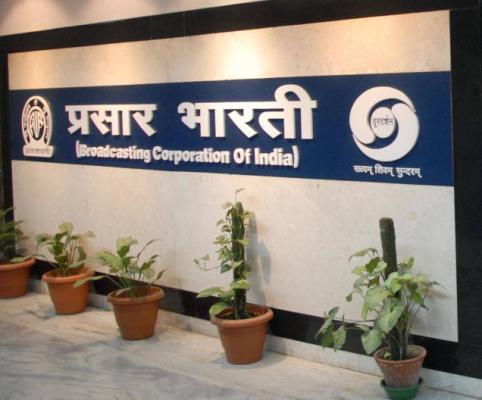
    This year is also important as Prasar Bharati has for the first time shifted to its own premises, adjoining Doordarshan in Copernicus Marg in New Delhi. Until now, it had been a tenant in the PTI Building on Sansad Marg (Parliament Street), just opposite Parliament House Annexe.

    A statutory autonomous body established under the Prasar Bharati Act 1990, it came into existence on 23 November 1997.

    Prasar Bharati had been conceived as a trust known as Akash Bharati in the report prepared by a committee headed by the late renowned mediaperson B G Verghese in 1978 focused on autonomy for broadcasting in India.

    After Prasar Bharati came into formation, both All India Radio and Doordarshan came under its ambit. These public service broadcasters had till then functioned as media units under the Ministry of I&B.

  • SC tells DD to air show warning about Blue Whale

    SC tells DD to air show warning about Blue Whale

    NEW DELHI: Amidst reports of suicides reportedly caused by the Blue Whale online game, public broadcaster Doordarshan has been asked by the Supreme Court to conceive and air a cautionary and educational programme on its dangers.

    DD was given a week’s time to prepare the programme that should be of at least ten minutes and should be telecast at prime time.

    A bench headed by chief justice Dipak Misra with justices DY Chandrachud and AM Khanwilkar said, “Anything that threatens life should be condemned.” The case by a 73-year old Chennai advocate N S Ponnaiah has been posted for further hearing on 15 November 2017.

    “Suffice to say that the Blue Whale game is dangerous to life. What endangers life has to be condemned and not allowed,” Misra observed.

    The court asked DD to script the programme in consultation with the Ministries of Home Affairs, Women and Child Welfare Department, Human Resource and Development and Information Broadcasting, and Information Technology.

    The court also directed the government to see to it that private channels also telecast the programme.

    “The idea behind the programme is to make parents and children aware of the dangers of online games like Blue Whale. The message of the programme should be that children should not be trapped by the game. There are children who are lonely and frustrated. Definitely visuals will have more impact,” Chief Justice Misra said.

    According to additional solicitor general PS Narasimha, a committee constituted by the Ministry of Information Technology found that around 28 cases have been traced to have links with Blue Whale game. A probe was on and a complete picture of the extent and means of the game would be ascertained in the next three weeks.

    The Centre was determined to “stop the game”, which has the potentiality to destroy life. The government had communicated to many agencies and online platforms to check and inform on the availability and use of the game.

    The commission has told school authorities to thoroughly verify the background of teachers and non-teaching staff before hiring them.

    The Blue Whale challenge is a game created by Russian national Philipp Budeikin, 22, in which a set of instructions tell the players to harm themselves and eventually commit suicide. Budeikin is now in jail.

  • Smriti Irani: Need to reduce gap between regional & national news & democratize viewership

    Smriti Irani: Need to reduce gap between regional & national news & democratize viewership

    NEW DELHI: Stressing on the need for a model structure of broadcasting, which can strengthen the Indian democracy, Minister for Information and Broadcasting Smriti Irani yesterday exhorted the media to reduce the gap between regional and national news, thus democratizing viewership, and the need for meeting objectives of public good and entertainment.

    “If we want the broadcasting landscape to be strong, the first and the foremost requirement is to give as much importance to the regional content as the national content…(and) reduce the gap between the regional news and  national content,” Irani said yesterday while delivering the Sardar Patel Memorial Lecture 2017 themed ‘Model of Broadcast: Landscape for Democracies’.
     
    Describing the broadcast news landscape as a “spectator sport”, the minister said the rush for audience ratings has reduced everything to “headlines competing with hashtags” in the wake of social media explosion taking place in the country that has provided a new pathway for information dissemination.

    Coming down heavily on a certain section of the media for being driven by TRPs, forsaking codes, ethics and conduct rules, unlike another section, Irani said, ”There is a need to democratize the (audience) measurement system in the country.”

    According to the feisty minister, who also holds the portfolio for Textiles Ministry, a model structure of broadcasting should focus on “democratized viewership” based on an accurate measurement system that reflects the strength of regional languages, varied tastes of viewers/consumers and bridges the divide on issues related to agenda setting, creative content and revenue between the mainstream and regional platforms.

    Stressing the importance of the sector keeping abreast with trends in the social media, which she described as a “disruptive” force, Irani said though the broadcasting sector is based on business propositions and technological upgradation, the ‘Mann ki Baat’ programme of Prime Minister Narendra Modi aired on AIR was an ideal example of how a technology platform blended his message with citizen understanding and awareness of the issues highlighted in each episode.

    Highlighting the difference in the way pubcasters — Doordarshan and All India Radio — functioned vis-a-vis a large section of the private sector media, Irani added: ”If you look at the broadcasting sector, the overriding focus of the public broadcaster has been on serving the public good. In today’s times, however, when news has become a spectator sport, there is a need to bridge the gap between serving the public good and providing entertainment.”

    The annual lecture held at the National Media Centre in the Capital, started by All India Radio way back in the 1950s, was attended by Minister of State for MIB Rajyavardhan Rathore, pubcaster Prasar Bharati chairman A. Surya Prakash and Prasar Bharati CEO Shashi S. Vempati, apart from other senior government officials.

    Even as Irani lauded the public broadcaster’s endeavour to focus on public good, she said it was the “duty of the public broadcaster to speak fairly and freely, as it is doing now”. She also called upon the pubcaster to weave stories on the lives of ordinary people, which could have an impact both within India and abroad.

    The minister said it would be the endeavour of MIB to promote the concept of “design thinkers” for content generation in the digital space in the light of growing use of technology by the young generation in areas of internet, mobile content and animation & gaming. This would also incorporate the elements of the New India vision envisaged by the Prime Minister by 2022.

    Highlighting the fulcrum strength of her ministry, Irani said that the Information Service officers’ profile would be strengthened in the future by giving them skill sets along with an integrated administrative exposure so as to enable them to serve policy and programmes of the people through the medium of information. This would be along the lines of Sardar Patel’s vision of creating a steel frame to serve the people through the channel of information dissemination, she added.

    The first Patel memorial lecture was delivered by C. Rajagopalachari, while the other distinguished speakers in the series have included stalwarts like Dr. Zakir Hussain, Dr. A.P.J. Abdul Kalam and Morarji Desai.

    Also Read: Smriti Irani tweets industry body advisory urging restraint by TV news channels

    MIB minister Smriti Irani orders review of DD prime time auction process

    Smriti Irani gets additional charge as MIB minister

    BARC India to TRAI and MIB: Tweak legislation to make data tamper-proof