Tag: Doordarshan

  • DD has no plans to buy rights of cricket WC ’19 & Tests: MIB

    DD has no plans to buy rights of cricket WC ’19 & Tests: MIB

    NEW DELHI: Ministry of Information and Broadcasting (MIB) has stated that national broadcaster Doordarshan will continue relying on existing laws to air live and shared signals of relevant international cricket matches, the rights for which may be with some private broadcaster, while clarifying there were no plans to directly acquire rights for Tests or the cricket World Cup 2019.

    Quoting inputs from Prasar Bharati, parent of Indian pubcasters DD and All India Radio, MIB Minister Rajyavardhan Rathore told fellow parliamentarians that “live telecast of cricket matches” was being done on Doordarshan Sports channel under the Sports Broadcasting Signals (Mandatory Sharing with Prasar Bharati) Act, 2007, which was passed by the Parliament and notified the same year. These matches included the ongoing cricket series between India and England comprising three T20s and three one-dayers.

    “The Act enjoins upon the rights holder to share with Prasar Bharati, live broadcasting signals of sports events of national importance for which they hold broadcast rights to enable Prasar Bharati to re-transmit the same on its terrestrial and DTH networks,” Rathore explained.

    However, the government did not explain as to why it did not insist on shared TV feeds of five-day Test matches.

    Incidentally, Star India, managers of several sports channels and rights holders of IPL and several other cricket properties, which were acquired on payment of several billions of dollars, had filed a case in the Supreme Court against unencrypted signals of DD’s satellite-delivered channels not only spilling over to other countries, but also pirated by distribution platforms within India too during cricket matches. Star got a favourable directive from the apex court in 2017, though Prasar Bharati had described it as an opportunity. as it helped it to bring the focus back on DD Sports channel.

    Meanwhile, answering to other queries raised by parliamentarians on cricket, Rathore admitted there was “no proposal to acquire the broadcast rights” for live telecast of Test series between India and England, and the Cricket World Cup in 2019. The broadcast rights for India region for the ongoing England tour of India lies with Sony Pictures Networks India.

    DD Can’t Be Compared To Private Sector TV Channels’

    Pointing out that DD’s programming is more focused on issues of public interest like health, education, empowerment, social justice, etc., the Minister said that the pubcaster’s programmes could “not be be compared” with private channels as both have totally different objectives and programming formats.

    However, Doordarshan is striving to provide “impactful and meaningful” programmes to become the “preferred channel of choice of people”, Rathore said, adding it was a constant endeavour of DD to modernize its infrastructure and improve the quality of programmes.

    “Doordarshan has undertaken a comprehensive plan to improve the programme content, and look and feel of all national and regional channels in DD network,” the Minister said, highlighting that efforts were being made to empanel creative agencies that can work for better look and feel of the channel(s).

  • Blackmagic Design makes presence felt at Broadcast Asia

    Blackmagic Design makes presence felt at Broadcast Asia

    MUMBAI: It’s that time of the year again – where the leaders of the industry present the newest and most innovative technologies for film, television and digital advertising under one roof. It’s Broadcast Asia time. All the world’s leading broadcasters have descended on Singapore to keep pace with technology that can help them improve their processes, quality and output.

    One of the companies that has made its presence felt at the event is Blackmagic Design, a leading innovator and manufacturer of creative video technology. Blackmagic has created some of the most talked about products in the industry like codecs, professional cameras, Cintel Scanner among others. In order to gain a better perspective on and understanding of the Blackmagic software and hardware, Indiantelevision.com caught up with Blackmagic designs director Richard Lim at the event, excerpts follows.  

    You were saying that you have over 200 products, cameras and other equipments. Tell us more about it? 

    We established ourselves initially as a video capture company I/O card company for post production and since then after several acquisitions of companies, we have now become a full-fledged end-to-end solutions (provider) where we provide equipment and technology for different industries. This could be education, audiovisual, broadcast, production, post production, military, hospitality, simulation – all sorts of industry use our product as long as they need to work with video content, transport video content y,, (switch)  around video content, record video content, post produce video content and we should have technology and products that helps them. By end-to-end we mean that now it is possible to establish an entire facility workflow based on Blackmagic design products and technology. I think thats not one company in the industry that can do it except for us. 

    Basically you work as System Integrator (SI)?

    SI will be our customer, we provide all this to people who actually put together systems and they will serve maybe Doordarshan and Zee TV or any other platform requiring our services.

    Who have been your customer so far on the broadcast side?

    Almost all the tv stations, they are adopting more and more products, Nowadays, you see tv channels setting up faster in India, especially away from first tier cities. Mushrooms of local channels, most of these channels are using our products, mainly because our products are cost effective and reliable and we use the latest technology as well , so they do not suffer a loss of quality and yet they can do the same as any other big tv stations. We are working with traditional and new broadcasters.

    Can you name some broadcasters who are buying your products?

    Zee TV and Doordarshan are using our products. We have two guys is India one for tech and other for sales. Both are based out of Delhi but they are always on the move. We serve India through two distributors, one for the south and other for the west and north west region for the last two years. Most of the times you find that two distributors in a country are enemies of each other but not for us.

    But why would the companies working in North west and south be enemies?

    Because broadcasters don’t do business in one state, they will do project across states which usually tends to cause conflicts of interest. But our guys are collaborating with each other very well.  We also cater to the film making industry as they are kind of costumers who focus on one range of products and cameras.

    Which camera models are doing well for you?

    We have the Blackmagic Ursa Mini Pro, our flagship product for filmmaking. If you pick any of our cameras, it is good enough to make a cinematic movie, yet it is cost effective for you to own the product and technology. The company believes in empowering creativity by democratising technology, so you can own the technology and not rent it. Arri owners mostly rent their cameras. Ditto with Red. The sticker price is way beyond the reach of filmmakers which makes ownership challenging.

    What is your customer base in India?

    We haven’t really counted that but we have a healthy unique sale in India. I will fairly say that we have the most filmmaking cameras in India owned by people not by rental companies. Rental companies don’t like us. Because they cannot make money out of us,. In India, we have customers who don’t maintain equipment and they always cite environment as the culprit. But we also have customers who manage to take care of the equipment very well because they understand the environmental issues. Generally, we have experienced double digit growth in India for many years.

    Which area is stronger for you in India? Is it the north or southern market?

    Generally, the north has always been doing better, but actually not so from the last couple of years. For the last couple of years, the south is doing well for now..

    So is the east is going to explode now for you?

    Yes, absolutely! If you consider the growth rate between India and other south east Asian markets like China and Korea, India is a bit slower but it is getting there. The volume in China is multiple of India. The per capita income in India is far less than China and Korea as people here still have their basic needs to fulfil. 

    Why are your products so expensive in India as compared to Singapore?

    The difference is due to the import duties. Now with the GST rollout, things will become better. Our margins are already negligible. 35 per cent of our prices includes duties and taxes which we pay to the government. The duties are more than margins. We have really done our best to keep the prices as competitive as possible but the fixed rate of the duties makes buying from Singapore more attractive for an average Indian.

    Have you done any end-to-end solutions in the last six years? From pre-production to proaction to post-production?

    Usually we have customers who want to build a studio – like a three camera set up with acquisition (camera system), monitoring (display ssytems), recording, switching, storage, streaming. We have customers who say I am a rental company – I do concerts, I do shows, I do weddings, so we provide them with the whole system for that too. But lately, we are also seeing some post production companies who don’t want to concentrate only on post production but want to work with  ad agencies as well. They usually want to shoot commercials,  music videos, and do postproduction for you as well. . Our products are well equipped to do that as well. Some of our technology users are now moving towards extending more services. Now, if I am an advertising agency, I don’t need to go to several people for a video but I can directly go to an Prasad or  Prime Focus and ask them to shoot something, do post production and distribute it for me.

    Which  products are giving you volumes and value in India?

    As far as our products go, if you would look at  the footprint they have, then our no 1 product is video I/O cards, because we have been selling them for 16 years and they continue to be our bread and butter. We sell a lot of cards to India. of our productsOur cards are the highest sellers for us in India; we have been in cards for 16 years. 

    Convertors are also the bread and butter products which is not very expensive and we sell a lot of them. Displays are also doing well. Also in the last four years has been to make make DaVinci resolve – our color correction and editing tool – more affordable to consumers. At one time, daVinci used to cost $500,000, today it is in the hundreds of dollars only for the full version, whereas the free version has 80 per cent functionality. 

    It’s difficult to tell you which really is our best seller because they are all evenly spread out in terms of customers. 

    How do you market the brand across customers in India? Do you attend trade shows?

    In India, we only attend Broadcast India, but our partners attend local shows. As a company, we do a lot of workshops with our distributors. This year we did two series of workshops for our cameras. Our distributors go and visit the end customers and do various workshops and visits to customers. 

    What about 4K offtake in India… 

    We are probably one of the few companies who have pushed 4K work right from the start. Most of our products are 4K enabled, but priced as HD. The advantage for us in pushing 4K work for last four years is that our staff and our resller channels are fairly familiar with 4K requirements.

    What is the way forward for Blackmagic Design? Do you see more acquisitions happening?

    If we have to look at acquisitions, it has to be the technology that can make the company stronger. We are always on the look out for a good acquisition opportunity. 

    The company was created by three people and we fund it  ourselves from internal accruals. It  started 18 years ago from scratch and it has grown tremendously ever since. The revenue funds the expense of the company and we have good margins. We are a medium sized global company. We  like to focus more on our technology and products to make them  accessible for average consumers – the average creative guy who wants to make great content.

  • Prasar Bharati Board approves finalising FreeDish policy

    Prasar Bharati Board approves finalising FreeDish policy

    MUMBAI: The Prasar Bharati board, at a meeting held on Monday, decided to finalise the FreeDish policy. According to an Asian Age report, the public service broadcaster gave its approval to Doordarshan which operates the entity. The finalised version will be submitted to Ministry of Information and Broadcasting (MIB).

    According to the referred report, the policy is likely to consider MIB’s direction to stop all e-auction of channels. However, in last meeting the decision was delayed with a fear that the directive could “wreck the finances of Prasar Bharati”.

    Meanwhile, PTI reported that the broadcaster was earlier asked by the MIB to review the continuation of FreeDish. It felt that the programme benefited only private channels and brought recurring liability to the government. FreeDish boasts a reach of 22 million subscribers.

    The matter had reached the Telecom Disputes Settlement Appellate Tribunal last year when channels reacted to its decision to suspend auctions after which an interim order allowed channels to continue at a pro rata basis till it decides on a new policy. The halting of auctions was done soon after Smriti Irani took charge as MIB minister. FreeDish was also looking at MPEG4 technology to carry more channels. Currently, it holds 80 channels.

    Also Read:

    DD Free Dish looks at  advertising for monetisation 

    10 FreeDish slots may fall vacant by Oct-end as renewals hang fire

  • Kalanithi Maran, Sun TV: the evolution

    Kalanithi Maran, Sun TV: the evolution

    MUMBAI: In the late eighties, a scrawny young man returned to India from the US having completed his MBA from the University of Scranton. He had lights in his eyes, fascinated as he had become by television in the US during his management freshman and graduation days.

    But television in India was a domain restricted to only state-owned Doordarshan. For a while, he dabbled in the print media that his family owned but the lure of the moving image proved too strong. So, he did the next best thing: he started producing a video magazine in Tamil.

    Kalanithi Maran had bigger ambitions; he wanted to start a TV channel in Tamil; not just a TV channel; TV channels in the various south Indian languages. With that goal in mind, he approached the then-emerging TV baron Subhash Chandra whose Zee TV had caught the imagination of the nation with edgy fast-paced general entertainment programming.

    The young man wanted a slot (one in the afternoon) on Zee TV’s service to start his own TV channel; but a Zee TV executive saw no merit in the plan and turned it down. He never got a chance to meet the goateed Chandra.  It was to prove to be a colossal mistake. However, another cable TV operator–Siddhartha Srivastava–who has the distinction of launching the first Indian private TV channel (not Subhash Chandra as many commonly believe) called ATN was more giving and provided him with a slot.

    Kalanithi cobbled together his savings and also got his father the late Murosali Maran to guarantee a bank loan for him. The same 25 friends who were working on the video magazine–Poomalai (which was by then plagued by piracy) and the cable TV programme Tamizh Maalai–stood by him and drew up the programming for the to-be-launched channel.

    Thus, Sun TV was born on 14 April 1993 beaming off the wobbly Russian satellite called Gorizont. The programming was primarily film entertainment-based. Kalanithi and his team had to work hard to build cable TV distribution infrastructure in the state, coaxing shop owners to become cable TV operators and set up headends and distribute Sun TV  so that it could be seen by Tamilians who had little else to watch in the comfort of their homes.

    His efforts bore fruit: cable TV operators soon thereafter popped up all over Tamil Nadu, courtesy consumer demand for the channel. Both fuelled each other and, by 1996, Sun TV was notching up revenue of Rs 450 million with a penetration of 86 per cent in the state. Apart from Zee TV, it was the only other channel that was sporting a black bottom line at that time.

    Kalanithi went about fulfilling his dream to have a southern Indian language network, just as Chandra was expanding his Zee Network. The aggressive young entrepreneur launched Udaya TV in Karnataka in 1994, took over Gemini TV soon thereafter and Surya TV followed.  There has been no stopping him and, today, the group runs 33 channels and another nine are being added. His portfolio covers the genres of entertainment, news, comedy, music, movies, kids and classic.

    Along the way, Kalanithi appears to have shed his inhibitions of foraying outside his comfort zone of the south–Tamil, Telugu, Kannada and Malayalam. For some time now, the Sun group has been gestating Bengali and Marathi language channels. Six to eight months from now, the two are slated to be launched and teams have been hired in Kolkata and in Mumbai. Hectic parleys are going on to decide the programming, the positioning, the distribution and marketing of the two channels.

    Kalanithi also owns 42 FM radio stations, the second-largest Tamil-circulated daily newspaper in India Dinakaran, and five other magazines, DTH platform Sun Direct and the Sunrisers Hyderabad IPL cricket team. Then, there is the cable TV network SCV, which has presence in Chennai. The Sun group made an ill-informed dash to acquire and run an airline SpiceJet, which Kalanithi found challenging to do and quickly did a volte face and sold it to Ajay Singh who has since been doing a better job. And then there is the network’s new OTT offering Sun Nxt.

    Recently, the group celebrated 25 years of its television existence with full front-page ads across select newspapers and a week of celebrations with its 1,500 employees nationwide. The ads crowed about Sun TV’s no 1 status in India and then went on to thank everyone saying it would not have been possible without “your support.” Silver coins, plates were given out to long-serving employees during the celebrations. Print ads aside, the Sun network did no press or public relations blitz–in the mainline nor the trade media.

    That’s in keeping with Kalanithi’s innate tendency to stay away from the limelight. He and the group have been publicity shy to the T. The company does not have any media relations to speak of or have a structured communications department like the other big four networks do. Star India, Zee, Viacom18, Sony Pictures Networks Television, do. Zee TV, Viacom18 and Sony Pictures all celebrated lavishly during their individual anniversaries inviting important partners, clients, and vendors.

    The shunning of the media probably stems from the fact that his roots are in one of the most important political families in the country. His grand uncle M Karunanidhi heads the DMK party, his uncles are politicians while his late father Murosali Maran held ministerial positions in various political regimes and his brother, Dayanidhi Maran, has been a minister, too.

    This apart, the group also owns powerful print media titles, which serve as a very strong platform to communicate the messaging Kalanithi wants to convey.

    All along, mutters have been doing the rounds that the Sun network got several benefits and favours courtesy Kalanithi’s political lineage. Allegations have also been hurled that Sun TV Network misused the clout and used strong-arm tactics with Tamil film producers demanding movie titles for broadcasting on his network to the exclusion of other television stations. And at surprising prices.

    Additionally, most media went to town alleging that the Sun TV network worked as a strong supporter of the DMK party. But which news channel in India does not have political backing, leaning or favourites? And Kalanithi’s DMK leaning was probably at a time when the AIADMK was going hammer and tongs against the DMK with its own party mouthpiece Jaya TV. Even then, Sun TV’s reportage at times caused heartburn to DMK supporters as Kalanithi worked on maintaining a balance.

    Moreover, over the years, most Indian TV news channels have become more blatant in their support of specific political agendas and parties–whether national or state wise or region wise. So, singling out Kalanithi as a political beneficiary is like the pot calling the kettle black.

    Finally, that myth must have been totally exploded following the distancing of grand-nephew from grand uncle and the launching of a competing television network by the DMK patriarch. Also, oodles of trouble followed with Kalanithi and Dayanidhi in relation to the 2G telecom scandal. Both have been since absolved and freed of the charges by the courts.

    The fact is that it is not political equations that have allowed Kalanithi to build his Sun group. It has been his savvy ability to see opportunity where others don’t, grab it and diligently make it successful. And he has done this fearlessly time and again–with the exception of SpiceJet. His radio stations are some of the more innovative ones and attract a wide demographic with a lot of it being youth. They are profitable. His newspapers give him wide reach and coverage and, in the process, media clout. And they make money.

    What’s above all this is the fact that Sun is highly profitable and its stock price has been holding strong when others have not. That itself speaks highly of the confidence the investor community has in him. As a businessman and as an innovator. No other media enterprise has come even close to breaking the stranglehold he has on viewers in the south; the programmers seem to understand the pulse of the Sun Network viewers. Several have tried including smaller players and the big four. But none has managed to race ahead of the Sun network.

    The Sun TV stock appears to be an investor’s darling, often times being talked of being undervalued. Both investors and shareholders have come to terms and have accepted the high pay cheques Kalanithi hands out to himself and his wife Kavery every year, ranking him among the top-paid CEOs in India.

    Many scions of political leaders have been given similar silver spoons but none have been able to scale up their ventures to the level that Kalanithi and the team Sun TV have. Clearly, credit should be given to his business acumen rather than just the political lineage.

    Clearly, it’s about time–during its silver jubilee year–Kala be given his due place in the media sun as an entrepreneur who has made it big. On his own steam.

  • Prasar Bharati’s policy on DD Free Dish to be out soon

    Prasar Bharati’s policy on DD Free Dish to be out soon

    MUMBAI: The suspense surrounding Prasar Bharti’s policy on its free direct-to-home (DTH) platform is likely to end soon. The pubcaster has told the Telecom Disputes Settlement and Appellate Tribunal (TDSAT) that it will come out with a new policy for DD Free Dish in a few weeks.

    Prasar Bharti made this submission before the tribunal that is hearing petitions filed by broadcasters against Doordarshan’s decision to scrap slot auctions without putting in place a new policy.

    As a result, Prasar Bharati has finally decided to expedite matters by framing a new policy on DD Free Dish.

    “The respondent – Prasar Bharti submits that the respondent is in the process of taking a policy decision in respect of subject matter of these petitions. It is expected that such decision may be taken within few weeks,” the TDSAT noted in its brief order.

    Following Prasar Bharati’s submission, the tribunal has posted the matter under the same head on 28 May. The tribunal also told Prasar Bharati to bring on record any decision that it takes in the meantime.

    “It appears that pleadings are already complete in these matters and there is no requirement of taking any further evidence. However, if there is any subsequent development, the parties will be at liberty to take required steps,” the TDSAT stated.

    Broadcasters have argued that DD can allow channels to continue on Free Dish on pro-rata basis. They also contended that DD’s decision amounts to discrimination as it has earlier granted continuity to channels on a pro-rata basis.

  • Star to share select IPL matches with DD with an hour’s delay

    Star to share select IPL matches with DD with an hour’s delay

    MUMBAI: For the first time in the Indian Premier League’s (IPL) history, one of the biggest cricketing bonanzas in the world will be aired by India’s public broadcaster Doordarshan too. But there’s a catch. Rightful broadcast rights holder Star India and DD have mutually agreed that select matches out of the 60-odd ones to be played this season will get aired on the pubcaster’s channel with an hour’s delay.

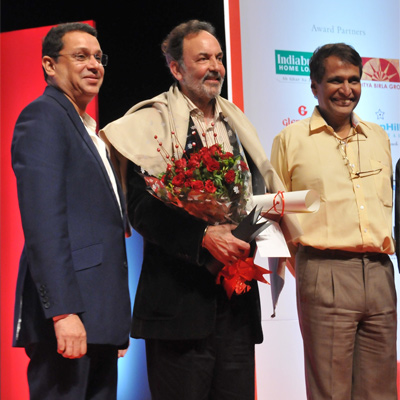
    Asked specifically by Indiantelevision.com on the sidelines of an event here on Thursday, Star India chairman and CEO Uday Shankar said, “We will share with DD some highlights and one match every Sunday, apart from select other ones. It’s good for IPL that new audiences (not subscribing to pay TV) will get to sample it.”

    According to Shankar, who’s riding a wave of cricket broadcast rights and other successes, Star India will share with DD select matches of the 11th edition of the IPL in 2018 that the pubcaster will air with a delay of 60 minutes. What does it mean? If an IPL match starts at 8 pm, for instance, DD will start airing it 9 pm onwards.

    Asked as to why Star, which won the IPL global broadcast rights last year for a period of five years, is willing to share matches with the pubcaster that can probably have advertising revenue implications, Shankar said, “Its more in the nature of providing sampling opportunities to people who don’t have access to pay TV. It’s a mutual agreement [and] if we were not comfortable, we wouldn’t have shared the delayed feed also.”

    Though Prasar Bharati CEO Shashi Shekhar Vempati and Minister of Information and Broadcasting Smriti Irani tweeted about the IPL matches to be aired on DD sometime early evening Thursday quoting a media report, Prasar Bharati’s Twitter handle later expanded on the actual deal to say, “To bring Vivo IPL 2018 to a wider audience, Star TV has agreed to share with Prasar Bharati select matches on a one hour deferred live basis with 50-50 revenue sharing.”

    Indiantelevision.com also learns from industry and government sources that the as per the Star-Prasar Bharati deal, the matches to be aired on DD will also include the opener, the play-offs and the final. The 2018 edition of the cash-rich league will feature 12 matches that will be played at 4 pm and 48 matches that will start at 8 pm. According to details available, the matches will be played at nine venues over 51 days starting 7 April 2018.

    Though Star was not forthcoming on the issue, Indiantelevision.com also learns from industry sources that DD will do the ad-sales and marketing of the matches to be aired on pubcaster’s TV channel and share the revenue with the rights holder in the ratio of 50:50. Star, while quoting government norms on mandatory sharing of sporting events with DD, earlier had pushed for a revenue share in the ratio of 75:25 in its favour.

    For several months, officials of the MIB and Prasar Bharati and executives of Star India were locked in a series of hard bargaining over the finer details of match sharing with the pubcaster. Even as the finer points of sharing were being negotiated, the Indian cricket board wrote a letter to the MIB two days back expressing concerns over various government nods not forthcoming needed to telecast IPL matches live. The MIB has given its nod for temporary live uplinking of the IPL’s 11th edition, whose inaugural ceremony will be held on 6 April 2018.

    In September last year, Star India had won the global television and digital rights to IPL for the next five seasons for approximately $ 2.5 billion or Rs 16,347.50 crore. Until 2017, Sony Pictures Networks India had held the television broadcasting rights of IPL for 10 years (since 2008).

    Also Read :

    Star India beats Sony, Jio to win media rights for BCCI’s home matches

    IPL 2018 gets a makeover with Star India

    Comment: Does Star stand to gain or lose by sharing IPL with DD?

    Star’s Uday Shankar on distribution challenges, IPL, FTA vs. pay TV, innovations, Made in India content…and much more

  • 90s hit ‘Shrimaan Shrimati’ back in new avatar

    90s hit ‘Shrimaan Shrimati’ back in new avatar

    MUMBAI: Nineties super hit comedy series ’ is all set to make a reappearance on Sony SAB in a new avatar. The show, renamed Shrimaan Shrimati Phir Se, will premiere on 13 March with a fresh cast.

    Rajan Waghdhare will direct the show who also directed the original sitcom on Doordarshan. Barkha Bisht will play the role of Prema Shalini known as Doll. Along with her, Suresh Menon, Samir Shah and Sucheta Khanna will join the cast.

    The story of the show revolves around around the lives of two men who are neighbours and have a soft corner for each other’s wives and try their best to impress them. This leads to many awkward and hilarious situations as their hopeless and relentless attempts add to the humour quotient of the sitcom.

    “In line with Sony SAB’s belief of ‘Haste Raho, India’, we bring to you a refreshed version of a classic TV series that brings back the same high-level comedy that made it a cult favourite, served with some new age flavours. Pure comedy never goes out of style, and that holds twice as true for a timeless show like Shrimaan Shrimati,” senior EVP and head of SAB and MAX cluster channels Neeraj Vyas said.

    “In its all-new avatar, Shrimaan Shrimati Phir Se is packed with nostalgia as an ensemble of versatile actors bring alive unforgettable characters in a contemporary setting. Waiting in the wings, this retelling of a classic is all set to entertain viewers all over again,” he added.

    Also Read:

    Sony to launch Marathi GEC

    Man Jit Singh, Andy Kaplan to depart Sony Pictures following restructure

  • MIB calls for ‘fiscal prudence’ in Prasar Bharati

    MIB calls for ‘fiscal prudence’ in Prasar Bharati

    NEW DELHI: The Ministry of Information and Broadcasting (MIB) on Friday justified certain government directives to India’s publicly funded national broadcaster Prasar Bharati Corporation by saying “fiscal prudence” was the need of the hour, while reiterating its commitment to safeguard interest of the organisation’s employees.

    “Fiscal prudence and accountability is the very fulcrum of the functioning of any government organisation. Prasar Bharati is as much bound by the general financial rules (GFR) of the government of India as any ministry or any organisation receiving grants-in-aid from the government,” MIB said in a statement, which, apparently, looks like a rebuttal to a report appearing in news website The Wire that questioned certain decisions of minister Smriti Irani.

    MIB also termed the story, without directly referring to it, as a “deliberate, sinister (and) motivated campaign” to “tarnish” its image by putting out a report that was “based on ill-will and incorrect appreciation with half baked facts”.

    “As per the provision of GFR, any autonomous organisation receiving grant-in-aid must sign a Memorandum of Understanding (MoU) with the ministry, clearly bringing out the physical and financial targets with timelines for activities to be done by utilising the said grant during that financial year,” MIB clarified further, adding, “For the record, irrespective of repeated reminders from the ministry, no MoU has been signed by Prasar Bharati.”

    In a news report, headlined ‘Angered by Prasar Bharati’s Defiance, Smriti Irani Blocks Salary Funds for DD, AIR’, which went viral on social media over the last few days, The Wire quoted Prasar Bharati chairman Surya Prakash, serving his second term, as saying contingency funds were utilised to pay salaries to employees for the month of January and February 2018. It also concluded that if the standoff continued, the pubcaster will run out of money by April.

    The story’s reporter, a freelance journalist who’s also written a book on BJP’s online troll army, highlighted that the federal government earmarked around Rs 2,800 crore in 2018-19 towards Prasar Bharati where the allocation is routed through the MIB, which releases monthly installments for the salaries of its approximately 5000 employees.

    The report went on to state, quoting unnamed sources in the pubcaster, that the ministry had been “raising queries and creating problems” before releasing funds and, since December, has “not released money for salaries, forcing a drawdown of contingency funds”. The crisis, the report quoted the sources as saying, began when Prakash started questioning some of  Irani’s actions.

    It must be stated here that Indiantelevision.com is not in a position to independently verify the allegations made in The Wire report and has based its present news story on an official statement put out by MIB on the website of Press Information Bureau on a day when majority of Indians took a public holiday to celebrate the festival of colours – Holi.

    However, illustrating how fiscal accountability led to “curbing of wasteful expenditure” in the Prasar Bharati, which controls Doordarshan and All India Radio, MIB said, “By bringing in Human Resource Information System in Prasar Bharati, at repeated insistence of the ministry, exact amount of expenditure on employees has been worked out and this has resulted in savings to the tune of nearly Rs 30 crore per month for the salary head (Rs 360 crore a year). The Sam Pitroda Committee had also suggested a number of measures such as manpower audit etc. to enhance financial discipline. Hence, we are hopeful that following similar footsteps, together a lot can be done to enhance transparency and accountability.”

    At a media conference last week Irani had publicly questioned Prasar Bharati management’s ability in generating additional revenues. “The tragedy was that private broadcasters grew at the cost of [pubcaster] Prasar Bharati [riding DD’s FTA FreeDish platform],” Irani had said, adding, “How can we leverage the infrastructure that taxpayer has paid for so that good content is available [and] there is increased ad spend because of sheer power of reach of Prasar Bharati?”

    Meanwhile, according to a report in The Economic Times, the MIB is scrutinising the pay packages given to senior officers in Prasar Bharati and pointing out cases of mismatch in positions to pay. Being an administrative ministry, it claims to have more power in deciding the pay for current and retired employees, superseding the directive of Prasar Bharati.

    In one particular case, Rajeev Singh, an officer at the additional secretary position in the finance wing, is drawing the salary of a secretary. This leads to a difference in pay of Rs 20,000. Seven other employees in the rank of additional director general are being probed with regard to their appointments.

    ALSO READ:

    Smriti Irani exhorts DD to leverage reach better

    Prasar Bharati’s main role is of pubcaster, not revenue generator, says Rathore

    MIB minister Smriti Irani orders review of DD prime time auction process

    Smriti Irani tweets industry body advisory urging restraint by TV news channels

  • Smriti Irani exhorts DD to leverage reach better

    Smriti Irani exhorts DD to leverage reach better

    NEW DELHI: Minister of Information and Broadcasting Smriti Irani at a public platform yesterday posed a question that may not be palatable to all but would bolster the confidence of Doordarshan bosses. She asked why the pubcaster couldn’t better leverage its own taxpayer-funded vast infrastructure for revenue generation the same way as private sector broadcasters had done.

    “The tragedy was that private broadcasters grew at the cost of [pubcaster] Prasar Bharati [riding DD’s FTA FreeDish platform],” Irani said, asking further, “How can we leverage the infrastructure that the taxpayer has paid [for] so that good content is available [and] there is increased ad spend because of sheer power of reach of Prasar Bharati?”

    According to her, India’s total advertising spend is expected to grow from 9.6 per cent last year to 12.5 per cent this year.  

    Irani, speaking at the Broadcast Engineering Society-oraginsed BES Expo 2018, went on to raise several other issues on the need of marrying good business model with technology, inadequate capacity and capability to manufacture locally STBs and the importance of broadcast engineering in the development of India’s media industry.

    DD’s KU-band DTH service, marketed under FreeDish brand, has been in the news lately with private TV channels questioning the pubcaster’s decision to not renew contracts to be on the FTA platform on expiry. Since then, DD has been giving temporary extensions to TV channels, waiting for broadcast disputes tribunal TDSAT, moved by some by some aggrieved TV channels, to give a final ruling on the matter.

    Bringing up the issue of FreeDish at a media event, Irani looked at a natural process of sending a message across to the private sector TV channels (over 800 on last count) and the mandarins of Prasar Bharati, which, by an Act of Parliament, is an autonomous body but relies heavily on government for funds.

    “The tragedy was that private broadcasters [on DD FreeDish] ended up taking a huge chunk from the ad pie not only from the ad spend of private sector, but also from government institutions like the DAVP [agency responsible for handing out government ads] on the basis of strength they leveraged from Prasar Bharati’s own infrastructure,” the minister pointed out.

    According to Irani, if Prasar Bharati, the managers and owners of DD, leveraged its infrastructure better, it would result in not only increased advertising revenue for the pubcaster but also reducing the burden of the taxpayer. She added that the government had allocated over Rs 2,500 crore to Prasar Bharati to fund its activities that also include DD’s sibling the All India Radio.

    Admitting that online consumption of video is increasing in India—40 per cent of entertainment is consumed online—and there is a growing demand in the digital arena for broadcasting, the minister asked whether Indian consumers, both rural and urban, have been sufficiently educated about digitisation of entertainment and the convergence happening in the country.

    While exhorting the stakeholders to collaborate with phone handset manufacturers to get additional numbers on video consumption patterns in terms of quality, quantity and genre, Irani said, “Data cannot have only [a] few masters… [one of the] greatest liberators in terms of data is the expanding reach of digital tech.”

    Bemoaning the country’s inability to manufacture locally good quality, cost-effective STBs in adequate numbers, Irani said, “That engineering anomaly needs to be addressed.”

    Though India is still far from digitising fully its 183 million TV homes, industry observers say the country imports almost 90 per cent of the boxes from China and ASEAN countries not because of engineering inability but lack of financial incentives.

    The BES Expo is one of the biggest broadcast technology shows in India. Nearly 300 companies from 25 countries will display their products in this year directly or through their dealers and distributors in India.

    Also Read :

    WOW Cinema petitions TDSAT on delayed auctions for DD FreeDish slots

    Right time for India-centric global news channel: Smriti Irani

    Smriti Irani: Need to reduce gap between regional & national news & democratize viewership

  • Urban areas dominate DD viewership: Zapr

    Urban areas dominate DD viewership: Zapr

    MUMBAI: Once the sole television provider in India, Doordarshan (DD) has survived the onslaught of television privatisation over decades. TV analytics conducted on DD channels provide insights into its diverse content across sports, Hindi entertainment and news and how the broadcaster is still relevant for India’s TV population. In 2003, DD radically changed its monetisation plan by paying private producers for prime-time shows to promote new content and open advertising avenues on its channels. With data-driven audience segmentation being an important prerequisite for media planners to set priority markets for their branded content, Zapr Media Labs (Zapr) has mapped out viewership trends of DD channels at the individual user level. From channel level analysis to geographic positioning of viewers, the study even traces migration patterns to see how DD viewers are switching channels across the Indian Television landscape. The company has analysed DD channels over three months—September, October and November 2017—and mapped out current trends in reach, viewership and audience migration. Over the considered period, there was a gradual rise (165.7 million)​ and fall (92.4 million)​ in audience reach and 4 per cent non-DD viewers ​(August) started watching DD in September. Deep-diving into DD’s viewership trends, the study found 59.20 per cent of urban viewership share​ for the pubcaster’s channels. These insights were derived from Zapr’s active user-base comprising over 40 million smartphones.

    DD’s viewership over September, October and November

    DD channels’ viewership ranged from 165.7 million​ to 117.1 million​ during week 36 and week 37. This viewership spike is before and during the India-Australia ODI series. The chart below shows the viewership of the broadcaster across weeks:

    public://DD-Channels1_2.jpg

    DD’s top-ten channels

    DD channels are home to various genres, languages and television programmes. The top-ten list comprised channels from across DD’s categories. Irrespective of the fact that the channel caters only to Hindi audiences, DD National (previously DD1) topped the list ​with an audience share of 23.90 per cent. ​This high viewership could pertain to the varied shows—serials, bhajans, news, cookery shows and even news for the hearing impaired (15 minutes daily) that ensures DD National has something for everyone.

    public://DD-Channels1_3.jpg

    DD National is followed by DD News (15 per cent)​ and DD Bharati (13.20 per cent) ​in terms of viewership. Interestingly, the sole international DD channel, DD India did not make it into top three and was followed by six regional channels​—DD Madhya Pradesh (13.10 per cent), DD Yadagiri (12.80 per cent), DD Oriya (12.5 per cent), DD Kashir (12 per cent), DD Sahyadri (11.90 per cent) and DD Podhigai (11.59 per cent). DD prevails in metros and cities with million plus population. The report also identified geographical locations that claimed a major share in DD channels viewership. Delhi (30 per cent)​ claimed the top position in the metro cities list, followed by Mumbai (25 per cent), Chennai (16 per cent), Bengaluru (11 per cent) and Kolkata (11 per cent). For brands and media planners, these insights reveal deterministic geo-segmentation by actual content consumption, something which large sample TV data cannot provide. The chart below also indicates viewership share across top five cities distributed across tier-2 populations. These stats show Pune with the highest viewership share (17.30 per cent). ​The top city is followed by Ahmedabad (9.40 per cent), Bhopal (6.20 per cent), Jaipur (6 per cent) and Lucknow (5 per cent) based on actual actual audience share for DD channels.

    public://DD-Channels-1_4.jpg

    Urban folks flock towards DD

    The urban segment claimed a substantial viewership share of 59.20 per cent​ over rural regions (40.70 per cent)​. With studies reporting higher socio-economic position among urban audiences, this urban skew among DD viewer suggests that their buying power is not lagging behind other TV segments across paid channels. For media planners, DD channels and their upward-mobile audiences constitute a trough of unexplored opportunities compared to largely cluttered spots on more commercialised channels.

    public://DD-Channels1_5.jpg

    DD caters to viewers across the TV spectrum

    Cricket broadcasts such as ​Sri Lanka vs India T20I ​and Micromax Cup Sri Lanka vs India 2017 ODI Series and news ​telecasts such as News Night, Batmya and Samachar ​occupy top positions in the list of most-watched prime-time shows on DD channels. With significant overlaps between the viewers of cricket tours and sport leagues such as the IPL. Marketers can tap into high-value TV segments and reach them on cost-effective spots using surrogate targeting offerings, DD’s top five primetime shows based on viewership have been listed below.

    public://DD-Channels-1_6.jpg

    DD National penetrates Urban India with purely Hindi content

    To understand how language influences viewership at a national level, Zapr looked at DD’s popular all-India channels—DD National and DD Sports. Interestingly, DD National with its single-language content in Hindi had higher viewership skew towards urban audiences (63 per cent) compared to its rural counterpart (37 per cent). DD Sports with its bilingual telecasts in Hindi and English witnessed smaller difference between its urban (55 per cent)​ and rural (45 per cent) markets. Our analysis indicates that DD’s all-india content in Hindi which began as instructive and informative content for India’s largely rural masses has now majorly penetrated much of urban India. Are marketers keeping up with DD’s evolution from Bharat to India?

    public://DD-Channels1_7.jpg

    Non-FTA to FTA

    To further understand purchase power of DD viewers, Zapr mapped out DD audience overlaps with free-to-air (FTA) channels exclusive of DD content and non-FTA channels. As the name suggests, FTA channels are accessible without subscription charges and according to Zapr data, 55.6 per cent of​ DD viewers tune into these channels regularly. Interestingly, the data reveals larger skew towards with non-FTAs or pay channels with an overlap of 58.4 per cent​, suggesting that DD audiences have high propensity to spend on premium content.

    public://DD-Channels-1_8.jpg

    Migration to DD channels post agency accreditation

    The growing commercialisation of television indicates more focused marketing efforts across TV segments. Zapr wanted to understand the impact of DD’s agency accreditation in September 2017 when the network opened commercial ad-spots and a round of new TV content on 30+ DD channels. “TV analytics at Zapr reveal that there has been a 4 per cent rise in DD viewership from August to September suggesting a shift towards DD channels which could be an early positive result of the broadcaster’s agency accreditation plan. The 58.4 per cent overlap of DD viewers with Non-FTA channel viewers is also an incredible result,” Zapr VP (data insights) Aditya Kulkarni said.

    public://DD-Channels-1_9.jpg

    DD has revamped its content and advertising avenues, and clearly succeeded in staying relevant to India’s dynamic media landscape. Armed with data-backed insights, broadcasters can optimise their content inventories and expand their TV audiences. Marketers can avoid clutter by targeting these growing segments, and ultimately stand strong in the minds of their priority markets.

    Also read:

    Doordarshan’s R-Day broadcast notches up record TV viewership

    DTH’s year of consolidation

    BARC ratings: DD Sports in top 5 after 37 weeks