Tag: Doordarshan

  • Sudhanshu Vats to helm Asci in landmark 40th year

    Sudhanshu Vats to helm Asci in landmark 40th year

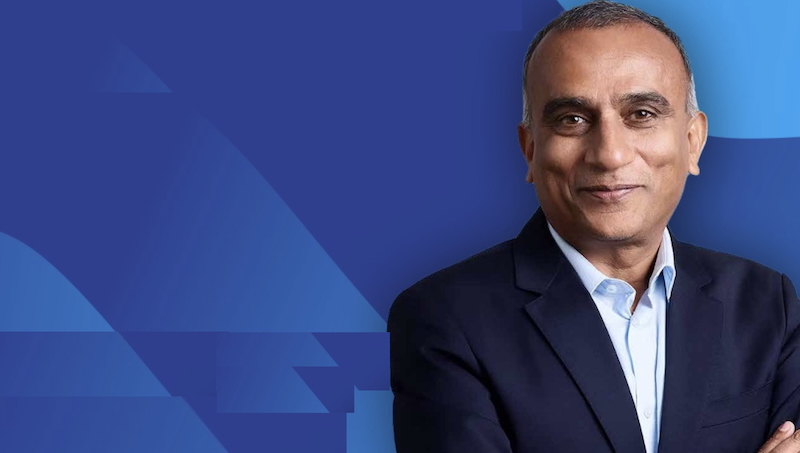
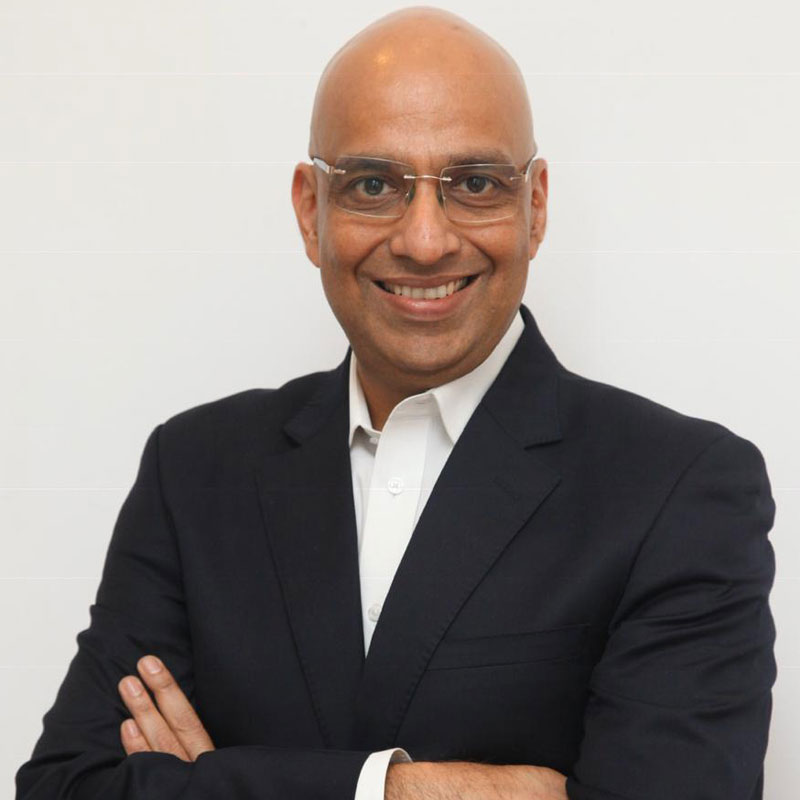
    MUMBAI: Pidilite Industries managing director Sudhanshu Vats has been elected chairman of the Advertising Standards Council of India (Asci) at its 39th annual general meeting, taking charge as the country’s advertising regulator-by-consensus enters its fourth decade.

    MullenLowe Global chief strategy officer S Subramanyeswar  moves in as vice-chairman, while industry veteran Paritosh Joshi of Provocateur Advisory becomes honorary treasurer.

    Founded in 1985 as a voluntary self-regulatory body, Asci is recognised by the Cable TV Act, Doordarshan, All India Radio and several key regulators. Its consumer complaints committee enjoys extraordinary acceptance for a voluntary code: in FY 2024-25, compliance hit 98 per cent for print advertising, 97 per cent for television and 81 per cent for digital. The supreme court has repeatedly cited Asci’s role in consumer protection.

    Vats said the council’s job has “never been more important” as advertising mutates with technology and new formats. “Our responsibility is to ensure advertising is executed with integrity—centred on the product promise, respectful of the community and mindful of consumers,” he told members. “Self-regulation provides guidance to the industry and assurance to the public. The simple principle is to keep the consumer’s interest front and centre.”

    Outgoing chairman Partha Sinha called his tenure “a comma in a sentence that keeps unfolding”. Over the past years, he said, Asci has “moved from being a watchdog to an enabler of responsible communication—partnering, not just policing,” and stepped “firmly into the digital arena, because responsibility cannot lag behind technology.”

    To mark its fortieth year, the council unveiled an ambitious agenda:

    * AdWise literacy drive – training more than a million schoolchildren to identify, question and evaluate advertising messages, reducing their vulnerability to misleading or harmful pitches.
    * Gen-Alpha research – an ethnographic study of children born into the touchscreen age to craft a framework for responsible advertising to the next generation.
    * New city offices – expansion of Asci’s physical footprint to Bengaluru and Delhi to deepen engagement across India.
    * Legal knowledge hub – a comprehensive online resource on advertising codes and laws, developed with leading law firm Khaitan & Co.
    * Podcast partnerships – a new series with The Logical Indian and Marketing Minds to spread awareness of responsible advertising.
    * Visual commitment badge – a mark members can display in their communications and on websites to signal adherence to the Asci code.

    Asci’s influence has widened well beyond complaint adjudication. The Asci Academy now drives education and thought leadership through masterclasses for marketers, faculty development programmes in media and advertising colleges, and a pre-production advisory service that helps advertisers check compliance before campaigns go live—avoiding costly post-release fixes.

    In recent years the council has published widely cited white papers on dark patterns, artificial intelligence in advertising, the depiction of masculinity and the trust deficit around digital influencers. It has issued pioneering guidelines on influencer conduct, cryptocurrency, green claims and gender stereotyping, earning two global awards for leadership in self-regulation.

    Looking ahead, Vats said Asci will “strengthen global partnerships and knowledge exchange with peer bodies worldwide, and invest in research, innovation and frameworks that respond to the realities of digital-first advertising.”

    For a voluntary body that began as a modest industry code, the next chapter promises to be anything but quiet.

  • Central government  drives Bind scheme with Rs 2,539 crore push

    Central government drives Bind scheme with Rs 2,539 crore push

    NEW DELHI: India’s public broadcasters are in the middle of their most ambitious revamp in decades. The government told Parliament this week that its Broadcasting Infrastructure and Network Development (Bind) scheme — approved for 2021–26 with an outlay of Rs 2,539.61 crore — is advancing on schedule, with close to Rs 981 crore already spent.

    The five-year programme is designed to modernise Doordarshan and Akashvani (All India Radio) with digital transmission, high-definition studios, new FM towers and a wider footprint in border, tribal and left-wing extremism–affected regions. The ministry said no major funds have lapsed, though procurement delays occasionally slowed spending, now being addressed through tighter monitoring.

    One of Bind’s biggest successes is the expansion of DD Free Dish, India’s only free-to-air DTH service. Channel count has surged from 104 in 2019 to 510 today, including 92 private broadcasters, 50 Doordarshan services and 320 educational channels. Popular Akashvani stations such as FM Gold, Rainbow and Vividh Bharati are also available on the platform, making free access to information and entertainment more widely available.

    Akashvani’s terrestrial coverage now spans 90 per cent of India’s geography and 98 per cent of its population. Alongside its traditional FM network, more than 260 AIR channels are now accessible through the NewsonAIR mobile app. To further strengthen reach, 59 new FM transmitters have been approved under the scheme.

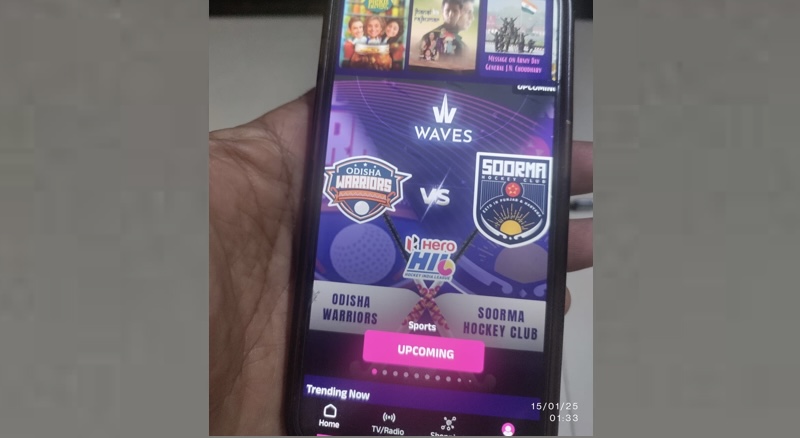
    In parallel, Prasar Bharati has entered the OTT space with Waves, launched in 2024. The digital platform aggregates infotainment, news, education and cultural content, and integrates feeds from Doordarshan and AIR. Officials say Waves is helping extend public broadcasting to younger, mobile-first audiences and to Indians overseas.

    The Bind scheme, covering all states, represents an attempt to reposition public service broadcasting in a hyper-fragmented media market.

    For New Delhi, the strategy is as much about access as it is about influence — ensuring that public broadcasting reaches underserved communities while competing with private players on technology and content.


  • Prasar Bharati rides new Waves with Shucae Films OTT content tie-up

    Prasar Bharati rides new Waves with Shucae Films OTT content tie-up

    MUMBAI: India’s national broadcaster is catching the OTT tide and this one’s making Waves. In a move that blends legacy media with fresh digital storytelling, Prasar Bharati has partnered with Shucae Films to host the latter’s vibrant catalogue on its OTT platform Waves, with select content also airing across its television channels. The alliance brings a medley of Shucae’s web shows to Prasar Bharati’s growing digital stable. Think romantic twists, comedic chaos, and indie grit with titles like Jaane Kyun, It’s a Match, Pyaar Ke Panne, Bolo Pencil, Love Forever, Yeh Hai Meri Love Story!, and more now streaming for free.

    By roping in Shucae’s younger, internet-savvy audience and juxtaposing it with its traditional viewership, Prasar Bharati is shaping Waves as a platform that doesn’t just preserve culture but also mirrors current content trends. The move also reflects the broadcaster’s broader digital-first ambition.

    “This partnership reflects our commitment to offering vibrant, diverse and engaging content,” said Prasar Bharati CEO Gaurav Dwivedi. “Waves continues to evolve as a digital-first platform showcasing the best of Indian storytelling.”

    Shucae Films CEO Manoj Doogra added, “We’re thrilled to bring our stories to a wider audience through Prasar Bharati. Waves is the perfect platform to blend entertainment with impact.”

    From love stories to offbeat dramas, the line-up adds colour to Waves’ growing content pool. It also signals a stronger future for public broadcasters leaning into contemporary formats and co-creating with India’s expanding OTT talent pool. Whether it’s the nostalgia of Doordarshan or the now-ness of web series, this is storytelling tuned to every screen.

  • Pro Panja League season two returns to Sony Sports on 5 August 2025

    Pro Panja League season two returns to Sony Sports on 5 August 2025

    MUMBAI: Pro Panja League, is set to return with its second season on Sony Sports Network from 5 August 2025, right after the India vs England cricket series wraps up. The league will air daily for two hours on Sony Sports Ten 3 channels (SD and HD), ensuring viewers enjoy an uninterrupted run of top-tier sporting action.

    Riding high on the success of its debut edition, the tournament known for its IPL-style franchise format promises 17 action-packed days of gripping arm wrestling battles as top athletes from across India clash for glory. Season one saw Kochi KD’s emerge as champions after a nail-biting final.

    The comeback of Pro Panja comes amid growing enthusiasm for the sport. Season one attracted 32 million unique viewers across Sony Sports and Doordarshan, outperforming several new sporting leagues in India, according to BARC data.

    Pro Panja League co-founder Parvinn Dabass said, “The response to our first season was beyond expectations. Arm wrestling has evolved into a professional sport with rising athlete standards and packed arenas our Mizoram showcase saw crowds of up to 20,000. Season two will raise the bar even higher.”

    With elevated production, intense rivalries, and a fan base that’s rapidly expanding, Pro Panja League is poised to become a household favourite, bringing the thrill of raw strength and strategy into living rooms nationwide.

  • TRAI issues recommendations for ground-based broadcasting

    TRAI issues recommendations for ground-based broadcasting

    MUMBAI: India has far been a cable and satellite TV country, apart from the single government-owned pubcaster Doordarshan which is the sole terrestrial network. That could likely change if one goes by the recommendations which the Telecom Regulatory Authority of India (TRAI) has come up with for ground based broadcasting (GBB). The recommendation are aimed at establishing a regulatory framework for GBBs in India. They focus on defining operational parameters and facilitating the use of terrestrial communication mediums by broadcasters.

    The key highlights of the TRAI recommendations are:

    * Definitions: The authority has clarified key terms such as “broadcaster,” “ground-based broadcasting,” and “terrestrial communication medium” to reflect updated practices in the industry, distinguishing between satellite-based and ground-based broadcasting.
    Regulatory Framework: TRAI recommends creating a framework for GBBs that aligns with existing guidelines for satellite broadcasters but excludes satellite-specific regulations. Ground-based broadcasters will not require authorisation from In-Space for frequency assignments but must secure other necessary clearances.
    * Delivery Mechanism: GBBs will provide channels to distribution platform operators (DPOs) using various terrestrial technologies, gaining the flexibility to utilise multiple systems as per their business strategies.
    * . Fee Structure: An annual authorisation fee of Rs seven  lakh per channel for GBBs has been proposed.
    *  Operational Areas: The service area for GBBs will be national, ensuring broad reach across the country.
    * Channel Migration Options: GBBs wishing to switch to or adopt satellite communication for their channels, and satellite broadcasters (SBBs) looking to embrace terrestrial methods, may do so with prior government approval while maintaining existing permission validity.
    * Compliance and Reporting: GBBs must report the primary language and sub-genre of their channels at the time of application, which will be displayed on the Broadcast Seva portal to assist in electronic programming guide (EPG) arrangement.
    * Examination of FAST Channels: TRAI recommends that the MIB assess the compliance of free ad-supported streaming television (FAST) channels with existing guidelines and develop policies as needed.
     

    These recommendations aim to enhance the operational landscape for broadcasters in India, promoting the effective use of emerging technologies while ensuring compliance with regulatory standards.
     

  • Prasar Bharati’s Waves OTT now on Jio Stores, expanding Indian content access

    Prasar Bharati’s Waves OTT now on Jio Stores, expanding Indian content access

    MUMBAI: In the bustling streets of Mumbai, where skyscrapers narrate tales of ambition, one name consistently towers above the rest—Mukesh Ambani.

    The maestro of business expansion has struck again, this time joining forces with Prasar Bharati, India’s cherished custodian of cultural narratives.

    In a move that seamlessly blends legacy with technology, the public broadcaster’s OTT platform, Waves, now graces the Jio Store shelves, promising a cinematic journey through India’s heart and heritage.

    Imagine the allure: archives of Doordarshan’s golden era, the timeless melodies of All India Radio, and an array of fresh originals—all a tap away for millions of Jio users. This partnership isn’t just about streaming content; it’s a bridge connecting India’s storied past with its digital future, hand-delivered by Ambani’s ever-expanding empire.

    Is there a realm Mukesh Ambani doesn’t touch? It seems unlikely, as Jio continues to rewire how India consumes entertainment, one milestone at a time.

    Since its launch, Waves has rapidly garnered attention, amassing over one million downloads and positioning itself as a premier destination for Indian audiences. With this collaboration, Waves takes a strategic leap to become accessible across all Jio devices, leveraging the telecom giant’s expansive reach and connectivity.

    Imagine how India’s rich cultural tapestry can now reach every corner of the nation? With Waves on Jio Stores.

    Waves offers something for everyone:

    . Original Content: Explore new fiction and non-fiction programming.

    . Legacy Programming: Rediscover classic shows from Doordarshan archives.

    . Live Events: Stream real-time happenings from across the nation.

    . Gaming and E-Commerce: A unique blend of entertainment and interaction.

    . Nostalgia Features: Enjoy photo albums and magazines highlighting India’s heritage.

    This diverse lineup ensures that Waves caters to audiences of all ages and preferences. As the platform grows, its popularity underscores a collective demand for authentic Indian storytelling.

    Prasar Bharati CEO Gaurav Dwivedi expressed his optimism about this partnership, “We are thrilled to take Waves to the next level by making it available to Jio users. The platform has already received a fantastic response, and with Jio’s vast subscriber base, we are excited to introduce our diverse and compelling content, which includes – Nostalgia, Live Channels, Magazines, Photo Albums, etc., to even more homes.”

    A Jio spokesperson added, “We are excited to partner with Prasar Bharati to offer Waves to our users. This partnership offers a wider content offering to audiences at large and ensures that they are able to choose from the best.”

    Why does this partnership even matter?

    The inclusion of Waves on Jio Stores signifies a blending of modern technology with the cultural essence of India. It underscores Prasar Bharati’s mission to preserve India’s heritage while ensuring it resonates with contemporary audiences.

    From classic TV dramas to innovative new content, Waves aims to deliver a robust digital entertainment experience that celebrates India’s diversity.

    Are you ready to surf India’s cultural treasures with Waves?


  • Long live linear TV, courtesy of NextGenTV

    Long live linear TV, courtesy of NextGenTV

    MUMBAI: Las Vegas. Normally labelled as Sin City. But in April it was all about the future of entertainment technology with the NAB Show opening with a bang. And what a bang it was. It is a hard knock for those who continue to resist the frenetic pace of technological evolution. One of these is ATSC 3.0 which is coming. Yes, even as it is spreading gradually in the US, it is being planned to come to India. That is if Sankhya Labs, Sinclair Broadcast, Doordarshan and Prasar Bharti succeed in its rollout.

    I happened to see some trial broadcasts in the Las Vegas Convention Centre and it was awesome.

    At early stages yet, ATSC 3.0 endeavours to wirelessly transmit data, video and audio, over the air without using the traditional terrestrial frequencies or the 4G, 5G or 6G spectrum. Also known as NextGen TV, it is a digital television standard developed by the Advanced Television Systems Committee (ATSC), offering features such as ultra-high-definition video, high-efficiency video coding (HEVC), high dynamic range (HDR), immersive audio, and interactive capabilities.

    Sankhya Labs has been working on developing semiconductor solutions and software for ATSC 3.0-enabled devices. These solutions encompass various aspects of ATSC 3.0 technology, including receivers, modulators, demodulators, and related software stacks. Sankhya Labs aims to offer cost-effective and scalable solutions to enable the deployment of ATSC 3.0 infrastructure and consumer devices in India and other markets. Currently, it has developed – and continues to develop –  the PCB, the software, the receiver and dongle, and set-top box designs which will then be farmed out for local manufacture.

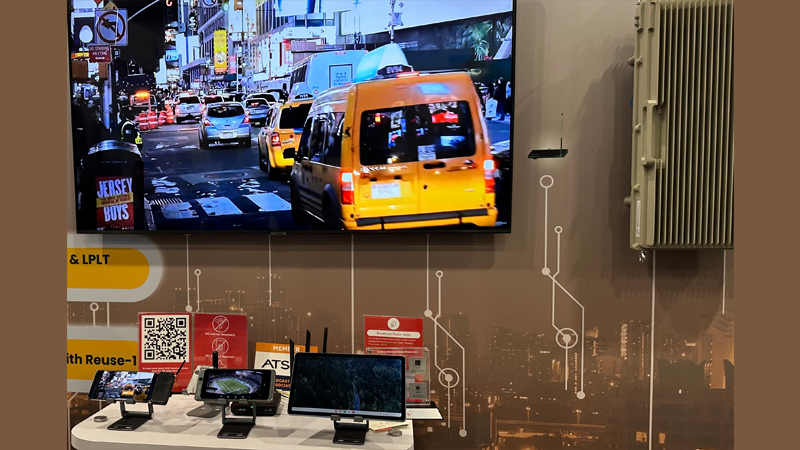
    I happened to see the transmitter developed by Sankhya at the NAB Show which will be mounted – when the service is ripe and ready to be rolled out – next to the cellular towers which dot Indian building terraces in urban and rural India. Then there is the dongle (looking like the early device we used to get connected to the internet) which will act as the receiver and can be attached to an ordinary smartphone with basic video capabilities and receive the transmitted video at almost no cost to the customer. (Remember there are more than 500 million smartphone users in this country and even if 10 per cent of them opt for ATSC 3.0 that will be a humungous base of 50 million viewers) For the home, users will have a set-top box (which Sankhya hopes to gradually decrease in size)  that will sit next to the TV set to receive the signals for family viewing.

    As it does for FreeDish, DD is likely to auction channels to private broadcasters who can reach viewers with another linear service, thus giving traditional TV a new lease on life and advertisers another medium to target the vast masses of television viewers.  This is at a time when YouTube video, Instagram reels, free-to-air TV, and streaming services have totally disrupted satellite and cable pay TV services in India with cord-cutters, cord nevers reaching record highs. The streamers need help to retain clever viewers who are sharing passwords as well as churning when they finish watching shows that interest them in one service or another.

    How long will ATSC 3.0  take to become a reality? Broadcasters, handset manufacturers, telcos have all blackballed it saying that it is a needless platform that is being created. 

    But Sankhya Labs and the NextGenTV committee would like it to spread tomorrow itself. Work has been going on for at least the past three to four years and it might take as much time for the government-owned broadcaster to give it a clear green signal. (I’m crossing my fingers DD moves fast once a government is formed at the Centre post the elections or a private company is given the responsibility of spreading ATSC 3.0 services in a public-private partnership.)  One can be optimistic and only hope that this exciting technology which can lead to the creation of zillions of local channels monitoring local traffic conditions, weather conditions, long-distance medicine, education, etc etc comes quickly enough.

    When it does arrive, it will come with the potential to revolutionise the way we consume our entertainment once again. And oodles of other services. 

  • Rathikant Basu: A bureaucrat who pushed boundaries

    Rathikant Basu: A bureaucrat who pushed boundaries

    Mumbai: He loved the high life. A career bureaucrat from the Indian Administrative Services, Rathikant Basu, shifted from the civil services to a private sector corporate job as head of Star TV India (yes, the same Disney Star TV India which has today been subsumed in the Big A’s Reliance Industries) in the late nineties.

    He had impressed Rupert Murdoch (who was then the owner of Star TV India) with the work he had done for Doordarshan when he, along with information and broadcasting secretary Bhaskar Ghose, privatised the news bulletins on the state-owned channel by handing production to the Prannoy Roy-owned NDTV.

    Additionally, he had also faced the influx of private general entertainment channels, Zee TV, Sony Entertainment, ATN, Star Plus (a hotch-potch of Chinese language and international programmes) -head on in the early and mid-nineties.

    He injected freshness into DD programming by inviting private producers to churn out popular shows on its buzzing with entertainment spinoff called DD Metro. This was at a time when Zee TV had revolutionized TV consumption with its dose of Anchor Ek Minute, Saregama, Antakshari, shows which struck a chord with starved-for-entertainment Indian viewers.

    Suddenly, DD which seemed to be losing its hold on the media planner and buyer trade, got it back, thanks to the spurt in ratings.

    And that is what had enamored Murdoch about Mr Basu – as he addressed him – and he hired him as the CEO. Former Star TV India CEO Peter Mukerjea had a moniker for him – he simply called him Rodney. Says he in his book Star Struck – Confessions of a TV executive: “..it was a friendlier and more informal way of referring to him than Mr Basu, which sounded very much more like a school headmaster. .He himself was an excellent thinker, super bright and also exceptionally amiable – clearly a highly talented individual.”

    Peter then talks about Mr Basu’s sojourn at Star India when the latter thankfully failed in his bid to transform its biz model to a slot-fee-air time model just like DD used to operate. He then talks about other failed forays of Star India into the DTH business with the government getting wind of it and disallowing it without it jumping through regulatory hoops. Basu’s attempt at localizing the foreign and English language shows like Baywatch, The Bold and the Beautiful into Hindi led to Star Plus becoming a laughing stock. His efforts at playing out reruns of shows such as Chandrakanta and Saans also flopped miserably. And led to confusion amongst advertisers who deserted it.

    What he was certainly successful at, was in the setting up of the lobbying group the Indian Broadcasting Foundation (IBF), which he did as a knee jerk reaction to the government raising the red flag on the Star India DTH service ISkyB. He also did a great job in launching the first private satellite news channel in India under the brand Star News in partnership with Prannoy Roy’s NDTV, with whom he had a prior and also good working relationship since his days at DD

    The confusion about Star Plus’ identity and Basu’s hiring of former government personnel led to a period of some chaos in amongst content producers and advertisers which then forced Murdoch’s hand and led to his being elevated as non-executive chairman with Peter becoming CEO.

    What also worked against Mr Basu as CEO of Star TV India was some envy from his peers in government service who saw him as a turncoat, thus retarding the network’s progress in India. 

    Not one to be put down, Basu,  after the completion of his contract at Star India launched channels under the brand Tara (a takeoff on Star India), which he continued to run for more than a decade and a half. Not very profitably. But ran them he did. Until he discovered he was suffering from Alzheimer’s Disease.

    Basu, on his part, also knew how to give back. He had kindly consented to be on indiantelevision.com’s The Indian Telly Awards jury for at least a couple of years. Far from being just a serious former bureaucrat, he cracked a few jokes and he chortled. Yes, he did – an antithesis to the strict and sombre exterior he normally presented to the media. 

    The industry veteran passed away on 17 March 2024, following a harrowing descent while grappling with the mind-robbing ailment. He was just nine days short of completing his eighty-second birthday.

    Says Peter in his book: “Rodney was never a bad chap, on the contrary he was rather fun to be with. Alongside his intelligence, I admired so many aspects of his admittedly quirky personality. As a boss, he had always been very civil with me and I, in turn, gave him due regard and respect. There was no doubt in my mind he was a gentleman.” 

    May the gentleman RIP.

  • Doordarshan is to run a special news bulletin titled ‘Ram Ki Paidi’

    Doordarshan is to run a special news bulletin titled ‘Ram Ki Paidi’

    Mumbai: Meticulous arrangements are being made for the smooth and successful conduct of the consecration ceremony of the Shri Ram temple in Ayodhya Dham, being held on 22 January 2024. Prime Minister Shri Narendra Modi will perform the ‘Pran Pratishtha’ as per prescribed rituals. It is expected that more than 8,000 guests will visit the temple on this day, followed by lakhs of devotees from 23 January onwards.

    Live Telecast

    Elaborate arrangements have been made for a LIVE telecast of the ceremony. The entire event would be live-telecast in 4K quality by Doordarshan, on DD News and DD National channels. On 23 January 2024, Doordarshan will do a LIVE telecast of Aarti and the Opening of Shree Ram Temple for the public.

    Doordarshan shall share the clean feed of the event in Ayodhya on 22 January 2024 with ANI TV and PTI Video. All TV channels which are subscribers to the agency can obtain feed from there.

    For other National and International broadcasters, a YouTube link with a key to a clean feed will be generated. This link will be shared with the concerned broadcasters upon their request. In order to obtain the YouTube link, domestic broadcasters may place their request with the Press Information Bureau. International TV Channels would need to place their request directly with Prasar Bharati. Contact details are available in the PIB Media Advisory, which can be accessed here.

    Channels also have the option of patching to DD News, in case a clean feed is not required. Courtesy may be given to Doordarshan in this case. PIB will issue photographs and press releases of the event, in English, Hindi, and Indian state languages.

    Ayodhya Media Centre

    A Media Centre is being set up at Ram Katha Sangrahalay in Ayodhya with limited capacity, where large LED TVs will be set up to facilitate viewing of the telecast. The Media Centre will be equipped with a Wi-Fi facility for media persons to file their stories.

    Portal for Media Passes

    The media organizations desirous of covering the event from Ayodhya may apply through PIB’s centralized portal, latest by 6 p.m., 17 January 2024; based on which security passes will be issued, through state administration. The portal can be accessed here.

    Special Programmes by Doordarshan

    Besides the live telecasts, Doordarshan is running a Special News Bulletin titled Ram Ki Paidi (राम की पैडी)) during 1 January – 15, 2024. From 5 P.M. -8 P.M., there will be a special live programme titled “श्री राम अयोध्या आये हैं” (Shri Ram Ayodhya Aaye Hain) which will include daily Ayodhya round-up, guest discussions, special stories, and vox-pop.

    Health Facilities

    Efforts are being made to make information on medical care facilities at Ayodhya available on the website of the local administration in Ayodhya and the Ram Janmabhoomi Trust, in order to facilitate people in getting adequate medical assistance. A team has been sent from JPNA Trauma Centre, AIIMS, New Delhi to impart training to around 200 health workers in Ayodhya from January 12 – 15, 2024.

    The government of India is likely to establish a Bhishm Emergency Response facility at Ayodhya during the Pran Pratishta ceremony and allied programmes.

  • NH Studioz paves the way for Doordarshan’s grand revival

    NH Studioz paves the way for Doordarshan’s grand revival

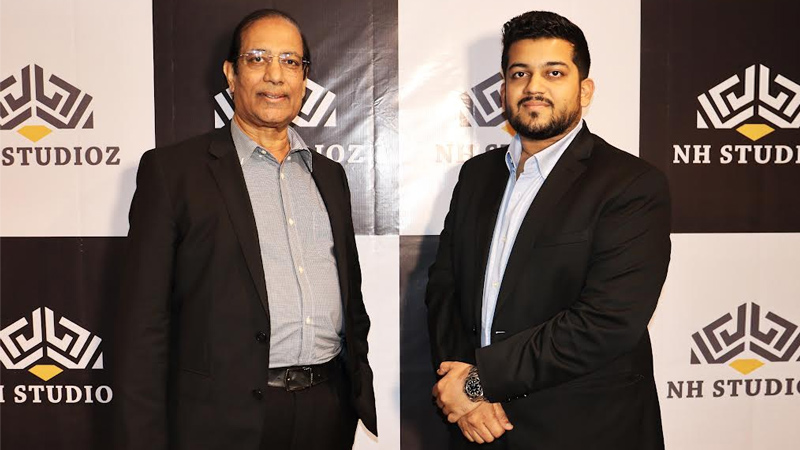
    Mumbai: NH Studioz, one of India’s premier content houses with a colossal copyright library of over 2500 feature films, has been awarded the tender and entered into a landmark agreement with Doordarshan (DD), India’s pioneering and most widely watched television channel. In a significant move that marks a new era of content synergy, NH Studioz has leased slots on DD for a two-year period, taking complete ownership of daily afternoon slots from 1 pm to 4 pm and weekend prime time slots from 8 pm onwards. They will be taking care of entire programming, advertising sales, marketing, and promotions.

    The agreement includes exclusive programming, advertising sales, marketing, and promotional responsibilities. Doordarshan, with its historical significance as India’s first and oldest television channel, boasts an unparalleled reach. The channel’s cultural impact, strategic placement on all platforms, government partnership, and emotional connect with viewers from diverse demographics make it the ideal platform for NH Studioz to expand its reach and engage with audiences nationwide.

    NH Studioz director Shreyans Hirawat expressed his enthusiasm for the collaboration, stating, “This partnership with Doordarshan represents a historic moment for NH Studioz. We are excited to bring our extensive content library and programming expertise to DD’s platform, and we look forward to providing captivating entertainment to viewers across the nation.”

    NH Studioz’s decision to collaborate with Doordarshan aligns with DD’s aggressive approach to revitalise its platform with new and engaging content. Recent initiatives by DD include shows by renowned creators like Subhash Ghai (“Janaki”), Shilpa Shetty (“Yoga”), and a collaboration with Netflix for “Azaadi Ka Amrit Mahotsav.”

    NH Studioz sees this partnership with Doordarshan as a significant step in shaping the future of entertainment in India. It combines the strength of NH Studioz’s vast content library and programming expertise with Doordarshan’s historic presence, wide reach, and enduring cultural significance. Together, they aim to provide engaging content to viewers across the nation, from tier 2 and tier 3 markets to cultural and festive occasions, reinforcing Doordarshan’s position as an integral part of Indian families.

    With a history of delivering exceptional cinematic experiences, NH Studioz has established itself as a major contributor to the programming of leading movie channels like Star Gold, Zee Cinema, and Set Max, consistently accounting for impressive programming of their content. The studio’s diverse film library, spanning from classics of the 1950s to contemporary releases in 2023, caters to audiences of all demographics and features the biggest names in Indian cinema, including icons like Amitabh Bachchan, Kartik Aryan, Ranbir Kapoor, and more. NH Studioz boasts a vibrant social media presence, with an engaged audience viewing approximately 50 million hours monthly across 33 channels, serving a subscriber base of 35 million users.