Tag: DOOH

  • GroupM’s year-end ad industry update and projections for 2025

    GroupM’s year-end ad industry update and projections for 2025

    MUMBAI: GroupM, WPP’s media investment group, today published the topline findings of its End-of-Year Global Advertising Forecast for 2024. The report, which analyses advertising investments over the past 12 months and shares projections for 2025 and beyond, finds that strong performance of the largest sellers of advertising and increased digital expansion have propelled growth in global advertising investment to 9.5 per cent this year.  The industry will surpass $1 trillion in total revenue for the first time in 2024 (excluding US political advertising) and grow another 7.7 per cent in 2025 to reach $1.1 trillion. Additionally, ad revenue growth will outpace nominal GDP growth in 2024 and 2025.

    Ad revenue growth

    Pure-play digital advertising (excluding digital extensions of traditional media such as CTV and digital out of home – DOOH-  but including YouTube and Tiktok) –  remains the strongest channel and is estimated to grow 12.4 per cent globally in 2024 and make up 72.9 per cent of total advertising in 2025. It is expected to grow 10 points in 2025 to $813.3 billion. The steady growth till 2029 will see it capture 76.8 per cent of all spends. 
    TV remains the most effective form of advertising, according to research. Yet we forecast global TV (including both linear and streaming, but excluding political revenue) will grow just 2.4 per cent on a compound basis from 2024 to 2029, significantly slower than total advertising growth of 6.4 per cent.  It is estimated to grow 1.9 per cent in 2025 to touch $169.1 billion.

    Retail media continues to emerge as a rapidly expanding segment within digital advertising, is estimated to reach $177.1 billion globally in 2025, surpassing total TV revenue, including streaming, for the first time.

    Out-of-home (OOH) advertising has maintained its share of the global advertising industry, largely due to the strong performance of its digital counterpart, DOOH, which is predicted to account for 42 per cent of total OOH revenue in 2025. Growth in 2025  is expected to be at at 7.2 per cent reaching $56.1 billion and accounting for five per cent of overall global ad spend. OOH has done  better than any other channel in the face of the digital onslaught.  It has almost certainly benefited from its “unskippable” nature in more recent years, its location-based value proposition, and its rapid digitalisation and innovation.

    Global AD growth vs Global GDP growth

    Global audio revenue will remain largely flat in 2025. But  streaming audio will see double digit growth in 2024 and 4.4 per cent growth on a compound annual basis through 2029.. Traditional audio, however, will see its share drop from 1.8 per cent of global advertising in 2024 to 1.2 per cent in 2029  (although it will still account for more than 60 per cent of total audio ad revenue).

    Print advertising, inclusive of all traditional and digital formats across both newspapers and magazines, will face further declines, dropping 4.5 per cent in 2024 and a further 3 per cent in 2025 to $48.1 billion. This medium continues to faces further declines, largely due to increasing digitization and the influence of AI.   By 2029 their combined share will represent just 3.0% of total ad revenue, down from 10.7  per cent in 2019 and 35.1 per cent in 2009. 

    Cinema advertising is forecast to grow 5.2 per cent in 2024 and a further 5.9 per cent in 2025, though the $2.3 billion total will fall short of 2019’s $3.0 billion global figure. Some markets will have surpassed 2019 levels by 2025, but of the world’s five largest cinema ad markets, namely the US, Brazil, the UK, India, and south Korea, only Brazil will have completed its recovery by 2025.

    All top 10  advertising markets are forecast for growth in 2024, although to varying degrees. The US and China remain the two largest markets, with total ad revenue expected to grow 9 per cent to $400.2 billion and 13.5 per cent to $204.5 billion respectively. The UK remains in third place, just ahead of Japan. Germany and France  maintain their rankings, followed by Canada, Brazil, India and Australia.

    Growth rates in ad revenues country by country

    On artificial intelligence the Group M report say that it is s a multiplier of technology and creativity, not a driver of advertising growth in and of itself. Brands are often rewarded by shareholders for touting their use of the technology to increase efficiency and improve productivity. Yet consumers are more fickle, at times embracing its uses and at other times decrying them. Brands that lean into the obvious direction of travel toward more AI while ensuring it remains ethically responsible are likely best positioned over the long
    term to capitalize on the effects. 

    The Group M report also gave some insights of the main advertising categories: 

    CPG: In a world preoccupied with conflict, technology, and an increasingly algorithmically driven media diet, CPG brands are looking to identify and align with cultural moments to help drive brand differentiation and sales growth. While media consumption has shifted in some part to online, and social channels in particular, the impact of TV (including both linear and streaming) is likely to retain its importance for CPG brands as companies look to drive both long-term brand health and near-term purchases.  the median advertising intensity (advertising expense as a percentage of revenue) is at 5.3 per cent.

    Digital endemics: In 2017, nearly a decade ago, the median advertising intensity (advertising expense as a percentage of revenue) for this group of companies was more than 19 per cent invested to a large extent on digital channels by in-house teams. Over the last two years, a focus on profitability amid rising interest rates and an increasing reliance on brand storytelling by the now “establishment players” has led to some growing pains and a sector-typical willingness to test, innovate, and make big bets. The median advertising intensity currently stands at 12.8 per cent.

    Retailers: While the biggest companies in this group, including Amazon, PDD and Walmart, have continued to report strong GMV growth, others (especially smaller, more nationally focused brick-and-mortar players), have sounded the alarm on consumer cautiousness and slowing sales. These companies may be able to offer an in-store experience the e-commerce players can’t, but some marketers may find it challenging to differentiate their store’s offerings across a range of more digital touch points. The median advertising intensity  for this category stands at 0.8 per cent.

    Media and entertainment:  The outlook for the year ahead does appear more positive than when we penned last year’s report. Streaming platforms at Disney, WBD, Paramount, and Netflix have all turned quarterly profits, and losses are narrowing at Comcast, ITV, and others. Revenue growth accelerated in Q3 of this year for all segments other than music, with positive growth in all segments (the first time that has been true since Q1 of 2022). However, linear TV’s gains from having the U.S. elections, the Olympics, the Copa America, and the Euros all in the same quarter are unlikely to be sustainable going forward. The median advertising intensity  for this category stands at 5.9 per cent.

    Automotive: Automotive advertisers are now caught in a similar situation to media companies. The writing seems to be on the wall as to future emissions requirements and the transition to battery powered and hybrid cars (similar to the shift to streaming). But the economics haven’t yet caught up and the competitive field for electric vehicles is much more fragmented than that of traditional combustion vehicles. Newer players like Byd are offering cheaper EVs and at the same time investing in coveted sports sponsorships like the UEFA Euros tournament in summer of 2024. The median advertising intensity  for this category stands at 7.4 per cent.

    Financial services: Because of compliance issues and integration complexities, the industry has been slow to avail itself of a host of new offerings that other sectors have adopted, including retail media networks, social media, and influencer marketing. Partly due to a renewed (and necessary) focus on brand building, companies in the sector continue to make significant investments in audio, TV, and sports sponsorships. Economic uncertainty and the growing distrust of traditional financial institutions further complicate the landscape, creating both opportunities and challenges for tech-forward financial brands. Balancing brand building with performance marketing and navigating compliance requirements are likely to remain key areas of focus. The median advertising intensity  for this category stands at 1.9 per cent.

    Technology:  The rapid pace of innovation is forcing adaptation on the part of tech advertisers. B2B brands are shifting to more digital marketing-led strategies, adding complexity to existing measurement and reporting. Digital channels are increasingly seen as critical to reaching new generations of consumers (whether for consumer or enterprise products), but as competition heats up, differentiation is challenging. Brand building continues to rely on sports, though advertisers are finding the space crowded as more sectors look to sporting events for scaled reach and cultural relevance. The median advertising intensity  for this category stands at  2.1 per cent.

    Pharma: Every industry is in a constant state of evolution and flux, but healthcare may rival advertising with the pace and magnitude of external factors driving change for the sector. Populations are aging and environmental and dietary factors are rapidly influencing future health outcomes (and future healthcare and pharmaceutical needs). And, in a recurring motif from this year’s report, competing successfully in a rapidly evolving industry can be complicated by internal divisions, regional and local nuance, and lagging technological integration. The median advertising intensity  for this category stands at  2.8 per cent.

    Luxury: Luxury advertisers have experienced significant volatility by region over the last four years. Consumption has flagged in China this year, and organic growth has slowed in North America as well. The APAC region, excluding Japan, has declined in the last three quarters for most companies reporting such a segment. Outperformance in Japan likely has more to do with a weaker yen and travelers from China, especially, looking for deals, implying a more transactional and price-conscious luxury consumer in 2024 and 2025.  The median advertising intensity  for this category stands at nine  per cent. 

    The report concludes by saying that the advertising industry is hurtling through a rapid evolution brought on by the pervasive use of AI and an ongoing shift to digital channels. Pureplay digital advertising, projected to surge 12.4 per cent  in 2024 and 10.0 per cent in 2025, is solidifying its dominance, representing 72.9 per cent of total advertising revenue in 2025 and a projected 76.8 er cent  by 2029. This digital dominance, however, is accompanied by increasing scrutiny and regulation, creating a complex environment for marketers to navigate. 
     
    While the narrative of television’s decline persists, its effectiveness remains undeniable. Despite this, global TV revenue, including streaming, is forecast to grow at a more modest 2.4 per cent  compound annual rate from 2024 to 2029, significantly trailing overall advertising growth. This divergence underscores the need for marketers to pursue a balanced approach, leveraging all the tools and channels available to meet both performance and long-term brand goals.

    (The visual was generated using Canva. No copyright infringement is intended)
     

  • IOAA, GroupM & JCDecaux to move the needle of sustainability in OOH

    IOAA, GroupM & JCDecaux to move the needle of sustainability in OOH

    MUMBAI: OOH is finally joining the sustainability bandwagon. GroupM, WPP’s media investment group, in collaboration with the Indian Outdoor Advertising Association (IOAA), has announced the formation of a dedicated task-force committee to advance sustainable practices within the out-of-home (OOH) advertising industry.

    The committee, comprising GroupM MD cinema, OOH and experiential marketing  Ajay Mehta, IOAA chairman Pawan Bansal and  JCDecaux Advertising India executive chairman Pramod Bhandula, is focused on guiding media owners in adopting sustainable practices. The committee’s ambitious target is to ensure that 50 per cent  of all advertising sites in India utilise recyclable materials by 2027.

    A three pronged thrust has been planned. First, in the area of digital OOH (DOOH) and power consumption, the second in the use use of fabric instead of flex materials and finally a recycling program for billboard waste. 

    To address the rise in power consumption from the transition to DOOH  advertising, the task force will prioritise the adoption of renewable energy, particularly solar power. The committee will develop a roadmap for transitioning OOH assets to renewable energy and enhancing cost efficiency through bulk procurement. 

    Additionally, the committee will explore alternative, sustainable materials such as fabric and polyethylene to replace traditional flex, aiming for options that are lightweight, weather-resistant, recyclable, and durable. Due diligence will be conducted to vet suppliers, and bulk deals will be negotiated to ensure a cost-neutral transition.

    A “Take Back Program” will also be introduced to recycle used billboard materials in partnership with non-profit organizations. This initiative aims to further minimize waste and encourage industry-wide accountability. The committee’s mission is to foster environmental responsibility among media owners and partners, ensuring the widespread adoption of sustainable practices. Insights from the World out of home organization (WOO) will also be leveraged to support global sustainability efforts within the OOH space.

    GroupM’s OOH Solutions team has already piloted sustainability initiatives with brands such as ICICI, Zepto, and Blinkit, using polyethylene fabric, showcasing actionable solutions that align with sustainable principles. 

    Mehta explained: “As leaders in the media industry, it is our responsibility to move the needle, inspire transformation, and ensure that sustainable practices become the norm rather than the exception. I truly believe that we should all do good while doing well, and this committee will strive to balance innovative advertising with environmental responsibility.”

    Bansal believes that “sustainability is the future of advertising and IOAA is committed to guiding media owners towards responsible, eco-friendly practices. This initiative will not only reshape the future of outdoor advertising but also set a benchmark for industries worldwide to follow in balancing growth with environmental stewardship.”

    According to  Bhandula, “sustainability is not just an option; it is a necessity for the future of our industry. At JCDecaux, we believe in driving positive change by embracing greener solutions that leave a lasting impact. This collaboration will propel the outdoor advertising sector towards a sustainable, innovative, and environmentally-conscious future.”

    (Picture courtesy: IOAA website)
     

  • Publicis OOH gets close up and personal with DOOH in Mumbai and New Delhi airport

    Publicis OOH gets close up and personal with DOOH in Mumbai and New Delhi airport

    MUMBAI: Publicis OOH head Shubabrata Dasgupta is pleased as punch. His outdoor agency has been involved in what he calls a ground breaking innovation.

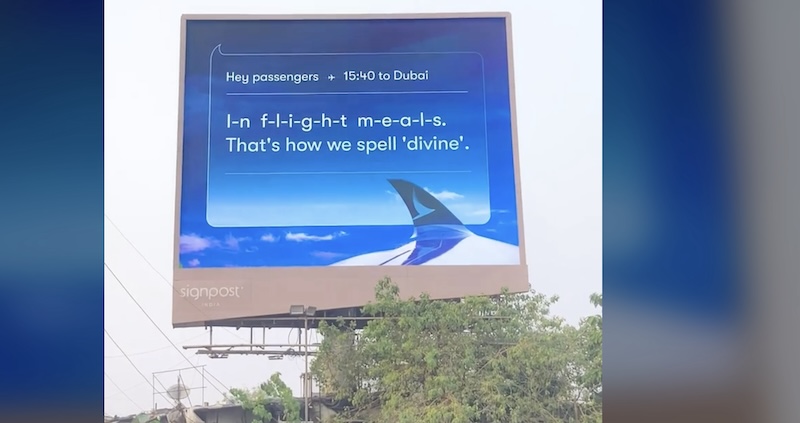
    Said Dasgupta on Linkedin: “It’s a digital out of home (DOOH) campaign. We successfully synchronized two Led screens on the Western Express Highway in Mumbai with real-time flight information. The content dynamically updates based on flight take-off timings, delivering highly relevant, time-sensitive messaging to commuters.”

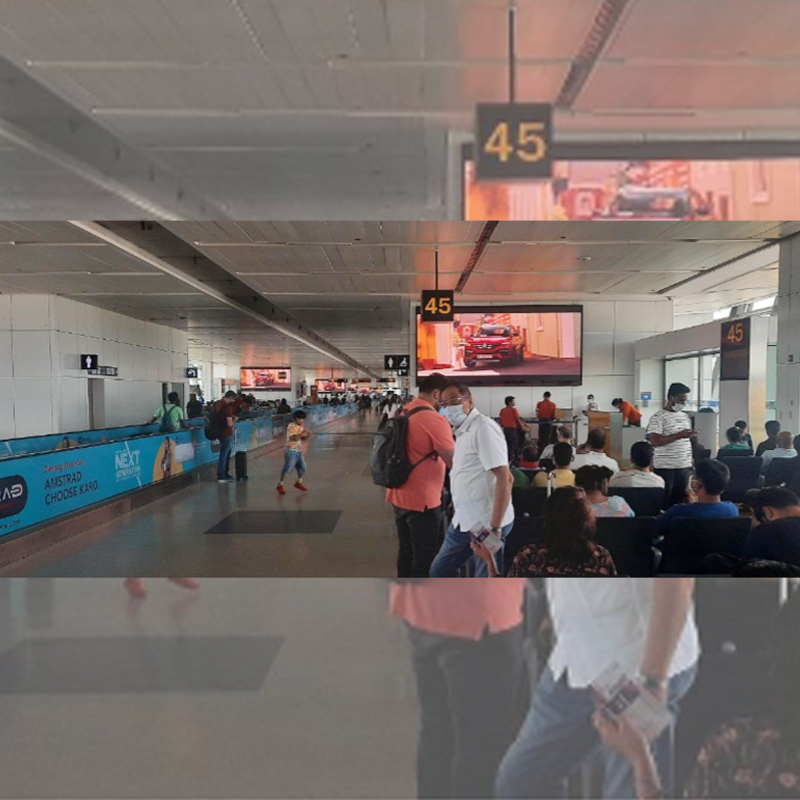
    According to him this (what he labels as the pinnacle in programmatic advertising) was executed at Delhi Terminal3 international airport too, where the agency managed to synchronise the outdoor display with the flight display information system (Fids).

    “Here the creative content is synchronised with Fids and updates based on flight departure gates, ensuring the messaging changes in real time according to live flight schedules,” he added.

    This real time displaying of flight data with OOH media  allowed the agency to take programmatic DOOH to the next level by helping it deliver contextually relevant and timely content to audiences both on the move and in high-traffic and high-engagement locations.

    Highlighted Dasgupta: “This innovative approach not only captures attention but ensures the messaging is always aligned with the audience’s immediate environment, creating a unique and powerful connection between the brand and its viewers. This campaign sets a new benchmark for real-time, data-driven OOH advertising, showcasing how advanced technology can revolutionise traditional out-of-home media, making it more dynamic, engaging, and personalised than ever before.”
     

  • Renault, Lemma & Yahoo launch a programmatic DOOH campaign

    Renault, Lemma & Yahoo launch a programmatic DOOH campaign

    Mumbai: Lemma, a leading programmatic digital out of home platform, recently enabled the Renault Kiger campaign at airports with Yahoo as the demand side platform.

    The campaign, planned by Omnicom media group, aims to raise awareness for the Renault Kiger model through targeted exposure on DOOH screens at India’s busiest airports.

    Lemma’s integration with Yahoo enabled OMG to buy and implement DOOH seamlessly as a part of their digital campaign, reaching millions of multi-city audiences through a single touch point with optimal budget utilisation.

    The campaign utilised audience insights, strategic ad rendering tools & ad placements to coincide with peak foot traffic to guarantee maximum exposure to the intended demographics.

    Commenting on the campaign, Lemme founder & CEO Gulab Patil said, “The benefit of programmatic DOOH is that it seamlessly integrates into the digital ecosystem, making it easier for marketers to implement programmatic DOOH via multiple integrated platforms. As the demand for new and emerging media grows, stakeholders must adapt quickly and provide agencies with solutions that help them execute omni-digital strategies effectively and efficiently through DSP integrations.

    He added, “This campaign executed in collaboration with Yahoo DSP demonstrates DOOH’s responsiveness in prioritising campaigns based on audience movement and other key variables, making every exposure accountable and delivering optimal reach & visibility.”

    “The Renault Kiger campaign’s extension from digital to DOOH demonstrates the importance of increasing audience reach by targeting specific ‘real world’ contexts, which is easily enabled by Yahoo’s omnichannel DSP,” said Yahoo global head of DOOH Stephanie Gutnik.

    “Airports offer the dwell time and audience attention that helped Renault Kiger’s content drive meaningful and measurable results,” he added.

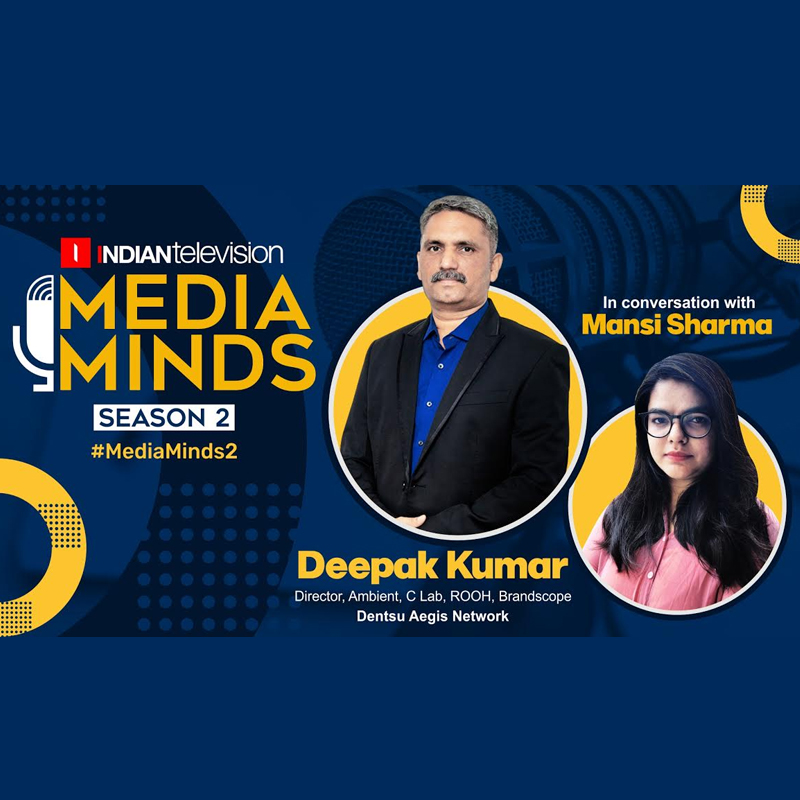
  • #MediaMinds2 | 90% automation for DOOH in just 2 years a big leap: Deepak Kumar

    #MediaMinds2 | 90% automation for DOOH in just 2 years a big leap: Deepak Kumar

    NEW DELHI: On the sixth episode of Media Minds season 2, an Indiantelevision.com initiative to discuss with marketing geniuses the current industry trends, their own experiences, and vision for the future,  director C Lab, Ambient,  Brandscope at DAN, Deepak Kumar talks about the interesting time he has spent building these verticals along with Haresh Nayak and also sheds light on the latest developments in the sector. 

    He insists that this is the best time to be in the advertising industry and the pause that Covid2019 brought has helped the agencies to reflect and effectively use it. 

    Kumar also discusses the tools and technologies that the agencies are using to help their clients achieve better results. “Brandscope has got a tool called Ozone which captures the digital sites in the country and has data analytics around it to tell where the site is and relevant consumer data of the area. C-Lab uses something called Star Metrics that helps identify the brand personality of the brand and the influencer to get the perfect fitment. We also look at a geographical heat map that shows the fan base of the star and match it with where the consumers of the clients are.” 

    He also shared that the vertical will soon be announcing a new technology to aid this. 


  • Lemma & Elevision together deliver first ever programmatic DOOH campaign in MENA

    Lemma & Elevision together deliver first ever programmatic DOOH campaign in MENA

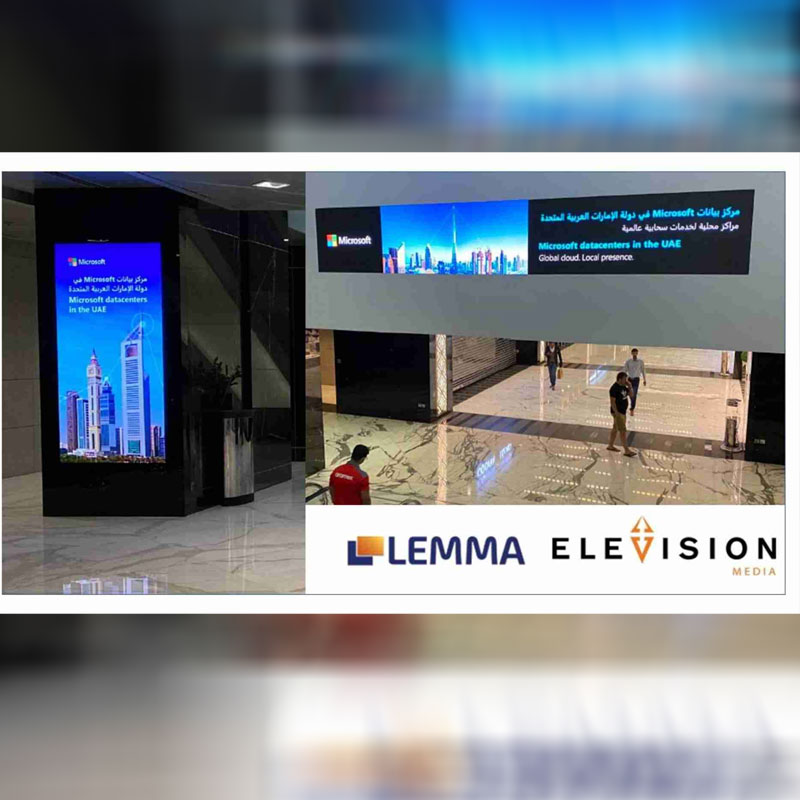
    NEW DELHI:  Lemma, pioneer in programmatic digital out of home, along with Elevision Media, a leading OOH firm in the UAE blazed a new trail, launching the first programmatic DOOH campaign in Dubai for Microsoft’s Azure’s “Global cloud. Local presence” brand message. 

    A strategic partnership that utilised Elevision’s premium network of large format digital screens & Lemma’s programmatic DOOH platform sought to increase relevant exposures through targeted impressions & dynamic ads rendered on 36 large format screens across Dubai’s premier business district – Dubai International Financial Centre.

    Using programmatic technology layered with data enabled targeting decision; the campaign attained higher OTS (opportunity to see) by delivering the ad at the right time to the right set of people. Exposures to ads took place only when the footfall volume was dense, thereby ensuring maximum relevant audience reach for the campaign. 

    Lemma  Founder & CEO Gulab Patil said, “Programmatic technology in OOH is certainly a game changer & advertisers & screen owners who move fast will experience the first mover advantage. This campaign with Microsoft, along with Elevision, displays the unison of data, technology and DOOH screens, highlighting the process efficiencies, optimized spends & improved ROI that can be obtained with a simple integration of Programmatic DOOH as a part of OOH solutions. As pioneers we’ve consistently delivered campaigns across many countries & are excited about our new beginnings in the Middle East. ”

    Elevision Media co-founder and chief operating officer Eamon Sallam said, “It was an exciting campaign to be a part of and we were thrilled to have a chance to deploy our programmatic platform for a world class client such as Microsoft.  Content is king in our business, and with the help of the team at Lemma we were able to deliver dynamic, contextual content to a premium audience in the DIFC. Lemma’s platform enabled our client to better segment their audience, optimise their budget and helped to deliver great results using Elevision’s assets.”    

  • ITW Consulting appoints Deep Drona as chief business officer

    ITW Consulting appoints Deep Drona as chief business officer

    MUMBAI: ITW Consulting, an affiliate of Global Sports Commerce specialising in crafting and executing multi-faceted brand management solutions across sports, entertainment and media, has appointed Deep Drona as chief business officer w.e.f. from October 2019.

    Drona will be responsible to streamlining and creating synergy amongst all verticals of ITW to provide 360 degree solutions to our clientele. Additionally, he will be developing and implementing new IP’s in the global market across sports and other business lines and assist ITW consulting management in achieving its next level milestones in National and International Markets .

    “As we further scale up our business in the market with new networks and offerings, we see great potential in bringing more synergy across different revenue functions of ITW. Deep’s incredible knowledge and experience will help us further streamline and provide 360 degree solutions to our clients. We have our expertise in sales, consulting, talent, events, content, sports media planning and buying, all under one entity. Further we would like ITW establish its credentials as a complete sports, media & entertainment organisation. We see Deep with his rich experience in sports & entertainment to add to our vision & meet our aggressive plan to establish ITW as a leader & forefront player in the market,” says Bhairav Shanth, co-founder & managing director, ITW Consulting Pvt Ltd.

    Drona said, “I am excited to take up this role and explore newer possibilities. I look forward to working with the team to build and execute impactful strategies as I embark on this exciting journey. ITW is unique in terms of the services they offer, they are in an end-to-end company with solutions for clients offering sales and marketing opportunities across sports media and entertainment along with being the largest sellers and consultants on cricket rights. Besides this ITW group companies ITW Global, DOOH, Playworx Entertainment, MediaWorx, Catalyst also offer a world of opportunities for collaboration to pitch 360 to clients.”

    With over two and half decades of experience, Drona joins ITW post a long and very successful stint at SPN India Pvt ltd. Earlier he was cluster head Sales of all Sony Sports channels and Movie channels MAX, MAX-2, FTA- Sony WAH. He has led the sales launch initiatives of the sports cluster before the buyout of Ten Sports and the music channel MIX and the movie channels Max 2 and WAH. Drona has under his leadership successfully delivered the first 10 seasons of IPL , ICC Events and other marquee Indian cricket bilateral tours of South Africa, England, Australia and others. FIFA, WORLD CUP’s, WWE, La Liga ,Champions League and SeriaA were some more properties that were helmed during his stint at SPN.

    Prior to SPN, he was with SABTNL where he set up sales operations and also launched successfully SAB TV. Nimbus Communication Pvt Ltd is where he began his TV career.

  • Signpost India Invites brands to come together for Save the Tiger campaign

    Signpost India Invites brands to come together for Save the Tiger campaign

    MUMBAI: Nagpur, the “Tiger Capital of India” is all set to don a refreshing new look by Signpost India, in active collaboration with Forest and Revenue Department of Maharashtra. The innovative media company with unmatched expertise traditional Out-of-Home (OOH) and digital Out-of-Home (DOOH) media is inviting all major brands across India to lend support for the “Save the Tiger” initiative by allowing them to put up advertisements across various bus shelter locations in Nagpur. 

    This campaign is set to kick-start from 27th July, 2018 and shall be free of cost (one location per brand) for the participating brands. It will be launched with a gala dinner in the presence of the Shri. Vikas Kharge, Secretary, Forest and Revenue Department of Maharashtra, and renowned playback singer Javed Ali at Palacio, Centre Point, Nagpur.

    The tiger isn’t merely a charismatic species or simply another wild animal living in some far away forest. It is an incomparable animal which plays a critical role in the health and diversity of an ecosystem. Unfortunately, if the tigers go extinct, the entire system would collapse and it will be a catastrophe for mankind.

    Fortunately, India is home to more than 70 per cent of the world’s tiger population and Nagpur is unofficially considered as the “Tiger Capital of India.” It is therefore unpardonable that at 23 deaths, Maharashtra stood second only to Madhya Pradesh (25) in tiger deaths nationwide during 2017. But luckily its tiger population is steady with 86 in Tadoba National Park, Nagpur – the prime reason why the campaign will go live in Nagpur.

    Through this campaign, brands will get an opportunity to extend their support towards protecting tigers and will be furthermore offered innovative messaging opportunity too. 

  • Ad & marketing growth may decelerate due to ‘online’ slowdown & no major spending: KPI

    MUMBAI: PQ Media’s Annual KPI benchmark sees slower growth in 2017 owing to political & economic anxieties. Political leaders and parties were replaced in several leading global markets (US, UK, Brazil, South Korea), while other incumbents faced increased pressure from opposing parties (France, Japan, Germany, India). And, various economic and political issues weighed down other major media economies, including South Africa, China and Russia.

    Global advertising & marketing revenues grew an estimated 4.9% in 2016 to $1.2 trillion, accelerating from 3.7% growth in 2015, but growth is poised to decelerate in 2017 as online media growth slows down rapidly due to brand marketers shifting budgets to mobile and other digital & alternative media, as per a closely watched annual KPI benchmark report by PQ Media. Revenues had grown owing to strong growth in mobile media, over-the-top (OTT) video, branded entertainment, content marketing and digital out-of-home (DOOH) advertising, as per the report.

    Global ad & marketing growth is poised to decelerate in 2017, due to the absence of major political and sports-related media spending, as well as the continued slowdown in online media growth. Seven of the 13 mobile media channels PQ Media tracks posted growth rates of faster than 40% in 2016, including mobile coupon marketing, mobile videogame advertising, mobile sampling & contests, mobile search and mobile video, as well as emerging smart technology marketing (or “acronym tech”) via the Internet of Things (IoT), artificial intelligence (AI) and augmented reality (AR), among others, according to PQ Media’s Global Advertising & Marketing Revenue Forecast 2016-20.

    Positive cyclical growth drivers in 2016, such as the Summer Olympics, increased political spending despite the Trump campaign’s unusual reliance on earned media coverage, and surging mobile media use worldwide, were offset in the second half of the year by increasingly volatile political climates and continued economic trepidation in the US and abroad.

    In addition, several key global markets in early 2017 were expecting to feel the impact of new Trump administration policies, some viewed as positive (Russia, China) and others perceived as negative (Mexico, Taiwan, China). PQ Media indicated US and global trends were buoyed by cyclical drivers last year, which may have masked a combination of potentially adverse secular developments that resurfaced in late 2016. Due to these turns in PEST variables, PQ Media said it recalibrated several ad & marketing growth rates for 4Q 2016 and 2017.

    “We have not seen such a strong combination of potential political and economic headwinds worldwide in many years,” said PQ Media president Patrick Quinn. “Despite this volatile mix, the advertising & marketing industry remains relatively stable due to several key growth drivers, including the need to engage more effectively with on-the-go consumers through experiential and influencer marketing; the shift to omnichannel media campaigns that employ the strengths of both traditional and digital media; and the quick adaptation of new technologies and strategies to engage target consumers for extended periods in the right venue, at the right time and in the ideal mindset.”

    The primary reason for decelerating growth in online media is that brand marketers are shifting budgets to media platforms and channels that demonstrate the consistent ability to execute on those critical objectives, Quinn added. For example, advertising on digital healthcare networks in captive doctors’ offices, engaging shoppers on smartphones with mobile beacons at retail, and using word-of-mouth ambassadors to develop social media conversations.

    While print media advertising has lost almost half its value over the past 20 years, due to the rise of digital media advertising & marketing, PQ Media believes a similar phenomenon has emerged in online media as brands rapidly move investments from internet to mobile media channels. Several internet channels have begun to post low single-digit, or even negative, growth rates after years of boasting double-digit gains annually, such as e-mail marketing and online search, according to the Global Advertising & Marketing Revenue Forecast 2016-20.

    Mobile was not the only digital & alternative media to post double-digit growth in 2016. Brands are seeking methods to interactive more efficiently with consumers, particularly as foot traffic at bricks-and-mortar retail outlets declines. OTT video, product placement, content marketing, DOOH media and word-of-mouth marketing have all consistently posted strong gains in recent years. Meanwhile, traditional direct marketing remained the largest of the 21 digital and traditional media platforms PQ Media tracks, surpassing $215 billion in 2016, with three other platforms exceeding $100 million, including live events, terrestrial broadcast television and traditional promotions.

    Brands are also moving to develop campaigns that utilize the fastest-growing of the 40 digital & alternative media channels PQ Media tracks, such as smart tech marketing, which is defined, sized and projected for the first time anywhere in the new PQ Media report. Smart tech marketing growth skyrocketed by over 1,000% in 2016, as select brands scrambled to embed messages in the AR game Pokemon Go!; to team up with IBM’s Watson to drive AI campaigns; and to develop IoT marketing messages. Other highlights from the report include:

    –Digital & alternative media expanded 12.5% to $399.4 billion, while traditional inched up 1.4% to $783.7 billion;

    –US remained the largest media market in 2016 at $461.7 billion, while no other market exceeded $100 billion;

    –Four of the top 20 media markets posted double-digit growth in 2016, led by India, as the US ranked 14th with overall growth of 4.7%;

    –Direct marketing was the largest of the 15 hybrid (traditional & digital media) silos tracked, with revenues of $230.4 billion worldwide;

    PQ Media estimates global advertising & marketing revenues will rise at a 5.1% CAGR in the 2016-20 period to $1.45 trillion, while the US market expands at a tamer 4.3% CAGR.