Tag: Donald Trump

  • A year after demonetisation: E-payment services emerged winners

    A year after demonetisation: E-payment services emerged winners

    MUMBAI: 8 November 2016 was a day that took the world by storm. While the world was stunned with Donald Trump’s victory as the new US president, Indian prime minister Narendra Modi decided to give the country a shocker of its own- demonetisation.

    An ordinary Tuesday evening saw all news channels and radio stations halt their programmes to listen to Modi, assuming it as another Mann Ki Baat. Instead, what followed was the shocking revelation that all the Rs 500 and Rs 1000 notes in the country will be invalid post midnight. As people scrambled to get rid of their notes and lined up for new ones, they were restricted to just Rs 10,000 a day and Rs 20,000 a week for the next 4 days (10-13 November).

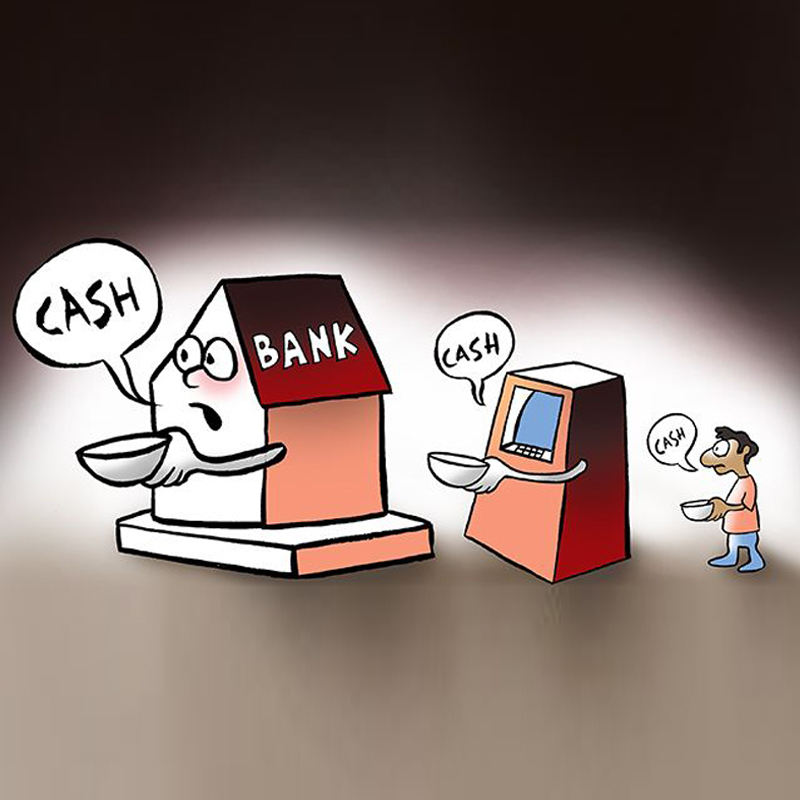
    A severe cash shortage in the hands of the public forced them to seek alternative modes of payment. Companies too weren’t spared. By the second week of demonitisation, cigarette sales had dropped by 30-40 per cent and cash on delivery (COD) orders fell by 30 per cent for e-commerce companies. Dabur India corrected its advertising spends for November by almost 50 per cent and many prominent brands decided to hold the rolling out of new campaigns for a few months. The festive October-December quarter, this year, ended up draining out over Rs 2000 crore.

    Amidst this confusion and loss, if there was a clear winner, it was the class of startups offering online wallets and digital payments. Brands offering online payment ‘cashed’ out the most from the prime minister’s move. It was time for overlooked and unrecognised players like Paytm, Freecharge, Mobikwik, Swiggy, Zomato, Foodpanda and others to make optimum utilisation of the situation. These brands had found people’s Achilles heel and created campaigns, tweaking their communication, to show people that you don’t need to worry about less cash.

    public://F1_20.jpg

    With this, digital payments became India’s new currency and debit card transactions surged to over 1 billion in January this year from 817 million last year.

    public://1_5.jpg

    Foodpanda India co-founder and CEO Saurabh Kochhar says that there were positive implications of demonetisation on its platform. “Before demonetisation, on a regular day, our platform would receive close to 70,000 orders. While that shot up by 40-50 per cent, around 92 per cent of payments were made online after demonetisation. As our order value ranges between Rs 400-500, consumers did not mind paying online,” he reveals.

    As consumers were forced to get acquainted with digital payment modes, they got comfortable with the idea of paying for their orders online. Brands ensured their technology backend could support the surge in payments so that no glitches would leave people harassed or with bad experiences.

    One of the biggest beneficiaries of demonetisation was online wallet app Paytm. Within only 12 days after the move was announced, Paytm witnessed over Rs 7 million transactions worth Rs 120 crore a day and Rs 5,000 crore worth of transactions in the month of January 2017.

    Even though India was cutting down on spending, online travel grew between November 2016 and June 2017. Indians spent $246.6 million in overseas travel-related payments in November 2016, up 581 per cent as compared to $36.2 million spent in the same month in 2015. Arrivals from India to Australia since the demonetisation period (Nov 2016 – Aug 2017) grew at an average of 15 per cent.

    A year on, are people still transacting online at the same pace or was it just the momentary fluster? Kochhar optimistically says, “As valid currency got into a normalised flow in the country, there was an increase in COD orders. However, we have seen more uptake in users paying online for their orders. It is more about the change in the mindset of the users and demonetisation pushed them in that direction for sure.”

    While demonetisation opened people’s eyes to digital avenues, adex was briefly hampered. Overall brand revenues fell and there was a clear dip in sale, but all of that is now in the past. The advertising and marketing industry revved up but was assured that India’s suspicious view towards digital had surely been changed.
     

  • FCC gets Indian origin Ajit Pai as its chairman

    FCC gets Indian origin Ajit Pai as its chairman

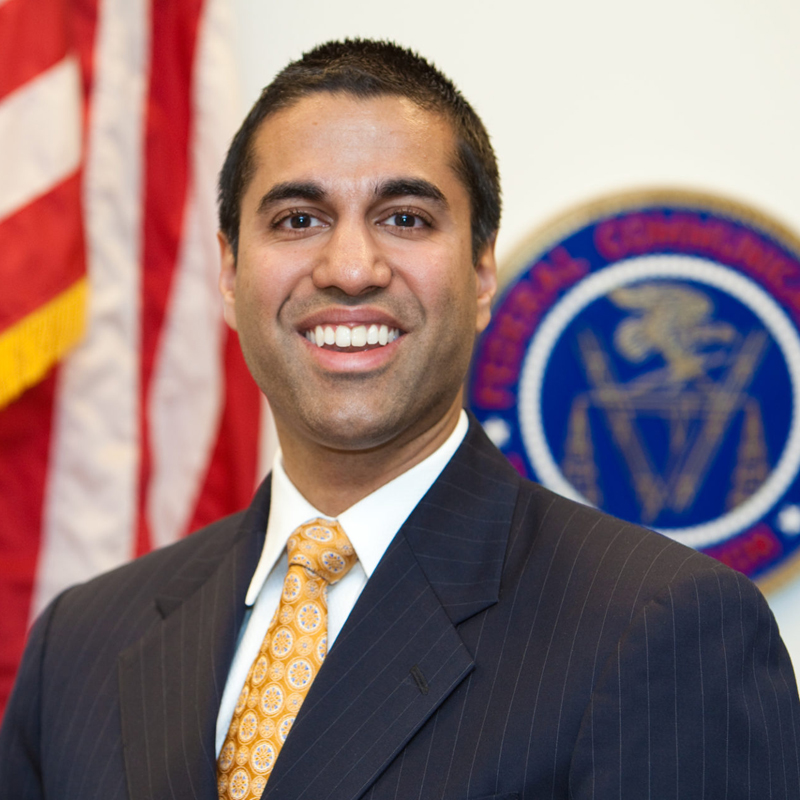
    MUMBAI: Indians are familiar with Ajit Pai who addressed Ficci Frames as a keynote speaker just three years ago. But Pai is the point man designated by US president Donald Trump as the 34th chairman of the Federal Communications Commission (FCC) who will be drawing up communications policy in one of the most highly networked and communications heavy nations on earth.

    Pai, a senior republican on the FCC, was appointed as a commissioner in 2012 by the then President Barack Obama and later confirmed by the senate. He replaces outgoing chairman Tom Wheeler.

    “I look forward to working with the new administration, my colleagues at the Commission, members of Congress and the American public to bring the benefits of the digital age to all Americans,” Pai said in a statement.

    Ajit Pai had credited his family for his successful rise as communications regulator during his Ficci Frames speech: Said he: “I was born and brought up in the United States, but my family’s roots are here in India. My mother grew up in Bangalore, and my father was raised in Hyderabad. In 1971, they came to the United States with just a radio and ten dollars in their pockets. Now, forty-three years later, here I am, in the country of my forefathers, speaking to you as the first Indian-American to serve on the FCC. The credit for this goes to my parents, who, like many immigrants, sacrificed to give me opportunities not available to them as children. It goes to my grandparents, who instilled in my parents the value of hard work and the vision to dream big.”

    According to the FCC website Pai’s rules on communication regulations are as follows:

    * Consumers benefit most from competition, not preemptive regulation. Free markets have delivered more value to American consumers than highly regulated ones.

    * No regulatory system should indulge arbitrage; regulators should be skeptical of pleas to regulate rivals, dispense favors, or otherwise afford special treatment.

    * Particularly given how rapidly the communications sector is changing, the FCC should do everything it can to ensure that its rules reflect the realities of the current marketplace and basic principles of economics.

    * As a creature of Congress, the FCC must respect the law as set forth by the legislature.

    * The FCC is at its best when it proceeds on the basis of consensus; good communications policy knows no partisan affiliation.

    Pai as the commissioner had proposed a:

    * Comprehensive plan to promote broadband deployment to all Americans. The federal government must make it easier to for broadband providers to retire increasingly obsolete copper lines in favor of next-generation technologies like fiber.”

    • It must enable rural residents to have the same choice for stand-alone broadband typically found in cities.

    • It must create a roadmap for state and local governments so that companies that want to compete in the broadband market don’t have to jump through unnecessary regulatory hoops in order to lay fiber to consumers.

    • It must promote common-sense policies like “Dig Once” and reform pole attachment rules to reduce the costs of building digital networks.

    • It must streamline the process for deploying wireless infrastructure, from big towers to small cells.

    • It must free up more licensed spectrum for use by wireless carriers and more unlicensed spectrum for things like Wi-Fi.

    • And it must preserve Internet freedom here and abroad, so that the online world can flourish free from heavy-handed government intervention.

    Additionally, Pai ai was the first member of the FCC in over two decades to call for revitalizing the AM radio band; the basic reforms he proposed were adopted in 2015. He also urged the FCC to create a task force to study the “Internet Protocol Transition” and report on obsolete rules that could be repealed; that task force was created.

    He is likely to undo the net neutrality regime that the FCC had been pursuing under outgoing chairman Wheeler.

  • FCC gets Indian origin Ajit Pai as its chairman

    FCC gets Indian origin Ajit Pai as its chairman

    MUMBAI: Indians are familiar with Ajit Pai who addressed Ficci Frames as a keynote speaker just three years ago. But Pai is the point man designated by US president Donald Trump as the 34th chairman of the Federal Communications Commission (FCC) who will be drawing up communications policy in one of the most highly networked and communications heavy nations on earth.

    Pai, a senior republican on the FCC, was appointed as a commissioner in 2012 by the then President Barack Obama and later confirmed by the senate. He replaces outgoing chairman Tom Wheeler.

    “I look forward to working with the new administration, my colleagues at the Commission, members of Congress and the American public to bring the benefits of the digital age to all Americans,” Pai said in a statement.

    Ajit Pai had credited his family for his successful rise as communications regulator during his Ficci Frames speech: Said he: “I was born and brought up in the United States, but my family’s roots are here in India. My mother grew up in Bangalore, and my father was raised in Hyderabad. In 1971, they came to the United States with just a radio and ten dollars in their pockets. Now, forty-three years later, here I am, in the country of my forefathers, speaking to you as the first Indian-American to serve on the FCC. The credit for this goes to my parents, who, like many immigrants, sacrificed to give me opportunities not available to them as children. It goes to my grandparents, who instilled in my parents the value of hard work and the vision to dream big.”

    According to the FCC website Pai’s rules on communication regulations are as follows:

    * Consumers benefit most from competition, not preemptive regulation. Free markets have delivered more value to American consumers than highly regulated ones.

    * No regulatory system should indulge arbitrage; regulators should be skeptical of pleas to regulate rivals, dispense favors, or otherwise afford special treatment.

    * Particularly given how rapidly the communications sector is changing, the FCC should do everything it can to ensure that its rules reflect the realities of the current marketplace and basic principles of economics.

    * As a creature of Congress, the FCC must respect the law as set forth by the legislature.

    * The FCC is at its best when it proceeds on the basis of consensus; good communications policy knows no partisan affiliation.

    Pai as the commissioner had proposed a:

    * Comprehensive plan to promote broadband deployment to all Americans. The federal government must make it easier to for broadband providers to retire increasingly obsolete copper lines in favor of next-generation technologies like fiber.”

    • It must enable rural residents to have the same choice for stand-alone broadband typically found in cities.

    • It must create a roadmap for state and local governments so that companies that want to compete in the broadband market don’t have to jump through unnecessary regulatory hoops in order to lay fiber to consumers.

    • It must promote common-sense policies like “Dig Once” and reform pole attachment rules to reduce the costs of building digital networks.

    • It must streamline the process for deploying wireless infrastructure, from big towers to small cells.

    • It must free up more licensed spectrum for use by wireless carriers and more unlicensed spectrum for things like Wi-Fi.

    • And it must preserve Internet freedom here and abroad, so that the online world can flourish free from heavy-handed government intervention.

    Additionally, Pai ai was the first member of the FCC in over two decades to call for revitalizing the AM radio band; the basic reforms he proposed were adopted in 2015. He also urged the FCC to create a task force to study the “Internet Protocol Transition” and report on obsolete rules that could be repealed; that task force was created.

    He is likely to undo the net neutrality regime that the FCC had been pursuing under outgoing chairman Wheeler.

  • India, US should resolve IPR issues at earliest: IACC

    India, US should resolve IPR issues at earliest: IACC

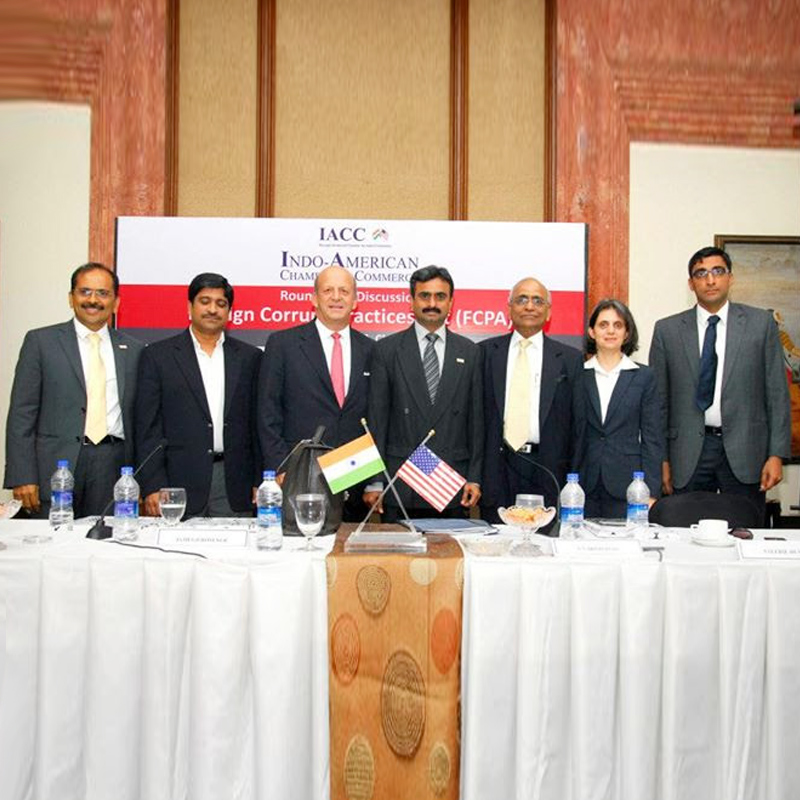
    NEW DELHI: India and the United States should exchange a bouquet of “wish lists” includig IPR issues aimed at fast tracking resolution of bilateral issues that impede accelerated flow of investment between the two countries, Indo American Chamber of Commerce national president N VSrinivasan said today.

    Broad contours of the wish lists should include amicable settlement of IPR issues leading to earliest conclusion of the Bilateral Investment Treaty (BIT), Totalization Agreement, a sound legal framework to expeditiously settle disputes, settlement of issues emanating from non-tariff measures and importantly a fast solution to nagging visa problems.

    He said that there was a growing realization among the US corporations that India, lying mid-way between West and the East, has the potential to emerge as a Gateway for serving both markets. Many corporations are seriously discussing these ideas in their board room meetings, while others are taking concrete steps towards investing in India with a renewed interest. “We have to capitalize on the situation by removing impediments to flow of investments and take concrete step toease doing business in India to leverage our position as an attractive investment destination,” according to Srinivasan.

    The US President – Elect Donald Trump is in the process of recalibrating the policies to deal pragmatically with each country by their level of importance and economic engagement. Against this backdrop, India’s recent policy initiatives like Make in India, Digital India, Smart city project, high budget investments in infrastructure etc. where critical technical and financial investments are needed, would stand to benefit.

    Trump has has made it very clear that he is averse to regional trade agreements like NAFTA, emerging Trans Pacific Partnership (TPP) etc. which according to him have been militated against the US interests.

    Flagging the contentious issues that are coming up in the bilateral economic negotiations, such as tardy intellectual property rights (IPR) protection and their enforcement, retrospective tax regime in India, insistence on deciding economic disputes under Indian laws etc, the IACC President said these issues can be settled in a spirit of give and take.

    There has been a proliferation of Indian companies and start-ups in the US, mostly in the ICT sector. These are set up mostly by people who migrated to the US at various stages, particularly during the dotcoms days. Their business enterprises are providing gainful employment to many US citizens. Most of the IT and technology platforms in India, such as mobile telephony, credit/debit card networks, climate tracking equipment, heavy duty computers, drones, sensors etc are working on equipment mostly imported from the US.

    “We are happy and privileged to have two administrations in the US and India, which are pro-business and believe in creating an environment for seamless business activities. Donald Trump’s significant business interests in India in various sectors and his statement of intent to forge a strong business relationship are pointers to an exciting bilateral business relationship”.

  • India, US should resolve IPR issues at earliest: IACC

    India, US should resolve IPR issues at earliest: IACC

    NEW DELHI: India and the United States should exchange a bouquet of “wish lists” includig IPR issues aimed at fast tracking resolution of bilateral issues that impede accelerated flow of investment between the two countries, Indo American Chamber of Commerce national president N VSrinivasan said today.

    Broad contours of the wish lists should include amicable settlement of IPR issues leading to earliest conclusion of the Bilateral Investment Treaty (BIT), Totalization Agreement, a sound legal framework to expeditiously settle disputes, settlement of issues emanating from non-tariff measures and importantly a fast solution to nagging visa problems.

    He said that there was a growing realization among the US corporations that India, lying mid-way between West and the East, has the potential to emerge as a Gateway for serving both markets. Many corporations are seriously discussing these ideas in their board room meetings, while others are taking concrete steps towards investing in India with a renewed interest. “We have to capitalize on the situation by removing impediments to flow of investments and take concrete step toease doing business in India to leverage our position as an attractive investment destination,” according to Srinivasan.

    The US President – Elect Donald Trump is in the process of recalibrating the policies to deal pragmatically with each country by their level of importance and economic engagement. Against this backdrop, India’s recent policy initiatives like Make in India, Digital India, Smart city project, high budget investments in infrastructure etc. where critical technical and financial investments are needed, would stand to benefit.

    Trump has has made it very clear that he is averse to regional trade agreements like NAFTA, emerging Trans Pacific Partnership (TPP) etc. which according to him have been militated against the US interests.

    Flagging the contentious issues that are coming up in the bilateral economic negotiations, such as tardy intellectual property rights (IPR) protection and their enforcement, retrospective tax regime in India, insistence on deciding economic disputes under Indian laws etc, the IACC President said these issues can be settled in a spirit of give and take.

    There has been a proliferation of Indian companies and start-ups in the US, mostly in the ICT sector. These are set up mostly by people who migrated to the US at various stages, particularly during the dotcoms days. Their business enterprises are providing gainful employment to many US citizens. Most of the IT and technology platforms in India, such as mobile telephony, credit/debit card networks, climate tracking equipment, heavy duty computers, drones, sensors etc are working on equipment mostly imported from the US.

    “We are happy and privileged to have two administrations in the US and India, which are pro-business and believe in creating an environment for seamless business activities. Donald Trump’s significant business interests in India in various sectors and his statement of intent to forge a strong business relationship are pointers to an exciting bilateral business relationship”.

  • Star World’s ‘Jimmy Kimmel Live’ show to host Donald Trump & Bernie Sanders

    Star World’s ‘Jimmy Kimmel Live’ show to host Donald Trump & Bernie Sanders

    MUMBAI: Jimmy Kimmel Live remains the go-to late-night destination for Presidential candidates. Next week, presumptive Republican nominee Donald Trump and United States Senator and candidate for the democratic nomination Bernie Sanders will sit down with Jimmy to discuss their respective campaigns.

    Donald Trump will make his third appearance on Jimmy Kimmel Live and his second as a presidential candidate. Senator Sanders will also make his third appearance, having most recently sat down with Jimmy Kimmel in March. 

    The episodes will be aired on 27 May and 30 May at 11 pm on Star World and Star World HD.

  • Star World’s ‘Jimmy Kimmel Live’ show to host Donald Trump & Bernie Sanders

    Star World’s ‘Jimmy Kimmel Live’ show to host Donald Trump & Bernie Sanders

    MUMBAI: Jimmy Kimmel Live remains the go-to late-night destination for Presidential candidates. Next week, presumptive Republican nominee Donald Trump and United States Senator and candidate for the democratic nomination Bernie Sanders will sit down with Jimmy to discuss their respective campaigns.

    Donald Trump will make his third appearance on Jimmy Kimmel Live and his second as a presidential candidate. Senator Sanders will also make his third appearance, having most recently sat down with Jimmy Kimmel in March. 

    The episodes will be aired on 27 May and 30 May at 11 pm on Star World and Star World HD.

  • Donald Trump to host ‘Saturday Night Live’ with Sia

    Donald Trump to host ‘Saturday Night Live’ with Sia

    MUMBAI: US Presidential hopeful Donald Trump will return to studio 8H as host for Saturday Night Live (SNL) on 7 November on NBC.


    Trump previously hosted SNL on 3 April, 2004.


    Returning for her second musical guest appearance, Sia’s forthcoming album This Is Acting features her new single Alive. Her last album, the gold certified 1000 Forms Of Fear reached Number One on the charts and featured four-time Grammy nominated singleChandelier


    Saturday Night Live is produced in association with Broadway Video. The creator and executive producer is Lorne Michaels.

  • Bulldog to bring ‘The Apprentice’ & ‘Space Race’ to India in 2016

    Bulldog to bring ‘The Apprentice’ & ‘Space Race’ to India in 2016

    MUMBAI: After India’s Next Top Model, Bulldog Media and Entertainment is gearing up to bring two more international formats to India.


    Even as Donald Trump is standing for the next US Presidential elections in 2016, the television show synonymous with him – The Apprentice – will make its India debut as Bulldog Media and Entertainment will be bringing the Indian adaptation of the game show. Additionally, the company has also acquired the format rights of NBC’s ambitious series – Space Race.


    Speaking to Indiantelevision.com, Bulldog Media and Entertainment co-founder and executive producer Akash Sharma said, “We are very excited about the new reality shows that we will launch soon. The Apprentice is an American reality game show that has also been launched in several countries; it’s a very successful show in America.”


    Sharma further added, “Our plan is to expand ourselves in different genres. For the next 18 months we will work on bringing quality content and international formats to India. We are also looking at bringing back People’s Choice Award.


    The Apprentice is an American reality game show hosted by Trump, which has been created by American television producer Mark Burnett. The format has been licensed across the world in Africa, Australia, Brazil, Germany, United Kingdom, Malaysia and Russia amongst others. 


    On the other hand, Space Race is an unscripted series produced by NBC along with Richard Branson’s Virgin Galactic and Burnett. It is an elimination competition series where everyday people compete for the ultimate prize – a trip for the winner into space on Virgin Galactic’s SpaceShipTwo for a life-changing experience few people have ever enjoyed, all captured on camera. However, NBC was said to have been seriously assessing the probability of launching the show in the light of Virgin Galactic’s SpaceShipTwo spacecraft crash in October 2014, which killed one pilot and seriously injured the other.


    Talking about this unique show, Sharma says, “Space Race will be the most aspirational show ever on Indian television. It basically takes contestants from different walk of life to space. Putting them into physical and mental challenges will give them chance to go in space in the Virgin Galactic spaceship. The show will be produced by Mark Burnett and Virgin Galactic. We are waiting for the official clearance from Virgin Galactic.”


    “We will have very intense challenges in store for contestants and the winner will get a chance to board space port America in Virgin Galactic space port. In the finale they will have a chance to represent India in space,” he adds.    


    Bulldog Media’s bid to bring Space Race to India will indeed be worthy to watch.

  • You’re Hired: ‘The Celebrity Apprentice’ tells Arnold Schwarzenegger

    You’re Hired: ‘The Celebrity Apprentice’ tells Arnold Schwarzenegger

    MUMBAI: Twice-elected California governor and international movie star Arnold Schwarzenegger has been named the new host of NBC’s The Celebrity Apprentice, which will return to the network for the 2016-17 season.


    Schwarzenegger steps into the shoes of erstwhile host Donald Trump, who, in his role as host of the seven seasons ofThe Celebrity Apprentice, helped raise more than $15 million for charity.


    Schwarzenegger served two terms as governor of California, managing more than 300,000 state employees and a state budget in the hundreds of billions. He has successfully invested in both real estate and sports franchises, and is known to millions globally for his starring role in the Terminator film franchise. His films, over a six-decade career, have grossed billions of dollars in worldwide box office.


    The Apprentice franchise is one of the most successful reality formats in television history. In The Celebrity Apprentice, business-savvy celebrity contestants work in teams and are asked to perform various tasks and win challenges, all the while employing a business model that promotes teamwork and, hopefully, ends with a financially successful outcome – all for a worthy charity. Contestants are subjected to long hours, grueling deadlines, intellectual challenges, personality clashes and intense scrutiny. Each task will end in the Boardroom, where contestants must account for their actions or risk being “fired” by the host until one remains.


    Previous Celebrity Apprentice winners include Joan Rivers, Piers Morgan, Bret Michaels, Trace Adkins, Arsenio Hall, John Rich and Leeza Gibbons.


    The Celebrity Apprentice is produced by United Artists Media Group. Mark Burnett, Schwarzenegger, Page Feldman and Eric Van Wagenen are executive producers.