Tag: Dolby

  • Animated Dolby film ‘Silent’ wins two Daytime Emmy Awards

    Animated Dolby film ‘Silent’ wins two Daytime Emmy Awards

    MUMBAI: Dolby Laboratories’ short animated film Silent won two Daytime Emmy Awards at the National Academy of Television Arts and Sciences’ Daytime Creative Arts Emmys ceremony.


    Created in conjunction with Moonbot Studios and CAA Marketing, a division of entertainment and sports agency Creative Artists Agency (CAA), Silent represents the evolution of film technology from the silent-film era to the present day. The three-minute film celebrates how storytellers, inventors, and technology work together to create magic in the cinema.


    Silent won a Daytime Creative Arts Emmy in Outstanding Special Class Animated Program (executive producers: William Joyce and Vince Voron; producers: Lampton Enochs, Trish Farnsworth-Smith, and Angus McGilpin) and Outstanding Directing in an Animated Program (directors: Limbert Fabian and Brandon Oldenburg)


    “We’re elated that Silent was recognized so richly by the Academy, and we celebrate this achievement with our partners at Moonbot Studios and CAA Marketing,” said Dolby Laboratories vice president and executive creative director Vince Voron.


    Silent is an animated short film featuring Morris Lessmore from Moonbot Studios’ 2012 Academy Award winning short film The Fantastic Flying Books of Mr. Morris Lessmore. In Silent, Lessmore and his fellow street performer, The Kid, dream of bringing their picture-and-sound show to life. When they discover a magical contraption inside an old theatre, they embark on a cinematic adventure of sight and sound, traveling through movie history to find the audience they have always wanted.


    The two Daytime Creative Arts Emmy Award wins mark a first in the creative category for Dolby.

  • Dolby declares improved q-o-q results for Q2-2015

    Dolby declares improved q-o-q results for Q2-2015

    BENGALURU:  Audio equipment maker Dolby Laboratories Inc (Dolby) reported a 16 per cent quarter on quarter (q-o-q) growth in revenue for the quarter ended 27 March, 2015 (Q2-2015, current quarter) to US$ 271.95 million as compared to the US$ 234.24 million reported for the immediate trailing quarter. However, y-o-y, revenue fell 2 per cent from the US$ 278.59 million reported for Q2-2015. The company says that total revenue for Q2-2014 included a back payment settlement of US$ 24.7 million, which did not repeat in Q2- 2015.


    “We had another solid quarter driven by growth in our broadcast business,” said Dolby Laboratories president and CEO Kevin Yeaman. “In addition, we saw significant progress with our new initiatives as AMC Theatres and Disney announced their support for Dolby Cinema and Vizio announced the first Dolby Vision TV.”


    Revenue


    Three streams add to the company’s revenue – Licensing, products and services, with licensing contributing the lion’s share. Q-o-q licensing revenue increased 4 per cent to US$ 243.33 million in Q2-2015 as compared to the US$ 216.6 million in Q1-2015, but was 6 percent less than the US$ 258.62 million reported for Q2-2015.


    A major chunk of licensing revenue comes from broadcast licensing (42 per cent in Q2-2015, 41 per cent in Q1-2015 and 46 per cent in Q2-2014). PC licensing, Consumer Electronics licensing, mobile licensing and other licensing are the other contributors to licensing revenue. Mobile licensing in Q2-2014 contributed just 11 per cent to licensing revenue, as compared to 16 per cent in the previous quarter and the corresponding year ago quarter.


    Products revenue for Q2-2015 was US$ 22.99 million, for Q1-2015 it was US$ 13.26 million and for Q2-2014 it was 14.56 million. Services revenue for Q2-2015 was US$ 5.63 million, for Q1-2015, it was US$ 4.38 million and for Q2-2014, it was US$ 5.41 million.


    Income


    Q2-2015 GAAP net income was US$ 58.0 million, or US$ 0.56 per diluted share, compared to US$ 75.9 million, or US$ 0.73 per diluted share, for Q2-2014. On a non-GAAP basis, Q2-2015 net income was US$ 74.9 million, or US$ 0.72 per diluted share, compared to US$ 91.7 million, or US$ 0.88 per diluted share, for Q2-2014.


    Dividend


    Dolby today announced a cash dividend of US$ 0.10 per share of Class A and Class B common stock, payable on May 12, 2015, to stockholders of record as of the close of business on May 4, 2015.


    Company forecast


    For Q3-2015, Dolby estimates that total revenue will range from US$230 million to US$240 million. Gross margin percentages are projected to range between approximately 89 percent and 90 percent on a GAAP basis and between 90 percent and 91 percent on a non-GAAP basis.


    For FY-2015, Dolby anticipates that total revenue will range from US$ 970 million to US$ 1 billion.


  • Getting Dolby 5.1 audio into Anil Kapoor’s ’24’

    Getting Dolby 5.1 audio into Anil Kapoor’s ’24’

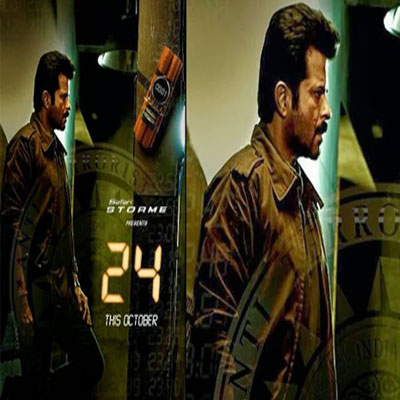
    While the Indian television industry is no stranger to 5.1 Dolby surround sound, the recently concluded season of Anil Kapoor’s 24 on Colors garnered much appreciation for skilful use of this technology, while setting a benchmark for television shows to follow. 

    As most readers would be aware, Dolby  5.1 (five point one) surround sound is the common name for six channel surround sound multichannel audio systems, using five full bandwidth channels and one low-frequency effects channel (point one). Dolby Digital, Dolby Pro Logic II and DTS  are all common 5.1 systems, and use the same speaker channels and configuration, having a front left and right, a centre channel, two surround channels and a subwoofer.

    I wanted the experience to be exactly the same as when viewers spend Rs 100-200 on a ticket to watch a film in a cinema hall, says Abhinay Deo

    So how was a technology commonly associated with commercial cinema incorporated to create a more immersive experience for viewers within the comfort of their homes?

    Says Dolby India country manager Pankaj Kedia: “We started the dialogue with 24 quite early when everything was in the pre-production stage. We supported and worked closely with them right through the entire production and post-production. I think 24 is unique because the promise that we have been talking about, the possibilities we have been talking about for 5.1 and HD, 24 has made it all possible. Because consumers watch the content; they are not watching a channel or a particular operator. I think 24 as content is a new genre from an Indian broadcast perspective, and it has taken this experience to an altogether different level, which has never been possible before.”

    For 24 director Abhinay Deo, sound was one of the stars of 24. “Sound for me is a very important aspect. A film or emotion cannot be complete without the right sound. We started with the show, and looked at it both as a television product and as a feature film. I wanted the experience to be exactly the same as when you spend Rs 100-200 on a ticket to watch a film in a cinema hall,” says Deo.

    “I didn’t care about what it is that television viewers are used to, and I was warned about it time and again… ‘This won’t work in television… we are not used to this… and so on…’ But we went out with what we believed in. Forget about who is used to it and who isn’t, who used it and who didn’t. We gave them the experience we feel they should have had,” he adds.

    With only LCDs, LEDs and Plasma TVs supporting HD, how did the team ensure that HD viewers with home theatre systems and those without and those with plain vanillas TVs with normal stereo sound have an equally enjoyable experience?

    Replies Deo: “That was the biggest challenge in sound for us. We did a lot of pre-production. We didn’t do anything majorly radical in either of these parts. We did a lot of R&D and made a standard so that people on both sides of the fence could enjoy that experience. We kept the volume at a level it should be at; not more, not less. And that is great because of the Dolby experience.”

    Coming to the technology itself, sound designer for 24 Nimish Chheda goes on to explain the nitty-gritty. “We gave it a cinematic approach, right from the start; our studio had speakers behind a perforated screen equipped with a digital projector, making you feel like you are sitting in a theatre,” he says. “We had layers of all the elements – dialogues, sound effects, and music. We mixed it, keeping in mind what was important for a particular shot. We highlighted what was important in every shot and moved onto the next shot and thus, ensuring a smooth flow.”

    To keep the sound as ‘real’ as possible, ambiences were used more than sound effects. For the purpose, the team scouted the city at particular times, recording four-channel or ‘quad’ sounds. Usually in 5.1 surround sound, dialogues are always in the centre speaker and sound effects are in the left and right speakers, while ambiences are in the front left and right and the rear left and right channels. Hence, a viewer seated in the centre gets a surround sound experience.

    To keep the sound as _real_ as possible, ambiences were used more than sound effects, says Nimish Chheda

    Recording location sound proved to be an uphill task throughout as each episode took at least seven to eight days to shoot. For example for episode No 3 which is supposed to happen between 2 am and 3 am. Since the filming of that specific episode was done over eight days, ambient sound kept changing every night. 

    Unlike the norm on TV wherein the camera audio with its two channels is used, for 24, the team opted for eight dedicated channels. Specific microphones were assigned to Kapoor as the main protagonist Jai Singh Rathod, and film sync sound set up was used for the rest of the cast.

    Approximately 60 per cent of the filming was outdoors as compared to a general TV series; and Deo was extremely rigid about filming locales with natural environments. “Hence, we had to be extremely particular about ambient sound interference like a lorry honking or a dog barking when sound was being recorded,” says Cheddha.

    Another requirement that they had to keep in mind was that of the title sponsor Tata Motors. There was a commitment from the team to ensure that each and every Tata car sounds as real and distinct as it does on the streets. Hence, all these sounds were recorded on location. 

    The five-member strong post-production team comprised a dubbing engineer, foley artist, foley recordist, sound editor, and the sound designer, who also served as the mixing engineer for the entire series. The background score was done by two music professionals – Mark and Gaurav – while a team of post-production coordinators made sure the entire process between sound and video was smooth.

    No particular servers were used for audio though there were dedicated two 2TBa Enterprise Edition internal drives (10,000 rpm) for the purpose. This apart, they were backed up on two 2 TB drives each; thus three back-ups happened simultaneously at the end of each day.
    Standard Avid and Protools software were used for designing, clean-ups, mixing and so on.

    According to Pankaj Kedia, the biggest challenge for Dolby during the making of 24 was to preserve the content creator_s intent

    First the dialogues recorded on the eight track location sound recorder (Deva), were cleaned up and in unfortunate cases, where the ambient levels were too high, they were marked for dubbing. In the episode which had Richa Chaddha and Anil Kapoor on a construction site, despite all efforts to do live noise reduction of ambient sound; the team had to dub almost 80 per cent of it.

    Then, the location ambience tracks were listened too very closely…as well as the sound design and sound effects. In the sound design process, we used certain sounds which were generated using Kyma Pacarana. The rest of the sound effects were used from the library or recorded live to ensure that the sound is as real as possible. The music tracks from the music composers were then layered into the session, and making it ready for the 5.1 Dolby mix. 70 per cent of the background score used in the Indian series was that used in the US, and the Indian music composers had to work with the two stereo tracks that the music came down in to add their elements and nuances.

    The challenge was to make sure all the elements worked well in TV 5.1 for which the team did a lot of R&D. All the tracks were mixed as per the Dolby Mix Level of -23dBfs.

    General television shows comprise of just dialogue and music; the challenge here was to keep the overall mix i.e. the sound effects, music and dialogue proportionately loud enough, yet crystal clear when listened to separately, giving you a complete cinematic feel out of your general tv speakers.

    It may come as a shock but on an average, 70 hours were spent on post-production per episode to deliver 42 minutes of content. Of these, 30 hours were devoted to cleaning up and leveling of dialogues, 25 hours to sound designing and the remaining 15 hours to the final mix. “Time was always a challenge, we had to give unmix’s, Dolby 5.1 mix & a stereo mix version for every episode to the channel for their Promos and the HD and SD platforms respectively” says Cheddha. “But it was fun, which generally TV is not.”

    The dogged focus on getting it right ensured that Colors’ technical and quality control team gave it the go ahead for almost every episode. The only exception was the first in the series, which had a problem that got clearance after corrections from the production house. 

    The show is a refreshing change to Indian television, believes Resul Pookutty
    Deo points that the sound and technical standards used in the original US version of 24 became the gold standard for Dolby audio in TV shows worldwide. And the desi version too toed the same line. “I think the US 24 in its time, reinvented TV there, which is what our intent was as well,” he says. “Hence, we were clear when we said that whatever they had, we must have. There is standardisation in terms of treatment of sound, as Dolby did with the original. But having said that, Los Angeles and Mumbai are totally different and the way they sound is totally different. We needed to hear Mumbai at a particular hour. In that sense, the original US version is pretty clean whereas ours is noisy and that is great.”

    According to Kedia, the biggest challenge for Dolby during the making of 24 was to preserve the content creator’s intent. “We wanted to deliver the content exactly in the same way it was meant to be and not in any different way. The bullet sound, the explosion and the whisper had to all sound exactly the same that they’d been designed to,” he says.

    That’s a sound way of looking at things. And it worked if one goes by the kudos the entire sound team has been getting. Hear out what Oscar winning sound designer Resul Pookutty has to say.  “I haven’t seen it much on TV; I was supposed to do the sound for the same. But my schedules didn’t allow me to work on it, what I’m hearing is a lot of good things about the show, which in a way is a refreshing change to Indian television.”

    Indeed. And may the tribe pushing the envelope on sound in Indian television increase.

  • Puja festival – A great platform for brands to engage

    Puja festival – A great platform for brands to engage

    MUMBAI: Many brands are planning to use the puja festival at various pandals to engage with the consumers. The product range can be as wide as possible. Starting from soya bean nuggets to aerated products brands can make use of this huge platform as a great place for engaging and delivering experiences to the worshippers who will throng in huge numbers across several pandals especially in East and North India. Brands must leverage this opportunity as they are able to address a wide spectrum of audience from kids to adults to elderly people; and thus helping brands to deliver that extra mile through brand experience. Let’s examine how brands can enrich themselves and establish a strong connect with the audience at the various pandals.


    Relevant Brand Connect: The essence of the brand should be captured with firsthand experience. Vijayadhsami is the most auspicious day for most parents to make their kids learn and start their beginning to step into the educational world. This is a brilliant opportunity for writing instrument brands to connect with tomorrow’s audience. Catch them young to stay connected with your brand. People especially in the East are avid travelers and sincerely make use of their LTA to visit new holiday spots. Travel and tourism brands should try and explore it to the maximum advantage by capturing some of the tourist spots in the most dramatic manner to bring them closer to the brand.


    Right Brand Experience:  Give a proper structure to deliver the brand experience. For example an audio and television brand can create a mini auditorium to deliver great sound and picture clarity to give the consumer that original and natural experience at the venue. Brands like Dolby can really capitalise by educating and promoting their sound features with live demonstration and firsthand experience.


    Interactive engagement: Make use of the best of technology to make your consumer engagement interactive. Touch screens and use of apps will intrigue customers to take maximum advantage. With so many Pandals located at various places, downloading of apps at the venue which gives you all information on various activities at various pandals will excite the consumers to download the information using their mobile. Some famous devotional songs can also be made available for downloading at the venue to bring in some emotional connect with the festival and the relevant brand.


    Relevant Target audience: You will witness people from all strata of the society queuing up at all pandals. So one need not worry about the brand fit to be present at the pandals. A mixed population can be reached with the relevant product and brand and thus giving you an immense opportunity for branding your product at various touch points.


    With the economy slow down and limited marketing budgets, I am sure most brands will use this platform to propagate their brands in the most engaging manner. What’s more with festivals like Puja becoming popular year after year it’s one of the best platforms for marketers to pump in money and increase their brand saliency.
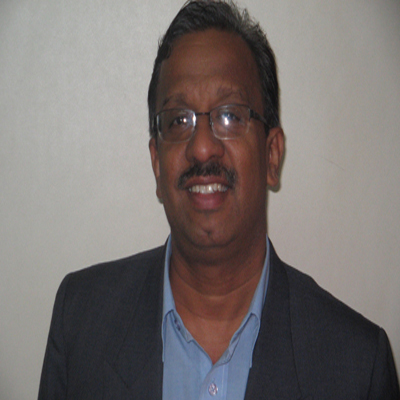
    By Ganapathy Viswanathan, an independent communication consultant, in communication, branding and public relations.

  • Star gears up for MIPCOM

    Star gears up for MIPCOM

    MIPCOM is where the ‘stars’ align for business. And so it is that Star India will be participating for the eighth consecutive time at MIPCOM this year, armed to its teeth with content including Hindi and regional programs.

    There’s no undermining how important MIPCOM is, even for an established entity such as Star India, whose programs have takers not only in India but all over the world. Star India vice president Ashutosh Mordekar puts it well saying: “MIPCOM is the biggest aggregation of content buyers and sellers across the globe. It provides a platform to showcase our content to buyers across the world.”

    Ashutosh Mordekar believes the market provides an opportunity to meet and transact with new as well as existing clients

    Mordekar also believes the market provides an opportunity to meet and transact with new as well as existing clients.

    Star will be focussing on markets like Central and Eastern Europe, Russia and CIS region and Central Asia.

    Coming to what’s new from the Star stable, Mordekar says: “Star is showcasing the epic Mahabharat which is the most expensive show coming from India. The show is already garnering interest across Asia and Europe, and buyers have already indicated their interest.”

    Explaining why Indian content is very well accepted in global markets, he reasons: “The world is currently opening up to Indian content in a big way. Indian content is at present just breaking out. We are at the end of stage one, where the content has been sampled in various countries through initial foothold deals and the success of these shows has created a huge interest in fresh content coming from India.”

    While it is generally felt that the production value of Indian content has gone up in recent times, is it really up-to-speed with international standards? “Yes! The last couple of years have seen a huge leap in the production value of our shows. Be it HD, Dolby 5.1 Sound etc. – the production values today are comparable to the best in the world,” quips Mordekar.

    About the platforms the network plans to target at MIPCOM, he says: “We are going to be in discussions for exploiting our content on IPTV, mobile, VOD (Voice on demand) or free-to-air platforms.”

    Optimistic about the results of participation, Mordekar is looking forward to this year’s fest.

  • Star Trek into Darkness appreciated at the Hollywood premier

    Star Trek into Darkness appreciated at the Hollywood premier

    MUMBAI: Paramount Pictures‘ Star Trek into Darkness, an American science fiction action film creates a lot of excitement at the Hollywood Premier. Stars like Chris Pine, Zachary Quinto, Zoe Saldana, Alice Eve, Karl Urban, Peter Weller and John Cho hit the silver carpet at the Dolby Theatre on Tuesday, reported by The Hollywood Reporter.
     
    Directed by J.J. Abrams and co-written and produced by Damon Lindelof, walked the carpet and shared their excitement about returning to the U.S.S. Enterprise. Zoe Saldana stole the audience‘s attention with her supernova-like appearance in her sheer, brown dress. She praised Abrams, who is signed on to direct the next Star Wars film.
     
    The movie‘s suspense challenges the viewers as it‘s not one of those movies where the person get‘s an idea what is going to happen next.
     
    One of the reasons that motivated director Abrams to make the sequel was the star cast. Their work was very well appreciated by the audiences in the past and he wanted to work with them again.
     
    Zachary Quinto, who plays Spock in the summer blockbuster, was the last to hit the carpet and said he loved this cast and called them a great group of people with a strong commitment to their work.
     
    Star Trek into Darkness opens nationwide in IMAX 3D on 16 May.

  • Mumbai gets its 1st International Multiplex – Cinépolis

    Mumbai gets its 1st International Multiplex – Cinépolis

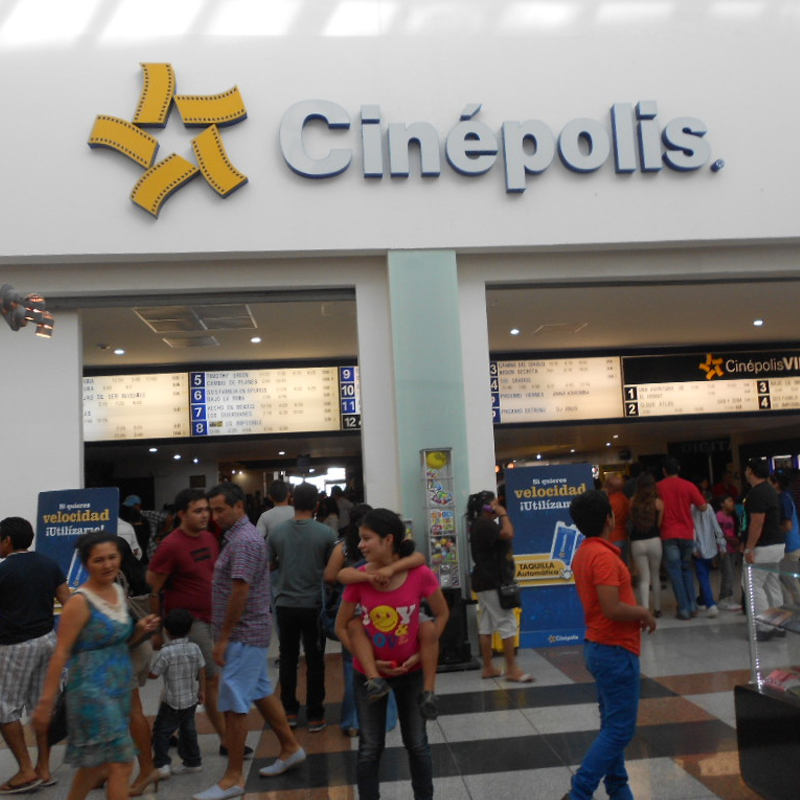
    Mumbai: Cinepolis has announced the launch of its six screen, 100 per cent digital multiplex at Mumbai.


    The multiplex brings together RealD, the world‘s best 3D technology, Hollywood standard 4k digital screens and 7.1 Dolby digital audio.


    Cinépolis India country head and managing director Milan Saini said, “We are pleased to announce the opening of our newest multiplex, providing international movie experience, in Mumbai. Our patrons can look forward to enjoying a truly world class movie going experience with our state of the art cinema which is conveniently located in one of the best malls of the city. This is the 1st Cinema in Mumbai to have the most advanced 4K digital projection.”


    Cinepolis currently operates at Ahmedabad, Amritsar, Bengaluru, Mumbai, Patna, Surat, Ludhiana, Bhopal, Jaipur and Mangalore.

  • 86th Oscars shifted to March to avoid clash with Winter Olympics

    86th Oscars shifted to March to avoid clash with Winter Olympics

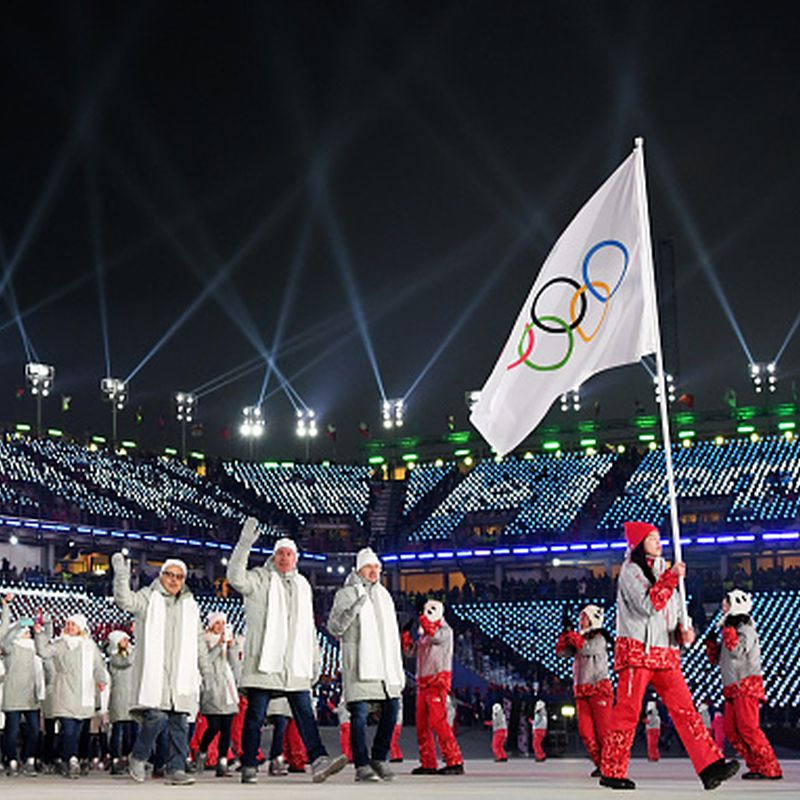
    MUMBAI: The Academy of Motion Picture Arts and Sciences has announced that the 86th edition of the Academy Awards now known as Oscars will happen in March next year to avoid a clash with the closing ceremony of Winter Olympics in Russia.
     
    The 86th Oscars, which will be held on 2 March, 2014, would have clashed with closing ceremony of Winter Olympics in Russia had the organisers kept its traditional last-Sunday-of-February slot.
     
    The 87th Oscars will be back to its routine in 2015 and will happen on 22 February, 2015.
     
    The 86th and 87th Oscars ceremonies will be held at the Dolby Theatre at Hollywood & Highland Center in Hollywood, and will be televised live by the ABC Television Network.

  • UFO Moviez offers to install sound processors in select UFO digital theatres

    UFO Moviez offers to install sound processors in select UFO digital theatres

    MUMBAI: UFO Moviez India, the satellite-based digital cinema network, has offered to install Dolby CP750 sound processors in select UFO digital theatres at discounted rates. Once installed, these sound processors will enhance the cinema‘s sound to world standards giving a crisp 5.1 surround sound experience to its audience, the company said.

    The deal is as a part of UFO‘s new loyalty program for its exhibitors. This follows soon after UFO‘s recently announced collaboration with Dolby Laboratories Inc. to bring in a major transition in the audio experience across UFO‘s digital cinema screens in India.

    UFO Moviez COO Pankaj Jaysinh said, “UFO values its exhibitors‘ support and believes that growth must be mutual. This newly-introduced loyalty program is entirely a result of our desire to create a win-win environment for our patrons that is conducive to an enhanced cinematic experience for their audiences. We‘ve taken multiple factors into consideration when rolling out this loyalty program and we believe that the theatre owners will make good of this opportunity to install the CP 750 Dolby Processor at their cinemas and treat their audiences to an unmatched sound experience.”

    Dolby will assist UFO with the setup for the digital encoding and mastering workflow for UFO Moviez and provide UFO-Dolby co-branded CP750 cinema processors, delivering a complete end-to-end digital sound process and helping to provide an authentic audio experience in the theatres.

    Currently, sound in many digital cinemas in India goes through multiple conversions from digital to analog and back, resulting in loss of sound quality at each conversion. Additionally, audio alignment and calibration of theatres will be conducted to ensure a premium entertainment experience for moviegoers in UFO cinemas, the company said.

    Beneficiaries of this loyalty programme were chosen after an evaluation on multiple parameters, such as their association with UFO, quality standards and initiatives implemented by the cinema hall.