Tag: Diwali sale

  • realme expands after-sales service program with realme care+ nationwide

    realme expands after-sales service program with realme care+ nationwide

    Mumbai: realme today announced the expansion of its after-sales service program, realme Care+. This initiative reflects realme’s commitment to delivering superior customer service across India, aligning with the slogan “We Care, for Real.”

    realme Care+ focuses on improving customer satisfaction by providing high-quality, efficient service. With over 550 service centers already operating in India, realme plans to increase this network to over 600 centers and establish 50 new brand service centers by 2025, covering more than 500 cities nationwide.

    realme Care+ offers a 10-day product exchange policy, a one-year warranty, and multilingual support in 10 languages. Customers benefit from Service Day every mid-month, offering unlimited bonuses. With a 95 per cent first-time resolution rate and 97 per cent same-day repairs when parts are available, realme Care+ ensures fast, reliable service. Their service centers have achieved a 90 per cent customer satisfaction rate and a 4.3 Google rating.

    During the Diwali Sale, realme offers discounts worth Rs 800 crore on smartphones and AIOT products. Customers can enjoy up to Rs 4,000 off on select realme P2 Pro 5G variants and coupons worth Rs 2,000 on realme NARZO 70 Turbo 5G.

  • Jio Haptik announces exclusive product launch event ‘Hype’ ahead of festive season

    Jio Haptik announces exclusive product launch event ‘Hype’ ahead of festive season

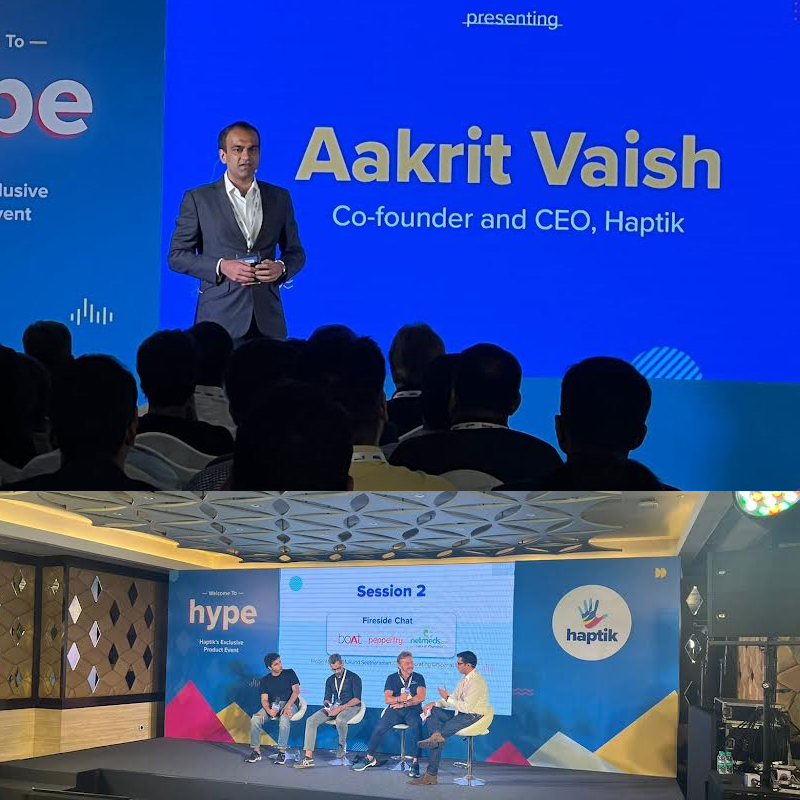
    Mumbai: As the festive season is just around the corner, a conversational commerce company, Jio Haptik, has announced plans to organise its exclusive product launch event, ‘Hype.’ Jio Haptik, through this much-awaited event, will launch new commerce products and features for the upcoming festive sales.

    The event will be held at Taj Santacruz, Mumbai, on 15 September from 4:00 p.m.

    While dealing with an increase in sales and support requests, WhatsApp has emerged as the ideal medium for brands to achieve their goals. This product launch event is aligned with the increasing importance of proactive customer engagement strategies through WhatsApp. The event will witness top industry leaders discuss various WhatsApp campaign strategies to help brands break sales records, especially during the upcoming Diwali and festive season.

    As part of the launch, the products introduced by Jio Haptik will help brands significantly optimise marketing budgets, achieve phenomenal sales, and enhance customer interactions. The product ‘proactive messaging’ will help customer-facing teams to initiate new conversations with users via WhatsApp notifications. The second product, ‘commerce plus,’ will make shopping through conversations easier through search and FAQs on WhatsApp, Facebook, and Instagram.

    The event will be facilitated by leading CX and growth leaders –  Jio Mobility platforms & products manager Satinder Singh, Jio Mart director of product management Archit Shrivastava, Netmeds chief communications officer Bruce Schwack and many more.

    Sharing his views on the event launch, Haptik CEO and co-founder Aakrit Vaish said, “Messaging as a medium is now helping brands accomplish sales via direct customer conversations at scale. As the world’s largest WhatsApp chatbot provider, our exclusive features will help enterprises proactively sell their products to customers, digitise the end-to-end shopping experience, and meet enormous demand during the festive season. Also, our solution shall significantly increase brand discovery through newer channels like ads, SMS, and Instagram to help brands build a true-omnichannel strategy.”

    Commenting on the occasion, Netmeds chief communications officer Bruce Schwack said, “We have been using Haptik for two years now, and from the outset, we have been impressed not only with their technology, but also with their sharp focus on how the technology could help us achieve our business objectives. We’ve already experienced the tremendous advantage Haptik gives us in managing and reducing friction on the CS side, and now the new WhatsApp commerce feature promises to help us convert browsers into customers. Any tool that helps us retain existing customers and on-board new ones gets a big thumbs up from me. So, don’t put your fork down, the best is yet to come!”

  • Snapdeal witnessed 50% growth over last year from two Diwali sale editions

    Snapdeal witnessed 50% growth over last year from two Diwali sale editions

    MUMBAI: Snapdeal, one of India’s largest value-focused online marketplaces, concluded the first two of its Bharat-focused Diwali sales on a high note. Snapdeal witnessed a 50 per cent growth over last year from the first two sale editions of this year and is confident of the momentum continuing in the third and final Snap-Diwali sale.

    Two out of every five buyers who bought in the Diwali sales came back for another purchase during the ongoing sales to take advantage of the attractive offers.

    For Snapdeal, the strong performance this Diwali continues, with orders consistently at more than 1.5 times that of last Diwali. Nearly 90 per cent of the orders received on the marketplace so far were from non-metro cities like Nagpur, Surat, Vijayawada, Chandigarh, Panaji, Jamshedpur, Shimla,  Guwahati, Roorkee, Hazaribagh, Khammam, Tezpur etc.

    The first time users surged across cities like Nashik, Surat, Chandigarh, Panaji, and Guwahati and the overall growth in first time users was 2.3 times YoY.

    Working closely with its seller-partners & logistics companies, Snapdeal has already shipped out 97 per cent of the Diwali sale orders so that orders are delivered ahead of the upcoming festivities.

    An interesting trend that emerged this year is of buyers from metro hubs like Delhi, Gurugram, Noida, Mumbai, Bengaluru, Pune, Ahmedabad, and Kolkata using Snapdeal to send Diwali gifts for their families back home in Uttar Pradesh, Uttarakhand, Bihar, Odisha, West Bengal, and Himachal Pradesh. These gifts were sent to small towns like Khalgaon & Sangrampur in Bihar, Tato in Odisha, Rampur in Himachal Pradesh etc.

    According to Snapdeal, “The trend of users buying gifts on Snapdeal and sending it to their families back home is something that started last year and has grown sharply this year. The volume of such gifts has already tripled this year and we expect more such orders over the next few days.”

    “The range of festivals starting with Karva Chauth and followed by Dhanteras, Diwali, Bhaiya Dooj and Chhath Puja have become important gifting occasions. Many of our users who stay away from their families, find and ship their gifts home via Snapdeal. We are privileged to be connecting loved ones with their families on these festive occasions.”

    Highest trending products for gifts sent home: 

    ●        Clothes for family members constituted 60 per cent of the gift items, with Sarees, sweaters and childrens’ garments accounting for the bulk of this.

    ●        Home use products like Steel utensil sets, copper flask-tumbler, quilts, blankets and bed sheets accounted for nearly 20 per cent of the gifts category.

    ●        The other popular items shipped home by family members in big cities included set of 3-watches, duffel bags, mini bluetooth speakers, earphones, Rechargeable LED lights, mosquito nets and Toran door hangings.

    Overall Sale:

    ●        Home, kitchen and fashion categories were key drivers of repeat purchases.

    ●        Festive fashion, electronic accessories, Diwali lights, traditional Diwali decorations and home products continued to be strong sellers in the Diwali Sales.

    ●        2 out of 5 buyers who bought in current Diwali sale came back for another purchase

    ●        97% of orders received already shipped.

    The third & final Snap-Diwali sale for the festive season will commence on 18 October and will conclude on 20 October 2019.

  • Snapdeal’s Brand Registry helps sellers protect their registered brands

    Snapdeal’s Brand Registry helps sellers protect their registered brands

    MUMBAI: Snapdeal, India’s largest value-focused online marketplace, is scaling up its brand registry program, which helps protect sellers having their own registered brands from brand infringements on its marketplace.

    Snapdeal has more than 500,000 registered sellers, who together have more than 200 million listings on the platform. Snapdeal is a pure marketplace and all products are listed and sold by third party, independent sellers.

    According to a Snapdeal spokesperson, “Many of the sellers have successfully developed their own brands for online sales. The success of these brands leaves them open to the threat of their brand name being misused by those looking to sell lookalike products under the same name.”

    To assist such brands, Snapdeal runs a program whereby sellers on Snapdeal having their own registered brand name, trademarks etc. get exclusive rights to sell their product in the relevant categories on the Snapdeal marketplace. 

    More than 1000 brands are now part of the registry. These include brands like Wolphy (Fitness Equipment), Tanishka Fabs (Bed Linen), Voylla (fashion jewelry), Bentag (Electronics) – all of whom have a strong online presence in their respective categories.

    Many of these brands have been bestsellers in Snapdeal’s recent Diwali Sale, which saw business volumes double in 120 cities across India, with 90% of the sales coming from non-metro cities.

    Snapdeal’s focus is on the value-conscious segment, which comprises emerging brands and the unbranded segment. The unbranded market in India is worth ~ USD 160 Billion and is now starting to come online in a big way to meet the demand of buyers from non-metro cities.

    The emerging brands focus on serving the unmet needs of buyers by focusing primarily on the functional attributes and with a pricing strategy that doesn’t include large brand premiums. 

    The online markets present an opportunity to create brands in an efficient way without the need to invest in mega advertising campaigns or a network of physical stores. In fact, India is now witnessing the emergence of many online-only brands, mirroring the trend in China, where many brands have chosen not to explore the physical markets while establishing new lines of products, especially in personal care, food and home products.

    According to a Snapdeal Spokesperson, “The program is aimed at helping SMEs create and grow their own brands. This initiative strongly supports, domestic “Made-in-India” brands in their online growth. We are happy to be able to support these brands right from the initial stages of their journey.”

    Snapdeal’s Brand Registry is expected to scale up to include more than 5000 emerging brands by March 2020.

    Snapdeal also operates “Brand Shield”, which offers a single point of contact for brands to report suspected counterfeit products being sold on the Snapdeal platform. Brand Shield offers a fast-track one-day delisting process for verified complaints. The program has significantly boosted collaboration between brands and the marketplace in on-going and successful efforts to weed out sellers who peddle counterfeits on online platforms.

  • Amazon heavily dependent on Diwali sale for revenue

    Amazon heavily dependent on Diwali sale for revenue

    MUMBAI: Not only do Indians eagerly await Diwali but so does Amazon it seems. The largest online retailer across the world has published a mixed result for the third quarter. While its revenue fell short of Wall Street expectation, it posted a record profit. On the other hand, despite the growth in domestic business, the international business showed a significant slowdown. Interestingly, a late Diwali in India has been cited as the reason which shows how crucial the Indian market has become for it.

    “There's also material change in the Diwali calendar in India. About half of our Diwali sales last year were in Q3. This year they'll be fully in Q4. So those are a couple factors that hit the international growth area in particular,” Amazon chief financial officer Brian T Olsavsky said in an earnings call.

    In India, Amazon is already fighting the domestic player Flipkart which is now backed by Walmart. The first leg of Diwali sale from both the player was around same time. Despite Flipkart’s popularity in India, three fold number of people signed up on Amazon to shop in the first two days compared to last year.

    “We've seen great response from customers. We've had 60 per cent growth in new customers during the period. Orders are coming in from 99 per cent of the pin codes in the country. So, great first wave of the, what we call the Amazon's Great Indian Festival, which lead into Diwali,” Olsavsky added.

    Advertising has been one of the major areas where the company reaped high profit. The revenue from the unit representing its display, sponsored product and other advertising revenue jumped 123 per cent, more than double the growth rate a year earlier.  While it is locked in a battle with Google, Facebook for digital ad pie, the company has made it clear that it won’t go down the road of ad-supported Amazon Prime Video soon.

    Amazon Prime membership, the card at hand to turn more consumers into shoppers, has continued to grow in US, as well as other countries. The company claims to be satisfied with the renewal data and annual sign up data since the price increase earlier this year.

    “Since then, program remains very strong, both in membership and engagement, and a lot of our video content, music and shipping definitely as well as other Prime Benefits. We just continue to see that ramp up, not only in the US, but in other countries. So we do continue to make the Prime offer better as well,” Amazon CFO said.

    Although the slowdown in international business led to fall in shares, it continued to reduce losses, which came down to $385 million in Q3 from $494 million in Q2. However, on the back of Diwali sale Amazon expects a huge boost to international segment reaffirming India’s importance in its business.

  • Future Group to now tie up with an e-commerce site

    Future Group to now tie up with an e-commerce site

    MUMBAI: A day after lashing out at e-commerce sites such as Flipkart for undercutting prices, Future Group CEO Kishore Biyani said that he would announce his ‘exclusive e-commerce partner’ soon, according to media reports.


    As per the reports, Biyani agreed that he met Amazon founder and CEO Jeff Bezos in Delhi last week, hinting that he might partner with Amazon to sell its private labels.


    “We discussed many things like the macro environment, the prime minister and so on,” Biyani told a leading business newspaper talking about his meeting with Bezos.


    “We can learn a lot of things from e-commerce players regarding their supply chain and logistics, sourcing and so on,” Biyani added.


    The buzz is also that Biyani is expected to meet other e-commerce players for a tie-up.


    The group would first take its fashion products online, followed by FMCG, general merchandise, food and others, he further said.


    The reports also add, “While tying up with e-commerce portal is a ‘brand strategy’ Biyani said, the group’s own omni channel strategy, set to go live after Diwali, is a retail strategy or extension of his physical stores. He said the group’s omni channel strategy will work simultaneously along with retailing on e-commerce partner.”


    As part of the omni strategy, the group’s electronics format, Ezone, is expected to go online first, followed by premium food chain Foodhall and hypermarket chain Big Bazaar, a group executive further revealed.


    Biyani recently came out strongly against the strategy of e-com firms, accusing them of predatory pricing backed with foreign funding.


    Media reports quoted him saying, “Laws in this country do not allow sales below cost price. This is anti-competitive. We (at Big Bazaar and other retail brands) never sell below cost price.”


    The future group also launched ad blitz, lashing out at the e-commerce portals with taglines like, “No deal can win the trust of a billion people, you have to earn it.”


    His comments came after Flipkart announced that it clocked record sales of $100 million (Rs 610 crore) in just 10 hours of its Big Billion Day sale on 6 October. Rival Snapdeal also claimed to have matched it with its chief saying the portal saw sales of over Rs 1 crore per minute.


    But the Flipkart Big Billion Day was far from perfect, the e-commerce portal later apologised for the glitches encountered admitting its ‘failure’ in living upto the expectations of its customers. Acknowledging that it was not adequately prepared for the sheer scale of the event, Flipkart promised to come better prepared next time.


    Targeting the e-retailer after it released the apology letter, Future group released another ad with the tagline ‘You can’t take a nation for granted even for a day.’


    Confederation of All India Traders (CAIT) too has expressed concerns over huge discounts being offered by e-commerce firms. It has asked the Commerce and Industry Ministry to take steps to monitor and regulate online businesses.