Tag: diversity

  • “Auraa envisions a future where modeling is valued and respected on par with prestigious professions”: Auraa Talents’ Arpita Das

    “Auraa envisions a future where modeling is valued and respected on par with prestigious professions”: Auraa Talents’ Arpita Das

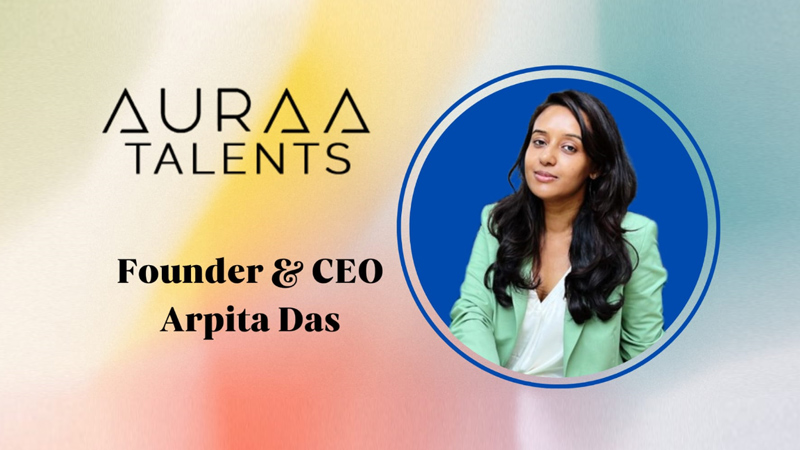
    Mumbai: Amidst the dazzling and glittery world of modeling, where trends shimmer and styles evolve, one cannot ignore the prevalent preferences for lighter skin tones that have cast a subtle but persistent shadow over the industry. However, breaking through these conventional norms and redefining beauty standards is Auraa Talents, a dynamic platform founded in 2008 by former model and visionary entrepreneur Arpita Das.

    Auraa Talents has not only become a leading force in the creative, modeling, and entertainment sphere but has also emerged as a champion for diversity, empowerment, and inclusivity. As the industry grapples with stereotypes, Auraa stands as a beacon of change, dedicated to eradicating negative perceptions and fostering a culture where every talent, regardless of skin tone, shines with their unique spark and potential.

    Indiantelevision.com caught up with Auraa Talents founder & CEO Arpita Das to know more about their evolution since inception, key milestones, training programs for both models and their employees, and much more…

    Edited Excerpts:

    On Auraa Talents’ evolution since its inception in 2008, and the milestones that you’re most proud of in its journey

    During its inception, Auraa showcased only two international models, reflecting its global ambitions. From its modest beginnings, Auraa has now blossomed into a thriving pool of talent representing 150 plus international and Indian talents and actors, from over 25 countries. We have also worked with diverse clientele such as Coca Cola, Tanishq, Vaseline, and others, over the last 16 years leading to a remarkable impact in the modeling realm.

    A few of our proudest milestones over the years are a collaboration with Pocket FM that involved our entire talent cast. They were also chosen to participate in a short film called ‘F se Fantasy’. Moreover, a few of our models were cast alongside prominent celebrities such as Taapsee Pannu, Hrithik Roshan and Samantha Prabhu across advertorial campaigns.

    On some of the key challenges you faced in the modeling industry that motivated you to establish Auraa

    As soon as I began pursuing modeling full-time, I began to understand the industry’s shortcomings. Back in the 2000s, most brands were attracted to lighter skin tones which posed a challenge as I was more dusky. Furthermore, as I lacked appropriate management at the time, it hindered my visibility on the right platforms. As a result, I set out to establish a platform that would provide equal opportunity to all individuals who shared the same dream.

    On Auraa Talents setting itself apart in the competitive modeling and talent management industry

    At Auraa, we foster a culture of safety, respect, and empowerment within the community. Our commitment to leaving no stone unturned for our talents and treating every project with utmost priority, sets us apart from the rest.

    On the inspiration behind championing equal opportunities for aspiring talents, emphasizing inclusivity regardless of skin tones

    Every individual deserves a fair opportunity to showcase their talent and contribute to the industry. We not only nurture creativity, but also celebrate the uniqueness & richness that every individual brings to the table.

    At Auraa, we stand for empowerment, by breaking down barriers and amplifying voices, diversity, and the belief that talents shine the brightest when given the opportunity to flourish, irrespective of skin tone or background.

    On Auraa promoting a culture of safety, respect, and empowerment within the modeling community

    At Auraa, we foster a culture of safety, respect, and empowerment within the modeling community by prioritising education on making informed decisions, building self-belief, and instilling confidence in our models. We provide comprehensive training to help our talents differentiate between right and wrong choices, empowering them to navigate their careers with integrity and resilience. By emphasising self-belief and confidence-building exercises, we equip our models with the tools to assert themselves and thrive in a competitive industry. Our commitment to being readily available for support and guidance ensures that our models feel secure and valued.

    On Auraa’s training programs and their impact on the development of both models and its employees

    We offer comprehensive training programs catering to both employees and models. Our grooming classes for models focus on refining their skills and presentation, ensuring they are well-prepared for the modeling and entertainment industry. A notable success story here would be of our plus-size model Shefali who faced resistance and skepticism from her family and fiance. However, today, she stands tall not only as a successful model but also as a proud wife, daughter, and daughter-in-law.

    Employees benefit from our training programs designed to uplift and empower them, providing a platform for growth. A few notable success stories include Venky, who started as an office boy and now thrives as a talent manager, and Pooja, who transitioned from working in an NGO to international scouting.

    Overall, Auraa’s aim through these programs is to inspire the following:

    1. Holistic growth and confidence building

    2. Becoming the better version of themselves

    3. Guidance and support

    4. Ownership and commitment

    On your aspirations for Auraa Talents in the coming years

    In the coming years, Auraa aspires to achieve the following for its talents:

    1. Brand recognition: The aim is to elevate Auraa to a household name synonymous with modeling excellence. We strive to have Auraa recognised as a trusted and reputable institution in the industry.

    2. Education and awareness: Auraa seeks to educate aspiring models and the general public about the modeling industry. By providing valuable guidance and information, Auraa aims to steer individuals away from potentially harmful paths and ensure they make informed decisions about their modeling careers.

    3. Elevating the status of modeling: Auraa envisions a future where modeling is valued and respected on par with other prestigious professions like engineering and medicine. By promoting the significance and artistry of modeling, Auraa aims to elevate the status of models and the industry as a whole.

    4. Global reach and representation: Auraa is working towards creating a path for aspiring models to reach international markets and represent India on a global stage. By providing opportunities for talents to showcase their skills internationally, Auraa aims to open doors for Indian models to achieve success and recognition worldwide.

    Overall, Auraa’s aspirations for its talents in the coming years revolve around building a strong foundation of education, awareness, and support, to empower models to reach their full potential, make informed decisions, and succeed both nationally and internationally. By striving to transform the modeling landscape and create new opportunities, Auraa aims to shape the future of modeling in India and beyond.

  • Reliance Jewels unveils exclusive jewellery collection inspired by spring festivals

    Reliance Jewels unveils exclusive jewellery collection inspired by spring festivals

    Mumbai: Reliance Jewels, known for its deep-rooted appreciation of India’s rich cultural heritage, is announcing its latest collection as the auspicious spring season nears. This new range of jewellery celebrates the vibrancy and diversity of India’s spring harvest festivals.

    Drawing inspiration from astrological mandala patterns, which hold significant importance during this period, the collection features stunning sets of earrings and necklaces. Crafted from pure gold, these pieces are adorned with laser-cut designs that beautifully encapsulate celestial motifs of stars, cosmos, and planets, embodying the essence of movement and transition intrinsic to these festivals.

    Across India, spring festivals are celebrated with unique customs, reflecting the country’s unity in diversity. From the bonfires of Lohri in the North and the kite-flying of Uttarayan in the West to the harvest festivities of Magh Bihu in the East and the Pongal celebrations in the South, each region brings its own flavour to this joyous time of year.

    Emphasizing the harmony between tradition and contemporary design, Reliance Jewels’ latest collection offers an artistic blend of India’s varied cultural tapestries. The brand invites its patrons to commemorate these festive moments with their exclusive collection, now available in all stores and on their website.

    Reliance Jewels, a part of Reliance Retail Ltd., boasts over 400 stores in showrooms and shop-in-shops across more than 200 cities. The brand is renowned for its exquisite gold, diamond, and silver jewellery collections, marked by impeccable design and craftsmanship. Each piece is a testament to the brand’s commitment to offering unique designer collections that resonate with India’s artistic, craft, and heritage inspirations.

    For more information about the new collection and the rich traditions it embodies, visit the Reliance Jewels website or follow their social media channels.

  • Vanaja Pillai to head of diversity, inclusion and impact at DDB Mudra

    Vanaja Pillai to head of diversity, inclusion and impact at DDB Mudra

    Mumbai: DDB Mudra Group has announced the elevation of Vanaja Pillai as head of diversity, inclusion and impact, underscoring the company’s commitment to embedding diversity, equity and inclusion in its people and business strategy.

    Pillai was the driving force behind the Phyllis India Project, a comprehensive and intense leadership development program to help prepare DDB’s women talent for leadership.

    “Vanaja’s work on the Phyllis India program has been applauded across DDB’s borders and is a brilliant example of senior leadership driving actionable change in advancing DEI within the DDB family,” stated DDB Worldwide chief diversity, equity and inclusion officer Nikki Lamba. “We are excited about her taking on this larger mandate and bringing DEI to the heart of our business, people and product strategies in India.”    

    In her expanded role, she will work closely with CEO and MD Aditya Kanthy and HR head Rita Verma on initiatives to grow a diverse and inclusive workplace, including talent acquisition, retention, training and outreach to talent in underrepresented communities. Pillai will also lead the creation and delivery of effective growth and development opportunities rooted in the company’s purpose and growth strategy, said the statement.

    “To compete in our times, we need to take a critical view of every aspect of our business. Our approach to talent and culture included,” commented Aditya Kanthy. “There is much to do in this area, and Vanaja is just the right person to lead us to success. This work, with the Group’s effort as a global network, will bring in diverse voices to help shape workplace culture and brand communication of the future.”

    “It has been an exhilarating journey, from the intent of creating an India chapter for the Phyllis Project, to having the first batch graduate last week,” Vanaja Pillai said, speaking on her extended role. “The bar has been set high for every challenge we pick up from hereon. Over the next year we will focus on a select set of DEI goals and approach them with the same rigour and passion that made the Phyllis India Project what it is today. From an overall talent perspective, the pandemic made us even more aware of the need for constantly focusing on people and their growth.”

  • Mars Wrigley India exemplifies inclusion and diversity with five key appointments

    Mars Wrigley India exemplifies inclusion and diversity with five key appointments

    Mumbai: In a significant move demonstrating its ambitious focus on inclusion and diversity and continued investment in the talent pool in India, Mars Wrigley on Thursday announced the appointment of three new women executives in its India Leadership Team and chose two executives from India to take up global roles critical to the company’s growth strategy.  

    Richa Singh, Sunita Patnaik, and Shahine Ardeshir have joined Mars Wrigley India Leadership Team as chief financial officer (CFO), director – corporate affairs, and director – people and organization (P&O) India, respectively, while Chirag Shah has been elevated as CFO of Nature’s Bakery, a Mars business in the US, and Hegeler Solomon promoted to director of people and organisation, Mars Wrigley Asia.

    “Fostering talent and building capability remain a cornerstone of Mars Wrigley and we are highly intentional in finding the best talent, building the right capabilities and creating an environment of inclusion and diversity,” said Mars Wrigley India, general manager, Kalpesh R Parmar. “This is instrumental to our ability to deliver our growth legacy and navigate the challenges as well as capitalize on the opportunities that lay ahead as we remain steadfast on our long-term commitment to India. Aligned with this, I am pleased to welcome  Richa, Sunita and Shahine to Mars Wrigley India’s leadership team. These appointments advance our commitment to bringing on board strong women leaders to position us well in our journey of purpose-led growth.”

    “Equally, I am very excited that Chirag Shah and Hegeler Solomon have been elevated to lead global positions within Mars. Both of them have been strong architects in India’s growth story for Mars Wrigley and have made a significant contribution to the business. I am very proud of this move as it is a strong testament of our ability to nurture and export world-class talent from India for the company globally. Their unique experiences in a diverse and fastest-growing market like India will help shape and contribute to the transformative growth strategy of the company across the markets. I wish all of them the very best as they begin their new assignments,” Parmar added.

    Richa Singh comes with a global experience of over two decades across consumer durables and FMCG companies, leading business accelerations and transformations, process optimisations, among others. She joins from Niine Pvt Ltd, a start up in feminine hygiene that she led for three years. Prior to Niine, she worked in Philips Healthcare@Home, Philips Consumer, J&J Medical ASEAN, Coca-Cola, and P&G across India, ASEAN, Australia, and Japan. Richa replaces Chirag Shah.

    Sunita Patnaik comes with nearly two decades of experience in journalism, corporate affairs, communications, CSR, and Sustainability. Sunita joins from Facebook India where she led content and programs policy communications. Prior to Facebook, Sunita was associated with Walmart India and Cargill India. In her current role, Sunita will be responsible for leading government relations, corporate communications, PR, and advocacy efforts across all Mars Wrigley India brands and verticals.  

    Shahine Ardeshir comes with a wealth of experience, a large part of it from within the company, having joined Mars in 2012. She has held a number of key roles within the leadership team, including most recently as Associate Relations (AR) Lead for the segment across India, Middle East and South Africa. She played an integral part in launching and stabilising AR operations of the new People and Organization operating model, across a diverse region, supporting all segments including Mars Wrigley, Pet Nutrition, and Royal Canin. Shahine replaces Hegeler Solomon.

    Richa, Sunita, and Shahine will be based in Gurugram.  

    Chirag Shah joined the company in 2016 as CFO for the erstwhile Mars Chocolate segment in India. He was later appointed as Finance Director for the Mars Wrigley integrated business in 2017 in India. Shah will be relocating to the US shortly.

    Hegeler  Solomon joined Mars in May 2014 as People and Organization Business Partner for the erstwhile Wrigley segment and subsequently moved as director – people and organization for Wrigley South Asia. Later he was appointed as director – people and organisation for the combined Mars Wrigley unit in India. During this stint, Solomon played the lead role in integrating the structure of the two different organisations and created an enabling culture that helped the company secure a ‘Great Place to Work’ status in India. Solomon will transition to his new role in September. 

  • Amazon Studios launches inclusion policy & playbook

    Mumbai: This is one production studio which is putting its money where its mouth is. And it should even get a nod of appreciation from the Indian ministries of information and broadcasting, electronics and information technology, and even education. Even as many companies are talking about inclusion and diversity, the Culver City (California, US)- based Amazon Studios released on 16 June a comprehensive inclusion policy that extends its commitment to diversity, inclusion, and equity for its content and productions, as well as a playbook with guidelines for its collaborators in the creative community.

    These guides offer detailed and actionable recommendations as Amazon Studios continues to seek out stories and storytelling that amplify voices across race, ethnicity, nationality, sexual orientation, age, religion, disability (including mental health), body size, gender, gender identity, and gender expression for the global Prime Video audience.

    “Amazon Studios has long prioritised telling innovative and inclusive stories from a diverse range of creative talent, delighting our global audiences. We wanted to move beyond good intentions to creating mechanisms that hold us accountable to a high bar. This inclusion policy and inclusion playbook adds important, additional depth and guidance for our internal teams and external partners to ensure we continue to advance our shared mission of amplifying the best creatives and content around the world,” said Amazon Studios executive head of diversity, equity & inclusion Latasha Gillespie in a press release.  

    “With the establishment of our inclusion policy and inclusion playbook, Amazon Studios has committed itself to being a thought and action leader in the transformation of our industry,” said Amazon Studios head Jennifer Salke. “We know how much work there is to be done to improve representation both on-camera and behind the scenes, and it starts at home, with us. With clear directives and a commitment to accountability, these guides provide a path toward a more equitable future, both on- and off-camera.”

    Amazon Studios shared the policy and playbook with creators, including Gloria Calderón Kellett, creator and executive producer of the upcoming Amazon Original series With Love. Said Kellett, “I am so proud to be a part of a creative community at Amazon that understands the importance of what I’ve been doing my whole career. Inclusive hiring is what makes a change. Opportunity and an eye towards changing things through action is what makes a change. Thrilled that Amazon has put together this playbook to start important conversations with their other creatives. This is real action and commitment and I’m thrilled to see it!”

    Upload’s creator and executive producer, Greg Daniels said: “Having worked with Amazon Studios for several years, I can confirm their commitment to inclusiveness is deep, sincere, sensitive, and practical. These new guidelines should encourage talented people from historically underrepresented groups to feel more confident about making a career in Hollywood.”

    Establishing expectations for Amazon Studios and its creative partners, the inclusion policy covers four primary areas: developing stories and characters, hiring and production, reporting and documentation, and meeting goals. The policy ensures meaningful visibility in Amazon Studios’ content and throughout all aspects of the production process — both in the stories being told and the people hired to tell them. The policy includes specific goals for Amazon Studios productions, including:

    • Each film or series with a creative team of three or more people in above-the-line roles (directors, writers, producers) should ideally include a minimum 30 per cent women and 30 per cent members of an underrepresented racial/ethnic group. This aspirational goal will increase to 50 per cent by 2024.
    • Casting actors whose identity (gender, gender identity, nationality, race/ethnicity, sexual orientation, disability) aligns with the character they will be playing.
    • Aiming to include one character from each of the following categories in speaking roles, with a minimum 50 per cent of these to be women: LGBTQIA+, a person with a disability, and three regionally underrepresented race/ethnic/cultural groups. A single character can fulfill one or more of these identities.
    • Seeking at least three bids from vendors or suppliers on productions, one of which must be from a woman-owned business and one from a minority-owned business.
    • Pay equity across casting, behind the camera staff and crew, and vendors and suppliers.

    Amazon Studios will provide a report template for each production to indicate whether these expectations were met, which will be submitted within one month of the completion of principal photography. This reporting exceeds the minimum standards set by the US Academy of Motion Picture Arts & Sciences but ensures Amazon is poised to report on the diversity of their films for Academy Award contention.

    Through the setting of goals and tracking of adherence to these policies, Amazon Studios, says “it is expanding its commitment to increasing representation on camera and behind the scenes, contributing to efforts to move the industry forward to a more inclusive future.”

    The inclusion playbook puts in place intentional practices to minimize and disrupt biases, providing specific guidance that will help everyone within and working with Amazon Studios to meet the expectations set in the inclusion policy. The playbook provides direction on how to make inclusive decisions while telling authentic stories and hiring the best people for the job; knowledge of where to go for help, including tools to make inclusive decisions; tools to identify criteria for making creative choices, leading to balanced, consistent and informed decisions; and ways to foster curiosity and ask questions to disrupt the status quo about “how things are done.”

    Amazon Studios worked closely with Dr. Stacy Smith and Dr. Katherine Pieper of USC’s Annenberg Inclusion Initiative, and with Brenda Robinson of the International Documentary Association and Gamechanger Films on the creation of the policy and playbook. The studio also consulted with leading organizations devoted to advancing the visibility and responsible depictions of underrepresented or marginalized people, including GLAAD, Illuminative, Think Tank for Inclusion & Equity, and the Disability Rights Education and Defense Fund.

    “Frankly, the outcomes of DEI work within the entertainment industry have not been swift or sweeping. In part, that can be attributed to disingenuous approaches to address the systemic barriers to entry that have long plagued Hollywood,” said Smith. “But now, Amazon Studios has created a comprehensive new blueprint that will change Hollywood by elevating those who have historically lacked access. I’m immensely proud of this new policy and I know it will be a gamechanger throughout an industry often resistant to real change.”

    One will have to wait and watch whether Amazon’s new inclusion policy will be applicable to its Indian productions as well. The diversity, equity, and inclusion team within it which was instrumental in drawing up the changes has “telling inclusive narratives to globally diverse audiences” as one of its main focuses.

  • adidas film celebrates differences at UEFA Euro 2020

    Mumbai: Apparel brand adidas unveiled the first in a series of short films, as part of its new UEFA EURO 2020 campaign to inspire fans, players, and communities to build a more positive and inclusive world by celebrating the differences that make people unique.  

    The rallying cry began on Friday with the pre-tournament short film calling all athletes and fans together to celebrate, and push for, inclusivity through football. The film focuses on the unique power football has in bringing people together and creating opportunities to drive positive change, beyond the pitch and within society.   

    Through the film, players from the world over are seen playing in an exhibition of the Niforia, the official match ball of UEFA EURO 2020TM. Launched to complement the original tournament timings, the ball offers homage to the coming together of teams of footballers from different countries and varied origins, bearing the coordinates of several stadiums that will host the momentous and incredible European sporting history.   

    adidas football head of global brand marketing Matt Davidson said: “Since we started on the journey towards UEFA Euro 2020TM, a lot has changed, but one thing that hasn’t has been the excitement for a major tournament. Perhaps the excitement for this tournament is even greater than normal, due to what the world has been through. UEFA Euro 2020TM will show us once again what is possible when we come together & celebrate the power of sport – the thrills, the emotion, the respect. The Uniforia ball remains a symbol for how we can unite through sport & culture, and also celebrate what makes us different.”  

    The campaign is part of adidas’ wider refreshed brand attitude to inspire optimism with action against the key focuses of sustainability, inclusivity, and credibility. It encourages us all to see the world, not as it is today, but how it could be.

  • Pandemic helped us understand our true resilience: Blue Dart CMO Ketan Kulkarni

    Pandemic helped us understand our true resilience: Blue Dart CMO Ketan Kulkarni

    KERALA: At a time when the entire nation is facing the wrath of the Covid-19 pandemic, logistics company Blue Dart has been working round the clock to ensure supply chain continuity. With the #WeMoveSoYourWorldCanMove campaign, the brand ensured quick delivery amid the pandemic scare and ensured that the shipments are moving in perfect conditions. 

    Indiantelevision.com’s Nirmal Narayanan spoke to Blue Dart CMO and head-business development Ketan Kulkarni to know more about the company’s operations during the pandemic times, and understand how it pivoted during the pandemic to ensure supply chain continuity across the country.

    Edited excerpts: 

    On navigating the Covid pandemic.

    The logistics sector is crucial for the business continuity of all industries. It is seldom in the spotlight, but it received due credit for the work done during the pandemic. The resilience of the sector was tested given the restrictions imposed on the mobility of any sort. With the ensuing lockdowns and the fear of contagion rampant, people became increasingly reliant on online services that delivered shipments to and picked up shipments from the customer’s doorstep. This heightened trend, spotted across customer demographics, was enabled by an agile logistics sector.

    Blue Dart stepped into action the minute the lockdown was announced, gearing up with its business contingency and continuity plan (BCCP) to aid customers in their time of need. Initially transporting only essentials, we worked with vigour and determination like never before to fulfil our role as the trade facilitator to the nation and continued to do so as the economy ‘unlocked’. We leveraged the power of technology to continue to deliver the premium service quality associated with Blue Dart.

    On the challenges faced to deliver shipments on time.

    Transport restrictions on the ground put a spoke in our wheel. However, our market differentiating air express service won the day, as we leveraged our Boeing 757-200 freighters to transport essentials across the country as well as to our neighbours internationally as part of the government’s Lifeline Udan initiative. We pioneered the Contact-Less Delivery service that eliminated contact by allowing access to over 14 digital wallets, netbanking, credit and debit cards, UPI, and BHIM. The pandemic helped us understand the resilience of Blue Dart. The success mantra we followed was to tackle challenges head-on with an ‘improvise – adapt – overcome’ perspective and it worked. 

    On Temperature Controlled Logistics Solutions (TCL) for pharma products.

    Blue Dart has been a Temperature Controlled Logistics (TCL) industry expert for a significant period. Our solutions are developed, keeping pharma and life science in mind. It provides a secure and validated supply chain for all temperature-sensitive needs and ensures safe and compliant transport in frozen, chilled, and ambient conditions. Using appropriate cooling mediums, the packaging performance delivers temperature for the range – 20°C, 2°C – 8°C, and 15°C – 25°C for varying distribution times.

    We also design customised packaging to meet our customers’ unique requests. We have pharma grade conditioning rooms at strategic locations like Mumbai, Chennai, Hyderabad, Ahmedabad, Pune, Kolkata, Delhi, and Bangalore. These rooms are close to our Blue Dart Aviation Stations which reduces our turnaround time and aids in the speedy delivery. With our TCL Solutions, we can deliver excellence to 9,000 pin codes within 24 hours and 12,000 pin codes within 72 hours. Additionally, as part of the DPDHL Group, we have access to several additional assets such as reefer vehicles, cold storage trucks as well as a global network spanning 220 countries and territories worldwide.

    On the #WeMoveSoYourWorldCanMove campaign.

    Blue Dart’s USP is our quick delivery and fast turnaround time, all while ensuring shipments move in the perfect condition. When the pandemic hit, this was only reinforced further as we put in an extra 100 per cent to ensure supply chain continuity. We understand that every shipment, something as small and yet so meaningful as a Rakhi, something as valuable as bank documents, or something as crucial as a vaccine or medicines matters to our customers, and hence, it matters to us. Therefore, the phrase ‘We Move So Your World Can Move’ and ‘If It’s Important, #BlueDartIT’. 

    On Blue Dart’s first women-led service centre in India.

    We value the diversity of our teams as a genuine strength. Our organisation brings together people from a wide range of cultural backgrounds – all with different skills, experiences, and viewpoints. We perceive diversity as something that goes beyond gender, race, religion, age, disability, sexual orientation, or any other characteristics protected under law. We promote inclusion because an inclusive team leads to happier and more innovative employees. We wanted to take one step ahead to help our nation bridge the gender gap that is widening as we speak. The All-Women Service Centre is a step in the right direction towards achieving this feat. Diversity begins at hiring and in the future we will continue to hire more diverse talent, increasing our Diversity and Inclusivity ratio.

    On getting certified as a Great Place to Work for the 11th year.

    Blue Dart has always championed a ‘People First’ philosophy. Therefore, we ensure our colleagues and their families are taken care of. ‘A Happy colleague equates to a Happy Customer’ – keeping this as the foundational tool of our business, Blue Dart has launched several initiatives, including several internal campaigns that highlight the outstanding work done by our colleagues.

    We have also launched the Employee Assistance Program (EAP) to increase mental health awareness. For the outstanding work done during the pandemic, we offered a special Covid-19 appreciation bonus. Additionally, in case a team member falls victim to the virus, special Covid leave and a special medi-claim policy have been put in place to ensure that the individual feels supported in their time of need. Our HR initiatives include the Death Benevolent Fund (DBF) to help resolve the financial crisis of the family rising due to the death of a team member.  Upstairs is another program that aims to help children of team members by offering a scholarship program that provides them with Rs 1 lakh per year along with a mentor. 

  • Wonder Women 100: Mindset needs to change first for more inclusion, diversity

    Wonder Women 100: Mindset needs to change first for more inclusion, diversity

    KOLKATA: Women are increasingly coming out and taking up more challenging roles against all odds. The media, entertainment and advertising industry is no exception. Despite the great strides made over recent years, there are still issues like fewer women leaders in upper management positions and salary gaps that need to be addressed for a better tomorrow.

    In a panel discussion, ‘Women, inclusivity and change’, industry leaders shared their views on the existing gaps and how that can be tackled to bring about positive change. Zee5 head-customer strategy and relationships Anita Nayyar, ABD CMO Anupam Bokey, Lodestar UM CEO Nandini Dias, NXTDigital group chief technology officer Ru Ediriwira, Madison Media Sigma – Madison World CEO Vanita Keswani, Hollywood actress and producer Rashaana Shah and Indiantelevision.com founder and editor-in-chief Anil Wanvari were part of the discussion. The session was moderated by Indiantelevision.com editorial lead Srishti Choudhary and online lead Arunima Bhattacharya.

    First off, the panelists expressed their opinions on whether corporate India has finally adjusted itself to bring more women professionals into leadership roles. Nayyar said we are miles away from where we actually should be given the kind of women leaders that are there in any industry, not only in advertising and marketing. Women have taken leadership roles in sectors like manufacturing, banking, and automobile; which most people considered no space for a woman.

    Dias brought up another important aspect of addressing the issue. While organisations across the board are hiring more women, these recruitments are happening mostly at the starting level. As time passes, the women get into different life stages, some of them even drop off. Corporates, governments do not enable their female employees to stay in the workforce, there are not enough policies to ensure they don’t quit midway because of changes like marriage and pregnancies.  

    Not everything is grey though. According to Keswani, there is not any gender if looked at from the perspective of microenvironment of media. She added that the industry believes in a person’s capability and does not uphold any bias. Moreover, it is about the individualistic approach. She also highlighted an issue that even some women don’t prefer working with women. “A lot of spirited action and ambition to move up the ladder,” she emphasised. The drive to work and climb up the ladder depends not just on an organisation’s policies, but the person’s family, upbringing, and education.

    Bokey, who works in the liquor industry where gender disparity has been prevalent, said that he joined his current organisation because it had a very transformative agenda. The agenda was not only about market share and sales but also internal management. He asserted that there is no option to not have this diversity because business or brands will suffer otherwise. Equal the numbers better would be the work, he stated.

    Hollywood actor and entrepreneur Shah said women are more well accepted in Hollywood, compared to the Indian film industry. Hollywood is much more inclusive too. She had to go through a great deal of unlearning after moving to Los Angeles. There are more women on sets these days, and there is no code of conduct expected from women particularly, making the experience more liberating. However, she faced a unique problem when she was pitching to venture capitalists to invest in her production house. The investors did not trust women with so much money, making the overall pitching much harder for her.

    The issue with such a mindset is also a big reason for the wage gap among male and female leaders. Nayyar said that everyone, including women, should stop seeing things in terms of gender. There is a wrong perception across industries that female resources can be hired at a cheaper cost. Most of the industries are not equating capability with remuneration, she pointed out. The salaries are not at par because these organisations are, by and large, headed by men. Dias shared a similar view, adding that women don’t negotiate often because they get overwhelmed after breaking the glass ceiling. Experts opined that belief in self can give them a place at the negotiation table.

    Ediriwira highlighted the lack of mentorship in many organisations is another reason for many women just stopping at middle management. “We have the responsibility to mentor and help other women who are coming up behind us,” she shared.

    “Diversity, inclusion – these are not words. These are facilities to be done, things to be done. We don’t want clones of men. A woman will think differently, she will behave in another way, her bodily function will be in a certain way. We want diversity, inclusion in the real sense of the word and that will bring nuances which are different and organisations need to facilitate that,” Dias emphasised.

    Most importantly, being true to yourself, taking care of yourself, empowering and encouraging other women, asking for help rather than going it on your own, are mandatory to bring the change from within.

  • Netflix India in step with global trend of nearly 50% female representation: Srishti Behl Arya

    Netflix India in step with global trend of nearly 50% female representation: Srishti Behl Arya

    KOLKATA: Netflix added inclusion as its cultural value in 2017. Recently, the streaming giant released its first ‘inclusion report’, which revealed that women comprised 47.1 per cent of its workforce. The company, a vocal proponent of gender equality, has featured women in the lead role in many of its original shows and films as well. The balance between an inclusive internal community and female representation on screen is being followed in India as well, Netflix India international original film director Srishti Behl Arya said.

    Since joining Netflix in 2018, Behl Arya has been front and centre in building the streamer’s local content library. She has seen the industry grow and evolve – from the time when there were only a handful of women on film sets, before streaming platforms had entered the scene. She used to be the only woman on set as an assistant director; things have come a long way since then, but there is still a lot to be done. For starters, said she, we need to reach a point when we stop referring to “women director” as something extraordinary.

    “As far as Netflix is concerned, we have even put out an inclusion report globally, we are showing that almost 50 per cent of our workforce is women and that’s the same thing we are seeing in India as well. Not just in the workforce but also in leadership positions,” Behl Arya shared during a virtual interaction. In 2021, the company will be working with 18 women directors and it is already collaborating with over 1,000 women creators in various roles.

    She further added that last year, 50 per cent of Netflix’s film titles had a woman producer or a woman director. Nearly half of its entire content had women playing central roles. Moreover, the company is giving equal opportunity to newer people as well, rather than riding on established names alone.

    “As you see all the members, you see all our subscribers are divided between male and female. When the population of the world is divided in such a way, it’s not right to not represent half the population of the world. That’s a very logical next step for us. And I think what has happened is more and more female members are also finding their voice now. That itself is giving rise to more and more stories about women and more stories, very importantly, from women’s point of view,” she noted.

    Behl Arya reemphasised how Netflix is committed to diversity of all types. According to her, it will come by including more and more voices and stories, as more people want to see themselves reflected on screen.

    The Netflix executive also said the change is also about giving women access to tools to aid their quest for equality and representation. The streaming giant recently created a $100 million global fund for creative equity aimed at more inclusive pipelines behind the camera. $5 million of that fund will be deployed for women all over the world. As part of the initiative, Netflix will be conducting screenwriting workshops for women over the course of a year. In India, the company had many first time female producers, writers, directors.

    “The idea is to enable women to come forward and provide comfort for them to share their stories and that is something that we are actively working on. In fact, right now, in one of our titles, we have a first-time female cinematographer,” she commented.

    There is a common notion that companies hire women leaders in tried and tested roles. However, the scenario is entirely different for Netflix. “We have great representation in the tech side at our Los Gatos office. We have lots of women working on our film side, all our regions, we have them in our production management, VFX, we have women working in marketing and different aspects of it. India office is also following the global trend of close to 50 per cent representation of females. There is no function we can say that is not touched by women,” she remarked.

    While many OTT platforms boast their ratio of female viewership, Netflix India takes a different approach. Behl Arya clarified that Netflix does not divide viewers on the basis of gender, age. It’s the viewing of the title that matters.

    “We have the same high bar for all the countries we are programming and for all the employees and the same standard, we want to maintain all our subscribers. It helps us think things a little differently from how other traditional players think,” she stated.

    Overall transformation in the industry, including at Netflix, was not easy to come by. Women have increasingly stepped up in uncomfortable circumstances to prove their competence. Along with that, men also frequently supported and enabled them.

    “As we break more and more bastions, we will find more and more opportunities to prove how good we are and we are here to entertain and do it really well and it just makes sense to work with more and more people bringing in the diversity,” Behl Arya shared on a confident note.

    Despite the positive changes, one may observe there are only a few women in the upper echelons, which applies to video streaming services too. However, Behl Arya begged to differ. She cited the example of industry leaders like Ekta Kapoor who runs the OTT platform ALTBalaji; Reliance media segment has Jyoti Deshpande at the top, south-based Annapurna Studios CEO Supriya Yarlagadda, ex-Sony Pictures Networks’ (SPN) film production division head Sneha Rajani. Having said that, she raised an important point.

    “There are women in the position but I think that we are still not used to seeing them so they stand out. That’s exactly my dream is that one day gender will not stand out because it will be so common,” she summed up.

  • Inclusivity makes a strong business case for media companies

    Inclusivity makes a strong business case for media companies

    MUMBAI: In the last few years, diversity and inclusion have caught heightened attention in organisations across the world. Although diversity is less of a concern for media companies, inclusion is what needs to be addressed. The motive behind this should its relevance today and the impact it has on business.

    At the recently concluded Media HR Summit hosted by Indiantelevision.com, a panel discussion moderated by D&I evangelist and founder and MD Vividhataa, Diversity Hiring Consultants Ratnaprabha Sable revolved around the issues regarding D&I. Voices of Inclusion author Deepa Shankar, Mondelez International diversity and inclusion lead (independent consultant) Priyadarshini Gupta, NeoSeven Solutions global HR expert Monika Navandar took part in the discussion.

    Gupta explained that diversity is about having diverse perspectives, thoughts and viewpoints on the table while innovating something or creating a new product, service or working together, collaborating. According to her, having diverse thought processes on the table is important.

    Talking about the need for diversity in an organisation, she also said that a diversity agenda should have a business case for it. She gave the example of an American KPO that was investing a high amount of money in training employees in the age group of 22-25 who would end up leaving the organisation in less than a year. Instead, it started recruiting retired people with the necessary skill sets for whom skipping jobs or moving high or quickly in their career did not matter. As a result training cost reduced significantly impacting topline and bottom line of the organisation.

    “Inclusion is about what I am doing in order to help a talent who has been brought back into the system to make them feel they belong to the organisation and the person thrives and grows,” Shankar commented. She also added that inclusion is also about policies which support the diversity agenda.

    Navandar contradicted a point from another session where panellists made a point about having tech and analytical skills. According to her, people should play to their strengths as there are so many other jobs.

    While there’s a common tendency of discussing only on gender-specific issues, it came out during the discussion that diversity moves beyond this. The panel also discussed the issue of unconscious biases which even sometimes affects recruitment processes.

    In the context of the media and entertainment industry, it was agreed that diversity is not a big concern there but inclusion needs to be worked upon such as accepting smokers and non-smokers, people who have alcohol vs those who don’t have. More importantly, Sable highlighted the need for backward integration. She contended the importance of creating jobs for people with disabilities, acid attack victims and mental health issues. According to her, organisations need to identify jobs where these people can be placed in or trained for.

    The media industry has the advantage of having different sets of people compared to other industries. Moreover, multicultural workforce brings out multicultural content making the business case strong for diversity agenda. However, looking at supplier, product and service delivery diversity along with consumer diversity is also important while working. Hiring a diverse slate of people and recruiting from different industries, not just from media will also enhance diversity.