Tag: dittoTV

  • Originals are a big play for us, says Viacom 18’s Gaurav Gandhi

    Originals are a big play for us, says Viacom 18’s Gaurav Gandhi

    If you look at Gaurav Gandhi’s CV, you will see that this NMIMS graduate began as a strategic business media executive with the Sam Balsara-promoted Madison Communications way back in 1998. He then took the plunge into television, joining Turner as a researcher and planner, and then, Star India. He followed that up with a stint in NDTV Imagine. 

    But, for the past six years, he has been associated with the Viacom18 brand – first as the commercial head, then moving on to distribution of traditional television with various assignments in Sun18 and IndiaCast, before being given the responsibility of steering the company into the digital space in late 2015. 

    Burning the midnight oil for more than seven months, he and his team, rolled out their first offering – a VOD service called Voot in March 2016. Rivals such as Star India, and Zee TV had their versions – Hotstar and DittoTV — in play for a longer period. But, that did not faze Voot COO who is known to be a feisty fighter. He is quite clear of the direction that Voot is taking, and he spoke about its journey so far in a tete-a-tete with Indiantelevision.com’s Megha Parmar. Read on to get some Gandhi insights on the Indian OTT space.

    How has the response to Voot been so far?

    The response has been very good. We are happy where we are. To get to be the third largest streaming website in watch time in a short period that we have is very encouraging. It’s been a good journey. We know that, as a market, we have close to 100 million users now, which will go to 400 million. So, the 4x growth is happening in the market, and we are riding that well.  There are three things that really encourage us. First, 45 minutes per day per user on an average is a very good number, so the watchtime is there. We have a large user base now, which excites us. Second is the fantastic response to our content. Of our three properties (TV, kids and originals), specifically for television, there is so much to do around a reality show. Thirty per cent of the views come from the extra stuff that we do around it. We shoot a lot of things along with our TV counterparts. And having 50+ advertisers on board definitely gives us a sense that we are going in the right direction.

    What were the learnings in the past few months?

    There has been a lot of learning. With our kids, we know exactly what is going on.We have a publishing cycle in place and the way it works is to make sure that we refresh it thrice a day. Kids will come back from school by 4 pm, and we thought that we should put our best content there and market it. Reality happened to us at 9 pm as the kids were watching it at that point of time when their parents are busy with dinner. That was the learning, which came alongside. Actually, the father’s phones have been used far more on weekends.

    We initially were of the opinion that 500 cities are enough for us but, in the third month, we crossed 1000 cities. There are viewers in 1100 cities right now who regularly consume Voot.  It’s all been a great learning. We had originally thought that it was about currency or new shows, but the catalogue has been watched by people for new stuff.

    People repeatedly come to us for something they love such as the MTV show, Kaisi Yeh Yaariyan. We look at the data and have witnessed that a lot of people consume data when in office between 1:30 am and 3 pm. There is a big surge of content.

    The kids demo peaks at 9 pm, the GEC at 10 pm and youth escalates from 11 pm to 1 at night. Our traffic only goes down from 2:30 am to 5 am. That is the time when we have some time with us, say, to solve a technical problem. Those things are very different. This is a consumer business, B2C, as against the past. We have not been going to  the consumers directly. We are consumer brands now, and that is an interesting proposition.

    When you say that 75 per cent of video consumption is now happening through WiFi and it is expected to change after digitization, after which a majority of the consumption will happen through telcos. The telcos are also coming into play with their own offerings of VOD and aggregation OTT platforms such as Jio, Wynk, Idea TV. Are the VOD platforms going to be at a disadvantage?

     Let me be honest with you, there is no dearth of platforms, and there will be none going forward. It’s like we have approximately 600 to 800 channels right now technically, and it still has a demand because people are watching. We are ultimately providing content. Those are platforms wherein everything is available but ours is a video-on-demand platform where you can choose what you want to watch and at what time.

    If you are talking from the content front, if you have a clear direction on the partnerships, the consumers as well as the content creation that you are doing, I don’t see a threat. Second, telcos are building services out. How we work with them and tie up is yet to be seen. The fact that we are over the top, we are available to every single person. We are an OTT service and we are available to all.

    Telcos are only concerned about one thing: consumer data. We work very closely with Jio and many other players. I think, from a telecoms perspective, they want to give their users everything possible and encourage them to consume data. From our point of view, we are talking about the fact that we want maximum viewership and that converts to eyeballs, money, and so on. So it’s very much a complementary situation. We provide content, and they get the users to use that content on their network. We get our eyeballs they get their consumption.

    What type of growth do you see after 4G rolls out completely?

     I see currently 120 million digital video users overall to go to 400 million next year. That’s three and a half times growth. You are doubling the user base over digital video every year. Now, if that is the case, all the players will grow automatically. Obviously, there will be top three, four, five, naturally who will see more growth because of more content.

    The other part of India is an interesting challenge because top five or six companies control 80 per cent of the IP. They are investing on the IPs and they are building more and more. Naturally, they will have a bigger advantage. Telcos will build their interesting products. How you will work with the telcos and how they launch their products will be interesting to see.

    Currently, it’s an ad-supported market largely, and that leads to getting more eyeballs because you are making it available to a large set. We foresee growth to be fairly phenomenal in the next 36 months for everyone in the market. We want to grow at a faster pace — naturally.

    So, you think an ad supported model is faring well for you, and that is the way to go? Or, will you also experiment with other models?

    There are multiple models that you can play with. The reason that, today an ad supported model works, and is the right way is because of three main reasons. One, people are psychologically prepared to pay for content. You get 400 channels for Rs 300, and if you go back 10 years, the cable TV monthly subscription was around Rs 200. Channels have increased, it’s become digital, HD has arrived, etc., but the amount you are paying is the same. People think that this is our birthright, we will get it anyhow. So, there is a big mindset shift that needs to happen and it has to happen with the distribution industry. But, till then, the value of content in the mind is benchmarked to the amount you pay on TV, especially if it a subscription base. If it is event based, for eg, paying for a movie where you are paying for the experience of movie, you will not pay the same amount for watching a movie at home. You are paying for the outing, the experience, so there is a challenge.

     The second challenge is data prices, that are very high. To pay for data and to pay for content together for a consumer is very steep today.

    The third one is payment gateways. How do you pay for content? Not many people have credit cards, and people are not using it for recurring charge.

    I see this mindset changing in the next 36 months as well. The data prices will fundamentally come down, you will have data, bundled deals of content, you will have better speed connectivity, you will be offered premium services, HD service and various other services. Even the gateways will emerge. All these things will allow me to do a subscription model or a TVOD model as well. But, the large belly of the business is the ad-supported model.

    To run an advertising model you need humongous volumes. If you are a niche player, however good you might be, you can’t get business on advertising because the whole model of advertising is built on the number of eyeballs.

    It is a very expensive business. There are technology costs which are very high, there are content costs, there are costs of marketing and acquiring a customer, there are costs of streaming to the customer.

    The more content you watch on Voot or Hotstar or Youtube, there are two things which tend to happen. You are charged for data and it will also cost more to me as well as I have to pay the CDN (content delivery network) cost. So, the more you watch, the more I am paying. So I have to recover that cost. Unless you are a large volume player, you can’t do ad-supported. If you are a small player, you have to charge a sensible price to recover that cost. Netflix  – taking the sliver of the market at that price point, saying I only want these people – is one model. You are paying Netflix month on month.

    I think there will be more interesting models emerging in India going forward to break the psychological barrier in people’s mind. It’s not only an affordability barrier, but also a psychological barrier.

    We have to traverse the journey from ‘completely free’ to ‘completely pay.’ That journey has to pass through the consumer’s point of view, who is trying to pay for somethings. Once you are hooked on, then you tend to convert into a smaller package. The consumers will convert, but you can’t straight away give them a shock that tomorrow morning you will have to pay Rs 700. You will then get some, but a small portion.

    However, that’s not enough as in this country you have to build volumes. We are in the volume business. But, with some products, you can say that I want to play the international market game and play on the subscription part. It makes a lot of sense.

    But, one player has minimalised its rate to say the cost of a samosa. What do you have to say about that?

    We are not comparing with them. They only offer channels and not video on demand. I don’t know how are they doing it. Any strategy in my mind has to be sustainable. If they are able to offer all the channels in the world at Rs 20, then I think cable companies should talk to them and figure out why are they not charging that amount for the same channels.

    But, think of it logically. If you have all channels, everything for life at Rs 20 per month, then why would you pay the cable operators? You can choose to acquire customers from any route. You have a different way of acquiring customers and then you can hope them to stay hooked. I think it’s a marketing strategy from their point of view. People use different marketing strategies. But, I don’t think it makes business sense.

    I personally consume Voot content while it also is a ritual for me to catch up on Splitsvilla. But, there is a lag of around eight hours. Why?

    Splitsvilla has a humongous catch-up. There was a day where the Splitsvilla Sunday numbers were bigger than the next three days put together combined in a total value. I am a firm believer that consumers should have an ad model but you also need to understand that an ad supported model, you are getting this absolutely free as compared to me providing it to a cable or a DTH operator who is charging customers for it. There needs to be some gap. I could make this little pay and make it at the same time. But, if it is absolutely free here, you can play it, Chromecast it, share it, then personally I don’t feel that it is the right model. But, you can argue with me why it has to be eight hours? Why can’t it be six hours or a four hour lag? Those things are workable from my point of view but currently we have started with this strategy to put it up next morning. So, the way it works is TV airs it, we then process it, which takes about two to three hours. The team comes up here at 5am and publishes it on for the TV, tablet, mobile, website, etc. By 7:30 am, the content gets published most of the times.
    Is there scope of providing live content? How much, according to you, can the window be narrowed which also makes sense to your business?
    I am not going to comment on live, but, from case to case, we might have a much shorter window. I can narrow it down to zero also but, right now, I am not taking up that call because putting it up in the morning makes sense. You have to look at the larger thing. Currently, TV is measured on ratings and that’s how channels and advertisers are making money. TV has a large business there. This type of an emerging business has a separate sales, cost, structure, separate consumer base; we have to grow both businesses. It can’t be at the cost of the other. Definitely, it can’t be that you are actually working against the partners of yours especially on the distribution side by providing it free or live at the same time. I know some of my competitors have done it on the same time or even before, but as a stunt it is fine. But, if you do it continuously, I think it is should be made a free channel, which should be also free for the cable operators.

     I think giving it absolutely free at the same time is something I am not completely convinced right now. It is just a commercial business challenge to figure out whether it makes sense.

    We at the same time are also trying to increase the ARPU of the consumers. The business will grow but it also needs value. If I say that the same channel is available here for free and you stream it whereas there you are charging Rs 600 for it, then why will you pay? For what? The consumers will come and leave. We are just four months old, and this is an evolving space for us. At this time, we feel a six to eight hours lag is good. But, sometimes we reduce the lag.

    Do you plan to have Colors Infinity content on Voot?

    We do have it with us. The stage is there. We already have all the Indian productions of Infinity. At this time, it will only be home-grown content because the international content has two challenges, one is the third-party rights and the international players are a little more circumspect about putting content on ad-supported models. They want to put it on premium models. So, we are working with them to see what we can do. We have the format for ‘24’ with catch-up available. So, we get the stuff we create here. I think it is a journey. There are only two large ad-supported models in the world i.e China and India. They have never seen many big ad-supported models in the world.

    It’s a shift for us as well. If you talk to large players, they come to India and are amazed by the advertising growth here. Their mindset has changed. Netflix charges $8 in US which is like Rs 500 for us. But, that is their price point. I think as you are playing with the consumers in the market, you also have to adjust your prices and look at that.

    Some are B2B players who don’t talk to consumers directly. It takes sometime for them to figure out their life. So, I think it will take some time to convince the big studios to put their content on the ad-supported model in English.

    How are your originals doing onVoot?

    Very good. We only started with a few. There is a surge in catch-up audience or the ones who were more skewed towards TV content. ‘Chinese Bhasad’ has done well for us. ‘Badman’ has won awards India and internationally as well. ‘Shaadi Boys’ have seen a crazy demand and we have some episodes in place for the next season to come up shortly. The kind of traction we get for trailers is mind-blowing. I have got my competitors writing to us saying the content is phenomenal. Just now, someone from Star wrote that you are killing it with your shows. So, we are very happy with the response. I think the idea really is to create differentiated content that people don’t get on television but also have it relevant. We don’t want flaky things at all. We want to connect with the audience, and this is mature show. This is for everybody who is either married or is in relationship. It is not for a 15, 18 or 20 year old.

    Do you plan to package separately for your originals on Voot?

    As we speak, we have launched six shows. But, overtime, we will create a separate section of Voot Originals on the app. That is the way for us. Totally! Originals are a big play for us.

    Data is crucial for OTT and VOD. Are advertisers buying (agreeing with) the data you are giving them. What do they expect?

    Fifty advertisers on board, it’s not a small number. Everybody can see us as the third largest platform in the country in terms of size, in terms of minute data. You look how we have gotten million downloads. We are amongst the first guys who shared our data weekly dashboard to advertisers. Before us nobody used to do that. We are proud of what we have pursued in the first few months but it’s a long way to go. So advertisers are very keen. We have deals with several agencies, all the big clients are on board, we have long term deals as well.

    What is the sweet spot for advertising rates for OTT and VOD platforms? Let’s say for Voot?

    That is very hard, I can’t guesstimate. Let me tell you that we are on the higher end of the market. Because you know what you get here are the premium audiences – in the sense that they would not be buying Porsche and BMW but a loyal audience who can actually be fully measured and targeted.  You will be able to get a sponsorship opportunity, content, several integrations and lot more things surrounded. Sometimes, you are able to own the entire show as well.

    SonyLiv, Hotstar, Amazon Prime are going to be bidding for IPL rights? Where will that place platforms such as Voot as compared to the one who gets it?

    See, we don’t play in sports. Whether it comes on OTT or television, the reality of it is very simple. When there is cricket and when there is India playing, people are watching something. I do not buy the fact people are watching both things at the same time. The statement that you are watching TV and you are watching Voot or Hotstar or whatever it might be does not work.

    I actually believe that a sport, especially cricket, is something which you watch with a lot of people together. It’s an event-based thing. People watch it so numbers are there is no doubt about it. But, in my mind, it’s not as if those two hours or four hours or three hours of a match impacting my Voot journey too much. Contrary to that, I think we have a clear strategy on three big or four big types of content and I want to put my money behind that and that’s why what I am doing with kids, originals, reality. It is a clear indicator that I was actually putting my money before advertisers came on. I commissioned the shows in originals before they came on right. I am not waiting for the next guy to come who will give me money so that I can start.
  • dittoTV to show Zee Cafe content alongside U.S.

    dittoTV to show Zee Cafe content alongside U.S.

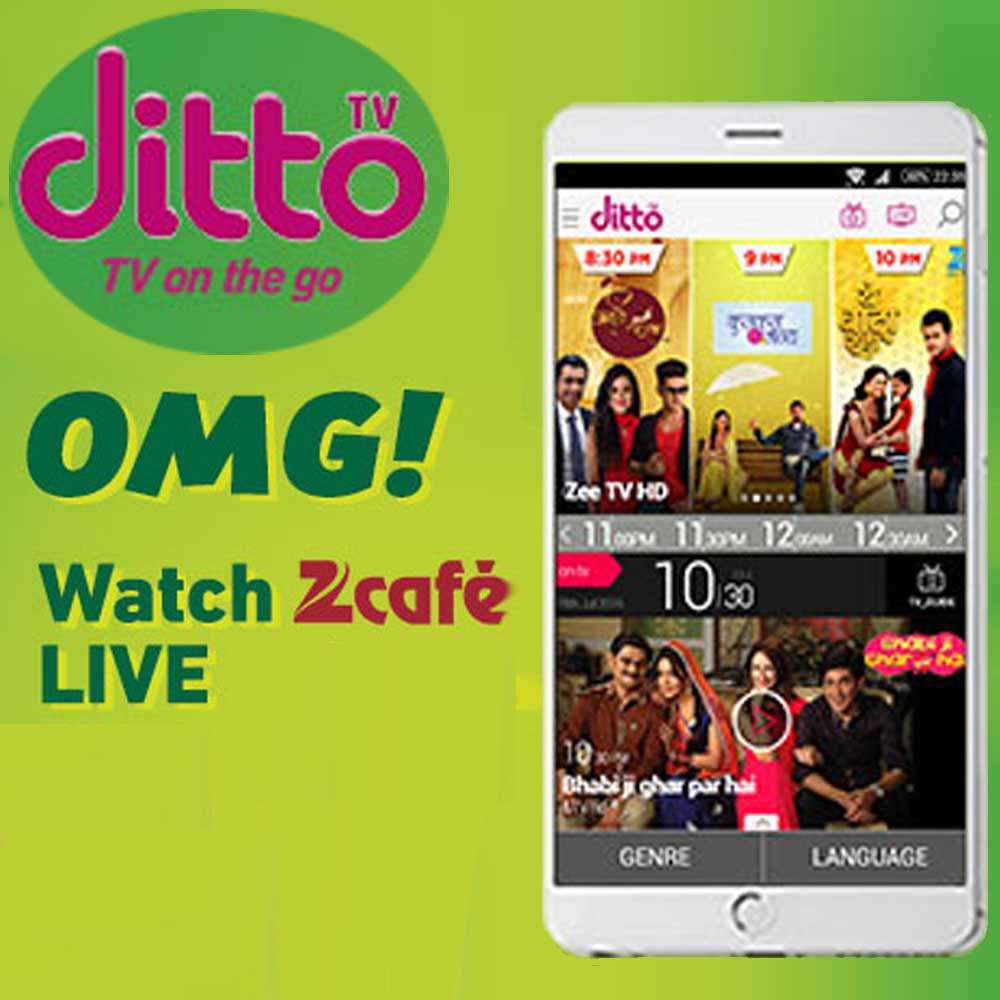
    MUMBAI: Be content with this treat! TV buffs are in for a treat as Zee Digital Convergence Limited’s (ZDCL) OTT platform dittoTV will bring Zee Cafe’s shows to viewers live. With an array of five popular shows, along with a brand new action series, the platform’s subscribers can watch these shows on-the go, anytime, anywhere on their internet connected devices.

    “Indian viewers often have to wait for weeks, even months to watch their favourite U.S. shows. With Zee Café now broadcasting these shows along with the US, fans can watch the latest seasons and be as updated as their U.S. counterparts.

    With this new lineup of international shows, dittoTV brings together an interesting mix of genres – drama, comedy and action on a single online platform, which caters to the content preferences of the young Indian audience,” said dittoTV business head Archana Anand.

    Secrets and Lies season 2 will air on Mondays at 10 pm whereas Big Bang Theory season 2 will air on Tuesdays at 6:30 pm. The season 3 of Gotham will air on Tuesdays at 10 pm. Series premiere of Lethal Weapon will happen on Thursday at 10 pm. The season 2 of Supergirl will air on Tuesdays at 7 pm while season 12 of Grey’s Anatomy will air on weekdays at 6 pm.

    Apart from this addition, the platform offers access to over 100 live channels like the entire Zee Network, Colors, Sony, Aaj Tak, BBC, MTV and Ten Sports.

  • dittoTV to show Zee Cafe content alongside U.S.

    dittoTV to show Zee Cafe content alongside U.S.

    MUMBAI: Be content with this treat! TV buffs are in for a treat as Zee Digital Convergence Limited’s (ZDCL) OTT platform dittoTV will bring Zee Cafe’s shows to viewers live. With an array of five popular shows, along with a brand new action series, the platform’s subscribers can watch these shows on-the go, anytime, anywhere on their internet connected devices.

    “Indian viewers often have to wait for weeks, even months to watch their favourite U.S. shows. With Zee Café now broadcasting these shows along with the US, fans can watch the latest seasons and be as updated as their U.S. counterparts.

    With this new lineup of international shows, dittoTV brings together an interesting mix of genres – drama, comedy and action on a single online platform, which caters to the content preferences of the young Indian audience,” said dittoTV business head Archana Anand.

    Secrets and Lies season 2 will air on Mondays at 10 pm whereas Big Bang Theory season 2 will air on Tuesdays at 6:30 pm. The season 3 of Gotham will air on Tuesdays at 10 pm. Series premiere of Lethal Weapon will happen on Thursday at 10 pm. The season 2 of Supergirl will air on Tuesdays at 7 pm while season 12 of Grey’s Anatomy will air on weekdays at 6 pm.

    Apart from this addition, the platform offers access to over 100 live channels like the entire Zee Network, Colors, Sony, Aaj Tak, BBC, MTV and Ten Sports.

  • Saying traditional TV is dying in India is premature

    Saying traditional TV is dying in India is premature

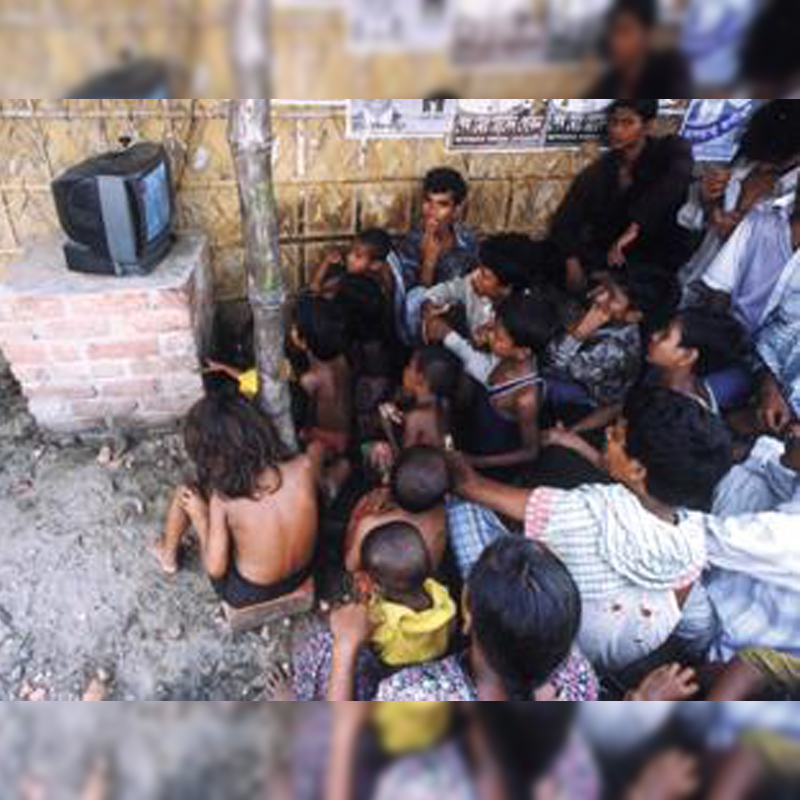
    On a recent road trip to Ladakh with friends we stopped at a nondescript roadside ‘dhaba’ (makeshift eatery) near the Himachal Pradesh and J&K border for tea and to stretch sore limbs. As tea was being boiled, stifled giggling from inside the hutment attracted me. While trying to see if my smart-phone was working so I could check-in on FB, I peeped inside. A group of local kids were enjoying a soap opera on television; courtesy DD FreeDish, a free-to-air DTH platform. My mobile phone, in the meanwhile, showed no signs of life with a No-Network message flashing.

    This, and many other such examples in India’s hinterland, highlight a fact loud and clear: India may be going digital, but Bharat (as non-urban hinterlands of India is referred to by some sociologists and marketers) still roots for the traditional. Such instances also tell us that in a country as diversified, complex and challenging as India, traditional habits, like TV watching, are there to stay despite technological disruptions like streaming video and smart-phones.

    Globally, death of traditional TV viewing has been predicted for past few years. But data and analytics from more mature and developed markets and even some East Asian nations – where digital is a big draw – show that TV as we know it is not going away anytime soon.

    A US Department of Labour Survey, released early 2016, states that watching TV was the leisure activity that “occupied the most time (2.8 hours per day), for those aged 15 and over.”

    BARB (UK equivalent of BARC India) data shows that average daily video viewing by all individuals is 4hrs 35mins and that TV accounts for 94 per cent of all video advertising time. Over the last decade, despite several “disruptive” technological developments, time spent watching TV has hardly dipped, as was being forecast. More importantly, TV continues to have largest reach of all media: it reaches 71per cent of population in a day, 93per cent in a week, and 98 per cent in a month.
    And, these are markets with near total saturation of TV homes, and a highly developed and widespread digital eco-system.

    What about India?

    Appetite for more TV content is only bound to grow given that only 153 million homes in India have TV out of a total of about 250 million (a penetration of about 60 per cent). Rise in disposable incomes, increasing fragmentation of families and continued challenges of Indian infrastructure are bound to push TV viewing higher.

    All-India BARC data for 47 weeks appear to validate that. Average daily TV viewing stands at 3 hours 16 minutes, showing headroom for growth, compared to more mature TV markets that have higher TV penetration rate of 97+ per cent.

    India has close to 900 licensed channels and while Ministry of Information and Broadcasting (MIB) agrees some of these licensees may not be on air, but scores of applicants are in queue too — another indicator of growth in appetite for TV.

    But, what about the perception that traditional TV viewership is losing out due to growth of digital platforms?

    Let’s look at BARC India data for a recent TV event, the Rio Olympics. TV viewership for Rio 2016 grew 2.65 times as compared to London 2012. While 16 million unique viewers watched the broadcast of London Games in India, the corresponding figure for Rio Games is 43 million (using the same viewership base – 1million+ towns). If one looks at the all-India (Urban+Rural) base, Rio 2016 set another high of 203.8 million unique viewers.

    This brings us to cricket, India’s fav sports (apart from politics). BARC data shows that a new viewership high was achieved during an India-Pakistan ICC T20 World Cup match in 2016, which generated a whopping 80.5 million impressions across Star Sports Network and DD National. And these numbers came on the back of not just a larger number of people watching TV, but also considerable higher time spent on TV.

    When asked about linear TV’s impending death in India owing to digital’s growth, Colors CEO and President of the Advertising Club (of India) Raj Nayak waved away the analysis asserting, “I am ready to stick out my neck on this. People who say that traditional television is dying don’t know what they are talking about. TV has been growing and there is still big headroom for its growth in India.”

    India may be adopting mobile phones faster than the US or other western countries, and a major percentage of them are smart-phones. Still, challenges for digital players are big and many ranging from costly data, indifferent bandwidth speed and getting the right content mix for a country that has 22 official languages and over 700 dialects.

    At Vidnet2016, an OTT conference organised by indiantelevision.com recently, Hotstar chief Ajit Mohan admitted that high cost of data is a major hurdle for expansion of streaming services like Hotstar and others like Voot, dittoTV, BoxTv, Arre, Savvn, Hooq, Viu, SonyLiv, etc.

    Data pointing to greater consumption of TV is one side of the picture. Globally, studies and data also indicate that TV remains a highly effective form of advertising.

    A study by the Institute of Practitioners of Advertising (UK’s equivalent of India’s AAAI) shows that TV continues to guarantee best commercial outcomes of campaigns for things such as sales, profit, market share, etc. Echoing similar sentiments, Colors’ Nayak added, “Digital advertising does not have the same impact that TV (advertising) has… Even Amazon, Google and other e-commerce companies have to use TV to make an impact.”

    US-based eMarketer (started in 1996 to study digital trends and considered one of the most widely cited research providers in the media) admits that despite a drop in TV watching time, in general, it hasn’t stopped marketers from pouring significant amounts of money into television advertising.

    Without discounting the strides being made by digital players in India (and they seem to be mushrooming all over like dotcoms during the dotcom boom of the late 1990s), traditional TV’s importance and reach still outstrips that of digital.

    Pointing out that digital does offer consumers choices of watching TV (government lingo for video consumption) at different time and in different formats, a senior government official, having worked at MIB, on condition of anonymity admitted that TV is not going away from India. Rather, the size of India will help it retain its pre-eminence as opposed to other media.

    GroupM too testifies to TV’s strong presence in India compared to other segments of media like print, OOH and digital. In projections made in January 2016, which are re-visited mid-year to do any course corrections if necessary, the company said television was estimated to grow by 17.6 per cent to touch Rs 27,074 crore (Rs. 2,7,0740 million) this year against Rs 23,022 crore (Rs. 23,02,20 million) last year as far as advertising spends go.

    Colors’ Nayak aptly sums up the issue: “There is no doubts that digital will see growth at a phenomenal pace especially with Reliance Jio addressing the bandwidth and speed issues, but digital must be seen as another platform for delivering content and that’s it. There will be lot of content consumption on digital platforms, but it will not be at the cost of (traditional) TV viewing.”

    Like Nayak, I too am ready to bet my bucks on linear or traditional TV in India. Digital has to travel many more miles in India before it can be a replacement for TV, which is still far off from near-saturation point or even plateauing off.

    (Author is Consulting Editor to indiantelevision.com)

  • Saying traditional TV is dying in India is premature

    Saying traditional TV is dying in India is premature

    On a recent road trip to Ladakh with friends we stopped at a nondescript roadside ‘dhaba’ (makeshift eatery) near the Himachal Pradesh and J&K border for tea and to stretch sore limbs. As tea was being boiled, stifled giggling from inside the hutment attracted me. While trying to see if my smart-phone was working so I could check-in on FB, I peeped inside. A group of local kids were enjoying a soap opera on television; courtesy DD FreeDish, a free-to-air DTH platform. My mobile phone, in the meanwhile, showed no signs of life with a No-Network message flashing.

    This, and many other such examples in India’s hinterland, highlight a fact loud and clear: India may be going digital, but Bharat (as non-urban hinterlands of India is referred to by some sociologists and marketers) still roots for the traditional. Such instances also tell us that in a country as diversified, complex and challenging as India, traditional habits, like TV watching, are there to stay despite technological disruptions like streaming video and smart-phones.

    Globally, death of traditional TV viewing has been predicted for past few years. But data and analytics from more mature and developed markets and even some East Asian nations – where digital is a big draw – show that TV as we know it is not going away anytime soon.

    A US Department of Labour Survey, released early 2016, states that watching TV was the leisure activity that “occupied the most time (2.8 hours per day), for those aged 15 and over.”

    BARB (UK equivalent of BARC India) data shows that average daily video viewing by all individuals is 4hrs 35mins and that TV accounts for 94 per cent of all video advertising time. Over the last decade, despite several “disruptive” technological developments, time spent watching TV has hardly dipped, as was being forecast. More importantly, TV continues to have largest reach of all media: it reaches 71per cent of population in a day, 93per cent in a week, and 98 per cent in a month.
    And, these are markets with near total saturation of TV homes, and a highly developed and widespread digital eco-system.

    What about India?

    Appetite for more TV content is only bound to grow given that only 153 million homes in India have TV out of a total of about 250 million (a penetration of about 60 per cent). Rise in disposable incomes, increasing fragmentation of families and continued challenges of Indian infrastructure are bound to push TV viewing higher.

    All-India BARC data for 47 weeks appear to validate that. Average daily TV viewing stands at 3 hours 16 minutes, showing headroom for growth, compared to more mature TV markets that have higher TV penetration rate of 97+ per cent.

    India has close to 900 licensed channels and while Ministry of Information and Broadcasting (MIB) agrees some of these licensees may not be on air, but scores of applicants are in queue too — another indicator of growth in appetite for TV.

    But, what about the perception that traditional TV viewership is losing out due to growth of digital platforms?

    Let’s look at BARC India data for a recent TV event, the Rio Olympics. TV viewership for Rio 2016 grew 2.65 times as compared to London 2012. While 16 million unique viewers watched the broadcast of London Games in India, the corresponding figure for Rio Games is 43 million (using the same viewership base – 1million+ towns). If one looks at the all-India (Urban+Rural) base, Rio 2016 set another high of 203.8 million unique viewers.

    This brings us to cricket, India’s fav sports (apart from politics). BARC data shows that a new viewership high was achieved during an India-Pakistan ICC T20 World Cup match in 2016, which generated a whopping 80.5 million impressions across Star Sports Network and DD National. And these numbers came on the back of not just a larger number of people watching TV, but also considerable higher time spent on TV.

    When asked about linear TV’s impending death in India owing to digital’s growth, Colors CEO and President of the Advertising Club (of India) Raj Nayak waved away the analysis asserting, “I am ready to stick out my neck on this. People who say that traditional television is dying don’t know what they are talking about. TV has been growing and there is still big headroom for its growth in India.”

    India may be adopting mobile phones faster than the US or other western countries, and a major percentage of them are smart-phones. Still, challenges for digital players are big and many ranging from costly data, indifferent bandwidth speed and getting the right content mix for a country that has 22 official languages and over 700 dialects.

    At Vidnet2016, an OTT conference organised by indiantelevision.com recently, Hotstar chief Ajit Mohan admitted that high cost of data is a major hurdle for expansion of streaming services like Hotstar and others like Voot, dittoTV, BoxTv, Arre, Savvn, Hooq, Viu, SonyLiv, etc.

    Data pointing to greater consumption of TV is one side of the picture. Globally, studies and data also indicate that TV remains a highly effective form of advertising.

    A study by the Institute of Practitioners of Advertising (UK’s equivalent of India’s AAAI) shows that TV continues to guarantee best commercial outcomes of campaigns for things such as sales, profit, market share, etc. Echoing similar sentiments, Colors’ Nayak added, “Digital advertising does not have the same impact that TV (advertising) has… Even Amazon, Google and other e-commerce companies have to use TV to make an impact.”

    US-based eMarketer (started in 1996 to study digital trends and considered one of the most widely cited research providers in the media) admits that despite a drop in TV watching time, in general, it hasn’t stopped marketers from pouring significant amounts of money into television advertising.

    Without discounting the strides being made by digital players in India (and they seem to be mushrooming all over like dotcoms during the dotcom boom of the late 1990s), traditional TV’s importance and reach still outstrips that of digital.

    Pointing out that digital does offer consumers choices of watching TV (government lingo for video consumption) at different time and in different formats, a senior government official, having worked at MIB, on condition of anonymity admitted that TV is not going away from India. Rather, the size of India will help it retain its pre-eminence as opposed to other media.

    GroupM too testifies to TV’s strong presence in India compared to other segments of media like print, OOH and digital. In projections made in January 2016, which are re-visited mid-year to do any course corrections if necessary, the company said television was estimated to grow by 17.6 per cent to touch Rs 27,074 crore (Rs. 2,7,0740 million) this year against Rs 23,022 crore (Rs. 23,02,20 million) last year as far as advertising spends go.

    Colors’ Nayak aptly sums up the issue: “There is no doubts that digital will see growth at a phenomenal pace especially with Reliance Jio addressing the bandwidth and speed issues, but digital must be seen as another platform for delivering content and that’s it. There will be lot of content consumption on digital platforms, but it will not be at the cost of (traditional) TV viewing.”

    Like Nayak, I too am ready to bet my bucks on linear or traditional TV in India. Digital has to travel many more miles in India before it can be a replacement for TV, which is still far off from near-saturation point or even plateauing off.

    (Author is Consulting Editor to indiantelevision.com)

  • dittoTV brings live UEFA Champions League to Ten 1 HD viewers

    dittoTV brings live UEFA Champions League to Ten 1 HD viewers

    MUMBAI: The widely followed UEFA Champions League 2016-17 is set to return on Ten 1 HD and football fanatics can also watch the action-packed matches live on dittoTV. The SVOD subscribers can tune into the channel at 12:15 am to catch the league.

    The football league which kicked off this week will see 380 games spanned across nine months. The Champions League final will take place on 3 June.

    The likes of Real Madrid, Barcelona, Atletico Madrid, Bayern Munich, Arsenal, Manchester City, PSG, Juventus and more get set to begin their course for European glory.

    dittoTV business head Archana Anand said, ““Football is one of the most followed sports, especially among the younger audiences in the country. However, due to the late airing time of the Champions League matches, many football fans miss out on the action on TV. With dittoTV, viewers can tune in to Ten 1 HD on their smartphones, laptops or any internet-enabled devices and catch all the football action in real time. We are extremely excited to bring this event to viewers on our platform.”

    The platform is available on Android and iOS platforms. The subscription charges for one month, three months, six months and one year are INR 20, INR 50, INR 90 and INR 170, respectively.

  • dittoTV brings live UEFA Champions League to Ten 1 HD viewers

    dittoTV brings live UEFA Champions League to Ten 1 HD viewers

    MUMBAI: The widely followed UEFA Champions League 2016-17 is set to return on Ten 1 HD and football fanatics can also watch the action-packed matches live on dittoTV. The SVOD subscribers can tune into the channel at 12:15 am to catch the league.

    The football league which kicked off this week will see 380 games spanned across nine months. The Champions League final will take place on 3 June.

    The likes of Real Madrid, Barcelona, Atletico Madrid, Bayern Munich, Arsenal, Manchester City, PSG, Juventus and more get set to begin their course for European glory.

    dittoTV business head Archana Anand said, ““Football is one of the most followed sports, especially among the younger audiences in the country. However, due to the late airing time of the Champions League matches, many football fans miss out on the action on TV. With dittoTV, viewers can tune in to Ten 1 HD on their smartphones, laptops or any internet-enabled devices and catch all the football action in real time. We are extremely excited to bring this event to viewers on our platform.”

    The platform is available on Android and iOS platforms. The subscription charges for one month, three months, six months and one year are INR 20, INR 50, INR 90 and INR 170, respectively.

  • Ithech Taka Tamboo: dittoTV adds Zee Yuva

    Ithech Taka Tamboo: dittoTV adds Zee Yuva

    MUMBAI: Zee Yuva, ZEEL’s Marathi channel, is now available on dittoTV. The channel offers refreshing, light-hearted, and contemporary content that resonates with younger audiences.

    “Content consumption patterns in India have evolved and younger audiences consume entertainment on-the-go. With dittoTV, youth can enjoy shows anytime and anywhere,” said Zee Yuva and Zee Talkies business head Bavesh Janavlekar.

    Shows on Zee Yuva include, Bun Maska, which portrays the life of fun-loving girl, with a confused philosophy of love; Freshers, a show that revolves around college-goers; ShravanBal Rock star, a show about an aspirational rock star who is trying to balance his own dreams and the aspiration of his parents; Yuvagiri, a show which journeys through colleges across different parts of Maharashtra and interacts with the youth to understand their opinion on various issues; Love Lagan Locha, a story which revolves around boys who are trying to find their perfect match; Ithech Taka Tamboo, a story of a man who escapes from the superficial world and tries running a beachside hotel in a small town in the state..

    dittoTV business head Archana Anand said, “Zee Yuva strikes a connect with our subscribers, especially college and hostel students, due to it’s novel content. We have witnessed a high consumption of regional GECs on dittoTV. Going forward, we will continue to expand the variety of channels across languages and genres to suit audiences across different target groups.”

  • Ithech Taka Tamboo: dittoTV adds Zee Yuva

    Ithech Taka Tamboo: dittoTV adds Zee Yuva

    MUMBAI: Zee Yuva, ZEEL’s Marathi channel, is now available on dittoTV. The channel offers refreshing, light-hearted, and contemporary content that resonates with younger audiences.

    “Content consumption patterns in India have evolved and younger audiences consume entertainment on-the-go. With dittoTV, youth can enjoy shows anytime and anywhere,” said Zee Yuva and Zee Talkies business head Bavesh Janavlekar.

    Shows on Zee Yuva include, Bun Maska, which portrays the life of fun-loving girl, with a confused philosophy of love; Freshers, a show that revolves around college-goers; ShravanBal Rock star, a show about an aspirational rock star who is trying to balance his own dreams and the aspiration of his parents; Yuvagiri, a show which journeys through colleges across different parts of Maharashtra and interacts with the youth to understand their opinion on various issues; Love Lagan Locha, a story which revolves around boys who are trying to find their perfect match; Ithech Taka Tamboo, a story of a man who escapes from the superficial world and tries running a beachside hotel in a small town in the state..

    dittoTV business head Archana Anand said, “Zee Yuva strikes a connect with our subscribers, especially college and hostel students, due to it’s novel content. We have witnessed a high consumption of regional GECs on dittoTV. Going forward, we will continue to expand the variety of channels across languages and genres to suit audiences across different target groups.”

  • Ditto TV sees more demand for regional content

    Ditto TV sees more demand for regional content

    MUMBAI: With an aim to be the default app on every internet enabled smartphone in India for content delivery, Zee’s dittoTV seems to have got its marketing pitch correct with #BeeskaTV and #DeshkaTV campaign.

    Poised to clock an annual revenue of Rs 150 crore (according to a media analyst) from a base of approximately six million installs (downloads), mostly in the Hindi speaking markets (HSM), the OTT service is attracting audience from a segment that is still growing in India.

    “We have received a phenomenal response across all our platforms— six million installs and counting! The viewers loved our television commercial and we trended at no. 3 worldwide on Youtube when the campaign went live,” gushed dittoTV business head Archana Anand.

    #BeeskaTV and #DeshkaTV were among the top 10 Twitter trends worldwide, according to Anand who added that the the dittoTV app trended at #1 in the entertainment category in both the Android and iOS app stores.

    With an aim to build on this trending success and further enhance penetration, the digital platform has tied up with sister company Siticable, which is one of the oldest and largest MSOs in the country. Both come from the Subhash Chandra and family-promoted Essel group.

    As part of this collaboration, Siticable will be pushing the authentication and subscription to dittoTV from its portal to the subscribers of its cable TV service for free. The cable TV service will share 20 per cent as revenue for every ditto TV subscription that the operator sells.

    dittoTV subscription charges for three months, six months and one year are Rs 50, Rs 90 and Rs 170, respectively.

    “They say well begun is half done. By that theory, we are in an extremely good position. With the new alliance rolling out and the masses sharing the phenomena of #BeeskaTV, we see the start of a fun and exciting journey,” Anand explained, adding a strong uptake is also reflected on the service’s usage and good content consumption.

    Anand and her team are working on getting new business partnership for the platform and some alliances are said to be in the pipeline, which were not disclosed.

    The platform credits its success to a combination of factors: width and depth of content and its incredible pricing. dittoTV offers access to over 100+ Hindi, English and regional-language channels encompassing general entertainment, sports, movies, news and lifestyle at just Rs 20 a month.

    What worked best on Indian television (general entertainment) seems to have mirrored on the OTT service too as GECs were key drivers of dittoTV, followed by regional and news channels.

    “Regional language content performs superbly across all our platforms and is rising steadily,” opined Anand claiming that regional viewer is also a `returning viewer’ and spends higher time compared to the platform average.

    “On certain days, we’ve actually seen higher consumption for certain regional GECs as compared to key Hindi GECs. Sports and News are very event based and do extremely well for us in bursts when there is a sporting event or breaking news,” Anand said.

    The average view time on the platform has been up to 24 minutes per user. What the reason? Events like cricket (the West Indies vs. India series) and the bundling of dittoTV with data packs with telcos like Idea Cellular have contributed to this substantially.

    dittoTV has deliberately positioned itself differently from other similar players in the markets like HotStar, Sony Liv and Voot as they follow a simple and clear strategy of providing live content similar to what is available on television.

    An aggressive pricing strategy notwithstanding, dittoTV is still far away from replacing cable TV or DTH from consumer homes as a primary source of video consumption, but Anand is upbeat.

    “TV is synonymous with entertainment for the Indian masses and dittoTV being a linear TV offering remains synonymous with TV. I strongly believe that our platform will be a game changer and will help us drive volumes as well as change the way people consume content on-the-go,” she concluded.