Tag: Ditto TV

  • ‘Iss Pyaar Ko Kya Naam Doon Ek Jashn’ to ‘ICC  World Cup’ What’s hot on the Indian OTT scene

    ‘Iss Pyaar Ko Kya Naam Doon Ek Jashn’ to ‘ICC World Cup’ What’s hot on the Indian OTT scene

    MUMBAI: The latest buzz about town is how Netflix is all set to launch in India later this week. But even without the American Video On Demand (VOD) giant, India’s over the top (OTT) scene has kept pretty active, thanks to all the new and edgy shows that the different platforms streamed last year and some more lined up to storm digital screens later this year.

    Hotstar, #Fame, Sony Liv and Ditto TV have kept the market up and running with carefully curated content, which paves way for a promising future for web-only content in 2016. In the light of the OTT space hotting up, Indiantelevision.com compiled a list of such initiatives on digital platforms in India that made an impact in the web-only content market.

    1) Iss Pyaar Ko Kya Naam Doon — Ek Jashn: No sooner did word get out that this phenomenal fiction show from Star Plus, that ruled the tele ratings chart three years back, was going to have a reboot through the network’s OTT platform, Hotstar, fans of the show were already going gaga over this mini-series. It was a clever move on Star India’s part to not only evoke nostalgia for the popular show but also turn a chiefly television audience towards its OTT platform.

    2) Love Bytes: While television is slowly only just proceeding to handle progressive and bold content, digital has been way ahead of its broadcast counterpart in this arena. Take Sony Liv’s exclusive web series Love Bytes for example. Targeted mostly at metro centric netizens, this show, which was initially launched on Zoom, was later moved to Sony Liv as India’s first-ever show exclusively for the digital platform.

    The 26-part series, which stars Kushal Punjabi and Sukhmani Sadana, portrays the ups and downs in the relationship of the lead characters Ananya and Abhishek.

    3) On Air with AIB: Think web only and YouTube in India, and the very first name that comes to your mind is All India Bakchod or simply AIB. Therefore it was no surprise when Star India roped in the four comedians for a new show On Air With AIB on Hotstar albeit with re-airings on Star World and Star Plus. This OTT first show garnered a huge response from the millennials and can be easily considered one of the breakthroughs in digital content. Inspired by factual comedy that is patented to American comedian John Oliver for his show Last Week Tonight, On Air With AIB delivered a new breed of comedy that makes fun of burning social issues and at the same time strikes a key note with the audience.

    4) ICC Cricket World Cup 2015: Hotstar became a new partner for all cricket fans in India early 2015. With its epic launch with ICC Cricket World Cup played in Australia and New Zealand, the VOD platform leap-frogged to one of the most downloaded apps. The matches were played in the wee hours of the morning leaving Indian fans fuming in dismay. In came Hotstar and in a jiffy Indian fans took to the app to get a fix of their favour favourite sport.

    5) Re-Gender (Indian adaptation): The new kid on the block in the digital content scene, Arre from Ronnie Screwvala’s UDigital is also all set to take everyone by surprise with edgy content that is rumoured to set some new standards in the industry and blur other lines. For starters, the platform plans to release a provocative docu-reality show that is inspired by Israeli LGBT show Re-Gender. Distributed by Armoza Formats, the show’s format allows gives men and women a chance to experience life of the opposite sex.

    While the show’s title in India remains tentative in India, it will be interesting what comes out of the three weeks’ shooting time at Chhatarpur in Delhi.

  • After IPKKND, five other television shows OTT can bring back!

    After IPKKND, five other television shows OTT can bring back!

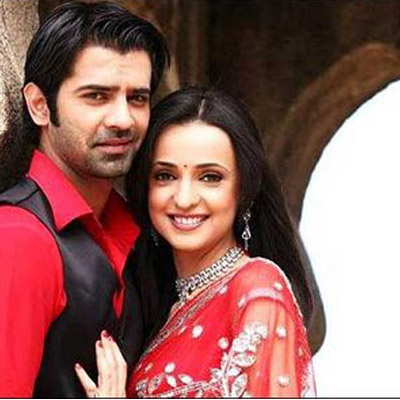
    MUMBAI: Some time ago, television lovers were pleasantly surprised when Star India announced that it was bringing back one of their most loved TV shows and chart toppers,  Iss Pyaar Ko Kya Naam Doon as a web series on Hotstar. The web series would not be made up of repeats. An eight episode mini-serines with brand new content titled Iss Pyaar Ko Kya Naam Doon Ek Jashn was planned

    Under the ‘Entertainment Mafia’s’ banner of productions, each episode will be 10 mins long and will take the lead characters’ ‘Arnav’ and ‘Khushi’s’ story forward since the serial went off air 3 years ago..

    Read more here

    It wouldn’t be an exaggeration to say Iss Pyaar Ko Kya Naam Doon is what made its leads, Sanaya Irani and Barun Sobti into the superstars that they are today. The show went off air in 2012 leaving its huge fan base in both India and abroad wanting for more. So much so that they strived hard to keep forums discussing the show alive with fanfics and self-compiled music videos. Now that the show is back, albeit for a brief period that is eight 10 minutes per episode long, fans are ecstatic over the development. Some are even hopeful that this will become a trend, so that they can reconnect with their favourite shows that went off air.

    Revisiting old shows that had built a sense of loyalty and fan base amongst viewers  is a great way to introduce traditional television watchers to their Over The Top services  like — Ditto TV for ZEEL, Sony Liv for Sony, and of course Hotstar for Star India.

    Getting a time slot during the television prime time band is difficult considering the tough competition between channels to garner more eyeballs and more so, in the Hindi GEC genre. Shows with slightly unconventional content, which didn’t strike well with all demographics at the same time often needed to be pulled off to make space for the next big thing. In fact 2015 saw many shows with very short life spans, they didn’t even make it through half the year.

    Being a more dedicated, customisable and targeted platform, OTT can be a great way to re-introduce such shows and give them another run chance to cultivate a niche audience.

    Taking a cue from Star India, Indiantelevision.com has compiled a list of popular shows that went off air, shows which can be revisited through the networks’ respective digital arms.

    1: Left Right Left [ Air time:  2006 – 2008 on Sab TV ]

    Under DJ’s Creative Unit’s production  banner, the youth centric show Left Right Left came as a daring move from Sab TV when contemporary Hindi GECs were sticking to the ‘saas bahu’ formula on the prime time slot..

    With its catchy opening song to edgy content and a powerful team of young actors including Rajeev Khandelwal as Captain Rajveer Singh Shekhawat, Left Right Left was a show ahead of its time when it comes to the youth genre in Indian television. Perhaps that’s why it earned itself a season two on the channel, though it wasn’t able to create the same fervour as its predecessor. None the less, fans of the show are still seen raving about it, and watching its repeats on YouTube. The show’s opening song and episodes that have been uploaded on YouTube see frequent traction as well. Relaunching the show on Sony Liv might bring a smile on the faces of these fans.

    2  Pavitra Rishta: [ June 2009 to October 2014 on Zee Tv]

    In Balaji Telefilms’  trademark mark style,  soap opera Pavitra Rishta  had a unique positioning with its audience —  it was not only appealing to the mothers and aunts in the family, but progressive ideas and dynamic actors like Sushant Singh Rajput and Ankita Lokhande, allowed several youngsters to take interest in the show. The actors’ successful careers post the show only proves how popular it was. Not to mention the show’s reel couple ended up being a couple in real life.

    With close to 1500 episodes, the show has a huge fan base, as is obvious from a slew of Facebook groups and other fan clubs that regularly update their fanfics. While both the leads of the show have gone on to shine in the industry, making the idea highly unlikely, but returningPavitra Rishta on Ditto TV sounds like an awesome idea to the millions of fans of the show. ZEEL are you listening?

    3. Manmarziyan:  [ April 2015 to August 2015 on Star Plus ]

    Created by Swastik Pictures, Manmarziyan addressed the young independent women in India whose idea of a successful life isn’t marrying rich and settling down, but chasing after their dreams. The show was an experiment for both the channel as well as the production house

    With this modern approach content, the show struck a chord, but, only with a niche audience and therefore had to be pulled off air. Post which many fans of the show came with several petitions to see it back on air. As a response to them, if not on television, Manmarziyan can be brought back and continued on Hotstar.

    4. Na Bole Tum Na Maine Kuch Kaha [Jan 2012 to Oct 2012, 2013 on Colors TV]


    With a very unique storyline, Sunshine Productions’ Na Bole Tum… was yet another show that left tele lovers asking for more, so much so that the craze remains even after the second season aired on 2013 with a 12 year leap from the first season. Aakanksha Singh and Kunal Karan Kapoor emerged as powerful actors throughout the series and connected the audience to the not so conventional characters, Mohan Bhatnagar and Megha Vyas. Log on to any popular television drama fan club or group on the web and you see fan letters and petitions pouring in requesting a season three! With  the Colors TV lineup packed with new shows, fans may have to hold on to their season three plans, unless the recently announced VOD service from Viacom 18, VOOT takes up the chance and offers the show’s fans a chance  revisit to their favourite show.

    5. Geet Hui Sabse Parayee: [ April 2010 to December 2011 on Star One]

    Another gem from Star India, Geet Hui Sabse Parayi, is known for several reasons — for touching upon a serious social issue, for introducing yet another unconventional heroine, and for the sizzling chemistry and jaw breaking comic exchanges between the leads  Drashti Dhami and Gurmeet Chaudhary. Produced by Endemol, the show was well received by both youngsters and the plus 40 viewers.  The popularity of the Drashti-Gurmeet couple on screen was perhaps only next to Sanaya and Barun Sobti in Iss Pyaar Ko Kya Naam Doon. In fact, for some, Geet and Maan still remain the classic bubbly girl and angry young man pair on small screen.Though the show had to be axed due to the channel undergoing a revamp, several fans maintain an active fan page for it.

    Fan made videos featuring the leads in latest romantic songs have entertained fans of the shows even now. Ask them if they wish the story continued from where they left off, you would get an emphatic and unanimous yes! So maybe after IPKKND Hostar can pick up Geet for them?

    While we have listed just five, there are several other shows that fans would love to have back in a cool new digital avatar.

  • Ditto TV aims to double revenues this fiscal; plans more original shows

    Ditto TV aims to double revenues this fiscal; plans more original shows

    MUMBAI: It’s gotten late off the blocks but it sure is looking to sprint ahead and fast. We are talking about the Zee network’s digital over the top (OTT) offering Ditto TV.


    Zee Digital Convergence (ZDC) Chief Executive Officer Debashish Ghosh told PTI over the weekend  that his goal is to double his company’s revenue from around Rs 30 crore to Rs 60 crore this year, with almost 95 per cent of it coming courtesy subscription.


    With 1.8 million subscribers on a monthly basis and almost 60 percent of them being repeat viewers, Ditto TV is present in 167 countries. Most of its consumption is however happening in India. With the exception of Star and Sun group channels, Ditto TV offers 156 channels across 13 languages. Ghosh further told PTI that almost 30 per cent of Ditto TV subscribers consume live TV.


    ZDC  has invested around $5 million in Ditto TV over the past three to four years, Ghosh disclosed. That is slated to go up in the coming months as it starts pumping in money into original content. The first of these is a music based show called Life is Music; other programmes are being planned in-house as well as with outside producers.


    Clearly, the OTT original content space is seeing a lot of action.


    Netflix is slated to launch in India by mid next year and invest top dollar in cutting edge content. Star India’s Hotstar already has an average of 20 million users every month. It has paid a fat commissioning fee to stand up comedy group All India Bakchod to produce shows running over 20 episodes. Then it has been premiering some of its big-ticket Bollywood movies and TV shows on Hotstar.


    Entertainment major Eros International recently announced that the registered user base of its OTT service Eros Now has grown to 30 million as of 30 September.  It has ordered six new original shows which are slated to debut soon and feature big name stars.


    MSM Media’s Sony Liv, on the other hand, notches up an average of 5-7 million monthly users, and is also getting into OTT content.  It is experimenting with a fiction show titled  Love Bytes. Then the Viacom18 group is also pacing on the sidelines, gearing up to launch its own OTT service under the leadership of Gaurav Gandhi.


    Ghosh, while speaking at IDOS (organized by Indiantelevision.com and MPA in September) said that the hyper activity is good for the OTT sector as a whole.


    He further  told PTI, that India is expected to have 500 million Internet users by 2017, out of which 382 million would be smartphone users, 70 per cent whom would be 3G/4G customers. And that is what is exciting the Zee TV network to further invest in Ditto TV.  Add to that the prediction that almost 60 per cent of India’s population is going to below 40 by 2020, and that both wired and wireless broadband infrastructure will be in place. That’s the positive side.


    “But the fact is that the OTT players will find the going challenging,” says a media observer. “At least until the numbers really scale up and bandwidth constraints and costs fall. Indian consumers are chary of paying for content, apart from cricket. Hence, Hotstar has taken the AVOD route (advertising video on demand). But advertisers and agencies have been reluctant to buy into the medium; at least at prices Star has envisaged. Eros Now has announced a multiple revenue stream offering which includes advertising, transactional (TVOD) and subscription video on demand (SVOD), with differential pricing for Indian and international consumers. Ditto TV is primarily SVOD and its growth has been limited so far. Each of them has to find a robust and sustainable revenue model.”

  • Hotstar tops as online source for sports in top 6 metros: TeleWeb

    Hotstar tops as online source for sports in top 6 metros: TeleWeb

    MUMBAI: Star India’s over-the-top (OTT) platform Hotstar has emerged as the biggest online source for consumption of sports in the top six metros of Mumbai, Delhi, Kolkatta, Hyderabad, Bengaluru and Chennai.

    A total of 1361 (000s) people consumed sports on the Hotstar platform in the top 6 metros making it the most reached online sports platform according to the TeleWeb Audience Measurement system for the period of April -June 2015.

    With HotStar airing IPL8 matches, Star Sports internet channels managed to garner a reach equivalent to 19 per cent of the TV reach for IPL on all Sony channels put together.

    In the six metros, Mumbai contributed the highest reach of sports internet channels with a contribution of 33 per cent followed by the next biggest market for sports internet channel, which is Delhi with 22 per cent contribution.

    The second most consumed online sports platform in period of April – June 2015 was Sony Sports Network’s Sony Liv with 234 (000s) in the six metros followed by Zee’s Ditto TV in the third slot with 167 (000s).

    Apart from top consumed sports internet channels, other cricket websites and apps consumed 1159 (000s), whereas IPL websites reached 721 (000s) in the above mentioned six metros.

    Amongst the six metros, Kolkatta also emerged as a major contributor to the reach of Star Sports Network internet channels and other cricket websites & apps.

    According to TeleWeb, the Star Sports Network witnessed the highest incremental reach from the internet, which led it to displace Ten Network for the second position in the period from April – June 2015. Moreover, Star Sports Network got 21 per cent of its total reach from Internet exclusively.

  • Cyrus Oshidar launches youth centric digital venture 101India.com

    Cyrus Oshidar launches youth centric digital venture 101India.com

    MUMBAI: Digital ventures are mushrooming in the country nineteen to a dozen. With the big daddys of Indian media and entertainment like Raghav Bahl and Ronnie Screwvala leading from the front in the space with new ideas and bags full of investment, it doesn’t take much to figure that digital is where the future lies. And another such media personality, who is putting his money where the mouth is, is the former MTV man Cyrus Oshidar.


    When it comes to interacting with the youth in India, there’s no bigger name than Oshidar. Under his supervision at MTV India, iconic creative series targeted at the youth were launched, which successfully managed to garner the TG’s attention. Be it Roadies, or the musical voyage in Sound Trippin, uniqueness was forever visible in each and every concept.


    The man who played a pivotal role in establishing youth market in India with multiple innovations, is now set to connect with the youth yet again and this time with the digital portal 101India.com. The portal was launched a month ago with the aim of providing unique and differentiated content for young Indians. What’s more, his team’s unique skill sets were also used to create deeper and more relevant brand solutions. With 101India, Oshidar and his team aim to lead the digital content movement in India.


    Speaking exclusively to Indiantelevision.com, 101India.com MD and chief creative officer Oshidar says, “It was at the 2012 Cannes’ first branded content and entertainment contest that the concept of 101digital.com came into my mind. It’s time for the movement to begin. We need to talk to the youth in a creative manner, which they will acknowledge and then eventually interact with.”


    Combining adverts in a subtle manner with content on the platform is how the portal will look at making an impact on the youth’s mind. Oshidar says, “We are not a million hits platform and hence we are not going to go pitching to advertisers with promises to millions in return for their crores. We know how to speak to the youth of the country and that’s all we will do. Gone are the days of putting ads in between content. Now we have to fit the brand in the content itself and that’s what we will do in 101India.com.”


    The content publishing platform will target educated metro youth aged between 21 – 25 years and hence majority of the marketing and promotional activities to promote the venture will revolve around social media.


    Broadband speed in the country is poised to get a major fillip what with Airtel 4G already hitting the market and Reliance Jio impending launch by year end. Oshidar is of the opinion that these rollouts will enhance the infrastructure and bridge the gap between quality streaming and content.


    While internationally acclaimed over the top (OTT) venture Netflix is speculated to start its India operation in 2016, another player HOOQ has already launched its India ops. The space is getting cluttered by the day with the addition of Indian OTT players like Ditto TV, Hotstar and Eros Now amongst others. There’s cut-throat competition in the market and established ventures can often overpower startups. However, Oshidar believes that quality content will always sustain. “Game Of Thrones will remain Game Of Thrones and people will consume it irrespective of the platform. So we need to have premium content to sustain in the long run,” he asserts.


    101India.com will soon launch an app to reach out to more mobile customers. In terms of content, the venture has created a documentary on the issue of transgenders in association with Times of India’s online venture Indiatimes.com. Also in the pipeline are a series of fiction shows along with a few short movies.


    The entire production is taken care of by the in-house team at 101India.com. “We are blessed to have a group of creative talents, who have worked closely with me at MTV and we execute the production all among ourselves,” Oshidar concludes.


    More digital power to Oshidar we say!

  • “If OTT players offer a unique proposition, all of them can co-exist:” Debashish Ghosh

    “If OTT players offer a unique proposition, all of them can co-exist:” Debashish Ghosh

    ditto TV – India’s first OTT venture owned by media mogul Subhash Chandra – is all set to thrust forward in the space with a strong focus on innovation and fresh content. The OTT player has launched its international operations and will soon have content from across the globe. 


    In conversation with Indiantelevision.com’s Anirban Roy Choudhury, ditto TV CEO Debashish Ghosh shares his vision and thoughts on the emerging OTT market in India. Prepared to take on international players entering the market, he says that Zee Entertainment Enterprises does not believe in loss making business propositions. Every business under the conglomerate is financially independent. The emerging market not only has the potential to grow rapidly but also offers ample scope for innovation.


    Excerpts:


    Is India ready for OTT platforms? How is the market shaping up?


    The Indian market is surely getting ready for OTT. The only challenge that Indian OTT players face is that of bandwidth. The cost of data be it mobile or cable is high. For an average Indian to shell out Rs 2000 individually to have internet on their mobile is still a challenge. Yes, things are improving and it’s but natural that penetration will increase. Statistically, we are going over the US when it comes to penetration of the Internet.


    We at ditto TV are cognizant of the bandwidth condition in the country from the very beginning. Hence, we are not a platform that only works on 3G or Wi-Fi. ditto TV also works on 2G, WAP as well as on feature phones. The OTT market in India is growing and has great growth opportunity. The infrastructure will get better and data will become cheaper as we go along. The growth of OTT will also be interconnected with the new set of consumers that are coming in. Anybody born post 1990s and is above 25 years old doesn’t really watch TV today. They watch all their content on the digital platform.


    Which revenue model will sustain in the long run for OTT players in India and which model will ditto TV follow?


    I don’t believe any one model will work. It has to be a hybrid scenario. Advertising revenue for at least next three – five years is not the proposition that will be sufficient to offset the cost, so if the business strategy is to incur huge losses then going with the advertising platform is okay. We don’t believe in such loss making propositions. We believe in that whatever business we do, must pay for itself and that’s the reason why we follow the subscription model. I think we are one of the two players, who follow a subscription revenue model. World over the subscription based revenue model is something that’s proven to be sustainable and I don’t see that changing in India.


    What kind of advertising can OTT platforms offer? What is the advertiser’s overview on the platform?


    If today India is paying for TV that means they are paying for content. The way digital platforms have progressed in this country, creates a challenge. So far the advertising model was working but we all know that it’s stagnating now. Display advertising by its own nature isn’t attractive anymore on digital for brands. As digital is a measurable medium, people over the platform want to target a specific audience and hence the funda of mass roll-out does not work here. That’s why a proposition like native advertising is coming in and innovations like brand solutions, integrated marketing and most importantly proposition like highly targeted advertising will work. Now when a brand wants to advertise, they won’t say “I want ‘X’ GRP” or “‘X’ circulation of a medium,” but will instead say “I want to target 1 million Male, who are aged between 24-32 and are interested in sports.”


    BARC is scheduled to release data for all screens which will also include screens that OTT caters to. Do you feel we have enough data to provide brands with a platform for targeted advertising?


    Even if BARC provides data for all screens, it will still remain a sample based proposition.


    On the other hand, publishers today have the capacity to roll out empirical data. We can give empirical data of the number of people watching our content, how they are watching it, how much time they are spending and how many of them are coming back. Based on this data, we can target specifically. That infrastructure is a function of technology and technology exists today. There are many data management companies like Lotame and Bluberry, which are in play today. So it is possible to fulfil advertisers’ demand and those who can fulfil this will remain in play or get premium CPM for their inventory. The growth will come from targeted advertising. But I believe that India is a market where if the content is original, attractive and effective, people will pay for it.


    What’s your take on the current content on OTT platforms? What will be ditto TV’s content strategy and what kind of content is likely to work?


    Largely, OTT players today are going for pre-produced TV content, which is easily available. At the same time, brands, freelancers and MCNs are also creating a lot of original content. ditto TV has also invested in creating original content. We launched a music show, which is exclusively for digital and then we are also moving towards producing a whole lot of original shows in different genres like humor, horror, short series and short movies etc. This is sharable content that resonates with consumers, which is not necessarily long. 


    I believe that the debate between long and short show is a wrong one. Content is what is important. If the content has quality, short will also work. We can take example from Sujoy Ghosh’s Ahalya, which got more than two million views in three days. So if the content has quality, it will fly. We make so many long movies but how many do we actually remember at the end of the day?


    Do you think an ‘only original’ content strategy is monetarily sustainable at this stage?


    Creating content cannot be the only strategy. Producing content is also a strategy. One must have all sorts of content including original content. You cannot drive something only on the basis of original content. Let’s face the reality, TV content is still attractive and liked by the mass so there is no point in saying that we will only create original content and dump TV.


    Also if you create content, you have to find different ways of monetizing it and that’s where syndication comes in. If you are stuck to a particular model, it’s highly unlikely that you will recover money. Also, the more the content is watched, the more relevant it becomes. House of Cards, Game of Thrones and Orange Is The New Black are examples that we already seen.


    Do you feel post the 4G launch, there will be more mobile consumption?


    I am keenly waiting for 4G to roll out. But I believe that content will be consumed on both mobile as well as broadband devices. Expecting someone to watch content full day standing on one leg is a little too much as entertainment is not only about content quality but also experience. So group viewing will continue but at the same time when someone is travelling, instead of missing the content because they are in transit, they will watch it on mobile devices, which they wouldn’t be able to do if OTT wasn’t present. In my opinionm consumption is never a ‘or’ but is always an ‘and’ proposition.


    Do you feel that the launch of global OTT players Netflix and HOOQ can pose a threat to existing Indian OOT platforms?


    India is a very big market and there is scope for everybody to play, provided you are unique. Whether you are ditto TV, HOOQ, Netflix or Hotstar, your USP should be clear to the consumers. The consumer is fickle, so if these players bring in a unique proposition in terms of content and entertainment, all of them will reside simultaneously.


    However, in the long run, there will be players who will survive and those who will perish. The platform offering the best holistic experience will survive and hence OTT players will have to keep innovating and setting benchmarks.


    Was ditto TV’s new TVC with the tagline ‘Who watches TV alone?’ launched with the aim of taking a dig at Hotstar’s ‘Go Solo’ campaign?


    If you don’t go only by the last line, with this campaign what we are actually trying to convey is that television viewing is a collective experience. Initially when TV came to India, it used to be a community viewing. We all used to go to the neighbour’s place and watch Mahabharat. I believe that has not changed significantly because it’s entertainment at the end of the day.


    Entertainment is consumed with people one cares for and that’s what we wanted to communicate. In today’s world, where cultures are shifting, people are moving out of their families, nuclear families are mushrooming but relationships do not change. So if people have separated due to circumstances, they don’t need to change their habit of watching TV together. That’s why we showcased mother – daughter, fiancé, brother and sister as well as friends in our campaign. This campaign was executed after research and has nothing to do with Hotstar or its campaign.


    With the campaign, was the aim to reach a particular milestone in terms of downloads? What is ditto TV’s subscriber base at this stage?


    Downloads mean nothing to us. Ideally, download should mean nothing to everybody. It is just an eyewash. Being a subscription based platform, we analyse ourselves on the basis of the number of active subscribers we have and our target is always to enhance the subscriber base, not the downloads.


    We have 1.5 million monthly paid subscriber base out of which most of them are based in India. We have just launched our international operations and have around 20,000 international subscribers. We believe that international operations will play a big role in our growth in terms of monetisation. 


    What is the roadmap ahead for ditto TV?


    Our goal is to have a worldwide presence with a versatile range of content, which includes both regional as well as international content. We will keep innovating and offering people an exquisite experience. We will make subscription easy and have a wide range of packs, which will make people pay for what they want.


    A Bengali has no necessity of a South Indian pack and vice versa, so we will make sure that channels are not forced on to consumers. We allow users to download shows and watch them at their leisure. So overall, we will keep innovating and I believe that’s something that the OTT sector also needs to do non–stop.

     

  • #fame is an amalgamation of technology and content: Saket Saurabh

    #fame is an amalgamation of technology and content: Saket Saurabh

    MUMBAI: The staircase to fame is less steep and wider today than it used to be a couple of decades ago. In the era of digital adeptness, a person sitting in Bangalore or Bokaro, Jalandhar or Jamshedpur, Mumbai or Mussoorie, Delhi or Daman has an equal opportunity to showcase talent and content to the world at the click of a few buttons.


    Over the years, from hoardings to cinema to television, the medium through which fame can be achieved has changed drastically. Today, with the emergence of the digital medium, talent no longer needs to follow the long and tedious process. The ‘funda’ is simple: If you if have quality content, all you need is a hashtag to become famous.


    At a time like this, armed with the motto of providing a platform to talent that has the quality content, To The New Ventures’ (TTN Ventures) platform – #fame is making waves in the digital world.


    With the launch of its new app a couple of months back, #fame enabled users to stream content live, which can be consumed real time.


    Speaking to Indiantelevision.com, #fame CEO Saket Saurabh says, “We started our journey as an entertainment network by creating digital first content, which was exclusively for digital. The app, which is India’s first live-streaming app, has seen half a million downloads since launch and that is very encouraging. The app is dedicated to talent where anyone can live beam their performance, find an audience, interact and create a marketplace.”


    “As a company we are focused on talent. Our aim is to ensure that we discover emerging talent using the power of digital and give them a platform to showcase their skills and find an audience. We have two fundamentals: one is content and the other is tech. The #fame app is an amalgamation of both,” Saurabh asserts.


    Currently, the company’s main focus is to create a quality wave of supply, which can meet consumers’ demand. “We have more than 15000 unique performers and we’re adding 500 new performers every day. In this business, supply is most important and hence having good supply was always our priority,” adds Saurabh.

    Forging multiple tie-ups since inception, #fame’s biggest association so far has been with the IIFA Awards. “We are getting a lot of engaging content. This year we partnered with IIFA and with that we changed IIFA from a two hours prime time show to a three-day entertainment gala. We created content that would never find a television spot and consumers lapped it all up. From the green carpet to behind the scenes, the who’s who of Bollywood were chatting with subscribers and that’s the power of the app,” Saurabh explains.


    Today, the Indian youth is constantly interacting across various mediums while consuming content and constant partial attention has become a primary discussion for the ad fraternity. In the age of real time interaction and trending hashtags, consumers are giving their opinion across social medium. The digital medium, be it over-the-top (OTT) or video-on-demand (VOD) platforms, has the infrastructure to provide brands an opportunity to be a part of the real time interaction.

    Saurabh is of the opinion that this phenomenon is poised to get a major impetus in India due to various factors, technological advancement being one of them. “The primary reason for real time interactive mediums to grow is the overwhelming penetration of smartphones. Secondly, the impending launch of 4G will play a pivotal role in ensuring feature phone users’ move towards the smartphone. Last but not the least, access cost will come down while the intensity and quality of streaming will enhance. So interactive mediums will enhance their base and become more mass. The digital medium gives marketers the option to target and analyse specifically because of its interactive nature,” he says.


    A key reason for the digital medium’s success is its ability to catapult a person to instant fame. Moreover, according to Saurabh, it definitely has the potential to sustain in the long run. “There is a sea of content creators who are looking towards digital to communicate, which in return is spelling success for the likes of YouTube, Facebook or even #fame for that matter. Talent like All India Bakchod and The Viral Fever are coming to the forefront gaining national and international attention thanks to the medium. What this phenomenon tells us is that there is a wave of talent using digital to come to the fore and connect directly with the audience, which has never happened before. A couple of decades back when television and films were the only medium of exposure for talent, the success ratio of people making it big was very small. The digital medium has multiplied the ratio by 100x if not more. Now all people need to do is shoot and upload. If it has quality, it will get the wings to fly. Digital made things more meritocratic and reduced the reluctance on luck,” Saurabh adds.


    #fame, which follows the advertising revenue model, is not looking at the subscription based revenue model as of now. The venture’s focus is to create exclusive content, which can be a great platform of promotion for brands too and help in creating a value proposition for advertisers.


    “We have had a very strong relationship with advertisers right from the beginning. Being a talent management company, we indulge in creating a lot of properties, which helps us to discover talent. We created a fashion property where Karan Johar was a mentor and editor. We recently launched a musical property called Web Singer with Pritam Chakraborty, where the focus is on discovering young singing talent. Being an interactive medium, we interact with audiences in many different ways and brands associated with us also become a part of the interaction,” informs Saurabh.


    Speaking on the growth of digital medium, he says, “The time of digital boom has come. We have to follow consumers wherever they are going and they have now moved towards the mobile medium. There’s always a debate about whether mobile is the second screen or the third screen. Well, I think mobile is the first screen. The line between television and digital has blurred over the time. All we need to do is create specialized content for consumer to consume in digital mediums.”


    With the influx of new players like HOOQ, Hotstar and Ditto TV amongst others, India has become a battlefield of OTT and VOD platforms. Moreover, with the speculated launch of Netflix in India by 2016, the competition is only set to get tougher. Speaking on the same, Saurabh says, “The players that are already present will spur the ecosystem and competition will only go on to ensure that better quality is presented to consumers. So I don’t think one will demolish the other. Rather in my opinion, one will subtly compliment the other and at the end of the day, it’s the survival of the fittest.”

  • “As VOD market grows, brands need to up their advertising budget:” Meera Chopra

    “As VOD market grows, brands need to up their advertising budget:” Meera Chopra

    MUMBAI: Mobile video on demand (MVOD) could see a boom in the country in a couple of years. What is heartening for the MVOD business is the fact that with just 19 per cent penetration of mobile, close to 70 per cent of video consumption happens on it. The numbers will most definitely see an upward trend, when the remaining 81 per cent of the country, which resides is tier II and III cities, are reached through mobile.


    One of the players operating in the VOD space since 2008 is Vuclip, which was launched with the insight that mobile video will be the access point for engagement and entertainment.


    The platform, which operates in India, the Middle East, South East Asia and Africa understood the issues of the region before launching. Vuclip knew it had challenges to overcome in a country like India. The platform on the technology front had to deal with two main challenges: multiple bandwidths and multiple screen sizes.


    “In a country like India there is no stabilized bandwidth. The consumer here has grown up on television, experiencing great television reception and expecting the same to now be transmitted to mobile,” says Vuclip vice president & global head of advertising sales Meera Chopra.


    In order to address the issue, Vuclip came up with dynamic adaptive bitrate streaming module, which enabled translation of video depending on the quality of bandwidth and the screen size at that particular time. “We give un-buffered experience, because we show the content not just depending on the bandwidth, but the screen size as well,” informs Chopra.


    Citing that m.vuclip as a product has over the years grown organically, without any marketing around it, Chopra says, “Consumers came to Vuclip because they got a great experience and could collate video content from anywhere on the web.”


    On Vuclip, content discovery happens in two ways: firstly through content search on m.vuclip.com, which gives video content from across the web and secondly through its own copyrighted content. “We work with 200 plus content distributors. This includes the likes of Yash Raj Films, Balaji, Sony, Rajshri and Colors among others,” she says.


    In India, data is premium and understanding this, Vuclip introduced the download feature to enhance consumer experience.


    Price points


    Understanding subscribers’ needs and behaviour is key for any company and Vuclip claims to have understood its subscribers well. “People in this business today are struggling to make money out of content subscription, but close to seven million of our subscribers globally are pay,” Chopra informs.


    Pointing out that the success of a MVOD platform depends on the way the product is priced, she adds, “One should know how to price the product. If the app can give value for money, consumers will have the app.”   


    A VOD platform needs to have several price points to work in an emerging market. In India, for example, the recharge value of prepaid phones is anywhere between Rs 50 – 85. “One needs to work in this bandwidth. If someone is recharging their mobile for Rs 75, they will not subscribe to content worth Rs 50. The pricing of content could start from as low as Rs 5 and go up to Rs 35. For a postpaid customer, it could be a little more,” suggests Chopra.


    Chopra is of the opinion that super premium content needs to be paid for. “You cannot have everything free. Subscription revenue is the key. Look at Hulu or Netflix, a majority of their revenue comes from subscription. Advertising revenue will never scale up to subscription revenue,” she says.


    Increased competition


    India has recently seen the mushrooming of VOD platforms from content creators like Star India, Sony and Colors. “While it didn’t work in the US, India is a different story. Look at e-commerce, there are hundreds of them operating in the country today. In the same way, there can be hundreds of VOD players as well. There is enough and more for everybody. The consumer is ready to experiment and he is price and quality conscious. If you are able to meet these two matrixes, the consumers are ready to pay,” she points out.


    Chopra believes that while more players and competition opens up the market, it also tells a trend, which everyone wants to capitalise on. “There will be a lot of people entering the market, but the market will see a lot of consolidation as well,” she opines.


    In India, according to Chopra, growth will come from tier II and III cities. “While there will be more players entering the market, the larger challenge will be to retain the consumers on the platform.”


    Advertiser benefit from VOD


    From an efficiency point of view, VOD is cheaper than TV. “The advertisers are going very intelligently on the platform. Pre-roll and banners are passé. Brands today want to marry their offering with the content, which is something VOD can easily provide,” says Chopra.  


    Vuclip for example, created an adventure segment as part of a marketing campaign for a non-cola brand. “We had a lot of adventurous content available on the platform and so we created a section. This became a mini TV channel for the brand, which cannot be done on TV and even if it is done, the price point will be high,” she informs.


    The VOD platform did a similar programming capsule for Imperial Blue, wherein the product owned the cricket content available on the platform.


    “We now plan to create a Yash Raj movie festival on Vuclip and I feel that any brand, which associates with the content should advertise and own the content,” she says.  


    Vuclip currently has an association with close to 150 brands, which includes the likes of Airtel, Tata, Pepsi and Idea among others. “A lot of these advertisers are repeat advertisers. Majority of the business on Vuclip is sustained,” informs Chopra.


    A new area that will open up with the expansion of the MVOD market is that brands will start creating content for mobile, which will be different from a TVC. “Advertisers know that the audiences on the two platforms are different,” Chopra says.


    Regionalisation of content is another area to explore that has immense potential. According to Vuclip’s Global Video Insights (GVI) survey, though movies and TV shows account for around 80 per cent of the international content consumed on the Vuclip platform, 78 per cent of Vuclip viewers in India have shown preference to watching content in their native language. “Personalisation and localisation is the way forward for Vuclip,” she says.


    As of today, mobile advertising constitute not more than seven – eight per cent of the advertisers’ total ad budget and of this, VOD would constitute 15 – 20 per cent. “Looking at the way video is growing, this can go as high as 40 per cent. But brands will not spend on regular campaigns. It will be a play of how well the platform can use the content it has,” informs Chopra.  


    Chopra feels that while VOD is growing, advertisers need to grow their advertising pie and not divide the same sum of money to different mediums. “Currently we are fighting for the same money. Advertisers will need to grow their advertising budget, which can then be distributed across all platforms. Only when this happens, will all players be able to co-exist and grow,” concludes Chopra.

  • Ditto TV introduces new #TVBuddy campaign

    Ditto TV introduces new #TVBuddy campaign

    MUMBAI: Zee’s over-the-top (OTT) platform Ditto TV has launched a new campaign called #TVBuddy, which makes viewers aware of the people who have similar TV viewing habits.


    Coming from the bouquet of Zee Digital Convergence, the #TVBuddy campaign narrates how one always discusses their favorite TV shows with someone far away.


    #TVBuddy bridges gaps and brings together common interests of people wanting to view similar things on TV irrespective of being in different cities according to their comfort and convenience. If one is watching Jodha Akbar in their apartment in Mumbai, their TVBuddy can watch it at the same time in another timezone, like Sydney.


    “Indians are like flamingos. They flock together, even virtually while watching TV. As this insight has a strong connect, we kept the film simple to demonstrate dittoTV’s role in the lives of Indian viewers,” said Scarecrow Communications founder and director Manish Bhatt. 


    Talking about the campaign, Zee Digital Convergence CEO Debashish Ghosh added, “Zee has always been an innovator in the media industry over the period of 22 years. Its content has always resonated with the audiences and now we have taken it a notch higher with dittoTV. We believe that India is a country where we celebrate every occasion together; with #TVBuddy campaign we are aiming to lend TV viewing experience a personal touch where you can watch your favorite movie, TV show or a match with your TV buddy who may be miles apart from you. The essence of Indian audiences who have evolved with just one TV set today now have TV at the tip of their fingers!’’


    Scarecrow Communications founder and director Arunava Sengupta informed, “In the category of these app-based products, because of individual consumption, the selling point always has been about offering a personal space. But dittoTV breaches the wall and talks about consuming the entertainment together, instead of being confined to their own personal space. This, we believe, has a potential to create a disruption in the category.”


    TV buddies can watch live TV on their smart phones, tablets or laptops, by downloading the DittoTV app and install it on their devices. The app also has other features like ‘catch up’ that let people catch up with movies and TV serials from where they left them.

  • Eros Now to launch three original shows; ties up with Anil Kapoor Film Company

    Eros Now to launch three original shows; ties up with Anil Kapoor Film Company

    MUMBAI: As India’s digital landscape is poised to undergo a renaissance, Eros International’s over-the-top (OTT) platform Eros Now is gearing up to  produce multiple in-house flagship original programmes. Additionally, the platform will also showcase premieres of recently released Bollywood films. 


    The Eros Now mobile app for Android and iOS platforms, which will be free for download as of now, has also tied up with Anil Kapoor Film Company to co-produce the Indian adaptation of a popular international sitcom, the name of which will be revealed at a later date.


    Eros’ OTT platform will roll out its original content strategy with three ad-free shows namely KhelThe Client and Ponniyin Selvan. These shows will have film-like production values targeted at young Indians, which is the largest demographic of the Indian population. 


    Khel is a wicked dark drama featuring an insider’s perspective on the twisted characters that populate the world of cricket and the Indian Premier League. It is directed by Karan Anshuman. On the other hand, Rohan Sippy will helm The Client, which is a thriller based show starring Bipasha Basu as the main character. Ponniyin Selvan is an epic period drama based on a popular Tamil historical novel by Kalki Krishnamurthy, which is an in-house production by Eros South. 


    Moreover, in a bid to create hype for internet users, Eros Now will also be premiering the latest Bollywood movie Tanu Weds Manu Returns on 19 July even prior to its television release. The other Bollywood movies that are scheduled to stream on the platform are Badlapur, NH10Shamitabhand Happy Ending amongst others.


    Eros Now COO Karan Bedi said, “Eros Now is a premier online application for Android and IOS users, which will feature different genre of movies, TV serials, music albums and releases, that too free of cost. Eros Now’s library has over 1.5 lakh movies, which will be showcased only for the online app users. The app will also feature TV shows of different channels like Colors, Sab, Sony and Pakistani TV channel Hum TV.


    While the Eros Now app will be free for now, the company will be building an in-app payment mechanism, wherein users will have to pay for some content that they want to watch exclusively in the near future. These may be movies sans ads or movies in HD quality. The price point will range from Rs 50 – 150, which might include daily, weekly or monthly chargers.


    Eros International Plc Group CEO and managing director Jyoti Deshpande said, “Eros Now app has over 19 million users across the country in its pre-launch phase and Eros has done their market survey in which there are 500 million internet users out of which 382 million people are active smart phone users, so as consumption patterns has change globally, Internet entertainment networks have begun to rapidly replace traditional, linear television. It’s our turn now. And I believe that Eros will have the first mover advantage in this space with the strength of its vast content library and dominant market share to further consolidate its leadership position as it reinvents itself from a film studio to a more consumer facing content and digital company in the next phase of growth.”


    It may be recalled that recently Asian OTT player HOOQ entered the Indian market and also has plans to introduce original content. On the other hand, Indian broadcasters like Star India, Zee Entertainment Enterprises and Sony Entertainment Television are also upping their digital strategy by putting their might behind their OTT platforms namely Hotstar, Ditto TV and Sony Liv respectively. With more and more players entering the digital fray, premium content and competitive price points will play a major role in acquiring subscribers as well as raking in the moolah.