Tag: Ditto

  • #Throwback2020: Success in space and satellites

    #Throwback2020: Success in space and satellites

    NEW DELHI: The pandemic may have slowed down life on earth, but it could not deter the world from looking beyond. As most activities came to a sudden halt, the space agencies across the globe persevered through the crisis. Some had to push back their crucial space missions, others struggled to keep them on track, while a few managed to script history.

    Indian Space Research Organization (ISRO) began the year with the launch of a high-powered communication satellite GSAT-30 on-board a European rocket from French Guiana. It replaced the aging INSAT 4A to continue providing high quality television, telecommunication, broadcasting services to the Indian subcontinent with extended coverage over Asia and Australia.

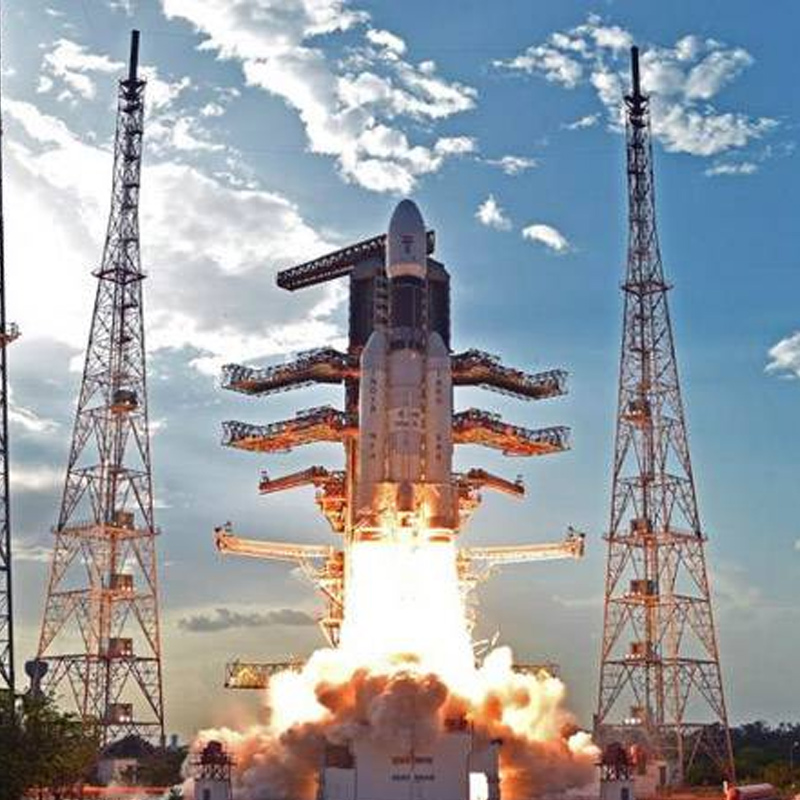
    The lockdown ensured no further launch took place for the next ten months, until November, when India’s premier space agency returned to the launch pad to inject EOS-01–an earth observation satellite—into space along with nine other customer satellites. This was soon followed by the launch of the country's forty second communications satellite CMS-01 in December which replaced the aging GSAT-12.

    While ISRO managed to keep its regular satellite launches on track, the pandemic cast a shadow on its bigger space missions. This included a fresh bid to achieve a successful soft landing on the moon which Chandrayaan-2 had failed to achieve last year, and first of the two unmanned missions of Gaganyaan, India’s first human-spaceflight programme which was expected to take off this December. 

    Nonetheless, the groundwork for the 2022 Gaganyaan mission continued. The agency completed the selection of the astronauts and began their training. The process of human rating for GSLV MkIII selected for the historic mission also remained in progress. 

    Globally, as many as 101 orbital launches took place in this turbulent year. The US was top of the leader board with 40 successes out of 44. China came next with 33 successful launches out of 37 attempted. Russia had a perfect score with 16 satellites reaching their orbital locations. Ditto with Japan which had four immaculate launches, and Europe had four clear takeoffs and one failure with Iran and India acing it with two successes each.

    A large share of the launches were accounted for by low earth orbiting birds which were meant for earth observation, technology demonstration and to provide internet in select areas.

    Amongst the big communications birds which were sent into space included: Tiantong 1-02 (mobile communications, China), Galaxy 30 (Intelsat, communications, North America), BSat4b (Broadcasting Satellite System Corp, communications, Japan), Ekspress 80 and Ekspress 103 (Russian Satellite Communications Co, communications, Russia), Apstar 6D (APT Holdings; communications, China), JCSat 17 (Sky Perfect JSat Corp; communications, Japan), GSat30 (ISRO, communications, India, Kourou), and Eutlesat Konnect (Eutelsat, communications, Africa & Europe). Palapa N1 – a satellite owned by Palapa Satelit Nusantara Sejahtera, a joint venture between Indosat Ooredoo and Pasifik Satelit Nusantara, or PSN – met with a fiery end after its launch vehicle the Long March 3B had engine failure.

    The year will be noted for the achievement by the Mission Extension Vehicle MEV-1 which became the first telerobotically-operated spacecraft to service another satellite on-orbit when in February 2020 it completed the first phase of a five-year mission to extend the life of the Intelsat 901 (I-901) satellite. It was brought back from the graveyard orbit to a geosynschronous one by April 2020, opening up a future where human intervention is not needed for on-orbit satellite servicing, like it was for dealing with the Hubble telescope in the early 2000s.   

    2020 also marked the first time a private company successfully undertook a crewed mission into the low earth orbit. Elon Musk's SpaceX achieved the feat after it was able to put two astronauts into space aboard its spacecraft Crew Dragon, heradling a new chapter in commercial space operations. It was a busy year for the American aerospace manufacturer which injected as many as 26 satellites into space. The company is racing to get its Starlink constellation in operation to provide high speed internet connection from the skies.

    The year also witnessed the return of UK based broadband satellite communications company, OneWeb which put a total of 36 communication satellites into space on board a Russian Soyuz rocket. The satellite operator which recently emerged from bankruptcy is eyeing to build a massive constellation of over 650 satellites to beam internet service to people. Early this year, India’s Bharti Global had picked up a 45 per cent stake in the company.

    In the global space arena, Mars continued to allure the space agencies and three countries managed to keep their date—a brief time window which comes around every two years.

    The first was the United Arab Emirates (UAE) which scripted history with the successful launch of its spacecraft named Hope— the first-ever interplanetary mission by any Arab country. It was followed by the launch of Tianwen-1 by China in July and Perseverance rover by the United States a week later. All three spacecraft are expected to enter the Martian orbit early next year.

    However, the pandemic marred Europe and Russia's joint Mars mission and the launch of its first Mars rover, Rosalind Franklin probe, was postponed to 2022.

    Among other ground-breaking missions of 2020 was China’s Chang'e-5 lunar capsule which returned to Earth carrying fresh samples of moon rocks. China has now become just the third country to explore the moon's surface, after the US and the former Soviet Union, and the first to successfully return from the moon since Soviet Union’s Luna 24 spacecraft in 1976.

  • Big Ganga shows now available on ZEEL’s OZee

    MUMBAI: Nowadays, a marketing strategy simply wouldn’t help a television channel succeed. It would need the right distribution strategy and a worthwhile social media presence.

    Lately, almost all channels are extending their availability digitally. From linear feed on television to pick and choose (and pay) for select content on the go. Examples abound — Star group has a presence on Hotstar, Zee on ditto and Ozee, Sony Pictures Network on SonyLiv and Viacom18 on Voot.

    Going with the flow, Reliance Broadcast Network Ltd (RBNL) has now partnered with ZEEL’s VOD platform Ozee to expand the reach of its Bhojpuri regional channel, Big Ganga.

    Speaking to Indiantelevision.com, RBNL CEO Tarun Katial said, “We are partnering with Ozee and deploying all the content to their platform. We are surprised of whatever happened on digital. On Youtube, a lot of our content is being watched. Our show ‘Birha Muqabla’ has crossed one lakh views on YouTube.”

    Last year, ZEEL acquired the TV business of RBNL which includes two operational channels, one is Big Magic, a comedy channel that has now turned into a variety entertainment channel. On the other hand, there is Big Ganga, a Bhojpuri regional channel, which has also acquired four TV licences.

    Also Read:

    RBNL all set to relaunch Big Magic

    Big Ganga strengthens weekend programming; four shows planned in Jan

    Big Ganga available on Tata Sky now

  • Times Network unveils second leg of Remonetise India campaign

    MUMBAI: Prime minister Narendra Modi would surely approve Ditto with the finance minister Arun Jaitley.

    The Times Network is getting into the second phase of its drive which seeks to give an impetus to the initiative by the two most powerful leaders in India to nudge Indians towards cashless transactions, digital money and paying taxes.

    Called – Remonetise India – Invest in the Nation (Help your Help), it follows the first leg Remonetise India – A Citizen’s Pledge. The second part of the campaign was flagged off with a TVC yesterday that will be promoted across the Times Network channels and additionally in 300+ multiplexes. It is being supported by a digital contest where viewers will be gratified with goodies to promote participation.

    The TVC will run almost 20-25 times each day on the Times Network’s channel bouquet. Ads will also appear in parent company Bennet Coleman & Co’s print publications and on sister firm ENIL’s Radio Mirchi stations nationally. These will continue across the Times media group until 31 March 2017, following which the pay taxes phase will commence.

    Says Times Network MD and CEO MK Anand: “At a time when the nation is attempting to leapfrog economically, we believe that regulation, infrastructure and technology are not enough to jumpstart socio-economic change. Behavioural and cultural transformation are as important, if not more. This is where a uniquely positioned media group like Times Network can help. Through the ‘Remonetise India’ campaign, we aim to focus on making changes in everyday behaviour of urban Indians so that the benefits of this disruptive reform (demonetisation) flow in the right manner. One of the pledges under Remonetise India is to help others around us to go digital and benefit from the new economy. The second phase of the campaign ‘Help your Help’ is a call to capable urban citizens to help and aid others in achieving financial inclusion.”

    The first phase included activities like Telethon, Go-Cashless Rally and Sahayata Camps. The telethon witnessed the participation of key influencers, policy makers and opinion leaders like Ministry of Commerce and Industry Minister for Commerce Nirmala Sitharaman, Niti Ayog CEO Amitabh Kant and Infosys founder Narayana Murthy who answered questions on the way forward for the remonetisation movement.

    Then B-town celebrities like Sonam and Anil Kapoor, R Madhavan, Shilpa Shetty, Sonu Sood and Manoj Bajpayee supported this initiative and came together to be the agents of change to help bring India’s economy back on track.

    Additionally, the network organized Sahayta Camps which were supported by actress Taapsee Pannu who encouraged people to get Pan Cards, Aadhaar Cards and open bank accounts (Jan Dhan Yojana Accounts) for the development of Digital India.

    Finally, the Go-Cashless rally took place to drive awareness about digital transactions and save cash for those who can’t do without cash.

    The Times Network will continue with these activities across India to take the movement forward in phase II and phase III as well.

    With a viewership base of around 4.5 crore English speaking Indians, it is likely to have an impact on those who are most likely to follow the new vision that Modi has set out for the nation.

    Publicis South Asia MD and CCO Bobby Pawar points out that the three-step campaign was conceived during a conversation that the agency and the Times Network team was having about the consequences of demonetization.

    “We saw that it was causing pain,” he says. “The media primarily focused on the immediate impact of demonetization. Because most of the transactions were in cash, businesses got affected, raises got affected, employment got affected and people started losing jobs. We kept saying that we have to be forward thinking about the change that is being attempted by the government. We started with seeding it on social and doing things on-ground and then taking it to mass media. One of the biggest challenges was apathy. To make people go beyond themselves was a tough task. Even if we move a few thousand people, it will be a big thing. This is a long term thing and will take a lot of efforts. Post us, other brands will also start talking about it.”

    Adds the TVC’s director Karthik Bhatt: “We have created a light hearted film in which we have highlighted that we want to make a small change which will benefit everyone in the long run, rather than the focusing on the big tidal change. We got the brief and I immediately went on a recce to the Sahatya camps to see what the situation really is. I saw people who did not have any PAN card or Aadhar card but were willing to have one. There were volunteers filling their forms. We have used references from what actually happened at the camp. 26 January was my first visit and we shot the film on 5 February. We had the film ready in 10 days times. We did not want to get to preachy; we just wanted to tell you to help them. If they want to be a part of the system, they need to understand the process and once that happens they will get regular.”

    Also Read :

    http://www.indiantelevision.com/television/tv-channels/news-broadcasting/unsponsored-remonetise-india-simulcast-on-all-times-channels-without-ads-170115

    http://www.indiantelevision.com/mam/media-and-advertising/ad-campaigns/taapsee-endorses-cashless-economy-campaign-170206

  • Lowe Lintas’ Balki shows how to do an advertising award

    Lowe Lintas’ Balki shows how to do an advertising award

    MUMBAI: Trust the man with the beard to do it differently. 10 years ago, the creative guru and the current Lowe Lintas chairman & chief creative officer R. Balki took a decision to put a full stop to his agency‘s participation in the advertising industry awards. But even he knows creatives have this innate desire to be patted on their backs for good creatives and advertising that they have slogged to create over zillions of cups of chai, ciggies and sometimes rum and coke or single malt scotch.

    Hence, to keep those in his agency in good cheer he created his own internal awards gig calling it ‘The True Show‘ way back in 2003. And the agency has been putting it together randomly once every few years; whenever it thinks the time is right. The first was in 2003, the next in 2005, the third in 2008 and finally the last one which was held last night at the Shangri La Hotel in Central Mumbai.

    At the fourth True Show, Balki made an appearance with his lovely and talented wife Gauri Shinde accompanying him as he entered the venue. And he quickly got down to the business for the evening.

    R Balki chairman and CCO of Lowe Lintas strikes a pose

    He was pretty blunt when he spoke: “I don‘t give a damn for awards shows. Awards are just an excuse to drink and have fun and they change no one‘s lives. True Show is not about awarding our self it‘s about awarding good work.”

    And indeed it was time to down a pint or two. Instead of the usual trophies, Balki handed out bottles of wine to each of the winners onstage. He even went as far as forcing them to down a few shots before letting them go. Post their pumping their fists in the air, they returned their bottles back, for each to be handed over to the next winner.

    Balki obviously was in good spirits and hence it was strange to see some vets like DDB Mudra chairman & CCO Sonal Dabral shying away from receiving their bottle of wine. Ditto with ‘Vicky Donor‘ director Shoojit Sircar, who was recognised for his film for Gujarat Tourism with Amitabh Bachchan. Both had to be pushed by their former colleagues on to the stage. They were not from Lowe, but from other agencies, and there only to have a good time.

    Prasoon Joshi and R Balki – ‘The True Showmen‘

    Of course, old friends like Bang-Bang Films‘ Roopak Saluja, BBDO India‘s Josy Paul, Lodestar‘s Shashi Sinha, Axis Bank‘s Shikha Sharma, Leo Burnett‘s K.V. Sridhar, McCann Erickson‘s Prasoon Joshi, O&M‘s Madhukar Sabnavis and Abhijit Avasthi, Taproot‘s Agnello Dias, Draft FCBUka‘s KC Chakravarthy ‘Chax‘ were all there to take part in the party. And clients like Rajiv Bajaj of Bajaj Auto, HUL‘s Nitin Paranjpe, among others.

    Rajeev Bajaj and K V Sridhar in conversation

    Leo Burnett India CCO K.V. Sridhar was full of praise for Balki‘s effort. Speaking to indiantelevision.com he said: “True Show is true to the personality of Lintas and Balki. At the end of the day, it is all about celebrating good work. Unless you care about the work done by you the world will not.”

    Way to go Balki!

    Here‘s a list of those who got a chance to take home a bottle wine and were forced to down shots by Balki:-


    True Craft Awards
    Voice – Ad : Coke (Cricket ki Khushi) – Dev
    Design – Ad: Fastrack – Akash Lyod & Karl
    Cinematography – Ad: Lifebuoy – Tapan

    Lyrics – Ad: Idea Honey Bunny campaign – Amitabh Bhattacharya/Subodh Menon/Ashwin Varkey  

    Music – Ad: Idea Honey Bunny campaign – Amit Trivedi
    True Show Talent Anupam & Urfee
    True Show Best Editor Ad: Axis Bank – Shekhar
    Work that we truly envy Ogilvy and Mather – The Hindu
    Work that we truly envy for craft

    Shoojit Sircar for directing the TVCs for Gujarat Tourism

    Work that we truly envy Ad: Big Bazaar – Mudra
    True Simplicity Ad: Havells Idli – Sriram Iyer & Team
    True Activation Idea Ad: Tata Tea Jaago re campaign, Chotti Shuruvat
    Best Continuing campaign

    Ad: Surf Excel

    True Brand Portfolio

    Ad: Tanishq

    Blockbuster of the year Ad: Idea Honey Bunny campaign
    True Idea
    Bronze – Ad: ET Half Knowledge campaign

    Silver 01 – Ad: ICICI Prudential (Bandhe Ache Hai)

    Silver 02 – Ad: Havells Fans (Sriram & Team)

    Gold – Ad: Idea Exchange (Telephone Exchange campaign – Himanshu & Team)

    Truly Special Award Ad: Lifebuoy Gondappa
  • Life OK, Sony are the biggest gainers of TAM wk19

    Life OK, Sony are the biggest gainers of TAM wk19

     MUMBAI: All’s Ok with Life OK and Sony Entertainment Television (SET) in week 19 of the TAM ratings report. The two channels are the biggest gainers in the ramped up digital universe that TAM is now reporting on from 5 May. TAM data (for Hindi speaking market including five new LC1 markets, C&S, 4+) sourced from a channel, shows Life OK added 21 GRPs this week to close the week with 123 GRPs (102 GRPs last week) and the No 6 slot. Life OK’s mythological drama Devon Ke Dev..Mahadev added some points to register 1.8 TVR (1.5 last week). Its crime-based show Hum Ne Li Hai…Shapath showed rapid improvement with 1.4 TVR (0.8 last week).

    SET, the other major gainer, continued its upward journey this week too by adding 12 GRPs to its last week tally taking it to 166 GRPs and the third spot among GECs. SET scored on the back of its crime-based properties like CID (2.2 TVR), Crime Patrol (2.0 TVR) and comedy reality show Comedy Circus that registered a 1.5 TVR. Its fiction shows such as Bade Achhe Lagte Hain added eyeballs as they rated 1.6 TVR (1.3 last week). Other fiction shows either stagnated or dipped marginally during the week.

    The good news for GECs, however, is that the genre has overall grown by 37 GRPs, taking it to 1,004.

    Back to the leader, Star Plus continues to lead the flock with an increase of eight GRPs to 232. The channel’s new talent hunt-cum-reality show India’s Dancing Superstar notched a 2.6 TVR on its Saturday and Sunday telecast even as fiction shows like Saathiya Saath Nibhana continue to be stable in week 19 with 2.2 TVR. Its chart topper, Diya Aur Baati Hum’s ratings, however, declined from 4.0 to 3.8 TVR in the week ended 11 May. Pyaar Ka Dard occupies No 3 position amongst all Hindi fiction shows with 2.9 TVR (2.8 last week).

    “We are doing very well in the expanded digital TV universe. But what is more important is that we have seen that our relative share has improved continuously over the last quarter. Though our relative numbers have been low (average of past 13 weeks) but the share of the channel has improved,” says Star India vice-president – marketing Nikhil Madhok.

    Following Star Plus is Zee TV, that held on to its second spot on the Hindi GEC chart with 174 GRPs (175 last week). Zee TV’s top performer was the fiction series Qubool Hai with 2.8 TVR (2.6 last week) followed by Sapne Suhane Ladakpan Ke that rated 2.7 TVR (3.0 last week). Its reality talent hunt India’s Best Dramebaaz’s viewership declined by a huge margin on Saturday to 1.8 TVR (2.4 last week) and on Sunday to 1.6 TVR (1.9 last week).

    At fourth spot, is Colors which dropped a point to record GRPs of 165. Its leading fiction series Balika Vadhu notched a 2.8 TVR (2.7 last week) and Madhubala rated a 2.5 TVR (2.4 last week). Sasural Simar Ka ended the week with 2.3 TVR (2.5 TVR last week).

    Multi Screen Media’s other Hindi GEC Sab maintained status quo with 131 GRPs and was at the No 5 spot. Ditto was the case with Max which is telecasting IPL6 which stayed put at 224 GRPs, while Sahara continued to shed GRPs and dropped to 13 GRPs.

  • ‘UK’s Ofcom model difficult to export to Asia’

    ‘UK’s Ofcom model difficult to export to Asia’

    HONG KONG: Do any industry players love their regulators? The answer, probably, is a big NO.

    And, in return, a regulator should not expect love, but should have a relationship with a regulatee that is based on transparency and integrity, amongst other things. Ditto for a vice versa relationship.

    This was the message that Kip Meek, senior partner for competition and content at Ofcom in the UK and chairman of the European Regulators’ Group said here today at the ongoing annual convention of Cable and Satellite Broadcasting Association of Asia (Casbaa).

    Speaking at session, aptly titled `How to love your regulator’, Meek also said that the Ofcom model of regulation is difficult to transport to other places; especially Asia. Reason? Ground realities may differ from market to market.

    “Is the Ofcom model exportable (to Asia)?” Meek posed a question and answered in the negative.

    Detailed regulation should follow on-ground realities, he explained, adding that content regulation in all countries cannot be the same.

    For instance, he said, Ofcom is quite liberal in comparison to some other regulators in developed countries as far as content goes.

    On cue, a majority of over 70 per cent in the audience voted against common regulatory standards in Asian countries, when asked to after Meek had finished speaking.

    According to Meek, the phrase ‘light touch of regulation’ may also sound an absurdity though Ofcom in the UK regulates on three principles, which include unbiased and least intrusive regulation.

    Meek also opined that a converged regulator is better placed to regulate in the present environment, provided it’s “truly independent and truly unbiased.”

    “A fully converged regulatory model does work… but don’t go for harsh measures,” he said.

    However, Meek felt there is a possibility of a converged regulator being considered too powerful.

    Moral of Meekspeak: a regulator-regulate is not the usual run of the mill tale.