Tag: distributors

  • FMCG distributors to boycott HUL products in Maharashtra

    FMCG distributors to boycott HUL products in Maharashtra

    Mumbai: FMCG distributors demanding restoration of old margin structures from the leading maker HUL on Thursday said they would boycott its products in Maharashtra, starting with Taj Mahal Tea.

    According to PTI, The distributor said that if the company does not pay attention to their demand, they will boycott the Kissan brand and leading detergent brand RIN along with Tata Mahal Tea brand going ahead.

    Recently HUL has reduced the margin of distributors by 60 basis points and increased the variable margin by up to 100 to 130 basis points of its distributors.

    HUL owns brands such as Lux, Surf Excel, RIN Pond’s and Dove has reduced the fixed margin by 60 basis points and increased the variable margins by up to 100 to 130 basis points for its distributors. The Distributor demands a minimum 5 per cent margin. The All India Consumers Products Distributors Federation (AICPDF) , an umbrella body for distributors, has raised concern over the new margin structure.

    AICPDF on Thursday shared a statement from the Maharashtra Consumer Distributors Federation (MSCPDF) in which they have started non-cooperation against HUL from January 11. MSCPDF plans to keep the Taj Mahal Tea brand as Inactive till January 25.

    An E-mail sent to HUL remained answered till press time. The Federation also said from March 1 a nationwide movement will be organised by 1000 distributors in front of HUL head office in Mumbai.
     

  • Merzigo has reached the leading position in Turkey with a 40% market share, says Yigit Dogan Celik

    Merzigo has reached the leading position in Turkey with a 40% market share, says Yigit Dogan Celik

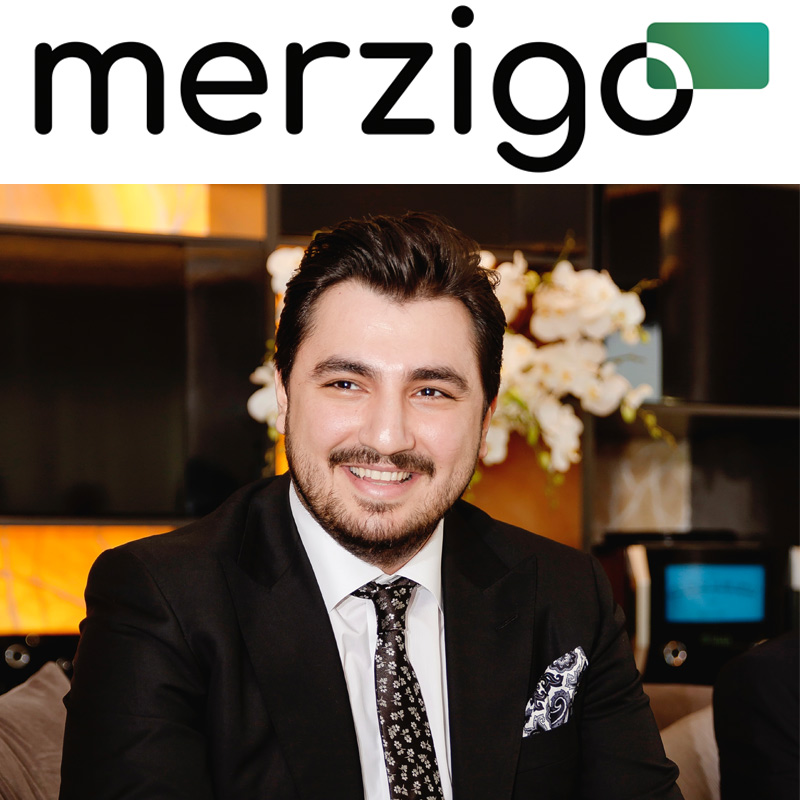
    Mumbai: Merzigo, a leading Turkey-based technology company that offers video monetisation and channel management solutions for producers, broadcasters, and distributors in the global advertising-based video on demand (AVoD) market, has been a key player in presenting riveting content across the globe. The man behind the success story of the firm is Merzigo’s chairman and founder Yigit Dogan Celik.

    Born in 1988 and a graduate of MEF International School (in Istanbul, in the year 2007), Celik studied law at the University of East Anglia and business administration at Regent’s University (in the UK, in the year 2012). He kicked off his career in 2014 as a country representative at Havelsan, a prominent software and development company.

    In 2015, he went on to establish his own business and serve as the co-founder and head of sales at Merzigo. He became the chairman of the board of directors in 2019 at the content syndication company.

    Celik also continues to draw attention in Turkey and Europe with Key Networks Group’s continued investments in the OTT industry, production, and distribution. PowerHouse, an incubation centre under Key Networks Group, regularly invests in different technology and AI projects.

    He took important and strategic steps that contributed to the level of success that Merzigo has achieved today. His decisions led the organisation towards leadership in the digital marketing sector, both domestically and globally.

    In an interview with Indiantelevision.com, Celik discusses Turkey’s content market, Merzigo’s presence at Mipcom 2022, his interest in Indian content, and much more.

    Excerpts:

    On the objective behind such a big presence of Merzigo at Mipcom 2022

    Merzigo is a video monetisation and digital solution company for content rights owners, production houses, and broadcasters across the globe. We are already doing business with clients in the Americas, Europe, the Middle East and North Africa (MENA), and Asia through our offices in Istanbul, Mumbai, and London.

    At Mipcom 2022, our main goal is to focus on initiating new partnerships with potential clients and strengthening our position in the markets we are already active in. Our aim is to reach out to the ever-increasing base of partners and showcase our strong content offering. We expect to increase our already strong footprint globally and create stronger and more meaningful partnerships with our existing clients and newer prospects. We aim to further expand our global clientele so that Merzigo can become the leader in the AVoD market.

    On achieving the success you have at 34, about your journey pre-Merzigo and after setting it up

    Merzigo was founded in 2015 as a response to the market’s video monetisation needs. Our technological approach, expertise, and our own solutions helped us rapidly increase our market share and provide our domestic and international clientele with the best services available. As per our strategies, we have reached the leading position in Turkey’s market with a 40 per cent market share.

    Also, in line with our global vision, we continue to increase our market share to strengthen our position. As of 2022, Merzigo continues its activities under the newly restructured Key Networks Group, reaching a total of 400 employees. Merzigo’s leadership and knowledge in the digital sector’s monetisation and knowledge are elevated to a new level by these global strategies.

    On the Turkish adex market – whether it’s small or large, how advertising has evolved over time, especially in terms of digital video and AVoD, and how it is growing today

    Merzigo has a global presence. You can say that we are present wherever YouTube is present. We have been in the AVoD business since our establishment, and we have witnessed the market’s growth towards a more positive stance towards the AVoD model. We believe this shift will only accelerate due to the global landscape and the growing importance of accessibility. As you know, even major subscription video on demand (SVoD) platforms are considering AVoD plans that include advertisements. Hence, we believe we are on the right track. 

    On witnessing a tapering off of CPMs post opening up after the lockdowns

    Cost per mile (CPM) is a good indicator of how valuable advertisers find your videos and audience for achieving their own business goals. Your revenue will not be equal to your CPM times your views because CPM reflects what advertisers pay, not what you earn. Advertisers can control which geographies they’d like to reach with their ads. Different locations will have different levels of competition in the ad market, so CPMs will vary by geography.

    If there’s a shift in where most of your views are coming from, you may see a shift in the CPM. For instance, if you previously had views from a geography with higher CPMs but are now getting more views from geographies with lower CPMs, you may see a decrease in your CPM.

    On partners’ asset monetisation that you are managing on Turkish digital video platforms, which ones have managed to generate maximum revenue and why, and why have the others failed

    Survivor Turkey, The Voice Turkey, Turkey Got Talent, Fox TV in Turkey, and globally published Turkish series such as El Sultan (Magnificent Century), El Poder del Amor, and various international series channels launched in India, and from Spain, we signed a deal to monetize RTVE series are among our top channels.

    We also took over the management of some of Turkey’s leading free TV channels, multiplying their revenues per year by 10-fold during our first year. We are providing content in the following languages: Turkish, Spanish, Arabic, Romanian, Portuguese, English, French, Serbian, Italian, Urdu, Hindi, German, and Polish. Our content offerings are a perfect blend of emotion, drama, and variety, which are synonymous with almost all cultures in the world.

    On explaining your interest in international content – especially Indian

    Gripping stories, powerful characters, and edge-of-the-seat entertainment will ensure the viewers’ loyalty and stickiness. We aim to push the boundaries of entertainment by presenting new concepts and engaging content across genres to our audience. We pick up topics that are relatable to almost all cultures in the world and present gripping stories that are a perfect blend of emotion, drama, and variety. We bank on stories, which at their very core are stories about humans – their emotions, challenges, love, relationships, victories, defeats, and courage.

    Our strategy is to strike a good balance of content that works well with our audience and experiment with new and disruptive ideas constantly. And India being one of the world’s oldest and most diverse cultures, its series are a perfect blend of emotion, drama, and variety, which are synonymous with almost all cultures in the world. We believe there is tremendous headroom for growth for international content – and particularly India content – and hence we look at this as one of the key priorities for our content distribution.

    On your app being currently gestated: how will it be different from others, and what is the competition like

    ‘Baslat’ (meaning “start”) is our own OTT AVoD platform, which will be launching in Turkey in January 2023 on all platforms such as the web, phones, and smart TVs. Baslat will have an entirely different vision and intend to stand out in the AVoD market, offering an innovative and unique viewing experience for audiences in Turkey, as the viewers will be able to access premium content & original production for free. SVoD platforms in Turkey are increasing with new players entering the market, increasing the production budget and cost.

    Today, there are more places than ever to consume content. There’s a huge demand for variety in content, and audiences are more interested in the type of content and stories they can relate to. With the rise of OTT players, our focus is on how we can meet the needs of our viewers and focus on delivering different concepts and good stories to cater to the needs of both live and on-demand videos across different devices.

    On the target audience, and how will you monetise it

    We have always adapted to market demands and expectations, maintaining the standards that we have established over time and delivering high-quality content to audiences.

    The series dubbed in Turkish is a perfect blend of emotion, romance, family, and socially relevant issues that will immediately resonate with mainstream audiences. We will ensure content for all age groups.

    The most important issues are viewers’ habits when it comes to video consumption as well as piracy. We will be encouraging people to watch the content they wish to watch on a legal yet free platform. Our revenue model for Baslat will be through advertising sales.

  • Boosting local market manufacturing will help the Indian M&E industry to become a supplier to the world: CII Big Picture Summit 2022

    Boosting local market manufacturing will help the Indian M&E industry to become a supplier to the world: CII Big Picture Summit 2022

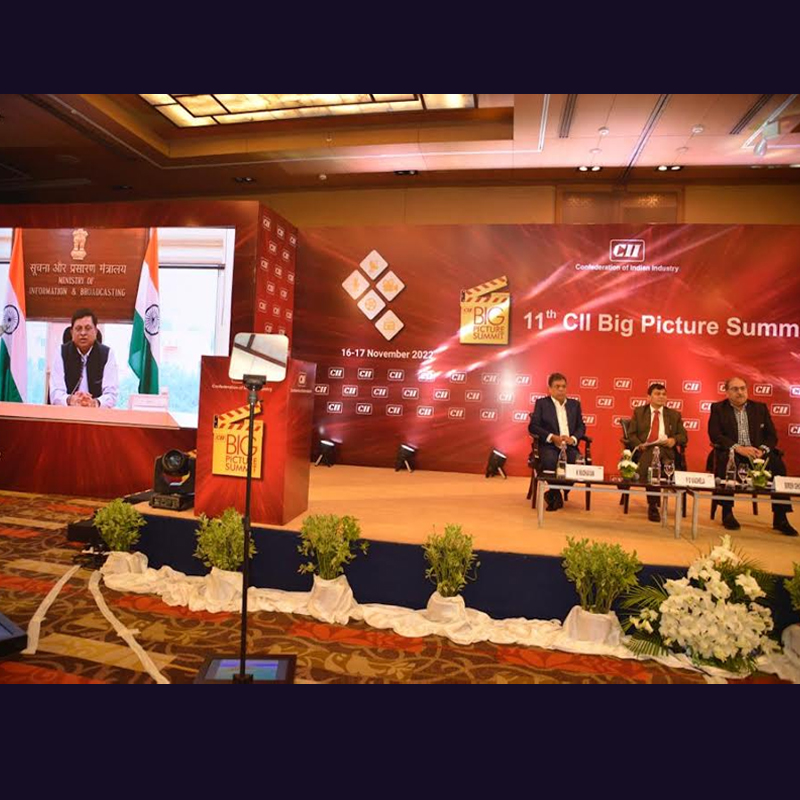
    Mumbai: The 11th edition of the Big Picture Summit 2022, organised by the Confederation of Indian Industry (CII), is a two-day event that is taking place on 16-17 November. The Summit witnessed the participation of various eminent panellists and marked the release of the CII-BCG report on “Shaping the Future of Indian M&E” and the CII-IBDF-KPMG report on “Sports Broadcasting in India.”

    CII Big Picture Summit 2022, with a range of sessions, has participation from content creators, broadcasters, buyers, studios, production companies, publishers, distributors, and developers across the gamut of the Media & Entertainment (M&E) landscape.

    On 16 November, the first day of the event, discussions centred around global trends and opportunities, the bounce-back of revenues to pre-pandemic levels, domestic consumer preferences, and local opportunities for a global audience through digital platforms that have never existed before, especially for the creative industry, storytellers, and technology providers.

    Speaking at the event, the ministry of information and broadcasting (MIB) secretary Apurva Chandra, stated that MIB, along with the Indian M&E industry, has set a goal of making the M&E sector a $100 billion industry by 2030. Chandra acknowledged the announcement by the ministry on the incentive policy for cinema at the Cannes Film Festival this year, out of which many proposals have been accepted for foreign productions in India.

    He further revealed, “The animation, visual graphics, gaming, and comics (AVGC) taskforce, which was launched as a part of the budget 2022, has completed its deliberations and is in the process of finalisation. The government will soon work towards actioning on the recommendations that come out of the report.” As regards the broadcasting sector, Chandra stated that the ministry has recently revised the guidelines for uplinking and downlinking for satellite television channels in India to ease the burden of compliance on channels.

    Telecom Regulatory Authority of India (Trai) chairman Dr. P.D. Vaghela highlighted the significance of the Indian M&E sector in the national growth story and economic prosperity. With about half of the population being young, the Indian demographic dividend presents a huge opportunity for Indian M&E services. Television is the largest and fastest-growing segment, representing around 50 per cent of the total media and entertainment revenue.

    He added that during the last decade, the M&E sector in the country has undergone several radical changes and is experiencing a paradigm shift due to the advancement of technologies and innovations in the creation, distribution, and consumption of media. He stressed that the traditional media would lose ground unless it understands, adopts, and merges its own business models with society 5.0, AI, machine learning, and other technologies that are being unleashed. Vaghela further mentioned, “The government needs to come out with policies that are flexible in nature and allow new players to easily enter the industry while at the same time not strangling the traditional sector with numerous regulations.”

    MIB joint secretary Sanjiv Shankar mentioned the various efforts made by the ministry in the recent past to ensure significant interventions in the regulatory framework, largely based on ease of doing business, Atmanirbhar Bharat, and Make in India. He stressed on the Broadcast Seva portal, which offers a single point facility to various stakeholders and applicants to apply for various permissions, registrations, licences, etc., for the development and integration of the broadcast industry.

    CII National Committee on media & entertainment chairman and Disney Star country manager & president K Madhavan, in his opening remarks commended CII for bringing together key stakeholders and policy makers together to discuss the future of India’s M&E industry and its potential in shaping societies. The M&E sector in India is underpenetrated, with a contribution of 0.9 per cent to the GDP compared to 3-4 per cent for many developed countries.

    He further advocated the potential for growth for the industry, owing to the presence of 300 million households in India, of which about 100 million households still have no access to television headsets. He further urged for timely support by policymakers in the areas of privacy, ensuring a supportive IPR protection measure, and announcing content-related policies while taking note of changing consumer habits and helping the industry to reinvent itself and adapt to creating travelable content.

    CII National Committee on media & entertainment chair & CII sub committee for AVGC & Immersive Media – vice chairman, and Technicolor India country head Biren Ghose in his closing remarks mentioned about the need to evolve in the ways content is being created and urged the stakeholders to look at growth from a different lens, particularly away from a linear vertical growth. Moreover, he mentioned fostering collaboration between government, industry, and academia for the continued growth of the M&E sector.

    Furthermore, Trai advisor Anil Bharadwaj said that while Trai is trying to enable a positive, consultative-based, industry-friendly approach with regards to the new tariff order (NTO), the industry needs to focus on building capacities and centres of excellence.

    CII has been driving several initiatives to take the Indian M&E sector to new heights and expand its global footprint in close collaboration with MIB. These include representing the Indian film and entertainment industries at the prestigious Cannes Film Market for the past 20 years, at the Berlin Film Festival for the past five years, and at the Toronto Film Festival for the past three years. CII’s strength in policy advocacy is acknowledged and accepted by both the government and media industries.

  • TRAI’s new regulation instructs broadcasters & distributors to file RIO

    TRAI’s new regulation instructs broadcasters & distributors to file RIO

    MUMBAI: According to the new regulation by Telecom Regulatory Authority of India (TRAI), broadcasters and distributors of television channels are required to file all the Reference Interconnect Offer (RIO). TRAI has recently issued the Telecommunication (Broadcasting and Cable) Services Register of Interconnection Agreements and all such other matters Regulations, 2019 with an aim to promote transparency and non-discrimination in the Broadcasting sector

    “The primary objective of register of Interconnect regulations is to formulate the contours of a reporting system for the service providers so that they can report details of interconnection agreements including commercial details to the authority. It would enable the authority to maintain register of interconnect as per provisions of TRAI Act. Presently the Register of Interconnect Agreement (Broadcasting and Cable Services) Regulation, 2004 is in force,” said TRAI.

    To simplify the process, avoid duplication of reports, and formulate its view on various issues such as accessibility of information of register, the authority had issued a consultation paper on 'The Register of Interconnection Agreements (Broadcasting and Cable Services) Regulations, 2016' on 23 March 2016.

    Based on the comments received in the consultation process and analysis of the developments in the market pursuant to implementation of the new regulatory framework, draft Telecommunication (Broadcasting and Cable) Services Register of Interconnection Agreements Regulations, 2019 was issued by TRAI on 22 April 2019. Comments received on this draft regulation were posted on TRAI's website. Subsequently, an Open House Discussion (OHD) was also held on 10 June 2019 in Delhi. Based on the comments received and analysis of the developments in the market pursuant to implementation of the new regulatory framework these regulations have been prepared.

    The objective of this regulation is to promote transparency and non-discrimination in the broadcasting sector. As per the new regulation, all the Reference Interconnect Offer (RIO) are required to be filed by every broadcaster and the distributor of television channels. Initially the distributor having average active subscriber base below one lakh have been exempted from the obligation of reporting details of interconnection agreements to promote ease of business and reducing regulatory burden on such MSOs with limited resources. The new regulation envisages online filing in electronic mode. The authority has specified that the new regulations will come in force in 120 days, except as regards submission of information related to compliance officer. The intervening period will enable the service provider to prepare for easy compliance.

    If any broadcaster or distributor fails to furnish the information or certificate or fails to verify the reported information, as required under regulation 3, by the due date, it shall, without prejudice to the terms and conditions of its license/permission/registration, or the act or rules or regulations or order made or direction issued thereunder, be liable to pay, by way of financial disincentive, an amount of rupees one thousand per day for default up to thirty days beyond the due date and an additional amount of rupees two thousand per day in case the default continues beyond thirty days from the due date, as the authority may, by order, direct.

    Provided that the financial disincentive levied by the authority under this sub regulation shall in no case exceed Rs 2 lakh.

  • Distributors’ ‘star films’ gamble backfires

    Jagga Jasoos is the latest film to release last Friday. The team of Anurag Basu and Ranbir Kappor who combined to give Barfi (2012) were expected to come up with something better. What is more, even Ranbir Kapoor had put his faith Basu and turned a co-producer in the project!

    The film, in the making since 2014, however, turned out to be a major disappointment at the box office. At some places, the early morning shows (9 am) which normally draw the college crowds because of low admission rates, had to be cancelled due to lack of audience.

    The film collected Rs 7.9 crore on day one which was not impressive since the film was given an extensive 1800-screen release. Whatever the film collected was mainly from two metros, especially Mumbai followed by Delhi with rest of the circuits being way below par and none crossing even a one crore mark on day one.

    The film did show some improvement over the weekend on Saturday and Sunday as children took to the film but, considering the public reports are negative on the film and that it needs to work its way to over Rs 200 crore (Rs 2k million) figure to break even, the figures are not at all encouraging. What is more, there has been a considerable drop on Monday.

    On Tubelight front, distributors with the principal distributor, N H Studioz, are reported to have approached Salman Khan Esq for the refund of some amounts as they have suffered huge losses. The film was reportedly sold to N H Studioz for reportedly a whopping Rs 135 crore (Rs 1350 million) which would need a recovery of Rs 325 crore. There are just few precedents of a film doing that kind of business and the gamble by the distributor backfired. The film has fallen short of the target by as much as Rs 225 crore. The Khan Esq is said to be considering the distributors’ request favourably.

    *Jagga Jasoos, a film inspired by The Adventures of Tin Tin and other sources, does not quite get the opening it should have considering the film’s cast and others in the billing. The film manages to collect 7.9 crore on its opening Friday. It improves a bit on Saturday and Sunday. The film ends its first weekend with Rs 31.3 crore. The Monday footfalls are not encouraging.

    *Mom, again a costly film compared to its face value, stands to lose big time considering it had nothing new to offer. Woman oriented action have it tough to find a slot with the Hindi audience unless backed by a solid story. They are few and far in-between. Bad for Mom that it followed in the same plot as the recently released Maatr, which stole it of its novelty. The film collected Rs 22.5 crore in its first week.

    *Guest In London fails badly ending its first week with a meagre Rs 6.7 crore.

    *Ek Haseena Thi Ek Deewana Tha adds Rs 30 lakh in its second week taking its two week total to Rs 1.35 crore.

    *Tubelight has collected Rs 80 lakh in its third week to take its three week tally to Rs 115.1 crore.

  • Distributors cannot charge more than Rs 130 per month for 100 SD channels: TRAI order

    MUMBAI: Consumers will now be able to receive 100 standard definition channels at Rs 130 a month plus taxes, according to the new TRAI tariff order issued last Friday. This will ensure reasonable rate of return to the DPOs on investments in the existing distribution networks as well as incentivise them for additional investment to ensure better network quality for providing value added services and broadband to subscribers. It is hoped that new framework will bring transparency, level playing field, encourage consumer choice and growth of the sector.

    The regulator stated that no separate charges other than this Network Capacity Fee (NCF) would be paid by the subscribers for opting Free-to-Air channels or bouquet of Free-to-Air channels.

    In order to provide choice to the subscribers and to curb skewed prices of a-la-carte channels as compared to bouquets, the Authority has mandated that a broadcaster can offer a maximum discount of 15 per cent while offering its bouquet of pay channels over the sum of MRPs of all the of pay channels in that bouquet. The restriction of maximum discount of 15 per cent on formation of bouquet is to ensure that a subscriber is not forced to take a channel which he doesn’t want. Forcing of non-driver channels to subscribers not only reduces choice of subscribers but also eats away bandwidth of distributors of television channels restricting entry of new and more competitive channels.

    Digtal addressable television distribution platforms, TRAI stated, are envisaged to provide several benefits to consumers of broadcasting services including better quality of signals, choice of channels, availability of multimedia services etc. With the completion of first three phases of digitization to a large extent, though the addressability, capacity and quality of signal have improved, issues relatéd to consumer choice, transparency and non-discrimination.

    Broadcasters want freedom to price their channels. Their contention is that since pricing at retail level is with distributors of television channels, the flexibility to maximise the revenue through advertisement and subscription fee has been compromised. News broadcasters, who primarily provide free-to- air (FTA) channels and have advertisements as only source of revenue, claim that many a time their channels at retail level are priced in such a manner that even pay channels are cheaper than their FTA channels. In the present framework distributors of television channels feel that they are totally dependent on effective negotiations with broadcasters for monetisation of their investment and due to non-transparency in the system, they end up at a loss while bargaining with the broadcasters.

    According to TRAI, subscribers feel that the pricing of channels is skewed resulting effectively in no choice of individual channels. They feel lack of transparency. Questions are raised time and again as to why same channel is priced so differently by different distribution platform operators.

    While prescribing the new regulatory framework, the TRAI has kept in mind the discussions in the Parliament on the motion for consideration of the Cable Television Networks (Regulation) Amendment Bill, 20 11, wherein the then Minister of Information and Broadcasting stated that TRAI would establish a system wherein consumers would be free to choose a-la- carte channels of choice and they would not be required to subscribe to bouquets.

    While framing this Tariff Order, the emphasis of the Authority has been to ensure transparency, non-discrimination, consumer protection and create an enabling environment for orderly growth of the sector. The new framework attempts to address all the issues raised by broadcasters, distributors of television channels and subscribers. The broadcasters will have to declare their channels as ‘Pay’ or Tree-to-Air’ (FTA). Broadcasters have been given complete flexibility to declare maximum retail price (MRP) of their pay channels to subscribers with no restrictions as long as such channels are provided to consumers individually. However, if a pay channel is provided as part of a bouquet, MRP of such pay channel cannot be more than Rs. 19/-. This is to ensure protection of interests of consumers as bouquet deals are oblique to individual channel prices. The new framework in no way restricts or curtails the freedom of broadcasters to price their channels. Provisions have also been made to ensure that no additional charges are levied for subscribing to FTA channels.

    The salient features of the Tariff Order are:

    Broadcasters to declare maximum retail price (MRP) (excluding taxes) ), per month, of their a-la-carte pay channels for subscribers.
    A broadcaster can also offer bouquets of its pay channels and declare MRP (excluding taxes) of bouquets for subscribers. However, MRP of such bouquets of pay channels will not be less than 85% of the sum of maximum retail price of the a-la-carte pay channels forming part of that bouquet.
    Separate bouquet for pay channels and free-to-air channels.
    Charges payable by a subscriber for distribution network capacity and channels have been separated.
    The distribution network capacity required for initial one hundred Standard Definition (SD) channels can be availed by a subscriber by paying an amount, not exceeding, Rs. 130/- (excluding taxes) per month to the distributor of TV channels.
    Within the capacity of 100 SD channels, apart from the channels to be mandatorily provided to subscribers as notified by the Central Government, a subscriber will be free to choose any free-to-air channel, pay channel, or bouquet of pay channels offered by the broadcasters or bouquet of pay channels offered by the distributor of television channels or bouquet of free-to-air channels offered by the distributor of television channels or a combination thereof.
    No separate charges, other than the Network Capacity Fee, to be paid by the subscribers for subscribing to free-to-air channels or bouquet of free-to-air channels.
    The additional capacity, beyond initial one hundred channels capacity, can be availed by a subscriber in the slabs of 25 SD channels each, by  paying an amount not exceeding Rs. 20/- per such slab, excluding taxes, per month.
    Every distributor of television channels shall offer all channels available on its network to all subscribers on a-la-carte basis.
    Every distributor of television channels shall declare distributor retail price of each pay channel and bouquet of pay channels payable by a subscriber:
    A subscriber can choose a-la-carte channels of its choice.
    Distributors of television channels are permitted to. form bouquets from a-la-carte pay channels and bouquet of pay channels of broadcasters. However, distributor retail price of such bouquets of pay channels shall not be less than 85 per cent of the sum of distributor retail prices of the a-la-carte pay channels and bouquets of pay channels of broadcasters forming part of that bouquet.
    A subscriber has to pay separate charges, other than the Network Capacity Fee, for subscribing to pay channels or bouquet of pay channels.
    Distributors of television channels have to offer at least one bouquet, referred to as basic service tier, of 100 free-to-air channels including all the mandatorily channels to be provided to the subscribers as notified by the Central Government. This bouquet will be one of the options available for subscription to customers. It will be the subscriber Who will be free to exercise his option.
    Any pay channel having a-la-carte MRP of more than Rs 19/- per month (Excluding Taxes) shall not form part of any bouquet.

    Also Read:

    We believe the new cable TV tariff order will benefit everyone – Hathway Cable video CEO TS Panesar

    TRAI gets support from Subhash Chandra on inter-connect guidelines

    TRAI free to issue TV tariff, Star HC case disposal in 60 days

  • TRAI may check broadcasters & distributors’ monopolistic behaviour

    TRAI may check broadcasters & distributors’ monopolistic behaviour

    NEW DELHI: The Telecom Regulatory Authority of India may intervene in case any monopolistic behaviour of significant market power (SMP) is observed or brought to its notice in future although it has decided not to regulate the market power at present.

    It said in its draft tariff orders that it will keep a watch on the developments after implementation of the new framework. It has noted that the monopolistic behaviour is well demonstrated by both, broadcasters as well as distributors of television channels. However, it says that it is prescribing a new framework for television broadcasting sector.

    In the consultation paper that has led to this draft, stakeholders had been asked to suggest whether there was a need to identify significant market powers. The stakeholders were also asked to suggest the criteria for classifying an entity as the a significant power.

    A majority of broadcasters felt that the issue of identifying SMPs was in the purview of the Competition Commission of India (CCI) and there was no need for TRAI to do so. They also said the CCI provides adequate safeguards for preventing anti-competitive behaviour. A few broadcasters however favoured the idea of SMP identification and have given suggestions on identifying SMPs.

    A few distributors of television channels submitted that there was no need to identify SMPs while the others believed that such a distinction be made. Some distributors suggested that vertically integrated entities in the distribution sector be subjected to additional regulations.

    Also read

    I&B ministry to take up cable TV monopoly recommendations

  • TRAI may check broadcasters & distributors’ monopolistic behaviour

    TRAI may check broadcasters & distributors’ monopolistic behaviour

    NEW DELHI: The Telecom Regulatory Authority of India may intervene in case any monopolistic behaviour of significant market power (SMP) is observed or brought to its notice in future although it has decided not to regulate the market power at present.

    It said in its draft tariff orders that it will keep a watch on the developments after implementation of the new framework. It has noted that the monopolistic behaviour is well demonstrated by both, broadcasters as well as distributors of television channels. However, it says that it is prescribing a new framework for television broadcasting sector.

    In the consultation paper that has led to this draft, stakeholders had been asked to suggest whether there was a need to identify significant market powers. The stakeholders were also asked to suggest the criteria for classifying an entity as the a significant power.

    A majority of broadcasters felt that the issue of identifying SMPs was in the purview of the Competition Commission of India (CCI) and there was no need for TRAI to do so. They also said the CCI provides adequate safeguards for preventing anti-competitive behaviour. A few broadcasters however favoured the idea of SMP identification and have given suggestions on identifying SMPs.

    A few distributors of television channels submitted that there was no need to identify SMPs while the others believed that such a distinction be made. Some distributors suggested that vertically integrated entities in the distribution sector be subjected to additional regulations.

    Also read

    I&B ministry to take up cable TV monopoly recommendations

  • Q2-2016: Mukta Arts EBIDTA up 32%

    Q2-2016: Mukta Arts EBIDTA up 32%

    BENGALURU: Mukta Arts Limited EBIDTA increased 31.9 per cent YoY in the quarter ended 30 September, 2015 (Q2-2016, current quarter) to Rs 2.16 crore (13.8 per cent margin) as compared to Rs 1.64 crore (6.8 per cent margin), but declined 2.2 per cent QoQ from Rs 2.21 crore (14.5 per cent margin). The company’s net Total Income from Operations (TIO) in the current quarter fell 34.8 per cent YoY to Rs 15.61 crore from Rs 23.95 crore, but increased 2.5 per cent QoQ from Rs 15.23 crore.


    Note: 100,00,000 = 100 lakh = 10 million = 1 crore


    Mukta Arts reported a small Profit after Tax (PAT) for the current quarter at Rs 0.32 crore (2.1 per cent margin) as compared to a loss of Rs 0.03 crore in Q2-2015 and a loss of Rs 1.43 crore in the immediate trailing quarter.


    Segment performance


    Mukta Arts has four segments-Software Division; Equipment Division (including other income); Theatrical Exhibition Division and ‘Others.’


    Software Division reported revenue of just Rs 1.64 crore in Q2-2016 as compared to Rs 13.89 crore in Q2-2015 and Rs 0.03 crore in Q1-2016. The segment reported less than one fourth of operating profit YoY at Rs 0.08 crore as compared to Rs 0.33 crore. This division had reported an operating loss of Rs 1.94 crore for the immediate trailing quarter.


    Equipment Division reported revenue of Rs 0.09 crore in the current quarter as compared to Rs 0.1 crore each in Q2-2015 and Q1-2015. The segment reported operating profit of Rs 0.05 crore in Q2-2016 as compared to a loss of Rs 0.12 crore in Q2-2015 and a loss of Rs 0.04 crore in the immediate trailing quarter.


    Theatrical Exhibition Division reported revenue of Rs 12.02 crore in the current quarter as compared to Rs 0.07 crore in Q2-2015 and Rs 11.14 crore in Q1-2016. The segment reported operating profit of Rs 1.36 crore in Q2-2016; operating profit of Rs 0.07 crore in Q2-2015 and operating profit of Rs 0.49 crore in Q1-2016.


    ‘Others’ segment reported revenue of Rs 1.87 crore in Q2-2016; revenue of Rs 1.96 crore in Q2-2015 and revenue of Rs 1.97 crore in Q1-2016. The segment reported operating profit of Rs 0.53 crore in Q2-2016; operating profit of Rs 1.68 crore in Q2-2015 and operating profit of Rs 1.40 crore in Q1-2016.


    Let us look at the other numbers reported by Mukta Arts


    Mukta Arts’ Total Expenditure in Q2-2016 reduced 37.3 per cent YoY to Rs 14.89 crore (95.4 per cent of TIO) from Rs 23.74 crore (99.1 per cent of TIO), but increased 3.4 per cent QoQ from Rs 14.41 crore (94.6 per cent of TIO).


    Distributors and producers share in the current quarter reduced 31.1 per cent YoY to Rs 3.96 crore (25.3 per cent of TIO) from Rs 5.74 crore (24 per cent of TIO), but increased 11.9 per cent QoQ from Rs 3.53 crore (23.2 per cent of TIO).


    Employee Benefits Expense in Q2-2016 increased 38 per cent YoY to Rs 2.12 crore (13.6 per cent of TIO) from Rs 1.54 crore (6.4 per cent of TIO), but reduced 2.6 per cent QoQ from Rs 2.18 crore (14.3 per cent of TIO).


    Purchase of Food and Beverages cost increased 18.9 per cent YoY to Rs 0.85 crore (5.4 per cent of TIO) from Rs 0.71 crore (3 per cent of TIO) and increased 7.7 per cent QoQ from Rs 0.79 crore (5.2 per cent of TIO).


    Finance costs in Q2-2016 reduced 12.9 per cent YoY to Rs 1.83 crore (11.8 per cent of TIO) from Rs 2.11 crore (8.8 per cent of TIO), but increased 5.4 per cent QoQ from Rs 1.74 crore (11.4 per cent of TIO).

  • NFDCs Film Bazaar13 invites entries for its Industry Screenings program

    NFDCs Film Bazaar13 invites entries for its Industry Screenings program

    MUMBAI: Film Bazaar 2013, NFDC’s (National Film Development Corporation) promotional arm, has begun calling for entries for its Industry Screenings program. In its seventh edition this year, South Asia’s Global Film Market will be held from 20-24 November, 2013 alongside IFFI at Marriott Resort, Goa. Qube Cinema Network (Real Image Media Technologies), associated with Film Bazaar since 2011, will be the Digital partner for the screenings this year too.


    Introduced in 2010, Industry Screenings has become an important segment of Film Bazaar, where filmmakers are given an opportunity to showcase and pitch their films to a select audience of sales agents, distributors, producers, festival programmers and directors through the market period. With digital theatres arranged at the market venue, filmmakers can either reserve their film screenings to a selected audience of international distributors and sales agents or open it for all attending delegates.


    Last year, Industry Screenings, saw twenty-six films screened through four days of the market. To name a few, The Bright Day (Hindi- English) by Mohit Takalkar; Pune 52 (Marathi) by Nikhil Mahajan; The Good Road (Gujarati) by Gyan Correa; Touring Talkies (Marathi) by Gajendra Aahire; Masala (Marathi) by Sandesh Kulkarni; Love Tomato (Japanese – English – Philippine) by Hideo Nanbu; Tasher Desh (Bengali) by Q; Kshay (Hindi) by Karan Gaur, were films that were screened in 2012.


    The last date for submission of entries for Industry Screenings is 15 November 2013.