Tag: Disney

  • Indo-Vietnamese venture brings Greymatter into filmmaking

    Indo-Vietnamese venture brings Greymatter into filmmaking

    NEW DELHI: Local content generated through creative storytelling. ‘Sut’ (meaning ‘shoot’ in Vietnamese) set to release in November 2016 is the first venture into film production by the content solutions company Greymatter Entertainment Pvt. Ltd.

    Developed in collaboration with Vincent Ngo of the “Hancock” fame, the film is a coming-of-age story of two brothers set against the background of the sport, football. It has been directed by Vietmax, one of the most successful directors in Vietnam.

    Greymatter Founder and CEO Chandradev Bhagat said, “We have always been excited about films. ‘Sut’ is a project that came together quite magically. Having worked on and delivered projects across geographies, the idea was to bring together creative talent, international work flows and storytelling abilities from around the world to create strong local content. This marks the beginning of some of our exciting plans ahead”.

    Greymatter has been doing some pathbreaking work in both, sports and non-fiction content, including Premier Futsal League and Pro-Wrestling League in the live sports space. It has also developed the hit series ‘The Remix’. In the last year and a half, ‘The Remix’ has been sold in 15 countries. It has been nominated as the top 25 formats in the world at MIPTV – in fact making it the first Asian format to ever feature in the list.

    Greymatter is strategically focused on creating IPR (Intellectual Property Rights) properties and churning out creatively distinguished content. It is currently one of the few Indian companies to have sold original formats globally and is a recipient of multiple nominations and awards in India and the A-Pac region including the EMVIES, Spikes Asia and Asian Television Awards.

    The agency has worked with some of the biggest brands including Ten Sports, Sony Six, Star Sports, Disney, Viacom Colors and VH1 to name a few on the broadcast end and brands like Google, McDonalds, Tata and Idea in the branded content space.

  • Prime Focus Tech gets funding from PE firm Ambit Pragma

    Prime Focus Tech gets funding from PE firm Ambit Pragma

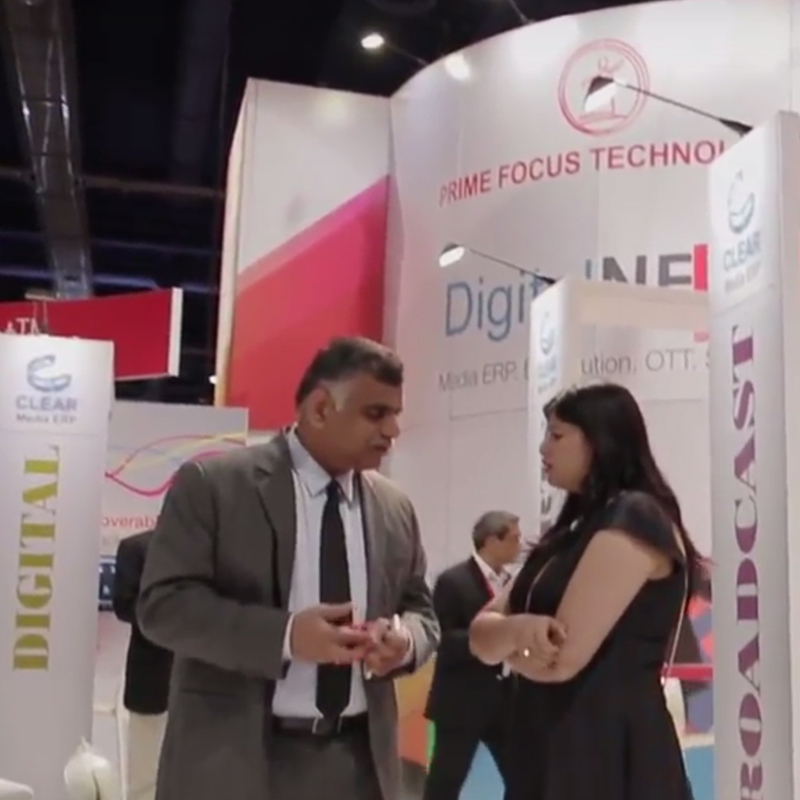
    MUMBAI: Prime Focus Technologies (PFT) – the technology offshoot of media services company Prime Focus – informed the Bombay stock exchange today that it had received its first round of funding from growth capital private equity fund Ambit Pragma.

    The amount or how much was being divested in favour of Ambit Pragma was not disclosed by PFT .

    It, however, elaborated that it proposes to use the investment for intensifying its development efforts of the software as a service (SaaS) products including its CLEAR Media ERPand gaining deeper penetration and growth in strategic markets such as North America and EMEA with increased sales and marketing efforts.

    PFT’s flagship product CLEAR Media ERP is targeted at M&E companies who increasingly adopt technology to tap the digital consumer landscape while enhancing efficiencies and lowering Total Cost of Ownership (TCO).

    CLEAR is the world’s first and most proven cloud based Media ERP Suite that virtualizes the content supply chain and builds a connected enterprise for M&E companies.

    PFT works with more than 300 clients in India and is the chosen technology partner for more than 100 clients globally including various leading broadcasters, studios, brands, sports and digital organizations.

    PFT’s award winning CLEAR Media ERP suite and Cloud Media Services have been successfully deployed for the last eight years in global M&E companies such as 21st Century Fox-owned Star India, Novi Digital, Hotstar, Miramax, Disney, Warner Bros, Global Eagle Entertainment, Cricket Australia, CBS Television Studios, 20th Century Fox Television Studios, FX Networks, Crown Media Holdings, Legendary Pictures, Starz Media, Lionsgate, A+E Networks, HBO, Mnet, CNBC Africa, SABC, IFC Films, HOOQ, Sony Music, Voot, Hearst Television, Showtime, BCCI, Indian Premier League and The Associated Press,among others.

    “Media ERP adoption in the global M&E industry has been growing steadily. With flat revenues and shrinking margins in traditional media, content enterprises especially broadcasters and studios have a tough time finding resources to invest in new monetization opportunities. M&E companies have to completely rethink technology investments and rejig their business model to survive in the new digital reality,” says PFT founder & CEO Ramki Sankaranarayanan.

    The investment by Ambit Pragma istremendous market validation of the business opportunity we serve and offers us growth capital to execute on our strategy for global leadership in the Media ERP space. We are delighted to have a like-minded partner in Ambit Pragma who appreciates the realities and opportunities within the M&E industry.”

    Adds Ambit Pragma CEO Rajeev Agrawal: “PFT is a global pioneer addressing the challenge s content enterprises are facing in this hyper digital market through their cutting-edge technology. The architectural road map of the product, its multiple use cases and their management’s thought leadership, represent a compelling opportunity for us to make the investment.”

  • Prime Focus Tech gets funding from PE firm Ambit Pragma

    Prime Focus Tech gets funding from PE firm Ambit Pragma

    MUMBAI: Prime Focus Technologies (PFT) – the technology offshoot of media services company Prime Focus – informed the Bombay stock exchange today that it had received its first round of funding from growth capital private equity fund Ambit Pragma.

    The amount or how much was being divested in favour of Ambit Pragma was not disclosed by PFT .

    It, however, elaborated that it proposes to use the investment for intensifying its development efforts of the software as a service (SaaS) products including its CLEAR Media ERPand gaining deeper penetration and growth in strategic markets such as North America and EMEA with increased sales and marketing efforts.

    PFT’s flagship product CLEAR Media ERP is targeted at M&E companies who increasingly adopt technology to tap the digital consumer landscape while enhancing efficiencies and lowering Total Cost of Ownership (TCO).

    CLEAR is the world’s first and most proven cloud based Media ERP Suite that virtualizes the content supply chain and builds a connected enterprise for M&E companies.

    PFT works with more than 300 clients in India and is the chosen technology partner for more than 100 clients globally including various leading broadcasters, studios, brands, sports and digital organizations.

    PFT’s award winning CLEAR Media ERP suite and Cloud Media Services have been successfully deployed for the last eight years in global M&E companies such as 21st Century Fox-owned Star India, Novi Digital, Hotstar, Miramax, Disney, Warner Bros, Global Eagle Entertainment, Cricket Australia, CBS Television Studios, 20th Century Fox Television Studios, FX Networks, Crown Media Holdings, Legendary Pictures, Starz Media, Lionsgate, A+E Networks, HBO, Mnet, CNBC Africa, SABC, IFC Films, HOOQ, Sony Music, Voot, Hearst Television, Showtime, BCCI, Indian Premier League and The Associated Press,among others.

    “Media ERP adoption in the global M&E industry has been growing steadily. With flat revenues and shrinking margins in traditional media, content enterprises especially broadcasters and studios have a tough time finding resources to invest in new monetization opportunities. M&E companies have to completely rethink technology investments and rejig their business model to survive in the new digital reality,” says PFT founder & CEO Ramki Sankaranarayanan.

    The investment by Ambit Pragma istremendous market validation of the business opportunity we serve and offers us growth capital to execute on our strategy for global leadership in the Media ERP space. We are delighted to have a like-minded partner in Ambit Pragma who appreciates the realities and opportunities within the M&E industry.”

    Adds Ambit Pragma CEO Rajeev Agrawal: “PFT is a global pioneer addressing the challenge s content enterprises are facing in this hyper digital market through their cutting-edge technology. The architectural road map of the product, its multiple use cases and their management’s thought leadership, represent a compelling opportunity for us to make the investment.”

  • BARC week 27: Nick leads kids genre; CN jumps to second spot

    BARC week 27: Nick leads kids genre; CN jumps to second spot

    MUMBAI: Continuing its reign as a genre lead, Viacom 18’s Nick was again the topmost watched channel in the kids entertainment segment, according to Broadcast Audience Research Council (BARC) India’s all India (U+R) data for week 27 in NCCS All 4-14 Individuals category.

    The channel has bagged 81167 (000s sums) as opposed to 86062 (000s sums) impressions last week showing a drop in its ratings, Nick is followed by Turner International’s Cartoon Network which has jumped from fourth to second position by securing 68299 (000s sums) impressions from 48093 (000s sums) in week 26.

    Cartoon Network is followed by Hungama from Disney India on the third spot with 57530 (000s sums) impressions and Pogo TV 56313 (000s sums) impressions giving it the fourth rank on the list.

    These are followed closely at heel by Disney Channel which has seen a significant drop in its viewership from 61691 (000s sums) last week to 52522(000s sums) this week.

    When it comes to the top five most watched programs in the genre, Motu Patlu and Chhota Bheem has yet again proved itselves as genre favourites.

    Nick’s Motu Patlu In Double Trouble lead the chart with 1071 (000s sums), followed by Motu Patlu Mission Moon from the same franchise grabbing the second spot with with 665 (000s sums) impressions.

    With a slightly lower ratings of 643 (000s sums) Motu Patlu Kungfu King Returns was third most watched show in the category while Chhota Bheem: Dholakpur To Japan was fourth in the list with 522 (000s sums).

    Chhota Bheem: Dholakpur to Kathmandu was fifth in the list with 515 (000s sums) viewership impressions. Overall one could notice a drop in total viewership in the genre.

  • BARC week 27: Nick leads kids genre; CN jumps to second spot

    BARC week 27: Nick leads kids genre; CN jumps to second spot

    MUMBAI: Continuing its reign as a genre lead, Viacom 18’s Nick was again the topmost watched channel in the kids entertainment segment, according to Broadcast Audience Research Council (BARC) India’s all India (U+R) data for week 27 in NCCS All 4-14 Individuals category.

    The channel has bagged 81167 (000s sums) as opposed to 86062 (000s sums) impressions last week showing a drop in its ratings, Nick is followed by Turner International’s Cartoon Network which has jumped from fourth to second position by securing 68299 (000s sums) impressions from 48093 (000s sums) in week 26.

    Cartoon Network is followed by Hungama from Disney India on the third spot with 57530 (000s sums) impressions and Pogo TV 56313 (000s sums) impressions giving it the fourth rank on the list.

    These are followed closely at heel by Disney Channel which has seen a significant drop in its viewership from 61691 (000s sums) last week to 52522(000s sums) this week.

    When it comes to the top five most watched programs in the genre, Motu Patlu and Chhota Bheem has yet again proved itselves as genre favourites.

    Nick’s Motu Patlu In Double Trouble lead the chart with 1071 (000s sums), followed by Motu Patlu Mission Moon from the same franchise grabbing the second spot with with 665 (000s sums) impressions.

    With a slightly lower ratings of 643 (000s sums) Motu Patlu Kungfu King Returns was third most watched show in the category while Chhota Bheem: Dholakpur To Japan was fourth in the list with 522 (000s sums).

    Chhota Bheem: Dholakpur to Kathmandu was fifth in the list with 515 (000s sums) viewership impressions. Overall one could notice a drop in total viewership in the genre.

  • Netflix becomes exclusive US pay TV home for Disney, Marvel, Lucas film & Pixar movies

    Netflix becomes exclusive US pay TV home for Disney, Marvel, Lucas film & Pixar movies

    MUMBAI: The global OTT player Netflix has partnered with Disney to broadcast forthcoming titles throughout the summer. Under the pact that was signed three and a half years ago, the streaming service will become the exclusive US pay TV home of the latest films from Disney, Marvel, Lucas film and Pixar with effect from September 2016.

    Netflix’ chief content officer Ted Sarandos has also announced that Netflix original movie Mascots and War Machine will be arriving the same month. While the earlier is a mockumentary on sports mascots from This Is Spinal Tap writer Christopher Guest, the latter is from acclaimed Australian director David Michod and starring Brad Pitt, in the serio-comic tale of the U.S. military adventure in Afghanistan.

    The partnership with Disney will allow Netflix to offer the movies during the same window as HBO and other paid cable channels but after the DVD and Blu-Ray releases.

    It has also added various films that will be available in its catalogue this summer which includes titles like The Big Short, Hotel Transylvania 2, Spotlight, Goosebumps, the Back to the Future trilogy, the Lethal Weapon franchise, Sixteen Candles and The Wedding Planner. Other new additions include Spotlight, the Jurassic Park series and The Fundamentals of Caring.

    Meanwhile, few Disney movies will not be featured on the platform. Movies that will no longer be aired from next month include titles like Hercules, Mulan and The Hunchback of Notre Dame.


  • Netflix becomes exclusive US pay TV home for Disney, Marvel, Lucas film & Pixar movies

    Netflix becomes exclusive US pay TV home for Disney, Marvel, Lucas film & Pixar movies

    MUMBAI: The global OTT player Netflix has partnered with Disney to broadcast forthcoming titles throughout the summer. Under the pact that was signed three and a half years ago, the streaming service will become the exclusive US pay TV home of the latest films from Disney, Marvel, Lucas film and Pixar with effect from September 2016.

    Netflix’ chief content officer Ted Sarandos has also announced that Netflix original movie Mascots and War Machine will be arriving the same month. While the earlier is a mockumentary on sports mascots from This Is Spinal Tap writer Christopher Guest, the latter is from acclaimed Australian director David Michod and starring Brad Pitt, in the serio-comic tale of the U.S. military adventure in Afghanistan.

    The partnership with Disney will allow Netflix to offer the movies during the same window as HBO and other paid cable channels but after the DVD and Blu-Ray releases.

    It has also added various films that will be available in its catalogue this summer which includes titles like The Big Short, Hotel Transylvania 2, Spotlight, Goosebumps, the Back to the Future trilogy, the Lethal Weapon franchise, Sixteen Candles and The Wedding Planner. Other new additions include Spotlight, the Jurassic Park series and The Fundamentals of Caring.

    Meanwhile, few Disney movies will not be featured on the platform. Movies that will no longer be aired from next month include titles like Hercules, Mulan and The Hunchback of Notre Dame.


  • HD channel boom imperative despite high television costs: Chrome Data’s Pankaj Krishna

    HD channel boom imperative despite high television costs: Chrome Data’s Pankaj Krishna

    MUMBAI: With digitization, the HD wave is not only hitting the Hindi general entertainment channels, but regional channels as well.  The HD channel boom began in 2015, with several broadcasters launching new HD channels or HD versions of their existing SD channels.

    According to Chrome Data Analytics & Media, with a 6-7 million (60-70 lakh) subscriber base and a 50 per cent year-on-year on growth in market size, the path of high definition may be a step in the right direction for broadcasters.

    Amongst others, even the infamous OTT platform Netflix, offers a package for Rs.650 with HD viewing to cater to high-end consumers, being one of the key reasons that the C&S industry is increasingly using non-linear modes of television.

    The overall landscape of the industry has benefitted with the introduction of HD channels as an increase in HD penetration can be seen as a driver for subscription revenue growth.

    Subscription revenue is expected to grow at a CAGR of 19 per cent to Rs 203 billion  (Rs 20,300 crore) driven by an increase in the declared subscriber base in DAS phase 3 and 4, increasing subscription revenue collected on ground due to channel packages and an increase in HD penetration.

    HD channels were first ad-free and solely dependent on subscription revenue, however, with time these channels have decided to monetise through introducing HD channel feeds separately for advertising revenues.

    Since the beginning of the year, several broadcasters have launched the HD version of their existing channels. After dissolving the 50:50 joint venture with Star India in 2012, Disney sports broadcaster ESPN had joined hands with Multi Screen Media (MSM) to launch two sports channel in India – Sony ESPN and Sony ESPN HD on 17 January.  Just a few days later, Times Network rolled out the HD feed of its English entertainment channel Romedy Now on 15 February.

    Viacom 18 also launched the HD feed of its music channel VH1 on 20 Feb.  In line with broadcasters tapping the high-definition space, Viacom 18 also geared up to launch its existing regional GECs (Colors Marathi, Colors Bangla and Colors Kannada), despite already having 5 HD channels currently on-air.

    Star India has successfully launched the HD feed of three of its regional SD channels, Star Jalsha and Star Jalsha Movies in HD (Bangla) with the Marathi GEC Star Pravah.

    Not only Hindi GECs or regional GECs, but now news channels have got onto to the HD wave.  On 17 April this year, ITV Network launched its English news channel NewsX in HD feed.

    Chrome Data Analytics & Media founder and CEO Pankaj Krishna explained, “The HD channel boom is imperative. The shift from standard to high definition is as organic as going from black and white to colour television. The cost of producing HD content has already been incurred, but the barrier to scale up lies in the hardware – procuring HD televisions is relatively expensive today. However, this is a cost which is already coming down and will further come down exponentially over the years, enabling more and more consumers to gain access to HD channels.”

    This ties in with the fact that rate for such channels is higher, seeing the nature of viewers of HD content. Thus, both subscription and advertising revenue have been impacted positively. While DTH operators are reaping the benefits of revenue growth owing to the ARPU and increased subscriber base with 15 percent of HD subscribers using DTH to view HD content, the only hurdle would be for MSOs to improve their marketing skills and upsell packages that constitute HD channels so that subscribers move to these packs.

    The realm that is high-definition brings along with it several benefits and certain challenges for stakeholders with more networks taking the leap to enter the market, hence changing the face of the quality of television content we watch today. 


  • HD channel boom imperative despite high television costs: Chrome Data’s Pankaj Krishna

    HD channel boom imperative despite high television costs: Chrome Data’s Pankaj Krishna

    MUMBAI: With digitization, the HD wave is not only hitting the Hindi general entertainment channels, but regional channels as well.  The HD channel boom began in 2015, with several broadcasters launching new HD channels or HD versions of their existing SD channels.

    According to Chrome Data Analytics & Media, with a 6-7 million (60-70 lakh) subscriber base and a 50 per cent year-on-year on growth in market size, the path of high definition may be a step in the right direction for broadcasters.

    Amongst others, even the infamous OTT platform Netflix, offers a package for Rs.650 with HD viewing to cater to high-end consumers, being one of the key reasons that the C&S industry is increasingly using non-linear modes of television.

    The overall landscape of the industry has benefitted with the introduction of HD channels as an increase in HD penetration can be seen as a driver for subscription revenue growth.

    Subscription revenue is expected to grow at a CAGR of 19 per cent to Rs 203 billion  (Rs 20,300 crore) driven by an increase in the declared subscriber base in DAS phase 3 and 4, increasing subscription revenue collected on ground due to channel packages and an increase in HD penetration.

    HD channels were first ad-free and solely dependent on subscription revenue, however, with time these channels have decided to monetise through introducing HD channel feeds separately for advertising revenues.

    Since the beginning of the year, several broadcasters have launched the HD version of their existing channels. After dissolving the 50:50 joint venture with Star India in 2012, Disney sports broadcaster ESPN had joined hands with Multi Screen Media (MSM) to launch two sports channel in India – Sony ESPN and Sony ESPN HD on 17 January.  Just a few days later, Times Network rolled out the HD feed of its English entertainment channel Romedy Now on 15 February.

    Viacom 18 also launched the HD feed of its music channel VH1 on 20 Feb.  In line with broadcasters tapping the high-definition space, Viacom 18 also geared up to launch its existing regional GECs (Colors Marathi, Colors Bangla and Colors Kannada), despite already having 5 HD channels currently on-air.

    Star India has successfully launched the HD feed of three of its regional SD channels, Star Jalsha and Star Jalsha Movies in HD (Bangla) with the Marathi GEC Star Pravah.

    Not only Hindi GECs or regional GECs, but now news channels have got onto to the HD wave.  On 17 April this year, ITV Network launched its English news channel NewsX in HD feed.

    Chrome Data Analytics & Media founder and CEO Pankaj Krishna explained, “The HD channel boom is imperative. The shift from standard to high definition is as organic as going from black and white to colour television. The cost of producing HD content has already been incurred, but the barrier to scale up lies in the hardware – procuring HD televisions is relatively expensive today. However, this is a cost which is already coming down and will further come down exponentially over the years, enabling more and more consumers to gain access to HD channels.”

    This ties in with the fact that rate for such channels is higher, seeing the nature of viewers of HD content. Thus, both subscription and advertising revenue have been impacted positively. While DTH operators are reaping the benefits of revenue growth owing to the ARPU and increased subscriber base with 15 percent of HD subscribers using DTH to view HD content, the only hurdle would be for MSOs to improve their marketing skills and upsell packages that constitute HD channels so that subscribers move to these packs.

    The realm that is high-definition brings along with it several benefits and certain challenges for stakeholders with more networks taking the leap to enter the market, hence changing the face of the quality of television content we watch today. 


  • Q2-16: Disney income up 10 percent aided by ESPN performance, studio entertainment

    Q2-16: Disney income up 10 percent aided by ESPN performance, studio entertainment

    BENGALURU: The Walt Disney Company Inc (Disney) reported 9.8 percent year-over-year (y-o-y) increase in operating income for the quarter ended 2 April 2016 (Q2-16, current quarter) as compared to the corresponding year ago quarter. Operating income in the current quarter was $3,822 million as compared to $3,482 million in Q2-15 (quarter ended 28 March 2015).

    The company saw an increase of $340 million in operating income in its current quarter vis-à-vis the corresponding prior year quarter. Its Media Networks segment reported operating income of $198 million, while its Studio Entertainment segment reported operating income of $115 million.
    Disney’s Media Networks segment’s sub-segment Cable Networks of which ESPN is a part saw 12.3 percent y-o-y increase in operating income. The increase at ESPN was partially offset by lower equity income from A&E Television Networks says Disney.

    Disney reported 4.1 percent y-o-y growth in revenue in Q2-16 at $12,969 million as compared to $12,461 million in the corresponding prior year quarter. Growth in revenue of $508 million was contributed to by $168 million and $377 million growth by Disney’s ‘Parks & Resorts’ and ‘Studio Entertainment’ segments respectively.

    Company speak

    “We’re very pleased with our overall results in Q2, which marks our 11th consecutive quarter of double-digit growth in adjusted EPS,” said Disney chairman and CEO Robert A. Iger. “Our Studio’s unprecedented winning streak at the box office underscores the incredible appeal of our branded content, which we continue to leverage across the entire company to drive significant value. Looking forward, we are thrilled with the Studio’s slate and tremendously excited about the June 16th grand opening of the spectacular Shanghai Disney Resort.”

    Segment numbers excerpts

    Media Networks

    Media Networks revenue in Q2-16 was relatively flat y-o-y (declined 0.3 percent) at $5,793 million as compared to $5,810 million in Q2-15. The  segment’s operating income increased 9.4 percent y-o-y to $2,299 million in the current quarter from $2,101 million during the corresponding prior year quarter.

    Disney Media Networks segment has two sub-segments – Cable Networking and Broadcasting.

    Cable Networks revenue for the quarter decreased 1.9 percent y-o-y to $3,955 billion from $4,030 million in Q2-15. Operating income in Q2-16 increased 12.3 percent y-o-y to $2,021 million from $1,799 million due to an increase at ESPN, partially offset by lower equity income from A&E. 

    The increase at ESPN was due to the benefit of lower programming costs and higher affiliate revenues, partially offset by a decrease in advertising revenue.

    Lower equity income from A&E was due to a decrease in advertising revenue, higher programming costs and a negative impact from the conversion of the H2 channel to Viceland as Viceland is in a start-up phase says Disney.

    Broadcasting revenue for the quarter increased 3.3 percent to $1,838 million from $1,780 million. Operating income of the sub-segment decreased 7.9 percent y-o-y to $278 million from $302 million due to lower operating income from program sales and higher programming and marketing costs, partially offset by advertising and affiliate revenue growth. Lower operating income from program sales was due to a significant SVOD sale in the prior-year quarter and a higher cost mix of programs sold in the current quarter. 

    The increase in programming costs was due to a higher average cost of new scripted programming and increased program cost write-offs. The increase in network advertising revenue was due to higher rates, partially offset by lower ratings. Affiliate revenue growth was primarily due to contractual rate increases.

    Parks and Resorts

    Parks and Resorts revenue for the current quarter increased 4.5 percent y-oy- to $3,928 million from $3.760 million. Segment operating income in Q2-16 increased 10.2 percent y-o-y to $624 million from $566 million. Operating income growth for the quarter was due to an increase at Disney’s domestic operations, partially offset by a decrease at its international operations.

    Studio Entertainment

    Studio Entertainment revenue for the current quarter increased 22.4 percent to $2,062 million from $1,685 million in Q2-15. Segment operating income increased 26.9 percent to $542 million from $427 million. 

    Disney says that higher operating income was due to an increase in theatrical distribution results and growth in TV/SVOD distribution, partially offset by the impact of foreign currency translation due to the strengthening of the US dollar against major currencies, decreased home entertainment results and higher film cost impairments.

    The increase in theatrical distribution results was due to the strong performance of Star Wars: The Force Awakens and Zootopia in the current quarter compared to the continuing performance in the prior year quarter of Big Hero 6 and Into the Woods, both of which were released domestically in the first quarter of the prior year. Higher TV/SVOD distribution results were driven by international growth. The decrease in home entertainment results was primarily due to lower unit sales reflecting the performance of Big Hero 6, Frozen and Marvel’s Guardians of the Galaxy in the prior-year quarter compared to The Good Dinosaur, Inside Out and Marvel’s Ant-Man in the current quarter. The decrease from lower unit sales was partially offset by the benefit from Star Wars Classic titles that are distributed by a third party.

    Consumer Products & Interactive Media

    Consumer Products & Interactive Media revenue for the current quarter decreased 1.7 percent to $1,186 million from $1,286 million. Segment operating income decreased 8 percent to $357 million from $388 million. 

    Lower operating income was primarily due to the impact of foreign currency translation due to the strengthening of the U.S. dollar against major currencies, lower operating margins and comparable store sales at Disney’s retail business and lower results for Infinity. 

    These decreases were partially offset by higher licensing revenues. Increased licensing revenues were driven by higher revenue from Star Wars  merchandise, partially offset by an adverse impact from the timing of minimum guarantee shortfall recognition and a decrease in revenue from merchandise based on Frozen.