Tag: Disney

  • Media consumption in India growing @9% in last 6 years: CII-BCG report

    Media consumption in India growing @9% in last 6 years: CII-BCG report

    MUMBAI: The Indian media industry, experiencing disruptions, is witnessing an increase in consumption that has been facilitated by proliferation of broadband too and over the last six years has been growing at the rate of nine percent.

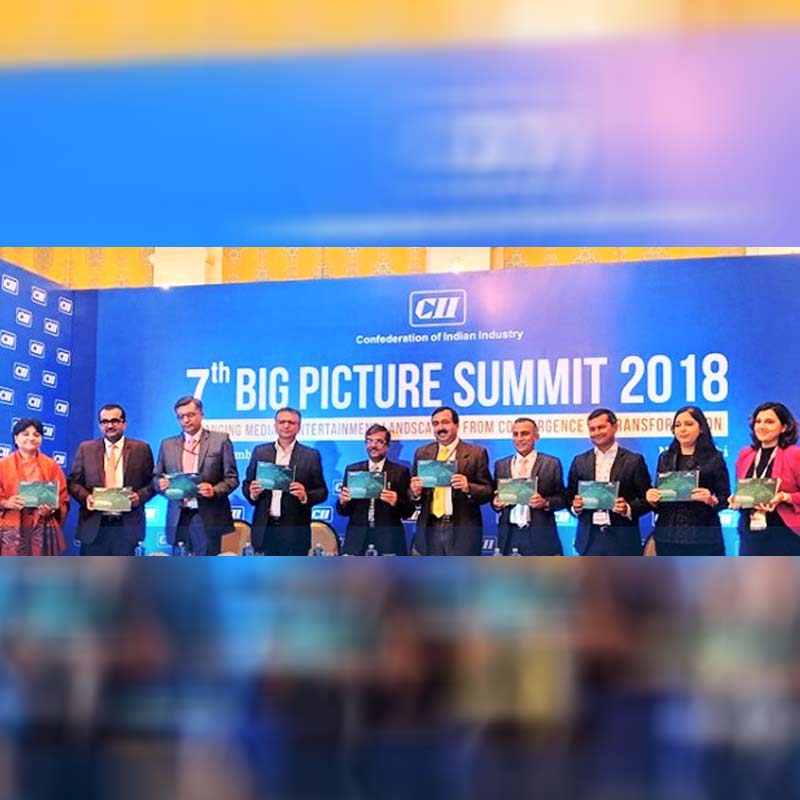
    According to a CII_BCG report released today at CII Big Picture Summit event in New Delhi, at 4.6 hours of consumption per capita per day, India is still behind China (6.4 hours) and US (11.8 hours), suggesting further headroom for growth.

    “Unlike in developed countries, in India this growth has been additive and not cannibalising traditional media, yet. For the next several years, we expect India to remain a multi-modal market where all forms of media, including traditional media like TV and digital will continue to co-exist," the report states.

    In 2012, total media consumption per capita per day was 2.7 hours which was further distributed into print (0.2 hours), radio (0.2 hours), TV (1.9 hours) and digital (0.4 hours). On the other hand, 4.6 hours consumption per capita per day has increased to print (0.3 hours), radio (0.3 hours), TV (2.7 hours) and digital (1.3 hours).

    Over the past 2-3 years, the number of broadband users has become 2X (~480 million broadband users across mobile and fixed) and the data consumption has become 10X (~10 GB per user per month).

    Indian media formats are primarily advertising driven and consumer costs are minimal. Unlike the US where the cost of a cable connection can be as high as $80 per month, India with $3 cost of cable per month doesn’t have the need for skinny bundles.

    India is undergoing a video explosion. Indian consumers are consuming ~190 minutes of video per day per user across platforms, which has been growing at ~8 per cent over the last five years. 30+ digital platforms have been added to the wide range of TV channels. While an average consumer consumes 10-15 channels per day and 2-3 apps in any given month, the overall spectrum of platforms from a content creators/curator’s perspective is massive.

    Global players are realising the importance of creating curated content, in line with viewer preferences. Players like Netflix invest aggressively to match 3X the investment made by top players like Amazon Prime and Hulu. Top 5 global players as per their annual content budget are Fox ($16.7 biilion), Comcast ($15 billion), Disney ($12.7 billion), Time Warner ($12.4 billion) and Netflix ($12 billion).

  • Disney’s flagship streaming service to enter market in late 2019

    Disney’s flagship streaming service to enter market in late 2019

    MUMBAI: Walt Disney (Disney) reported strong earnings for the fiscal fourth-quarter topping analysts' expectations. While Media Networks revenue for the quarter increased 9 per cent year-over-year to $6 billion, Studio Entertainment revenues for the quarter increased 50 per cent to $2.2 billion. Along with the financial result, the company also announced that its streaming service set to launch late next year in US market which will be called Disney+.

    “Disney+ will be offering a rich array of original Disney, Pixar, Marvel, Star Wars and National Geographic content, along with unprecedented access to our incredible library of film and television content, including all of our new theatrical releases, starting with the 2019 slate,” Disney chairman and CEO Robert A Iger said.

    The content pipeline of the flagship service will also include The Mandalorian, the world's first live action Star Wars series written and produced by Jon Favreau. A rebooted version of Disney’s super hit The High School Musical franchise will be also a part of the content pipeline. Moreover, the service will be the exclusive home of the next season of the popular Star Wars animated series Clone Wars. A live-action Marvel series about Loki starring Tom Hiddleston is also being developed.

    Its other streaming service ESPN+ which was launched six months ago already has more than 1 million subscribers. As of now it owns 60 per cent stake in Hulu also. Disney thinks there's an opportunity to increase investment in the digital platform on the programming side. However, as Comcast and AT&T Time Warner are other two partners in Hulu, it will keep an eye toward being fiscally responsible to the other shareholders.

    While Disney purchased Fox for $71.3 billion in cash and stock, it is confident that the television business that it is buying is very attractive, not just in the US. “If you factor in Star in India and the rest of Asia, and you factor in Europe where they have a substantially greater footprint of channels than we do, which by the way may ultimately end up helping us with content and distribution when it comes to the direct-to-consumer business,” Iger commented.

    Going beyond Wall Street’s projected earnings of $6.94 per share on $58.87 billion in revenue for the full year, Disney reported adjusted earnings of $7.08 per share on $59.43 billion in revenue. While the company is happy with the financial performance in fiscal 2018, they want to remain focused on the successful completion and integration of 21st Century Fox acquisition and the further development of our direct-to-consumer business.

  • Zee Media gets permission for 4 regional news channels

    Zee Media gets permission for 4 regional news channels

    MUMBAI: After a long tenure of being strict in awarding channel licenses, the Ministry of Information and Broadcasting (MIB) has finally become lenient. In the month of September, eight new channels received licenses while none saw their licenses cancelled as on 30 September 2018.

    Out of the eight channels, four channels were of Zee Media Corporation Ltd (ZMCL). All the four permissions are for news channel named 1 Chennai (Tamil, English), 1 Mumbai (Marathi, English), 1 Kolkata (Bengali, English) and 1 Delhi (Hindi, English). The permission was given on 11 September 2018 for both uplinking and downlinking of the four channels.

    On the other hand, Disney Broadcasting India got the permissions for a non-news channel UTV HD (English) for both uplinking and downlinking on 14 September 2018.

    Vedic Broadcasting has got permission for launching three new channels named Aastha Tamil, Aastha Telugu and Aastha Kannada on 26 September 2018.

    The 14 licenses which were cancelled earlier by MIB due to security denial by Ministry of Home Affairs (MHA) are still now under stay order from the court.

    After cancelling permission to 247 channels, the number of private satellite TV channels having valid permission in India stands at 869 as on 30 September 2018. 483 channels are non-news channels and the remaining 386 are news channels.

    Of the 868 permitted private satellite channels, TV channels permitted for uplinking from India and also to downlink into India are 769 among which 365 are news channels and 404 are non-news channels. 11 non-news channels and five news channels are permitted for uplinking from India but not downlink into the country. 84 TV channels are uplinked from abroad which only have downlinking permission in India. This category includes 15 news and 69 non-news channels.

  • The Walt Disney Company names new organisational structure for media networks biz

    The Walt Disney Company names new organisational structure for media networks biz

    MUMBAI: The Walt Disney Company, as part of the integration planning for its pending acquisition of 21st Century Fox, today announced plans for a new organisational structure for its media networks segment, conditional upon closing of the deal. Under the new structure, several 21st Century Fox executives would assume leadership roles at the Disney business segment once the acquisition closes.

    “The strength of 21st Century Fox’s first-class management talent has always been a compelling part of this opportunity for us,” said The Walt Disney Company chairman and chief executive officer Robert A Iger. “Upon completion of the acquisition, this new structure positions these proven leaders to help drive maximum value from a greatly enhanced portfolio of incredible brands and businesses.”

    Peter Rice will become chairman, Walt Disney Television and co-chair, Disney Media Networks, reporting directly to Iger. The new organisation under Rice will include ABC Television Network, ABC Studios, the ABC Owned Television Stations Group, Disney Channels, Freeform, Twentieth Century Fox Television, FX Networks and FX Productions, Fox 21 Television Studios, and the National Geographic channels.

    “I love making television and have been fortunate to work with incredibly talented executives and storytellers. Disney is the world’s preeminent creative company, and I look forward to working for Bob, and with his exceptional leadership team, to build on that amazing legacy. I also want to thank Rupert, Lachlan and James Murdoch for the privilege of working on such a wide array of movies and television, both entertainment and sports. It has been a wonderful thirty years,” Rice said.

    Rice’s appointment will take effect upon completion of the acquisition. He is currently president of 21st Century Fox and chairman and chief executive officer of Fox Networks Group.

    Reporting to Rice will be: Dana Walden, Chairman, Disney Television Studios and ABC Entertainment; John Landgraf, chairman of FX Networks and FX Productions; Gary E. Knell, chairman of National Geographic Partners; Gary Marsh, president and chief creative officer, Disney Channels Worldwide and James Goldston, president, ABC News

    Walden’s portfolio will include Twentieth Century Fox Television and Fox 21 Television Studios, as well as ABC Entertainment, ABC Studios, Freeform and the ABC Owned Television Stations Group. She is currently chairman and chief executive officer of Fox Television Group.

    Disney Media Networks co-chair Ben Sherwood and Disney|ABC Television Group President, will remain in his current role during the transition period until the acquisition closes.

    “I want to personally thank Ben Sherwood for his years of service at ABC and Disney. Ben has been a valued colleague, and I deeply appreciate his many contributions and insights, as well as his professionalism and cooperation in this transition,” Iger said.

    Disney’s acquisition of 21st Century Fox has received formal approval from shareholders of both companies, and Disney and 21st Century Fox have entered into a consent decree with the US Department of Justice that allows the acquisition to proceed, while requiring the sale of the Fox Sports Regional Networks. The transaction is subject to a number of non-US merger and other regulatory reviews.

  • Murdoch promotes 5 top execs to Fox ahead of Disney deal

    Murdoch promotes 5 top execs to Fox ahead of Disney deal

    MUMBAI: After Disney won the bid to acquire 21st Century Fox (21CF) assets against Comcast earlier this year, future CEO and chairman Lachlan Murdoch has set key leadership positions for the properties left behind in the merger that will now be called new Fox.

    Steve Tomsic, currently deputy CFO for 21CF, will be promoted to chief financial officer at new Fox. Eric Shanks, currently chief operating officer and executive producer at Fox Sports, will become CEO of Fox Sports.

    In a statement, Murdoch said, “Collectively they bring to Fox the vision, entrepreneurial spirit and proven track records to position Fox to seize future opportunities for its leading and deeply resonant brands across sports, news and entertainment.”

    Mike Biard will become president of operations and distribution for Fox, another key revenue function. His current title is president of distribution for the Fox Networks Group.

    Paul Cheesbrough will remain chief technology officer, but his job will be expanded to include oversight of the company’s direct-to-consumer platforms in anticipation of launching a streaming service.

    Marianne Gambelli will see her portfolio expand as she becomes president of ad sales. She manages ad sales for the Fox News channel and the Fox business network.

    Tomsic said, “We are fortunate to be able to continue working with these enormously talented executives who have helped make our businesses the incredible successes they are today.”

    The appointments of the soon-to-be leadership team will take effect after the Disney transaction closes. Disney is buying Fox’s television production and movie studio, FX cable channel, National Geographic, stake in Hulu and such international operations Star India.

  • Disney’s Stay Fit Initiative  makes a splash across Schools’ in India

    Disney’s Stay Fit Initiative makes a splash across Schools’ in India

    The Walt Disney Company believes in filling kids’ lives with hope and imagination through the magic of storytelling. As a part of our healthy living initiative, we, at Disney, have identified fitness as one of the key themes and want to propagate the idea ‘Staying Fit can be fun’ amongst kids. 
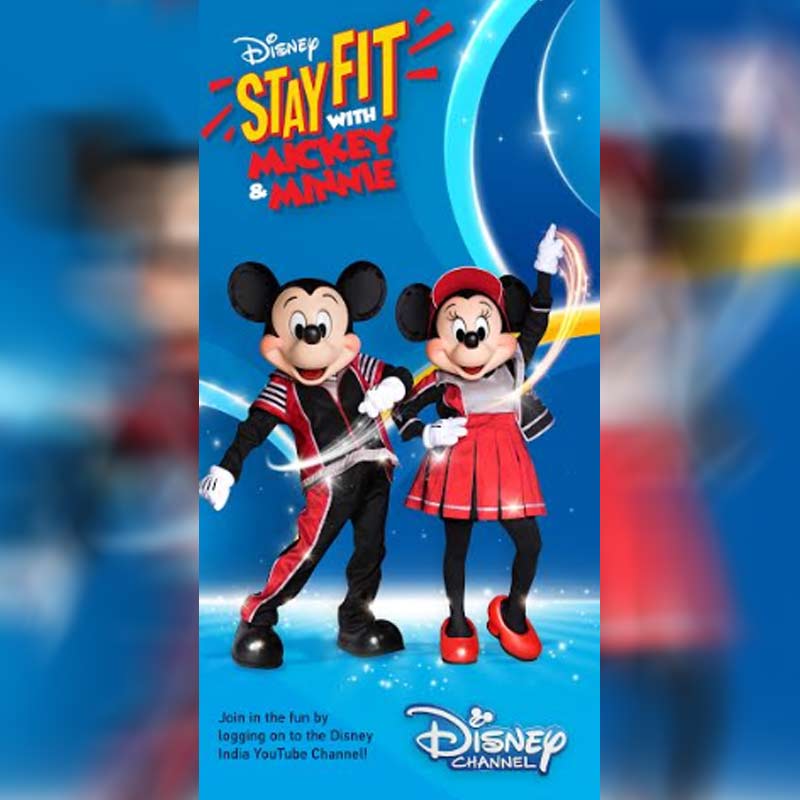
    Mickey Mouse and Minnie Mouse are leading this ‘Stay Fit’ activity by teaching children various fun-filled, easy-to-follow dance steps. We have screened a ‘dance along’ Mickey and Minnie video, demonstrating the specially choreographed dance routine which the kids can watch, follow and perform together with their friends. With a little help from choreographer Dhiraj have put together 9 simple signature dance steps on a special foot-tapping song which are fun and easy and will help strengthen the young muscles; paving way for a healthy future
    We are taking this initiative to 3000+ schools; reaching out to 1.2+ million kids across the cities of Mumbai, Delhi and Bangalore, and its a unique activity not done before!
    Devika Prabhu, Executive Director and Head – Product, Media Networks, Disney India  was quoted saying, “At Disney, we are consistently working towards creating interesting engagement opportunities that can fill the kids’ lives with fun, laughter and optimism. Celebrating Mickey’s 90th Anniversary this year, we embarked on a unique initiative  to propagate the idea that ‘Staying Fit can be fun’. We are thrilled with the response we have received from kids, their families and their teachers so far; and we hope they will spread the fun so we have many more kids and families joining Mickey and Minnie as they dance their way into fitness.”  

  • Ex MullenLowe Lintas’ Joseph George ‘Tilt-ing’ the creative agency model

    Ex MullenLowe Lintas’ Joseph George ‘Tilt-ing’ the creative agency model

    MUMBAI: A 150-year experienced team from across advertising, marketing, content, consumer advocacy, data analytics, storytelling, studio production, digital, media, qualitative research, behavioural science and video analytics have come together to offer consulting, communication, content and video production services for brands and businesses under the name Tilt Brand Solutions.

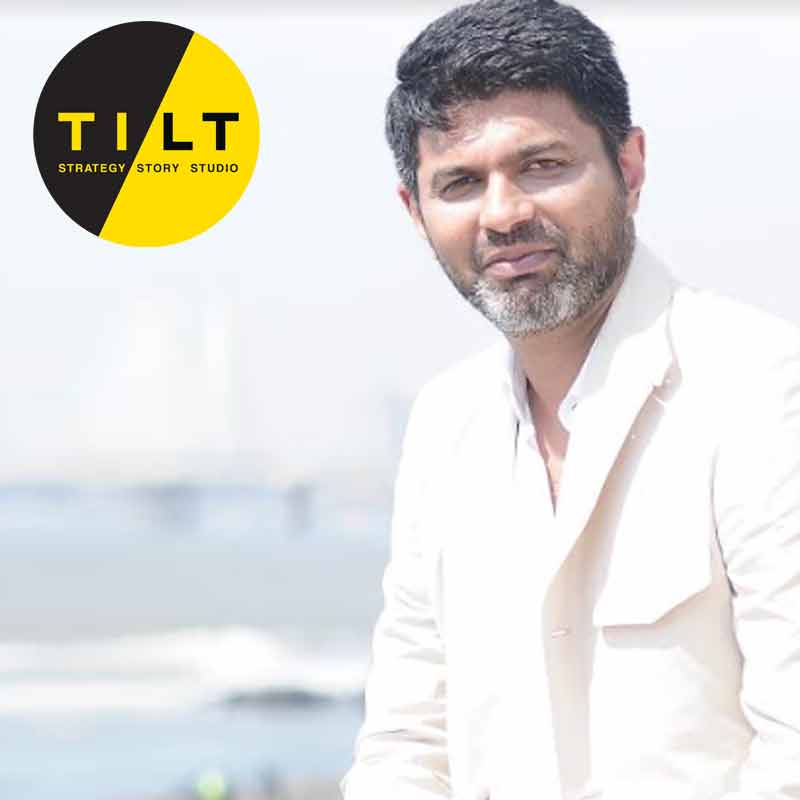
    Tilt Brand Solutions chairman and MD Joseph George says, “The context in which brands operate is everything. When that changes, everything about the brand outreach needs to change. What, where and how consumers buy, and what, where and how they consume content, have all changed. These changes cannot be responded to, by shoe-horning existing models into new structures. They need to be addressed by structuring a new; not re-structuring an old. Ergo Tilt.” 

    Tilt believes that brand and communication planning today is mostly “right brained”, predicated primarily on culture, attitudes and beliefs. And while these will continue to remain critical, the plethora of actual behavioural and consumption data available today cannot be ignored.

    Joseph opines, “Data analytics today sits only in digital, media or analytics agencies. At Tilt though, composite teams of left and right-brained strategists evaluate brand and behavioural data in human and cultural contexts and vice versa. Specialists in brand management, consumer behaviour, digital and media, data analytics, video analytics and communication planning work together to provide what we at Tilt call, full brained thinking.”

    Democratisation of data and proliferation of screens of all sizes, have resulted in Indians consuming more videos than ever before; contributing 50 to 70 per cent of all IP traffic and 75 per cent of advertising spends. Tilt believes thus, that getting right the conceptualisation and production of advertising and content in the video format, has become critical.

    Explains Joe, “Tilt’s creative philosophy of One Brand, Many Stories is built on the belief, that brands have, and need to tell many stories. More the stories, the more the brand begins to breathe and belong in people’s consciousness. The assumption that one video asset will work across audiences, objectives and platforms is flawed. Content creation and production needs to be tailored to each platform and experience across all forms of video-based advertising and content – from commercials to long, short and very short format video content.”

    The leadership team, Shriram Iyer chief creative and content officer, Srikanth Sarathy chief operating officer, Rajiv Chatterjee chief business officer and soon to join Kedar Teny as chief strategy officer is confident that Tilt’s strategy-story-studio offering, driven by its twin philosophies of full-brained thinking and one brand, many stories could well serve as proof of concept for brand owners and creative enterprises who are seeking to influence, engage and entertain consumers of today.

    The agency wants to sit in the union set of consulting, communication, content and video production; drawing inputs however, from the intersection set of brand building, communication planning, storytelling, analytics, media & digital strategy, behavioral science and production management.

    Joseph further adds, “We had to look at talent with specific experience and skills; and so, our starting team couldn’t be more diverse from each other, and different from norm in terms of careers and academics – Airtel, Culture Machine, Disney, Franklin Templeton, Hindustan Unilever Ltd, IIT, Infosys, ISRO, Leo Burnett, Lintas, London School of Economics, McDonald’s, Mediacom, NID, Omnicom Media, PWC, Sony Sports, Star TV and The Viral Fever.”

  • Cosmos-Maya’s strategy for global animation

    Cosmos-Maya’s strategy for global animation

    MUMBAI: Producing animation series isn’t a low-hanging fruit. Considering that a huge amount of money is spent on the production of animated shows than general entertainment channels (GECs) in the Indian television segment, it takes a big heart to risk Rs 20-60 lakh for an animated show’s 11-22 minute episode as against investing Rs 7-8 lakh to produce a daily soap.  But one man decided to don the hat of a filmmaker and launched an animation studio named Cosmos-Maya, realising the need to create more home-grown content rather than depending on overseas programmes on TV.  

    Cosmos-Maya, founded by Ketan Mehta, commenced its journey 20 years ago when he faced certain issues during 1993 in infusing some visual effects for a scene in his movie Maya Memsaab.

    Ketan said, “There was a shot required in the climax where we had to use special effects. Maya drinks a magic potion and disappears in the flame of light. I tried to shoot it in 10 different ways and it was still not satisfied because the technology was just not available in India at that point in time.” In search of the right equipment and expertise, he travelled to Hong Kong but to no avail.

    “I felt that it was a shame that India, which claims to be the largest film industry in the world, didn’t have the basic technology that a filmmaker wants. But fortunately, around the same time, visual technology was taking off, so we decided to take a leap of faith and start a studio,” he added.

    The journey was tough. Cosmos-Maya CEO Anish Mehta said that scaling up from 40 to 1200 employees was a major challenge. “It was a challenge in the beginning and it is a challenge now that it has been achieved. There have been a lot of ongoing hurdles. Ensuring that there is no repetition and bringing out this mirrored range of variety from a creative standpoint is also an ongoing challenge that is dealt with on a fairly regular basis.”

    Now, the company is filled with 1000 techno artists, 20 full-time writers and many other freelance writers and the plan is to double the employee count. 

    Albeit coming from a filmmaking background, his strong belief in launching a studio and training the employees in animation production resulted in a seamless production pipeline. “We produce 30 episodes per month and no other production house is able to produce the number of episodes that we make per month,” said Ketan. Filmmaking experience helped him create his own IPs.

    Bullish about India’s animation scenario today, like every other player in the market, Ketan also feels that it is growing rapidly. According to him, the industry will grow at least 17-20 per cent y-o-y. He believes that so far the growth in the industry has been television driven, but gradually feature films will also come into play.

    A major industry challenge was to evolve the IP rights system. Anish said, “The creation of successful IPs through partnerships is the way forward now because retention of IP has been a major focus area across all the key partners in the value chain. So we need to align with the partners who have a similar vision and share our philosophy. There has to be a complimenting set of goals that both teams are working towards and hence IP partnerships can work out.”

    The animation industry also sees digital being a major future area. According to Ketan, in the next 5-10 years, TV and digital segments will be complementing each other. 

    To take Cosmos-Maya global, the company is already working on developing a global idea. With the Emerald investment, co-production with European and Latin American companies has already commenced. “Now the growth strategy is, how to grow beyond the Indian domestic market,” Ketan added.

    Over the past five years, the company has produced a record 1,400+ half-hours of animated content for major TV and digital platforms, including Viacom18, Disney, Turner, Sony Pictures, Discovery, Netflix, and ALT Balaji. In addition to its hit series Motu Patlu, Cosmos Maya has an impressive twelve titles on TV now, including Shiva, Eena Meena Deeka, Kisna, Vir – The Robot Boy, Guru Aur Bhole, Chacha Bhatija, Tik Tak Tail and Selfie with Bajrangi.

    Pakistan is another major territory for Cosmos-Maya, as the Urdu version of the show Motu Patlu works well with the audience. The show is also dubbed for countries like Indonesia, Vietnam and Mauritius.

    Ketan feels that the Indian share in the global market still remains at 1 per cent. He said, “It has phenomenal scope to grow as we have skilled manpower and there’s no reason that we can’t do better in the animation sector.”

    With a bright future, Cosmos Maya is venturing into an unknown but hopeful future.

  • BARC data shows upward trend for kids’ viewership

    BARC data shows upward trend for kids’ viewership

    MUMBAI: Once upon a time, the kids’ genre was the most sidelined of them all but now broadcasters have figured out how to make magic work – localised content. At the ATF Kids’ Summit 2018 in Hyderabad, Broadcast Audience Research Council (BARC) COO Romil Ramgarhia threw light on Indian kids and their viewing habits.

    According to BARC, younger kids in the age group of two to eight years prefer watching Indian content. As far as mixed content is concerned, Indian and international, Cartoon Network garners 49 per cent of viewership from 2-8 years of age group, whereas 51 per cent from the 9-14 years of kids. Talking about the international content consumed by the viewers in the age group of 2-8 years, 45 per cent of the viewers watch Disney channel, 40 per cent and 43 per cent viewership watch Disney XD and Hungama channel respectively. Moreover, Nick channel raked in 58 per cent from the kids on Indian content, followed by 56 per cent, 54 per cent and 62 per cent viewership for Pogo TV, Discovery Kids and Sony Yay channels respectively. 

    Ramgarhia also said that the regional flavour is catching up in the kids’ segment too. Sun TV is already broadcasting in this space. Kochu TV (Malayalam) gets 56 per cent of viewership, whereas Kushi TV (Telugu) and Chutti TV (Tamil) secured 24 per cent and 21 per cent viewership respectively in the age group of 2-14 years kids.

    The duration of home-grown content on national kids’ channels has grown by 18 per cent. In 2016, kids’ channels aired 33 per cent of Indian content and now in 2018, it jumped to 39 per cent.

    Despite the fact that kids spend about 26 per cent of their time on Hindi GECs, the time spent on kids’ channels have also witnessed a hike in the last two years.

    [[{“fid”:”836512″,”view_mode”:”default”,”fields”:{“format”:”default”,”alignment”:””,”field_file_image_alt_text[und][0][value]”:”Channel”,”field_file_image_title_text[und][0][value]”:”Channel”},”link_text”:null,”type”:”media”,”field_deltas”:{“1”:{“format”:”default”,”alignment”:””,”field_file_image_alt_text[und][0][value]”:”Channel”,”field_file_image_title_text[und][0][value]”:”Channel”}},”attributes”:{“alt”:”Channel”,”title”:”Channel”,”height”:393,”width”:700,”class”:”media-element file-default”,”data-delta”:”1″}}]]

    29 per cent kids like watching Hindi GECs, followed by 18 per cent for Hindi movies and only 11 per cent kids consume kids’ channels. Since 98 per cent of Indian homes still owns a single TV, co-viewing is high.


    From week 1 to 32 of 2018, as per the BARC data, the total TV viewership of boys and girls in the age group of 2-14 years was 52 per cent and 48 per cent respectively. 61 per cent boys and 39 per cent girls watch animated content more on TV. Segregating the genre’s viewership on TV to rural and urban areas, urban viewership is 61 per cent while rural is 39 per cent for kids channels. The same shows a different side when it comes to overall TV viewership by kids with 46 per cent urban and 54 per cent for rural.

    The BARC data further showed that animation films on kids channels delivered higher viewership as compared to animated shows and games/quiz programmes.

    [[{“fid”:”836515″,”view_mode”:”default”,”fields”:{“format”:”default”,”alignment”:””,”field_file_image_alt_text[und][0][value]”:”Channel”,”field_file_image_title_text[und][0][value]”:”Channel”},”link_text”:null,”type”:”media”,”field_deltas”:{“3”:{“format”:”default”,”alignment”:””,”field_file_image_alt_text[und][0][value]”:”Channel”,”field_file_image_title_text[und][0][value]”:”Channel”}},”attributes”:{“alt”:”Channel”,”title”:”Channel”,”height”:448,”width”:803,”class”:”media-element file-default”,”data-delta”:”3″}}]]

    When it comes to sports, according to BARC data, kids dig kabaddi. Apart from this, cricket is the universal game that is liked by 69 per cent of the population.

    [[{“fid”:”836516″,”view_mode”:”default”,”fields”:{“format”:”default”,”alignment”:””,”field_file_image_alt_text[und][0][value]”:”Channel”,”field_file_image_title_text[und][0][value]”:”Channel”},”link_text”:null,”type”:”media”,”field_deltas”:{“4”:{“format”:”default”,”alignment”:””,”field_file_image_alt_text[und][0][value]”:”Channel”,”field_file_image_title_text[und][0][value]”:”Channel”}},”attributes”:{“alt”:”Channel”,”title”:”Channel”,”height”:450,”width”:800,”class”:”media-element file-default”,”data-delta”:”4″}}]]

    Also, the data stated that on weekends, vacations, festivals and cricket, kids tend to watch more television, especially during events like T20 World Cup, Navratri, Diwali and Christmas.

    [[{“fid”:”836517″,”view_mode”:”default”,”fields”:{“format”:”default”,”alignment”:””,”field_file_image_alt_text[und][0][value]”:”Channel”,”field_file_image_title_text[und][0][value]”:”Channel”},”link_text”:null,”type”:”media”,”field_deltas”:{“5”:{“format”:”default”,”alignment”:””,”field_file_image_alt_text[und][0][value]”:”Channel”,”field_file_image_title_text[und][0][value]”:”Channel”}},”attributes”:{“alt”:”Channel”,”title”:”Channel”,”height”:448,”width”:800,”class”:”media-element file-default”,”data-delta”:”5″}}]]

  • Audience is understanding importance of licensed merchandise: Saugato Bhowmik

    Audience is understanding importance of licensed merchandise: Saugato Bhowmik

    MUMBAI: You walk into a kids store and you see Sponge Bob backpacks, a sipper of Lightning McQueen from Cars, or a t-shirt with the word Barbie embossed on it. Licensed merchandises are everywhere today.

    The retail licensing business in India is estimated to be worth $1.26 billion where entertainment license is valued at $406 million, sports licensing at $30 million and fashion licensing at $594 million. However, Indian brands make up less than 10 per cent of licensing and merchandising activity in India. 

    The Indian licensing and merchandising market is primarily dominated by Disney followed by Viacom18 and Turner (Cartoon Network). While Disney merchandise has been available in India for over 30 years, Viacom entered the business only 8 years back and already has a large share in the segment. 

    Viacom18 Consumer Products is a significant player in the ever-growing consumer products space with its diverse portfolio. Viacom18 has channels including Colors, Nickelodeon, Comedy Central, Vh1 and MTV and sells licensed merchandises for its marquee characters including perfumes, jewellery, footwear, watches, bottles, tiffin boxes, apparel, backpacks, jackets, beauty products, etc. 

    The advancements in technology and expanding marketplaces have been key to successful licensing programmes in India in the last few years. But local trademark owners and licensees need to now follow in the footsteps of international brands and adopt licensing as a core revenue stream.

    While the licensing business is pretty fascinating, it has its own challenges. While you may be able to buy a licensed product in a store or a mall at Rs 200, you will find the same product being sold at street corners for Rs 100. Counterfeit is a huge challenge for the industry and though it can’t be completely eradicated, it can, however, be reduced by exercising raids and creating consumer awareness.

    License India recently concluded its trade show India Licensing Expo 2018 for the budding licensing fraternity to apprise themselves on the concept of licensing as a business module, and explore exhibited licensing opportunities in multiple product categories. The show gathers the potential of the industry to network and connect, to further explore possibilities to grow bigger and faster in the given peripheries. 

    Indiantelevision.com spoke exclusively to Voot Kids, INS and consumer products business head Saugato Bhowmik and Viacom International Media Networks London VP licensing and business development Dan Frugtniet where they discussed the licensing business in India, the scope and challenges, their target consumer and much more. Excerpts:

    Licensing is relatively new in India as an organised sector. How do you view the segment? 

    Saugato Bhowmik: Licensing is an exciting business where India has grown rapidly. It is a young industry and there are a lot of brands that have come to India which have been led by us and our friendly competitors but we still need more brands to come in.

    How big is the licensing sector in India? What is the market size?

    Saugato Bhowmik: As per our estimate, the licensing business today is around $1.4 billion of retail sales which includes all kinds of licensing — fashion, sports, entertainment and characters. Viacom18 operates in about 40 per cent of the licensing segment which is in entertainment and character licensing and some part of the sports licensing. It has been an exciting journey for the last 5-6 years for Viacom18 consumer products because we have grown rapidly. 

    What is Viacom18 Consumer Product’s market share in the licensing business?

    Saugato Bhowmik: There is no way to identify the market share of any player as there are no syndicated industry reports that suggest market share. Also, it’s difficult to identify the market share of a business that is a horizontal multi-category business. However, what we’ve learnt from our partners is that Viacom18 Consumer Products is the second largest consumer product business in India. The number one player has been in India for 30 years, whereas we have been here for only 6-7 years but we have grown aggressively in the last five years.

    But licensing as a business is still expensive in India…

    Saugato Bhowmik: If you are going to add the value to the brand to a product, that price incremental will happen. Yes, some licensed merchandises like toys, hard lines are important because a lot of the manufacturing base is not yet in India. The Indian government, on the contrary, wants the manufacturing to move to India because that is when the pricing will go down and the industry will grow further. It’s slow going on that front, but we expect that in the upcoming years, as more consumers move into this piece, the demand will grow and you will see manufacturing base growing further. 

    What are your most popular characters for licensing and merchandising?

    We are primarily structured around our brands SpongeBob, Teenage Mutant Ninja Turtle, Dora, Shimmer and Shine and others. We also have Viacom18’s own homegrown animation that has been tremendously successful. Motu Patlu, Gattu Battu, Shiva and Rudra have been some of our exciting properties. Motu Patlu is in the top three brands in India at any given time. We are also seeing spectacular results with Shivaas well.

    You are here at the India Licensing Expo 2018. What is Viacom18 looking at from this licensing expo?

    Dan Frugtniet: India Licensing Expo is a place where common shareholders, stakeholders, licensees, licensors get together to build the industry. We need much more of this. We are a huge believer in these trade shows and expect the footfall to increase over the years. These trade shows are for long term building and commitment on partnership and trust because we need to meet our partners in person. It’s important to have domestic market trade shows where we can help home grown stakeholders have a meeting place but also where all licensors can come and expand their business by meeting their partners.

    What are the key challenges in this sector? What’s your plan to overcome them?

    Saugato Bhowmik: There are a lot of challenges for licensing business in India in terms of infrastructure, retail fragmentation and depth of audience. But all the metrics are in the right direction and the economy is in the right direction. The e-commerce is headed in the right direction and the audience is now understanding the importance/worth of licensed merchandise. We are getting better at it with more licensees coming into the business, more distributors being added to the business, more manufacturers and retailers coming in. The industry is headed in the right direction but we have to continue investing as there is no easy growth. It’s still a long distance to go before licensing as an industry becomes massive yardstick business like it is in the UK and US.

    Today, there are several international brands present in the market that have become kids’ favourite. Is there a competition and challenge for you to create distinguished products?

    Saugato Bhowmik: There is no such theory to prove it and it’s all about brand love. Different people get attached to different brands. A fan of Motu Patlu who is five years old is obsessed with Motu Patlu. The concept of international and domestic doesn’t exist in kids’ head and it’s the characters that they fall in love with. This domestic v/s international characters may be the theory for adult audiences where they may view international brands as more premium. But I can’t really comment on it.

    What about Roadies merchandise? We don’t get to see them a lot. What are your sales points for them?

    Saugato Bhowmik: You can find Roadies collection on e-commerce sites. Earlier we had done several deals in the apparel and eyewear category. We have exited a lot of existing partnerships. We are going a little slow on youth space because we want the right partnership to happen for both MTV and Roadies. For youth, we don’t want to get a deal with smaller partners. While partnering with someone, we look at the product aesthetics, distribution, ability to market as it has to be at a different level altogether, which is why are taking it slow and selectively appointing partner.

    The time between your deciding on launching merchandise and it actually hitting the shop is huge! How do you strategise on what to launch and what to miss?

    Dan Frugtniet: There is nothing worse for a brand owner than its product launch not working because it reflects badly on us. There’s a lot of time, energy and money that goes behind it and that’s why it is best to invest cautiously on youth market as it’s very difficult to identify what is hot and what is not for the target demographic as it changes rapidly and our deals are not fast. It may take us 3-6 months to get the contract signed, followed by 3-9 months to get the product produced, shipped and listed on stores. You’re talking 12 months which is the quickest you can get a product out in the market. By that time, some of the trends have gone! We have to be extremely cautious about what we launch and select the properties with a detailed eye. 

    Where do you see most of your consumers coming from that want to buy merchandise?

    Saugato Bhowmik: At the moment, most of our consumers come in from six metros but over the next 3-4 years, I do predict that half of our audiences will come from beyond the metro cities because of e-commerce and a lot of local animation licensing taking off.

    What’s your distribution strength and how do you plan on penetrating rural India?

    Saugato Bhowmik: We want to tap into everyone from rural and urban equally. We want to tap into people from all kinds of economy strata and not just have one kind of consumers but have a wide portfolio. 

    What are your online sales like?

    Saugato Bhowmik: E-commerce definitely gives us a lot of access into cities and towns where we did not have any presence in. But, discoverability has always been a challenge on online platforms and we work with our partners to improve our discoverability. 

    How do you choose your partners?

    Saugato Bhowmik: For us to decide on a successful partnership, we ensure the partners have enough expertise and professionalism. Product quality is most important and ensuring the partner has good distribution is also needed.

    Do you think counterfeit is a challenge for the licensing industry or does it not bother you?

    Saugato Bhowmik: Imitation products only get sold if there’s a demand and it makes us happy to see that there is a demand. We do take actions from time to time to send the message out but today, license merchandising business is not yet equipped to address everyone in the Indian market and gradually over a period of time, counterfeiting will go away as our technology and reach gets better. It’s what happened to music streaming, where there was a point when nobody paid for music streaming but today music piracy has gone away. Technology changed the game for them and while it might not change the game completely for us but technology will change the industry.

    Dan Frugtniet: We have reduced counterfeit with direct action by raids and seizures. I think it’s important to educate the consumers about the health risks of giving imitated toys to their kids. If not today, these things will eventually stop.

    How do you view the licensing business in India going forward?

    Saugato Bhowmik: I think more and more players will keep coming in because the industry is going to grow. I think a lot of international players will come in and a lot of Indian brands will also start to understand the licensing business and they will get into it.

    What is your strategy and plan for Viacom18 Consumer Product growth? How do you want to take the business forward?

    Saugato Bhowmik: The plan is to just keep growing very aggressively in high double digits every year because we want to make it a large scale profitable business. We want to continuously grow our existing brand portfolio and bring in more brands, open new categories and new experiences categories. A lot of hard work ahead but an exciting time.