Tag: Disney

  • Netflix declines being part of Apple TV service

    Netflix declines being part of Apple TV service

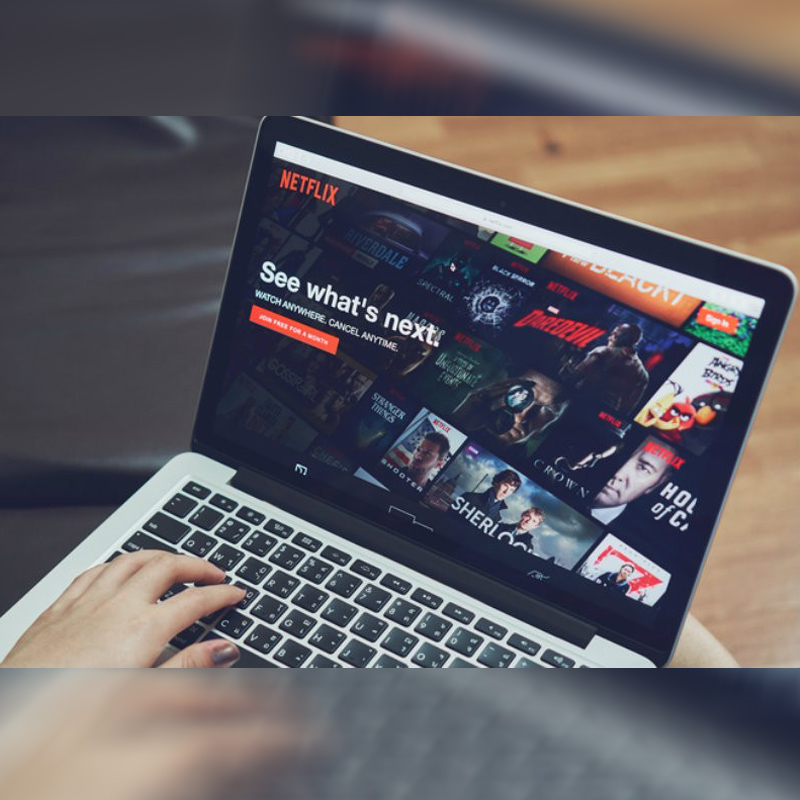
    MUMBAI: Streaming giant Netflix will not make its content available on Apple’s upcoming video offering. The latter is expected to introduce its video-streaming services on 25 March ramping up the competition in streaming business.

    “We prefer to let our customers watch our content on our service,” Netflix CEO Reed Hastings told as quoted by the Reuters. “We have chosen not to integrate with their service,” he added.

    Till now, Netflix has not adopted the most recent revamp of Apple's TV app for iOS. According to media reports, Netflix chief content officer Ted Sarandos said that their intentions have been moving away from the App Store subscription fee defending the decision not to adopt. He also added that Apple TV was not an important source of revenue for the OTT platform.

    The new service from Apple may have original content as well as resell subscriptions from CBS Corp, Viacom and Lions Gate Entertainment Corp’s Starz among others.  With entry of apple, the upcoming launch of Disney’s streaming service, Netflix is about to face tough challenge in near future.

  • Uday Shankar, citing TRAI tariff order, suggests govt should unshackle instruments of monetisation

    Uday Shankar, citing TRAI tariff order, suggests govt should unshackle instruments of monetisation

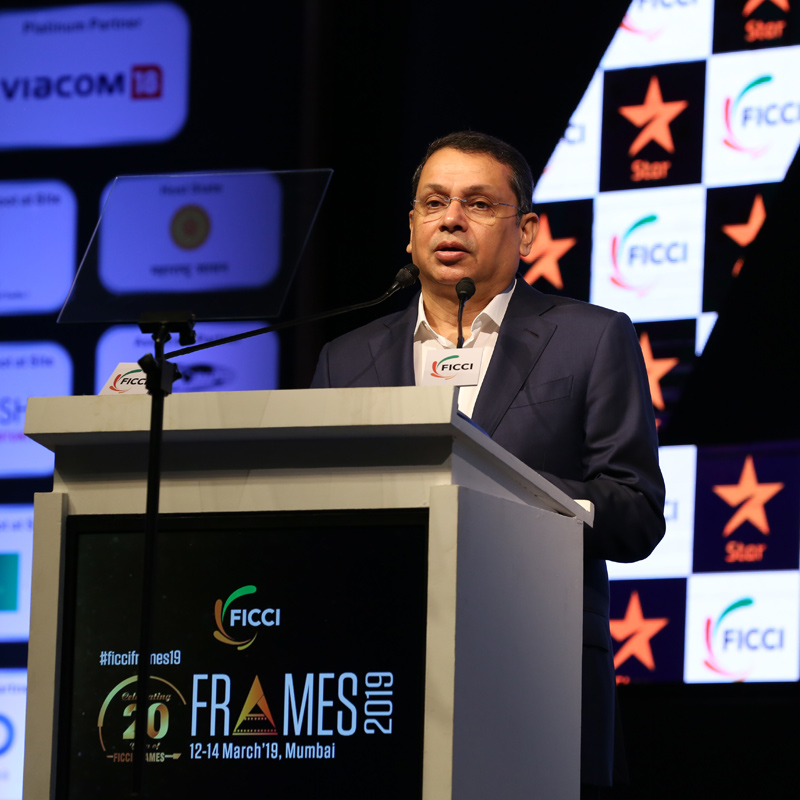
    MUMBAI: Uday Shankar believes one of the most ‘powerful’ means of fuelling the next decade of growth for India’s media and entertainment industry is for the government to ‘unshackle the instruments of monetisation’. Driving home his point, the veteran executive cited the Telecom Regulatory Authority of India’s (TRAI) as an example.

    “Distribution regulation of television content, where what you can charge from the consumer regardless of how much you invest in the content, is determined by the regulator and not the market,” Shankar said on the opening day of FICCI FRAMES 2019, where he moderated a session titled ‘Global Goes Indian’ featuring MIB secretary Amit Khare and Prime Minister Narendra Modi’s Economic Advisory Council chairman Bibek Debroy as panellists.

    Shankar wondered whether there was a need for India to revise its ecosystem in order to compete in the global content market place.

    “When a Hollywood film is made, or when Netflix or Amazon produce a series, they are able to monetise it across the world and hence their ability to invest in that content is a great deal more. In India, especially for TV, because of restrictions on how and how much can you monetise, there is a cap on investment. There are regulations on the affiliate monetisation front. So, your ability to monetise is limited,” he argued.

    Shankar channelled his inner newsman as he highlighted some of the most pressing issues facing India’s media and entertainment industry. The recently appointed Disney APAC boss referred to a series of stumbling blocks across film, TV and digital content creation that could delay the sector from realising its true and full potential.

    The 56-year-old focused on three key areas that needed addressing for the Indian M&E to grow at a faster pace. The FICCI vice president drew the attention of the panellists and the audience to issues plaguing content creation, monetisation and the need for government policies and regulations to be consistent.

    Shankar rued the fact that India wasn’t adding more theatres in tune with the times. He pointed out that the increase in number of screens was a result of single screen theatres being converted to multiplexes.

    “New theatres are not coming and while more films are being released in Hindi and regional languages, it becomes a challenge for them to get exhibited because there are not enough screens. While the big budget films are still accepted by theatres, the smaller and regional films are struggling. This problem looks like it’s going to get more and more complex,” he said.

    Shankar then shifted his focus to the lack of adequate infrastructure, adding how this was preventing creators from scaling up their focus on local and city-specific content across the country. To further build on his perspective, Shankar offered the example of Mumbai’s film city.

    “We had one film city which used to cater to the needs of the film industry and a few TV channels. Now, we still have the same film city which has to cater to the needs of the much diversified industry,” he stated.

    Shankar asked whether policy development by the government, given that M&E is a major employer, would be a potential problem solver. However, he made it clear that the industry isn’t seeking any special favours from the government.

    “The entire content for whole Hindi heartland from Bihar all the way to MP, Rajasthan, Gujarat and Haryana is created out of Mumbai because it is the only city where basic infrastructure still exists. A decade ago, there were initiatives to launch Bhojpuri channels designed to cater only to the population of Bihar and some parts of UP. But all those channels turned out to be unviable because there was no facility to create content locally and all of them had to come and rent expensive facilities in Mumbai and create content here. There are no facilities available outside Mumbai. Is this a subject needs that needs to be addressed via policy intervention?” he asked the panel.

    Shankar then drew a parallel to how a complex process at every level had been a hindrance to investment in theatre infrastructure.

    “For instance, the reason malls are coming up everywhere and no theatre is being made is simply because the entire policy around building a new theatre, in terms of all requirements, is too complicated,” he said.

    Shankar made another critical point as he highlighted the need for government policies to be consistent.

    “There has to be certainty of regulation. You should know what is expected of you and what you need to deliver. There should be no surprises, because surprises create a shock in the system and everyone takes time to recover from that,” he stated.

    Earlier in the day, during his opening remarks, Shankar described India as one of the major media markets in the world. According to him, Indian M&E is at an inflexion point.

    “We are already seeing the innovations that are taking place in this country in the domain of sports or in digital, where Indian creativity is being talked about globally and attracting the interest of one and all. However, we need to make sure that our policies are aligned to accelerate creativity and growth,” he said.

  • Disney eyes 10% stake in Hulu

    Disney eyes 10% stake in Hulu

    MUMBAI: The Walt Disney Company wants to have a grip on the US streaming service Hulu. According to reports, Disney is in active discussions with AT&T to acquire the 10 per cent stake that WarnerMedia owns in the streaming platform.

    Disney holds 30 per cent stake in the WarnerMedia Company, combined with another 30 per cent deal with Fox which is finalied and if it succeeds in convincing AT&T, Disney will own 70 per cent of Hulu.

    According to the reports that originated in Variety, Disney’s intentions are to keep Hulu as an adult-oriented, general entertainment hub, while its forthcoming Disney+ SVoD service will complement it as a family-friendly platform. Disney would also likely seek to expand Hulu into international markets.

    NBCUniversal's CEO Steve Burke revealed back in January that Disney also wanted to buy the 30 percent stake the media conglomerate owns, but the company wasn't looking to sell. Disney's offer for AT&T's portion won't fall on deaf ears, though: AT&T has been thinking of selling WarnerMedia's portion to prepare for its own streaming service's launch later this year. 

  • 21st Century Fox reports strong $8.5 bn Q2 revenue

    21st Century Fox reports strong $8.5 bn Q2 revenue

    MUMBAI: 21st Century Fox (Fox) reported strong second-quarter earnings even at a time when Disney is all set to take over a major part of the Murdoch empire. The company reported total quarterly revenues of $8.5 billion matching analysts’ estimates. Fox also added that it anticipates the transactions regarding the acquisition by Disney closing in the first half of calendar 2019.

    “This increase principally reflects higher affiliate revenues reported at the cable network programming and television segments and higher advertising revenue reported in the television segment partially offset by lower home entertainment revenue reported at the filmed entertainment segment. The impact of foreign exchange rates adversely impacted revenue growth by approximately $195 million, or 2 per cent in total,” the company commented in the earnings release.

    Fox reported 4 per cent increase in its cable network programming revenue reaching to $4.562 billion. While the domestic cable revenue increased by 7 per cent, international cable revenue declined 5 per cent. 11 per cent local currency growth at FNG International and Star adversely impacted international affiliate revenue. While the company saw cable network programming expense increase 7 per cent to $1.45 billion from its local sports acquisitions, it was partially offset by lower cricket rights costs by Star.

    “Reported international advertising revenue decreased 9 per cent as the adverse impact from the strengthened US dollar and lower local currency advertising revenue at FNG International more than offset local currency advertising growth at Star,” the release also added.

    The film division, powered by Bohemian Rhapsody theatrical revenue and pay-TV fees for The Greatest Showman, reported a 47 per cent increase in operating income. Television revenues surged nearly 19 per cent to $2.148 billion but reported $22 million loss due to higher sports programming costs.

    “Our company delivered another strong quarter of financial results, underpinned by distribution and advertising revenue increases at our domestic cable networks and broadcast businesses and the substantial gain on our sale of Sky. These results reflect our continued commitment to excellence in all aspects of our business. There has also been significant progress regarding the transaction with Disney and the spin-off of Fox Corporation including the effectiveness of the Form 10,” Fox executive chairmen Rupert and Lachlan Murdoch commented.

    The $71.3 billion mega-deal with Disney still needs final regulatory approval as regulators in America continue to conduct their review. After the finalisation, Fox will be left with Fox broadcasting, Fox News, and a few other channels.

    According to a report by MediaPost, the new Fox entity will be called Fox Entertainment and it will have a startup mentality. It will go beyond just TV or sports and news into newer avenues such as a content development accelerator.

  • Bob Iger on Disney’s bid to conquer streaming business

    Bob Iger on Disney’s bid to conquer streaming business

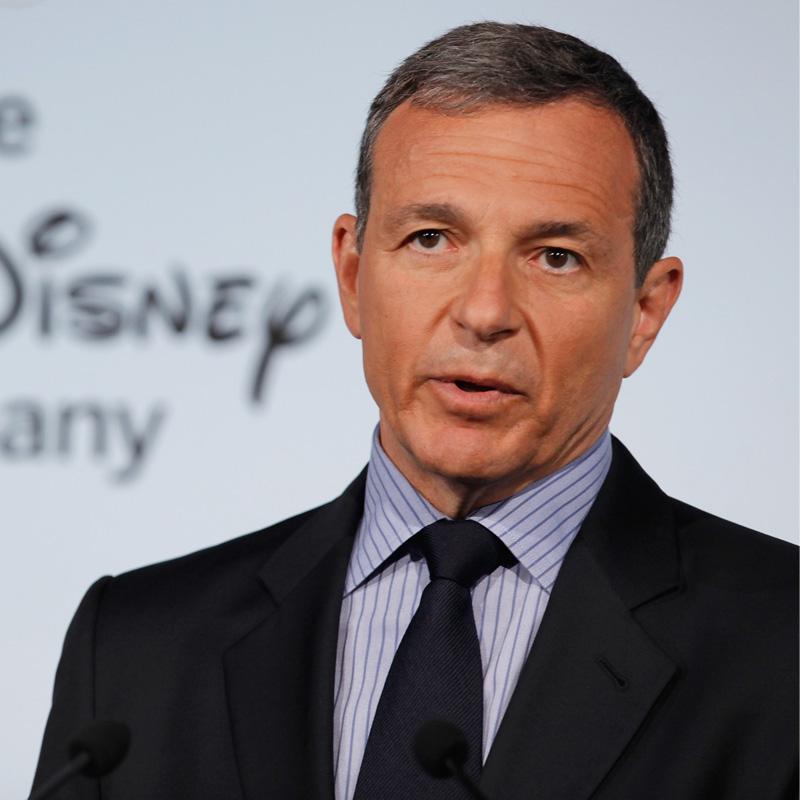
    MUMBAI: The Walt Disney Company (Disney) is gradually changing the focus of its business. Despite having a strong revenue-generating traditional media business, the company is set to make a splash in with high-profile entry into the streaming era. While the newly created direct-to-consumer segment of the business remains the immediate top priority, the entertainment giant is focusing on both programming and technology to differentiate itself in the high-stakes battle.

    The media conglomerate launched its audacious digital venture last April with sports streaming service ESPN+, which now has two million paid subscribers. Disney CEO and chairman Bob Iger said in an earnings call after Q1 results that from the nine-month journey of ESPN+, Disney has learned that BAMtech platform is capable of handling not only scale in terms of live streaming simultaneously but a substantial number of transactions in a very short period of time. Having fortified its base for the upcoming Disney+ service, the Bob Iger-led company seems confident about the streamer’s success.

    Disney is aiming to pump in serious amounts of cash to produced exclusives for its upcoming streaming service, Disney+.

    Iger told investors that Disney intends to relinquish $140 million (current rate) year over year in licensing revenue to provide the content it has currently licensed to Disney+. Captain Marvel will be the first Disney movie that the entertainment behemoth will entirely hold back from its licensee partners. The move is in line with Disney’s 2017 announcement of ending the practice of licensing its films to platforms like Netflix.

    Iger also revealed that teams of many Disney sub-brands are producing content with Disney+ in mind.

    “We have a number of creative engines across our company, many of which are dedicating their time and talents to develop content for the Disney+ platform,” Iger told investors.

    “Many are the same innovators driving the prolific success of Disney, Pixar, Lucasfilm, and Marvel. We look forward to leveraging National Geographic for even more content on Disney+,” he added

    Apart from Disney+ and ESPN +, the company will soon own a majority stake in the very popular over-the-top platform Hulu post its acquisition of 21st Century Fox closes. With just 30 per cent stake in Hulu, Iger thinks it’s premature to discuss its business prospects for now. The veteran executive, however, stated that Disney would look more aggressively at some international rollouts of Hulu.

    While competitors are looking at bundling services on one platform, Disney has preferred segregation so far.

    “Ultimately, our goal would be to use the same tech platform to make it easier for people to sign up for all three should they want to, same credit card, same username, same password, et cetera, but give the consumer the kind of choice that we think consumers are going to demand more and more in today's world,” Iger remarked.

    He also mentioned that if a consumer wants to subscribe to two or three platforms together, Disney will probably offer a discount to them. On the other hand, having three different platforms will enable them to attract subscribers who only want to consume a particular type of content, for example, sports.

    It’s evident from the fortunes of other OTT platforms that making profits in the streaming business at the moment is a long shot. Investors of Disney are also expecting the costs in streaming business to pressurize total revenue.

    Talking about making Hulu’s business profitable, with its good subscriber base, Iger said that there is enough opportunity in media businesses citing the example of streaming giant Netflix.

    “We think there's huge potential for Hulu to grow as well as for the other services to grow and plenty of room for other entrants in the marketplace. But we aim to take advantage of, on the Disney and ESPN side, our brands and that expertise,” he added.

  • Disney makes direct-to-consumer biz top priority after strong Q1 earnings

    Disney makes direct-to-consumer biz top priority after strong Q1 earnings

    MUMBAI: The Walt Disney Company (Disney) started the financial year 2019 on a strong note by smashing Wall Street expectations. Sales increases in media networks and theme parks businesses helped the giant media conglomerate to post total revenue of $15.30 billion. However, the revenue came in slightly lower than the first quarter of 2018.

    In its first quarter earnings report, Disney reported $1.86 EPS against a consensus estimate of $1.55. Total revenue of $15.3 billion also beat consensus estimates of $15.18 billion. Media Networks revenues for the quarter increased 7 per cent to $5.9 billion and segment operating income rose 7 per cent to $1.3 billion.

    “After a solid first quarter, with diluted EPS of $1.86, we look forward to the transformative year ahead, including the successful completion of our 21st Century Fox acquisition and the launch of our Disney+ streaming service,” Disney chairman and CEO Robert A Iger said.

    At a time when Netflix and Amazon are getting more aggressive in the entertainment sector, Iger went to state that direct-to-consumer business is the top priority for his company. Interestingly, he also mentioned in a post-earnings call that its sports streaming service ESPN+ has doubled paid subscribers in the past five months reaching 2 million in total.

    However, Direct-to-Consumer & International revenues for the quarter decreased 1 per cent to $918 million and segment operating loss increased from $42 million to $136 million.

    “The increase in operating loss was due to the investment ramp-up in ESPN+, which was launched in April 2018, a loss from streaming technology services and costs associated with the upcoming launch of Disney+, partially offset by an increase at our international channels and a lower equity loss from our investment in Hulu,” the company said.

    Notably, this earnings report could be the last full quarter of results before Disney closes its acquisition of most of 21st Century Fox. While Disney’s upcoming streaming platform Disney+ is making a grand entrance this year, the company expects 21st Century Fox’s assets will aid in its streaming strategy.

    The media powerhouse is gradually changing the core of its business to take on services like Netflix as well as to cope with changing content consumption trends. In the earnings call, Iger also said that that departments across all of Disney are working on creating high-quality content specifically for Disney+.

  • Netflix adds 8.8 million paid subs in Q4; stock falls as spending weighs on profits

    Netflix adds 8.8 million paid subs in Q4; stock falls as spending weighs on profits

    MUMBAI: Netflix in its Q4 earnings beat Wall Street expectation in terms of international subscriber growth but the same in its domestic market remains tepid. For the quarter, the online video platform reported 1.5 million domestic subscriber addition and 7.3 million new subscribers internationally.

    Netflix posted mixed result in terms of revenue also. The company beat Wall Street estimates on earnings per share (EPS) but fell a bit short on the total revenue. It posted EPS of 30 cents versus 24 cents consensus estimate. On the other hand, against Wall Street's estimation of 4.21 billion revenue, the online video player reported $4.187 billion in revenue.

    As a result, Netflix stock fell 4.31 per cent thanks to slower domestic subscriber addition and revenue growth. The most closely watched stock gave the hope of bigger boom among investors. Notably, the copman beat its own projection in terms of subscriber addition. On the back of new 8.8 million global paid memberships in Q4, the subscriber addition went up to 29 million paid subscribers for the full year of 2018. It is clearly 33 per cent higher if compared to 22 million paid subscribers addition in 2017.

    “We added a record 8.8 million paid memberships (1.5 million in the US and 7.3 million internationally), higher than our beginning-of-quarter expectation for 7.6 million paid net adds and up 33 per cent year over year. For the full year, paid net adds grew 33 per cent to 29 million versus the 22 million we added in 2017,” the company commented in a letter to shareholders.

    Few days ago, Netflix announced its increase in US prices for the first time since 2017. The hike in subscription rate will be applied also to subscribers in Latin American and the Caribbean, where Netflix bills in US dollars. The most popular subscription plan will see the largest hike costing $13 a month, up from $11. Wall Street showed high enthusiasm by sending the stock shooting skyward after the announcement.

    “We change pricing from time to time as we continue investing in great entertainment and improving the overall Netflix experience. We want to ensure that Netflix is a good value for the money and that our entry price is affordable. We just increased our US prices for new members, as we did in Q4 in Canada and Argentina, and in Japan in Q3. The new pricing in the US will be phased in for existing members over Q1 and Q2, which we anticipate will lift ASP,” the company added in the letter.

    Apart from its well-known and critically acclaimed shows, Netflix is expanding its film market also. As claimed by the company, its films drew bigger attention in the last quarter. Netflix has also mentioned the relevance of international productions again as good ones enjoy viewership both inside and outside the country. “We’re making significant investments in productions all over the world because we have seen that great stories transcend borders,” the OTT platform commented.

    For the first quarter of 2019, Netflix forecasts global paid net additions of 8.9 million, with 1.6 million in the US and 7.3 million internationally. The revenue forecast for Q1 19 represents 21 per cent year over year growth.

    Next year is going to be a tough one for Netflix as its rivals like Disney, AT&T, NBC Universal, Apple are gearing up for their own online services. Given the strength of Disney’s scale, AT&T’s reach, anyone can assume the intensity of the challenge.

    “There are thousands of competitors in this highly-fragmented market vying to entertain consumers and low barriers to entry for those with great experiences. Our growth is based on how good our experience is, compared to all the other screen time experiences from which consumers choose. Our focus is not on Disney+, Amazon or others, but on how we can improve our experience for our members,” Netflix said.

  • 2019 OTT TV trends in Asia and India

    2019 OTT TV trends in Asia and India

    MUMBAI: 2018 wrapped up as a fascinating year for OTT TV in Asia, with global content owners, Pay TV operators, and OTT players all ramping up their direct-to-consumer OTT offerings. With falling smartphone prices, OTT content market saw a boom in India as players across the spectrum set up shop. Original content was a game changer over the last few years, with OTT players outdoing the Bollywood big studios in their budgets. Netflix is investing Rs 500-600 crore per year into original content in India whereas Amazon Prime has announced that it would be investing around Rs 2000 crore in the same. In contrast, the budget of a Bollywood blockbuster like Padmaavat (2018) was merely Rs 200 crore.

    As content owners and pay TV operators launch — or even revamp — their direct-to-consumer OTT TV services, it’s an ongoing race to establish a business model that includes the right content, pricing, and user experience. Here’s my take on the top six trends that will shape OTT TV in India this year.

    1. Focus on the viewing customer

    While previous years have been dominated by conversations about tech or monetisation, 2019 will be dominated by a focus on the customer and enabling their access to great content. Disney’s Kevin Mayer puts this succinctly in a recent interview: “Having a better relationship with our consumer puts us in control of our own destiny.”

    2. Enabling access on every device

    Consumption trends are plotting a chart upward and to the right. Not all of this consumption is sensitive to copyright ownership, but it’s clear that video viewers have multiple devices and an internet connection, which facilitates increasing consumption. However, there’s a great deal of friction preventing these viewers from watching the content they want or even being offered the option of paying for the content they watch.

    3. Consumers want flexible payment options

    According to our OTT research, consumers have varying views across the region about whether they’re willing and happy to pay with their time (through watching advertising) or their money (subscriptions).  In 2019, we’ll see platforms using their understanding of their consumers’ preferred content to deliver premium experiences. Business model choices also need to be flexible for the consumer. In India and Asia, OTT providers could take a cue from the FMCG marketing playbook by offering sachet pricing. OTT TV providers can also offer small, low-priced subscription plans that are valid for a weekend or a week. The aim here is to enable users to sample the content and eventually convert the consumer into a more long-term subscriber.

    4. Does OTT advertising remove friction?

    Advertising paying for TV content is a contract the viewer is already familiar with. The benefit for the viewer is that they ‘pay’ with their attention. And they should receive more relevant, well-targeted ads than they would on a broadcast channel.

    Because of its highly targeted nature, ease of measurement, and tendency to have higher ad completion rates, OTT advertising is opening up new revenue streams for OTT TV providers — while also offering a highly engaging environment for brands. For advertisers, who tend to go where their audiences are, OTT TV is a beautiful mix of engaging content and addressability. It’s encouraging that agencies are seeing ad rates hit a plateau in the traditional, linear channels, while CMOs are excited by the high viewability of OTT TV services.  

    5. The content viewing experience guides OTT strategy

    According to Brightcove's OTT TV research with YouGov, trials and promotions tend to drive users to sign up for OTT services, but it’s the content itself that drives retention. We see many OTT providers not just investing in content, but also making their content work harder with content discovery and recommendation features. The research also sheds light on the importance of accessing content on mobile, which forces OTT providers to consider how their mobile OTT app could or should enhance the viewing experience. Features like offline download, which allows users to watch content when they’re not on wifi or a mobile network, and video continuity, which allows users to continue where they left off or ‘travel’ in between devices, remain desirable. All of these features are designed to increase stickiness to the service, as they allow for increased view times and encourage binge-watching habits.

    6. Pay TV operators experiment with OTT solutions

    Asia Pacific pay TV annual growth is slowly grinding to a two percent compound annual growth rate — from 267 million subscribers in 2018 to 288 million subscribers by 2023. Such low growth means that pay TV operators need to adapt to changing viewer habits by exploring the extension of their pay TV service to OTT TV services. Skinny bundles are an emerging product offering in Asia, with HOOQ launching skinny bundles in Indonesia that are targeted to tap into the 90 percent of Indonesia’s population who do not already access pay TV services. These kinds of content offerings acknowledge the difference between the buffet of the pay TV mega bundle and the a la carte personal choice of OTT TV. Understanding the context-driven difference in consumer preferences will allow pay TV operators to thrive in the OTT space.  

    Finding success in OTT TV services ultimately comes down to the viewing customer. For any global regional broadcaster or direct-to-consumer OTT service to thrive in this highly competitive environment, they must offer the desired elements to consumers.

    (The author is head of media sales, Asia, Brightcove. The views expressed here are his own and Indiantelevision.com may not subscribe to them)  

  • Cosmos-Maya Wins coveted Filmy Cricket League

    Cosmos-Maya Wins coveted Filmy Cricket League

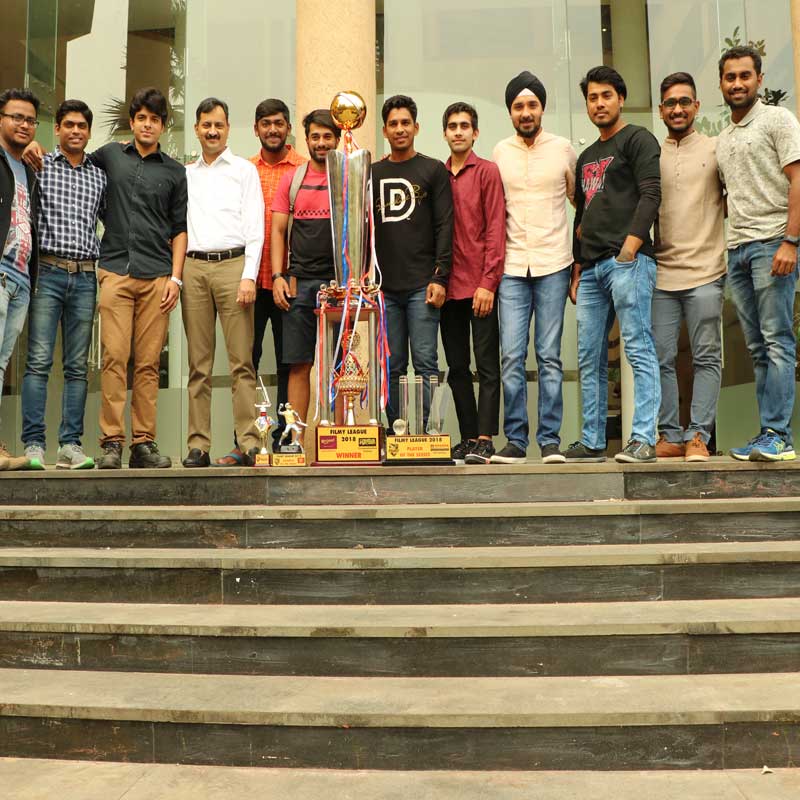
    MUMBAI: Cosmos-Maya, the market leader in original Indian animation content creation in kids’ space, recently won the Filmy Cricket League, held in Mumbai.

    The Filmy Cricket League (FCL), in its 7th edition, saw the participation of major media houses like Disney, Warner Bros, Sony Pictures, Reliance Entertainment, Fox Star Studios, among others.

    A conscientious company that earnestly believes in encouraging team spirit and unity, Cosmos-Maya has undertaken numerous team building activities for this purpose. One of these attempts included having a Cricket team in place for participation in sporting events like the Filmy Cricket League. Cosmos-Maya has been a regular at the event ever since its inception. However, this year, it exceeded everyone’s expectations by comprehensively winning every match it played in the tournament.

    Commenting on this victory, Anish Mehta, CEO, Cosmos Maya, said, “It has been our endeavor to provide our employees with the perfect blend of work and play. Whether it was the selection trials or the tournament itself, the response from Cosmos-Mayaites was phenomenal. Our efforts to inculcate a sense of team spirit through sporting activities, have proven to be successful.”

    The 7th edition of Filmy Cricket League was held on the 21st, 22nd, and 23rd of December, 2018.

  • A year when OTT onward march & TRAI tariff issue hogged limelight

    A year when OTT onward march & TRAI tariff issue hogged limelight

    MUMBAI: 2018 could have been easily dubbed as the Indian year digital or OTT, with its chaotic growth continuing and multi-million dollars being poured into programming by global and local players, however, the new tariff and regulatory regime for the broadcast and cable sector occupied as much mind space.

    Though these are early days for a sure shot business model for digital space emerging as players continue to experiment with AVOD, SVOD and combination of several other models, there’s no denying OTT has more than a foot inside the door in India.  

    According to a report by market research firm Media Partners Asia, online video revenue, comprising net ad spend and subscription fees, will grow at an 18 per cent CAGR across Asia Pacific between 2018 and 2023, climbing from $21 billion 2018 to $48 billion by 2023. While China will account for the lion’s share of industry value, with more than 60 per cent of Asia Pacific online video revenue and more than 75 per cent of direct-to-consumer SVOD subs by 2023, other big markets by revenue would include India, Japan, Australia, Korea and Taiwan.

    So, though traditional pay TV is not dead yet and will continue to grow in India as the saturation point is still far from over (BARC India estimates there are about 197 million TV homes in India over 100 million still to be covered), traditional media players have realised OTT and other forms of digital delivery of video — professional or user generated — will continue to grow and put pressures on ARPUs and other numbers as more Indians take to smartphones and devises with broadband infrastructure slowly improving and cost of data plummeting in the short term.

    The inroads into India in 2018 made by Chinese mobile companies have been impressive while raising fears of tracking and data misuse too.

    “With 160 million shipments of smartphones in 2019, apart from being the only market to grow in this sector, India will also be the most potential market for global content creators,” Zeel MD Punit Goenka tweeted last week. This observation is testimony to traditional media players waking up to the competition from OTT platforms for eyeballs.

    The growth of online platforms also means the continued search for both original and library content too will grow as it did in 2018. Not only global players like Netflix and Amazon announced big-budget investment in original content starring leading Hindi film stars like Shah Rukh Khan and Saif Ali Khan, local companies too have upped the ante realising the potential of the digital space. Star India’s digital arm Hotstar claimed 100 million viewers for the IPL cricket and ZEE5 has come out with some refreshing non-fictional programming.

    If online video distribution is growing in India, so has the demand for content regulation. Even as Indian policy-makers struggle to understand the business model(s) for digital players, the cry for regulation to suit Indian sensibilities (or lack of it) too has increased. Netflix Indian original Sacred Games is still fighting out a legal case, while informal warnings have gone to other Indian OTT platform too to tone down edgy programming being streamed.

    Bouncing amongst several government organisations (MIB, TRAI and Meity), the issue of online content regulation was a hotly debated topic in India with a large section of the industry pushing for self-regulation like those prevailing for TV content.

    If not in 2018, some sort of content regulation for online video will definitely come. The only thing that matters is whether in 2018 or it will be post general election in 2019.

    The action in the online video segment and its delivery mode was catalysed by the arrival of Reliance Jio that has expanded from just being a player to becoming a behemoth in a short period of time, handing out services at comparatively low prices. The rollout of Jio Giga fibre network in 2018 has sharply woken up legacy distribution players, including telcos who went on a partnership spree to source content.   

    And, if the regulators in India struggled with the issue of online  content, TRAI’s new tariff regime, proposed first quarter 2017, continued to cast a shadow in 2018 with confusion relating to some aspects (like a 15 per cent cap on discounts to consumers for TV channels) lingering on like a unfinished record playing out discordant notes. While TRAI has sought clarification from the Supreme Court on the discount issue (the next hearing is sometimes in January 2019), it has simultaneously cracked the whip on broadcasters and distribution platforms to fall in line with its new tariff regime by end of the present year.

    The formulation of a new telecom policy or the National Digital Communication Policy 2018 could also be said to be a milestone as India stopped just short of creating a mega communications regulator overseeing the realms of TV broadcast, online and telecoms, depending on having increased synergies amongst these segments and their regulatory regimes.

    Increased mergers & acquisitions seen in 2018 would continue consolidating the market and players. But such activities also raised doubts on possible creation of monopolies. Disney takeover of most of the media businesses of Rupert Murdoch’s 21st Century Fox, including Asia biggie Star, played out in India too even as Mukesh Ambani’s Reliance Industries and its various arms went on a shopping spree buying sizable stakes in content makers (Balaji Telefilms, Eros, for example), distribution platforms (Hathway, DEN Networks) and other media assets. That Subhash Chandra-founded Zee too is looking for an investor spiced up the mergers and acquisitions space.

    Channels continued to be launched in 2018 with almost all networks rolling out new offerings in regional languages – a trend which began over 2016 and 2017. Colors Tamil, Sony Marathi, Star Sports 3, Zee Keralam were unfurled for viewers by the major players. What's keeping broadcasters buoyant is the annual expansion in advertising continues unabated at about nine to 10 per cent annually. 

    While legacy media players (like cable TV, MSOs/LCOs, DTH) in India have started a fight for survival and improved bottomlines in the aftermath of online’s growth, the #MeToo effect in 2018 did not leave the media and entertainment untouched.

    Though #MeToo in 2018 more impacted the advertising and film segments with some big names becoming casualties, the ripple effect in the broadcast sector was low. But the movement has opened up a can of worms in the Indian media, entertainment and advertising segments.

    The industry is on tenterhooks in an election year, wondering whether the BJP or NDA will make a comeback in April-May 2019 or yield to the Congress. Will the policy regime continue or will there be changes? These are questions that seem to be creasing many a brow. 

    But on the whole, will the trends continue in 2019? Of course, yes as it too promises to be quite a roller-coaster.