Tag: Disney

  • Hotstar on track for full-fledged app launch on 29 March

    Hotstar on track for full-fledged app launch on 29 March

    MUMBAI: The rebranded service of Hotstar, combined with Disney+ content and the new blue logo of Disney+Hotstar, created a buzz in the market on Wednesday. But, within 24 hours, the app abruptly stopped streaming Disney+ content or the updated logo. The streaming service stated that it was a release of the beta version of the Disney+ Hotstar.

    “A limited release of the beta version of the Disney+ Hotstar app is currently being tested with a small number of consumers, in preparation for the full-fledged app launch on 29 March,” a Hotstar spokesperson said.

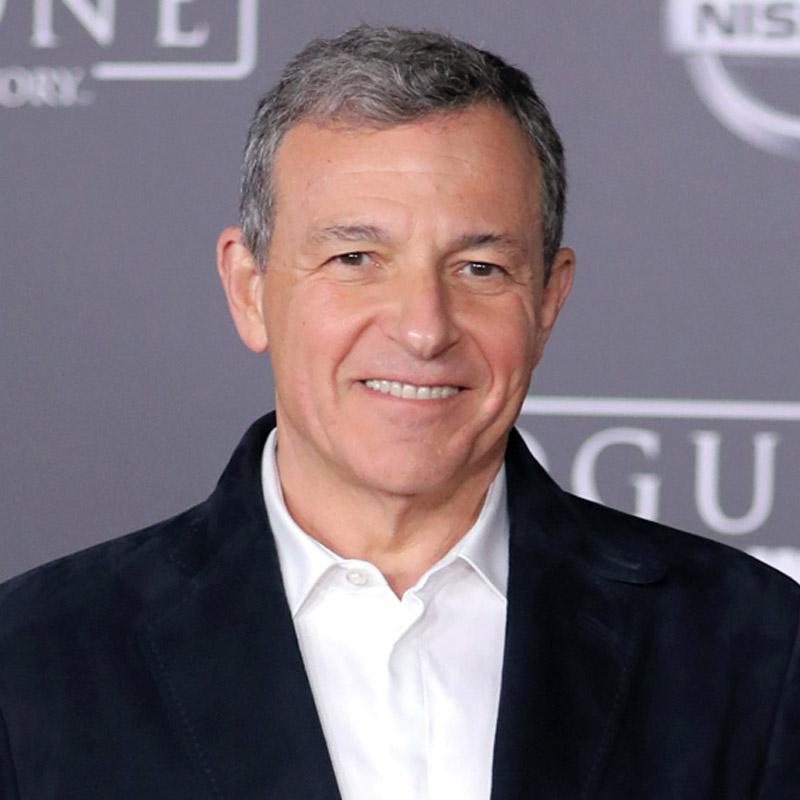
    Former Disney CEO Bob Iger said in an earnings call after Q1 result that it would be launching the service in India through Hotstar on 29 March at the beginning of the Indian Premier League. After successful first few months of its domestic launch, Disney+ is now gearing up for its international expansion. Iger wanted Disney+ to leverage the success of Hotstar in India by bundling the two services. During IPL 2019 , Hotstar registered more than 300 million users.

    As the Disney+ content suddenly disappeared from the streaming app,  speculations were rife if Hotstar stepped back because of the postponing of IPL 2020. As to whether  Hotstar now wants to coincide the launch with IPL on 15 April, sources said it is following the earlier plan of launching it on 29 March.

    Analysts are of the view that Disney+ content will position Hotstar as a premium offering. While the service has already positioned itself as the leader in the advertising-based business model, it started its journey of premium fiction content last year. In the fragmented OTT market amidst home-grown players and deep-pocket international players, it will be easier for Hotstar to take off its subscription-based business thanks to Disney content.

  • Disney+ arrives on Hotstar; what next for the rebranded service?

    Disney+ arrives on Hotstar; what next for the rebranded service?

    MUMBAI: Disney+ marks its much-awaited arrival in the crowded over-the-top (OTT) ecosystem. Wednesday morning onwards, a large part of Disney+ content catalogue has been made available on Hotstar which now comes under the umbrella of The Walt Disney Co post acquisition of 21st Century Fox. The black-yellow logo of Hotstar has also been  replaced by blue and white design for Disney+ Hotstar. 

    The entertainment giant has made its debut ahead of its scheduled time. Former CEO of Disney Bob Iger earlier said that they would be launching the service in India through Hotstar on 29 March at the beginning of the Indian Premier League. However, Hotstar did not make any statement on the early launch or give any clarity if its a test launch.

    Under the leadership of Iger, the giant media conglomerate has embarked on the streaming war in the OTT world dominated by the likes of Netflix and Amazon. Iger said that Disney+ would remain focused on providing quality content from its core franchises and brands, not just on the quantity of the library. As the service was also gearing up for international launch, Iger noted that they would leverage the success of Hotstar in India by bundling the two services.

    “Disney+ will be more positioned as a premium offering. It will open up a segment of the market that is not largely consuming international content at this point. It will position Hotstar with those consumers. It will improve Hotstar premium positioning,” Deloitte India partner Jehil Thakkar says. 

    “It will help Hotstar target a segment of the market that is actually paying for content. The 30-40 mn people in this country who are willing to play premium prices for an international as well as premium Indian content, It will help Hotstar position well with those consumers,” he adds. 

    Iger said post Q1 earnings that the new streaming service, Disney+ reached 28.6 million subscribers. After he stepped down from his position as CEO, it was reported that he would continue to spend much of his time focusing on the streaming service into the role of executive chairman. 

    “Disney has a big amount of content library and it is largely kids-focused. In India, there are not too many kids based OTT platforms. Kids' content is a big market. Putting Disney content on Hotstar, making the look crisp, it will have a good impact on the subscriber base,” Elara Capital VP – research analyst (Media) Karan Taurani said. 

    Taurani also added that as India is a very fragmented market, the entry of one more global giant who is serious to stay here will not impact the global giants except the smaller players. However, Thakkar is of a different opinion. According to him, Disney+ will first position itself as an international content provider. Hence, it will increase competition for international players primarily. 

    While Hotstar has already established its position in the advertising-based video-on-demand play surpassing 300 million active users, the Disney+ launch will definitely boost its newly launched subscription service also. The huge combined library of those two giants will challenge other deep-pocket international players who also see India as their next frontier of growth. However, the pricing which has not been revealed yet will also be a deciding factor of the new rebranded service’s fate. 

  • Disney Junior’s animated series ‘Mira, Royal Detective’ to premiere in U.S and India on 20 March

    Disney Junior’s animated series ‘Mira, Royal Detective’ to premiere in U.S and India on 20 March

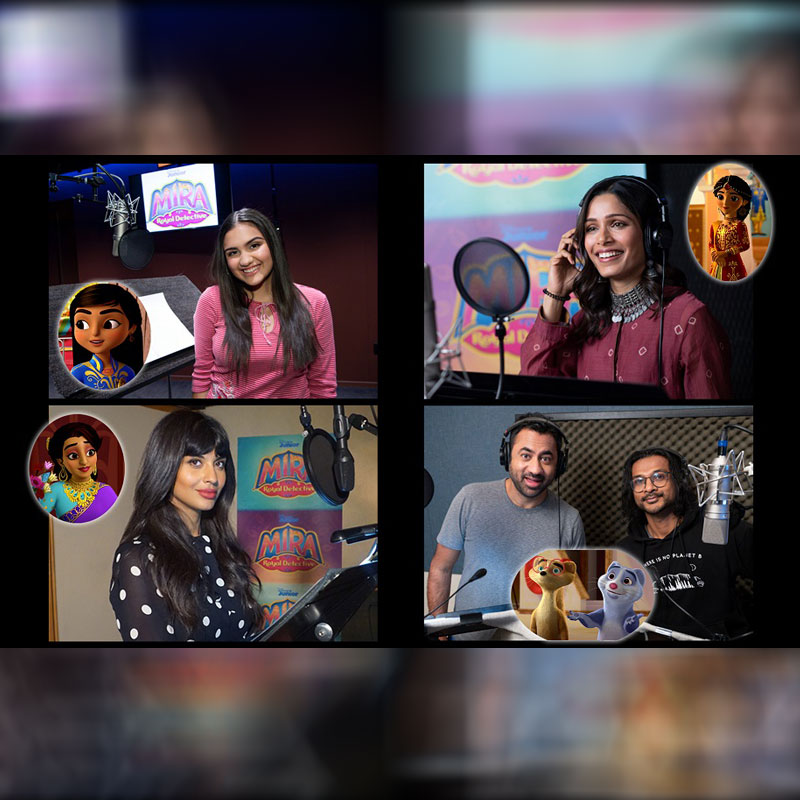
    MUMBAI: Disney Junior's animated series Mira, Royal Detective will premiere in the U.S. on  20 March (11:00 a.m. EDT/PDT on Disney Channel and 7:00 p.m. EDT/PDT on Disney Junior). Disney Channel India will also be premiering a sneak-peek that same day, followed by the series premiere on Sunday, March 22. Set in the magical Indian-inspired land of Jalpur, the series introduces a brave and resourceful girl named Mira, a commoner who is appointed to the role of royal detective by the queen. Following its premiere in the U.S. and India, the series will roll out worldwide in an estimated 160 countries on Disney Channel and Disney Junior platforms globally.

    "Mira, Royal Detective," which has already been ordered for a second season, stars Freida Pinto, Kal Penn, Utkarsh Ambudkar, Hannah Simone, Jameela Jamil, Aparna Nancherla, Aasif Mandvi, Karan Soni, Maulik Pancholy, Sarayu Blue and Sarita Choudhury. Newcomer Leela Ladnier stars as the voice of Mira, alongside additional cast members Roshni Edwards, Kamran Lucas, Karan Brar, Parvesh Cheena and Sonal Shah.

    Joining the previously announced cast in recurring and guest star roles are Kunal Nayyar ("The Big Bang Theory"), Danny Pudi (Disney's "DuckTales"), Iqbal Theba ("Glee"), Sunita Mani ("GLOW"), Karen David ("Fear the Walking Dead"), Rizwan Manji ("Perfect Harmony"), Hari Kondabolu ("Totally Biased with W. Kamau Bell"), Nardeep Khurmi ("Jane the Virgin"), Aarti Sequeira ("The Next Food Network Star"), Avantika Vandanapu (Disney+ Original Series "Diary of a Future President"), Julian Zane (Disney's "Doc McStuffins"), Brian George ("The Big Bang Theory"), Sakina Jaffrey ("House of Cards") and Madhur Jaffrey ("I Feel Bad").

    Created for kids age 2-7 and their families, "Mira, Royal Detective" centers on Mira, who, along with her friend Prince Neel, creative cousin Priya, and comical mongoose sidekicks Mikku and Chikku, set out on mystery-solving adventures that highlight critical thinking and encourage deductive reasoning for young viewers. Each episode is comprised of two 11-minute stories that celebrate the cultures and customs of India by incorporating authentic food, fashion, language and art. Reflecting their importance in Indian culture, music and dance play an integral role in "Mira, Royal Detective," with each episode featuring at least one original song and dance number that showcases the diversity of the culture.

    A music video featuring a mash-up of the series' main title song and Mira's song, "We're on the Case," will debut Friday, Feb. 21, on DisneyMusicVevo and in the DisneyNOW app. In conjunction with the series premiere on Friday, March 20, Walt Disney Records will release a digital soundtrack with 20 songs from the series, and the DisneyNOW app will debut a hidden object game in which players are invited to help Mira solve mysteries by following a trail of clues in an immersive 3D environment. Additional extensions for the series will continue to roll out later this year.

    In advance of the series premiere, Disney Parks, Experiences & Products will debut a product line by Just Play at the 2020 American International Toy Fair. Featuring dolls, role-play products, figures, playset and more, the line is set to release Fall 2020.

  • Disney+ stays put on subscriber guidance despite overwhelming response

    Disney+ stays put on subscriber guidance despite overwhelming response

    MUMBAI: There was a widespread high expectation for Disney+ and the streaming service had more than 10 million sign-ups by the end of first day. Within a few months of its entry, Disney+ acquired 28.6 million paid subscribers surpassing all previous estimates. Although the media conglomerate seems excited with the positive response, it is not changing the guidance currently.

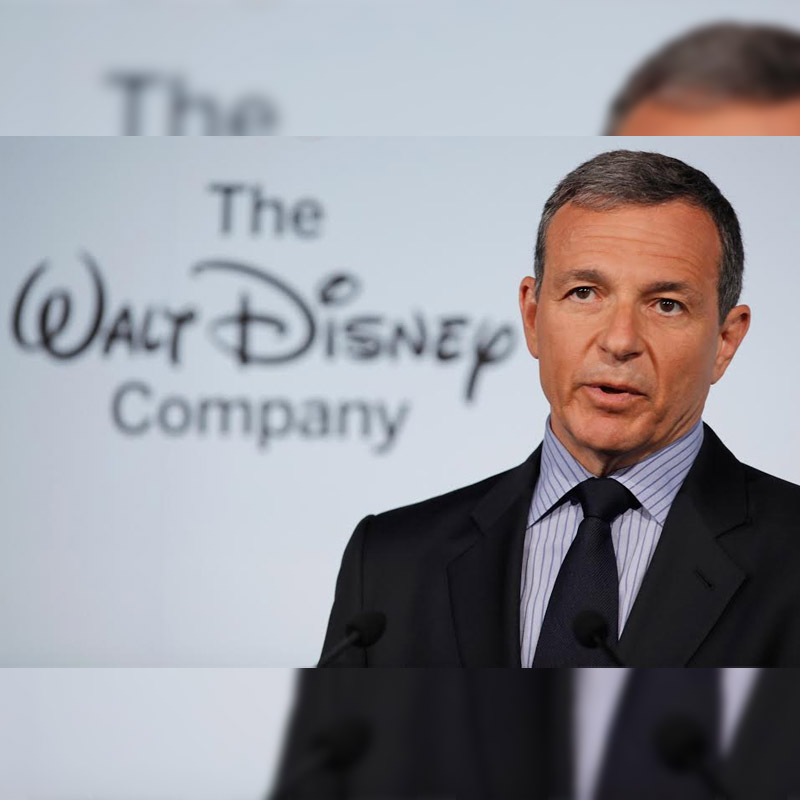
    “We’re just beginning there, and I think it's just premature for us to take our guidance up. What we do know, of course, is that we have reached a number in the United States that since you did the math that would suggest that we're at the number that we predicted we would be in year five, just after a very short period of time, and I don't know whether that is a statement about the total available market or the quality of the product or both, or the price. It is just the way I think a number of factors that I've touched upon, and I just – I'll go over them one more time,” Disney chairman and chief executive officer Robert Iger stated in an earnings call.

    While Disney projected between 60-90 million global subscribers by 2024, it counted on two-thirds of that from subscribers outside the United States. As the streaming service has not been launched in most of those markets, Iger said it is more of a challenge to launch in those markets and needs more marketing efforts. Although the interest in streaming is not as high as US in those markets, he mentioned that these markets have been seeded with streaming.

    The platform saw 50 per cent of subscribers signing up directly while Verizon partnership made way for 20 per cent subscribers. Rest of the subscribers came from other services including Apple, Google, LG, Microsoft, Samsung, Sony and Roku. Moreover, the bundle with ESPN and Hulu was very helpful in terms of lowering churn rates.

    “The fact that the ARPU by the end of the quarter was $5.56 on a $6.99 subscription suggests that while there were discounts in the market in the packaging that existed enabled consumers to buy in at lower prices. We did extremely well, basically with the Direct-to-Consumer Package,” Iger added.

    As Igers shared, users have adored the  offering of classic movies and shorts from the studio including Moana and Frozen, Disney Channel series like Hannah Montana and The Suite Life of Zack & Cody, recent theatrical releases like The Lion King. Along with old library, subscribers have shown interest to growing slate of original content especially The Mandalorian which has “quickly become a bonafide hit and a cultural phenomenon”.

    “We know there is great anticipation for the substantial array of Baby Yoda consumer products hitting the market in the coming months. We'll continue to add high quality content to the service that includes Frozen 2, and Episode 9, The Rise of Skywalker. Many of you probably saw our Super Bowl spot featuring three original new Marvel series for Disney Plus. Loki, The Falcon and the Winter Soldier, which will premiere on the service in August and Wandavision, which will debut in December,” Iger stated.

    However, the trajectory in terms of investment in original programming on the service is roughly the same as it would have been or as was before the launch. The company has not brought significant change in the investment.

    Although Disney is working up a plan to take its other streaming service Hulu internationally, it has decided that the priority needs to be Disney+. It is going to be launched cross multiple territories in Western Europe, and India on 29 March. Following that, it is going to continue to roll out across the world going into 2021 including Latin America. Hulu’s international expansion will come right after or soon after that.

  • Disney+  launch on Hotstar  during IPL 2020

    Disney+ launch on Hotstar during IPL 2020

    MUMBAI: Come the IPL in end March 2020, and Hotstar subscribers will be able to get access to the Disney+  app which has managed to attract 28.6 million subscribers in a short period since launch last year.

    Speaking at an investor earnings conference call after announcing the first quarter results ending 28 December 2019, The Walt Disney Co chairman  & chief executive officer Robert A. Iger said that Disney + will be bundled with Hotstar and sold as a product on 29 March at the beginning of the IPL season.  He refused to reveal the price points it will be launched at, although he acknowledged it will be tailored to the market.

    Said he: “We will be rebranding our existing Hotstar VIP and Premium subscription tiers to Disney Plus Hotstar. Assume that one will be more premium and will include the entire library plus original programming, and the other one will bemore basic that will only have the library and not the original programming. It will be launched at a peak period – that is the IPL cricket league. We will be taking advantage of the presence of Star in the market and the millions of subscribers that they have; we take advantage of the sports tie in. And we will be using the interface and technology that includes the billing that already exists (in Hotstar).  The launch of the service – we believe – (is) under very optimal circumstances.”

    He also told analysts that Disney's next priority is to launch its streaming service in western Europe on 24 March with debuts expected in the UK, France, Germany, Spain Italy, Switzerland, and Austria. Markets like Belgium, the Nordics, and Portugal will follow in the summer. " In December we signed a deal with Canal Plus, the leading pay TV provider in France," he said. "We're currently in talks with several other potential distribution partners throughout the region."

    Iger admitted interest in streaming across the world in international markets is not as high as in the US. “We have a marketing challenge to launch in those markets. Not that those markets have not been seeded with streaming. But we have to yet to launch there,” he said.

    Iger has been accelerating the launch of Disney+ globally, following the rapid uptake of it in the US. Markets like Australia, New Zealand and Peurto Rico followed a week later.

    Earlier expectations were that Disney+ would launch in India after the IPL, and it would launch in Europe much later.

    It may be recalled that Disney APAC president Uday Shankar had, earlier this year, been mandated to steer Hotstar, leaving K. Madhavan in charge of the TV business. Now we know why: to meet the early launch date of Disney+ on Hotstar.

    (updated at 10:19 am)


  • Disney starts the year with strong quarter, reports $20.86 bn revenue

    Disney starts the year with strong quarter, reports $20.86 bn revenue

    MUMBAI: The Walt Disney Company (Disney) reported its first fiscal quarter earnings, the first result since the launch of its new streaming service Disney+. Beating Wall Street expectations, the company has seen a strong start by reporting $20.86 bn revenue in contrast to market expectation of $20.79 bn. Disney’s adjusted earnings per share came in at $1.53 versus the expected $1.44.

    “We had a strong first quarter, highlighted by the launch of Disney+, which has exceeded even our greatest expectations,” said Disney chairman and chief executive officer Robert Iger said.

    “Thanks to our incredible collection of brands, outstanding content from our creative engines and state-of-the-art technology, we believe our direct-to-consumer services, including Disney+, ESPN+ and Hulu, position us well for continued growth in today’s dynamic media environment,” he added.

    Media Networks revenues for the quarter increased 24 per cent to $7.4 bn, and segment operating income increased 23 per cent to $1.6 bn. Cable Networks revenues for the quarter increased 20 per cent to $4.8 bn and operating income increased 16 per cent to $862 mn. Broadcasting revenues for the quarter increased 34 per cent to $2.6 bn and operating income increased 41 per cent to $575 mn.

    Studio Entertainment revenues for the quarter increased from $1.8 bn to $3.8 bn and segment operating income increased from $309 mn to $948 mn. Higher operating income was due to increases in theatrical and TV/SVOD distribution results at legacy operations, partially offset by a loss from the consolidation of the TFCF businesses.

    Direct-to-Consumer and International revenues for the quarter increased from $0.9 bn to $4.0 bn and segment operating loss increased from $136 mn to $693 mn. The company stated that increase in operating loss was due to costs associated with the launch of Disney+, the consolidation of Hulu and a higher loss at ESPN+. However, it also mentioned that these increases were partially offset by a benefit from the inclusion of the TFCF businesses due to income at the international channels including Star.

    The company’s biggest bet at streaming Disney+ delivered an impressive 26.5 mn subscribers, starting from Nov. 12 through year’s end. ESPN+ had 6.6 mn subscriber as of 28 December. Hulu’s SVOD only subscriber stood at 27.2 mn while the service combined with Live TV offering had 3.2 mn subscribers.

    “The average monthly revenue per paid subscriber for ESPN+ decreased from $4.67 to $4.44 due to a shift in the mix of subscribers to our bundled offering. In November 2019, the Company began offering a bundled subscription package of Disney+, ESPN+ and Hulu. The bundled offering has a lower average retail price per service compared to the average retail price of each service on a standalone basis,” Disney stated.

    “The average monthly revenue per paid subscriber for our Hulu SVOD Only service decreased from $14.49 to $13.15 driven by lower retail pricing and a shift in the mix of subscribers to our bundled offering. The average monthly revenue per paid subscriber for our Hulu Live TV + SVOD service increased from $52.31 to $59.47 due to higher retail pricing,” it added.

  • “Most of the SVOD businesses are not going to be viable” -Tubi’s Farhad Massoudi

    “Most of the SVOD businesses are not going to be viable” -Tubi’s Farhad Massoudi

    Streamers such as Netflix, Disney+, Amazon Prime, Apple Plus, HBO Max – have been capturing headlines across the world, including in India. But one service which has been growing silently – probably the first totally reliant on advertising – has been Tubi. Launched in America around five years ago, it has caught the US consumers’ fancy with more than 20 million actives users every month.

    Tubi CEO Farhad Massoudi sat down with Variety’s Todd Spangler during the Variety conference at the Consumer Electronics Show in Las Vegas earlier this month and spoke at length about his vision for the free ad supported streaming service. Indiantelevision.com was there at the CES recording the conversation. Farhad was pretty open about his views on the streaming ecosystem.

    Prior to founding Tubi and ad tech company adRise, Farhad was the VP of engineering at socialmedia.com and he also worked as an engineer with Yahoo!Read on for excerpts of the interview:

    Tell us a little more about Tubi?

    Tubi is the largest movie streaming service in the country. We offer over 20,000 titles to our consumers in the United States. We are expanding globally. It’s completely free at no cost.

    What’s the content on Tubi?

    Traditional TV is in a secular decline. In the third quarter of last year, we had over two million consumers cut the cord. This is a record and up from half a million the year before. So in an era where consumers are watching less and less traditional TV, it’s being replaced by VOD services. Obviously Netflix and many others are leading that effort. In the world of subscription video on demand, their job is to offer you originals to justify themselves on your bills at the end of the month. So, we expect the average consumer to have a few subscription services whatever that number maybe. So as a result these services become shallower and shallower with more expensive originals. Netflix’s library is shrinking over time.

    So the job of AVOD services to be included is to complement these services with a massive library of content – a subset of which is relevant to you. We have a massive diverse kind of content. We have horror movies like Friday the 13th to award winning titles like Catch me if you can, Pulp Fiction, and many others to anime to African American titles to Spanish and many other. We launched Tubi kids in the summer. So it is a vast library of content.

    You have deals with a lot of the major studios. Not with Disney.

    Yes that’s true. We work with most major media companies.  We deal with over 250 companies video content. Lionsgate, MGM, we have deals with all of them. And they are investors in Tubi.   

    So you don't see Netflix, Hulu, Disney+ – the premium SVOD services as competitors?

    We all compete for share of time. That includes Instagram, Facebook, ESPN. But we don’t see Netflix as a direct competitor in fact we compliment them in most households where Tubi is consumed. They offer originals and I am a big fan of Netflix originals.  But we offer a library that deserves to be watched – that we give it a voice, that is otherwise not accessible to our viewers. I think that’s really important for the media industry, that’s important for society. And it obviously adds a lot of value to advertisers.

    What is the typical profile of the Tubi viewer?

    Let me contrast it to traditional TV. The median age in TV is about 58; half our viewers are 18 to 34. So the median age is in the low thirties. They represent the breadth of America. We are all over the United States. In the summer we mentioned we had over 20 million monthly active users. So there is a very large percentage of the American population, which is using us. 

    How much do people watch?

    We have millions of consumers using us everyday for hours and it is a very engaged audience.

    You are an ad supported service. What does the ad load look like compared to other media?

    First of all most of the successful internet companies are advertising based – Facebook, Google, Instagram to YouTube,  Pinterest –  so we are just like them. I think it’s very important to offer the service at no cost to the consumer. In regards to the ad load, we offer an ad load of four to six minutes as compared to traditional TV, which is 14-18 minutes per hour. So it’s a substantially lower ad load and it’s important we don’t mess up the experience.

    What are the ad formats you are offering advertisers?

    What we offer advertisers is pretty straightforward: brand safe. We have no UGC content, no short form content that is traditionally on the web. Most of the consumption is on premium TV screens. So it is a TV commercial experience with an ability to do targeting and measurement. So it is the best of both TV and digital. We offer access to consumers who are watching less and less TV.  So that’s a huge extended reach for national advertising. We are expanding beyond US borders. There are a lot of sophisticated targeted measurement capabilities; there are some interactivity capabilities. So we offer access to consumers who advertisers will not be able to access through traditional TV anymore.

    What is your business need in terms of the ecosystem to really make a difference?

    We started AVOD nine years ago. The concept of ad supported TV is what people made fun of five six years ago. We have had a phenomenal couple of years and it would be shocking if we did not have any competitors. People have noticed that AVOD is a huge opportunity in the US and are launching services similar to us. We still are the largest, the most watched. We have the largest library, the most sophisticated machine learning recommendation engine. We are really comfortable where we are. We welcome all the new players.

    What are your biggest challenges?

    Look our team doubled in the past year. So maintaining the momentum, the culture, the innovation, and the cutting edge is not easy. So a lot of my attention is on making sure that we keep that culture and we continue pushing the edge.

    In the backdrop of the streaming wars are you going to increase the spend on content?

    We have been. We announced a nine figure spending for last year. We are going to significantly increase it. The library has more than doubled in the past year. The quality has never been as good as this. The depth of our library in any genre is at level with any streaming service out there. That is going to continue to grow. The thing that we do best and we specialise in it is that we use technology, data and machine learning to figure out what content to license, what do our customers want, and how much we should pay for it so that we can have a sustainable business and continuously grow it.

    The originals on Netflix require spends of  billion  and to license content, don't you need to more capital to break out?

    No. Here's what we do and we have been successful doing it. The playbook for SVOD is a content forward playbook, which means you need originals to drive subscribers. So if HBO were to remove their top 10 titles, I don't think they will be worthwhile.

    AVOD is the opposite: it is about giving access to the consumer to content that otherwise you won't  have access to through SVOD services because it does not drive subscribers. Some of our titles don't appeal to everybody. We have anywhere from documentaries you won’t find anywhere else. To horror movies. And that is something Tubi offers at no additional cost. We are on a mission to aggregate about 99 per cent of TV shows and movies in the market. The top one per cent is going to be the streaming wars – the Netflix, the Amazon and HBO going at each other. Our job is to aggregate that other 99 per cent and personalise it so that you find the titles that are relevant to you as opposed to the rest of it.

    99 per cent sounds expensive, you are going to need investment.

    We are growing our revenue, and we are going to invest in the library and 20,000 titles is by far the largest library in the market. For any service – AVOD or SVOD. Netflix has about 5,400 titles. We have 4X or 5X Netflix’s titles. We are not the long tail. Long tail video suggests cat videos, which is not what we offer. We are not about the top one per cent of content – I call those the shiny titles, the ones that win awards, that get a lot of headlines. The subscription services need those to convince you to pay. We will focus on the rest.

    Will you focus on original content? And do you require exclusivity for your content licensing deals?

    No. We will not to do originals for the reasons I just mentioned. I get these pitches for original content and I tell them sorry we are not the right partners.  If we can get exclusivity for licensed content, sure. Ultimately what matters is that on a Friday night you put on Tubi and we pair you up with the content that is relevant to you.

    What developments are you looking at to make personalisation better?

    The sophisticated machine we have built to pair the right content with the user, needed a lot of content. We have been working on our machine learning recommendation engine for five years. We are the only AVOD service or the most sophisticated with a recommendation engine. That is critical to our success.

    Tubi originated from adRise – an adtech company. How did that happen?

    The fun story is I was in school college many years ago. And I took a business class that the CFO of Netflix attended. And I remember students were grilling him that the more your consumers use your product, the more you have to pay for shipping them and they were a DVD by mail service. And he said the future of TV is streaming and the apps will replace TV channels. And that stuck with me.

    Years later I was in adtech and in advertising and I realised that advertising as long as we know is going to be dominated by TV. So I put two and two together and I said TV app replaces TV channel. The domestic $70 billion ad market and the global $200 billion one is going to be completely be disrupted.  And consumers still want more content that is subsidised. So that was the hot moment for me.

    So I launched in 2011, the first AVOD OTT business and it was called adRise. It was a white label streaming platform that powered other media companies’ apps behind the scenes. The thinking then was that I would not be able to license content with no money for my free streaming service. Which certainly was the case back then. And most people thought streaming was not going to happen and this concept of ad-supported service is ludicrous. Five years ago we saw an opportunity to launch our own brand called Tubi TV, which we then renamed to Tubi and we stopped doing the adRise business.

    Your partners who distribute your content – Comcast and Cox. How is that going?

    We love our partners. Our MVPD partners in cable and satellite. And we are going to expand that. We are happy with the two. We are the third app after Netflix and YouTube to launch Xfinity set top  boxes. We complement Comcast and Cox and offer their customers 20,000 titles.

    In your ad campaign, you are directly saying you are not Netflix. Is it a good idea to name a competitor?

    On notonnetflix.com, there are a few celebrities like Terence Howard, Nicole Scherzinger, Carment Electra  talking about us. It has been a phenomenal campaign and has been very successful for us. And again we have highlighted that we have content that is not on Netflix which means we complement it. If you want to watch 13 reasons why, go for it. For everything else, there is Tubi. 

    What’s you forecast for SVOD?

    The idea of a consumer having to subscribe to a Netflix, Amazon, Disney+, Hulu, ESPN, HBO Max, HBO Now, Starz, CBS All Access – it is ludicrous. It is not going to happen. Most of these businesses are not going to be viable. A lot of these businesses are going to fail because they just won’t have scale.  Consumers are not going to subscribe to all of these services. The jury is out which ones are going to build a viable business and which ones are going to spend billions and stop doing it. The reality is we will know in the next couple of years. In the meantime, you pick the few you really like, because they have oriignals you really like and you complement it with Tubi. 

  • Indian animation 2019 – the year of highs

    Indian animation 2019 – the year of highs

    2019 was a great year for the Indian animation industry. What a wonderful culmination of a decade which saw the complete transformation of the industry. Today we are at the cusp of a creative revolution. There has been a proliferation of media platforms and content consumers are spoilt for choice. The resulting increase in supply has peculiarly resulted in increased demand and consumption, thereby giving rise to more such platforms and more opportunities all round. A recent report by KPMG pegs that the Indian animation and VFX industry, which now stands at $1.23 billion, will more than double in size to $2.6 billion in the next 5 years.

    2019 was a year of highs for the industry. After being declared the most popular Indian television show in the world by Google, Motu Patlu, Cosmos-Maya’s flagship IP, was immortalized in wax at the Madame Tussauds museum. The year also saw the launch of Cosmos-Maya’s Bapu, the first-ever IP in this space based on Mahatma Gandhi, commemorating his 150th birth anniversary. Green Gold Animation’s Mighty Little Bheem became the second most-watched original series globally on Netflix in the Kids’ category. When a homegrown franchise which is with a pay-TV broadcaster like Turner takes the original route with Netflix, you know that winds of change are blowing.

    In addition to the above, there were giant leaps in terms of the evolution of storytelling, where major franchises are being planned. Cosmos-Maya’s Motu Patlu spinoffs, Inspector Chingum and Guddu were launched on Disney and Amazon Prime Video respectively. Both these IPs followed a ‘Digital First’ approach where it was envisaged that these first air on a major OTT to propagate the IP, and then on Pay TV to increase eyeballs manifold. Also, in the normal run of things, where OTTs spend big to get original and exclusive content on board, they are now preferring to air content which is already running on a different platform, thereby leveraging the placement of an IP.

    The current digital scenario is very promising. WowKidz, Cosmos-Maya’s YouTube network, has been a big benefactor of this digital growth. WowKidz today has more than 35 million subscribers and 16 billion views. An average of 75,000 new subscribers are added daily to the mix. The reason is simple. Close to 650 million Indians have access to internet services today. Smartphone penetration has reached the 500 million mark. When we look at the breakup of India’s animation production pie, 53.5 per cent is digital’s share. This is driven by content viewing on mobile phones in a country which has mostly single TV households. TV has 30 per cent share in India’s animation production pie but still has the maximum reach.

    For content creators like Cosmos-Maya, both platforms are equally lucrative. If the brand is big, Digital and Pay TV can end up being similar partners. A situation very unique to India, today TV and OTT are both growing in the country and there is a beautiful co-existence of both. Animation is transcending boundaries in this regard.

    Speaking of transcending boundaries, 2019 also heralded a new trend. Cosmos-Maya’s ‘Selfie With Bajrangi’, one of the highest-rated and most popular shows has made its way into a general entertainment channel through Star Plus, which from an industry perspective is a welcome change because animation has always been an under-indexed category with low ad rates, in spite of its GRP contribution being in line with some of the most popular categories. The year also marked the ‘Bring in Bollywood!’ era. IP’s like Golmaal Jr with Nickelodeon Sonic, Fukrey Boyzzz with Discovery Kids capitalized on the popularity of the Golmaal and Fukrey franchises.

    Another important trend which Sony Yay! started off is the airing of their content in 7 regional languages. Speaking here from a more holistic perspective, though OTT players like Amazon Prime Video, Netflix, Hotstar, Zee5, Alt Balaji among others, are producing more and more regional content to tap on as many users as possible in the country, TV still dominates here. To add more perspective, OTT is yet to penetrate rural India, which has always been a big traditional media market. TV is a god-sent for rural folk who make up around 70 per cent of Indian population.
    On the global front, Indian animation content reached almost all corners of the world. To quote an example, our non-dialogue show Eena Meena Deeka is aired in more than 50 countries today.

    International co-productions are becoming big and we have captured newer frontiers in this regard as an industry. There were times when only a bunch of people who would attend international markets from India to discuss co-production possibilities. Today, dedicated Indian delegations attend these markets. Hence, the scope has increased exponentially. 4 of Cosmos-Maya’s co-produced international IPs have been ‘glocalised’ and will air in Hindi on a major broadcaster. To quote an example, Berry Bees, one of our biggest co-productions, an all-girl IP, with Atlantyca, SRL and Telegael will air as The Dabangg Girls in India, thereby giving it an Indian soul and yet retaining its original charm.

    2019 also saw the $ 2 billion giant in the form of the Indian ed-tech industry being given a push by animation. A major need gap exists between the education and entertainment industries and we identified it. Cosmos-Maya has the animation mandate of the ed-tech unicorn BYJU’s, which has also tied up with Disney. Entertainment to empowerment, through the power of education, is a mass phenomenon.

    While this decade for Indian animation belonged to Entertainment, the next ten years will belong to education.

    (The author is CEO, Cosmos Maya. The views expressed are his own and Indiantelevision.com may not subscribe to them.)

  • 2019: The year industry got hit in the gut

    2019: The year industry got hit in the gut

    MUMBAI: The year of churn. Gut-wrenching churn like the industry has never experienced before. That’s how the media and entertainment history books will describe the year 2019. CEOs of media companies had to develop cast-iron stomachs to see it through.

    “We are struggling to just survive,” said a CEO of a leading news broadcaster to indiantelevision.com. “I am praying that I can see through the next 12 months with my head above the water.”

    In the backdrop of an impending global recession sparked off by the trade spat between two presidents – the US’ Donald Trump and China’s Xi Jinping – and the dreaded Brexit chaos under Boris Johnson, the industry had to deal with the cautious mind state that crept into the business on account of the slowdown. Add to this the lending phobia that has become endemic in the banking system, courtesy the implosion of a few financial institutions and banks. Net result: cash evaporated in the economy, leaving many organisation cash strapped.

    The year started with a new TV pricing order which was finally enforced, sending the pay TV broadcast, cable, satellite industry into a tizzy. While welcomed by all, the manner in which it was rolled out was questioned as the distribution fraternity, for the most part, was not geared up for it.  Subscribers vanished. What were considered important genres once were hit by an earthquake that saw ratings plummet. Niche regional language channels suddenly raced to the numero uno spot, thanks to the fact that they were free to air.

    Mergers shook the landscape globally, including India, as the year 2019 and were all set to hit the Indian landscape as the year was ending with Mukesh Ambani having parleys with Sony to merge with his TV18 and Viacom18 venture. Disney went through with the execution of its merger globally with Fox reflected in India in the form of Star absorbing Disney India. Unlike the rest of the world where Disney was the primary driver of the union. Viacom merged with CBS in a deal that could have repercussions worldwide. The promoters of Zee Entertainment Enterprises bit the bullet on ownership, in order to pay off hungry creditors. They chose to sell their equity and retain a minority position, and paid off creditors through the proceeds but keep India’s largest indigenous broadcast network in play amongst the top three.  Free to air channels flourished and blossomed, even as the pay TV sector groaned under the changing paradigm brought about by the new tariff order. However, the entire pay TV sector acknowledges openly that the NTO is the best way forward for the entire industry. On the advertising front, WPP sold 60 per cent of its stake in Kantar to Bain Capital.

    2019 will be noted as the year when advertisers tightened the noose on promotional spends, what with consumer off-take slowing down. Almost every category of product witnessed reduced or stagnant custom.

    The top agencies also splurged to improve their digital expertise. Havas Group acquired UK management consultancy Gate One, UX agency Think Design, and digital agency Langoor.

    It was the year of elections – both at the centre and in different states. But strangely for the news channels, the advertising dollars did not shower on them as expected.

    A relatively insipid festival season meant that not enough cars were driven out of the showroom; not enough consumer – both fast-moving and durables – were bought like it used to be. Estimates were that the advertising industry would have grown at around the pace of the economy.

    Cricket, cricket – it was the year of cricket. 2019 witnessed a host of high-end cricket events rolling outright from the World Cup to the IPL to India’s tours domestically and internationally. And of course, they sucked in a fair bit of ad spends, across Star and Sony.

    But optimism continued to run high as channels continued to hit uplink stations and playout facilities. The Epic group launched a free to air channel and was in line to introduce more. Zee TV was also pacing the sidelines with its new regional language offerings.

    On the distribution front, Airtel flirted with the acquisition of DishTV, which was still recovering from the indigestion it suffered following its swallowing loss maker Videocon d2h. Tata Sky on its part emerged as the satellite platform, which knew where it was headed thanks to the strong leadership, which has instituted discipline in its deal making with content providers and a very strong customer orientation.  The distribution platforms started pushing devices which in turn had the streaming services installed in a bid to retain consumers.

    Streamers gathered steam as the platforms swore to spend big on churning out eye-popping content, even as they continued to focus on customer acquisition and retention. And they tossed around money for productions like a gambler with a winning streak on the casino floor, giving birth to a new breed of producers, creators who let loose cutting edge content, much to the delight of a select bunch of OTT viewers.  Following in the footsteps of their global brethren, the Indian streamers as well acquired or commissioned producers to create exciting local shows. Global leaders in turn had to reorient their pricing strategies and introduce low level value packs in line with that of the Indian OTTs and more suitable to Indian incomes.

    On the people front, the year witnessed upheaval of sorts. The bad economic clime apart, which led to companies focusing on productivity, saw head counts falling. Then there was the merger pressure, which led to attrition. Estimates are that almost 2,500 media executives lost their jobs in 2019.

    Senior executives said sayonara to their companies. Amongst the high profile departures included: Raj Nayak, CEO of Colors, Sunil Lulla at Balaji Telefilms, Sanjay Gupta at Star India, Sunil Nair at Alt Balaji, Ashok Venkatramani at Zee Media, Barc India CEO Partho Dasgupta,  Sneha Rajani at Sony Pictures Networks, Uday Sodhi at SonyLiv, Nikhil Gandhi at Zoom, among several others. 

    Other executives got reappointed: Punit Goenka as the head honcho of Zee Entertainment for the next five years (despite the fact that he – along with his brother Amit and father Subhash Chandra – is a minority shareholder today), and Jawahar Goel as the chief at Dish TV India.   Even as the year was ending, Uday Shankar found a real cool way to fill the mighty big shoes of Sanjay Gupta. He handed over the entire TV operations of Star Disney to his long time regional language colleague K Madhavan, while temporarily retaining control of Hotstar. Apparently, a senior executive with long experience in both television and streaming is slated to be announced as the new Hotstar lead very soon, if insider info is to be believed. Voot hired a new CEO in Gourav Rakshit, who filled in a seat which had been left vacant with the departure of Gaurav Gandhi in 2018.

    Dentsu Aegis Network found a new India CEO in Anand Bhadkamkar as incumbent Ashish Bhasin moved to Singapore to lead as APAC CEO. Its daughter company SVG Media suffered a big human loss with the untimely demise of its CEO Anurag Gupta. Erstwhile COO Deven Dharamdasani was promoted to the vacant post.

    Most of the TV executives are making a beeline for the digital world. Examples: Sanjay Gupta towards Google, Sunil Nair towards Firework, Nikhil Gandhi as Byte Dance boss.

    While 2019 left a lot to be desired for those in the business, executives are hoping that 2020 will prove to be closer to being a twenty-twenty year.

  • Disney+ crosses 10 mn subs within days of launch

    Disney+ crosses 10 mn subs within days of launch

    MUMBAI: Disney’s much-anticipated OTT platform Disney+ has signed up 10 million subscribers within days of its launch on 12 November, from just a few international markets of Canada, USA, and the Netherlands, and in spite of the technical glitches consumers endured on the day of its launch.

    Disney+ is yet to roll-out in many important markets.  The video-streaming service will be available in Australia and New Zealand from 19 November and more countries will join the list in the coming months. While Disney+ will not be launched in India, viewers will still be able to stream Disney+ content in India through Hotstar, even though there is no clarity on the time-frame yet.

    As Disney+ starts rolling out in newer markets, the media conglomerate will see its subscriber base soaring and as per the latest Digital TV Research report, it could have over 100 million subscribers by 2025. The company itself estimates its subscriber base to be between 60 and 90 million by 2024.

    Given Disney+’s unmatched content library strength, offering 500 films and 7,500 episodes of television, the OTT platform was bound to be an instant hit. However, 10 million subscribers from just a few international markets within days of its launch is a huge disruption in the OTT segment by any standard.

     To put this in perspective, video-streaming giant Netflix has only 150 million global subscribers after many years of existence. Hulu, another streaming service owned by Disney, has 28 million subscribers after its launch more than a decade ago.

    The huge response to the Disney+ launch was not dampened even by the technical glitches people faced on the day of its launch that made its services unavailable for a few hours. The company cited higher-than-expected demand as a factor.

    Disney+ subscribers will have access to over 500 movies, including three of the four highest-grossing films of all time – Avengers: Endgame, Avatar and Star Wars: The Force Awakens – as well as films from Marvel Studios including Captain America: Civil War, Guardians of the Galaxy, The Avengers, Iron Man 3, Doctor Strange, Guardians of the Galaxy Vol. 2, Captain Marvel, Iron Man, Thor: The Dark World, Captain America: The Winter Soldier, Iron Man 2, Thor, Avengers: Age of Ultron, Captain America: The First Avenger and Ant-Man.

    In addition, Disney+ will offer content from National Geographic including the critically acclaimed and award-winning documentary Free Solo and the streaming debut of Science Fair.

    Also in the library are all six of the original classic Star Wars films released between 1977 and 1999, in addition to recent blockbusters Star Wars: The Force Awakens and Rogue One: A Star Wars Story. At the end of 2020, the entire Skywalker saga will be available on the service. Besides, it has 30 seasons of The Simpsons, 18 Pixar movies – including Wall-E, Up, Monsters Inc., Finding Nemo, The Incredibles, Toy Story, Inside Out and Brave – plus thousands of episodes of Disney Channel and Disney Junior series. These include The Suite Life of Zack & Cody, Kim Possible, Mickey Mouse Clubhouse, PJ Masks and Jake & the Never Land Pirates.