Tag: Disney India

  • Brand force is strong with Disney India for ‘Star Wars’

    Brand force is strong with Disney India for ‘Star Wars’

    MUMBAI: Even as Star Wars: The Force Awakens has set the cash registers ringing at the box office across the world, Disney India is riding high on the stupendous buzz created by the movie and has managed to multiply the buzz manifold by roping in 50 odd brand associations.

    Disney India asserts that Star Wars as a franchise fits brands like a hand to a glove. The core theme is easily relatable to audiences across cultures as the film is centred around good versus evil. India too is no exception. Which explains why Star Wars is universally preferred by most brands from a wide cross section of industry with a varied target of consumer base. Disney India has collaborated with 50 odd brands, starting with brand integration, associated promotions to product and merchandise partnerships.

    “There are few movies, if any, in history that can claim to have an iconic status similar to that of Star Wars. Its universal content appeals and entertains fans across ages. As the franchise is new to Indian audiences, we decided to start our marketing and brand associations and activations almost a year in advance. Our Consumer Products team has worked hard to get a record number of brand partners on board for the film. The growing buzz around the movie has helped us get many brands excited about the property,” Disney India MD Siddharth Roy Kapur tells Indiantelevision.com.

    Of the 50 brands that hopped on to the Star Wars bandwagon, Maruti Suzuki India’s Baleno hatchback car and Hindustan Unilever’s Lifebuoy are the only two Indian brands that have tied up for the release.

    “Apart from these, there are other brands like HP India, Subway, Duracell and Amazon.in whose global tie-ups with Star Wars have extended to the Indian market as well. Therefore, we see their visibility here,” reveals a source close to the development, adding, “the net worth of the deals signed by Maruti Suzuki and Lifebuoy with Disney India over Star Wars stands at approximately Rs 4 crore.”

    While Maruti Suzuki has struck an out of movie association with Disney India, Lifebuoy’s is a media deal.

    Elaborating on the nature of such brand associations Dentsu Aegis, psLive vice president Sidharth Ghosh says, “There are fundamentally two types of brand association for a movie. One is merchandising that allows brands to launch products and other services associated with the movie, and the second is movie tie-ups that lends the brands the creative rights to do co-branded campaigns on different media.”

    Amongst the key brand associations Star Wars: The Force Awakens has done, several have launched an entire new range of products in tribute of the intergalactic saga.

    Jack & Jones and Funskool have worked with Disney India to create its new Star Wars collection to celebrate the release of the movie. The latter released a wide range of merchandise including Lightsabers, action figures, collectibles, role-play toys, construction sets and board games.

    ICICI Bank too couldn’t help but make optimum use of ‘the force.’ A tie-up with ICICI Bank Expressions Debit Card program is in place, which allowed over one crore consumers to choose from 16 designs of Star Wars characters from the original trilogy as well as Star Wars: The Force Awakens

    E-commerce giant Amazon.in have plans to send out four lakh units of Star Wars branded jiffy packages to consumers in 25 cities for products across categories like consumer electronics, accessories and toys. Amazon has also launched a Star Wars branded shop on its site, which lists all products across categories.

    Amazon.in vice president – category management Samir Kumar said, “We have created limited edition of Star Wars packaging, a first-of-its-kind e-commerce innovation in India. We will be surprising a lot of our customers with this special packaging when they order with us online over the next few weeks. With our partnership with Disney we have combined the fervour of the movie with the trust and convenience of buying genuine memorabilia online.”

    The most eye catching is perhaps what HP India has done for the movie. The company’s special edition Star Wars premium laptop and accessories includes exclusive SW content embedded in it. The company also set up zones in HP Stores where fans can experience the force. HP also roped in VJ Hoezaay to star in a digital campaign titled Fun Side Challenge, which went viral on Twitter.

    HP India director – personal systems, PPS Ketan Patel adds, “HP is delivering an experience that is unmatched on a PC by giving customers exclusive access to rare Star Wars content so they can immerse themselves into the Star Wars universe. We are thrilled to be the only PC vendor collaborating with Disney and Lucasfilm to create a one-of-one-kind notebook for a great Star Warsexperience on a PC.”

    Apart from these, departmental stores like Hamleys and Landmark are some of the other brands, which collaborated with the movie.

    The brand associations for Star Wars The Force Awakens have been, no doubt, unprecedented. However, veteran media planner and Reliance Industries’ Vibrant Media vice president Karthik Lakshminarayan says it was expected from a movie franchise as big as Star Wars. He also rules out the thoughts of the brands cannibalising each other’s promotion with hyper visibility of the merchandising products.

    “Every brand has worked on the Star Wars fanfare in a different way and used it to their own understanding. While I do feel that for certain brands this tie-up wouldn’t be that successful, most of them are a profitable deal, in spite of the theme being used over and over again,” he opines.

    In India, the movie is slated to release on 25 December in English, Hindi, Tamil and Telugu and some say that the delayed release may have set it up for an even bigger release in the country.

    Giving more insight on the movie’s delayed release in India, Roy Kapur shared, “India is a heavily under screened market where we have only two multiplex screens per million people. It is imperative to plan a release around school holidays and overall festive period to give the film its full capacity. Christmas Day is a holiday all over and an ideal time for the release of this epic movie, for all our Indian viewers, which is truly one of the biggest franchises ever. Star Wars has opened to rave reviews and record-shattering box office numbers globally and we are now geared up to give Indian audiences a taste of this modern classic. To add to it we believe the global fervour around the movie will travel to India and will aid in ramping up the demand further by the time we release it in Indian theatres.”

    Though Disney India took a chance with Star Wars’ worldwide fanbase, the studio didn’t leave any stone unturned in marketing the franchise in India. In fact, promotional activities for the movie began almost a year ago. From branding across theatres and multiplexes for all top releases including PK to attaching a teaser with Avengers Age of Ultron, Disney’s ABCD2 and now Dilwale, Disney India had movie buffs covered, especially in the metros.

    “We launched the franchise in India with a truly innovative year-long marketing campaign, bolstered by a record number of brand associations that provided additional visibility, impact and promotional support to the campaign. All this has not just kept the fanboys engaged with the brand but also helped introduce a new audience for the franchise all together,” Kapur states.

    Counting theater activations during big ticket releases like PhantomBrothers and MI5, the marketing measures covered over five lakh fans.

    From an experiential marketing standpoint, the Star Wars Lightsaber Challenge travelled to several cities including Delhi, Bangalore and Hyderabad with footfalls of 1,00,000.

    With a build up like this, one can’t help but be drawn in the phenomenon that is Star Wars. Now it remains to be seen the box office records that the movie shatters in India.
  • ‘We have never got the cable television pay model right’: Ronnie Screwvala

    ‘We have never got the cable television pay model right’: Ronnie Screwvala

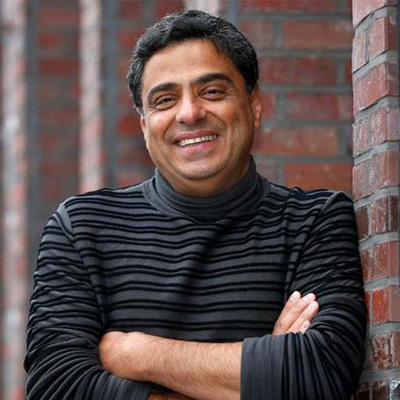
    Despite having a negative connotation more often than not, “disruption” can be a good thing, especially when it’s planned and executed in a strategic manner. And if there’s one person who is known for good disruption time and again in the Indian media and entertainment industry, it’s Rohinton Soli Screwvala or Ronnie, as he is popularly known as.

    With a quest to grow and excel in whatever he undertakes, Screwvala belongs to the rare breed of first generation media entrepreneurs in India. For him, trying is not enough for he believes in achieving all his dreams as he dreams with his eyes open!

    The pioneer of cable television in India, Screwvala has been best known to build brands and enter untapped territories. From a humble beginning in the cable industry, erecting one of India’s well known media company UTV, grabbing The Walt Disney Company’s attention, foraying into Kabbadi – a sport that was never televised robustly to breaking even in the second year, Screwvala has always pushed the boundaries.

    Complacency and failure are two words that don’t exist in his dictionary. In a country where entrepreneurship means legacy business, Screwvala is the flag bearer for first generation entrepreneurs.

    In a conversation with Indiantelevision.com’s Anirban Roy Choudhury, Screwvala goes back in time and shares his views on the Indian cable TV industry, Disney, sports and more.

    Read on for more :-

    The Disney – UTV deal is touted as a landmark deal in the Indian broadcast space. How does it feel when you look back at it today?

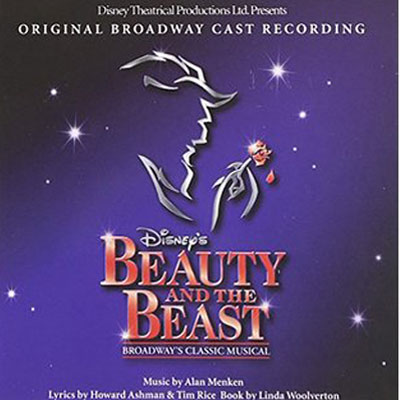
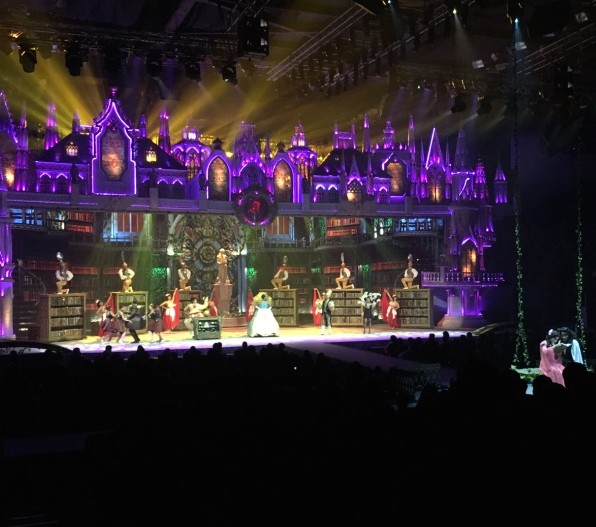
    I feel very proud when I look back at Disney India. We have a phenomenal team, which is doing an incredible job across the board. The channel is doing well and the movie studio is doing fantastic. The live show Beauty and the Beast has given live experiences in India a new benchmark. The best part is that they did it with local talent. It was not some imported show that travelled in here and went away.

    So it’s an incredible job done by the Disney team in India and I am proud of them. The easiest thing would have been to get a travelling show in, but they took the difficult route with local talent so it’s a local Disney show. The Disney team makes me feel proud.


    As a pioneer of cable television in India, you played a pivotal role in building it from scratch. What is your view on the evolution?

    When I look at cable, I have to say I have a little bit of regret because we are the only country in the world where we have to explain what cable TV is!

    The concept of local cable operator (LCO), multi system operator (MSO) is not there anywhere in the world other than India. A cable operator means that you need to pay for content. There are cable operators who are actually aggregators of channel. We have never got the pay model right! It started because nobody wanted to pay. Then there was a whole decade of under-declaration and nobody made capital investment.

    There are two things: Firstly, after 25 years of cable we are still not paying for content and secondly, serious investments have not gone into cable. You need billions of dollars……. we are still using the same cable that we were using 25 years back. We are still using the same model that we were using 20 years back. Yes, there have been some improvements, but we cannot call it cable TV. We are not cable TV like the world understands cable TV and that’s my problem.

    On the flip side, I must say it’s an incredible cottage industry. Look at the number of jobs it has created! It’s such a gigantic industry and for that matter if it was not the way it flourished, TV might not have been that popular the way it is. People could still be watching terrestrial TV and there would have been no satellite programming. So the fact that it has spread because of its entrepreneur spirit is a proud moment.

    I am proud of the entrepreneur spirit that has gone in there. However, I am regretful because no serious investment has been made there and we could not manage to get the pay model right.

    Speaking about the pay model, are we getting it right in digital? We are providing content for free and hence making free content consumption a behaviour.

    Let’s be very clear… people think online is free, but we are not doing anything for free. The first entrepreneurship course that we are launching is for Rs 50,000 for three months. Yes, people are skeptical to pay but that’s the way forward.

    The problem with the digital platform is that the biggest player in the ecosystem – YouTube is for free. That becomes habit forming. Things will change on digital once we go to experiential viewing. There has to be something for you other than just watching… I don’t have any idea what that is but we are trying very very hard to figure it out.

    I think the digital paid space will be experiential where you are not paying for watching but for watching plus plus… We are trying to figure out what those plusses are.

    Do we have a content strategy ready for digital? People still consider it to be a platform for 2 to 3 minutes video consumption.

    You will be shocked to hear that since last year, people are watching 30 to 40 minutes of content online even while everyone thought that digital means two to three minutes. 

    There are more people now watching 20 to 30 minutes of content online compared to the ones watching two – three minutes. What’s more, people have been also heard saying that the smaller duration content is snaky. That habit is changing because there are increased offerings. You give people quality content, they will consume it.

    Quality of content and storytelling in digital is changing. People are ready to watch a full movie on digital but they cannot now because of the bandwidth issue. So content size is not an issue, it’s the quality that matters.

    Talking about films on digital, Netflix recently simulcast The Beasts of No Nations. What’s your take on Netflix and what is the revenue model that Indian players should follow?

    Today Netflix’s market cap is as much as 21st Century Fox’s, it is as big as Time Warner and higher than Viacom… with the sole exception of Disney, which is the largest media company in the world.

    The road ahead for digital has to be ad revenue. We cannot fool ourselves on that. But the frustrating part is that we are dealing with people who do not understand digital. So the problem is that when you start a new digital medium, the main constituent – the advertisers – do not understand it at all. They still think it’s niche. They just don’t get it that today movies can be launched on digital.

    There are huge advantages of the platform. Sorry to generalise on the advertisers but the fact is that they do not understand digital and it’s going to take them three to four years to understand it. The big challenge is that while digital players will rely on advertisers, there will be no one available to experiment. So players will have to experiment, prove and only then will advertisers come on board.

    Are you saying that the next few years will be very tough for digital players?

    It will be tough, but it will be tough in a good way. It won’t be scary tough. Only serious players in the ecosystem will stay. The others that are coming with a herd mentality, the MCN players etc… I have no idea what they are up to.

    You cannot wake up to 20 different channels. What is the need? What is the model? Where will it go? What will happen to it? And the worst part is, you got investors backing those models. I fail to understand what they are up to. But yes, serious players who want to be in the ecosystem for good will be there.

    After your successful stint with Kabaddi, are you eyeing any other sport?

    We are investing in football. We are doing global grass root training programmes but it’s not the training that everyone is doing here. The training that we are giving is very different wherein we will take 60 kids to Germany for six years of training.

    Since the cost of something like this is very high, the expenses will be shared by us and the candidates. The will pay for the lodging and boarding, whereas we will pay for the training. We will manage their careers for the next 10 years. The age group that we are looking at is under 12, under 14, and under 16. We have to catch them really young and that’s the challenge.

    There are people who do three months training and summer courses, but you cannot become football stars by that. In our initiative, the kids will have to be away from home for six years. The peer pressure to meet global standards, the environment, discipline and the commitment is what we plan to offer them.

    So is this a business proposition of USports or are you doing this to uplift the sport?

    (Laughs). Of course it is a business proposition! Swades is the only social initiative that I am in for non-profit. Everything else is pure business. I think we are in the process of developing 300 future football stars. Then we will manage their careers for 10 years, that’s our business model.

    What is the progress of your motor-sport innovation?

    My motor-sport venture is an attempt to start a destination sport in India involving two-wheelers. Lakshadweep, Daman and Diu, Leh and Ladakh and Puducherry are the locations that we have in mind. The infrastructure has to step up to it, and the most important part is not the track but safety.

    This year India will be number one in terms of bike consumption, larger than China. The two-wheeler population is massive in India. Therefore, sports is an interesting way to go forward with that. But to us, the most important part is safety. It’s not a rally that we are planning so we cannot do it on a muddy paddy field. The infrastructure will take time to grow. There will be one domestic team and one international. The domestic riders will go abroad and train for six months.

    How much more time do you think it will take to match the quality you need? Are there any other investors involved?

    I would have liked to start it in next six months but the safety level that we are targeting will take at least 18 months more.

    I am doing it on my own and there is no partner involved to start the league. Here, we are going to be a league owner and our partners will be the ones we sell our franchises to.

    You have entered into online education with UpGrad. What are your plans with the venture?

    UpGrad is in the education space for post-grads. We are eyeing 14 to 16 completely different online courses, which will all be post-grad and specialised courses.

    We kicked off on 25 November with our entrepreneurship course. UpGrad received 2000 applications and then eventually we shortlisted 600 participants for the first cohort that started on 25 November. This would be the first time someone is doing a course of such high scale on entrepreneurship. The number that we roped in is huge. For every hundred students, there will be a teacher associate, who will interact with them at regular intervals. There will be a continuous process of mentorship. The course on entrepreneurship is of three months. After that the next one on Big Data will be of nine months to a year. We are launching three new courses, which will be out between March and May.


    You recently wrote a book and that inspired many igniting minds. Are you planning a second one too?

    I am not an author for sure! A book takes a lot of effort, I am happy being a business man. I am not even thinking about one more book at this stage.


    What are your plans with Swades? How much do you invest in it both in terms of money and time?

    Swades to me is not an investment. We are putting our heart and soul in it. Zarina, my wife, is working full time for that. We are not cutting cheques. Philanthropy is when you cut a few cheques and give it to an NGO. We are building a foundation from ground up. Yes, we are putting our own money but we are also putting our sweat and toil. We have 1200 people working for Swades, which is also quite big. It is a life-long commitment for us and there is no running away from it.


    You are too much of a TV person to not be in TV. When are you going back? What’s next?

    I don’t feel I am being left alone. Look at the things we are doing with Football, UpGrad and with Kabaddi. If because of Filmfare, five people used to come for selfies, now at least 50 of them come because of Kabaddi. It’s the same in rural areas too. When we travel for Swades related work, we get to know the popularity and the craze of the sport.

    I am happy with what we are doing and have no plans of going back. Swades is a key focus for me and Zarina both and we will continue to do what we are doing.

  • Disney’s theatrical production Beauty and the Beast makes an impressive debut

    Disney’s theatrical production Beauty and the Beast makes an impressive debut

    MUMBAI: When the history of Indian theatre is written sometime in the future, historians will make references to the pre- and the post Beauty and the Beast era. The date: 21 October 2015 will be enshrined as the day that changed the Indian musical theatre world.  That was the day that Disney India had an exclusive premier of its one-year in production international theatrical musical.


    It played to a packed house consisting of Bollywood stars, directors, producers, broadcasters, distributors and a select high net worth client list of Citibank credit cards (apparently it willingly shelled out Rs 5 crore plus to be associated with the musical) at the National Sports Club of India Dome  in Mumbai.


    Disney India MD Siddharth Roy Kapur  was cock-a-hoop with delight about the response to the first performance. “We have made an impression on an audience consisting of entertainers, I think the rest of the journey is going to go well,” he said. “Disney International chairman Andy Bird responded to my wanting to bring Disney’s Theatrical Production to India with Beauty and the Beast. I thank him for that.”


    Watching spell bound were film makers and artistes and industry barons like Subhash Ghai, Vishal Bhardwaj, Emraan Hashmi, Mini Mathur, Ashutosh Goawarikar, Kabir Khan, Vishal Bharadwaj, Rakeysh Omprakash Mehra, Vidya Balan, Soha Ali Khan, Imtiaz Ali, Anurag Basu, Nikhil Advani,Ayan Mukherji, Rajkumar Hirani, Shabhani Azmi, Aditya Roy Kapur, Madhur Bandarkar,  Anil Thadani and Raveena Tandon, Manyata Dutt, Ronnie and Zarina Screwvala, Amol Gupte, Ramesh Taurani, Nikhil Meswani, Sudanshu Vats, Tarun Katiyal, among scores of others.


    It’s not as if attempts at upping the ante for musical theatre have not been made in India before. We had the showman Alyque Padamsee period in the eighties during which shows like Evita (probably the longest running musical in India), Jesus Christ Superstar, Joseph and his Amazing Technicolor Dreamcoat, Greased Lightning,  The Wiz, sold out  in venues like the NCPA, Sophia, Homi Bhabha Auditorium in Mumbai. Then in recent times his daughter Rael Padamsee has been behind the production of  The Sound of Music and Grease. But while their efforts are praiseworthy, they pale in comparison to the scale that Beauty and the Beast was mounted upon.


    Estimates are that Disney India may have signed a cheque of Rs 22 crore for the production which will continue in Mumbai for 10 more shows till end this month. Delhi is slated to follow later. Most of the other Indian efforts at adaptations have budgets which are a fraction of that.


    The “different international” experience commenced at the venue itself with clear signage directing the traffic to the red carpet. And there was Siddharth Roy Kapur to greet his guests along with international Disney executives. Once you got past the gates with your bar coded ticket giving you entry you walked into a spacious dome theatre constructed for the Beauty and the Beast.  Rows upon rows of seats gave it a seating capacity of about 2,000-2,500.


    A half moon shaped lavish and large set (160 ft x 70 ft – normally used only for big budgeted televised awards shows) with ramps bisecting the front audience vertically and horizontally (giving it an H-shape) from those in the middle greeted the fans. Constructed by art director Varsha Jain at a cost of around Rs 1.80 crore, it is the centre-piece of Beauty and the Beast’s Indian production. It probably is the biggest stage ever constructed by Disney for the show anywhere in the world.  Then there is the attention to detail and quality that Varsha has put into the set. You are almost lulled into believing that you are in the village with its marketplace, its main street, the roadside café, the bakery, the vendors, where Belle lives in her small home with her father.


    A few minutes later the stage transforms itself into the dark castle wherein resides the young prince who was cursed to be a beast on account of his arrogance with a beggar. From the dark exterior to a well lit dining room to the dungeon to the balcony to the porch the shifts happen quickly.


    3D Projection mapping, LEDs and large curtains, focused lighting – every trick in the book has been used to make the transitions easy and seamless. Additionally the props too have a sense of realism about them as compared to the shoddy fare that we often see in use in Indian theatrical productions.


    It obviously is director Vikranth Pawar ‘s (he of Jhumroo and Zangaroo fame) vision. And choreographer Terence Lewis has ridden with him and made use of every inch of the stage and beyond for the sequences during the play. And he has adapted the choreography including styles such as ballet, jazz, breakdance and even classical ballroom dance depending on the scene’s requirement.  One of the most memorable ones is the opening act  with the song “Belle” wherein there are more than 60 actors and dancers on stage and you can’t seem to get enough of any of them.  Overall the production has more than 250 dancers back stage through its 130 minute duration.


    The musical  score  – like the original by Alan Menken  – by Leslie Lewis for the Indian edition is flawless. Recorded in Prague with a Philharmonic Orchestra and mastered in Los Angeles, it is  Lewis at his best, something that even Menken has acknowledged.


    The costumes by Gavin Miguel – around 400 of them – for both the lead and support cast  again are a class apart and make the show probably the biggest costumed theatrical show in India so far. The impeccable make up and hair design by Pallavi Devika take us back to the time and the place of the fairy tale. Vocal trainer Suzanne D’Mello  is reported to have put her heart and soul into lifting the singing performances of the cast, and it shows for almost the entire duration of the show.


    The technical production and direction are another highlight of the show and credit for that should go to Vikas and Vevek Menon (from Production Crew). Apparently, the lighting is being technically directed and programmed by foreign crew while it is being manned by Beckett.


    Onto the cast. The deep, grain rich voice of Amitabh Bachchan as he introduces the long-loved fairy taile sets the tone for its quality. Meher Mistry as Belle fits  and plays her part to the T, effortlessly becoming self-assured, vulnerable, loving, distraught and then joyous as she progresses from her ennui with the boor Gaston to meeting up with the Beast and her disgust with him transforming into love. And her singing is near perfect throughout as she easily croons the demanding tracks with lyrics from famed writers such as Howard Ashman and Tim Rice.


    Edwin Joseph essays the role of the Beast with finesse and a gentle touch. His agony at being trapped in an ugly body, his realization of his love for Belle, his heroic battle while saving Belle from the wolves, and then his joy at his transformation into a handsome young prince are emotion-filled scenes. The young 21 year older is someone we will hear a lot more of both for his acting and singing prowess. Veteran actor Bugs Bhargava as Cogsworth and Nichols Brown as Lumiere, Sanjiv Desai as Maurice, and the actors who play Lefou, Gaston, Mrs Potts, Ayudh Jatin Parikh (as Chip) deserve a mention for fabulous performances.


    In summation,  Disney India’s Beauty and the Beast was made in India but better than world class. And that was echoed by almost all those who watched it to the end. Something that should warm the cockles of Narendra Modi’s heart.

  • Disney to bring Broadway shows to India

    Disney to bring Broadway shows to India

    MUMBAI: Broadway lovers in India need not travel anymore as Disney India gears up to bring Broadway shows to the country now. Starting with timeless classic Beauty and the Beast, Disney India will begin the Broadway journey in October from Mumbai and will then take it to Delhi in December.


    While Disney has had a 20 year Broadway journey across the globe, Disney India finally thought of venturing into it in order to give to the people a Disney immersive experience. “Broadway could just be the birth of a new culture in entertainment,” said Disney India managing director Siddharth Roy Kapur.


    Kapur is of the opinion that while the country had the vision, dream and talent for live English entertainment, what it actually lacked was infrastructure. Talking about the target group for Broadway in the country, Kapur said, “The audience that we are looking at is families and young adults who have the inclination and the ability to enjoy experiences of this kind.”


    According to Kapur, with Indians today travelling extensively to overseas, they have been exposed to theatre and Broadway. “People are looking at experiences to cherish as a family and unfortunately in our country we haven’t been able to offer them those experiences apart from cricket and Bollywood. But, they have the disposable income to be able to afford it and they have the interest and inclination to want to experience it as well,” he opined. 


    Disney India will be hosting a number of shows in both Dome at NSCI in Mumbai and Thyagaraj Sports Complex in Delhi. Not revealing the number of shows, Kapur said, “We are looking at an audience ranging from 2000-2500 per show.” 


    Explaining the reason behind bringing Broadway to the country with Beauty and the Beast, he said, “Beauty and the Beast has been that show that Disney has always started Broadway with and this is because of the beautiful story, which resonates in different cultures and is not difficult to understand. It has also got great music and performances. So, this seemed like the logical choice for us.” 


    Disney India has roped in local talent for the show. Leading it from the front is Disney India show director and creative head, live entertainment Vikranth Pawar. The company has roped in Lesle Lewis as music director, Terence Lewis as choreographer, Varsha Jain as set designer, Gavin Miguel as costume designer, Pallavi Devika for hair and make-up and Suzanne D’Mello as vocal trainer.


    “It is a local production with local cast and crew. We believe that we have got the talent in the country. All that was needed to give live English entertainment a boost was infrastructure,” he said.  


    Disney India had been mulling bringing Broadway to the country for the past three years. While the company got 8,000 entries from artistes, it conducted 1,000 physical auditions in five cities to get the final 18 artistes who will now perform.

  • Vidya Balan marks a decade in cinema; receives Doctorate from Rai University

    Vidya Balan marks a decade in cinema; receives Doctorate from Rai University

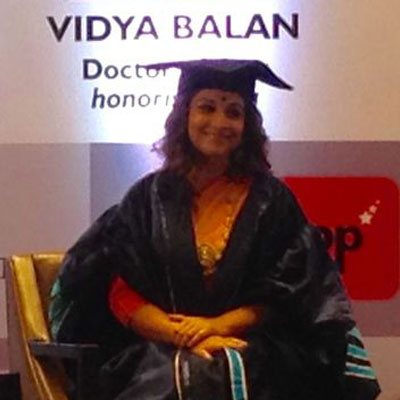
    NEW DELHI: Actress Vidya Balan – known to take on challenging roles and win laurels – has been conferred a Doctor of Arts Honoris Causa by the Ahmedabad-based Rai University. Balan also completed ten years in the film industry this week.


    The honour was given earlier this week in appreciation of her contributions to Indian cinema over the past 10 years. Her endeavour to bring out the strong side of a woman in films has contributed to women’s empowerment in society, Rai University chancellor, Dr. Harbeen Arora, said.


    The actress thanked God, her parents, the university and “each and every one of you” among the media present at the convocation at the J.W. Marriott International.


    The University also announced an annual scholarship named Balan, and she said she was tongue-tied.


    She said, “I must also thank my husband Siddharth (Roy Kapur of Disney) even if he is embarrassed by what I am going to say. And that is that just by being with him, I have become a better person! I would like you to be with me all my life and I have to tell you that I will be with you all your life too!”


    “It is truly humbling and overwhelming to receive this honour. What makes this even more special is that I complete ten years in the Hindi film industry this year. There can be no bigger compliment for any actor than to have done work that has made a significant mark and also to be looked upon as a role model by young Indians. I hope to live up to the title,” said Balan.


    Her parents, sister’s family and her mother-in-law were also present.


    “Among the league of iconic actors, Vidya is a pioneer in every way. Her films epitomize a distinct Indian-ness and powerful womanhood,” Arora said. The citation mentioned all the key films in Balan’s career.


    Balan has received the four highest civilian award ‘Padma Shri’, a National Award, and Filmfare awards. 

  • Disney looks to exploit ‘Arjun’ across platforms; launches merchandise, mobile game

    Disney looks to exploit ‘Arjun’ across platforms; launches merchandise, mobile game

    MUMBAI: Eyeing a bigger share of the merchandising and gaming pie, Disney India has now expanded its product offering by launching a mobile game and merchandise for its television series Arjun: Prince of Bali.

    Launched about three weeks back, Disney’s first local animation property Arjun: The Prince of Bali, developed in association with Green Gold Animation has tasted success in its first series and is back again to engage kids through a new range of merchandise and a game inspired by the show.

    While in the first season of the show, one episode a week was aired, the second season will have two new episodes, which will air every Thursday and Friday at 3 pm.

    Speaking about the same, Disney India VP and head content and communication media networks Vijay Subramaniam said, “Disney Channel in India tells uniquely tailored stories through great characters. The first season of Arjun gained immense popularity amongst our young viewers and we saw the potential to give them more opportunities to enjoy the story while continuing to entertain with the second season on the channel. Arjun inspired merchandise and a game will provide kids with a stronger and deeper engagement with their favourite local stories.”

    Green Gold Animation founder and managing director Rajiv Chilaka added, “The audience has always got to see the princess in all Disney movies and series and probably for the first time the Indian audience will witness the Prince of Disney. It is a flamboyant character and we intend to showcase a lot of comedy, action and adventure with this show.”

    The show’s second series continues to narrate the story of Prince Arjun of Bali and will focus on his coming of age journey as he now matures into a valiant prince while continuing to master newer techniques and strategies of warfare. The new series also explores the relationships with his friends and family and brings to light the jovial and lively side to the warrior prince.

    The runner game around the show is set in the kingdom of Bali and is developed by Disney India’s Interactive division, Indiagames. The mobile game has features like weapon upgrades to make characters stronger as the levels progress.

    “With an interesting storyline, beautiful landscapes and popular local characters, the Arjun series makes for an interesting game play. By integrating elements from the show and building on the character traits in the game, we were looking at giving fans an opportunity to interact with Arjun and his friends beyond the show and create an all immersive gaming experience for them,” said Disney India VP and head interactive Sameer Ganapathy.

    The consumer products around the show will be extended across a range of products from toys, back to school merchandise, apparel to stationery. Toys also include figurines, bow and arrow set and more. In addition to this, plans are also afoot to develop school supplies such as school bags, lunch boxes, water bottles, note-books and home decor with bed sheet sets, cushions and mugs.

    With 26 episodes of 22 minutes each, the series will go on for 13 weeks. Post that, Disney Channel will either add more episodes or bring in the show’s next season.

    Speaking about the launch of merchandise, Disney India VP and head consumer products Abhishek Maheshwari said, “Kids today adore local animation and want to own a piece of their favourite character on their everyday products. The popularity of the Arjun series and the appeal of its characters amongst kids have inspired an entire range of interesting consumer products. Each character possesses a unique characteristic which can be leveraged very well across categories.”

    When queried about launching the merchandising at this stage of the local animation series, Ganapathy said, “The success of the first series made us come up with merchandising and a mobile app. Another reason is that we wanted to engage kids in as many ways as possible, so after the show they can get along with the game and engage with us.”

    “The IP holds a lot of potential and that is the reason why we got into merchandising and a mobile game at this stage of our local animation. Disney’s strategy has always been to cater to multiple platforms and that’s what we want to do with Arjun as well,” Maheshwari added.

    Currently, the app has a sizable number of downloads on the Google Play Store. The app will also be made available on the Windows and iOS platform soon.

  • Disney India joins hands with Liberty to launch ‘Avengers’ footwear

    Disney India joins hands with Liberty to launch ‘Avengers’ footwear

    MUMBAI: Disney India has joined hands with Liberty to launch a special range of footwear featuring Marvel’s Avengers.


    Liberty has introduced over 50 styles featuring the Marvel Avengers namely Iron Man, Hulk, Captain America and Thor. The range is launched to add to the on-going fervor around The Avengers: Age of Ultron scheduled to release on 24 April, 2015.


    The range includes flip-flops, casual shoes and sandals and is available for boys above four years. The design depicts each character’s most recognised icons through its varied prints and is available in multiple shades of blue, red, green, and white. The shoes are fully adjustable with velcro fasteners and laces to provide a perfect custom fit, and cushioned insole making them comfortable and play-worthy. 


    The range is priced between Rs 399 – 1499, and is available across all exclusive Liberty showrooms and select multi brand stores. The products are also available online on Amazon.in and Libertyshoesonline.com. 

  • “Make sure that the attitude you wear fits you and is not forced:” Vijay Subramaniam

    “Make sure that the attitude you wear fits you and is not forced:” Vijay Subramaniam

    The youth of India believe in purposive action and are restless for change at all levels, their own lives, society and circumstances. One man, who has studied the young adults very closely is Disney India Media Networks VP – content and communications Vijay Subramaniam.


    Talking about one of the leading youth network in the country, bindass, with his passion and perseverance, the channel has been consistently entertaining young adults with content and campaigns that are purposive and action-oriented, with more than 1000 hours of path-breaking original content.


    He intends to inspire the youth of the country to actively do something about issues that surround them and believes that young people can fight the system and bring in the change. With Subramaniam being at the helm since its inception, the channel has grown in viewership by more than 150 per cent and today reaches out to 1.3 times more young adults since launch.


    In conversation with Indiantelevision.com’s Disha Shah, he talks about bindass’ journey, his views about today’s youth and how different they are from previous generations, the best way of engagement and more.


    Excerpts:


    How has bindass’ performance and journey been since its launch?


    It’s been one of the most interesting journeys for us with the brand. Seven years ago, when we set up bindass, it was exciting for us to be able to create a well defined Indian youth brand. The landscape back then and even now is such that most young adult brands tend to be international. It was an interesting challenge for us to provide the Indian youth with a brand, which they could not only relate to and see the reflections of themselves in, but also a brand that would understand the nuances of everything Indian.


    The journey has been incredible. In terms of viewership alone, in the last seven years, we have grown by over 150 per cent. We have added 90 million viewers, who are tuning in on a weekly basis. The evolution of this brand has seen significant increases in its performance at every step.


    Today as a composite, if we take the other brand that we had launched alongside bindass, i.e bindass play, together they command 19 per cent of the market of young adults, which is essentially the age group of 15-24 Sec AB.


    What do you think about the youth today? How is this generation, as a group, different from the previous generations (both politically and socially)?


    One of the corner stones of our success, both as bindass as well as to tell great stories to this audience, has been our ability to constantly converse with them. Very often people talk about research which is very important but I do believe that continuous dialogue with our audiences is the most important factor.


    Young people are casual, informal and shape the world through that lens. First and foremost I think today’s generation is booming with confidence. Everyone today is hoping to hit the high orbit and want to do well for themselves. There is a lot of optimism there.


    Secondly, they live in a world of abundance. What they see out there is really what we describe as tetras of opportunities. What’s crucial for them is their ability to make sense of it all. The youth today looks for meaningful relationships with brands, such as us, that help them navigate through the tetras of opportunities and help them to get through their desired goals. It’s also a generation that has deep-rooted commitment to things that really matter to them. As we have seen very often, when push comes to shove, this generation rises up and is willing to be scouted.


    Another interesting dimension is their interpretation of freedom. It is very important and matters a lot to them. Here, I am talking about all kinds of freedom, from expression to choosing their own boundaries. Alongside this dimension are achievements and successes and with that comes materialism.


    They live in a world where there are no borders, frankly. Be it social media or the amount of technology available to them… today’s generation is born into it. Their ability to see the world through a global lens is far easier than generations prior to that.


    Overall, it is a very confident, optimistic, positive and energetic generation and we at bindass reflect all of these in everything that we do in our journey with them.


    What according to you is the best way to engage the young? What works with them?

    Engagement is a broad term. For us, we have to choose methods of engagement on the basis of what we mean to them – while we are their friends; we are also responsible for their entertainment. Our focus engagement is through entertainment that is purposeful, enabling, funny as well as empowering. Our aim is to provide content that allows them to lean back and yet the message is the lean forward one.


    Through the themes that I spoke about, comes the ability to engage. However, what makes for fruitful engagement with them is dialogue and not monologue. The dialogue should reflect their attitude and spirit and above all else we should be able to constantly walk in step with them as their attitudes change, are shaped and re-shaped. That’s what creates successful meaningful engagement with young people.


    bindass’ shows like Halla Bol, Yeh Hai Aashiqui and Emotional Atyaachar all cater to the youth. How do you ensure that each show stands different from each other?


    We have a continuous conversation with our TG and that is possible only because of our robust research mechanism. We have tried to focus on different dimensions in the themes that we believe entertain young people in India. From that perspective, we have explored the entire spectrum of the theme of love and relationships. Right from Yeh Hai Aashiqui, which talks about strong love stories and relationships, to the other end of the spectrum – Emotional Atyachaar that talks about what happens when love goes wrong or even Pyaar Ka The End.


    And why this is important to young people? They want a 360 degree view of themes that matter to them because ultimately at some level they relate to it. While they are being entertained by the content, they absorb what is shown and also apply it to their lives.


    Talking about our second theme, empowerment, the first season of Halla Bol narrated stories of women facing harassment and fighting back. The second season took it a few notches higher by showcasing women fighting the system. We are seeing a lot of success in our society on that front. This is yet another reflection of how important empowerment is for young people.


    We also did a show called Change Ayega, Hum Layenge, which was a satire on the fact that if you are just going to indulge in armchair activism, nothing is going to change. Young people have to get up and get going and bring about change.


    The inspiration and source for a lot of differentiation comes in our deep understanding of themes from all dimensions. And that allows us to put our stories and different pieces of content that are both entertaining and engaging and at the same time giving a very holistic view of the themes that matter to the young people.


    Does creative talent understand youth programming today?


    Absolutely for bindass. For us, our success as a brand has been to be able to partner with creators right across the board and help them benefit from our rich understanding of young adults in India. A lot of this knowledge that we have, is transferred within our creative eco-system.


    From an overall industry perspective, creative talent today is progressive and has a good understanding of the target audience. It is ultimately about your focus. If they are focused on the youth, the understanding is very high and if their focus is on other age segments, then their understanding is not necessarily that high.


    What have you learnt about your audience?  


    One is the dialogue, which is a two-way interaction with the audience, regardless of the medium of entertainment. Second is to be able to wear your attitude and make sure that the attitude fits you and is not forced. It’s like a group of friends, each one has a distinct personality but when they come together, they form a nice group. The third lesson is that if you want to win them. you have to walk with them and be one of them. Lastly, this is a restless audience because they have so much to achieve and so we have to reflect those needs.


    What are the platforms on which the youth consumes more content today – television or digital?


    Between the access of technology and that of hardware, the fact remains that they are looking for their source of entertainment at points and devices that are convenient to them at that point in time.


    Keeping this in mind, as a brand that they care about, it is important for us to reflect that moment. This is the relationship that is changing in terms of their traditional consumption and we do believe that we need to be present wherever they want us to be present.


    For example, earlier the youth looked at television as a lead medium, whereas digital was to provide marketing support and extend a bit of the television universe. But at bindass, we have always pioneered our digital first strategy. We have always looked at these two universes as being symbiotic and not one leading and the other following. We have also looked at important philosophies through all these access points for young people and all of these are active and not promotional.


    Besides television, bindass had also launched initiatives like Dreamstart and bforchange. How has the response been for them?


    We were very clear that bindass will play a certain role on television and there are other roles that bindass, as a brand, will play with our other consumer touch points. Both the properties played a very important role on digital as the call to action made way for live conversations, tracking progress, engaging and interacting that are best done using the digital environment.


    Both initiatives had started with driving the brand message of being the enabler of purposive action. Today I am very proud to say that the partnerships Dreamstart did are commendable and we are getting perfect partners for the initiative. We are trying our hands on the music space as well. With the other initiative bforchange, we could bring about 170 NGOs onto a digital platform and make it so easy for people to access and pledge their support to them.


    Nowadays, most of the Hindi general entertainment channels (GECs) are tapping into the youth genre through new shows. Do you feel that going forward they can be your direct competitor?


    We welcome them (laughs). We are not just about the shows that we air but also a state of mind in the lives of our consumers. We are a part of the youth’s group today and in order to stay there, we need to stay relevant.


    Anyone who is willing to entertain will get the attention of the audience if done correctly. Young adults today loves a variety of entertainment. At any point of time, while they will be entertained by many, the fact is that they still prefer a few and those are the ones that they have made an emotional investment in. We believe that bindass is a brand that our audiences will make an emotional investment in.


    On the other hand, the advantage of more variety of programming coming through is that we get to tell even more differentiated stories of high quality. When Hindi GECs also move in these dimensions, it also gives a creative uplift to the entire eco-system and that is a welcome benefit for all of us.


  • “Broadcasters need to stop relying on advertisers for revenue”: Sameer Nair

    “Broadcasters need to stop relying on advertisers for revenue”: Sameer Nair

    MUMBAI: Broadcasters need to stop relying solely on advertisers as their main source of revenue. Moreover as digitisation reaches the third phase, it is imperative to for them to come up with new content strategies.


    A FICCI Frames session moderated by media analyst and columnist Vinita Kohli Khandekar saw an aggressive discussion by top level media and broadcast executives on the future of content creation keeping in mind the emergence of digital platforms.


    The panel comprised Balaji Group CEO Sameer Nair, Disney India VP and content head Vijay Subramanium, Reliance Broadcast CEO Tarun Katial, Zee TV business head Pradeep Hejmadi and Star Plus GM Gaurav Banerjee.


    There are approximately 815 channels, which places India amongst the top five video consumers of the world and it is crucial to have varied and captivating content, which caters to the need of the viewers. The biggest question that arises from the scenario is – What should be changed to make better content?


    A pertinent point raised by Nair was that channels need to cut down their dependence on advertisers as their main source of revenue and find alternate sources in order to dish out quality content.


    Nair asserted, “The content we have been producing is often termed as trash, which in reality is not because we all remember the content and no one remembers trash. We are a growing industry and content takes time to transit. We have to give it the necessary amount of time as a sudden transition may lead to confusion. Some years back there were 25 million TV homes and now we have 100 million homes. This proves that we are growing. Like every business, content is dominated by economics. We need to stop our heavy reliance on advertisers. Our need to earn high ratings is because of advertiser pressure and that is what is stopping us from aggressively experimenting with content. We need to start discovering other sources of revenue.”


    Talking about the necessities, Banerjee added, “A lot has changed from where we were a few years back. We are a lot more ambitious from what we used to be. The budget for a half an hour fiction show has risen from Rs 7 lakh– 8 lakh to Rs 15 lakh– 20 lakh and that speaks volumes. Television industry’s biggest power is its reach. We reach twice the audience of the biggest viewed film release and hence with the reach comes responsibility, which we should not forget, while making content. The need of the hour is devoting more time and money to research and development. We need to research in depth before putting up any content as it might have its repercussion and have socio-economic fabric of our nation..”


    During the course of the discussion, an issue that was constantly debated was whether films or TV shows make for better content. Firmly defending TV content over films, Banerjee said, “We should have a more distinguished measurement phenomenon when it comes to cinema and we should also not forget the fact that the number of screens is shrinking. There are a lot of opportunities to improve and no reason to rate films over TV content as of now.”


    Supporting Banarjee’s opinion, Katial added, “Films in recent times have lost their purpose and contribute very little in creating a social impact.”


    “What comes from the production house is just a one line concept and the channel gets into it and executes what is shown on TV. Another part that plays a vital role in improvising content is measurement, which comes from research because what TAM shows is post airing analyses and does not favour in deciding if the content is appropriate. So overall, while we are setting ourselves for the new era of TV content production we have to test, try and excel,” said Hejmadi.


    Now it remains to be seen if TV content makers raise the bar and produce quality content instead of jumping for  quantity and following herd mentality. More importantly, the need of the hour also is for broadcasters to discover alternate source of revenue for their business in order to make compelling content.

  • Disney India’s ‘Friends For Change’ recognises stewards of change in Delhi-NCR

    Disney India’s ‘Friends For Change’ recognises stewards of change in Delhi-NCR

    NEW DELHI: ‘Friends for Change’, an innovative interschool volunteering program, initiated by Disney India in April 2014, witnessed its culmination today amidst much fanfare in the capital city. The event, held at the PHD Chambers of Commerce and Industry had students, teachers and principals from the nine participating schools, government officials, NGOs working in the conservation space and representatives from other schools in attendance. National Award Winning actress Vidya Balan, who was the Guest of Honour for the event, encouraged and congratulated the participating schools.


    At the culmination ceremony, all schools showcased their work tracing their journey of transformation in the adopted parks. The students captured their experiences on how they went about planning the activities, understood native species, and undertook soil testing and plantation drives within the gardens. They put up “street plays” to promote awareness and garnered support from the local authorities and communities.


    “Conservation is one of the key pillars of our Citizenship initiatives globally as well as in India. Drawing inspiration from the global initiative, we envisaged the ‘Friends for Change’ program for India, centred around the key issue of depleting urban greenery. We believe that today’s children are tomorrow’s future and as part of the programme, we involved them to be the champions of change. The participation and enthusiasm of students, teachers and schools, coupled with the support and encouragement received from local authorities and the community at large, has been phenomenal and motivates us to grow this initiative in the coming years,” said Disney India  managing director Siddharth Roy Kapur.


    Post the schools completing their work in December 2014, an eminent jury panel comprising of technical experts, representatives from Disney India and CMS,  visited all the parks and based on the evaluation parameters of infrastructure development, water source utilization, plantation, stakeholder involvement, sustainability and innovation, chose the winners.  Amity International School, Pushp Vihar was announced as the winner of ‘Friends for Change 2014-2015′, for bringing about an astounding change in Sector IV park in Pushp Vihar. Bal Bharati Public School, Brij Vihar, Ghaziabad was announced as the runners-up, for transforming the Tikona Park in Ghaziabad. There was also a Jury Special Mention winner – Delhi Public School Ghaziabad, Meerut Road for adopting Shaheed Smarak Park, a heritage site and modifying it.


    “I strongly believe that parks are an integral part of any child’s formative growing years. As a child I have been fortunate to have easy access to parks, which have I believe have made a huge difference in my life. Since children are stewards of change, I think the idea of inculcating in them a sense of responsibility towards the environment through a participative process is bound to be more effective. While on the one hand, Disney’s Friends for Change is a unique initiative to instill qualities of compassion, creativity & conservation amongst kids, it is also a great platform for fostering team work, collaboration and understanding amongst them,” said Balan, who graced the culmination event and felicitated the winning school.