Tag: Disney +Hotstar

  • IPL 2021: 18 sponsors hop onto the bandwagon

    IPL 2021: 18 sponsors hop onto the bandwagon

    KOLKATA: Star Sports, the official broadcaster of the Vivo IPL 2021, has roped in 18 sponsors and over 100 advertisers across multiple brand categories, days ahead of the commencement of the league.

    The 18 sponsors onboard for the 2021 edition are Dream11, Byju’s, Phone Pe, Just Dial, Upstox, Bingo, Kamla Pasand, Association of Mutual Funds in India (AMFI), Frooti, Asian Paints, Thums Up, Vodafone-Idea, Mondelez, Amazon Prime, Groww, Cred, Garnier Men, and Havells. The categories of advertisers include edtech, fantasy sports, beverages, pay wallets, home décor, auto, telecom, consumer durables, FMCG, financial services, amongst others. 

    Star Sports executive vice president Anil Jayaraj said, “We are delighted with the response received from brands across categories. Vivo IPL on Star Sports has established itself as a marquee marketing platform, and the interest among advertisers has only grown with each passing year. We have been associating and providing sponsors with customised and innovative solutions that drive high impact and engagement.”

    Vivo IPL 2021 will broadcast live on the Star Sports Network and stream on Disney+ Hotstar starting 9 April 2021 from 7.30 pm onwards across multiple languages. Select Dugout will be back on Star Sports Select with legends providing cricket enthusiasts with an in-depth analysis of each match.

  • Disney+ Hotstar & Netflix dominate India’s SVoD market: Omdia

    Disney+ Hotstar & Netflix dominate India’s SVoD market: Omdia

    MUMBAI: Now here’s further research confirming Netflix and Disney+ Hotstar’s dominance of the Indian streaming market. Research firm Omdia’s  2021 Online Video Market and Consumer Trends Report released on 31 March states that the two streaming giants accounted for 50 per cent of all subscription video on demand (SVoD) signups in India in 2020. This was on the back of the pandemic and nationwide lockdown which saw SVoD revenues spurt 142 per cent from $265 million to $639 million by end 2020. The duo accounted for 78 per cent of that final tally, meaning about $498.42 million.

    While Disney+ Hotstar trebled its subscriber base from eight million to 25.6 million in 2020, Netflix nearly doubled its subs from 2.4 million in 2019 to 4.4 million in the same period. The Indian streamer’s growth partly came from the  bundling of Disney+ and Hotstar, as well as the postponement of the start of the thirteenth  season of the Indian Premier League (IPL) from April to September, as well as competitive pricing plans and exclusive rights to foreign content such as Game of Thrones.

    One of the key factors for the growth of subscriptions for online video is the aggressive pricing models of both Disney+ Hotstar and Netflix, with the latter launching mobile only subscription packages in 2019, reflecting the Indian consumption habits. 82 per cent of online video services are accessed through smartphones with only 39 per cent accessing content through dedicated TV apps (data from Omdia’s 2020 consumer survey).

    Disney+ Hotstar on the other hand offers three specific content packages. The VIP plan (Rs 399 per year) offers dubbed local languages while Premium (Rs 299 per month) offers both English and dubbed version of content. In terms of device access, the VIP plan only allows its subscribers to watch on one screen in HD while Premium allows subscribers to watch on two screens simultaneously in full HD.

    By offering affordable streaming plans and partnering with large telcos such as Reliance Jio, Bharti Airtel and Vodafone India, Omdia expects that mobile-only subscriptions will continue to grow over the next couple of years. However, mobile-only subscriptions will face challenges from traditional pay TV services as pay TV services aggregate OTT video services with their core pay TV plans.

    Whilst retaining premium rights to foreign titles and sporting events have contributed to significant growth in revenues and subscribers, over the past few years there has been an increased focus on investing in original Indian language content, Omdia noted.

    In 2021, Amazon Prime and Netflix will continue their large investment in original Indian content, with the two major US services set to invest around $340 million, representing 52 per cent of the total investment in 2021. Omdia expects that close to 400 original titles (mostly series and films) will be produced in 2021 by the global and Indian OTT services.

    Most of the investment being made is directed towards original content in Hindi, around 65 per cent  of total spending, according to the Omdia report.

    “The online video (OTT) market of India is steadily growing its foothold in every direction,” says Omdia principal analyst – TV & online video, consumer Constantinos Papavassilopoulos. “The Covid2019 pandemic accelerated the growth rate of an already dynamic and robust OTT market. The basic elements that will propel the market to further growth in the near future are already there: very affordable mobile broadband prices, high penetration of smart-phones, a population eager to consume more content, an ever-growing investment in Indian originals and a plethora of choices with more than 40 OTT services operating in the country.”

  • Telecom bundling, availability of smart TVs boosting OTT market in India

    Telecom bundling, availability of smart TVs boosting OTT market in India

    NEW DELHI: The Covid2019 outbreak which brought the entire world to a standstill has helped one sector in India – the OTT industry. Post the pandemic, OTT platforms like Netflix, Amazon Prime Video, and Disney+ Hotstar gained massive popularity in the country, and they successfully expanded their userbase in 2020. 

    From bundling plans to cheaper smart televisions, there are various factors that have played a crucial role in elevating the popularity of OTT platforms in India, according to data shared by analytics firm Redseer.

    Telecom bundling helps OTT platforms increase their userbase

    Bundling plans offered by telecom and broadband providers have helped OTT platforms to increase their customer base during the pandemic. 

    Telecom companies like Airtel are offering subscriptions to Hotstar, Netflix, and Prime Video as a part of their bundling plans, while Jio Fibre's broadband bundling offers free Prime Video and Netflix subscriptions. 

    According to the report, unique paid user growth rate was 35 per cent in February 2021 when compared to April 2020. Subscriptions also increased by eight percent during the same period, and the subscription revenue also witnessed a rise of 41 per cent. 

    In an attempt to expand its customer base, Netflix last year launched a new plan priced at Rs 199, where the user can watch their favourite movies and shows on their smartphones. Even though this plan will not work on smart televisions, it has impressed the urban youth in the nation who spend most of the time on mobile screens. 

    The rise in smart TV users helps streamers

    The growing number of smart TV users in India is also contributing to the growth of OTT platforms in India, the Redseer analysis revealed. Unlike previous years where smart TVs were confined to rich homes, the entry of companies like Xiaomi in the Indian market turned things upside down, as they are now offering full HD and 4K smart televisions at an affordable rate. 

    Indians spend 188 billion minutes streaming videos in February

    According to the survey, Indians spent 188 billion minutes on OTT platforms in February, a drop of six percent when compared to the 200 billion OTT minutes Indians spent last April. The drop is primarily due to the country's return to normalcy, and the arrival of television soaps in channels. However, with more releases in the pipeline along with product improvement, the engagement is likely to increase in the coming months. 

    Out of the 188 billion minutes, users spent 69 billion minutes watching daily soaps, followed by movies with 31 billion minutes and then originals produced by the OTT platforms. 

  • Guest column: Implications of the new digital media code for online content platforms

    Guest column: Implications of the new digital media code for online content platforms

    NEW DELHI: The Information Technology (Intermediary Guidelines and Digital Media Ethics Code) Rules 2021, framed under the Information Technology Act 2000, were notified on 25 February 2021. The Rules apply to publishers of online curated content (OCC), intermediaries, including social media intermediaries and significant social media intermediaries (ie those with 5,00,000 or more users), and publishers of digital news and current affairs.

    The rules have been issued amidst the backdrop of, and perhaps in response to, various public interest litigation matters that remain pending across the country, alleging that content published on significant OCC platforms is seditious, defamatory, contemptuous, infringing, obscene, offensive, and, or, is otherwise illegal.

    Regulation of OCC platforms

    The rules prescribe a Code of Ethics and guidelines for OCC platforms and publishers of digital news and current affairs content. These entities and their compliance with the rules will be overseen by the ministry of information and broadcasting (MIB).

    The rules prescribe a three-tier regulatory mechanism to ensure publishers (including OCC platforms) comply with the code. Further, the factors to be considered before publication of content on an OCC platform include the effect of the content on the sovereignty of India;  whether it could affect friendly relations with another state, incite violence or disturb public order; whether it could affect India’s multi-religious and multi-racial fabric; and, whether its publication would otherwise be prohibited under any law for the time being in force.

    The rating categories are to be assigned to the content after considering the depiction of themes and messages, violence, nudity, sex, language, drug and substance abuse, horror within the content and the target audience of the content.

    Implications of the rules on OCC platforms in India

    Under the Rules, ‘online curated content’ includes content which is owned, licensed, or contracted to be transmitted, and is made available on demand, including through subscription. The definition of ‘publisher of online curated content’ specifically excludes individuals who are not transmitting content in the course of a systematic business, professional or commercial activity.

    The Rules apply only to persons engaged in the distribution of content for commercial purposes, and clearly are not intended to regulate user-generated content uploaded on social media platforms. On a plain reading, it appears that the Rules may also regulate channels of social media influencers and celebrities on significant social media platforms such as YouTube, as these channels may be considered publishers of OCC. However, the rules do not make any specific reference to individuals generating content or social media influencers, and the position with respect to social media influencers is unclear. For instance, in the absence of a clarification, content on YouTube channels such as IISuperwomanII would pass the test of being ‘curated catalogues’ as these channels usually contain a mix of comedy sketches, podcasts, interviews, short films and news critiques, addressing an identified audience.

    The rules do not expressly address situations where news may be disseminated through non-traditional channels or could be considered to have been disseminated through an OCC platform (for example, Last Week Tonight on Disney+ Hotstar and the ScoopWhoop Unscripted YouTube channel). In theory, such OCC publishers may be required to comply with the entirety of the code, ie part I which addresses publishers of digital news and current affairs and part II which addresses OCC.

    The three-tier regulatory mechanism is similar to the self-regulation model that is already in place for non-news and news television broadcasters, and the rules have, therefore, been promulgated as an attempt to provide a level playing field to digital content platforms as opposed to the traditional forms of television and cinema broadcasting.

    The rules prescribe sanctions in the form of warning, requiring an apology, reclassification, editing, modification, deletion, and even blocking of access to the publisher of content violative of the rules. The new regulations do not suggest content censorship, and only prescribe matters to be considered before classifying and publishing content. Given that television content in India is quite conservative in comparison to the content currently available on OCC platforms, there is apprehension amongst the stakeholders that OCCs may be subjected to a similar level of ‘excessive’ censorship. However, OCC platforms have a distinct advantage over television – sophisticated software that enables age-gating of content and creation of buckets of content for different age groups. The interdepartmental committee of the MIB should bear this advantage in mind when issuing directions, orders or penalties under the rules.

    The rules may encourage OCC platforms to err on the side of caution and restrict the publication of content where apprehensions may arise regarding that content’s rating. This approach may adversely affect content creators’ constitutional right to freedom of speech and expression. In this context, it will be interesting to see whether the rules do, in fact, level the playing field not only in terms of regulation of various media but also result in availability of similar kinds of content across all modes of distribution. In any event, the rules may provide a much-needed structure to the OCC space.

    (The note has been authored by Kaushik Moitra, partner and Karnika Vallabh, associate at Bharucha & Partners. The views expressed in this article are their own and indiantelevision.com need not subscribe to them.)

  • StreamFest brings cheer for Netflix

    StreamFest brings cheer for Netflix

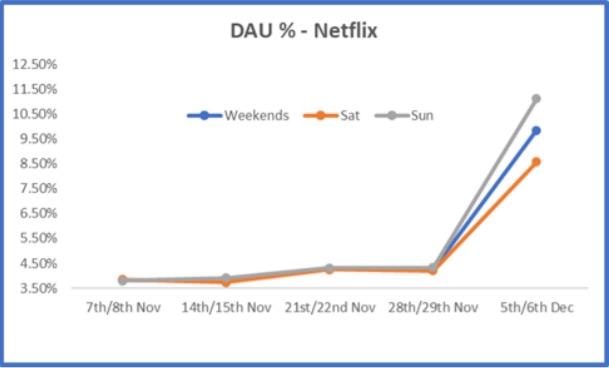
    KOLKATA: In a unique promotional gimmick, Netflix offered Indian audiences all of its content for free over a weekend last month. The move seems to have yielded fine results for the streaming service, as it has witnessed a sharp rise in app installs, open rate, daily active usage during that period, according to Kalagato.

    After Netflix stopped offering a free monthly trial, the platform came up with this innovative marketing campaign to get more people to sample and subscribe to the service. On 5 and 6 December, non-users of Netflix could sign up with their name, email or phone number, and password and gain access to the content library without any payment. Following the overwhelming response, the streaming giant came back with round two on 9-11 December.

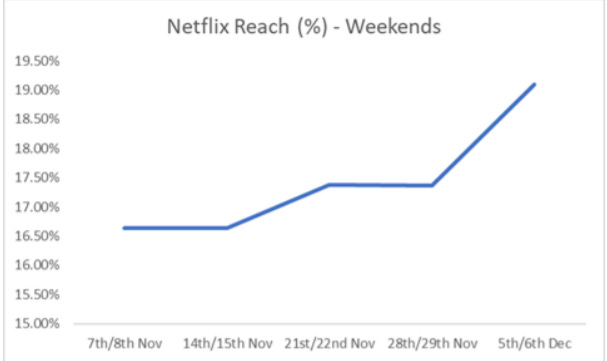
    One of the most obvious impacts of this campaign by Netflix was an increase in app downloads during the promotion period, with the reach seeing a spike of 13 per cent during the weekend of 5-6 December, compared to average reach of the previous four weekends. Notably, the spike of 15 per cent was sharper on Sunday, compared to 10 per cent on Saturday. All other apps excluding SonyLiv and Wynk remained more or less consistent with previous weeks’ performance.

    (Source: Kalagato)

    Along with improved access, Netflix saw 243 per cent DAU jump during the weekend. Saturday saw a rise of 213 per cent whereas Sunday saw figures reaching 271 per cent over the previous four Sundays.

    (Source: Kalagato)

    This impressive uptick in activity on Netflix, however, did not have any discernible impact on the usage of platforms like Facebook, Instagram, Whatsapp, Twitter or YouTube. Among other OTT apps, Disney+ Hotstar and Amazon Prime Video saw drops of 11 per cent and 17 per cent respectively. SonyLiv and Wynk Movies also saw significant spikes in DAU — to the tune of 127 per cent and 148 per cent respectively.

    Open rates for Netflix saw a spike of 135 per cent on average compared to the previous four weekends, 128 per cent on Saturday, and 141 per cent on Sunday. Amazon and Disney+ Hotstar, on the other hand, witnessed drops of six-eight per cent in open rates during this period. Some of these apps also saw lower time spent on their platforms. According to the report, drops of 10-12 per cent were seen across OTT apps of Amazon Prime Video, Disney+ Hotstar, MX player, Vodafone Play and Voot. On the other hand, Netflix saw a rise of 18 per cent in time spent on Sunday.

  • Great Learning places a great bet on the IPL

    Great Learning places a great bet on the IPL

    NEW DELHI: The outbreak of Covid2019 has turned out to be a watershed moment for the ed-tech sector, encouraging brands to acquire new subscribers and expand their business verticals. Both professional and school-level courses have witnessed a spurt in takers during the lockdown period.

    Currently, all ed-tech players are trying their best to leverage the situation and are focusing heavily on different marketing funnels geared towards new customer acquisition. A recent report revealed that popular Indian ed-tech firms have lined up a massive advertising warchest of Rs 500 crore which is being spent on various media outlets to lure and attract new customers for their courses. 

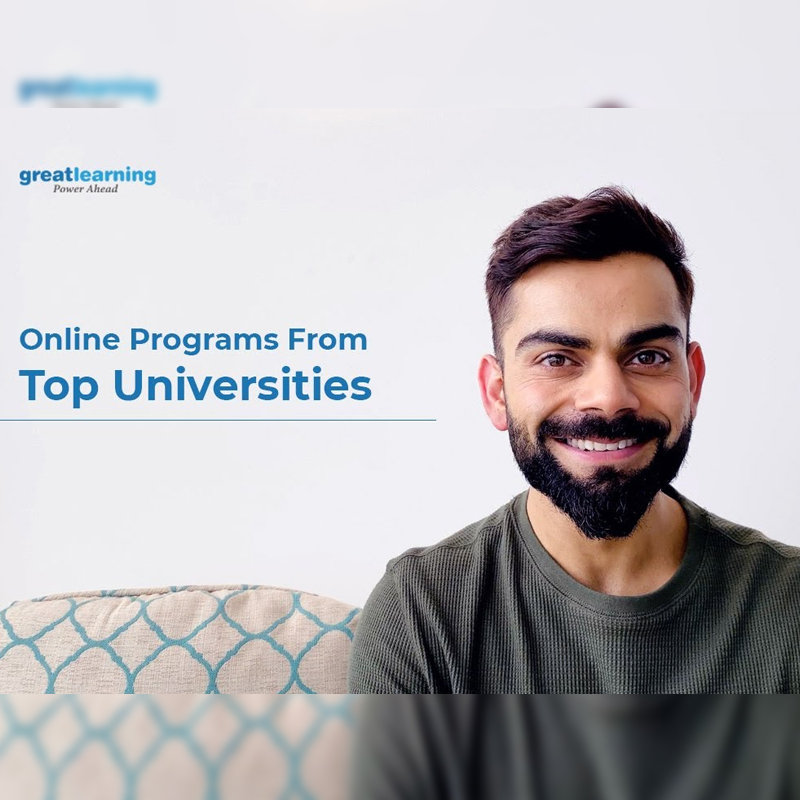
    Ed-tech platform Great Learning has placed a big bet on cricket by signing up with Disney+ Hotstar as a digital sponsor of  the IPL. It launched its first-ever TVC campaign ‘Power Ahead’ in August, highlighting the importance of lifelong learning. The ad film showcases how upskilling in a defined field at the right time can help professionals power ahead in their careers.

    In a big win, Great Learning also roped in Virat Kohli as its brand ambassador who has been featuring in a multi-ad campaign based on the ‘Power Ahead’ theme. The ad tagline reads, ‘Jo Seekhta Hai Wahi Aage Badhta Hai (He who learns, forges ahead)’.

    Great Learning co-founder Hari Krishnan Nair shares that the "Power Ahead"  campaign is playing out on  digital as well as TV and it will not just be limited to cricket. The ads are set to be  hit  40 national channels across categories such as sports, entertainment, news, and music to expand the ed-tech platform’s reach to new geographies and newer audiences.

    Explaining the rationale behind associating with the cricket tournament, Nair describes that the pandemic has fuelled digital and TV viewership, and experts are confident that IPL 2020 will be the most-watched season ever. “Betting on these estimates, we believe this is the right time for us to communicate and consolidate our leadership position through impactful brand communications,”, he says.

    Over the last few years, there has seen a shift in how brands assign their budgets to different mediums. Nair explains that IPL will bring the same ROI for brands because its digital viewership will rise multi-fold. “Depending on the audience one is looking to target, one can find the right balance between TV and digital. We feel that ROI will be leading the strategy as everyone will want more bang for their buck.”

    While a host of ed-tech players are pushing hard to reach the masses, ad creatives  are helping them break through the clutter. The audience for each one of them is not the same, and Great Learning’s target user comprises working professionals and students. “We believe our message of powering ahead and the relentless pursuit of excellence will resonate with our target audience, especially when delivered by our brand ambassador Virat Kohli. We believe he will encourage learners to chase career excellence and inspire them to achieve their goals through high-quality education provided by Great Learning,” says he.

    Over the last six months, the ed-tech firm has seen growth in the learner base on its platform with the launch of the Great Learning academy. There’s been a rise in demand for courses like AI, management, digital marketing, machine learning, cloud computing, and analytics as professionals and students of all hues look to find their footing in the new environment.

    The brand has also launched the Great Learning corporate academy for working professionals, and 700+ companies used it within the first month of its launch to train more than 10,000 employees. Some of the biggest names in the industry – Maruti, UST Global, HDFC Life, BPCL, ONGC, BHEL, HPCL, EcomExpress, EXL and Tech Mahindra – have flocked to the service to train their workforce.

    Nair shares that the pandemic has reinforced the importance of learning new skills more than ever before and has offered an opportunity to people to test the waters and see if online education works for them. During the lockdown period, the company registered a 5X growth in its learner base. And it’s just getting started.

    “We expect the surge to be even bigger over the next few months. It would not be an overstatement to say that the sector is all set to produce multiple unicorn companies over the next few years.”

    According to a media report, there was a 200 per cent increase in Great Learning app downloads in the month of April and May.

    The seven-year-old ed-tech startup has over 5,00,000 users from 140 countries across its post-graduate programme in FY20. Great Learning claimed that customer satisfaction rates remained over 90 per cent across 45 million hours of learning courses.

    It is stepping out from the shadows; hopefully like its brand ambassador Virat,  it will see its efforts being hit out of the park – for a six. 

  • Disney+ Hotstar brings exclusive content from Bigg Boss Tamil season 4

    Disney+ Hotstar brings exclusive content from Bigg Boss Tamil season 4

    MUMBAI: Bigg Boss Tamil is back again to light up, and spice up, the festive season. Hosted by Tamil superstar Kamal Haasan, the fourth season of the reality show intends to offer an enhanced and riveting digital viewing experience to its audience through its tie-up with Disney+ Hotstar.

    While fans can tune into the new season of Bigg Boss Tamil on Star Vijay, the show is also available on Disney+ Hotstar. The streaming service is giving its viewers the opportunity to watch the show and use their power to vote 50 times a day, exclusively on the platform – thereby becoming the ultimate game-changers to keep their favourite contestants in the house to battle for the much-coveted title.

    The streaming platform also has exclusive ‘unseen clips’ from Tuesday to Saturday inside the Bigg Boss house – meaning another helping of drama and action for the show’s fans. Along with full episodes of Bigg Boss Tamil fourth season, the platform will also offer episode extensions and weekly highlights which can be watched from Monday to Friday as per the viewer’s convenience.

    Disney+ Hotstar spokesperson said, “Over the years, Bigg Boss Tamil has grown to be one of the biggest entertainers we have today and has garnered a huge fan base. For this year’s edition, we have tried to incorporate interesting ways in which the audience can participate in the show and view exclusive content.”

    Bigg Boss Tamil forth season is the latest addition to the free to watch segment of Disney+ Hotstar.

  • On Uday Shankar’s exit from Disney+Star, a retrospective on his rise

    On Uday Shankar’s exit from Disney+Star, a retrospective on his rise

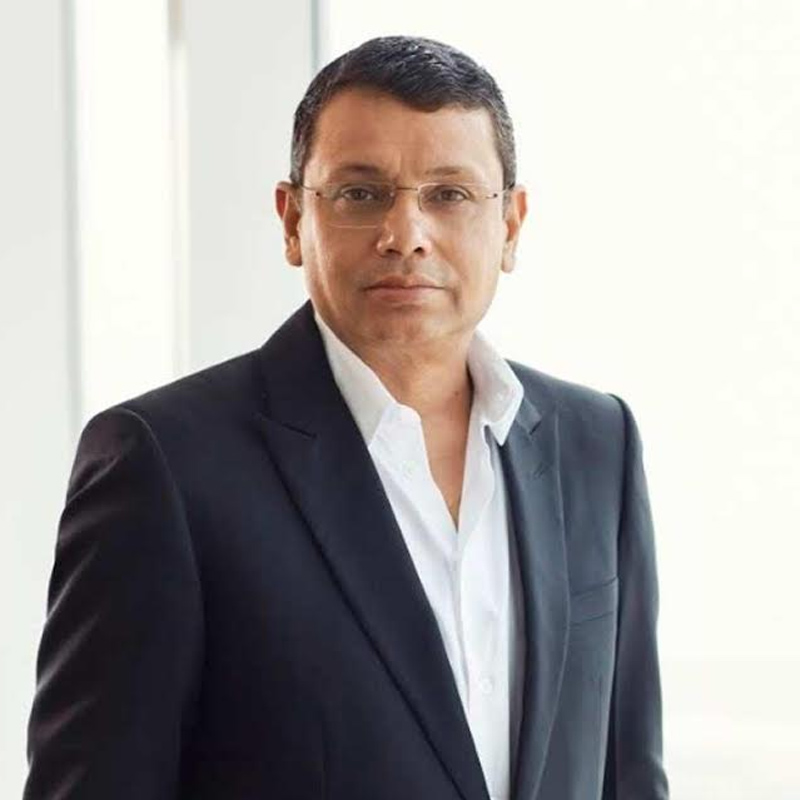
    MUMBAI: Back in 2007, when Uday Shankar was picked out of nowhere to lead Star India, the organisation was a minnow. It had been a leader in the Hindi GEC space through its channel Star Plus, but it slipped from that pedestal following aggressive moves by competitors like Zee TV, and Sony. It had a small presence in regional languages; its channel portfolio was limited. Long-running teams and senior managers had left the network, for whatever reasons.

    Most professionals asked: “Who Uday?” with the emphasis on the fact that they did not consider him much of an entity when one asked them about his appointment.

    When he leaves the organization on 31 December, he will be leaving behind a massive beast present in almost every Indian language, which is a front runner in general entertainment, drives the sports and sports broadcasting agenda in India, is a pay TV powerhouse, has a globally recognised OTT streaming service Hotstar, that is the envy of gold standard streamer Netflix.

    To add to that the Star India network also has brilliant pedigree attached to its brand – the name Disney, which is the world’s biggest media firm.

    And industry is still asking: “Who? Uday?”

    This time, the emphasis is on the shock that they feel about his decision to leave Disney Star India, having made his mark as a media and entertainment industry leader.

    Read more news on Uday Shankar

    Many expected him to leave on the back of the merger announcement a year and a half ago. Of course, the expectation was that there would be a clash between the rigorous process and the system driven approach that Disney is known for and the entrepreneurial, back-of-the envelope, seat-of-the pants culture that the Murdochs encouraged in Star India and which Uday had gotten used to. But because he stayed put – even as his deputy Sanjay Gupta, digital head Ajit Mohan, strategy and marketing head Gayatri Yadav left – one thought he had managed to meld into the new culture; that he would stay.

    Uday filled the executive gaps quickly by bringing in K Madhavan to look after the TV business, a new Hotstar boss in Sunil Rayan, and everyone thought he was padding up to take Disney Star India into its next innings.

    His announcement comes at a time when the IPL is having its best year yet with higher viewership than ever before; that too in times of dire stress thanks to Covid2019. The IPL is something which has been very close to his heart; hence he bid the seemingly ridiculously high amount he did when he acquired its rights. Yes, revenues may be a little stifled this year thanks to the clampdown on spends by advertisers. But by any yardstick, Uday and his team have done a fairly good job in bringing in the financial numbers they have.

    The channels he runs are in fine fettle – being top of the rung in almost every genre. Yes, there are rumblings that the broadcast sector is a legacy business; digital is going to make it look antiquated. Yes, Covid2019 and subsequent lockdowns have totally upended business and revenue generation plans and accelerated digital adoption.

    Read more news on Disney & Star India

    The wrongly held perception is that we are counting down to traditional television’s inevitable demise. Which is where many are wrong-stepping themselves, at least in the Indian scenario. If one were to look at the demographics of India, television still has a lot many homes to penetrate. Will these homes leapfrog to broadband and streaming TV? Unlikely. Most experts have said no. VoD is here to stay, but the lean-back comfort that TV provides cannot be wished away.

    Uday showed he has the appetite and the aptitude to think big, to think scale.He built a team from ground up. The team listened to him, opposed him, and together they charted the growth of Star. He managed to convince the Murdochs to consolidate management of Star’s India operations into India from Hong Kong, saving them hundreds of millions of dollars in the process. He also convinced them to grant him the independence of Star Sports’ future in India by buying out ESPN’s interest in ESPN-Star, the 50:50 joint venture between the two. He then went about on his sports pursuits, acquiring cricket rights across BCCI, ICC and that of almost every sport and setting up local leagues for football, kabaddi, tennis, badminton and what have you.

    He gave the programming vertical the respect it deserves by labelling it as content; he allowed the setting up of a writer’s room in Star, he encouraged the concept of a show runner, something the broadcast sector was loathe to define. He was willing to take risks on content, on branding the network. His channel campaigns were like the broad brush of a painter who knows his craft, and they hit a chord with all of us. At one time he coalesced the messaging around Star India with the messaging of a new India with the tag line Nai Soch (new thinking).

    He chiseled the Star network into one which is deeply connected to the Indian ethos with stories and shows that talked about uplifting the Indian woman. He brought in a new narrative and seriousness through series such as Satyamev Jayate, TedX talks. Yes, they possibly did not help lift Star’s TRPs but they showed that it cared, and cares. He made many friend in high places, even with rivals. Zee TV’s Punit Goenka and he were opponents in business, but they often exchanged notes as though they were friends.

    Amongst Uday’s biggest initiatives was to give shape to Star India’s digital initiatives after failing on different versions online. With the right teams, technology and investment, he nurtured and grew the streamer, Hotstar,  into one which is driving the local streaming  agenda in India today.

    Uday raged against excessive regulation in the broadcast sector, when all his earlier efforts at diplomacy failed with the industry watchdog Telecom Regulatory Authority of India.

    What does Uday’s departure signal? Nothing much. Except that he is itching to do something different. Like he has been vaunt to do throughout his career – giving up a cushy print media job to do TV, saying ta-ta to news TV to do general entertainment television and running a network. Now giving up a prime executive position to turn entrepreneur.

    Most of the executives who left Disney Star India have left to join either digital or investment oriented ventures. It was not as if they were unhappy with what they had going at Star India. They left for better opportunities – Sanjay as Google India MD, Ajit as Facebook India boss and Gayatri as chief marketing officer at Sequoia Capital. As is Uday himself.

    Uday, in the press statement issued on his departure announcement said that he is going to partner with a bunch of global investors and pioneers to mentor startups and entrepreneurs “as they set out to create transformational solutions that will have a positive impact on countless lives.”

    Rajesh Kamat – the former CEO of Viacom18 – had in the past taken a similar tack, by partnering with Paul Aiello to run media investment funds. But they were focused on media. Going by Uday’s statement, his remit will be wider.

    The release also announced that Uday will work closely with Disney direct to consumer & international segment chairman Rebecca Campbell to find his successor. He has three months to do that. Going by the legacy he is leaving behind, finding someone who can match his energy and chutzpah might be a tall order.
  • Star Sports brings back the excitement in MI vs CSK IPL 2020 opener

    Star Sports brings back the excitement in MI vs CSK IPL 2020 opener

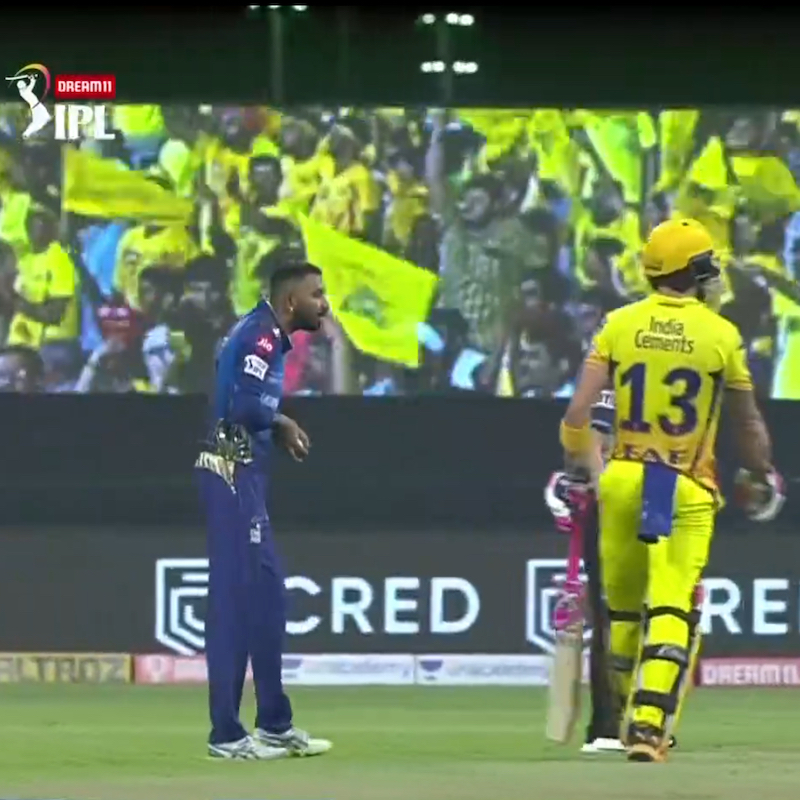
    MUMBAI: It promised a lot, and it did deliver. The Star Sports broadcast of the inaugural match of the IPL 2020 at the Sheikh Zayed stadium in Abu Dhabi between arch rivals Mumbai Indians (MI) and Chennai Super Kings (CSK) served all the dishes that make for a delightful platter. Thankfully, there was no gaudy, boring opening ceremony. The focus was on the sport. The venue, well it looked, perfectly fit for cricket with a green carpet on the ground. The sport too lived up to its potential. At least for the viewer at home on his Disney + Hotstar service or on their Star Sports channels.

    A rusty looking MI side muffed many a chance on the field and let a fitter looking –though having more retired players – Chennai Super Kings romp home with enough balls to spare in the twentieth over. The Rohit Sharma-led team began like they have done in many a previous IPL – losing their inaugural game. Their sloppiness in the field aided by rather inexplicable field placings, Jasprit Bumrah’s inability to bowl the yorker which he is renowned for and a collapse by most of the batters helped ease CSK’s passage to victory

    Of course one has to hand it to Mahinder Singh Dhoni’s captaincy while making his bowling changes and field placements. Piyush Chawla’s audacious spinning spell which tied the MI batsmen in knots, deserve a mention. The fielding was sharp and catches the Chennai Super Kings held their catches. The ball seemed to chase Faff du Plessis in the outfield who accepted two mishits by the Mumbai Indian batsmen and one strike near the ropes, which he lobbed back on the playing field to catch.

    On the batting front there was the reborn Ambati Rayaduand supportive Faff du Plessis, who helped stabilize the CSK innings – after two of its batters Shane Watson and Murli Vijay – departed cheaply. Once he got his eye in, Rayadu thumped the ball all around – and over – the ground – hitting three maximums – and scoring a brisk 71. Du Plessis was steady as she goes accumulating runs at regular intervals, and then came Sam Curran with his hurricane six ball 18, just when the match seemed to be getting a tad tight for the CSKs.

    Sharma and his men appeared to be helpless bystanders and just watched the ball going past them to and over the boundary or for doubles and triples. CSK’s victory broke its five match losing streak against the MI.

    Sharma, on his part, has to go back to the planning board, after what can be best described as a pedestrian performance by his team against an older side. He himself needs to hit the treadmill as his waist line showed. More of the top order need to get amongst the runs, the fielding needs to be polished, and the bowlers need to get more time at the nets, turning their arm over with the evening-dew-laden slippery ball.

    The lack of stadium attendees – while we wanted to see a sea of faces painted, smiling, energized, disappointed, praying fervently – was felt, but only marginally. For players on the field, many found it strange and they expressed it as such, without the constant roar of the tens of thousands of cricket lovers. But in this age of Covid2019, sport has to be revived without fans in the stands, life has to go on with social distancing to prevent the SarsCov2 virus from finding more victims. Dhoni expressed this best when called on during the post-match presentation. He nearly walked up to the presenter but was told to step back, reminding him of the two-metre distancing rule that needs to be maintained. Dhoni was apologetic but expressed that it felt strange, different to be doing so.

    On television and OTT, Star Sports used some tricks, like canned audience roars, screams and yells, fans and sponsors representatives popping up on giant sized screens placed in the stadium from their homes. As did videos of the cheerleaders doing their routine during exciting moments of the match, Then the Disney Star India fans too shared their Instagram reels – short video clips by fans commenting on cricket, the IPL and their experiences while watching at home. The commentators of course added to the excitement by being higher pitched than they are prone to be so early on in the tournament.

    Around seven million viewers on Disney + Hotstar at peak is a good number, considering the streaming service has put the IPL telecast behind a pay wall. The adverts on it and on Star’s channels were a-plenty, whether TVCs or banners or offers popping up. Of course that means good revenues. That should come as good news for the TV broadcast industry – which like many other sectors – is struggling with a poor five-month period of clamped up ad spends.

    And it’s good tidings for sports and for cricket buffs, who number hundreds of millions in India. As Dhoni said during the pos- match presentation: “It’s great that cricket is back after so long. For us and for the devotees. It takes a lot for those behind the scenes. We can be critical. But it takes a gigantic effort to put it all together. A big thank you to all them.”

    Indeed. Cricket and IPL fans echo his sentiment.

    (Today’s match between Delhi Capitals and Kings Xi Punjab at 7:30 promises to be another cracker.)

  • Brands doing moment marketing the Binod way

    Brands doing moment marketing the Binod way

    NEW DELHI: Internet is a weird place; from woke discussions on politics, society, and economy to reviews of movies, shows, and books, to national and international news, to good and bad memes, anything can be found on the web. The place has often provided brands great moment marketing ideas , like the costly bananas that Rahul Bose once ate and the recent Netflix release, Indian Matchmaking . 

    While most of these moment marketing themes had a context or content to spur the reactions and brand participation, the most recent bait to catch brands’ attention — Binod — left many scratching their heads. The faceless man is viral with no great feat achieved.

    The trend originated from a YouTube parody video covering weird comments that the creators, Abhyudaya and Gautami were getting on their channel Slayy Point and one fine gentleman named Binod Tharu had innocently commented, well, his own first name. After several days of the video going online, some bright minds of the web noticed the comment and started a hilarious meme fest over the weekend, which was soon joined by some of the brands.

    One of the first few to join the league was Paytm, which upon getting prompted by its followers, changed its name on Twitter to Binod.

    Here are some more brands that joined the moment marketing fest that Binod sparked.

    Amazon Prime India

    Call 112 Uttar Pradesh

    Disney + Hotstar

    Mumbai Police

    State Bank of India

    Surat City Traffic Police

    Tinder India