Tag: Disney +Hotstar

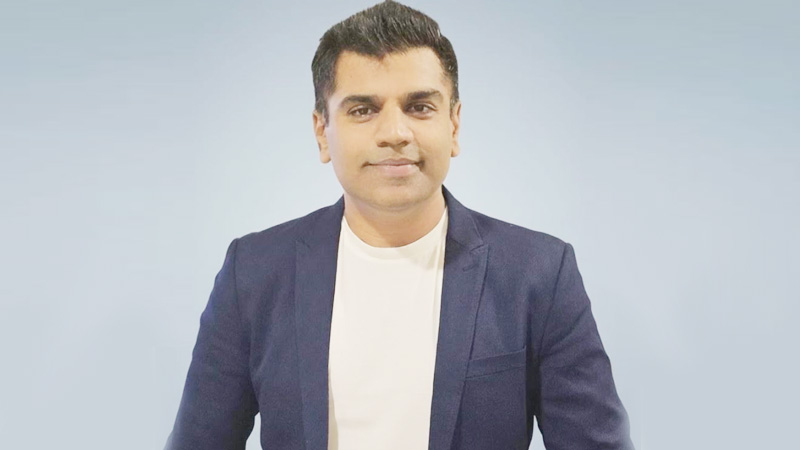
  • Vamsi Murthy wraps up his Disney+ Hotstar journey

    Vamsi Murthy wraps up his Disney+ Hotstar journey

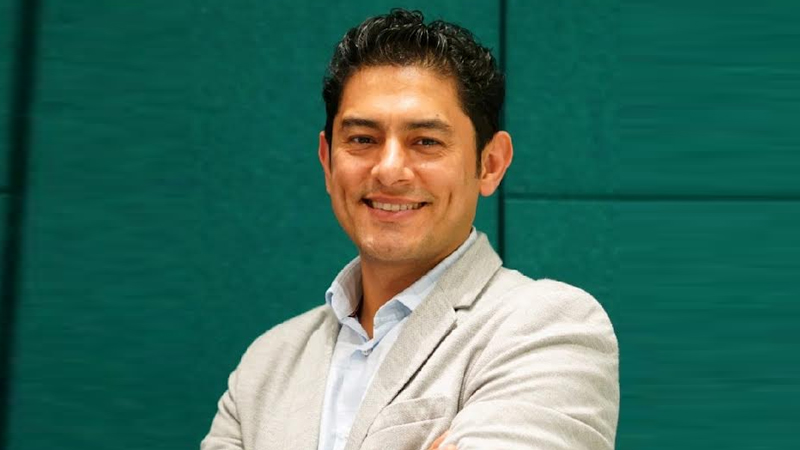
    MUMBAI: Call it a season finale worth bingeing. After an unforgettable four-season run, Vamsi Murthy has announced his exit from Disney+ Hotstar, wrapping up a chapter that reads like a streaming hit, complete with plot twists, high stakes and creative cliffhangers.

    As executive director and marketing head, Murthy helped script some of Hotstar’s most successful campaigns, cementing its reputation as India’s home of entertainment and sport. From building massive originals like Aarya, Criminal Justice, Special Ops and Taaza Khabar, to steering cricket fever through World Cups, his marketing playbook turned content into cultural conversations.

    Under his leadership, the platform revamped its entertainment marketing model, driving growth across brand love, viewership and subscriptions. The results showed improved ROI, award wins at Promax Asia, Kyoorius and Indian Telly Streaming Awards, and a brand that consistently set the tone for pop culture moments.

    Before Hotstar, Murthy’s career reel rolled through BookMyShow, ZEE5, Myntra, MakeMyTrip and Reliance Communications, marking a two-decade journey across India’s biggest consumer brands.

    Signing off, Murthy called his time at Hotstar “nothing short of a blockbuster,” thanking colleagues and mentors who made the ride special. As for what’s next, he’s keeping the suspense alive, promising a new chapter soon. Because in true entertainment style, every great show deserves a thrilling sequel.

  • Cinema Halls to Smartphones: The Shift in Indian Entertainment Consumption

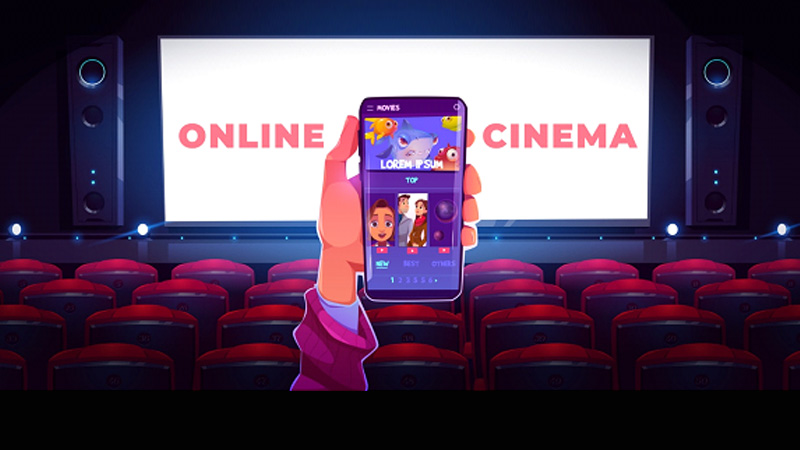
    Cinema Halls to Smartphones: The Shift in Indian Entertainment Consumption

    India has long been among the world’s biggest film markets in terms of ticket sales, number of films produced, and theatre infrastructure. Over the past decade, the rise of digital streaming, cheaper data, and changing consumer behavior has pushed for a rebalancing.

    According to a recent EY research, the Indian media and entertainment (M&E) industry increased by 3.3% in 2024 and was valued at approximately INR 2.5 trillion (US$29.4 billion).

    Within that, digital media is the largest segment, and contributed around 32% of total revenues. In contrast, traditional media, like TV, print, and radio, saw drops in both advertising and subscription income.

    The Legacy of Cinema Halls

    For so long, the cinema has been the centrepiece of Indian entertainment. Big festivals, major star vehicles, and regional cinema in language hubs built the live-theatre experience. It was in the 2000s and 2010s when multiplexes in large cities boomed. Single screens remained relevant in smaller towns, and cinema halls generated major portions of film revenues.

    However, it can’t be denied that experiencing entertainment at the cinema can be a bit pricey. The cost of theatre tickets, travel, and supplementary expenses (food, parking) slows attendance for many films. Some mid-budget or smaller regional films struggle to recoup costs via theatrical alone. The impact of COVID-19 also forced many delayed releases or direct-to-OTT experiments, which in turn raised questions about the sustainability of cinema as the only route.

    Rise of OTT and Mobile-First Viewing

    India’s OTT universe in 2025 stands at 601.2 million people who watched at least one streamed or online video in the past month. That accounts for about 41.1% of the population.  
    Of those, 148.2 million are active paid OTT subscriptions (including through telecom bundles and OTT aggregators).

    Connected TV usage has surged: the number of Connected TV users is now 129.2 million, up 87% year-on-year.  This shift shows streaming is no longer confined to phones only, as viewers want larger screens and living room experiences as well.

    Data costs have fallen, smartphones have become ubiquitous, and broadband penetration has improved in urban and rural areas alike. Streaming platforms like Netflix, Amazon Prime Video, Disney+ Hotstar (now JioHotstar), Zee5, SonyLIV, and many regional players have scaled voice, subtitle, language localisation, and pricing to reach broader audiences.

    Sports-related platforms or communities, both legal streaming and fan engagement spaces, show another angle of audience shift. For instance, users who follow cricket or other live sports not only stream matches on OTT platforms but also use various digital forums and social media platforms.

    10CRIC and other similar websites are some of those online spaces where fans get access to the latest odds, team stats, and more. That reflects the way entertainment and live content spill over into related digital spaces, though the core viewing remains on OTT and smart devices.

    Regional Content and Language Diversity

    Regional language content is a key driver in this transformation. Ormax Media reports show that in 2024, the number of streaming originals in India dropped by about 18% compared to the previous year, after peaking in 2023. Still among originals, fiction series dominate (around 70% of OTT originals), and Hindi remains the dominant language with 65%share.

    Other languages, such as Bengali, Telugu, and Tamil, have growing representation. Platforms focused on regional content (e.g., those devoted to one language) are just really seeing stronger engagement in their markets.

    Viewers increasingly prefer content in local languages, with dubbed or subtitled versions helping content move across state borders. Films originally released in theatres are seeing extended life on OTT in regional markets.

    Economics: Theatrical vs OTT

    Releasing a film in theatres is expensive. Studios spend on distribution, digital or print delivery, big marketing campaigns, and then share a large cut with theatre owners. If a film doesn’t get a strong opening weekend, it often struggles to recover those costs.

    An OTT release works differently. Platforms can cut down distribution expenses, reach audiences across cities and smaller towns at once, and earn through subscriptions or ads. This makes it a safer option for mid-budget or niche films that may not draw big crowds in cinemas.

    Subscription Video On Demand (SVOD) and Advertising Video On Demand (AVOD) are also coexisting. Many platforms give both options. There is also bundling through telecom providers. Some films release theatrically and land on OTT after a window. Some would have direct-to-OTT release strategies, especially for smaller budgets or niche content.

    Technology, Platforms, and Interactivity

    Better mobile networks (4G, growing 5G), cheaper data, improved video compression, and smart TVs all push streaming quality up. Platform features like offline downloads, profiles, parental controls, and multi-device sync help retain users.

    Interactivity now matters. Live trivia, polls during shows, social features built into streaming apps, and second-screen experiences. Streaming of sports or live events gets further amplified by chat, fan forums, commentary, and behind-the-scenes clips.

    Hybrid content consumption (combining cinema and streaming) is becoming standard. Consumers may watch big action or festival films in theatres, but a large part of their weekly content diet comes from OTT. As streaming grows, the role of theatres adjusts.

    What the Future Looks Like

    Growth projections are strong, and the FICCI-EY report estimates the M&E sector will grow 7.2% in 2025. So, that’s about INR 2.7 trillion at a CAGR of about 7% to reach around INR 3.1 trillion by 2027.

    OTT audience and adoption are also expected to increase, though growth rates might moderate. Connected TV adoption will likely continue its sharp rise.

    However, platforms will still need to combine technology investment, pricing innovation, content localisation, and strong marketing to retain audience loyalty. Those who will are the ones likely to remain relevant for a long time. 

    Disclaimer:This article has been published without the journalistic or editorial involvement of Indiantelevision.com. IndianTelevision.com Group, or any of its affiliated websites. IndianTelevision.com Group does not endorse, subscribe to, or take responsibility for the content, opinions, or views expressed herein.

    Readers are further advised that Online Casino, Betting, Cryptocurrency products, Financial Investments/Engagements, NFTs, and products or calls-to-action related to Health, Booking, Wellness, and Food are largely unregulated and carry significant risk. There may be no regulatory protections or avenues for recourse in the event of financial losses or health-related risks arising from engagement with such products or services.

    IndianTelevision.com Group expressly disclaims any responsibility or liability for the information, views, announcements, declarations, or affirmations presented in this article. By choosing to proceed, the reader acknowledges and agrees that they do so at their own discretion and risk, and expressly absolve indiantelevision.com (IndianTelevision.com Group) from any potential legal claims, liabilities, or actions.

    The content provided is solely for informational and awareness purposes.
     

  • Suno strikes a new note with Gourab Ghose as head of international markets

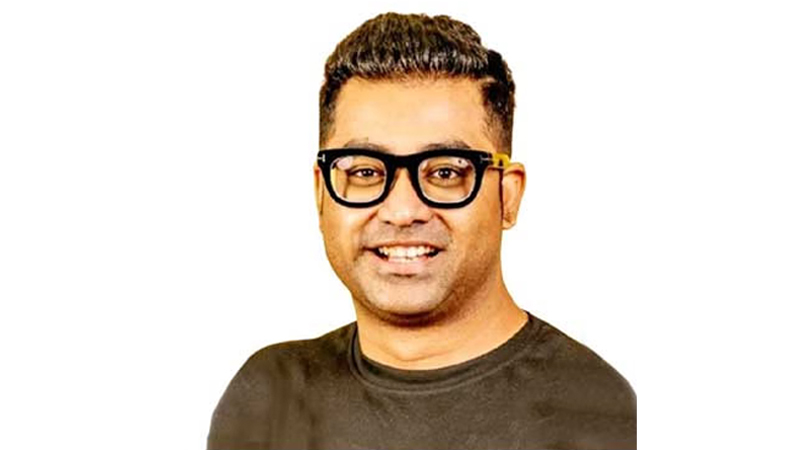
    Suno strikes a new note with Gourab Ghose as head of international markets

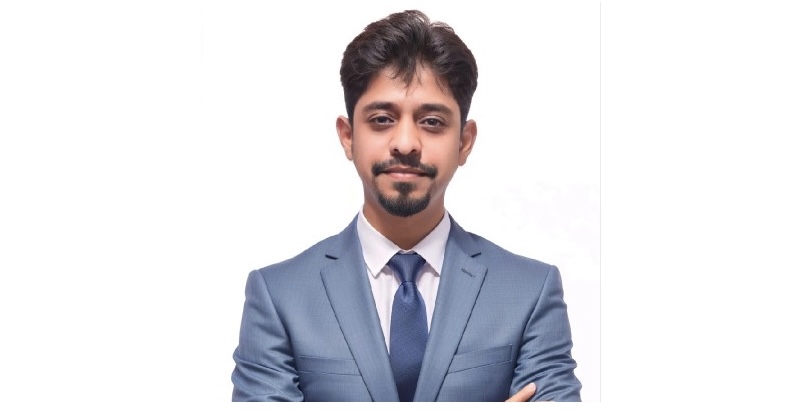
    MUMBAI: When Suno talks, the world listens and now it wants the world to sing along. The music creation platform has roped in Gourab Ghose as its new head of international Markets, a move that sets the tempo for its global expansion plans.

    Ghose arrives with an eclectic track record across some of the world’s biggest platforms. At Snap Inc., he was instrumental in scaling communities and monetisation in India the company’s largest market worldwide. Before that, he tuned growth strategies at Amazon Prime Video and Disney+ Hotstar (now JioHotstar), where his subscription initiatives hit high notes in one of the fastest-growing streaming battlegrounds.

    At Suno, Ghose will orchestrate the company’s international growth strategy, focusing on taking its AI-powered music creation tools to millions of creators across cultures, languages and communities. “Suno is rewriting the way the world interacts with creativity and creativity tools,” he said, calling the chance to globalise its vision both “exciting and deeply personal.” Suno’s co-founder Martin Camacho echoed the sentiment, hailing Ghose’s experience as key to scaling the platform’s community-first approach.

    With Ghose at the helm, Suno is looking to harmonise technology, creativity and global reach striking fresh chords in the rapidly evolving world of music creation.

  • Indian film producer loses copyright battle over Lootere title

    Indian film producer loses copyright battle over Lootere title

    MUMBAI: A Hindi film producer who made a 1993 film starring Sunny Deol has lost his bid to stop Disney+ Hotstar from streaming a digital series with the same title, after a Bombay high court judge ruled that film titles cannot be copyrighted.

    Sunil Darshan Saberwal, who produced the Hindi feature film Lootere three decades ago, sued Star India (now JioStar India) and others in March 2024, seeking to prevent them from using what he claimed was his registered title for their piracy-themed web series.

    But justice Sandeep Marne dismissed Saberwal’s application for a temporary injunction on 18 August, delivering a comprehensive rejection of his copyright claims and dealing a significant blow to long-standing industry practices around title registration.

    The judge ruled that “there cannot be a copyright in mere title of a film”, citing Supreme Court precedent that titles are “incomplete in themselves” and do not qualify as literary works under India’s Copyright Act of 1957. The ruling follows the apex court’s 2016 decision in Krishika Lulla v Shyam Vithalrao Devkatta, which established that commonplace words like Desi Boys lack the originality required for copyright protection.

    Saberwal’s 1993 romantic drama bears no resemblance to Star India’s eight-episode series about Somalian pirates hijacking an Indian vessel. The court noted that “except similarity in the title, plaintiff’s cinematograph film Lootere admittedly does not have any similarity in terms of story with the series.”

    The producer had registered the title Lootere with film industry associations including the Western India Film Producers Association, arguing this gave him exclusive rights. But the court dismissed such registrations as “purely private arrangements having no sanctity in law,” enforceable only between association members through contract.

    “The associations formed by film producers and registrations granted by such associations are nothing but an internal contractual arrangement between the members,” justice Marne stated. Since Star India was not a member of the relevant association, it could not be bound by Saberwal’s registration.

    The judgment highlighted how Bollywood routinely produces multiple films with identical titles—citing examples including Hera Pheri, Aankhen and Dilwale —without legal challenge, provided the underlying stories differ.

    The court also criticised Saberwal’s lengthy delay in pursuing legal action. Though he first noticed the series trailer in September 2022, he waited until March 2024 to file suit—by which time the series had already been streaming on Disney+ Hotstar for months.

    “Plaintiff has whiled away substantial time of about two years despite acquiring knowledge of plans,” the judge observed, noting this delay was “fatal” to claims for emergency relief.

    The decision undermines the film industry’s practice of treating title registrations as conferring legal rights, potentially opening the door to more disputes over popular names. Industry associations have historically operated these registration systems to prevent conflicts between producers, but the ruling clarifies they carry no statutory weight against non-members.

    Saberwal’s legal team had argued that Star India’s own attempts to secure clearance for the title from producer Boney Kapoor proved the industry recognises such rights. But the court found this irrelevant since it was undertaken by a production services company, not Star India itself.

    The series Lootere continues streaming on Disney+ Hotstar, having premiered in March 2024. Saberwal retains the option to pursue damages rather than injunctive relief, though his suit contains no such claim.

    The ruling reinforces that while films and their underlying literary works enjoy copyright protection, titles remain in the public domain unless they achieve trademark status or generate sufficient goodwill for passing-off claims—a much higher bar than simple registration with industry bodies.

  • How Maitri’s South-first strategy is shaking up Indian advertising

    How Maitri’s South-first strategy is shaking up Indian advertising

    MUMBAI: Nearly three decades ago, in the laid-back lanes of Kochi, three ex-Mudra execs took a punt on building an ad agency rooted in the South—but with national ambitions. Fast forward to 2025, and Maitri isn’t just holding its ground—it’s quietly becoming one of the most disruptive indie agencies in Indian advertising.

    With offices now spanning South India, the Maldives and Seychelles, Maitri has turned its bootstrapped beginnings into a ₹75-crore creative juggernaut. Its client list reads like an FMCG-Culture-Tech dream team: Netflix, Krafton, Wipro, Saffola, Disney+ Hotstar, and longtime loyals like Muthoot Finance and Mathrubhumi.

    So what’s their killer app? Not AI. Not jargon. But cultural intimacy.
    While the big Delhi-Mumbai shops took a north-to-south approach, Maitri did the opposite—leaning into its home-turf understanding of southern India. It didn’t just talk local; it thought local.

    As managing director Raju Menon puts it, “Nothing can beat consistency. When you deliver creatives to the clients that they love, year after year, you build a relationship. And that relationship builds the brand.”

    That philosophy has brought Maitri not just loyalty, but serious hardware.

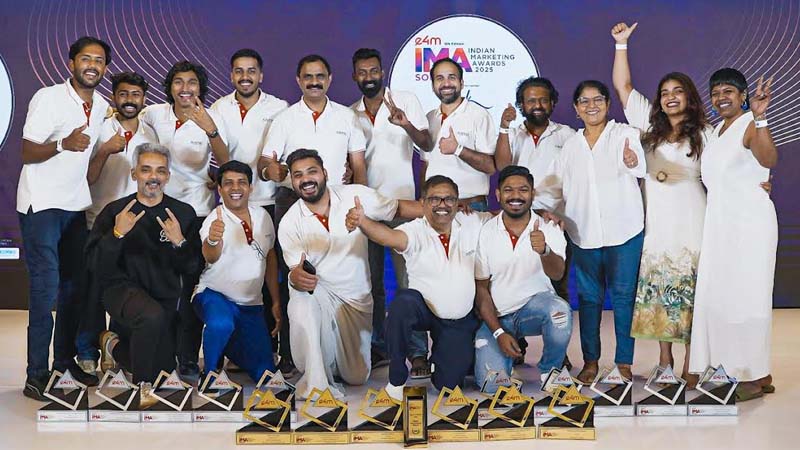
    In 2025 alone, the agency walked away with 17 metals at the Indian Marketing Awards South—a haul that included 5 Golds, 8 Silvers and 4 Bronzes for campaigns that blended heart, humour and serious social impact.

    Some of the show-stoppers?

    ●    “How BGMI made a scam ad to expose scam ads” – a digital, social, and influencer-led takedown of online fraud (3 Silvers, 1 Bronze)

    ●    “The suicide note that saved 50+ lives” – a haunting but hopeful campaign for Muktaa Charitable Foundation (1 Gold, 2 Silvers)

    ●    “Let your life shine” for Muthoot Finance – proving finance can feel (1 Gold)

    ●    “Kappa Cultr 2025” – a cultural blast that nabbed a Gold for omnichannel mastery

    Also in their trophy cabinet: campaigns for Asianet, myG, Brahmins, and Mathrubhumi’s International Festival of Letters. Each piece a masterclass in blending storytelling, strategy, and South Indian soul.

    And Maitri’s not just creatively consistent. Their secret sauce is also in the staffing. Employee churn is shockingly low in an industry notorious for its exits. Most of the agency’s top talent—many of whom cut their teeth at global agencies—have chosen to come home, literally and creatively.

    The result? A shop that has the polish of a multinational and the pulse of a neighbourhood storyteller.

    With four consecutive Agency of the Year titles under its belt, Maitri’s next chapter looks like one hell of a ride. Quietly confident, fiercely local, and globally savvy, they’ve proven that a deep understanding of people beats flashy pitches—and that sometimes, the most powerful ads come not from the centre, but from the edge. Or in this case, Kochi.

  • Ducktape Studios wins big at Cannes, Spikes and more in debut year

    Ducktape Studios wins big at Cannes, Spikes and more in debut year

    MUMBAI: From duct tape to Ducktape, India’s latest creative export is fixing eyeballs on global awards. Ducktape Studios may be barely a year old, but it’s already sticking out in the global ad world for all the right reasons. The Mumbai-based production house, helmed by award-winning director Raylin Valles, has stormed Cannes Lions, Adfest, Spikes Asia and the Kyoorius Awards in 2025, proving that a sharp idea with a dash of madness can punch well above its age.

    At this year’s Cannes Lions, Ducktape landed a Bronze Lion for its quirky Amazon campaign with Ogilvy India and earned a Film Craft shortlist for Dirty Money, its riotous spot for Steadfast Shredders created with Mullenlowe. The momentum continued at Adfest, where the team bagged a Silver for Film Direction and two Bronzes for Arms Deal and Hungal Driving School in collaboration with DDB.

    Meanwhile, at Spikes Asia, Arms Deal racked up a Bronze and two shortlist mentions, while the Kyoorius haul included a dazzling 4 Blue Elephants and 11 Baby Blues.

    This awards streak is no fluke. Ducktape’s cinematic chops are backed by Valles’s deep agency roots and an enviable global reel. His resume reads like a Cannes wish list Coca-Cola, Apple, Netflix, Unilever, Snickers, Ikea, Spotify, Disney+ Hotstar and his directing style ranges from stylised comedy and animated flair to high-octane action.

    “We launched Ducktape to build a space where ideas and craft could run wild,” said Valles. “A year in, we’ve worked with iconic brands, fearless agencies and some real heavyweight talent. We’ve made things that sparked memes, conversations and now, awards.”

    The studio’s sharp storytelling and slick visual language are drawing praise for being rooted in Indian culture while playing to a global stage. And while Ducktape’s tape measure of success is already long, it’s clear they’ve only just begun rolling.

    (If you are an Anime fan and love Anime like Demon Slayer, Spy X Family, Hunter X Hunter, Tokyo Revengers, Dan Da Dan and Slime, Buy your favourite Anime merchandise on AnimeOriginals.com.)

  • APOS 2025: Banijay Asia and its grow-grow urge

    APOS 2025: Banijay Asia and its grow-grow urge

    BALI: Banijay Asia, the formidable content producer, is strategically expanding its reach into Southeast Asia, with a sharp focus on Indonesia and a ground breaking reality series that will propel contestants into space, according to a report in Variety. Group chief executive Deepak Dhar, speaking at the APOS conference, revealed the company has “already locked a couple of deals in Jakarta” for both scripted and unscripted ventures.

    This expansion includes an enhanced version of Banijay Asia’s previously announced cross-border reality show, which initially sought one Indian participant but will now search for “one Indian and finding one Indonesian who we can send to space in a Blue Origin rocket.”

    The move comes as Banijay Asia continues to scale its substantial operations in India, a market with a “voracious content appetite,” according to Dhar. He noted the company produces “800 days of Big Boss [the local version of Celebrity Big Brother] in our calendar year of 365 days,” highlighting the sheer volume of content generated.

    “The timing is right for us personally, because we’re happy in the position that we are at in India, and now we can focus our bandwidth into the rest of the region,” Dhar explained. “We are really doubling down on Indonesia and then subsequently in Thailand.”

    Banijay Asia has built a strong reputation for successfully localising international formats while also developing successful Indian originals. Its  adaptation of The Night Manager for the erstwhile Disney+ Hotstar garnered massive viewership, with a second season currently in production. The company also recently rebooted the long-running crime procedural CID, which delivered “massive strong results on Sony television” before its subsequent windowing to Netflix.

    Dhar articulated the company’s broader regional ambition: “It’s really time that an Indian story catches the fancy and attention of global audiences as well. So that’s really something that we’re excited and working towards.”

  • Criminal Justice scores a killer debut with record OTT opening

    Criminal Justice scores a killer debut with record OTT opening

    MUMBAI: It’s official, Criminal Justice: A Family Matter has taken the law into its own hands… and the top spot on India’s OTT charts. According to audience estimates for the week of May 26 to June 1, 2025, the gripping legal drama clocked an explosive 8.4 million viewers, making it the biggest OTT original opening of the year across pay and freemium platforms.

    The numbers don’t just hold court, they rule. This marks the best opening for any original on JioStar (previously Disney+ Hotstar and JioCinema) since January 2023, making it a rare case of a sequel delivering more punch than its predecessors.

    Backed by a tight script, returning fan-favourite characters, and a family-centric twist on its signature justice narrative, the show has managed to strike the perfect balance between suspense and sentiment. And clearly, audiences across India are here for it.

    In a landscape brimming with crime thrillers and family dramas, Criminal Justice: A Family Matter has carved out its niche by fusing both genres with legal intrigue and numbers suggest the strategy is working. With 8.4 million Indians tuning in to at least one episode, it’s not just a courtroom drama; it’s a cultural phenomenon in the making.

    Gavel down, this verdict is unanimous: Criminal Justice is 2025’s hottest trial yet.

  • Brands of Tomorrow returns with season three, showcasing India’s rising entrepreneurs

    Brands of Tomorrow returns with season three, showcasing India’s rising entrepreneurs

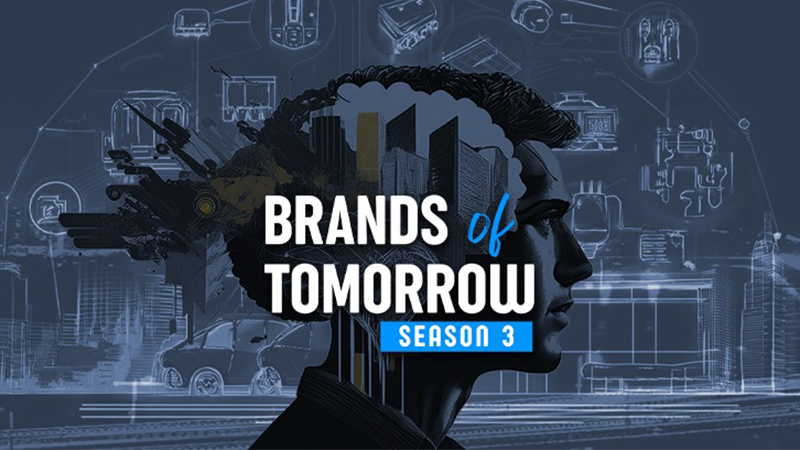
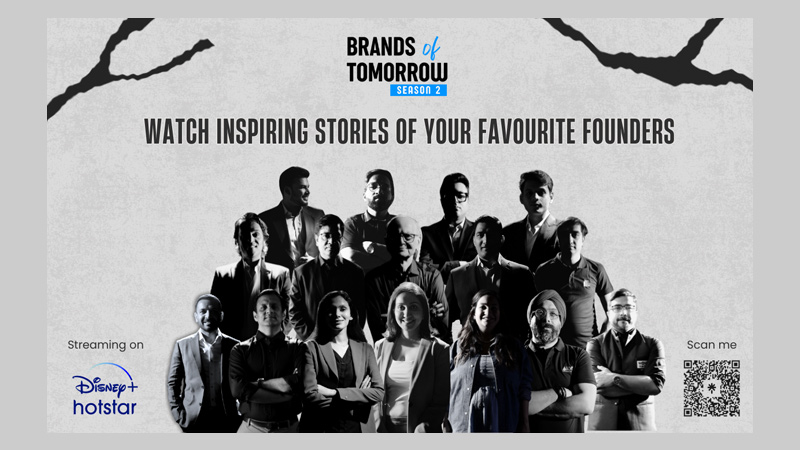
    MUMBAI: The third season of Brands of Tomorrow is now streaming on JioCinema and Disney+ Hotstar, offering an inside look at India’s next wave of entrepreneurial talent. The series showcases 21 emerging brands and the vision of 35 founders driving their growth through innovation and resilience.

    Spanning diverse sectors, the new season features businesses in technology, real estate, fintech, edtech, food and beverage, direct-to-consumer (D2C), electric vehicles, and sustainability. Notable companies include Aaseya, Ctruh, and Sundew in technology; Ravetkar Group and ASBL in real estate; and Stoxkart in fintech. The edtech segment highlights Interval Learning, College Vidya, and Academically, while Burger Singh, Chalu Chinese, Basil, Harajuku, and TBC represent the food and beverage space. D2C brands include Shobitam, Yes Madam, Sleepycat, Miraggio, and Campus Sutra. Statiq features in the electric vehicle category, with Lead Reclaim spotlighting sustainability efforts.

    Through in-depth storytelling, the series captures the challenges, milestones, and strategic pivots that have shaped these ventures. It offers viewers a rare glimpse into the entrepreneurial journey, exploring the bold decisions and creative solutions behind these rising brands.

    Founder of Brands of Tomorrow Suchayan Mandal shared, “This season celebrates the remarkable individuals who are transforming industries and redefining India’s economic landscape. Their stories of risk, determination, and ingenuity will inspire viewers and future entrepreneurs alike.”

  • Dhruv Dhawan checks in at The Trade Desk to power adtech growth in India

    Dhruv Dhawan checks in at The Trade Desk to power adtech growth in India

    MUMBAI: In a move that’s set to make waves in the adtech space, Dhruv Dhawan is joining The Trade Desk as vice president for revenue. With over two decades of expertise spanning communications, digital transformation, and consulting, Dhawan’s appointment signals a strategic push to strengthen The Trade Desk’s position in the Indian market.

    From Google to Disney+ Hotstar, Airtel to Accenture, Dhawan’s career has been a masterclass in building brands, driving sales, and shaping digital-first strategies. At Google, where he spent nearly a decade, Dhawan worked across multiple industries including telecom, financial services, FMCG, automotive, e-commerce, and retail helping businesses leverage digital tools for both online and offline growth. His most recent role as head of ads at Disney+ Hotstar saw him navigating the rapidly evolving streaming landscape, further solidifying his expertise in media and advertising.

    Beyond his industry credentials, Dhawan is also known for his passion for people development, having spearheaded sales training initiatives and workplace culture programmes focused on psychological safety and team dependability. His diverse skill set spanning product management, marketing, and consulting makes him a formidable addition to The Trade Desk’s leadership team.

    With programmatic advertising in India witnessing unprecedented growth, Dhawan’s appointment comes at a pivotal time. His vast experience in ad sales, digital evangelism, and data-driven marketing will be instrumental in driving revenue growth, forging new partnerships, and further establishing The Trade Desk as a leader in the adtech ecosystem.