Tag: Dish TV

  • MSO’s should be marketing CAS now: Sameer Nair

    MSO’s should be marketing CAS now: Sameer Nair

    MUMBAI: The cable fraternity is wasting the huge first mover advantage they already have in hand vis-a-vis pushing addressability in chasing the mandating of CAS, feels Star Entertainment India CEO Sameer Nair.

    Reiterating Star’s well documented opposition to mandated CAS, Nair asserts that the MSOs are seriously missing a trick on the matter in their “all-consuming” focus on getting a mandate out that will fix a time frame for the rollout of CAS.
    Nair drew attention to the latest reports circulating indicating that it could be anywhere between six to eight months at the minimum for the mandated CAS rollout to take off (if at all).

    According to Nair, even as big corporate players were preparing the ground for different addressable delivery platforms to roll out, the cable fraternity were only focussed on getting a cut-off date in place for the rollout of CAS.

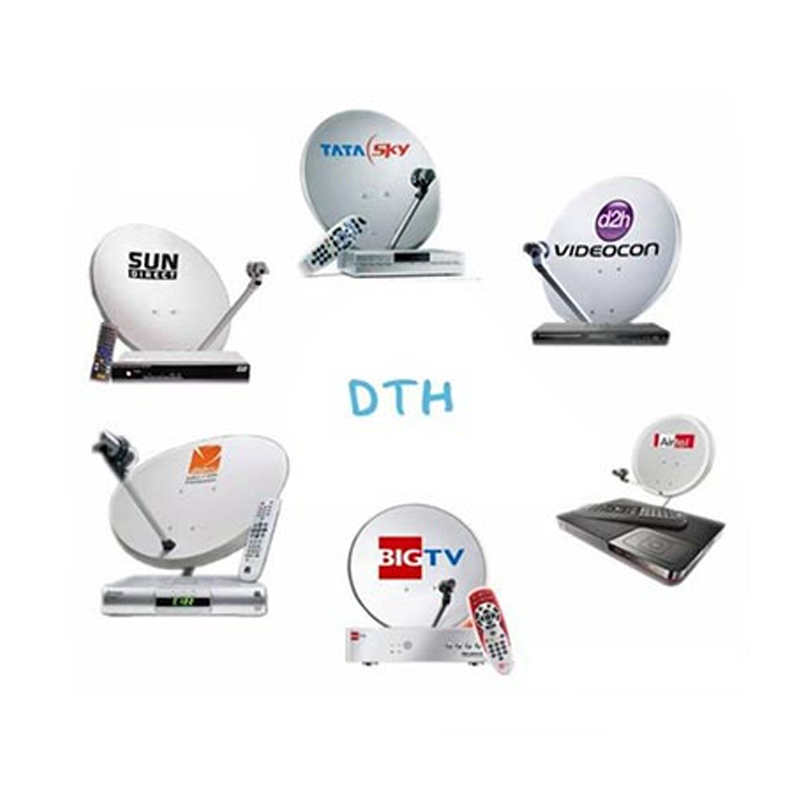
    Nair is of the view that with the imminent arrival of Tata-Sky DTH, Zee’s Dish TV ramping up and the big telecom players aggressively pushing ahead with IPTV, market forces would soon make the whole debate irrelevant and the MSOs may well end up “missing the addressability bus”.

    Nair averred that MSOs should instead be focussing their efforts on attractively packaging and marketing CAS to their direct points to begin with and concurrently convincing their franchisees of the need to get CAS going, government or no government.

    Another issue he raised was on the inability of many cable ops to deliver on CAS even if it was mandated. He said that barring a few big MSOs, most operators were simply not ready for CAS. Neither did they have the set top boxes nor the subscriber management systems in place to get it off the ground.

    According to Nair, in such a scenario, the likely result would be a blackout of pay channels in many areas, as had been witnessed in Chennai. But the difference here, he pointed out, was that unlike in Chennai, where there was no great demand for pay channels, in this case it would more likely be because of inability to deliver.

  • MGM Channel to launch in India on Zee’s Dish TV

    MGM Channel to launch in India on Zee’s Dish TV

    MUMBAI: MGM Networks, a division of Metro-Goldwyn-Mayer Studios Inc., has announced a string of breakthrough distribution agreements in key Asian markets. The MGM Channel will roll out in India, the Philippines, Vietnam and Cambodia.

    Debuting this month, the MGM Channel will be available on Zee’s Dish TV platform.

    MGM Networks executive vice president Bruce Tuchman said, “We are very excited to begin our newest chapter in the booming Indian market with this launch. Having previously seeded demand in India through a co-owned, co-branded channel with Zee TV, we are now launching a wholly MGM-owned, exclusively MGM-branded network in order to more fully mine the opportunities abounding in this dynamic market.”

    In the Philippines, Sky Cable, the country’s largest MSO, has just commenced the roll out of The MGM Channel as part of its new digital “Platinum” package offering. In Vietnam and Cambodia, Ho Chi Minh City Television and Phnom Penh Municipal Cable and Optical Television, respectively, have entered into distribution agreements with MGM Networks and recently introduced The MGM Channel to their customers.

    The MGM Channel’s launch into India and these new Southeast Asian markets are the latest milestones in an aggressive roll-out of the channel across Asia. Starting with its debut in South Korea in 2002, The MGM Channel followed up with a series of launches in Hong Kong, Taiwan, Singapore, Macau, Thailand, Malaysia and Indonesia. MGM Networks also launched a second branded channel in South Korea, called MGM Plus, following the successful launch of its first Korean network.

    “Our success and growth in Asia mirrors our success and growth elsewhere around the world. Over the last five years, MGM has increased its channel interests from approximately 25 countries and territories in a handful of regions to over 110 across Europe, Latin American, Africa, and Asia and the Pacific Rim,” added Tuchman.

    In Southeast Asia/Greater China, The MGM Channel is produced and distributed by MGM Networks through a strategic alliance with CNBC Asia Pacific. In South Korea, the channel is operated through a joint venture with leading local media companies, Skylife and Taewon Entertainment.

  • DD to demand carriage fee from broadcasters for DTH service

    DD to demand carriage fee from broadcasters for DTH service

    NEW DELHI: Prasar Bharati has decided that it would demand an annual carriage fee of Rs.10 million from private broadcasters to be on its DTH platform, DD Direct+.

    “We have written to some broadcasters on this and are awaiting their response,” Prasar Bharati CEO KS Sarma said today during an annual Press meet.
    According to him, after DD Direct+ increases its capacity to 51 television channels from May, a fee would be taken for being aboard the world’s first subscription-free DTH service, which on last count had approximately 1.1 million subscribers.

    Over 40 broadcasters, including some Indian and foreign religious channels, German pubcaster DeutcheWelle and the proposed AlJazeera International English news channel, are waiting in the queue to hop on to DD Direct+ seeing its obvious advantages.

    “We don’t anticipate any problems regarding drop-outs from the present lot as many channels are waiting with the requisite fee in hand for our nod,” Sarma said, adding some entertainment channels, including South Indian ones, too have evinced interest.
    However, charging a monthly subscription from the subscribers has been ruled out. “We want to remain free for some more time,” Sarma explained.

    To subscribe to DD Direct+ DTH service, a consumer has to buy the hardware for approximately Rs. 3,000, which can be considered as one time investment. No monthly subscription is charged from subscribers.

    Apart from DD Direct+, the other DTH player in the country is Subhash Chandra-controlled Dish TV. A Rupert Murdoch and Tata joint venture is proposing to launch Tata Sky DTH service later this year in market that might yield 15 per cent to DTH services over the next two-three years.

    Meanwhile, Prasar Bharati informed that a low-cost DTH set-top box has been launched in the market for radio channels.

    “We are quite excited by this and would strengthen our services to take advantage of this low-cost receiver,” All India Radio DG Brijeshwar Singh said.

  • Dish TV MD Sunil Gupta on way out

    Dish TV MD Sunil Gupta on way out

    MUMBAI: Zee’s DTH service Dish TV, which will soon be demerged as part of a major overhaul to streamline Subhash Chandra’s broadcasting business, is also seeing changes in its top management.

    Sunil Gupta, who joined Dish last November as managing director from Coke India where he was VP external affairs, South Asia, is leaving what is currently India’s only private DTH operator.
    Chandra confirmed to Indiantelevision.com that Gupta, whose initial responsibilities when he came aboard included increasing Dish TV’s subscriber base and penetration of the service across the country, would soon be leaving the company.

    Gupta was working along with Dish TV CEO Sunil Khanna in leading New Era Entertainment Network Limited (NEENL), which manages the affairs of Dish TV. Zee Telefilms holds 20 per cent stake in the company.

    Gupta has earlier worked with The Times of India as well as had a stint at Jain TV as COO.
    Dish TV is close to 1 million subscribers and is signing up around 3,000 customers a day. The average revenue per user (ARPU) is reportedly running at Rs 200 per month with services subsidised through the provision of a free annual subscription after a one-time charge of Rs 4,000.

  • Tdsat directive on Dish TV: Deadline over, MTV mum

    Tdsat directive on Dish TV: Deadline over, MTV mum

    MUMBAI: With just a day left for the 30-day deadline set by the Telecom Disputes Settlement and Appellate Tribunal (Tdsat), but music channel MTV and sibling kids’ channel Nick are still missing from Dish TV.

    It was on 10 February that Tdsat had issued a directive giving the two Viacom channels 30 days notice to make themeselves available to Zee Group’s DTH service Dish TV. As per Tdsat’s dictat, within the time frame from 10 February to 12 March, the two channels from the MTV stable had to be visible to Dish TV subscribers.

    Dish TV had issued a reminder to MTV, stating that the time period is on the verge of expiry and hoping for a positive response on the same. According to a senior Dish TV executive, “We issued a final reminder on 9 March. If they fail to respond to the same, we will move the Tdsat next week.”

    When contacted by Indiantelevision.com, a senior MTV Networks India executive said, “At this point of time, we don’t want to comment on this matter.”

    It is worth noting that when contacted earlier by Indiantelevision.com, MTV Networks India Sr VP network development and licensing and merchandising Sanjeev Hiremath had stated that the Set-Discovery One alliance (of which the two channels are a part) is already in talks with ASC Enterprises (Dish TV’s holding company) in regards to the matter.

    When asked if his DTH network and the One Alliance were anywhere near agreement, a senior Dish executive said, “We did have a few rounds of talks. However, nothing has been finalized as of now.”

    Dish TV, last year, had moved the disputes tribunal seeking legal redressal against, what it says, is MTV’s unwillingness to come onto its DTH platform.

    MTV India operates three channels in the country — MTV and Nick, distributed by the One Alliance and Vh1, distributed by Zee-Turner.

  • CAS Rollout Could Provide Huge Push for DTH Operators as Well

    In business as in life, timing is everything. And despite all the expected noises from the government (state elections are due in Kolkata after all) and the broadcasters (re-dusting the same arguments against CAS that they offered in 2003), one lot who might not be so peeved by the developments are the DTH operators.


    IF, the CAS Dwitya rollout saga doesn’t get derailed again by the usual suspects, we have quite an interesting proposition that is on offer for the consumer. Tata Sky is quietly preparing its launch schedule and would more than likely advance its timelines if there is a definite direction from the powers that be that CAS is really going to take off.


    In the meantime Dish TV, at present the only existing private sector DTH service provider, would be expected to sort out programming contracts with SET Discovery before that and any and all contentious issues with the Star Network at least by the time Tata Sky launches.


    One could ask why is the CAS rollout timeline critical here? After all DTH retains the advantage of having a national footprint while CAS will be limited to the three metros in the first phase.


    There is of course Chennai, which is already under the CAS regime but that should be kept out of this debate. Why? Because despite SET India CEO Kunal Dasgupta’s comment on “the CAS experience in Chennai not having been a happy one” the fact remains that the biggest reason that set top uptake did not happen was because the channel that is most critical in the Tamil viewer’s scheme of things – Sun TV (and others of its ilk) – is available in the FTA package so there was and still is no compelling enough reason to invest in one.


    Coming back to the main discussion, crucial to our premise is the staggered rollout of the addressable system of transmission of pay channels that had been notified in 2003.


    As per the notification, each of the three metro cities (Delhi, Mumbai, and Kolkata) would be divided into four zones. Within a one-month time frame, in Zone A in each metro, pay channels can be watched only with the use of STBs. From the second month onwards, CAS will take effect in Zone B in each metro. And so it follows in Zone C from the third month onwards and Zone D from the fourth month onwards.


    For the government, there are two choices — implement the court order or appeal. For the purposes of this argument we are going with the implement premise.


    The court instituted deadline for CAS rollout is 10 April. Therefore, the government after due consideration would be expected issue its fresh updated notification on 10 April that within a month all pay channels in Zone A would have to be delivered through a set top i.e deadline for Zone A to be “set top compliant” 10 May. Taking that timeline forward, Zone B’s deadline would be 10 may, Zone C 10 June and Zone D 10 July.


    IF Tata Sky can launch by 10 April then it, along with Dish TV will be able to go to the consumer with their individual offerings as possible alternatives to cable delivered addressability. What is critical here is that the consumer is COMPELLED to take a set top box if he wants to get his daily fix of Star Plus or HBO (whatever the case may be). Since the set top is a given the only issue is which service he / she selects.


    It will all then come down to which of the three alternatives is the best as per consumer understanding. Who offers the best deal, who is perceived as being capable of delivering the best in terms of technological quality and viewer experience at the most competitive cost?


    We believe that of critical importance here will also be the perceptions and prejudices that are attached to the service providers. These issues could well guide choices if all other parameters remain basically the same.


    What we could see is more “sophisticated” Zone A consumers opting for the DTH option while the skew could well be towards the more familiar “cablewallahs” in Zone D for example. Whichever way the skew swings, STBs will move. That ultimately is what all the players in the digital delivery game want.


    A moot point though is this. IF the CAS rollout does go forward as per the Delhi High Court ordered schedule and IF there is a huge uptake of set top boxes (digital cable or DTH), one big loser could potentially be Anil Ambani’s Reliance, which is neither ready with its IPTV nor its DTH offering. Once there are a large number of boxes out in the market, to get consumers to make the switch to something else would take twice the effort.

  • CAS Ruling: MSOs now have the ammo to take on DTH

    CAS Ruling: MSOs now have the ammo to take on DTH

    It was one piece of news that cable TV networks were waiting to hear for long, too long in actual fact!


    Buffeted by potential competition from direct-to-home (DTH) operators, the timing of the Delhi High Court ruling that has ordered the government to enforce the rollout of conditional access system (CAS) in India within four weeks couldn’t have been more crucial. Tata Sky is preparing to launch in June and Dish TV, at present the only existing private sector DTH service provider, is expected to sort out programming contracts with Star India and SET Discovery by then.


    Cable TV can take DTH head on with its digital service. It has the firepower to do so, having built a rich battery of last mile operators (LMOs) who have serviced consumers over the years.


    Firstly, it can cobble together more channels than DTH can offer at the initial stage when the consumer is making the shift from analogue to digital. Already, some MSOs are making available a little under 150 TV channels. DTH operators, on the other hand, are limited by transponder space on satellite and can only ramp up under MPEG-4 compression technology.


    Second, cable TV can bundle broadband and, with preparation in future, telephony services.


    Third, it can develop interactive features with its fibre network.


    Fourth, it has manpower in place which can be quickly energised to push digital set-top boxes (STBs).


    Sure, MSOs and independent operators would have preferred the courts to have come up with the same verdict much earlier, after the government withdrew CAS in 2004. That would have given them a first mover advantage with a considerable time lag before DTH could kickstart operations.


    But there was one issue which had still to be sorted out for an effective rollout: LMOs felt insecure and did not back the rollout of digital cable. With competition from DTH looming large, they now have the support of their franchisee operators.


    But what if the verdict on CAS had come after Tata Sky’s launch and Dish TV’s content contracts had been stitched with Star and Sony? Cable TV operators would have been able to fight against DTH with two weapons in their armoury – analogue cable and voluntary digitalisation. On analogue cable, operators have the flexibility of dropping subscription fees drastically. With a price warrior in place through analogue service, digital cable could offer an alternate choice to consumers to combat DTH head on. On the flip side, the digital service would still remain unaddressable while DTH could provide consumers the choice of selecting channels and packages they want to pay for.


    Under CAS, cable operators do not have the flexibility of delivering pay channels on their analogue network. Consumers will have to select between DTH and digital cable for receiving these channels. They will, in other words, have to buy either a DTH or a cable TV set-top box.


    But delaying the direct knock-to-knock face-off between cable and DTH operators hardly serves any purpose. The business model for MSOs and independent operators can only get worse if no CAS is in place. Because the way out to stop DTH from invading into cable territory without a properly tiered and price-packaged digital service would have been possible only through rate drops. While LMOs would have been unaffected, the MSOs would have felt the pinch.


    Retooling business strategies and organising the sector is in the commercial interest of the cable operators. The hour has come to change the mindset and bring in quality and service-oriented practices. It will be meaningless to wish away competition from DTH and later IPTV providers.


    Several networks already have a stockpile of digital STBs. So far, they have been unable to place these boxes in consumer homes. Even Hathway Cable & Datacom, the more aggressive of the digital cable TV players, claims it has managed to distribute just 40,000 boxes. It would do better for operators to take a more positive view: that with CAS, digitalisation, either through cable or DTH or IPTV, would move faster.


    After all, the market is too big and diverse for any single player to cover it all.


    Ensuring a ramp up in supply of boxes, erecting a solid encryption system, and having a sound billing mechanism should be the focus areas. Also, it is crucial for operators to find more, better and premium content which can lure customers. They will also have to work out rental schemes and low up-front charges to subsidise the boxes in order to stay competitive with DTH.


    Another hard lesson to be learnt from this is that investments on old technologies won’t help. For those who have put their money on analogue STBs, the chances of surviving the battle look grim. Yes, there is a market for free-to-air analogue service. But no, not for analogue STBs as that will limit the channel offerings at a time when supply is growing rapidly.


    There will be competitive pressure for cable operators to upgrade their networks and services. Territorial monopolies will end and cable operators will also have to fight amongst themselves for retaining or acquiring subscribers.


    DTH, of course, retains one advantage. It has a national footprint while CAS is limited to the four metros in the first phase. This will give DTH economies of scale, but then it will still face the big hurdle of drawing in consumers to buy a box in the non-CAS areas.


    By bringing in CAS, the MSOs realise the entire business model changes in favour of them. Gaining control over the entire value chain across the network and having an addressable system will pump up valuation of cable companies and draw in global investors.


    The green signal on CAS couldn’t have come at a riper time. If there is any year which can drive digitalisation forward, this is it. In June-July, ESPN Star Sports will show live the football World Cup. The other key properties on the roster are ICC cricket Champions Trophy in September and the cricket World Cup early 2007 (both events on Sony).