Tag: Dish TV

  • Dish TV appoints Salil Kapoor as COO

    Dish TV appoints Salil Kapoor as COO

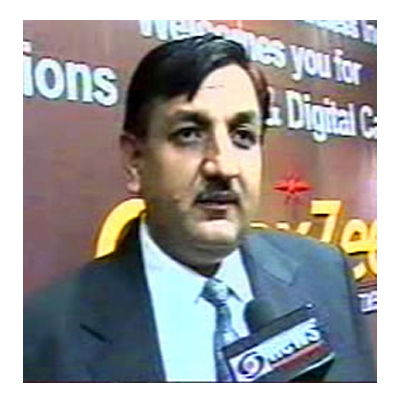
    NEW DELHI: Zee’s direct-to-home (DTH) company Dish TV has appointed Salil Kapoor as its chief operating officer (COO).


    The appointment follows Vinay Agarwal‘s joining Dish TV as its CEO in June-end.


    Kapoor will be taking the charge from the company’s headquarters in Noida from today. He brings with him an experience of over 17 years spanning across Information Technology, Consumer Durable and Engineering Industries.


    Prior to joining Dish TV, Kapoor was associated with Samsung Electronics as the national sales head.


    He was responsible for Consumer Electronics Revenue and Sales operations through 50 branches. He was also leading the senior level multi disciplinary teams.

  • ‘Our aim is to come up with total telecom solutions’ : Rajiv Agarwal – Essar Telecom Retail

    ‘Our aim is to come up with total telecom solutions’ : Rajiv Agarwal – Essar Telecom Retail

    The mobile retailing space is hotting up in India. Essar Telecom Retail, an Essar group company has entered mobile retailing in India with the launch of its “The MobileStore” outlets across the country. The basic aim is to be a complete telecom solutions provider.


    It has tied up with global media firm Virgin to provide the backend solutions like customer care. This marks Virgin’s entry into India’s burgeoning mobile sector. Virgin founder Richard Branson believes that this is an opportunity for the two parties to fundamentally change the face of mobile retailing in India.


    Indiantelevision.com caught up with Essar Telecom Retail CEO Rajiv Agarwal for a quick chat on the plans.


    Excerpts:

    Could you give me an overview of Essar’s mobile retailing initiative?
    This is a chain of retail stores that will serve as one stop shop for the needs of the mobile consumer. We are looking to fill a void that is present in the retail market. Today we have international players on the operators side, on the manufacturers side. But on the retail side we do not have an organised player. The customer is the most important element as all these people are working for him/her.

    As the number of mobile subscribers, users becomes more and more the market is becoming more complicated, which has created a void. Our aim is to come up with total telecom solutions for the customer.

    What are the different products and services being offered?
    One can buy cell phones, get repair services, do bill collection. We also have value added services like ringtones. We have media services like games, DTH connections, ipods, cameras. All are fast moving.

    What is the synergy that the group has in setting up telecom retail?
    Essar has decided to be in retailing in all their core businesses. We have been in telecom over the last 12 years. Our aim is to get closer to the customer. We have knowledge and awareness about telecom.

    As per research, what does the mobile user expect from a mobile retail chain and how is Essar going about fulfilling his/her needs?
    The mobile customer is looking for a range of products that he can touch and feel. He/she wants a store that is next to his house. He wants value for money, after sales service.

    Why did you decide against going the franchise route for your stores?
    There would have been the risk of our brand value being diluted. Also you have to manage many entrepreneurs if you walk down that road. This is a business where you cannot allow your service proposition to get diluted.

    The franchise route would have meant that there would have been no difference between us and any other mobile store.

    We have media services like games, DTH connections, ipods, cameras. All are fast moving

    Given that Indians are an extremely price sensitive won’t it be difficult for mobile retail to make a margin and have sustained revenue?
    That is the case for any product. We have developed our business model keeping this in mind.

    What is the investment being made and how many stores are being set up?
    In the next three years we are setting up 2,500 stores at an investment of Rs 1,250 crores (Rs 12.5 billion) across 600 cities.

    Over 70 stores have already been launched in places like Mumbai, Delhi, Kolkata, Hyderabad. In the next six to eight weeks we will have opened up another 100 stores. In the next six months we would be operating 700 stores.

    The stores are in three formats – large (1,000-1,500 sq ft), medium (800-1,000 sq ft) and compact (200-500 sq ft). The ratio being identified is 20:60:20 across large, medium and compact stores respectively.

    We are looking at a breakeven of three years for the business. The stores will cost between Rs 500,000 – Rs 5 million each to set up.

    What are the factors looked at to select each location?
    You look at places where customer footfalls are high. This could be in a mall or on a busy street. We will have the shop in shop concept to a certain extent going forward. Around 15-20 per cent of the stores will be in Metros.

    In terms of revenue how much comes in from where and who are the companies you have tie-ups with?
    Handsets contribute to 75 per cent of our revenues. We have tie-ups with all the major manufacturers like Nokia, Motorola, Sony. Mobile repairs are our core area. We have trained people in our stores who can look after the problem. We have straight tie-ups with the manufacturers and operators.

    We have a tie-up with Mauj Telecom for mobile games. For DTH there is Tata Sky, Dish TV. There are also opportunities for in-store advertising and merchandising.

    Could you talk about the back end solutions that have been put in place?
    We have a tie-up with Virgin. They bring retail knowledge in terms of softer skills in terms of customer relationship management. The deal is for brand licensing, technical and consultancy services.
    Virgin will provide their expertise in the areas of branding, marketing, customer care, store operations and staff training.

    We chose Virgin as that brand stands for good quality, brilliant customer service, innovation, fun and good value.

    Finally what marketing activities are being done to create awareness?
    We are airing ads during the broadcast of the cricket World Cup. A large portion of mobile users will be watching the event. We will also be doing a lot of print and outdoor activities.

  • Sun ready, DTH play becoming hot chase for satellite space

    Sun ready, DTH play becoming hot chase for satellite space

    MUMBAI: Having finalised on Malaysia-based Astro as his 20 per cent equity partner, Sun network chairman and managing director Kalanithi Maran is preparing the ground to launch his direct-to-home (DTH) service. He has decided on Iredeto as the encryption system while the set-top boxes (STBs) will be from Coship Electronics in China and South Africa-based UEC Technologies, a source close to the company says.

    “He is also looking at more STB vendors. Besides the basic box which will be competitively priced, he will have graded STBs. Multiple vendors will ensure supply safety in case of a huge demand for his service,” adds the source.

    Maran will be using MPEG-4 technology that will allow him to compress more TV channels per transponder. While MPEG-2 can pack in around 12 channels, the advanced compression technology will be able to accommodate over 20 channels.

    Maran will have seven Ku-band transponders on Insat-4B, which launches on 10 March, while Prasar Bharati’s free-to-air (FTA) package DD Direct Plus will have five on the same satellite.

    He may consider himself lucky when the launch of Insat-4C satellite failed in July 2006 after the rocket carrying it veered off course and exploded. He had booked six Ku-band transponders (and one more for digital satellite news gathering) on it for Sun Direct’s DTH service.

    By being located on the same satellite, Sun’s subscribers will be able to access DD Direct’s channels without Maran having to separately put them on his transponders.

    Dish TV which was sharing the NSS-6 satellite with DD, will not be hit badly after the migration. Since NSS-6 is at 95 degree East, a minor realignment of antenna will be required for receiving the channels as Insat-4B shall be located at 93.5 degree East. Tata Sky, on the other hand, will have to recarry DD channels on their transponders.

    The DTH play in India is, indeed, turning out to be a hot chase for satellite space. If Tata Sky had to wait for the launch of Insat-4A as rival Dish TV aggressively went on mopping up customers, it is now the turn of Anil Ambani’s Bluemagic and Bharti Telemedia to plead with the Indian Space Research Organisation (Isro) to provide them with Ku-band transponders.

    In the sprint to start DTH before the market gets taken away, Bharti may be the clear loser. Unless, of course, it gets the approval from Isro to be on Measat-3, a foreign satellite launched from the Astro Group.

    “Measat has made their Ku-band transponders available for us and have supplied the data. We are studying it technically and are making an internal evaluation,” says Isro contract management and legal services director SB Iyer.

    The satellite has 49 dbW (decibel Watts) as compared to Insat’s 53. “We have indicated this problem and Measat has said that it would examine it and come up with a solution. Insat-4B has 53 dcW and offers a powerful beam across the country. We will have to ensure quality and also come into an agreement with Measat. Besides, the users will also have to express their interest in the satellite,” says Iyer.

    Measat-3 has 24 Ku-band transponders and has been designed to provide capability for data services and DTH applications in Malaysia, Indonesia and the Indian Subcontinent.

    If no clearance is given to Measat, Bharti will have to wait the longest with Insat-4G launching only by 2008-end. The DTH market could possibly have settled by then with the spoils being distributed among Dish TV, Tata Sky, Sun and Reliance’s Bluemagic.

    Anil Ambani will get a shot at the DTH market after Insat-4CR (replacement) launches in the quarter beginning July this year. Reliance has asked for eight Ku-band transponders and Isro is reserving the remaining four for other users like National Informatics Centre.

  • Bharti floats subsidiary company for DTH

    Bharti floats subsidiary company for DTH

    MUMBAI: Bharti Airtel Limited has floated a wholly owned subsidiary, Bharti Telemedia, for its direct-to-home (DTH) services.

    The plan is to launch DTH this calendar year, but this will depend on whether the telecom major manages to get transponder space from the Indian Space Research Organisation (Isro).

    Indiantelevision.com was the first to report that Bharti would be entering into the DTH business, joining Anil Ambani’s Reliance, Kalanithi Maran’s Sun Direct and the existing players Dish TV, Tata Sky and DD Direct Plus.

    Bharti also hopes to launch its IPTV services in the first quarter of the next fiscal, a source in the company says. UTStarcom is the digital service vendor for Bharti’s IPTV including the headend and the digital set-top boxes (STBs).

     
    “There are issues we still have to sort out on technology, cost and reach. IPTV could have limitations in India at this stage. DTH can give us a wider market,” says the source.

    Bharti had started test runs for IPTV with UTStarcom but later invited other vendors as well. Subsequently, it has been using UTStarcom for its IPTV build up.

     
    The telecom major has also announced the acquisition of a submarine network cable system from Network i2i, which is jointly owned by Singtel and a Bharti group company, for an overall consideration of $110 million. This will be subject to obtaining the requisite approvals.

    Bharti Airtel is structured into three strategic business units – mobile, broadband & telephone (B&T) and Enterprise services. The mobile business provides mobile and fixed wireless services using GSM technology across 23 telecom circles. The B&T unit provides broadband and telephone services in 94 cities while the Enterprise services provide end-to-end telecom solutions to corporate customers and national and international long distance services to carriers.

    Bharti has an aggregate of 33.71 million subscribers (as of December-end 2006), consisting of 31.97 million mobile customers.

  • Zee demerger scheme for Dish TV gets nod

    Zee demerger scheme for Dish TV gets nod

    MUMBAI: Subhash Chandra is all set to list the direct-to-home (DTH) business of Zee Group after having got the demerger scheme approval from the court. Already listed are the other entities – Zee Entertainment Enterprises Ltd (ZEEL), Wire & Wireless India Ltd (WWIL) and Zee News Ltd (ZNL).

    Zee Entertainment Enterprises Limited today announced the approval of its demerger scheme by the Hon’ble High Court of Judicature of Bombay. “This approval paves the way for setting the record date for the demerger of the direct consumer business undertaking of Zee into ASC Enterprises Limited (ASCEL), which is soon to be renamed to Dish TV India Limited,” the company said in a release. Dish has 1.6 million DTH subscribers.

    Says Zee Chairman Chandra, “This is the last phase of our current restructuring process – WWIL and ZNL are already independent companies listed on the stock exchanges in India. Dish TV would also get listed very soon and we are confident that all four companies will deliver long-term shareholder value.”

    The record date is likely to fall in the latter half of February. The shareholders of ZEEL as on the record date shall be allotted 57.50 shares in ASCEL for every 100 shares held.

    “Dish TV would then apply for listing of such shares to the BSE, NSE and CSE, in compliance with SEBI guidelines. ZEEL expects the listing process to be completed by February,” the release said.

  • ‘Rolling out of Cas has been the most significant development’

    ‘Rolling out of Cas has been the most significant development’

    The Olympic motto `Citius Altius Fortius’ a Latin phrase when translated means Faster-Higher-Stronger. We see strong parallels between the motto and the Indian Entertainment & Media (IEM) Industry. India is among world’s largest media consuming and content creating markets. Paradoxically, IEM is just 0.7 per cent ($10 bn) of the global $1.4 trillion industry. Till now, poor policies, fragmented markets, low investments and leakages have kept the moolah remarkably elusive. However, with sweeping changes in distribution, convergence and integration of models, we see IEM growing to $21 billion by 2010. We are bullish.”

    The above mentioned observations of SSKI research aptly sums up the present upbeat scenario on the television and distribution sector in India. 2007 has been full of various significant developments in the television industry, which have laid the foundation for technological convergence, digitisation and addressability, thus ushering a new era in the sector which would revolutionalise the television viewing experience in the ensuing years.

    The most significant and landmark development of the year has been the successful implementation of Conditional Access System (Cas) in notified areas of Delhi, Mumbai and Kolkata. This is being regarded as a big leap towards migration from analogue regime to digital regime. The regulatory framework is acting as a catalyst in the process of digitization. Trai has already recommended to the government for extension of Cas in remaining areas of these three Metros.

    Trai has also submitted to the government a report of the Group on digitization for introduction of voluntary Cas in 55 more cities in a well defined time frame. It is now up to the information & broadcasting ministry, to trigger off the said process by laying down a clear cut road map.

    Prior to 2007 the digitisation rollout in cable was virtually negligible. However, now we expect it to be happening at an accelerated pace. It is estimated that by 2010, the total C&S homes are likely to increase to 90 million from present level of 68 million. It is expected that out of those homes, 37 million would be digitised.

    In October 2007, Trai had also sent its recommendations to the I&B ministry on the policy framework for licensing and issues pertaining to headend-in-the-sky (HITS), which too is a digital distribution platform. The ministry is examining them and once a final decision is taken on these recommendations, it is expected that the digitization in the cable segment will take off at a faster pace as HITS has potential of digitising the entire country within a short span of time.

    In addition to various benefits of digitization such as capacity augmentation and provision of Value Added Services (VAS) to consumers, digitisation also results in bringing transparency in the cable sector, which not only leads to better tax compliance and realisation of due taxes by revenue authorities, but also ensure equitable distribution of revenue across the value chain.

    The government is the biggest beneficiary of the shift from analogue to digital cable, as digitisation releases significant spectrum. The spectrum can be utilised for other services like telecommunications, defence, emergency, interactive platform and value added services. This is possibly what is driving the government to take the steps necessary for the evolution of digitisation.

    For instance, in Germany, the government subsidised Set Top Boxes for the low income group, whereas in Ireland, the government launched a company (Digico) to introduce digital terrestrial services.

    Digitisation in the cable segment will take off at a faster pace as HITS has potential of digitising the entire country within a short span of time
    _____****_____

    Similarly in DTH distribution, the market is going to witness fierce competition amongst five to six players. In addition to the existing DTH operators DD Direct, Dish TV and Tata Sky, new entrants Bharti, Reliance, Sun TV and Videocon are also expected to launch their services shortly. It is expected that by 2010 the DTH segment would also have about 16 million digital subscribers.

    Similarly, IPTV and Mobile TV both emerging digital technologies are also expected to register an impressive growth by 2010.

    The year 2007 also witnessed lot of activities and developments on the content front. Though already about 270 channels are existing yet, unfazed by the large number of existing channels, several new channels of different genres were launched during the year.

    However, on account of bandwidth constraints on analogue network, the new channels are required to spend heavily on carriage fee in order to ensure their placement on the visible band in the cable network. The existing channels also witnessed intense competition and the entertainment/current affair channels were mainly dominated by “reality shows”.

  • Bharti likely to enter DTH arena

    Bharti likely to enter DTH arena

    MUMBAI: The direct-to-home (DTH) space is set to get more crowded in India with the telecom majors planning to join the fray in addition to their IPTV gameplan.

    Bharti Group is the latest player to have shown interest to enter an arena which will be occupied by Kalanithi Maran’s Sun Direct and Anil Ambani’s Reliance Group next year along with the existing DTH operators Dish TV, Tata Sky and Doordarshan’s DD Direct Plus.

    “We are looking at DTH and are rolling out IPTV,” Bharti Enterprises Ltd chairman Sunil Mittal tells Indiantelevision.com.

    Bharti, it is reliably learnt, had preliminary discussions with Indian Space Research Orgainsation (ISRO) officials. With several players interested to kick off DTH operations, Isro is finding it a challenge to meet the growing demand for Ku-band transponders.

    Sun, for instance, has had to wait after the unfortunate failure of the GSLV-F02 launch rocket carrying the Insat-4C communication satellite in July this year. Maran had booked seven high-power Ku-band transponders in this satellite, out of which six would have been used for DTH and one for digital satellite news gathering.

    Bharati, however, has not yet applied for a DTH licence. “We are still evaluating. We haven’t yet applied for a licence,” says Mittal.

    Though telecom companies in India have chalked out ambitious triple play plans, they have not yet managed to sort out the technical issues. Last mile access to customer homes has also remained a big hurdle and private telcos, who have built a strong mobile phone business, have even looked at striking alliances with local cable operators. On the content front, there is no regulatory clarity yet for IPTV rights.

    Bharati, for instance, had conducted test trials with UTStarcom as the digital service provider for IPTV, but later made it open for other vendors as well. A leading mobile service provider, Bharti’s (like the other private telcos) progress on fixed telephone connections has been slow. With an eye to increase this base and raise ARPUs (average revenue per user) by delivering video content into consumer homes, the company has taken several steps for IPTV rollout including setting up a digital headend in Gurgaon on the outskirts of Delhi.

    “With IPTV still to kick off, some telcos feel DTH offers good opportunity and synergy,” says a trade analyst.

    Reliance, thus, is launching DTH under the Bluemagic brand and has roped in former Dish TV CEO Sunil Khanna to head the operations.

    The formula now being worked upon by the telcos is obviously to have a DTH footprint as well as IPTV which would give them access to homes for delivering video content.

  • Tata Sky upping subscription rate to Rs 300

    Tata Sky upping subscription rate to Rs 300

    MUMBAI: Tata Sky is increasing the monthly subscription rate of its direct-to-home (DTH) service to Rs 300, sources in the industry say. The revised rate, up from Rs 200, is likely to come into effect from 1 December.

    Tata Sky, however, has decided not to offer “tiered” channel packages at this stage of the DTH market. “Bundling channels and fixing different rates is confusing to the consumers. The mobile telephony market has shown that to everybody in this country. Tata Sky will continue to offer a single package unlike its competitor Dish TV,” sources add.

    When contacted for a comment on the developments,Tata Sky CEO Vikram Kaushik remained noncommital.

    Tata Sky offers 102 channels (including Star, Sony, Zee, Discovery, Cartoon Network, Disney, ESPN Star Sports and National Geographic) and six interactive services (Actve Khabar, Actve Newsroom, Actve Star News, Actve Games, Actve Sports and an on-screen guide).

    Tata Sky had stuck to the introductory offer price of Rs 200 even after Zee Turner’s 32 channels had hopped on to the DTH platform in late September. As the interim pricing of these group of channels (fixed by The Telecom Disputes Settlement and Appellate Tribunal till the dispute gets resolved) was Rs 75, a rate revision was in the pipeline. But the debate was whether Tata Sky would subsidise the content cost to the subscribers in the wake of CAS (conditional access system) being introduced on 1 January with a la carte choice of channels that would pull down cable TV rates.

    Tata Sky claims to have a subscriber base of 250,000 and says it is on target to achieve one million within a year of operations. The southern region continues to be a weak spot with the Sun group of channels yet to join the platform. Tata Sky has moved the TDSAT, hoping to get a positive verdict which would ensure the supply of the channels from the Sun stable.

    The Tata Sky set-top box (supplied by News Corp owned NDS), hardware and installation cost has been priced at Rs 3,999 (inclusive of taxes) with a full service warranty for one year.

  • Zee News, WWIL to list by February 2007; Dish TV likely by March

    Zee News, WWIL to list by February 2007; Dish TV likely by March

    MUMBAI: Zee Telefilms Ltd (ZTL) expects its two demerged entities, Wire & Wireless India Ltd (WWIL) and Zee News Ltd, to be listed by February 2007. This follows the approval of the demerger scheme by the Bombay High Court.

    The listing of Dish TV, Zee’s demerged direct-to-home (DTH) business, is likely to be by March. The scheme relating to the de-merger of DTH has not yet been listed for hearing at the Bombay Stock Exchange or in the Delhi Stock Exchange and will take some time. The listing date will be known only after the court gives the nod.

    “WWIL and Zee News Ltd should list by February 2007. We expect to list Dish TV by March,” says Essel Group CEO, corporate strategy and finance, Rajiv Garg.

    ZTL today announced the approval of its demerger scheme by the Bombay High Court. This paves the way for setting the record date for the demerger of the cable distribution and news and regional broadcasting businesses of Zee into WWIL and ZNL respectively.

    The Record Date is likely to fall in the latter half of December.

    The shareholders of Zee as on the Record Date shall be allotted shares in WWIL and Zee News. The respective companies would then be applying for listing of such shares to the BSE, NSE and CSE, in compliance with SEBI guidelines.

    Zee expects this process to be completed by February 2007.

  • Harris Broadcast Communications to provide end-to-end broadcast system to Tata Sky

    Harris Broadcast Communications to provide end-to-end broadcast system to Tata Sky

    MUMBAI:The battle for supremacy between Dish TV and Tata Sky has gone up by one more level with Harris collaborating with Tata Sky Ltd., to deliver its satellite television service via an end-to-end system that converts, processes, synchronizes and distributes digital program content.

    Tata Sky is the satellite television service for the Tata Group and Star Network in India.

    Designed to support 120 channels, Tata Sky’s facility uses Harris’ Integrator router for station routing, asserts an official release.

    “At Tata Sky, we continuously invest in state-of-the-art infrastructure to provide Indian audiences with a world-class satellite television service, offering unparalleled entertainment with pristine picture quality and sound,” said Tata Sky Ltd managing director and CEO Vikram Kaushik. “The Harris broadcast equipment will help us boost the quality of our digital transmission, enabling us to deliver top-of-the-line services to our customers.”

    According to the release, Tata Sky’s facility houses Harris NEXIO servers, for use in their test center; integrator router for station routing; a panacea router for clean switching; 6800+ and NEO modular interface products for video processing; the NEO MTG-3901 master timing generator system; the IconLogo modular branding solution; an IconStation master control graphics and channel presentation system; Videotek test and measurement products; the NEO SuiteView multi-source display processor; and the CCS Navigator software application and NUCLEUS user-configurable network control panel for control and monitoring.

    Harris Broadcast Communications division president Tim Thorsteinson said, “Tata Sky promises to revolutionise home entertainment in India, and we are extremely pleased to work with them in this venture.”