Tag: Dish TV

  • Dish Network launches Sling TV for on the go devices including tablets and smartphones

    Dish Network launches Sling TV for on the go devices including tablets and smartphones

    BENGALURU: Sling TV L.L.C., a subsidiary of Dish Network Corporation announced that it will launch Sling TV, a live, over-the-top television service, to customers in the US, in the first quarter of 2015. Sling TV will deliver live sports, lifestyle, family, news and information channels, Video-On-Demand entertainment and the best of online video to broadband-connected devices at home and on-the-go. Priced at US$20 per month, the service will require no commitment, contract, credit check or hardware installation, says a Dish Network release.

    At launch, subscribers can watch live TV by downloading the app to supported versions of iOS and Android, or by visiting the upcoming Sling website from Macs and PCs. Sling TV is designed to deliver a high-quality television experience inside and outside the home, anywhere a wired, Wi-Fi or mobile broadband connection is available. The service is delivered over an IP-based content delivery system that leverages adaptive bitrate streaming technology. This allows for the highest quality streaming experience possible regardless of network quality fluctuations or location says Dish Networks.

    “Sling TV provides a viable alternative for live television to the millennial audience,” said Dish Network President and CEO Joseph P Clayton. “This service gives millions of consumers a new consideration for pay-TV; Sling TV fills a void for an underserved audience.”

    “Consumers can now watch their favourite shows on their favourite devices that they already use to watch video. Live television, including ESPN, for $20 per month with no commitment or contract, is a game changer,” said Sling TV CEO Roger Lynch. “The arrival of Sling TV lets consumers, who’ve embraced services like Netflix and Hulu, take more control of their video entertainment experience.”

    Supported internet-connected devices for Sling TV are expected to include Amazon Fire TV, Amazon Fire TV Stick, Google’s Nexus Player, select LG Smart TVs, Roku players, Roku TV models, select Samsung Smart TVs, Xbox One, iOS, Android, Mac and PC. Sling TV expects to announce its availability on additional streaming devices and smart TVs in the coming months.

    At launch, Sling TV is offering a core programming package with live and Video-On-Demand shows, sports, movies and online video, as well as two optional add-on packs. Customers will be able to pause, rewind and fast-forward most live channels and Video-On-Demand content. For certain channels, the service includes a 3-day replay feature that gives customers the ability to watch some shows that have aired in the past three days; no DVR is needed. Sling TV’s features are available across all supported platforms.

    Priced at US$ 20 per month, ‘The Best of Live TV’ core package includes 12 Nielsen-rated sports, lifestyle, family and news networks: ESPN, ESPN2, TNT, TBS, Food Network, HGTV, Travel Channel, Adult Swim, Cartoon Network, Disney Channel, ABC Family and CNN. This package additionally features an array of Video-On-Demand entertainment and the best of online video with unique content from Maker Studios, the global leader in online short-form video.

    Consumers can tailor their experience with add-on packs for access to additional programming, at US$ 5 per month. Sling TV will offer a ‘Kids Extra’ add-on with Disney Junior, Disney XD, Boomerang, Baby TV and Duck TV, and a ‘News & Info Extra’ add-on with HLN, Cooking Channel, DIY and Bloomberg TV. A ‘Sports Extra’ package is coming soon says the company. Sling TV expects to expand its core package, Video-On-Demand content, online video and add-on packs throughout 2015.
     
    Sling TV is an emerging over-the-top service that is independent from Sling Media’s line of Slingbox products and services. Sling Media is the leading provider of multi-screen TV solutions giving consumers the ability to access their live and recorded traditional pay-TV service anywhere in the world, on any connected device.


  • RC Venkateish’s top 5 predictions for 2015

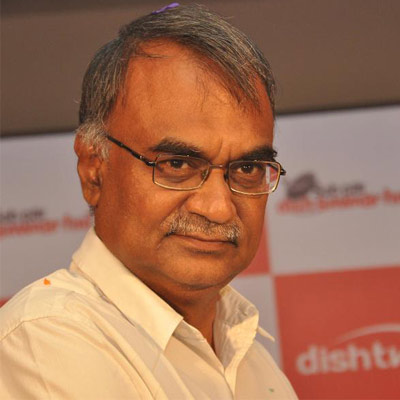
    RC Venkateish’s top 5 predictions for 2015

    MUMBAI: The direct to home (DTH) industry is looking forward to an exciting year ahead. The sector, which saw some improved subscriber numbers and Average Revenue Per User (ARPU), is hoping to improve it further this year, while continuing to add more innovative services to its kitty.

    According to The DTH Operators Association president and Dish TV CEO RC Venkateish, the overall additions in subscribers, for all the DTH players in the year 2014, were higher in magnitude of 25-30 per cent than 2013.

    While the industry faced some challenges in the previous year, with regards to high taxation and DTH licence fee issue, it hopes to have some clarity on it in 2015.

    The year 2014 saw some positive growth in Dish TV, as it regained its share leadership for about last three to four quarters. The DTH operator also launched a significant and tactical product in Zing which has helped it to capitalise in the phase III and IV areas.

    Indiantelevision.com asks Venkateish to list down his top five predictions for the year 2015:

    •    2015 will be an interesting year. It starts off with the ICC Cricket World Cup, which is a very high profile event. This will give a lot of momentum and boost to all the DTH operators, who could also gain traction in the phase III and IV markets. This is also being supported by developments like the new channel launches and talks of rational regulations coming in to keep the supply prices of high definition (HD) under control, so that’s one reliever.


    •    The year will also see a few operators showcasing some new technologies like 4K, though it’s still very far away.


    •    One might also see the launch of online consumption media. This trend has started picking up, but currently is at a nascent stage.


    •    For Dish TV, we will continue to strengthen the share leadership in all the segments. We will expand Zing to other geographies during the course of the year. We will push new technologies and there will be a couple of new products which will be launched around these new technologies.


    •    Overall, we go in to the New Year on a very positive note, and with the kind of plans we have, we hope we can sustain the kind of growth we gained in 2014.


  • 2014: A year of improved subscriber numbers

    2014: A year of improved subscriber numbers

    The year 2014 has been better than the previous year, in terms of the share of numbers for all direct to home (DTH) players. Subscriber additions were higher and there was more stability in the overall industry. In terms of price discounting, people were more rational through the year. Overall, it has been a much better year than 2013.

    Increased subscriber numbers and ARPU

    Overall additions in subscribers, for all the DTH players, were higher in the magnitude of 25-30 per cent than the previous year.

    That apart, the churn came down substantially, not only for Dish TV, but for all the other DTH players as well.

    2014 also saw a rise in the Average Revenue Per User (ARPU). But there are still problems, since the whole cable TV system hasn’t stabilised and gross billing hasn’t been fully implemented. Though, we do see some encouraging signs, in terms of people getting down to doing that now.

    DTH has been able to take price increases through the year. There was a price increase which took place in April, at the magnitude of 8-9 per cent. But the big collection from the ground will happen only once cable TV gets its act together.

    Different people calculate ARPU differently. For example, Dish TV calculates it on subscriber revenue, whereas Airtel Digital TV, as per its published figures, looks at gross numbers, and so do others. So there is no common matrix being used across the industry for definition of ARPU. But having said that, at the consumer level, the consumer prices are in the average price range of Rs 250-275.

    Challenges in 2014

    One of the major challenges that we continue to present to both the state and central government is on the high level of taxation on DTH. Apart from the taxation element which we have been presenting, we are the only industry which is subject to service tax and entertainment tax. While we were hoping for some relief in the last budget, we didn’t get that, we hope we will get some relief in the coming year.

    Secondly, there is no clarity on the licence fee issue, even though the Telecom Regulatory Authority of India (TRAI) issued a recommendation, there has been no action on that front.

    So while we lived in continued uncertainty in 2014, we hope that the government will take some steps in 2015. People have invested more than Rs 25000 crore in the industry, so at least we have the right to know what the law of the land will be going forward.

    The new launch Zing

    It has been an extremely successful product in all the geographies we launched. The specific proposition that we had, which was regional first and targeting the entire product mix around consumption has clicked very well with the customers. So we are very pleased with the way things have come.

    Highs and lows of 2014

     For Dish TV, it has been a fairly stable year. We regained our share leadership for about last three to four quarters. We launched a significant and tactical product in Zing which has helped us capitalize on the phase III and IV areas. The high point has been that we have been able to, post the balance sheet adjustment that we did last year, been able to get back on the growth path, which is what we have always said and we achieved that in 2014.

    The low point is at two levels: At one level, the whole issue of taxation and licence fee kept dragging for the whole year. Secondly, we expected the cable TV and broadcaster system to stabilize the whole regime. The whole issue of getting proper addressability and customers to actually choose and compare products has still not happened.

    Delayed Digitisation

    First and foremost, the manner of digitisation needs to be addressed. What has happened in the first two phases is simply the change of pipe. This has not been supported by addressability and that is the reason there has been no or marginal change in the revenue flow.

     Until and unless these issues are addressed, a non-addressable digitisation is of no help to anybody, neither to the government nor the stakeholders. We hope that by the time they get down to it, we will have some better roadmap of how to achieve that.


    (These are purely personal views of Dish TV CEO R C Venkateish and indiantelevision.com does not necessarily subscribe to these views)

  • The DTH industry’s big developments in 2014

    The DTH industry’s big developments in 2014

    MUMBAI: 2014 was the year of mixed fortunes for the direct to home television industry in India. The seven players in the industry continued to burn cash as customer acquisition costs continued to stay at high levels, at least one of the players spent a large part of the year looking for a white knight, all the players pushed ahead with their HD offerings in phase I, and II digitisation areas, leading to attractive rises in average revenues per user. The total number of registered subscribers and active subscribers, for all the six DTH players, as per the Telecom Regulatory Authority of India (TRAI) report, as on 30 June 2014 was 67.57 million and 38.24 million respectively. Close to 43.41 per cent of DTH subscribers were inactive till June 2014.

    At least two of the players have started generating positive cash flows during the year, even as new spectacular announcements of preparing launches of Ultra HD or 4K services were made during the year. Fresh debt and equity infusions, efforts to introduce new subscriber packages, and an announcement of new policy directions for licensing DTH by TRAI were the hallmark of the year.

    The DTH industry in the country saw some big innovative changes being made over the year 2014. These helped the industry in adding more subscribers while marginally increasing the average revenue per user (ARPU).

    The year began with three DTH operators, Tata Sky, Sun Direct and Reliance Digital TV being issued notices by the Information and Broadcasting Ministry (I&B) for not showing the mandatory 24 Doordarshan channels. Later on the Ministry also pulled the entire DTH industry for not paying licence fee worth Rs 2066 crore.

    The DTH ops resisted the amount stating that they had been paying the fees on the gross revenue (GR) basis while the government was extracting it on the adjusted gross revenue (AGR). A court case on the same had been pending from nearly four years and is still ongoing. However, Tata Sky and Reliance decided to challenge the same in the Telecom Disputes Settlement Appellate Tribunal (TDSAT) while Sun Direct made an application on its 2009 petition regarding AGR.

    The licence fee case was put in the backburner by the TDSAT stating that since it is relative to the telecom case on licence fee issue, it would hear that case first and then come to the DTH case. By the end of the year, however, the TDSAT agreed to hear the DTH ops separately rather than wait in line, the case is still on. Tata Sky in the meanwhile has already paid a sum of Rs 383 crore to the I&B Ministry, while Dish TV awaits court orders.

    The budget 2014 got some relief to the set top box (STB) manufacturers by reducing the excise duty from 12 per cent to 10 per cent from February to June 2014. However, they continued to fight the entertainment and service tax that was being levied on them since several years while cable operators go without paying it. Dish TV raised the issue with the finance minister Arun Jaitley and then I&B Minister Prakash Javadekar to discuss the multi layered taxes, which however didn’t lead to any conclusive solution on the same. DTH ops are subjected to licence fee, 12. 3 per cent service tax and also entertainment tax at the state level.

    The DTH Operators Association also saw a change of head with Dish TV CEO RC Venkateish replacing Tata Sky MD and CEO Harit Nagpal. Doordarshan ADG Ranjan Thakur who also headed Freedish moved out due to the expiry of his term.

    Freedish has been working on adding several Indian as well as international channels through its auctions while also setting up MPEG-4 boxes alongside MPEG-2 for the interior parts of the country.

    Several new innovations came across last year. Tata Sky introduced a new feature of Karaoke on TV while Videocon d2h came out with a headphone attached to the remote for watching TV without disturbing others. Both of them also were the first ones to introduce 4K HD TV set top boxes in the country. However, the official commercial rollout for both has yet to happen. Tata Sky even did a live telecast of one of the FIFA world cup matches on its 4K TV as a demo.

    Dish TV on the other hand, chose to go local, by introducing customised packs for regional India. A sub-brand ‘Zing’ was launched that would give localised packages in the states of West Bengal, Odisha, Tripura, Seemandhra, Telangana and Maharashtra. The oldest DTH operator also heaved a sigh of relief when after months, it received the nod from the Sri Lanka government to commence operations for its DTH project in the neighbouring country.

    With markets being more receptive, Videocon d2h, which has been planning on launching its IPO since long, went ahead with its filing to SEBI for Rs 700 crore with seven banks managing the share sale. Much of what it can raise will go towards acquiring STBs and outdoor units. Dish TV is also contemplating on starting its own manufacturing unit, though it hasn’t laid any concrete plans on it yet.

    TRAI played a big role when it came out with its DTH licencing recommendation paper which is now pending before the I&B Ministry. The paper restricted broadcasters from owning more than one DPO which is likely to affect Dish TV/Siti Cable under Zee and Sumangli Cable/Sun Direct under Sun Network.

    The paper however extended the 10 year licence period to 20 years while the one time entry has been retained at Rs 10 crore. DTH operators whose licence term expires after 10 years will be allowed to apply for a 10 year extension. The licence fee has been reduced from 10 per cent of GR to 8 per cent of AGR.

    The earlier norm of providing a bank guarantee (BG) of Rs 40 crore was change to the amount payable as a licence fee for two quarters and will have to be renewed year on year till the end of the licence period. New entrants will however have to provide a BG of Rs 5 crore for two quarters and then progress as above.

    The year ended with the Comptroller and Auditor General (CAG) of India coming out with a scathing report on the management of satellite capacity for DTH service by the Department of Space (DoS). In it, it stated that over the years the DoS has been lagging in its satellite launches that were required by DTH operators, leading to them migrating to foreign operators and loss of revenue to the government. The DoS had also goofed up on charging Sun Direct and Prasar Bharati leading to a loss. On the other hand, its commitment to Tata Sky for first right of refusal for using its Ku band transponders, led to its transponder space remaining idle for years.

  • Rajiv Khattar bids adieu to Dish TV

    Rajiv Khattar bids adieu to Dish TV

    MUMBAI: In the season of movements, Dish TV president-project Rajiv Khattar has decided to move on from the direct to home (DTH) platform.

    Confirming the news to indiantelevision.com, Khattar said, “Yes I have resigned.” He refused to furbish any further details about his movement.

    He has been associated with Dish TV for more than nine years, where he was responsible for content, technology, CPE and regulatory environment management.  

     
    Prior to joining the DTH operator, Khattar had a short stint with Reliance Infocomm as president Netway. He was also associated with multi system operator Siti Cable for a decade as its executive vice president.


  • Al Jazeera English now available on Reliance Digital TV

    Al Jazeera English now available on Reliance Digital TV

    NEW DELHI: Al Jazeera English is now available on Reliance Digital TV in addition to Dish TV and Tata Sky. The channel will be available on channel number 460.

     
    With this association, Reliance Digital TV viewers will be able to access Al Jazeera’s award winning and well acclaimed news and programme content from around the world at a click of a button. Globally, Al Jazeera English is available in over 260 million households across 130 countries.

     
    Al Jazeera Media Network marketing and distribution executive director Abdulla Al Najjar said, “We are delighted to be associated with Reliance Digital TV and are looking forward to cater to their subscriber’s base across India. I would like to take this opportunity to welcome all our new viewers in India to Al Jazeera English on all our platforms. We are committed to provide the highest quality coverage of India, from the region, and from our bureaus in all corners of the globe.”

     
    Reliance DTH Business head Ashutosh Srivastava added, “It has been our constant endeavor to offer a wide range of content to our consumers that enhances their television viewing experience on Reliance Digital TV. Al Jazeera is a valuable addition to our platform that will provide a significant blend of both national and international news to our viewers.”

     
    Launched in November 2011 in India, Al Jazeera English is known for its belief in the shared humanity of the global community, and as a result keeps real people at the centre of the story.


  • Dish TV collaborates with Concentrix Corporation to enhance business services

    Dish TV collaborates with Concentrix Corporation to enhance business services

    MUMBAI: Direct to home (DTH) operator Dish TV with its 12.1 million net subscribers has collaborated with Concentrix Corporation, a global leader in high-value business services to further enhance its business services for its premium customers. This is another positive move by the DTH player in providing services of global standards.

    Innovation has always been synonymous to Dish TV. Being the pioneers in DTH services in India, Dish TV has always been ahead in providing unequaled services in customer relations, movie on demand, video on demand, account balance card, DishOnline amongst several others, in addition to being the largest provider of HD channels. This collaboration will bring together Dish TV’s innovative offerings and revolutionary features with the world class customer engagement expertise of Concentrix. The choice to partner with Concentrix Corporation comes as a result of explosive growth in the Dish TV client base, and recognition of the high volume of customers who desire HD channels and require a higher level of service.

    Dish TV chief operating officer Salil Kapoor said, “Concentrix offers deep domain expertise, innovative technologies and a holistic approach to customer engagement that is fully in line with Dish TV’s driving purpose to provide “Service with a Passion”. This is an ultimate move made towards ensuring customer engagement and satisfaction.”

    Concentrix general manager – India domestic Anuj Kumar added, “We are thrilled to partner with Asia’s largest DTH Company in delivering a premium customer experience to Dish TV subscribers. Through our customer engagement services, technology, analytics and more, our aim is to add value to every customer interaction.”

    This recent procurement of a five-year deal with Concentrix Corporation on the part of Dish cements the initial step toward customer life cycle management and a strengthened presence in the globalized Indian market. Dish TV has high expectations for the delivery of premium customer service experience, service differentiation and improved retention. The strong references and demonstrated track record of delivering high quality results on the part of Concentrix contribute to a powerful and promising partnership.


  • Dish TV adds MTV Indies HD

    Dish TV adds MTV Indies HD

    MUMBAI: Dish TV has added MTV Indies HD to its growing list of HD channels. It will be available on channel number 87 and takes the total tally of HD channels of the DTH operator to 37.


    Speaking on the development, Dish TV India COO Salil Kapoor said, “Being a pioneer and market leader, Dish TV has always stood up to its promise of providing maximum entertainment. Latest trends suggest that people are watching HD channels, keeping that demand we are delighted to add MTV Indies HD and will continue to adding what consumer wants and provide the source of rich infotainment to audiences in largest DTH platform.”


    Speaking on the addition of the channel, IndiaCast UTV Media Distribution COO Gaurav Gandhi said, “With the launch of MTV Indies SD and HD on the platform, we have further strengthened our partnership with Dish TV and as a network, we remain committed to deliver high quality entertainment and news services to our viewers across the country – a vision that is shared with Dish TV. With the channel now available on Dish TV, more viewers across India would have access to the engaging content which the channel has to offer.”


    MTV Indies HD targeted mostly at the vibrant youth showcases a variety of content, such as insights into iconic album art, a look at what happens backstage at major concerts, graffiti art etc and was launched early this year.


    MTV Indies HD focuses on alternative music, film, art, street culture and fashion. 

  • Tata Sky gets ID in its basic pack

    Tata Sky gets ID in its basic pack

    MUMBAI: Even though many niche channels fear that people don’t consume them as they don’t fall into the base pack offered by the platform operators, the newly-launched ID-Investigation Discovery from Discovery Network’s stable has now hopped onto the basic pack of direct to home (DTH) operator Tata Sky on channel number 135.


    The channel was launched about three months ago and currently reaches about 30 million houses. ID is also available on Dish TV, Airtel Digital TV, Videocon d2h, Siti Cable, Hathway, Den Networks, GTPL, InDigital and Digi Cable.


    The channel provides shows on crime and investigation that are dubbed in Hindi. Speaking on this development, Discovery Networks APAC EVP and GM South Asia and South East Asia Rahul Johri said, “ID has been recognised for its distinct appeal, refreshing programming and unique positioning. We are delighted to have Tata Sky as our distribution partner and its viewers can enjoy the best investigative programmes in Hindi in the comfort of their homes.”


    Series that will air on ID include Disappeared, Who the (Bleep) Did I Marry?, I was Murdered, Evil,I, I Married a Mobster, Blood Relatives etc.

  • How DTH got digitisation right

    How DTH got digitisation right

    MUMBAI: Two years gone, two more in hand. But the cable TV industry is still grappling with getting its act right for digitisation. It was 10 years ago when the direct to home (DTH) players entered the Indian market with huge tasks in hand: introduce and convert people from the analogue regime into the digital ecosystem.

    Currently, the DTH sector commands about 36 million active subscribers (as per the recent TRAI report). While Dish TV was first to enter, it was soon followed by Tata Sky, Sun Direct, Airtel Digital TV, Videocon d2h and Reliance Digital. Not to forget, Prasar Bharati’s DD Freedish.

    How did the DTH industry manage to cultivate the business model which the MSOs are still finding cumbersome? Ask the DTH players and they say, it is because of their direct contact with the customer. “We were able to deal directly with the customer and provide a business model the way we wanted to. There isn’t any intermediary,” says Dish TV CEO RC Venkateish.

    Agrees Sun Direct CEO Mahesh Kumar, “DTH adopted the retail distribution model akin to aggressive FMCG/ telecom companies which is purely B2C. Majority of the employees at the senior and middle level are from the retail background.”

    The MSOs on the other hand had been running the analogue business, handled mostly by the local cable operators (LCOs). It was only after being pressurized by the government and regulator that they finally took up digitisation and started work on creating a proper business model. Tata Sky CEO Harit Nagpal feels that MSOs are working like puppets. “Cable operators are looking at digitisation as forced upon them. Digitisation is not about putting a box; this is inconvenient for the customer. It has to be sold to the customer as empowerment and not as a curse. DTH has done that.”

    While initially convincing the customer to switch from analogue to digital DTH wasn’t easy, what went in their favour was superior product offering with better quality sound and picture and selection of channels and packaging. “When DTH first came, it was the only digital offering. The country was largely analogue. That was the big advantage we had. We started from zero and had the opportunity to build the billing system and packaging,” says Venkateish.

    The claims made by DTH ops were supported by setting up call centres, backend and investment in brand building. However, what all executives agree as the best tool is the prepaid mode of payment. “The biggest success factor of the DTH model is the prepaid model which is a very transparent business model,” says Kumar.

    Nagpal feels that the crux of their model is the consumer centric approach, which MSOs don’t have. “You can activate and deactivate channels and packages whenever you want. Go on a holiday and don’t recharge. This is not yet possible in cable. The benefits of flexibility and empowerment in the case of DTH are in the customers’ hands,” he says.

    The only difference in the two is the pricing models for packages. While DTH starts its base pack at around Rs 200 to Rs 220, cable gives the entire channel list for approximately Rs 250. But Nagpal disagrees, stating that MSOs are not subject to taxes and also gets carriage fees from broadcasters. Whereas DTH, despite paying taxes and also paying for content, gives channels at a decently low cost with options of adding more.

    Kumar points out that DTH community has been able to segment the market and the customer which has helped the industry to do up-selling and consistently improve average revenue per user. Though the initial uptake of dishes was slow, over the years it has picked up speed. The choice of packages, HD channels, addition of newer channels and easy payment methods have put them on the better side of digitisation.  

    While DTH did have the upper hand in entering the market with a fixed plan of action, it is about time the MSOs come to terms with getting addressable digitisation done rather than just fixing boxes in homes. “DTH got digitisation right because we looked at it from what benefits it has to customer and not what the regulator is asking me to do,” points out Nagpal.