Tag: Dish TV

  • Gemporia targets revenue of Rs 60-100 crore; to launch on Tata Sky

    Gemporia targets revenue of Rs 60-100 crore; to launch on Tata Sky

    MUMBAI: Digitisation of cable television in India has opened up the space for many a niche channels. And taking advantage of this are brands and companies operating in diverse fields. One such company is Gemporia – jewellers from the United Kingdom, which forayed into India with the launch of a television channel back in September 2015. The channel, which is already available on direct to home (DTH) platforms like Dish TV and Videocon d2h, is all set to launch on Tata Sky in the next fortnight.

    What’s more, the channel is eyeing revenue between Rs 60 – 100 crore by the end of 2016. With the ethos of ‘Janiye aur Kharide’ (Know and Buy), the channel has a marketing budget of over Rs 25 crore, which it will strategically dish out with time. “The end goal is to be the largest selling jeweller in terms units and to reach that goal we will need to have an interactive marketing campaign. We are moving ahead towards that, the medium will depend on the marketing strategy, but we will innovate across platforms,” said Gemporia India co-founder Manuj Goyal.

    With the proliferation of the e-commerce space, there are a number of online stores selling jewellery in India. However, the online retailing of original jewels is yet to pick pace. Keeping the scenario in mind, Gemporia has taken TV route and has over 14 hours of live programming.

    The channel’s distribution and operation cost is predicted to be over Rs 50 crore. Goyal informs that the channel’s initial target is to be available on DTH platforms and then gradually move having a presence on cable.

    Gemporia has over eight per cent market share when it comes jewellery in the UK. “Majority of the jewellery shopping happens online across the globe. And I believe the same can happen in India too,” says Goyal.

    The venture has a target set to reach 100 million television audiences. Set up in Jaipur, Gemporia has 160 employees, of which 30 are equipped with GIA certificate.

    “All our products are hallmarked and we don’t sell imitation jewellery. We are the first dedicated jewellery channel with live programming. We stand by the purity of our jewellery and hence give our consumers the option of returning the jewellery within 30 days with full refund. Since we cannot offer consumers the touch and feel of our products, we create 360 degree videos of the product that consumers will eventually invest in,” informs Goyal.

    In a bid to stay ahead of online jewellery marketplaces, Gemporia decided to take the TV route. “Next to touch and feel is video and that’s where we have an advantage. Additionally, in most online stores, the products displaced are not ready and hence the delivery time is way more than us. Ours is a dedicated jewellery company and the product displayed is available for consumers to buy. The moment they buy a piece of jewellery, we can ship it and hence the logistics are way faster than the existing online stores,” says Goyal.

    A home shopping channel media expert says on condition of anonymity, “The jewellery space can pick up as it has the potential. But the product pricing has to be lower than traditional physical stores. All across the globe, the products that sells on home shopping channels are unique and priced lower than those in brick and mortar stores. Putting common products up will go no where. Gemporia’s biggest challenge and competition will be from the channels selling imitation jewellery. The first year will be challenging and will define the fate.”   

    Besides TV, Gemporia also has an online presence. Through the website, an on-screen anchor addresses consumers’ questions. Additionally, Gemporia also has a mobile app to sort out size issues. The Gemporia Ring Sizer app enables consumers to asses the ring size by just putting it up on the mobile screen. “We send ring sizer with our every order to sort out the size issue,” informs Goyal.

    With innovation, novel offerings and customer service being the key factors for success for a venture, it now remains to be seen how this one of a kind television channel orchestrates its voyage in the cluttered and unpredictable Indian market.

  • Gemporia targets revenue of Rs 60-100 crore; to launch on Tata Sky

    Gemporia targets revenue of Rs 60-100 crore; to launch on Tata Sky

    MUMBAI: Digitisation of cable television in India has opened up the space for many a niche channels. And taking advantage of this are brands and companies operating in diverse fields. One such company is Gemporia – jewellers from the United Kingdom, which forayed into India with the launch of a television channel back in September 2015. The channel, which is already available on direct to home (DTH) platforms like Dish TV and Videocon d2h, is all set to launch on Tata Sky in the next fortnight.

    What’s more, the channel is eyeing revenue between Rs 60 – 100 crore by the end of 2016. With the ethos of ‘Janiye aur Kharide’ (Know and Buy), the channel has a marketing budget of over Rs 25 crore, which it will strategically dish out with time. “The end goal is to be the largest selling jeweller in terms units and to reach that goal we will need to have an interactive marketing campaign. We are moving ahead towards that, the medium will depend on the marketing strategy, but we will innovate across platforms,” said Gemporia India co-founder Manuj Goyal.

    With the proliferation of the e-commerce space, there are a number of online stores selling jewellery in India. However, the online retailing of original jewels is yet to pick pace. Keeping the scenario in mind, Gemporia has taken TV route and has over 14 hours of live programming.

    The channel’s distribution and operation cost is predicted to be over Rs 50 crore. Goyal informs that the channel’s initial target is to be available on DTH platforms and then gradually move having a presence on cable.

    Gemporia has over eight per cent market share when it comes jewellery in the UK. “Majority of the jewellery shopping happens online across the globe. And I believe the same can happen in India too,” says Goyal.

    The venture has a target set to reach 100 million television audiences. Set up in Jaipur, Gemporia has 160 employees, of which 30 are equipped with GIA certificate.

    “All our products are hallmarked and we don’t sell imitation jewellery. We are the first dedicated jewellery channel with live programming. We stand by the purity of our jewellery and hence give our consumers the option of returning the jewellery within 30 days with full refund. Since we cannot offer consumers the touch and feel of our products, we create 360 degree videos of the product that consumers will eventually invest in,” informs Goyal.

    In a bid to stay ahead of online jewellery marketplaces, Gemporia decided to take the TV route. “Next to touch and feel is video and that’s where we have an advantage. Additionally, in most online stores, the products displaced are not ready and hence the delivery time is way more than us. Ours is a dedicated jewellery company and the product displayed is available for consumers to buy. The moment they buy a piece of jewellery, we can ship it and hence the logistics are way faster than the existing online stores,” says Goyal.

    A home shopping channel media expert says on condition of anonymity, “The jewellery space can pick up as it has the potential. But the product pricing has to be lower than traditional physical stores. All across the globe, the products that sells on home shopping channels are unique and priced lower than those in brick and mortar stores. Putting common products up will go no where. Gemporia’s biggest challenge and competition will be from the channels selling imitation jewellery. The first year will be challenging and will define the fate.”   

    Besides TV, Gemporia also has an online presence. Through the website, an on-screen anchor addresses consumers’ questions. Additionally, Gemporia also has a mobile app to sort out size issues. The Gemporia Ring Sizer app enables consumers to asses the ring size by just putting it up on the mobile screen. “We send ring sizer with our every order to sort out the size issue,” informs Goyal.

    With innovation, novel offerings and customer service being the key factors for success for a venture, it now remains to be seen how this one of a kind television channel orchestrates its voyage in the cluttered and unpredictable Indian market.

  • DTH players capitalize on DAS phase III areas with aggressive campaigns

    DTH players capitalize on DAS phase III areas with aggressive campaigns

    MUMBAI/NEW DELHI: DTH players like Videocon d2h, DishTV et al have been shouting from rooftops about being DAS Phase III ready for a few months now. And since the DTH sector stands to benefit the most with the cable TV digitisation drive in India, most players have rolled out aggressive advertising campaigns to acquire more customers.


    While Videocon d2h expects Phase III to be 50 million TV households in terms of size, the scope for customer acquisition is vast.


    More so now with the ongoing High Court cases filed by various multi system operators (MSOs) and cable operators to extend the Digital Addressable System (DAS) Phase III implementation deadline, as many as five states have got temporary respite. With cable operators in several states facing shortage of set top boxes (STBs), the situation proves beneficial to DTH players in acquiring new subscribers in DAS Phase III.


    Dish TV, which is the oldest direct-to-home player in the country, has stepped up its campaign following the deadline of the Government for switching off analogue signals in all urban areas covered by DAS Phase III.


    In fact, the DTH player has been very upfront about their marketing strategy that capitalises on the confusion over digitisation in Phase III areas, as seen from their latest aggressive campaign titled Dish99. Targeting the Hindi speaking market, the catch phrase for this new campaign reads “Set-Top-Box Matlab DishTV” (Set-Top-Box Means DishTV).


    The TVC features popular TV actress Radhika Madan, who is a household name for daily soap watchers, addressing two housewives to tell them that their serials would be off air soon.


    When the panic-stricken women ask what they should do, she urges them to switch to Dish TV that offers service starting at just Rs 99 before their analogue signals are disrupted and they miss out on their daily entertainment.


    Explaining their current marketing strategy, Dish TV MD Jawahar Goel said, “DishTV’s advertising has always been very pro-active, but the ongoing campaign has been designed in view of the obvious shortage of set top boxes with cable operators. With the deadline of phase III of TV digitisation coming to a close, we aim to capitalise the huge captive user base that will eventually be on digital platform.”


    With this product, further, to augment the digitisation drive in Phase III, DishTV has introduced a 360 degree multi-media campaign spanning TV (across leading entertainment, sports and news channels), outdoor, radio, digital, online and direct marketing that leverages the power of popular TV celebrities. This DAS campaign features DishTV’s relatable faces to strike a chord amongst the audience and create awareness about TV digitisation among every household to shift from analog to digital platform,” added another DishTV spokesperson.


    Earlier Tata Sky too had rolled out a similar engaging campaign with Kangana Ranaut as its brand ambassador reaching out to people and telling them why they should switch to Tata Sky and enjoy paying for selective channels.


    However, Tata Sky points out that their campaign was not intentionally targeted to capitalise the digitisation situation.


    Tata Sky CEO and MD Harit Nagpal says, “We didn’t do any special campaign and the ads with Kangana Ranaut had commenced last year before the deadline. The ad simply says that if the viewer gives a missed call on the displayed number, Tata Sky will call back for installing their system. Thus, the viewer will save money as well as get the work done.”


    The campaign kick started earlier in June 2015, saw itself drawing several eyeballs from both consumers and industry experts by virtue of its casual and conversational style of narrative.


    On the other hand, sources share that Doordarshan’s free to air DTH service FreeDish has no plans to step up its publicity or marketing in view of the extension orders by High Courts of the DAS Phase III.


    “FreeDish was in a market that was different from the other DTH players as it was a free to air platform. DD generally publicised FreeDish only on its own channels and has no intention of any cross-channel promotion,” a source informs.


    It is undeniable that the current situation of DAS Phase III poses an opportunity for several DTH players to provide an easier alternative to consumers and bring them on board as subscribers while cable operators find a solid ground on the digitisation proceedings. What’s more, even as the government has announced 31 December, 2016 as the deadline for DAS Phase IV, it now remains to be seen how DTH players get even more aggressive on the marketing front as the year progresses.

  • DTH players capitalize on DAS phase III areas with aggressive campaigns

    DTH players capitalize on DAS phase III areas with aggressive campaigns

    MUMBAI/NEW DELHI: DTH players like Videocon d2h, DishTV et al have been shouting from rooftops about being DAS Phase III ready for a few months now. And since the DTH sector stands to benefit the most with the cable TV digitisation drive in India, most players have rolled out aggressive advertising campaigns to acquire more customers.


    While Videocon d2h expects Phase III to be 50 million TV households in terms of size, the scope for customer acquisition is vast.


    More so now with the ongoing High Court cases filed by various multi system operators (MSOs) and cable operators to extend the Digital Addressable System (DAS) Phase III implementation deadline, as many as five states have got temporary respite. With cable operators in several states facing shortage of set top boxes (STBs), the situation proves beneficial to DTH players in acquiring new subscribers in DAS Phase III.


    Dish TV, which is the oldest direct-to-home player in the country, has stepped up its campaign following the deadline of the Government for switching off analogue signals in all urban areas covered by DAS Phase III.


    In fact, the DTH player has been very upfront about their marketing strategy that capitalises on the confusion over digitisation in Phase III areas, as seen from their latest aggressive campaign titled Dish99. Targeting the Hindi speaking market, the catch phrase for this new campaign reads “Set-Top-Box Matlab DishTV” (Set-Top-Box Means DishTV).


    The TVC features popular TV actress Radhika Madan, who is a household name for daily soap watchers, addressing two housewives to tell them that their serials would be off air soon.


    When the panic-stricken women ask what they should do, she urges them to switch to Dish TV that offers service starting at just Rs 99 before their analogue signals are disrupted and they miss out on their daily entertainment.


    Explaining their current marketing strategy, Dish TV MD Jawahar Goel said, “DishTV’s advertising has always been very pro-active, but the ongoing campaign has been designed in view of the obvious shortage of set top boxes with cable operators. With the deadline of phase III of TV digitisation coming to a close, we aim to capitalise the huge captive user base that will eventually be on digital platform.”


    With this product, further, to augment the digitisation drive in Phase III, DishTV has introduced a 360 degree multi-media campaign spanning TV (across leading entertainment, sports and news channels), outdoor, radio, digital, online and direct marketing that leverages the power of popular TV celebrities. This DAS campaign features DishTV’s relatable faces to strike a chord amongst the audience and create awareness about TV digitisation among every household to shift from analog to digital platform,” added another DishTV spokesperson.


    Earlier Tata Sky too had rolled out a similar engaging campaign with Kangana Ranaut as its brand ambassador reaching out to people and telling them why they should switch to Tata Sky and enjoy paying for selective channels.


    However, Tata Sky points out that their campaign was not intentionally targeted to capitalise the digitisation situation.


    Tata Sky CEO and MD Harit Nagpal says, “We didn’t do any special campaign and the ads with Kangana Ranaut had commenced last year before the deadline. The ad simply says that if the viewer gives a missed call on the displayed number, Tata Sky will call back for installing their system. Thus, the viewer will save money as well as get the work done.”


    The campaign kick started earlier in June 2015, saw itself drawing several eyeballs from both consumers and industry experts by virtue of its casual and conversational style of narrative.


    On the other hand, sources share that Doordarshan’s free to air DTH service FreeDish has no plans to step up its publicity or marketing in view of the extension orders by High Courts of the DAS Phase III.


    “FreeDish was in a market that was different from the other DTH players as it was a free to air platform. DD generally publicised FreeDish only on its own channels and has no intention of any cross-channel promotion,” a source informs.


    It is undeniable that the current situation of DAS Phase III poses an opportunity for several DTH players to provide an easier alternative to consumers and bring them on board as subscribers while cable operators find a solid ground on the digitisation proceedings. What’s more, even as the government has announced 31 December, 2016 as the deadline for DAS Phase IV, it now remains to be seen how DTH players get even more aggressive on the marketing front as the year progresses.

  • Q2-2016: Indian DTH players replicate improved performance of previous quarters

    Q2-2016: Indian DTH players replicate improved performance of previous quarters

    Over the past two quarters, the DTH segment of the television carriage industry has posted improved performances as has been mentioned by Indiantelevision.com for Q4-2015 and Q1-2016.

    The industry seems to have reached an inflection point in Q4-2015, with three players that have a combined market share of about 62 per cent posting improved results. The biggest player among them in terms of revenue as well as number of subscribers, Dish TV with about 27 per cent market share even reported a consolidated profit after tax (PAT) of Rs 34.94 crore in Q4-2015, a figure that helped wipe out the losses reported by the company for the previous three quarters. Dish TV reported consolidated PAT of of Rs 3.14 crore for FY-2015.

    As a matter of fact, even Airtel DTH services reported a positive EBIT of Rs 8.1 crore for Q4-2015, as compared to a negative EBIT of Rs 36 crore in Q3-2015 and a negative EBIT of Rs 67.6 crore in Q2-2015. The three players have now reported improved performances for the quarter ended 30 September, 2015 (Q2-2016, current quarter).

    Note: (1)100,00,000 = 100 lakh = 10 million = 1 crore.

    (2) This paper covers only three of the seven DTH service providers in India (as had the previous two papers) since the other four– Reliance Digital TV, Sun Direct (about 97 lakh subscribers as on 31 March, 2015), Tata Sky and DD Free Dish are not listed directly on the bourses and their financial numbers are not available, unless the principals of these companies/segments chose to reveal them. The three players – Airtel DTH, Dish TV and Videocon d2h have already been covered in our earlier reports mentioned above.

    (3) Some of the three players mention their financial as well as subscription numbers in millions in their financial reports/investor presentations and other documents that they make available publically. The financial numbers have been converted to Rs crore to an approximation of a single decimal place, though percentages have been mentioned to the second decimal place approximation.

    (4) There could be some ambiguity about the market share of the three players. If one were to go by the latest numbers released by the Telecom Regulatory Authority of India (TRAI) in November 2015 for June 2015. TRAI’s indicator report says that the number of registered DTH subscribers as on 30 June, 2015 was 787.4 lakh. The combined subscription numbers of the three players as on the same day as reported by them individually was 343.12 lakh and hence the market share of these players works out to 45.58 per cent. However, TRAI’s report also says that the number of active DTH subscribers as on 30 June, 2015 was 397.4 lakh. Based on the second TRAI number, the combined total subscribe market share of the three players in this paper works out to 86.34 per cent. The figures of 27 percent and 62 per cent have been taken from Dish TV’s estimates.

    (5) Videocon d2h EBIDTA numbers are adjusted – Q4-2015 Adjusted EBIDTA is before accounting for one off securities issue expenses of Rs 10.543 crore and Employee Share based Compensations cost of Rs. 2.974 crore towards provision of ESOP plan of 2014; Q1-2016 and Q2-2016 Adjusted EBITDA is before accounting for Employee Share based Compensations cost of Rs. 2.944 crore towards provision of ESOP plan of 2014

    Please refer to the graphs below. Panel A, B and C and D show the Q2-2015, Q1-2016 and Q2-2016 combined performances of the three DTH operators in this report and then in alphabetical order- Airtel DTH, Dish TV and Videocon d2h respectively. Panel E shows the ARPU value trends and Panel F shows the Monthly Subscriber Churn of the three players over 6 consecutive quarters starting Q1-2015 until Q2-2016.

    Please refer to Panel A in the graphs below. The combined revenues of the three players in the current quarter grew 16.20 per cent year on year (YoY) to Rs 2149.32 crore as compared to Rs 1849.60 crore and grew 3.12 per cent quarter on quarter (QoQ) as compared to Rs 2084.28 crore. EBIDTA increased 47.96 per cent YoY in Q2-2016 to Rs 680.30 crore (31.65 per cent margin) as compared to Rs 459.8 crore (24.86 per cent margin) and grew 1.90 per cent QoQ as compared to Rs 667.6 crore (31.65 per cent margin). Hence, EBIDTA margin declined slightly in the current quarter as compared to the immediate trailing quarter. Reported Combined Subscription numbers in Q2-2016 grew 12.77 per cent YoY to 351.16 lakh as compared to 311.4 lakh and increased 2.34 per cent QoQ as compared to 343.12 lakh.

    All the three DTH operators reported growth in revenue and subscription numbers, both YoY and QoQ. Dish TV and Videocon d2h reported growth in YoY and QoQ EBIDTA, while Airtel DTH reported a YoY increase, but a QoQ drop in EBIDTA and EBIT for Q2-2016. In terms of subscription numbers as well as revenue, Dish TV is the biggest player among the three. While Videocon d2h has a slight edge in terms of subscription numbers over Airtel DTH, the latter has a slight edge over Videocon d2h in terms of revenue.

    The average revenue per customer (ARPU) in the case of Airtel DTH increased QoQ to Rs 224 from Rs 222, it was flat in the case of Videocon d2h at Rs 205 and declined to Rs 171 in Q2-2016 from Rs 173 in the immediate trailing quarter in the case of Dish TV.

    During the six consecutive quarter period starting Q1-2015 until the current quarter, ARPUs of all the three DTH players show linear increasing trends. Monthly Subscriber Churn also seems to be increasing in case of all the three players as is obvious from the linear broken trend lines in Panel F. As a matter of fact the Monthly Subscriber Churn reported by all the three players in the current quarter – Q2-2016 was the highest during a period spread over six consecutive quarters.

    At the cost of repeating some of what has been mentioned above, let us see how these players have performed in Q2-2016.

    Airtel DTH

    Airtel DTH is a small segment of Indian telecom major Bharti Airtel Limited and its revenues constitute around four per cent of its parent company’s revenues and its EBIDTA is contributes just three per cent to overall EBIDTA. Capex investment however is in the seven per cent region of Bharti Airtel’s overall capex investments.

    Please refer to Panel B in the graphs above. Airtel’s DTH segment reported 12.85 per cent YoY growth in its revenue for the current quarter at Rs 706.8 crore as compared to the Rs 623.6 crore in Q2-2015. QoQ, the segment’s revenue grew 3.21 per cent as compared to Rs 684.8 crore.

    EBIDTA increased 53.24 per cent YoY to Rs 234.3 crore (33.15 per cent margin) as compared to the Rs 152.9 crore (24.41 per cent margin), but was 2.70 basis points lower than the Rs 240.8 crore (35.16 per cent margin).

    Airtel DTH segment reported a positive EBIT of Rs 17 crore (2.41 per cent margin) in the current quarter as compared to a negative EBIT of Rs 67.7 crore in the corresponding year ago quarter. EBIT in the current quarter, however was less than half (declined by 59.04 per cent) as compared to the Rs 41.5 crore (6.06 per cent margin) in the immediate trailing quarter.

    The company reported a 10.86 per cent YoY growth in its subscriber base to 105.76 lakh in Q2-2016 as compared to the 95.40 lakh in the corresponding year ago quarter and a 1.58 per cent QoQ growth from 104.12 lakh in the immediate trailing quarter. Monthly subscriber churn however increased to 1.3 per cent in the current quarter as compared to 1.1 per cent in Q2-2015 and 0.8 per cent in Q1-2016.

    The company reported a slight increase in Average Revenue per User (ARPU) in Q2-2016 in terms of Indian rupees, but a flat ARPU in terms of the US dollar at $3.5, which means that ARPU in dollar terms declined due to the rise in the price of the dollar in Indian Rupees. ARPU in Q2-2016 increased to Rs 224 as compared to the Rs 220 in Q2-2015 and the Rs 222 in Q1-2016.

    Monthly Subscriber churn in Q2-2016 at 1.3 per cent was higher than the 1.10 per cent in the corresponding year ago quarter and the 0.80 per cent in the immediate trailing quarter.

    Airtel MD and CEO India & South Asia Gopal Vittal said, “Airtel’s revenue growth in India has accelerated to 13.3 per cent in Q2 on an underlying basis, the highest in the last 12 quarters. Our smaller businesses – home broadband, DTH and our business segment all continue to perform strongly.”

    Dish TV

    This is the third consecutive quarter that Dish TV has reported growth across important financial and operational parameters including operating revenues (Total Income from operations or TIO), PAT and subscription numbers. During the previous fiscal and its last quarter (year and quarter ended 31 March, 2015, Q4-2015), the Subhash Chandra led Essel group’s Dish TV Limited turned the corner with a consolidated PAT of Rs 3.14 crore and Rs 34.94 crore (margin 4.8 per cent) respectively. The company followed this up with even better numbers in the previous quarter (Q1-2015). Dish TV was probably the first among listed DTH companies in the country in FY-2015 and Q4-2015 to report a profit after tax as opposed to the operating profits reported by a segment of the other Goliaths for whom DTH services is just another small segment or group company.

    Please refer to Panel C in the graphs above. For the current quarter ended 30 September, 2015 (Q2-2015), Dish TV has reported Operating revenue of Rs 752.42 crore, hence registering a 15.77 per cent YoY growth as compared to Q2-2015’s number of Rs 649.90 crore and a 2.14 per cent QoQ growth as compared to Rs 736.68 crore.

    The company reported PAT of Rs 86.96 crore (11.56 per cent margin) for the current quarter as compared to a loss of Rs 14.2 crore in the corresponding year ago quarter and a whopping 60.41 per cent growth in profit as compared to the Rs 54.21 crore (7.36 per cent margin) in the previous quarter.

    EBITDA in the current quarter increased 57.50 per cent YoY to Rs 255 crore (33.89 per cent margin) as compared to Rs 161.9 crore (24.91 per cent margin) and increased 7.69 per cent QoQ as compared to Rs 236.8 crore (32.14 per cent margin).

    The company’s subscriber numbers in Q2-2016 increased by 3.38 lakh to touch a subscriber base of 137 lakh as compared to the 133 lakh subscribers reported at the end of the previous quarter (Q1-2016). Monthly Subscriber Churn increased to 0.8 per cent after remaining flat for the previous five consecutive quarters at 0.7 per cent.

    Dish TV reported a YoY growth in Average Revenue per User to Rs 171 as compared to the Rs 166, but a QoQ decline from Rs 173 in the previous quarter.

    Dish TV chairman Subhash Chandra said, “Dish TV further reinforced its leadership position during the quarter. The company, while being at the forefront of the DTH industry in India, reached out to television viewers with innovative products that promise to enhance their television viewing experience. Dish TV’s improving financial strength coupled with its passion to be ahead of the curve, should be an advantage to further enhance its presence in the vast and still untapped analogue and free-to-air television markets in the country.”

    Videocon d2h

    Videocon d2h reported sales growth in both subscription revenue and revenue from operations for the current quarter. Subscription revenue increased 24.63 per cent YoY to Rs 629 crore as compared to Rs 504.7 crore, and increased 4.67 per cent QoQ as compared to Rs 599.61 crore.

    Please refer to Panel D in the graph above. Total revenue increased 20.35 per cent YoY to Rs 690.1 crore as compared to Rs 573.40 crore and increased 4.12 per cent QoQ as compared to Rs 662.83 crore.

    The company reported lower loss in Q2-2016 at Rs 24.6 crore as compared to a loss of Rs 61.4 crore in Q2-2015, but was slightly higher than the loss of Rs 24.4 crore in the immediate trailing quarter.

    Adjusted EBIDTA in the current quarter increased 31.72 per cent YoY to Rs 191 crore (27.68 per cent margin) as compared to Rs 145 crore (25.29 per cent margin) and was almost flat (increased 0.53 per cent) as compared to Rs 190 crore (28.67 per cent margin).

    The company notched up higher net subscribers at 108.4 lakh in Q2-2016 as compared to 94.6 lakh in Q2-2015 and 106.4 lakh in the immediate trailing quarter. Monthly Subscriber Churn in the current quarter at 1.19 per cent was higher than 0.85 per cent in Q2-2015 and 0.46 per cent in the immediate trailing quarter.

    The company reported higher ARPU at Rs 205 in Q2-2016 as compared to Rs 190 in Q2-2015 but was flat when compared to Rs 205 in the immediate trailing quarter.

    Videocon d2h executive chairman Saurabh Dhoot said, “I am happy to share that we have achieved EBITDA growth of 30.3 per cent in the first half of the current fiscal as against our guidance of 25 to 30 per cent growth. We are on track to deliver even stronger growth in the second half of this year, in line with the guidance shared earlier. During the quarter, we focused on enhancing our channel offering and added 14 Standard Definition and four High Definition channels. We have recently launched two proprietary services, namely d2h Hollywood HD and Darshan. With more than 500 lakh eye balls we also continue to gain traction on advertising revenue with marque advertisers coming on our platform.”

    Speaking on the near term subscriber growth outlook, Videocon d2h CEO Anil Khera said, “We estimate around 500 lakh television homes come under Phase III digitization, of which 240 to 250 lakh television homes are already on the digital platform. Thus, the target market under Phase III digitization is the remaining 250 to 260 lakh television homes that are currently on analog cable.”

    End Points

    Implementation of Phases III and IV of DAS presented a potential of about 700 to 750 lakh existing television households plus another 200 to 250 lakh new television households for the carriage industry as per industry estimates. How well each of the players in the ecosystem takes advantage of this  potential remains to be seen. The DTH players in the country are adding to their net subscription numbers, going by the combined 7.64 lakh net subscriber additions that the three players in this paper have reported for Q2-2016 as compared to the immediate trailing quarter. Reported capex investments to the extent of Rs 250 crore in the current quarter and Rs 211 crore in the previous quarter by Airtel DTH and Rs 246 crore in Q2-2016 and Rs 153 crore in Q1-2016 by Videocon d2h indicate that the DTH players are intent on gaining a large portion of this opportunity.

    An Icra Research Services paper of September 2015 on TV Distribution says that DTH players remain well positioned for tapping growth opportunities in Phase III and Phase IV markets due to inherent technology advantage and easier access to cable dark areas. Moreover, incremental investments towards the establishment of infrastructure in the rural markets and relatively high operating costs render it commercially unviable for national MSOs to enter such markets.

    The rural markets continue to remain cost sensitive; hence, MSOs and DTH players are also looking at introducing plain vanilla set top boxes (STBs) specifically for these markets to encourage subscribers to migrate. In this direction, Dish TV launched a lower priced STB under the brand name of Zing, the base pack of which is typically 20 per cent lower than a regular Dish TV STB. Amongst other measures, distributors are also evaluating channel packages with focus on regional content. The media consumption in Phase III and Phase IV markets are driven by regional content and hence such packages are expected to help distributors further expand their subscriber universe in these markets says the Icra report.

    HD channels is another opportunity that DTH players have sensed. Sensing a strong business opportunity Videocon d2h has started augmenting a new strategy early this year. With the number of HD channels set to increase in the coming years, Videocon d2h, which also manufactures STBs, will be phasing out its Standard Definition (SD) STBs over the next year or so. Videocon d2h is looking at 50 to 60 per cent acquisitions in the HD STB space.

    In early May 2015, while speaking at the Asia Pacific Video Operators Summit (APOS) held in Bali, Videocon d2h’s Khera had said, “The cost of difference between SD and HD set top boxes for us is only one and half dollar. In terms of gross adds, the market has been consistently growing and we have seen a growth of eighty to ninety lakh new additions in a year. Net additions has been a challenge, and the industry has been able to get net addition of fifty to sixty lakh. As far as the rotation churn is concerned how one retains customers and provides additional services, is a big challenge.”

    This brings forth another challenge-bandwidth allocation with a limited satellite bandwidth available. Projecting that there would be at least a hundred HD channels over the next one and a half year, Khera had then said, “All the Hindi and English general entertainment channels and movie channels will have a HD and SD feed.” That was six months ago.

    The cut-off date for DAS Phase III – 31 December, 2015 is less than a month away and for DAS IV – 31 December, 2016 just a little more than a year away. Initially the next 13 months followed by a year or two is the period required by the industry to gain some sort of maturity and have a semblance of stability. The next two to four years are going to be real chaotic and exciting times for the carriage industry. For now, the existing analogue consumers and the new television households, are the real low hanging fruits that can be plucked with relative ease. Post digitisation the game will be different, probably with a different set of unwritten rules (and most probably written rules on the path to market maturity).
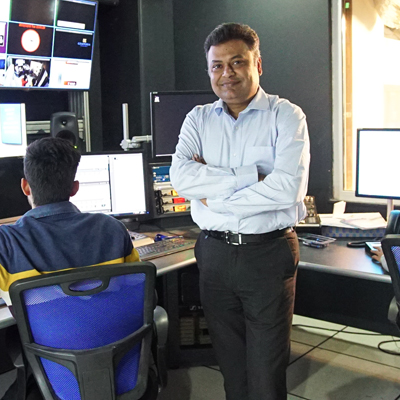
  • Arun Kapoor becomes new Dish TV CEO

    Arun Kapoor becomes new Dish TV CEO

    MUMBAI: Dish TV India has informed Bonmbay Stock Exchange that upon the recommendation of the Nomination and Remuneration Committee of the Board, the Board of Directors of the Company at their meeting held on 20 November 2015inter alia, has approved the appointment of Arun Kumar Kapoor as the Chief Executive Officer of the Company with effect from November 23, 2015.


    Further, Kapoor, has also been nominated as a ‘Key Managerial Personnel’ of the Company under the applicable provisions of the Companies Act, 2013 and Listing Agreement. Kapoor was earlier CEO of Taj  TV, the Zeel; groups distribution business subsidiary, a post from which he resigned in April 2015.


    Dish TV India CMD Jawahar Goel, while welcoming Arun Kapoor on board said, “Arun  brings a  depth of  business experience that  will  be a perfect  complement to  the expertise of Dish TV in  the DTH industry. His business acumen will enhance our ability  to deliver consumer oriented services while also increasing stake holder’s value.”


    Kapoor, on his appointment as the CEO of Dish TV, said, “I am delighted to have the opportunity to lead Dish TV at this important stage in its journey and look forward to working with  the Dish TV team to  ensure that  the Company delivers as per its  strategic business objectives.”


    It may be recalled that the earlier Dish TV CEO R.C. Venkateish  or RC as he is called had resigned effective October 31, along with a number of personnel at Dish TV following a board meeting on October 27.  The meeting also saw the elevation of managing director Jawahar Goel as Dish TV chairman, and the resignation of non-executive promoter director Subhash Chandra from the board. RC shall however continue to be associated with the company in an advisory role specifically in areas relating to content, legal and regulatory affairs. He shall also continue to represent Dish TV in the DTH Association and before industry and regulatory bodies.

  • Dish TV considers deploying 15-20 million multi-layer CAS STBs over 5 years

    Dish TV considers deploying 15-20 million multi-layer CAS STBs over 5 years

    MUMBAI: The Jawahar Goel led Direct-to-home service provider Dish TV India is considering deployment of around 15-20 million Set Top Boxes(STBs) incorporating multi-layer condition access system (CAS) solutions over a period of 5 years and is hopeful of completing the selection process by December 2015. Adoption of multi-layer (CAS) will ward off potential security threats as well as enhance system efficiency going forward.


    Further, Dish TV is also toying with deployment of STB’s supporting card-less technology simultaneously. Currently, the DTH operator uses Conax card-based CAS from Nagra and plans to adopt simulcrypting technology going forward..


    Dish TV recently issued a request for proposal (RFP) to leading CAS vendors across the globe. Irdeto, Viaccess, Pace, Verimatrix, Cisco, Nagra, Nstv, Conax, Civolution-Nexguard, CRI and SMI are some of the vendors that have shown the interest. The company is currently evaluating all proposals received on a strict core security benchmark and shall select multiple partners keeping its business interests in mind..


    With more than 13 million subscribers Dish TV, a part of the Essel Group also provides digital cable television services through its cable distribution arm, Siti Cable (approx. 4 million subscribers). 


    Zee Entertainment Enterprise Limited (ZEEL) is the flagship company of the group, and beams more than 100 channels across the globe, through its direct to operator (DTO) arm.

  • This Diwali, Big Magic & 92.7 Big FM presents ‘Ji Sirji’

    This Diwali, Big Magic & 92.7 Big FM presents ‘Ji Sirji’

    MUMBAI: Big Magic poised to be the ultimate comedy destination from Reliance Broadcast Network Limited, launches yet another innovative concept from its bouquet of differentiated content titled Ji Sirji.


    In line with its integrated programming strategy, this is the fifth successive show being launched by the network, which will air from November 11th, every Wednesday, Thursday at 10 PM on Big Magic and Wednesday, Thursday at 9 PM on 92.7 Big FM.


    Versatile actor Anup Soni will be seen taking the audiences on a hilarious ride, as he would bring forth day to day shenanigans in a professional work set-up, focusing on the relationship between bosses and their subordinates in the form of funny sketches. The show will also witness various actors playing roles of subordinates, who are usually at the receiving end of the whims and fancies of their respective bosses. One of the popular names playing a subordinate on the show is actor Gaurav Sharma, who is known for his character of Pappu from Total Nadaniyaan.


    Talking about the new integrated offering, Big Magic creative director Bimal Unnikrishnan said, “Our current programming strategy revolves around conceptualizing content that resonates easily with our target audience, with a high degree of humor and entertainment. The relationship between a boss and his subordinate is an interesting, relatable theme.


    Ji Sirji will bring forth this very relationship in an unconventional style, with funny, topical sketches, one that hasn’t been seen before by the audience. Moreover, with our integrated approach, we are widening our reach by tapping viewers and listeners on both our mediums of dominance.”


    Each episode of Ji Sirji will see multiple sketches, each focusing on a profession, various types of bosses and their behavior. Anup Soni will be seen playing a boss who has an OCD issue to being unreasonable, sadist, foolish, insecure and many more. Moreover, he will portray bosses across professions, switching between a corporate executive, government babu and even a truck driver!


    Big Magic is available across all DTH players such as Tata Sky, Airtel, Videocon, Dish TV, Reliance Digital TV along with all cable operators as Hathway, Incable, Digicable, DEN, 7 Star, ABS, Siticable, Star Broadband and GTPL amongst others.

  • DTH payment system provider BuySmart completes a Decade

    DTH payment system provider BuySmart completes a Decade

    MUMBAI: Starting their operations in 2005, the Indo-Israeli company began with Tata Sky, Videocon D2H and Sun DTH as their earliest clients and taking their service offering across India through an electronic distribution system. Over the next few years, the company strengthened its digital distribution on a pan India presence and also built a payment super highway with a scalable and robust technology that supports their B2B2C business model.


    EPRS BuySmart has, since then, expanded into offering a basket of products through their strong network of more 2.5 lakh retail outlets in more than 35,000 towns in India. As their technology works in the absence of strong Internet infrastructure also, the company has been able to reach Tier III/IV towns and villages in India, and currently, the company counts more than 300,000+ transactions/day on their platform. With the earlier focus on telecom & DTH, the company has now expanded into financial, logistics, utility payment and e-commerce segments of business with association with Tata Sky, Airtel, ICICI Bank, RBL, Dish TV, and Reliance BIG TV to name a few.


    Speaking on the occasion of the company’s 10th anniversary, Himanshoo Patil, Chief Executive Officer, EPRS-BuySmart, said, “EPRS-BuySmart was established with a view of revolutionizing the digital distribution and payment industry and help service providers reach out to all corners of the country and enable SMEs/entrepreneurs to offers consumer services at their retail points. I am glad that in these 10 years we have been able to come up as the catalyst of growth, prosperity and empowerment for the bottom of the pyramid population as well for the small business owners. It is encouraging to see that what EPRS-BuySmart is doing is in line with the current agenda of our nation’s leadership. We look forward to taking this forward in building a stronger brand over the next decade!”


    The company’s proposition to enable product sales on demand, at 2.5 lakh retail points across the nation is unique and unmatched, thus allowing the manufacturers and brands to save 20% on their cost in reaching out to end customers in a quick, economical and effective way.


    Services based on cutting-edge technology have helped create opportunities and employment for retailers at the bottom of the pyramid while exposing Indians at every corner of the country to mainstream services and products. EPRS BuySmart looks to further its vision by investing in their technology to offer a larger bouquet of products in the future.

  • Q2-2016: Dish TV PAT at Rs 87 crore; adds 3.38 lakh subscribers

    Q2-2016: Dish TV PAT at Rs 87 crore; adds 3.38 lakh subscribers

    BENGALURU: This is the third consecutive quarter that direct to home (DTH) company Dish TV has reported growth across important financial and operational parameters including operating revenues (TIO), profit after tax (PAT) and subscription numbers.


    Last fiscal and quarter (year and quarter ended 31 March, 2015, Q4-2015), the Subhash Chandra led Essel Group’s DTH operator Dish TV Limited turned the corner with a consolidated profit after tax (PAT) of Rs 3.14 crore and Rs 34.94 crore (margin 4.8 per cent) respectively. The company followed this up with even better numbers in the previous quarter (Q1-2015). Dish TV was the first among listed DTH companies in the country in FY-2015 and Q4-2015 to report PAT as opposed to the operating profits reported by a segment of the other Goliaths for whom DTH services is just another small segment.


    Note:

    (1)100,00,000 = 100 Lakh = 10 million = 1 crore

    (2) With effect from April 1, 2015, Dish TV says that it has started netting-off certain collection fees paid to its trade partners from its topline. This has resulted in the company’s topline getting shrunk by around four per cent, with a similar number being decreased from the middle line. The values for the prior comparative periods have also been recast to reflect the same.

    (3) Dish TV recently transferred its non-core business (including set-top boxes, dish antenna and related services) to its wholly owned subsidiary Dish Infra Services Private Limited (formerly known as Xingmedia Distribution Private Limited) on 1 April, 2015 on a going concern basis.


    For the current quarter ended 30 September, 2015 (Q2-2015), Dish TV has reported Operating revenue of Rs 752.42 crore, hence registering a 15.8 per cent YoY growth as compared to Q2-2015’s number of Rs 649.90 crore and a 2.1 per cent QoQ growth as compared to Rs 736.68 crore.


    The company reported PAT of Rs 86.96 crore (11.6 per cent margin) for the current quarter as compared to a loss of Rs 14.2 crore in the corresponding year ago quarter and a whopping 60.4 per cent growth in profit as compared to the Rs 54.21 crore (7.4 per cent margin) in the previous quarter.


    The company’s subscriber base in Q2-2016 increased by 3.38 lakh to touch 137 lakh as compared to the 133 lakh reported at the end of the previous quarter (Q1-2016).


    Dish TV reported a YoY growth in Average Revenue Per User (ARPU) to Rs  171 as compared to the Rs 166, but a QoQ decline from Rs 173 in the previous quarter.


    Dish TV chairman Subhash Chandra said, “Dish TV further reinforced its leadership position during the quarter. The company, while being at the forefront of the DTH industry in India, reached out to television viewers with innovative products that promise to enhance their television viewing experience. Dish TV’s improving financial strength coupled with its passion to be ahead of the curve, should be an advantage to further enhance its presence in the vast and still untapped analogue and free-to-air television markets in the country.”


    Let’s look at the other numbers reported by Dish TV


    Dish TV’s total expenditure in Q2-2016 at Rs 630.44 crore (83.8 per cent of TIO) declined 1.5 per cent as compared to the Rs 639.90 crore (98.5 per cent of TIO) in Q2-2015 and declined 4.4 per cent as compared to the Rs 659.69 crore (89.5 per cent of TIO) in Q1-2016.


    A major expense head is content cost comprising programming, content and other costs. In Q2-2016 content cost at Rs 203.54 crore (27.1 per cent of TIO) was 17.1 per cent more than the Rs25.27 crore (29.7 per cent of TIO), but was 14.7 per cent lower than the Rs 212.01 crore (28.8 per cent of TIO) in the previous quarter.


    Employee Benefit Expense (EBE) in Q2-2016 at Rs 29.58 crore (3.9 per cent of TIO) increased 17.1 per cent as compared to the Rs 25.27 crore (3.9 per cent of TIO) in Q2-2015, but declined 14.7 per cent as compared to the 34.67 crore (4.7 per cent of TIO) in Q1-2016.


    Dish TV’s selling and distribution expense in Q2-2016 declined 26.1 per cent to Rs 68.09 crore (nine per cent of TIO) as compared to the Rs 92.09 crore (14.2 per cent of TIO) in the corresponding year ago quarter, but was 2.6 per cent more than the Rs 66.34 crore (nine per cent of TIO) in the immediate trailing quarter.


    Dish TV managing director Jawahar Goel said, “Dish TV continued to actively contribute to the ‘Digital India’ movement by digitising analog TV homes in DAS phase 3 & 4 markets. A unique product mix and a strong brand recall enabled us to add a healthy 338 thousand net subscribers in a seasonally weak quarter. Our regional offering ‘Zing’ is now available across eight states and continues to be in high demand in its target markets.”


    Goel added, “Sticking to our guiding principle of growth with profitability, we enhanced operational efficiencies in the business and are pleased with an all-time high EBITDA margin of 33.9 per cent recorded during the quarter. We were positive at the net level as well and had a free cash flow of Rs. 84.9 crore. As we move ahead, we stay convinced about our pole position being related to our value for money offering and intend to constantly work on it for long term sustainable growth.”