Tag: Dish TV

  • Dish TV presses HD button; introduces new cardless set top box

    Dish TV presses HD button; introduces new cardless set top box

    NEW DELHI: HD ahoy! That’s the flag that India’s leading DTH operator the Essel group owned DishTV has been waving for quite some time. And now it is doing it again. In a move to encourage wary Indian TV viewers to switch from a standard definition (SD) to high definition (HD) connection, it has announced a campaign, which it has labeled “HD for all initiative.” Under this, it says it will stop providing SD boxes, and will now only ship HD ones to subscribers.

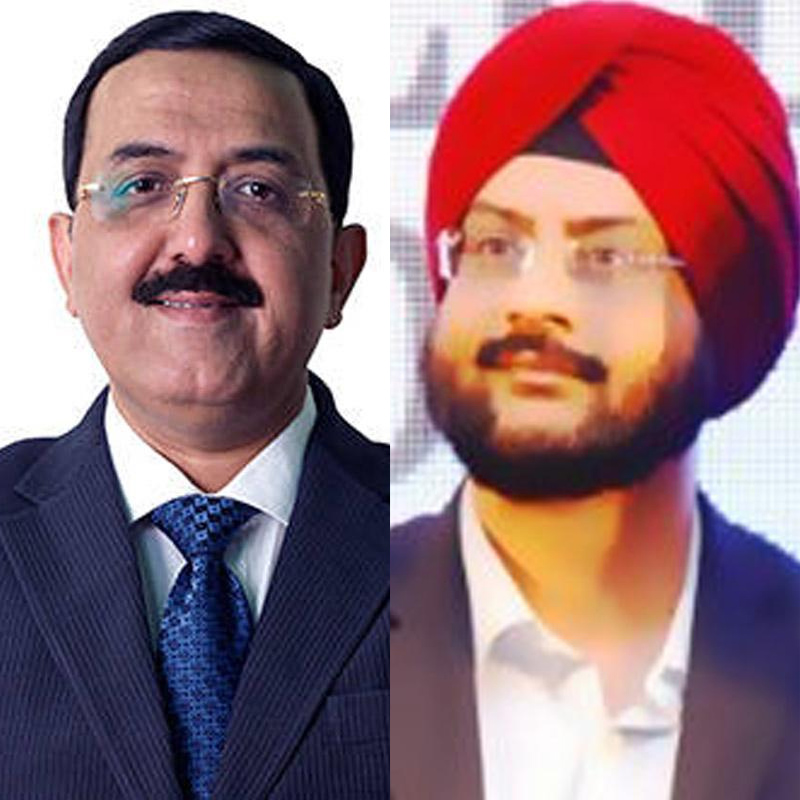
    “The HD space has been fast evolving, making significant in-roads into Indian households,” says Dish TV CEO Anil Dua. “With a sharp focus on HD, this move aims at bridging the gap between the SD and HD subscribers and taking away the inhibitions involved in switching from SD to HD. Our endeavor is to increase affinity with our audiences by providing them HD viewing experience.”

    Currently, India has around 12.8 million HD households; Dish TV hopes this push will more than double this subscriber base to 25-30 million s in the next five to six years.

    The company has also launched a new cardless HD set top box (STB) branded Dish NXT HD which has a starting price of Rs 1,500 with primary SD packs. It claims that the new box gives five times better picture quality, 5.1 suroound sound, and a whole new user Interface and graphics and multilingual support. Additionally, it comes equipped with an integrated smart chip technology to enable users to interact and tune-in to their television in a smarter way. A universal remote and a recorder come included with the box. The cardless feature eliminates the need of a separate viewing card for clutter free experience and faster performance.

    Points out Dua: “The new DishNXT HD STB will lead to a rapid rise in HD consumption. It will also encourage subsequent upgradation to full HD experience, thereby expanding overall HD viewership and boosting our revenues.”

    “As part of our festive offering, this latest innovation has been designed keeping in mind the evolving needs of our discerning customers and to enable an end to end entertainment experience,” adds Dish TV senior vice president marketing Sukhpreet Singh.” With the new clean, intuitive user Interface, fast navigation and ease of controls, DishNXT HD is a game changer in DTH entertainment, offering unmatched HD TV viewing experience.”

    Apart from this STB, it is also flogging its DishNXT HD Premium box which has a starting price of Rs 1,750 and can offer all 66 HD channels.

    Recently, the satellite provider had launched a Mera Apna Pack that allowed customers to choose their HD channels at a sticker price of Rs 17 plus GST as part of its popular packs. The company says this is partially in keeping with the Telecom Regulatory Authority of India (TRAI)’s tariff order as it empowers consumers and provides content as per customer choice.

    Amongst the packs it is offering currently include:

    * Priced at Rs 169, Swagat offers 210 channels.

    *The Super Family Pack offers 337 channels at Rs 250 per month.

    *The Maxi Sports Pack offers 342 channels at Rs 290 per month.

    *The All Sports Pack offers 387 channels at a sticker price of Rs 330 per month.

    *The World Pack has a bouquet of 400 plus channels and is priced at Rs 380 per month.

    * The Platinum Pack has a bouquet of 418 channels at Rs 475 channels per month.

    All these packs have a freebie offer going on currently: seven HD channels are being offered at no cost to customers. The free HD channels include: Zee TV HD, Colors HD, &TV HD, Zee Cineam HD, &Picture HD, Cineplex HD and MTV Beats HD.


  • Dish TV redefines its pay-TV services with Verimatrix security

    Dish TV redefines its pay-TV services with Verimatrix security

    MUMBAI: Verimatrix, a specialist in securing and enhancing revenue for network-connected devices, has announced that it has been selected by Dish TV India Limited to provide cardless security for its direct-to-home (DTH) service offerings. The former will illustrate how security solutions are at the core of all key monetisation strategies for the pay-TV and internet video service at IBC 2017.

    DishTV is Asia’s largest DTH video service provider and is the only DTH operator to operate through three satellites in space. The Verimatrix Video Content Authority System (VCAS™) for DVB was selected as one of its critical CAS partners for its future-proof approach to revenue security that can scale with the company as it continues to evolve business models and maintains its position as a market leader.

    “Our infrastructural and technological edge allows us to continually develop new innovations and revolutionize our service offerings, so it has become crucial that our revenue security measures are robust yet flexible enough to keep pace,” said DishTV COO V K Gupta.

    Based on a single content authority approach, VCAS for DVB offers a modern approach to multi-device streaming as video service providers like DishTV redefine their pay-TV services. The solution is completely compliant to applicable DVB standards and pre-integrated with a broad range of partner headend and software systems. Additionally, its cardless set-top box client technology provides new, essential levels of security that would be virtually impossible to achieve with legacy systems.

    “The Asia’s largest DTH provider continues to enhance its offerings and maintains its stance apart from competition in the region,” said Verimatrix president Steve Oetegenn.

    “Dish TV has long-established itself as the pioneer in the Indian DTH broadcast industry, and VCAS for DVB is optimally designed to adapt to any scenario it may face as the Indian pay-TV industry continues to undergo rapid transformation. In essence, the security framework will never become obsolete.”

    Verimatrix specializes in securing and enhancing revenue for multi-network, multi-screen digital TV services and is recognized in revenue security for connected video devices.

  • Jio, Sun Direct, Dish TV among top 50 as HDFC retains BrandZ crown

    Jio, Sun Direct, Dish TV among top 50 as HDFC retains BrandZ crown

    MUMBAI: HDFC Bank has continued to maintain its leadership position in fourth consecutive year, according to the BrandZ Top 50 Most Valuable Indian Brands 2017 report released by WPP and Kantar Millward Brown.

    HDFC Bank (24 per cent) is the India’s most valuable brand, almost doubling its brand value since the ranking started in 2014 from $ 9.4bn to $ 18.0bn.

    “It has a strong purpose – to improve lives by bringing world class financial services to all sections of India – and demonstrates it through increased access to banking in rural areas, an expanded digital presence and leveraging the latest technology to simplify its offering for customers. BrandZ data shows that consumers perceive the bank as increasingly innovative,” the report stated.

    India’s most valuable brands have increased their brand value by 21 per cent to US$ 109.3 billion in the last year. This compares with a two per cent decline in 2016, and is well ahead of the eight per cent value increase of the BrandZ Top 100 Most Valuable Global Brands 2017.

    There are seven newcomers in the overall ranking. Telecom provider Jio ranks at number 11 — only months after its launch, having disrupted its category with free-data promotions. The others are newly-listed retailer D-Mart (no.24), appliance brand Whirlpool (no.45), insurance brand Bajaj Allianz (no.49), Canara Bank (no.50) and entertainment brands Sun Direct (no.27) and Dish TV (no.47)

    The Store WPP CEO EMEA and Asia David Roth said, “Indian consumers seek authenticity and value for money, and the meaning of those things is being constantly redefined. As consumers become wealthier, they look beyond price to factors such as extra features, innovation and a personalised experience. As reflected in this year’s ranking the most agile Indian brands have recognised the complexity in the market, and achieved just the right balance between aspirational and affordable.”

    The automobile category, which also includes tyres, lubricants and motor fuels, grew 23 per cent in value. Brands responded to the changing market with new models that combined smart pricing and functionality with style and power. Royal Enfield, Maruti Suzuki and TVS were among the Top 10 overall fastest risers. Royal Enfield (no.40, 59 per cent) engaged with biker  groups on social media, and marketed a range of accessories. Maruti Suzuki (no.7, 56 per cent) extended the brand beyond its traditional appeal to the value segment of the market, while introducing new showrooms called NEXA to reach premium customers.

    India’s Top 50 faced successive disruptions in the last year, some global, some created by fast-growing competitors and others strategically imposed by the government – including demonetisation.

    The FMCG category, which includes alcohol, food and dairy, personal care and soft drinks, was significantly affected by these challenges but still managed to grow 6 per cent in total value. Some brands achieved impressive value increases by accurately understanding and responding to Indian sensibilities. Noodle brand Maggi (no.32; 66 per cent), the overall second-fastest riser, aligned itself with the trend for nostalgia. This helped it bounce back after a difficult couple of years; its rapid regrowth demonstrating how a strong brand can help a company weather a crisis and recover faster, although it is still some way below its peak brand value of $1.1bn in 2014. Health food brand Saffola (no.36; 24 per cent), meanwhile, introduced oats in new localised flavours and expanded its range of oils into a new super premium sub-segment.

    The financial services category increased its value by 26 per cent. The fastest rising banks were Punjab National Bank (no.39; 43 per cent), which is highly customer-focused and more agile than some of its competitors, and Kotak Mahindra Bank (no.6; 36 per cent), which has innovated in areas including digital banking. Both of these brands still have significant catching up to do, however, if they are to reach the top of the leader board.

    The BrandZ™ Top 10 Most Valuable Indian Brands 2017

    Rank 2017

    Brand

    Category

    Brand value 2017 (US$M)

    Change

    1 (-)

    HDFC Bank

    Banks

    17,965

    +24%

    2 (-)

    Airtel

    Telecom providers

    10,233

    +3%

    3 (-)

    State Bank of India

    Banks

    8,334

    +31%

    4 (-)

    Asian Paints

    Paints

    4,717

    +15%

    5 (-)

    ICICI Bank

    Banks

    4,697

    +19%

    6 (+1)

    Kotak Mahindra Bank

    Banks

    4,522

    +36%

    7 (+1)

    Maruti Suzuki

    Automobiles

    4,449

    +56%

    8 (-2)

    Bajaj Auto

    Automobiles

    3,564

    +5%

    9 (-)

    Hero

    Automobiles

    3,295

    +17%

    10 (-)

    Axis Bank

    Banks

    2,428

    +2%

    Other trends highlighted in this year’s BrandZ Top 50 Most Valuable Indian Brands include: The long-term growth curve of the Top 50 is positive, with the total brand value of the ranking up 57 per cent  since the study was first carried out in 2014, when it amounted to $69.6bn

    India experienced a resurgence in national pride, while also embracing globalization. This manifested in a desire for products and brands that best reflect Indian heritage, sensibilities and tastes, which benefited local brands and put pressure on multinationals to follow suit. Colgate (no 28; two per cent) launched a toothpaste with Ayurvedic properties to meet this demand.

    The top riser is insurance brand ICICI Prudential (no.35; 89%). It benefited from the ‘halo effect’ of other brands’ successful responses to rising consumer affluence, which led to an increase in sales of assets such as cars that need insurance protection

    Kantar Millward Brown MD — South Asia Vishikh Talwar said, “There are now ‘multiple Indias’. Consumers continue to love the brands they’ve loved for generations, while equally embracing the brands of the future. Brands must be completely in rhythm with the pulse of the market. Those that can accurately interpret Indian sensibilities, while ensuring smart pricing, are likely to be most successful. This is easier for local brands, but people will relate just as positively to a global brand if it uses insight to understand and meet their needs, and communicate in a way that builds trust.”

    For the first time, this year’s BrandZ Top 50 Most Valuable Indian Brands 2017 study incorporates new research from Y&R’s BAV Group into what it takes to build powerful nation brands. According to the 2017 Best Countries report, India stands out for its history, cultural influence, distinction and reputation for entrepreneurship; especially among the world’s business decision-makers.

  • Prasar Bharati, Dish TV, Star, Zee and BES bat for KU-band open-sky policy

    Prasar Bharati, Dish TV, Star, Zee and BES bat for KU-band open-sky policy

    NEW DELHI: A number of stakeholders in the Indian broadcast and satellite industry, including the country’s first DTH service provider Dish TV, Star India, Zee, the pubcaster Prasar Bharati, and industry organisations such as Broadband India Forum and CASBAA are batting for an open-sky policy relating to KU-band transponders.

    The reason for this support for an open-sky satellite policy is rooted in the need for increasing KU-band transponder capacity. The allotment of KU-band transponder on foreign satellites is regulated by the country’s space agency Indian Space and Research Organisation (ISRO) when it is unable to provide space on Indian satellites to domestic customers.

    While Dish TV does not see “any justification” in the closed-door or regulated policy regime followed for KU-band transponder capacity, Star India is of the opinion that absence of such a policy is limiting DTH platforms’ capacity to provide additional services. Though Prasar Bharati, managers of Doordarshan and All-India Radio, gets preference on Indian satellites, it has also supported an open policy.

    “At present, KU-band is permitted for HITS, DTH, uplinks and DSNGs/VSATs. These applications should be enabled for open-sky policy, which will allow the broadcasters/DTH operators to negotiate long-term contracts. As satellite life is 15-17 years, operators give benefit in long-term contracts to the extent of 50 per cent,” Dish TV has said, adding that, at present, ISRO executes only three-year contracts.

    According to Star India (its parent 21 Century Fox has a minority in DTH operator Tata Sky), “With the introduction of new satellite TV channels, DTH operators require more KU-band capacity with footprint over India to enable to uplink all such channels on such DTH platforms… (but), owing to the lack of open-sky policy in KU-band, DTH platforms are restricted to provide limited value-added services. The open-sky policy for DTH will unlock such value-added services and enable viewers to consume such immersive and interactive content.”

    Why is this clamour for an open-sky policy regarding KU-band transponder?

    At present, any request for additional KU-band capacity on foreign satellites to expand business by Indian customers is hampered as they are unable to negotiate directly, and have to go through ISRO’s commercial arm Antrix that acts as a gate-keeper and, after a deal is concluded with a foreign satellite for KU-band transponders, also charges a commission.

    This happens when ISRO is unable to provide space on Indian satellites, which are increasing in number but have failed to keep pace with the demands of the domestic companies. Incidentally, there is no restriction on leasing C-band transponder capacity on a foreign satellite.

    “For DTH services, acquisition of KU-band transponder capacity is highly regulated and is done through an intermediary (Antrix that is a government organisation). As a result, there has been considerable delay in acquiring KU-band transponders…and also due to non-availability of adequate transponders, DTH service-providers are unable to chalk out their business plans. This is necessitated as the current procedures are fraught with restrictive practices,” said Broadband Forum India, an industry organisation comprising member-companies providing services via satellites.

    Hong Kong-based Asian industry body CASBAA, pointing that it has been seeking a “less restrictive policy” for KU-band for over a decade, has said a PwC-researched paper for it mid-2016 concluded that the policy for KU-band was “in effect a very restrictive satellite policy as presently operated in India,” which “artificially suppress(es) demand, which in turn leads directly to a reduction in growth, profits, and therefore lower tax revenues.”

    Though the bogey of national security is often raised when liberalisation of satellite policies are talked about, CASBAA, while discounting such fears, suggested following medium-term policy tweaks to ease KU-band capacity crunch, which were also listed out by some other stakeholders too:

    i) ISRO/Antrix can regularly publish a list of pre-cleared satellites and operators who are permitted to supply transponders to the Indian market. Indian DTH operators should be free to negotiate and contract capacities directly from them.

    ii) An efficient procedure can be established for DTH operators to obtain security clearance from ISRO before contracting the transponder capacity directly from foreign satellites.

    iii) Contracting for incremental capacity or extending the contracts of existing suppliers can and should be completely left for DTH operators without any need to seek additional, duplicative approvals from ISRO/Antrix. DTH operators would need to keep the ISRO updated with the contracted capacities and contract durations.

    The issue of freeing up KU-band transponder lease regime has been discussed for years, but its gaining momentum as the present PM Modi-led government in New Delhi has been talking about furthering economic liberalization and easing norms for doing business in India.

    Broadcast Engineering Society (BES), a government organisation, too is in favour of  an open-sky policy. “Keeping in view the growing number of TV channels and their carriage on various platforms, it has become inevitable for the government to go for an open-sky policy for KU-band,” BES stated, adding technological advancement and growth of HD channels, apart from experimental 4K services, has necessitated this.

    The stakeholders were expressing their views on KU-band satellite capacity vis-à-vis an open-sky policy as part of a consultation process initiated by sector regulator TRAI on ease of doing broadcast business in India. Incidentally the regulator has been recommending in vain an open-sky policy for several years now.

    ALSO READ :

    ISRO stresses on indigenization; TRAI for Open Sky policy

    ISRO’s ‘South Asia Satellite’ to carry 12 ku-band transponders

    Could India blocking ABS’ FTA TV signals lead to breach of ITU norms?

    MIB: No DPO request for infra sharing, DTH ops’ transponder demand up

  • Tata Sky deploys DataMiner to improve customer experience

    Tata Sky deploys DataMiner to improve customer experience

    MUMBAI: Tata Sky has an impeccable reputation as being best in class in the area of customer services, tech and offerings. It has constantly been investing in tech and customer service to stay ahead of the curve as compared to rivals – Freedish, DishTV-Videocond2h, SunDirect, Airtel Digital and Reliance Big TV.

    Now the company, led by Harit Nagpal, has taken another step in that direction by deploying the DataMiner NMS/OSS (network management system & operations support system) to manage its direct-to-home (DTH) operations for both its pay TV and OTT services.

    DataMiner is a global leader in end-to-end multi-vendor network management and OSS software solutions for the broadcast, satellite, cable, telco and mobile industry. Its NMS/OSS is deployed with a majority of DTH, satellite and service providers worldwide. Its customers include: Gazprom, MTS, France Television, Megacable, Mulitchoice, KPN, Immarsat, Singtel, ABC and many more.  The company is a part of the Skyline Communications group.

    The core of the DataMiner system is a cutting-edge multivendor protocol engine, enabling integration of any device or system from any vendor, regardless of its interface or protocol. In fact, it is already integrated with over 5000 devices and systems from more than 600 key industry suppliers, which represents by far the largest third-party integration deployment available in the industry.

    The objective of Tata Sky, one of the first companies in India to launch multiple products and services, is to connect to the best content in the world on any budget, any screen, anytime and anywhere. And the Dataminer solution offered that.

    Says Tata Sky chief technology officer Yigit Riza: “Tata Sky has invested in the best-of-breed technology infrastructure to ensure maximum uptime, reliability and scalability. Software applications such as CRM, billing and ERP are deployed in a clustered environment, which not only ensures high availability, but also enriches the experience of our subscribers.”

    “The DataMiner Platform at Tata Sky offers one-screen access of the entire operation, including content acquisition and compression platforms across different vendors and technologies. The unified view enables users to easily access and configure services. DataMiner is also scalable, so we can add other equipment and systems in the near future, related to the RF platform and OTT platform,”  adds Skyline Communications regional account manager- south Asia & middle east Pramod Gupta.

    Gupta points out that DataMiner will help the DTH operator’s engineering room restore services as quickly as possible, either through automatic service redundancy switching or through operator-initiated switchover.

    “Moreover, any embedded switchover functions in the network infrastructure can be integrated in DataMiner. DataMiner automation is versatile and adapts optimally to the operational environment. The tailored failover automation engines decrease the mean-time-to-repair to the absolute minimum for every failure scenario,” Gupta says.

    For a customer like Tata Sky, this means it only need to invest in one NMS platform, instead of multiple proprietary and closed systems. End-to-end service orchestration and monitoring is at the heart of the platform.

    With the number of channels as well as its in house VAS services  increasing regularly,  the company believes  DataMiner will help it maintain or improve the QoS service it is reputed to deliver.

    ALSO READ :

    TRAI QoS implementation stayed by Delhi HC awaiting Madras HC verdict

    Tata Sky introduces Blogbuster

    DTH subscriber addition disappointing in calendar 2016

  • DTH subscriber growth on upswing in first quarter?

    DTH subscriber growth on upswing in first quarter?

    BENGALURU: Is the DTH subscriber growth in the first quarter of fiscal 2017 (Q1-18, quarter ended 30 June 2017, current quarter) on an upswing?  Of the six private players in the Indian DTH ecosystem, three are publically listed and their numbers are available in the public domain. Two players, Airtel DTH and Dish TV, have indicated a quarter-on-quarter growth in number of subscriber additions. Telecom Regulatory Authority of India (TRAI) has yet to release subscription numbers for Q1-18.

    Airtel has indicated subscriber additions of 0.499 million for Q1-18 as compared to 0.228 million for the previous quarter (quarter ended 31 March 2017, Q4-17, previous quarter). Dish TV reported adding 0.186 million subscribers as compared to an estimated 0.165 million additions for the previous quarter.

    The third player – Videocon d2h reported adding 0.13 million subscribers in Q1-18 as compared to the slightly higher 0.14 million for Q4-17. It may be noted that subscriber numbers are generally rounded off by the players in their reports, in some case to an extent of 10,000. Also, the sum of the net subscriber additions per quarter may not be equal to the overall subscribers reported as added in a fiscal by the companies because of subscriber churn and rounding off.

    Please refer to the figure below:

    public://F1_18.jpg

    As reported by us earlier, despite the sunset date for DAS IV having passed, the DTH industry had not been able to leverage the opportunity that it presented. Financial results of  Airtel Digital TV (Airtel DTH), Dish TV, and Videocon DTH show poor subscriber adds in the quarter ended 31 March 2017 (fourth quarter, Q4-17). As a matter of fact, subscriber additions in Q4-17 was the lowest that the three Indian major operators reported in a quarter for the financial year ended 31 March 2017 (FY-17). The combined subscribers for all the three players grew 8.33 percent to 41.23 million in FY-17 from 38.06 million in FY-16. In FY-16, the three players had added about 65 percent more subscribers in absolute numbers at 4.93 million as compared to the 3.81 million added in FY-17.

    The DTH industry witnessed a slowdown in subscriber growth even in fiscal 2016. Combined subscriber additions of the three pay-direct to home operators in India for the annual period ended 31 March 2016 (FY-16) vis-à-vis the previous year (FY-15) grew by 14.8 percent.  This subscriber growth rate was however was much lower than the growth that these entities had in FY-15 at 24.7 percent as compared to FY-14.

    The current DTH scenario in India

    Dish TV is at present the largest private DTH player in the country in terms of number of subscribers. The three players – Airtel DTH, Dish TV and Videocon d2h represent about 60 to 65 percent marketshare of the pay-TV DTH industry subscribers. The other three players are Tata Sky, Sun Direct and Big TV. Please refer to the figure below for the estimated subscriber marketshare of the private pay-TV players.

    public://F2_9.jpg

    The government’s FreeDish DTH service is the largest DTH player by far in terms of subscribers with an estimated 22million or 2.2 crore subscribers in 2016 as per the KPMG-FICCI Indian Media and Entertainment Industry Report 2017 (KPMG-FICCI M&E Report 2017) titled Media for the Masse: The Future Unfolds. It must however be noted that an exact number for registered or active subscribers is not available since this is a free DTH service. Also, the proposed merger of Videocon d2h with Dish TV will create the largest private television carriage player in India and quite likely the second largest in the world, be it cable, internet television or DTH or any other.


  • TDSAT ‘no’ to stay Star Bharat launch, DPO payments subject to adjudication

    TDSAT ‘no’ to stay Star Bharat launch, DPO payments subject to adjudication

    NEW DELHI: Even as it declined to stay or restrain the launch of Life OK channel as Star Bharat, the Telecom Disputes Settlement and Appellate Tribunal (TDSAT) yesterday said the amounts paid to the distribution platform operators or DPOs will be subject to the final orders of the tribunal.

    The bench, comprising TDSAT chairman Shiva Keerti Singh and members B B Srivastava and A K Bhargava, observed that the agreements between broadcaster Star India and DPOs Dish TV and Videocon d2h (both entities in the process of merging) will continue to operate and the cost being offered by the broadcaster cannot be reduced unilaterally.

    While Star India was given four weeks to reply, the two DTH platforms were asked to file their counter-affidavits too. Thus, the next hearing may come up some time in October 2017.

    The tribunal said if it is proved that the presence of Star Bharat on Prasar Bharati’s free to air DTH platform FreeDish is tantamount to the channel’s conversion from pay to FTA, then both Dish TV and Videocon d2h will be entitled a refund from Star.

    Star India had contended that merely making a channel available on FreeDish platform does not tantamount to a conversion in the nature of the channel for which the DPOs are being charged.

    Dish TV and Videocon d2h had moved the tribunal earlier this week alleging that Star India was converting its pay channel Life OK into a FTA network by putting the rebranded channel (Star Bharat) on FreeDish platform without informing the Telecom Regulatory Authority of India (TRAI). In its defense before the court, Star India responded by saying that “we are only rebranding” and not “converting our pay channel” into FTA.

    Interestingly, this petition came just two days after Essel/Zee Group’s Dish TV had sent a letter to the Ministry of Information and Broadcasting, Indian cricket board BCCI, TRAI and monopoly watchdog Competition Commission of India. In the letter Dish MD Jawahar Goel had alleged that Star was trying to create a monopoly over cricket broadcast rights in the country, a move that would be detrimental for all stakeholders, including consumers who would ultimately dish out more subscription money to watch cricket on telly.

    To buttress his arrangements, Goel had contended that Star had even challenged rge sector regulator TRAI’s jurisdiction to fix tariff charges — a case that’s pending before the Madras High Court.

    ALSO READ:

    Dish TV moves TDSAT against Star Life OK name change & turning FTA

    Dish TV shoots off letter to IBF; alleges discrimination by b’casters, OTT platforms

    Jawahar Goel raises alarm of emerging Star cricket monopoly (updated)


  • Dish TV moves TDSAT against Star Life OK name change & turning FTA

    Dish TV moves TDSAT against Star Life OK name change & turning FTA

    NEW DELHI: After having raised an alarm a day back over an impending monopoly of Star India if it wins the broadcast and other rights to IPL cricket, Essel/Zee Group’s DTH platform Dish TV has moved broadcast and telecoms disputes tribunal seeking restraining order against Star Life OK’s rebranding process and turning free-to-air (FTA).

    In its interim prayer Dish TV has sought an order from disputes tribunal TDSAT to “restrain” Star India from converting Life OK from a pay channel to FTA by changing its name to Star Bharat and joining the Doordarshan FreeDish platform. Reason?

    According to the petition, reviewed by Indiantelevision.com, Star is making the changes “without informing” sector regulator TRAI as also without giving public notice about the change as “specified in clause 4-3 of the TRAI regulations.”

    Star India is in the process of renaming on-air GEC TV channel Life OK (a pay channel) into Star Bharat and put it on Doordarshan’s FTA DTH platform DD FreeDish. Though industry sources indicated that the change was to come into effect from sometime end of August 2017, sources in Prasar Bharati, owner and manager of DD, had said the pubcaster’s DTH platform was not yet technically capable of bringing on board more channels despite they winning slots to be part of the FTA KU-band service as an upgradation process was still not complete.

    The case at TDSAT is scheduled to for an initial hearing on 25 August 2017. Dish TV, along with its partner Videocon D2h, has appealed the tribunal for a restraint on Star India and any other further direction that it may “deem fit and proper” keeping in mind the facts placed before the court.

    Keep tuned in for more episodes on the new and unfolding corporate warfare in the Indian media and entertainment realm.

    ALSO READ:

    Jawahar Goel raises alarm of emerging Star cricket monopoly

    Star Bharat to be available on DD FreeDish as b’caster’s fourth FTA offering

    Life OK rebranded as Star Bharat


  • Dish TV shoots off letter to IBF; alleges discrimination by b’casters, OTT platforms

    Dish TV shoots off letter to IBF; alleges discrimination by b’casters, OTT platforms

    NEW DELHI: In a move that’s certain to set the cat amongst the pigeons, Dish TV, one of India’s biggest satellite platform in terms of subscribers, has not only accused broadcasters of  “discrimination” relating to making available content to various pay distribution platforms vis-à-vis likes of OTT, but also “creating huge disparity” in the market.

    “Broadcasters, on one hand, keep on charging huge subscription fee from us and, on the other hand, provide the same content/channel to the OTT platforms at highly subsidized rates, thereby not only creating a non-level field, but also causing huge detriment to the subscribers of Dish TV. Availability of same content/channel on alternate distribution platform on much cheaper rate vis-a-vis DTH has started resulting into migration to the alternate distribution platforms,” Dish TV has said in a letter to the Indian Broadcasting Foundation, an apex body of TV channels or broadcasting companies operating in India.

    The Dish TV letter dated 11 August 2017, reviewed by Indiantelevision.com, goes on to highlight why the move of TV channels to turn FTA, join Doordarshan’s free-to-air DTH platform DD FreeDish after paying a carriage fee, and making available content at highly subsided rates to OTT platforms like YouTube and that being proposed by Reliance Jio slides the Indian television market’s business model to be largely advertising driven.

    “It is a common industry knowledge that the broadcasters have provided their channels to the OTT platforms at a highly discounted rates, which is totally prejudicial and discriminatory to the DTH platforms,” the Dish TV letter stated, which has also been sent to the DTH Association of India and the All India Digital Cable Federation, a body of digitally-able MSOs.

    The letter from Dish TV, written by the satellite platform’s managing director Jawahar Goel, is addressed to IBF president Punit Goenka, who also is Zee Entertainment Enterprises Limited MD and CEO, and a nephew of Goel. Goenka’s father and media baron Subhash Chandra is a member of India’s Upper House or Rajya Sabha.

     According to people familiar with the development, IBF’s member-companies have been asked to give their feedback on the content of the letter, which could be put to vote some time mid-September.

    “The IBF constitutes of seven major members, viz. Star, Zee, Sony, IndiaCast, Sun (TV group), Discovery and Times, which not only control the IBF but also are the major players collecting the subscription and advertisement revenue— collecting more than 99 per cent of the subscription and advertisement revenue of the Indian broadcasting industry,” the letter stated, adding that actions of the broadcasters “clearly indicate” the focus was shifting towards increasing the advertising revenue against subscription revenue.

    Raising the issue of sector regulator TRAI and disputes tribunal TDSAT’s emphasis on “fairness, reasonability and non-discrimination” as far as making available content to distribution platforms,  Dish TV pointed out that strategies employed by broadcasters were “deterrent to the pay TV market.”

    Pointing out that certain actions of the broadcasters could amount to breach of cross-media restrictions too, the letter exhorted the IBF members to discuss “whether the emphasis has to be on pay model (where the broadcasters can collect subscription) or an FTA model (where the broadcasters can get the advertisement revenue)”.

    Till the time of writing this report, Indiantelevision.com could not get across to IBF for a reaction.

    “Availability of same content/channel on alternate distribution platform on much cheaper rate vis-a-vis DTH rate has started resulting in(to) migration to the alternate distribution platforms,” the letter highlighted, adding that big broadcasters’ own OTT platforms (like Star’s Hotstar, Viacom18’s Voot, Sony Pictures Entertainment’s SonyLIV and Zee’s dittoTV, for example) also contributed to compounding the problem.

    The letter added: “It will be critical for your (IBF) members to spell out the strategy to hold/grow the pay TV market, which has been contributing to around 35-40 per cent of the total revenue of the pay broadcasters.”

    However, it seems that the present slew of letters from Dish TV and accusations will again rock the approximately Rs 558  billion Indian media and entertainment industry, which had thought corporate skirmishes of mid 1990s to mid 2000s had been buried in favour of overall growth of the broadcast and cable sectors and the media and entertainment industry, in general.

    ALSO READ:

    Jawahar Goel raises alarm of emerging Star cricket monopoly


  • Television viewership stable despite VoDs, says DISH TV exec

    MUMBAI: People’s interest in television was intact although use of cell phones in India has increased considerably in India. After increase in internet speed, people in India had started watching videos on mobile phones. However, despite VoD services proliferating in the country, viewers preferred to watch films on television.

    DTH services leader DISH TV’s senior executive told PTI that it was a wrong perception that people lately did not watch television because of the growing popularity of video on cell phone facility. Despite the increasing tendency of seeing videos on handsets, the executive said, different studies revealed that people’s interest in watching television in all age brackets had not declined.

    DISH TV’s senior vice president (marketing) Sukhpreet Singh, who was in Indore to launch DISH TV’s “Mera Apna Pack” and “Swagat Pack” in the Madhya Pradesh market, said, in fact, the television viewership was increasing. Singh said that people watching videos on cell phones was a healthy sign for the entertainment industry.

    Answering a question, Singh said even now many cable operators in India had not come under the purview of regulation, and they were the ones who became a nuisance for both, the government and the public. It would be better if they were regulated soon, he added.