Tag: Dish TV

  • Hooq to maintain its Hollywood focus in India

    Hooq to maintain its Hollywood focus in India

    MUMBAI: Content differentiates the platform and hook the consumers. To become a differentiator, VoD platform Hooq differentiated its offering by not diluting its energy into various verticals.

    In an interaction with Indiantelevision.com, Hooq MD India Salil Kapoor said, “We have the best of Hollywood and locals in all the markets, whereas in India, we are focusing only on Hollywood.”

    “We took this call because there are 25-30 players as far as the Indian market is concerned, and the cost of content is significantly high as compared to other market primarily for the local content. In India, broadcasters and several other players focusing on the local content that has pushed the price of the local content higher. So, we decided that instead of trying and win in every vertical, i.e., Hollywood, Bollywood, Local-Regional and Original, it would be better to concentrate our energy on one,” he added.

    Hooq, which offers content in Thailand, Singapore, Indonesia, Philippines and India, is one of the cheapest video-on-demand offerings in India with Rs 89 per month subscription pack, which lets viewers stream and download up to 10, 000 movies and 78 TV shows. Its content includes films owned and distributed by Sony and Warner Bros, such as Wonder Woman, Spider-Man: Homecoming, Baby Driver, Suicide Squad, Fantastic Beasts and Where to Find Them and Batman v Superman: Dawn of Justice.

    Kapoor said that the platform has recently launched an additional service in India which will allow viewers to watch the latest Hollywood offerings just after their theatrical release. “We have launched TVoD service in India, in which latest movies (after theatrical release) can be watched on Hooq in a little amount of about Rs 59, while TV shows and other movies will be a part of subscription package.”

    In 2018, Hooq will shift its focus towards providing content in various regional languages. Talking briefly about the same, Kapoor said, “We have launched Spiderman home coming in four languages – English, Hindi, Telugu and Tamil. This is something we will do in coming time. We are going to build up a lot of dubbed movies in our systems, so that people around the country can get taste of it.”

    “Although, English content is very popular on Hooq but we also want to give our subscribers an option of watching dubbed content, i.e., content in their own language. We have observed that people are liking it and we have observed the consumption of dubbed content picking up on website as well. However, apart from English, we see a lot of traction in Hindi, Tamil and Telugu as far as consumer interest is concerned.”

    Hooq has different sources of attracting subscribers, one is through the deals with Vodafone and Airtel in which customers get free access to Hooq, and on the other side, they have the partnership with ACT Fibernet, which is a broadband player. While discussing about their distribution partnerships, Kapoor said, “We get a lot of subscribers from partners and we are planning to get into partnership with smartphone brands. We get a large chunk of customers from B to C and from B to B to C.” Currently, Hooq is in partnership with Vodafone, Airtel, ACT Fibernet and ICICI Credit Card, and Hooq will be announcing couple of tie ups soon as they currently are in advanced discussion level. Mobile handset brands like Samsung, Xiaomi and Motorola-Lenovo are on top three positions in terms of usage of watching content on Hooq.

    Salil Kapoor has shifted his focus from D2h to OTT. While talking about the future of television, he said that television is not going anywhere in near future. He said, “OTT is complimentary to the television, a lot of people are shifting from watching TV in standard manner to watching it online.”

    In 2018, the trend will move towards three directions according to Kapoor, which will include – first, TV shows becoming more popular than movies like Live TV or catch up TV is already picking up; second, the numbers of people getting engaged from mobile phone is high, however, the relation of engagement is much higher in the large screens, i.e., TV, will continue to grow, and third is that more and more people want to watch it on demand, so, hardware based boxes through which they can get television interface like Chromecast, dongle, and more will grow very fast. He said that international content is anyway growing In India but regional content consumption will grow fast in 2018.

    Also Read:

    Indian filmmaker among 6 selected for Hooq

    Hooq plans to invest $2 million on original Indian content

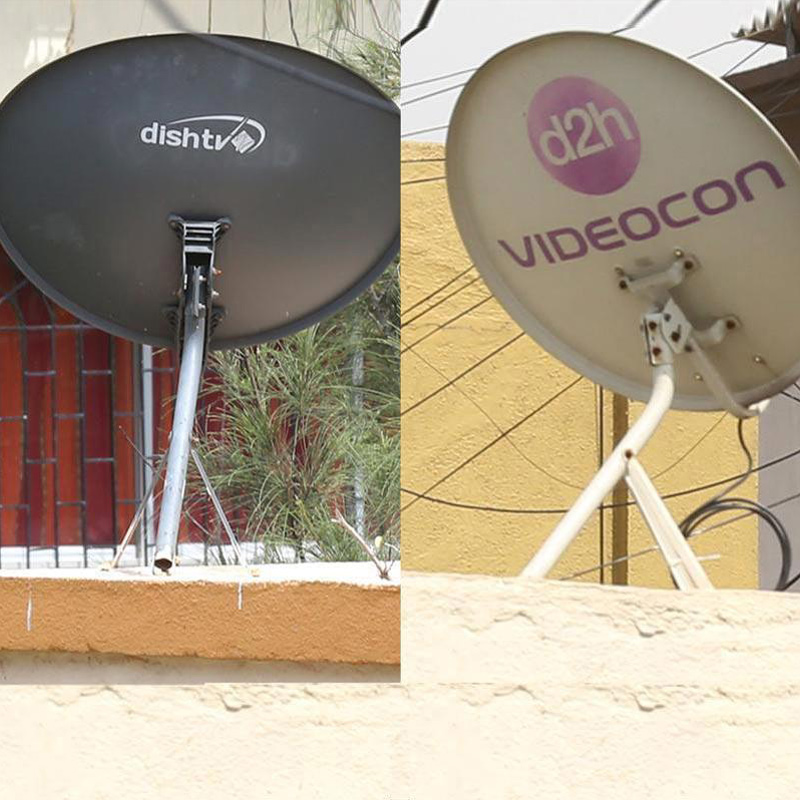
  • Dish TV re-evaluating Videocon d2h merger

    Dish TV re-evaluating Videocon d2h merger

    MUMBAI: The Dish TV-Videocon d2h merger had reached the final stage with the Ministry of Information and Broadcasting (MIB) giving it the green signal. Then, suddenly on 22 December, Dish TV announced that the union would be delayed beyond 27 December 2017 citing technical reasons. Now those reasons–it basically is revaluating the deal–are likely to hold up the fusing of the two DTH operators even further.

    Dish TV yesterday informed the BSE that it had told its advisors–which include financial advisor Morgan Stanley, E&Y, SR Batliboi & Co and Luthra & Luthra Law Offices-to re-examine the deal terms within 60 days.

    It said that it was taking this step as “it has come to our knowledge that certain entities belonging to the Videocon group, including the promoters of Videocon D2h Ltd, have become subject to insolvency and/or enforcement proceedings by lenders. The company is evaluating as to whether there is any impact of the same on its rights and obligations under the definitive agreements, and consequential effects on the transactions contemplated.”

    The companies had announced a merger in November 2016 tom-tomming the benefits that would accrue to the two if they went ahead. And both companies went about the process getting the various regulatory approvals required. In early March 2017, the merger got the NOC from the BSE and the NSE, Competition Commission of India clearance on 4 May 2017, shareholder approval through a meeting convened by the National Company Law Tribunal (NCLT) on 12 May 2017, and the NCLT green flag on 27 July 2017, and the MIB go ahead on 15 December 2017.

    As per the terms of the merger Dish TV Videocon d2h was to issue 857.79 million fresh shares. Shareholders of Videocon d2h were to get 2.02 shares of Dish TV Videocon for every share of Videocon d2h. D Dish TV shareholders would own 55.4 per cent shares of the merged entity while Videocon d2h would own the remaining 44.6 per cent.

    Dish TV is pressing the pause and review button at a time when at least two transactions in the direct-to-home segment have been completed.  Late last year, private equity firm Warburg Pincus picked up a 20 per cent piece of Airtel DTH for a handsome price of $350 million valuing the entire operation at $1.7 billion. Then Delhi-based Pantel Technologies and Veecon Media bought out all the losses, debt, and liabilities of Reliance Big DTH from the Anil Ambani group, bringing to a close a long struggle by the latter to exit the DTH business.

    Also Read :

    Dish TV-Videocon d2h merger date postponed

    DTH’s year of consolidation

    DTH subscriber growth down in second quarter


  • DTH’s year of consolidation

    DTH’s year of consolidation

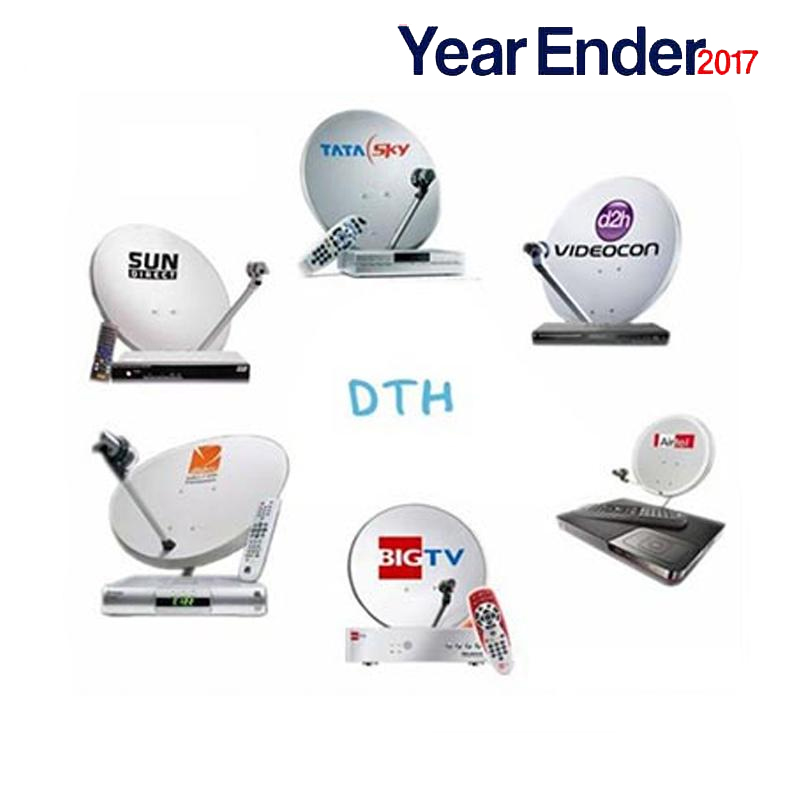
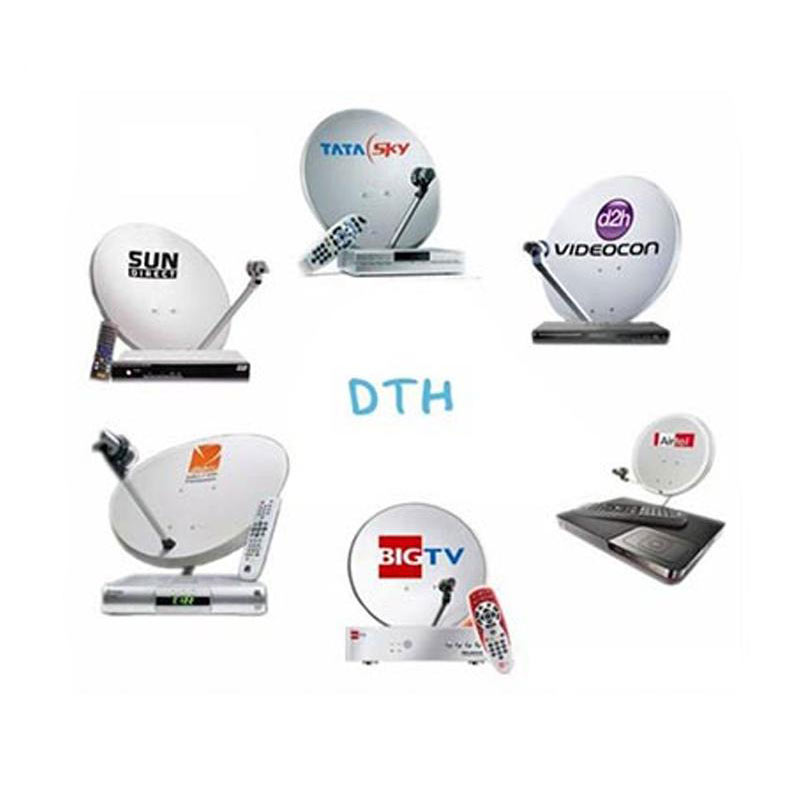
    MUMBAI: It would be safe to say that this was the year of the big DTH challenge. India’s cable TV multi system operators (MSOs) could not go into many phase IV areas and DTH stepped in wherever analogue broadcast signals were switched off following the crossing of the digital addressable system (DAS) deadline. Whether it was Tata Sky, FreeDish, Videocon d2h, Airtel Digital TV, Sun Direct or Dish TV, they all played a part.

    The going, however, was not as smooth as it could have been. High capex and opex and low ARPUs continued to dog the video distribution vertical making it an extremely low or no-margin business. While in the early days customer acquisition was the driver for most distribution platform operators, currently their eye has been on cost-efficiencies. This was evident from the ongoing overtures three of the players were making to others. Dish TV and Videocon d2h were already going through the throes of merging, the Anil Ambani-owned Reliance Big DTH was shopping around having conversations with almost every player, and there were talks of Airtel and Tata Sky possibly getting into bed with each other.

    The first nearly came to pass in 2017 with the two companies getting clearances from all quarters—government, courts and company law board—but getting stuck over the year end because of a technical difficulty. Reliance Big TV was sold to an IT and electronics company Veecon that sells security scanners and tablets–the wealth of its promoters is rumoured to be from selling religious lockets. Veecon said it would renew the Big TV licence by giving the requisite bank guarantees and ensure TV continuity for its approximately 1.2 million customers and jobs for nearly 500 people. It also announced that it would take Reliance Big DTH free to air (FTA) and announced a partnership with Sri Adhikari Brothers to launch a clutch of channels that would prove to be drivers of the platform. How Veecon will pay off Big TV’s payments to broadcasters was not clear at the time of writing and will decide whether the platform will ever take off.

    However, its announcement came at a time when the government had shut the door for private broadcasters and DD FreeDish, which had shown gee whiz growth rates, had come up as a powerful DTH player. New Ministry of Information and Broadcasting (MIB) minister Smriti Irani refused to make channel renewals for which several broadcasters took it to the Telecom Disputes Settlement Appellate Tribunal (TDSAT). An interim order gave the channels, whose licence was soon to expire, relief that they could continue by paying similar prices till Prasar Bharat came up with an alternative proposal and a convincing explanation to throw out private TV channels off DD Free Dish. It is expected that Prasar Bharati will formulate its new policy akin to the FM radio auction wherein 50 per cent of revenue is shared, apart from the bid amount, in e-auctions. Talk internally is that none of this would happen and DD Free Dish is most likely going to be used solely to relay government channels.

    Media reports also said sometime in the second half of the year that there could be more synergies between the Tatas and News Corp-promoted Tata Sky and Airtel Digital TV with possible merger talks taking place. That hasn’t happened as of now but the Airtel group did end up buying out certain telecoms asset of the Tatas.

    Also, private equity firm Warburg Pincus announced its decision to own 20 per cent stake in Airtel Digital TV for $350 million, leaving 80 per cent with Airtel’s promoters. That valued the Mittal-owned DTH service at a whopping $1.7 billion, which was mouthwatering news for the DTH pioneers. By September, Airtel claimed ownership to 14 million subscribers with revenue of $550 million.

    The year was significant for the fact that the DTH operators led by Tata Sky and Airtel Digital decided they had to take a tour of the court. The Harit Nagpal-led operator challenged the Telecom Regulatory Authority of India’s (TRAI) order on tariff and the reference interconnect regulations. The order stated that all stakeholders must abide by rates fixed by broadcasters. Joining Tata Sky in court was Airtel.

    Dish TV, the oldest DTH player in the country, appointed Anil Dua as its new CEO even as the company’s integration with Videocon d2h was on the anvil. Dish TV’s CMD Jawahar Goel raised an alarm over Star India’s monopoly in cricket events that, after its acquisition of the rights for the Indian Premier League (IPL), would force DTH players to include Star Sports channels and result in the broadcaster pricing the sports channels exorbitantly. No government reaction was forthcoming on this issue. Dish TV also took Star channel Life Ok to the TDSAT claiming that it could not rebrand itself as an FTA from a pay channel without sufficient intimation. Life Ok is today Star Bharat and a leading channel in BARC viewership ratings, riding on the expanded viewership courtesy Doordarshan’s FTA KU-band platform called DD FreeDish.

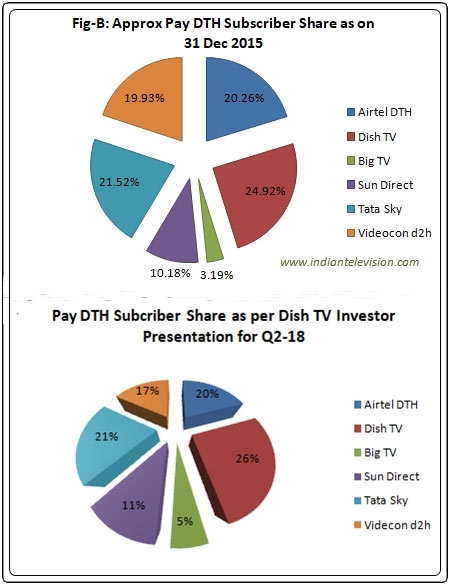
    For the quarter ended 31 March 2017, not only did subscriber additions dip drastically, but were also the lowest for a quarter in the financial year 2016-17. Airtel, Dish TV and Videocon saw total addition of just 8.33 per cent to 41.13 million for the concerned financial year. By 30 September 2017, there were just 2.47 million additions to the DTH industry as per TRAI, which was way below the 3.37 million it gained in the same six months in 2016. Moreover, active subscribers added in the July-September quarter were just 0.78 million, half of the figure from the corresponding quarter a year ago. Dish TV, Airtel DTH and Videocon d2h make up 63-65 per cent of the total active subscribers while Tata Sky holds about 21 per cent and Sun Direct 11 per cent. DD Free Dish is estimated to have 22 million subscribers and is expected to touch 40 million in two to three years.

    The second half of the year saw the introduction of the goods and services tax (GST) that gave a breather to those consuming cable and DTH services. Whereas customers once paid anything between 10-30 per cent as entertainment tax as well as a 15 per cent service tax, it was now fixed at 18 per cent. The Punjab government also announced that it would be adding a new entertainment tax to cable and DTH connections with the latter having to bear Rs 5 a month.

    Sun Direct is a major DTH player in the south holding about 40 per cent of the area. It also makes up 97 per cent of its total subscribers. Sun Direct took up an HEVC media solution from Harmonic to increase its HD channel number to 80.

    Profit after tax (PAT) for Videocon stood at Rs 168 million for the quarter ended 30 September 2017, which was just Rs 12 million for the previous quarter and Rs 148 million for the corresponding quarter a year ago. Dish TV, however, was in the red with net loss of Rs 178.7 million for the quarter as against PAT of Rs 689.6 million for the same quarter a year ago. During the quarter ended 30 September 2017, Airtel reported PAT of Rs 12,990 million down from Rs 27,350 million from a year ago.

    Videocon d2h and Airtel showed good average revenue per user (ARPU) numbers in 2017. The former raked in Rs 212 for the quarter ended 30 September 2017 from 13.25 million subscribers (a 0.21 million increase from the previous quarter). The ARPU for the previous quarter was Rs 198 while a year ago quarter was Rs 209. Dish TV’s ARPU for the same quarter was Rs 149, a rupee higher than the trailing quarter. It had a total of 15.1 million subscribers. ARPU for Airtel Digital TV stood at Rs 233 in the respective quarter, up from Rs 228 in the previous quarter and Rs 232 in the year ago quarter. Tata Sky does not release its financial numbers but analysts pinpoint its ARPU to be close to Rs 300.

    Dish TV introduced numerous value-added services (VAS) to encourage more viewers such as the Dance Active and Disney Active series, cardless STBs, 32 educational channels under Swayam Prabha. Early on in the year, it cut the rate of its base pack to Rs 33 a month to counter the free services by DD Free Dish. It even went to the extent of allowing people to curate their own packs by picking individual channels. Dish TV added 23 channels, which included nine HD ones.

    Tata Sky came up with a Make My HD pack for as low as Rs 30 per month and a regional HD Access pack at Rs 50 per month for users subscribed to regional SD channels. The channel targeted the south market with a South special pack at Rs 290. Dish TV campaigned for HD in all homes by removing the access fee on it and advertising a cost as low as Rs 169 per month (excluding taxes). Countering DD Free Dish, the oldest DTH player also introduced an FTA pack with a price translating to Rs 32 a month.

    On the technology front, Airtel’s hybrid STB was officially the first to launch in the market, bringing to consumers the best of both worlds–satellite channels and content available on the internet. The STB also came preloaded with Netflix and YouTube allowing even a regular TV to turn ‘smart’ courtesy an inbuilt wi-fi feature and Google voice search. Dish TV launched its new card-less security feature with Verimatrix as well as an artificial intelligence-enabled chatbot called ADI.

    For the coming year, the industry will likely see the outcome and growth of the first merger between Dish TV and Videocon and the synergies they bring to the industry. FreeDish is expected to be a big player in the remote parts of the country, especially with FTA broadcasters dancing to their tune. DTH operators have to still work hard to increase ARPU and maintain profitability.
     

  • DTH subscriber growth down in second quarter

    DTH subscriber growth down in second quarter

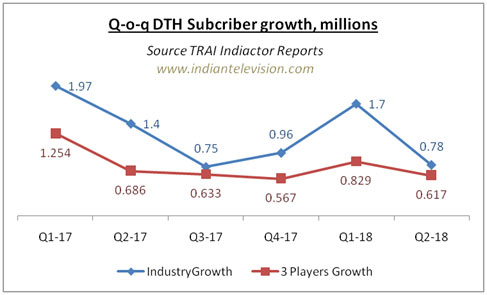
    BENGALURU: The carriage industry and more specifically the direct to home or DTH industry had a disappointing fiscal year 2017 (FY-17, year ended 31 March 2017) in terms of subscriber growth. Going by the subscriber numbers data of the six private DTH players in India provided by the Telecom Regulatory Authority of India (TRAI) in its Indicator Reports of the Indian Telecom Sector. This dismal performance seems to have spilled over to the second quarter of financial year 2017 (FY-18, year commenced on 1 April 2017 until 31 March 2018) as per TRAI data for the quarter ended 30 September 2017 (Q2-18, quarter under consideration). The industry could add just 2.47 million subscribers during the first six months (first 2 quarters, 1 April 2017 to 30 September 2017) as compared to the 3.37 million subscribers it added during the corresponding year six-month period the year before. Active DTH subscribers added in Q2-18 were just 0.78 million as compared to 1.4 million in Q2-17.

    Further, as reported by us earlier, despite the sunset date for DAS IV having passed, the DTH industry had not been able to leverage the opportunity that it was presented with. Earlier, TRAI numbers for the six private players in the DTH industry showed a very poor growth rate of just 0.96 million and 5.08 million during the quarter and year ended 31 March 2017 (Q4-17, FY-17) respectively. This figure is far lower – less than one-third of the 17.38 million active DTH subscribers that were added in fiscal 2016 by the six.

    Please refer to the figure below – The three players whose numbers are available in the public domain and whose combined q-o-q subscriber growth has been represented in the figure are Dish TV, Airtel DTH and Videocon d2h

    public://1_6.jpg

    Let us understand the status of the DTH industry at the end of September 2017. The six private DTH players are – Dish TV, Tata Sky, Airtel Digital Services (Airtel DTH), Videocon DTH, Sun Direct, and the Anil Ambani-led Reliance Big TV (Big TV). It may be noted that Big TV announced closure of its operations since November 2017. The three players – Dish TV, Airtel DTH and Videocon d2h represented approximately 63 to 65 percent of the active pay-TV DTH subscribers at the end of September 2017. Please refer to figure below for subscriber share of the private DTH players as per data in the public domain:

    public://2_1.jpg

    Besides the six private pay DTH players, Doordarshan’s (DD) Free Dish DTH service is a major player in terms of subscribers with an estimated 22 million as per the numbers available in the public domain. It must however be noted that an exact number for registered or active subscribers is not available even with DD, since this is a free DTH service. When the announced Dish TV Videocon d2h merger happens, the merged entity will probably be one of the largest DTH players in the world in terms of subscriber numbers.

    According to an E&Y report titled ‘India’s Free TV’ released in July 2017, among the DTH operators in India, DD Free Dish has grown to become the largest with its estimated 22 million subscribers which E&Y predicted could cross 40 million over the next two to three years.

    A number of reasons can be attributed to this dismal performance – two of the chief ones that are touted over the recent past by most players in media and entertainment industry – demonetisation in November 2016 and the implementation of GST. Another important reason could be that DTH is considered a premium service – by all the stakeholders in the carriage ecosystem with the resulting perception that procurement as well as monthly subscription will be premium and hence a deterrent for the consumer. While some players such as Dish TV have been making attempts to come up with packages that it perceives should attract the masses, but, results as per TRAI data seem to indicate otherwise. Yes, Dish TV is the largest private player in the country that has come up with different pricing models under different brands. Whether unwittingly or not, most of the other players present themselves as premium players and seem to have done little in that direction.


  • Dish TV-Videocon d2h merger date postponed

    Dish TV-Videocon d2h merger date postponed

    MUMBAI: The official date for the amalgamation of Videocon d2h into Dish TV has been moved ahead from the earlier decided 27 December 2017.

    In a release to the Bombay Stock Exchange, Dish TV said that the company would be unable to file the relevant intimation forms with the authorities, such as the Registrar of Companies and the Ministry of Corporate Affairs, by 27 December. The new date will be notified soon, the release added.

    A week ago, Dish TV and Videocon d2h were given the final nod by the Ministry of Information and Broadcasting to merge and create the world’s second-largest DTH company with 29 million customers. It was in November 2016 that the companies first announced their decision.

    The combined entity is expected to provide better after sales, distribution, and technology services.

    For the quarter ended 30 September 2017, Videocon d2h posted profit after tax (PAT) of Rs 168 million and an addition of 0.21 million subscribers. Dish TV’s PAT for the quarter was Rs 689 million and its subscriber base increased by 0.188 million.

    Also read:

    MIB clears path for Dish TV Videocon

    Dish TV reports improved operating profits for second quarter

    Recalibrating India’s DTH sector after Airtel DTH-Warburg Pincus deal

  • A tale of two giant mergers and their India fallout

    A tale of two giant mergers and their India fallout

    MUMBAI: Two deals shook the world of media and entertainment last week: Disney-21st Century Fox and Dish TV-Videocon d2h. One was all about content and affects the world of media and entertainment globally including India. The second was all about content distribution and platform and impacts the world of television in India.

    Of course, the ripple effect of the first is oceanic for comparison with the other. So deep will be the impact of Bob Iger and Rupert Murdoch’s decision that the future will look back at the history of media as the pre and post-Disney-Fox and New Fox era.

    Nevertheless, it has created a behemoth in India: the new Disney, which now will house Star India, will have relationships with Tata Sky and the video streaming service Hotstar. The union of Disney and Fox is expected to bring in synergistic savings of close to $2 billion; some of that will be contributed by the Indian division, however marginal that might be.

    In India, the Dish TV-Videocon d2h merger has created the world’s second largest pay satellite TV distribution platform with 29 million subscribers, just behind AT&T’s Direct TV.

    Dish TV Videocon merged is also predicted to bring in large savings through rationalisation of the two companies’ manpower, backend resources and better combined purchasing negotiating power, distribution and infrastructure like offices etc. An estimate is that costs cumulatively will come down by about 10-20 per cent.

    The main leverage it will get is in content costs. Even though the Disney-Fox combine will be unmatchable internationally, in India, Dish TV Videocon could more than prove a match for it. With the expensive IPL under its belt, it will most probably have to kowtow to CEO Anil Dua and chairman Jawahar Goel’s diktats on how much they will pay out for carrying the Star India network’s signals, which includes its premium programming and sports.

    Also read:

    MIB clears path for Dish TV Videocon

    21st CF spins-off into new live news & sports co Fox

    With Star India, Disney emerges as India’s largest M&E firm

  • MIB clears path for Dish TV Videocon

    MIB clears path for Dish TV Videocon

    MUMBAI: Even as a new global media powerhouse was created in the US yesterday with Disney’s buyout of Fox’s entertainment assets for $52.4 billion, India’s ministry of information & broadcasting (MIB) has cleared the decks for Dish TV and Videocon d2h paving the pathway for the creation of a mammoth DTH company.

    The companies had received the green signal from the Mumbai division of the national company law tribunal some months ago after which the ministry’s approval was pending. Dish TV and Videocon d2h reported separate revenue and EBITDA numbers which at a pro-forma level add up to Rs 60,862 million and Rs 19,909 million for FY17. Following the amalgamation, the combined entity will be renamed as Dish TV Videocon Limited.  

    As on 30 September 2017, the duo together serve more than 29 million customers.

    Dish TV CMD Jawahar Goel says, ““It has been a long journey since the announcement of the agreement between the two companies a year back. We would like to thank the ministry of information and broadcasting, the national company law tribunal, the competition commission of India, the securities and exchange board of India, the stock exchanges and all other stakeholders for showing their trust in us. I would also like to express our gratitude to our shareholders for standing by us through the transaction and believing in us to take the combined entity to the next level going forward.”

    Dish TV group CEO Anil Dua says, “Together, Dish TV and Videocon d2h are going to write history as we embark on this journey of delighting our 29 million and growing customer base. It is an exciting way ahead as we get this opportunity to leverage the individual strengths of the two organisations. I feel reassured looking at the formidable combination of these two talented teams that are now going to be working together towards a shared vision and common goals.”

    Dish TV Videocon is expected to provide better synergies and growth opportunities through enhanced after-sales, distribution and technology capabilities. Aon, Deloitte and PwC have been roped in to help it with project management for seamless integration of core functions, processes and technology infrastructure.

    It has been a year-long journey for Dish and Videocon since they announced the intent to merge last November. The scheme will take effect in the coming weeks.

    For the quarter ended 30 September 2017, Videocon d2h saw PAT of Rs 168 million and an addition of 0.21 million subscribers, taking its total to 13.25 million. On the other hand, Dish TV’s PAT for the same quarter was Rs 689.6 million while subscribers increased by 0.188 million to hit 15.9 million.

    The new year is expected to be a good one for the dynamic duo. And they have every reason to celebrate.

    Also Read:  Dish TV reports improved operating profits for second quarter

    Videocon d2h reports another profitable quarter

    Dish TV–D2H merger gets NCLT approval

  • Dish TV reports improved operating profits for second quarter

    Dish TV reports improved operating profits for second quarter

    BENGALURU: Hit by a double whammy–that of demonetisation and the implementation of the new goods and services tax (GST)–Indian media and entertainment (M&E) companies have been struggling to attain and/or maintain black in their financials. Direct to home or DTH was one of the components of the M&E industry that had slowly started reporting profits – operating or plain profits after tax. The Essel group’s DTH services company Dish TV India Ltd (DishTV) was one of the first companies from the Indian carriage industry that had started churning out profits until the aforementioned double whammy. Subscription collections were suddenly hit because people just didn’t have enough legal currency. Average revenue per user (ARPU) fell – last year in the quarter before demonetization, the company had reported ARPU of Rs 162. For the quarter ended 30 September 2017 (Q2-18, quarter under review), ARPU was Rs 149. In the immediate trailing quarter (Q1-18), ARPU was slightly lower at Rs 148.

    Over the last few quarters post demonetisation, Dish TV’s net profits were in the red. However, during these quarters, operating profits (EBIDTA) were positive and that seems to have improved for the quarter under review as compared to the immediate trailing quarter (q-o-q, Q1-18). Year-over-year however, Dish TV has reported a net loss and lower operating profit for Q2-18 as compared to net profit and EBIDTA numbers of the corresponding year ago.

    Dish TV reported 7.4 percent higher q-o-q EBIDTA for Q2-18 at Rs 2,160.8 million (28.9 percent margin – on operating revenue) as compared to Rs 2012.0 million (27.2 percent margin) for Q1-18. EBIDTA for Q2-17 was Rs 2,656.8 million (34.1 percent margin). The company’s net loss however widened q-o-q to Rs 178.7 million during the quarter under review as compared to a net loss of Rs 135.1 million in Q1-18 and a net profit after tax of Rs 689.6 million (8.8 percent margin) for Q2-17.

    The silver lining for the company has been its growing subscriber base, and this despite lower ARPU has resulted in 1.3 percent q-o-q increase of operating revenue to Rs 7,585.80 million for Q2-18 as compared to Rs 7,388.8 in Q1-18. However, y-o-y operating revenue during the quarter under review was 3.9 percent lower as compared the Rs 7,792.8 million for Q2-17.

    The company’s subscriber base has increased by 0.188 million subscribers during the quarter under review and it has reported a subscriber base of 15.9 million. The company had closed the corresponding year ago quarter with a subscriber base of 15.1 million – it had added 0.259 million subscribers in Q2-17. Consequently, Dish TV’s subscription revenue grew 1.9 percent q-o-q during the quarter under review to Rs 7,049 million. Year-on-year, subscription revenues were 3.3 percent lower than the Rs 7,288 million reported for Q2-17. Churn for Q2-18 was 0.8 percent

    A look at the other numbers

    Total expense in Q2-18 increased 6 percent y-o-y to Rs 7,834.7 million from Rs 7,393.1 million. Employee benefits expense was almost flat (declined 0.2 percent) y-o-y to Rs 366.3 million from Rs 367 million. Operating expenses in Q2-18 increased 6.6 percent y-o-y to Rs 3,893.4 million from Rs 3,651.9 million. Other expenses during the quarter under review declined 4.8 percent to Rs 1,038.0 million from Rs 1,090.8 million in Q2-17. Finance costs in Q2-18 increased 6.4 percent y-o-y to Rs 610.9 million from Rs 574.2 million.

    Amalgamation of Videocon D2h into Dish TV

    The proposed combination of Dish TV and Videocon d2h would create one of the world’s leading DTH platform.

    Dish TV CMD Jawahar Goel said, “We have been eager to get back to our stakeholders with the news of the successful closure of the merger. With all other approvals in place, the only approval pending is from the Ministry of Information and Broadcasting. We are optimistic about hearing back from the MIB any moment now and hope to close the merger at the earliest thereafter.”

     “We remain excited about the next phase of growth that the combined entity, Dish TV Videocon Limited, will go through and are committed to make the combination a mega success. On the synergy front, we stick to our guidance of Rs. 1,800 million for FY18 and Rs. 5,100 million for FY19,” he added.


  • Videocon d2h reports another profitable quarter

    Videocon d2h reports another profitable quarter

    BENGALURU: Saurabh-Dhoot led Indian DTH player Videocon d2h reported profit after tax (PAT) of Rs 168 million for the quarter ended 30 September 2017 (Q2 FY 2017-18). The company had reported PAT of Rs 12 million for the immediate trailing quarter (Q1 FY 2017-18) and PAT of Rs 148 million for the corresponding year ago quarter (Q2 FY 2016-17). Adjusted earnings before interest, taxes, depreciation, and amortisation (EBIDTA) increased by 6.9 percent year-on-year (y-o-y) during the quarter under review to Rs 2,805 million from Rs 2,625 million. Adjusted EBIDTA less capital expenditure increased by 29.4 percent y-o-y to Rs 1,174 million as compared with Rs 907 million.

    Videocon d2h revenue from operations increased by 7.5 percent y-o-y during the quarter to Rs 8,346 million from Rs 7,762 million. Subscription and activation revenue increased by 8.4 percent y-o-y to Rs 7,701 million from Rs 7,107 million.

    Subscriber matrices

    The company’s subscriber base increased by 0.21 million during Q2 FY 2017-18 to 13.25 million from 13.04 million in the immediate trailing quarter. The company had a subscriber base of 12.52 million in Q2 FY 2016-17. Videocon d2h reported a quarterly subscriber churn of 0.62 percent, which was less than half the churn of 1.27 percent reported for Q1 FY 2017-18. Subscriber churn for Q2 FY 2016-17 was 0.95 percent. The company has reported higher average revenue per user (ARPU) of Rs 212 for the quarter under review as against Rs 198 for the immediate trailing quarter and Rs 209 for the corresponding year ago quarter.

    A look at the other numbers

    Total expenses rose by 7.5 percent y-o-y to Rs 7,357 million in Q2 FY 2017-18 from Rs 6,843 million Operating expenses increased by 8.4 percent y-o-y to Rs 4,391 million from Rs 4,052 million. Administration and other expenses jumped up by 50.8 percent y-o-y to Rs 276 million from Rs 183 million. Employee benefits expenses declined by 23.8 percent y-o-y to Rs 240 million from Rs 315 million. Selling and distribution expenses increased by 4.3 percent y-o-y to Rs 633 million from Rs 607 million.

    Company speak

    Videocon d2h executive chairman Dhoot said, “I am delighted to report that we have delivered a strong quarter and have reported the highest ever quarterly adjusted EBITDA in the history of Videocon d2h at INR 2.81 billion. More importantly, adjusted EBITDA per subscriber grew by double digits from the last quarter and came in at INR 71 per subscriber per month, supported by better revenue realisations and higher operational efficiencies.”

    He added, “We remain optimistic on the future outlook of the company as we merge with Dish TV India Ltd in the coming weeks, subject to receipt of approval from the Ministry of Information and Broadcasting. The businesses of Videocon d2h and Dish TV India will be amalgamated for financial reporting purposes from October 1, 2017, the date appointed by the Honorable National Company Law Tribunal. We believe that the merged entity would be one of the largest pay TV platforms in the world in terms of subscriber base, according to company estimates. We are excited about the growth prospects of the merged entity given its large scale, solid business fundamentals, and a healthy balance sheet.”

  • Tata Sky offers Reliance DTH consumers migration deal, Dish TV too in play

    Tata Sky offers Reliance DTH consumers migration deal, Dish TV too in play

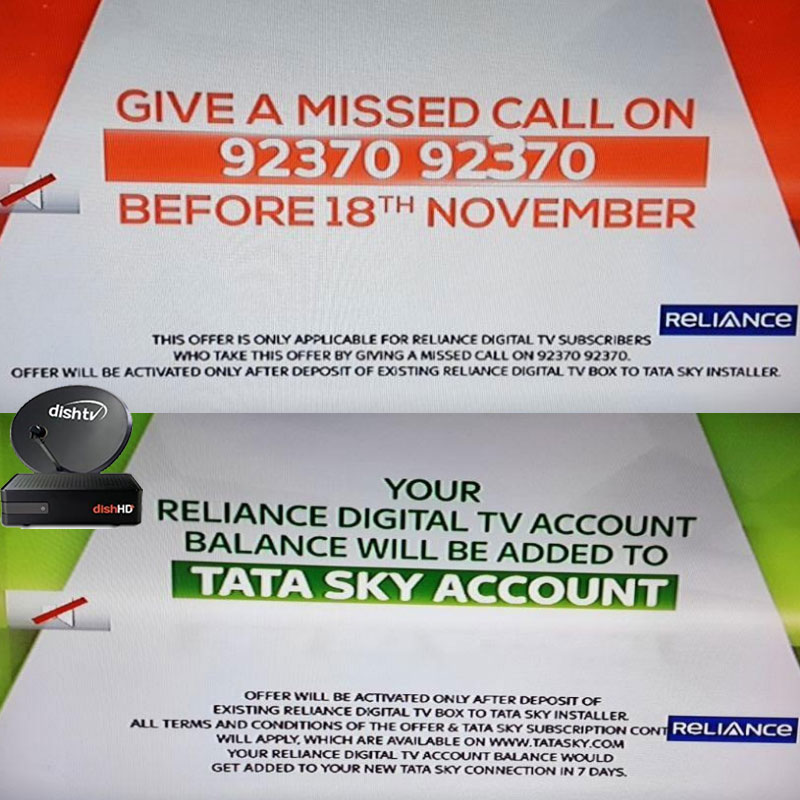
    MUMBAI: Tata Sky reportedly is offering consumers of Reliance Digital TV a limited time offer till middle of November 2017 to migrate to its platform at no extra cost. Reason: Reliance is not renewing its DTH licence that expires in November 2017.

    Though no official confirmations are forthcoming from any of the companies involved, a message being flashed on TV sets of consumers of Reliance Digital TV informs people to call a designated number or give a missed-call after which the consumer receives a call back from its new DTH service provider.

    The message mentions a number 9237092370 that has to be called. When the number was called by this reporter, a recorded message said, “Thank you for showing interest in Tata Sky. We will get in touch with you within 72 hours.”

    According to a possible deal hammered out between the two companies, Tata Sky will offer to Reliance consumers a mechanism involving installation of free STBs and dish antennas for a painless migration in an offer that is valid till 18 November 2017.

    Tata Sky is also promising the approximately one million Reliance Digital TV consumers — mostly pre-paid — their Reliance credit money will be transferred to the new Tata Sky accounts.

    However, industry sources indicated that India’s first private sector DTH operator Dish TV too has, reportedly, told its distributors that any Reliance Digital TV consumer who has not migrated to a competitor’s platform should be targeted for acquisition after paying that consumer a one-time fee of approximately Rs. 1,000. Dish TV is in the process of amalgamating the ops of Videocon d2h DTH with itself pending some regulatory clearances.

    Few days back Reliance Communications, parent of Reliance Digital TV, had informed Bombay Stock Exchange: “DTH operation is a non-core business of the company provided through Reliance BigTV Limited (RBTV), a subsidiary of the Company. RBTV’s DTH license is expiring by end of November 2017and the company is currently working with three leading DTH operators for seamless migration of customers to enjoy uninterrupted services”.

    Whether some regulatory clearances by other satellite TV operators in India need to be taken for customer acquisition of soon-to-be-shuttered DTH ops of Reliance is not yet clear. 

    When indiantelevision.com had got in touch with regulator TRAI and Ministry of Information and Broadcasting last week, officials at both the organizations said they were unaware of Reliance Digital TV’s future plans and also the reason as to why it was not renewing its DTH licence as no official communications had been received by them till then.

    (With additional inputs from BB Nagpal in New Delhi)

    ALSO READ:

    Malaysia’s Astro ‘doesn’t know’ about talks with Reliance Digital TV

    Videocon d2h & Reliance Digital finding ways to wriggle out of tough situations

    ZEEL gets NCLT approval for restructuring acquired Anil Ambani GEC business