Tag: discovery+

  • Discovery ropes in HP as presenting partner for Mythbusters

    Discovery ropes in HP as presenting partner for Mythbusters

    MUMBAI: Discovery Channel, the flagship network in Discovery Networks Asia-Pacific‘s (DNAP) portfolio, has roped in leading information technology service provider Hewlett Packard as a presenting partner for its popular series Mythbusters.

    The partnership, which includes on-air, on-ground and online elements, presents the new episodes of Mythbusters to viewers in Southeast Asia from 23 March to 28 April.

    In addition to presenting brand new episodes, the on-air component includes a spot campaign for the HP Folio13 that will air on Discovery Channel, TLC and Animal Planet for the duration of the partnership.

    Discovery Channel and HP will be running an online contest that will provide one lucky winner with a truly unique Discovery Channel experience – a trip for two to visit the Mythbusters lab in San Francisco.

    As part of the on-ground activation there will be roadshows in four cities in Southeast Asia, kicking off 22-25 March at Gandaria City in Jakarta, Indonesia, and from 24-25 March at Central World in Bangkok, Thailand. Other locations are Marina Square in Singapore on April 14-15, and Mid Valley Mall in Kuala Lumpur, Malaysia on April 25-29.

    At the roadshows, visitors will get the chance to test some “myths” associated with laptops, discover the unique features of the HP Folio13, and win prizes including exclusive Mythbusters merchandise at the various interactive booths. At the end of each roadshow, there will also be a HP Folio13 notebook to be won.

    Talking about the partnership, DNAP vice president-advertising sales Jacqueline Tok said, “Leveraging on our synergies as market leaders, Discovery Channel and HP are working together for the first time to bring viewers new episodes of our hugely popular series Mythbusters. Our integrated campaign extends the viewing experience beyond television and provides our valued partner HP with customised solutions to further reach their target audience and launch their latest business UltrabookTM, the HP Folio13.”

    The show will see special-effects experts Adam Savage and Jamie Hyneman take on age-old myths and urban legends to show viewers what‘s real – and what‘s reel. The show will be aired on Discovery Channel every Friday at 9 pm (SIN/HK) across Southeast Asia.

    HP South Asia and Taiwan (SEAT) vice president & general manager – Personal Systems Group Dennis Mark said, “We are excited to partner with Discovery Channel for a series of exciting roadshows that bring the HP Folio13 experience closer to SEAT markets.”

  • Aaj Tak, NDTV, Discovery emerge as most trusted TV brands

    Aaj Tak, NDTV, Discovery emerge as most trusted TV brands

    MUMBAI: TV Today’s flagship Hindi news channel, Aaj Tak, has emerged as the most trusted brand across the television as well as news channel category, according to the Brand Trust Report unveiled recently.

    New Delhi-based news network NDTV has come second as the most trusted television brand followed by Discovery channel, which is at the third spot in the overall television category and first in the ‘other’ category.

    The top ten listing consists of as many as three general entertainment channels including Zee TV at fourth spot, Star at sixth spot, and Colors at seventh spot. Food lifestyle channel Food Food TV has climbed tenth spot in the first year of its launch.

    Sun TV is the only channel from South to make it to the list of 40 most trusted television brands. Kaun Banega Crorepati, which made a successful comeback last year with its larger-than-life host Amitabh Bachchan, is the only television programme to figure in the Top 40 list, which mainly comprises news, infotainment and movies channels among others.

    Among the GEC’s, TLC Travel & Living has emerged as the numero uno brand followed by Colors in a list that comprises 13 channels including Star TV, Food Food and MTV who share the third, fourth and fifth position respectively. At the bottom of the heap is Hindi comedy channel from MSM stable, Sab TV.

    The English movies sub-category is shared by Star Movies and HBO at first and second spot respectively while the sports sub-category is dominated by ESPN Star Sports network channels – ESPN and Star Sports.

    Similarly, in the ‘channel cluster‘ category, Star Network, UTV Group (now bought by Walt Disney) and Zee Network have taken the top three spots. In ‘other’ sub-category, Discovery followed by Disney are the top two brands. Others include National Geographic channel, History channel and KBC.

    The news sub-category was dominated by Hindi, English and business channels with none of regional languages making it to the top 15 list. American news broadcaster CNN and British pubcaster BBC also finished in the final list.

    The Brand Trust Report (BTR), compiled and released annually, includes the BTR questionnaire which is designed to illuminate approximately 425 aspects of brand trust, of which 391 were directly brand related.

    The study also questioned respondents about two other important brand trust influencers – brand recall and the trust-experience of brands, the latter of which they were requested to furnish reasons for. This year‘s research was conducted among 2718 ‘influencer‘ respondents across 15 cities.

    The study generated nearly two million data points and 17,000 brands and was conducted across 15 cities. Indian Statistical Institute helped create a statistically robust Brand Trust Index which has been used to hierarchically rank India‘s brands on the basis of trust.

    The BTR report is published by Trust Research Advisory, which is a part of Comniscient Group.

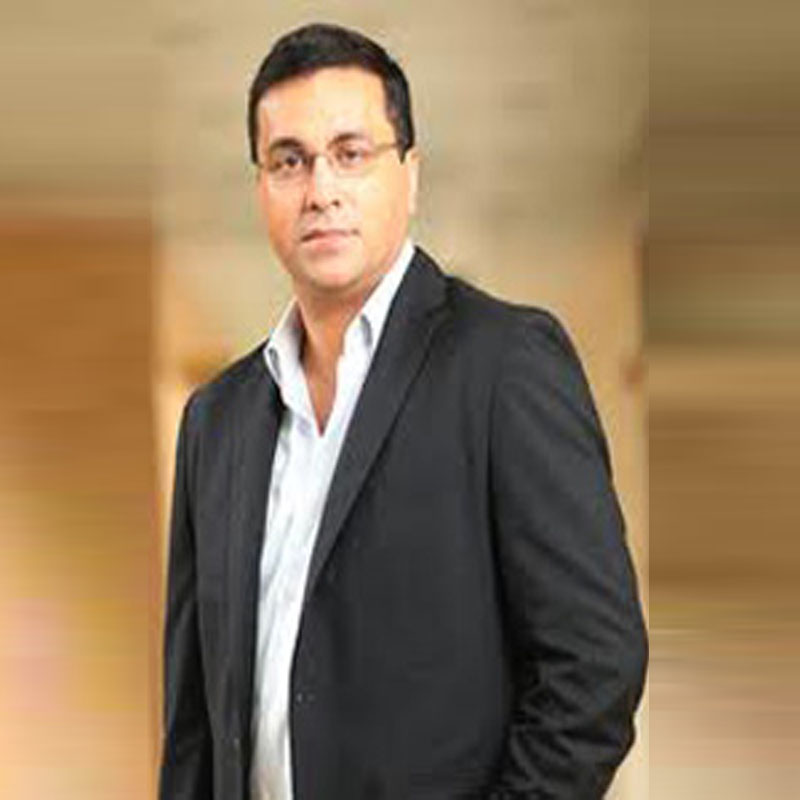
  • 2011: Getting ready for the next growth phase:  Discovery Networks Asia-Pacific SVP and  general manager (South Asia) Rahul Johri

    2011: Getting ready for the next growth phase: Discovery Networks Asia-Pacific SVP and general manager (South Asia) Rahul Johri

    2011 was a year of dynamic transformation for the industry. It will be remembered as a landmark year with the most noteworthy announcement being the government‘s new Digitisation Policy. The other major development which stands out was the sizeable M&A activity in the sector.

    The competitive landscape intensified with every major broadcaster expressing their interest in India with strong actions. New channel launches increased fragmentation. To keep the viewers engaged, companies invested on the brands and launched multiple high-cost productions. Offering a new experience, the HD channels gained attraction. And, of course, there was increased pressure on the limited distribution bandwidth.

    During the year, one of the most evident trends we witnessed in favour of the lifestyle and factual entertainment genre was the increased preference and value for differentiated, high-quality and entertaining content amongst all stakeholders.

    For Discovery India, it was a momentous year. We consolidated our leadership as India‘s No. 1 non-fiction media company by making consistent investments in content, distribution and promotion.

    During this exciting period, we expanded our business on all counts: new channels, new language feeds, path breaking India productions, quality global programmes like Curiosity, increased availability to over 173 million households, robust ad sales growth, all round innovations and high-decibel marketing and communications.

    Discovery‘s guiding principle, “Right Place, Right Time” was in action in all our strategic launches in the year – be it the introduction of our first regional channel Discovery Channel Tamil or the 24-hour Bangla and Telugu language feeds or the innovative local productions like Oh My Gold with Lisa Ray. During the last year, we also showcased our preparedness for the emerging new media landscape.

    India is witnessing a strident demand, amongst all stakeholders, for refreshing and distinct television entertainment. Discovery Channel has risen to the challenge and is today ranked in top 10 channels in India amongst more than 600 plus channels, measured on cumulative annual reach. A nationwide distribution encompassing more than 200,000 villages and a notable presence in the basic packs of the DTH companies are prime indicators of changing India and its strong preference for quality and differentiated entertainment.

    Comprehending the emerging trends, along with the ability to produce matching products and solutions, has been the foundation on which Discovery has created its robust business in India. I am confident that Discovery will continue to be both a beneficiary and catalyst of this fantastic change.

    2012 will be a year of new opportunities. However, it will also present unique challenges. The environment will be extremely vibrant with action on all levels – policy, industry, regional and genre. The year, amongst other things, will test the brands‘ strength and viewer loyalty. One can also expect an increase in spends by channels on both content creation and promotion. The viewer will get an even wider choice of networks, programmes and distribution platforms.

  • History TV18’s challenge will be to build a profitable revenue scale

    History TV18’s challenge will be to build a profitable revenue scale

    MUMBAI: Faced with severe competition from strong rivals like Discovery and NGC channels in the infotainment genre, late entrant History TV18’s strategy of offering the most number of regional feeds will attract a wider range of advertisers but the challenge will be to build a profitable revenue scale.

    Madison Media Group CEO Punitha Arumugam pegs the infotainment genre ad market at Rs 1.5 billion and believes that regional is still a developing space. The major chunk of the revenue, however, is taken away by the two big league players, leaving most of the others in the genre struggling.

    For History TV18, the best approach was to have an alternate strategy. Already available in seven languages (Gujarati, Bengali, Tamil, Telugu, Marathi, Hindi and English), the plan is to launch two more regional feeds.

    Arumugam favours such a strategy. “The future for not only infotainment channels but for every channel in the market is to have regional feeds. As more and more advertisers are exploring better targeting of audiences and localisation of messaging, the need of the hour is for regionalisation of national telecast beams,” she says.

    Several media experts agree that channels up against much bigger rivals should woo advertisers by creating a viable local alternate to the national option.

    Says Lodestar UM COO Nandini Dias, “Infotainment channels have had regional language feeds for quite a while now. Whenever a channel adds a language feed, the ratings in the state increase. This is more evident in the south of India rather than markets like Gujarat or West Bengal. But an increase in viewership is always welcome, however marginal. I am sure the channel would have done a cost-benefit analysis before going ahead with this strategy.”

    The success of regional feeds also depends on the region where the feed is launched. And of all of History TV18’s language languages, Gujarati seems to be the most debatable. Gujarat remains largely a Hindi TV-viewing market.

    Says Spatial Access joint CEO Nikhil Rangnekar, “Having a Gujarati feed will not affect the viewership much.”

    Some even question the profitability of starting a feed in so many regional languages.

    “When Discovery started a feed in Hindi, its viewership experienced a huge leap. But now, if you notice, most of the audiences are attuned to watching infotainment channels in either Hindi or English. These two languages cover most of the TG. Having so many regional language feeds will not really make a difference in the ad market share,” says Rangnekar.

    Also Read:

    History TV18 plans to add two language feeds, boost rev

  • Discovery presents Goafest 2011 ad conclave

    Discovery presents Goafest 2011 ad conclave

    MUMBAI: Discovery Channel will present the Advertising Conclave at Goafest 2011 for the third year in succession.

    The Advertising Conclave, presented by Discovery Channel, will take place at Zuri White Sands on 7 April from 3 pm to 8 pm.

    The ad industry has undergone significant changes in the past decade. Keeping the changing landscape of the industry in mind, Advertising Agencies Association of India (AAAI) presents ‘Preparing the profession for the new decade’, a conclave which will precede Goafest 2011.

    Commenting on Discovery Channel’s association with Goafest 2011, Discovery India senior VP, GM Rahul Johri said, “Goafest is the industry’s most prominent event and we are delighted to be partnering with it for the third year in succession. As in the past, we are confident that this edition of conclave will prepare the industry for the next decade through engaging discussions and in-depth interviews.”

    Presented by Discovery Channel, the Goafest 2011 Advertising Conclave is a common ground for the thought leaders to get together and discuss the larger issues of the industry.

    This year the conclave will be led by RK Swamy BBDO chairman and MD Srinivasan K Swamy. The discussions at the conclave will focus on the advertising practices in the new decade and cover four important dimensions. The first session brings in advertisers’ perspective on the issues facing the agencies and what they should do to be more relevant in the coming years.

    The second session address what can we learn from other service industries; like media/broadcasting, IT, consulting, auditing, telecom and interactive/digital. This will help gain insights on how to increase competency, be more remunerative, attract and retain talent.

    The third session is on ‘How have some advertising companies organised themselves for the new decade?‘ This will be based on an in-depth research done by IMRB on how ‘future-ready’ the agencies are with respect to agency structure, skills enhancement, and new talent acquisition.

    The last session will address the issues of improving remuneration, developing competitiveness and looking for a new cost effective agency model.

    Srinivasan K Swamy, Chairman, Goafest Advertising Conclave in his opening address will talk about the issues that the industry is facing and provide some answers.

    The Conclave will also see ASCI Ambassadors Event where senior professionals from advertisers, agencies and media will take a pledge to create advertising which is honest, truthful, decent, fair, promotes safety, and does not exploit weaker sections of society and children.

    The Conclave will be followed by Goafest 2011 from 8-9 April.

  • Mehul Shah is Discovery director ad sales West

    Mehul Shah is Discovery director ad sales West

    MUMBAI: Discovery has announced the appointment of Mehuli Shah as director – advertising sales, West.

    Shah will be responsible for generating advertising revenue along with planning and implementing business development activities in new market segments for all DNAP’s networks in India.

    Based in Mumbai, Shah will report to Karamjit Dua, Vice President – Advertising Sales.

    Prior to this appointment, Shah was working with the Network18 Group, heading up sales for the CNN IBN and IBN 7 in the Western region. This will be a return home for Shah who was previously with Discovery for six years.

    Shah is an Economics graduate from St. Xavier’s College.

    Discovery India senior VP, GM Rahul Johri said, “We are pleased to welcome Mehuli back to Discovery. She brings a solid performance track record to the job coupled with a high degree of commitment to the client, both of which align perfectly with Discovery’s values. Her broad range of proven sales experience in similar markets will be beneficial to building our ad sales business”.

    Discovery has six brands in its portfolio– Discovery Channel, Animal Planet, TLC, Discovery Science, Discovery Turbo, and Discovery HD World – reaching over 160 million cumulative subscribers.

  • Discovery, Nissan Motor in sponsorship deal in Australia

    Discovery, Nissan Motor in sponsorship deal in Australia

    MUMBAI: Discovery has announced a 12-month sponsorship deal with Nissan Motor in Australia.

    The partnership, an exclusive in the auto category in Australia, will feature Bear Grylls, host of Discovery Channel’s series Man Vs Wild, in a variety of campaign activities to promote the Nissan X-Trail.

    Discovery Networks Asia-Pacific senior VP, GM – Australia and New Zealand Mandy Pattinson said, “This unprecedented partnership is a natural fit as Bear Grylls, who is extremely popular with our Australian audience, is the very embodiment of the Nissan X-Trail’s brand attributes. Through his series MAN VS WILD, Bear captures the spirit of exploration, endurance, adventure, and the strength of the human spirit.”

    Nissan executive GM Tim Stuckey said, “Nissan is very excited to be working with Bear Grylls while he’s in Australia. Nissan X-Trail will always be about the great outdoors and ‘living life.’ The Nissan X-Trail is a capable and practical SUV that can take what the life outdoors throws at it so the association with Bear Grylls is a perfect synergy.”

    Grylls is currently in Australia to launch the Australian episodes of the show, where he ventured into some of the world’s most treacherous terrain in the Northern Territory and the Torres Strait.

  • Pix in marketing push for ‘The Hurt Locker’

    Pix in marketing push for ‘The Hurt Locker’

    MUMBAI: With one of its biggest properties for the year The Hurt Locker airing on 30 October at 9 pm, Pix is doing a marketing campaign covering print, television, outdoor and digital.

    Speaking on this Pix VP marketing Himmat Butalia says, “We are pushing The Hurt Locker as an action movie. We want to capture as many eyeballs as possible and the action genre works best for English movies.

    Pix has carried out outdoor activities in the form of hoardings in Mumbai, Delhi, Bangalore, Kolkata and Hyderabad from 22 October. There are print ads in Mumbai, Delhi, Bangalore and Kolkata on the day of the film‘s airing. The tagline is Everytime you suit up it is life or death”.

    On the television front, the channel has taken spots on channels like Discovery and TLC a couple of days before the film airs.

    In the digital realm, the channel has launched a viral game. Butalia claims that the game got 800 hits on Facebook within 15 minutes of launch. “The digital medium is certainly going to be very important for us going forward. You immediately get a reaction. You can track conversation. We are also using Twitter,” says Butalia. The viral game involves having to defuse a bomb.

    On the ground level, the channel tied up with multiplexes PVR and Fame for loo snippets in Mumbai, Delhi, Bangalore, Hyderabad, Kolkata and Pune. It is also running promos in restaurants like McDonalds, Café Coffee Day in Mumbai, Delhi, Bangalore, Hyderabad, Pune and Kolkata using their screens.

    Radio is not being used as the channel decided to focus on digital instead, says Butalia.

  • ‘Market needs to rationalise their payouts to distribution bouquets’ : MSM Discovery President Rajesh Kaul

    ‘Market needs to rationalise their payouts to distribution bouquets’ : MSM Discovery President Rajesh Kaul

    MSM Discovery is targeting Rs 10 billion in FY’11, an almost 40 per cent jump over the year-ago period, as it adds Neo Cricket into its distribution muscle.

    The rise in revenues will also be aided by stronger performance from some of the existing channels such as Sony Entertainment Television (Set) and Sab.

    Being the only distribution company that has entertainment and sports channels in its bouquet, MSM Discovery expects cable networks to rework their payouts to broadcasters and not take their decisions based on legacies.

    Shepherding MSM Discovery‘s growth drive to combine the subscription revenues of an entertainment and a sports bouquet is Rajesh Kaul. As president of the joint venture company between Multi Screen Media (formerly Sony Entertainment Television India) and Discovery, his 11-year stint at ESPN Star Sports could come into use as he hopes to play the ‘soft-and-hard‘ tactics game to ramp up revenues.

    In an interview with Indiantelevision.com‘s Sibabrata Das, Kaul talks about the need to drive up consumer ARPUs and have a regulatory policy that is fair to all stakeholders including broadcasters.

    Excerpts:

    Will the addition of Neo Cricket and Neo Sports compensate the loss of the Viacom18 channels including Colors?
    I can‘t comment on the exit of the Viacom18 channels as the matter is sub judice. But we are still the biggest distribution company in the country.

    When we had taken up the distribution of Colors, Sony Entertainment Television was around 75 GRPs and Sab 35 GRPs. Today, Sony is 197 GRPs while Sab has touched 134 GRPs.

    So a big change has happened to our existing channels. And we are the only distribution company that has entertainment and sports channels in our bouquet.

    Which is why MSM Discovery is targeting a turnover of Rs 10 billion this fiscal?
    I can‘t comment on the financials but we are looking at a 40 per cent growth. With the addition of the Neo channels, we should be getting the combined subscription revenues of an entertainment and a sports bouquet.

    Isn‘t that an ambitious target in today‘s environment when broadcasters are jostling for space in choked analogue cable networks?
    We expect a redistribution of monies to take place. We are the only bouquet in the industry which has 3 out of the top 10 channels – Sony, Max and Sab. The mother channel, Sony, may not be No. 1 at this stage but is doing well. With KBC coming in and Amitabh Bachchan hosting the game show, the channel‘s ratings can only get better. We have leaders in Discovery, Animal Planet and Aaj Tak.

    We also have the biggest sporting content in IPL (Indian Premier League) and BCCI cricket. We are, in fact, the best sports providing bouquet in the country. Let the cable networks and the DTH operators analyse the content and rationalise their payouts on the ground rather than be influenced by legacies.

    Are you hinting at subscription monies moving out of ESPN Star Sports (ESS) as sports content has got fragmented?
    I can‘t comment on whether ESS‘ content pool has weakened. What I can say is that probably people need to pay more to Neo and rework their payouts. For the next 15-20 days, we are going to carry out this campaign across the country to educate the trade.

    Sources who are familiar with the deal say Neo is guaranteed a payout of Rs 2.7 billion net over three years. Isn‘t this an expensive deal as it excludes the DTH side of the distribution business?
    Without getting into the commercial terms of the deal, let me state that we have paid the right value for the product. India cricket does not come cheap.
    ‘With the addition of the Neo channels, we should be getting the combined subscription revenues of an entertainment and a sports bouquet‘

    Market sources say Neo was making an annual subscription revenue of Rs 600 million from analogue cable. Isn‘t your payout on the higher side particularly when the BCCI cricket has to be shared with the pubcaster?
    Neo has got a guarantee of around 20 Test matches over three years that will not be simulcast on Doordarshan. That gives 100 days of Test cricket exclusive on Neo. Test matches still have a fan following and a very loyal base. We, in fact, will have 3-4 months of BCCI cricket, including ODIs and T20s, and almost 2 months of IPL in a calendar year. That puts us in a formidable position. While for all broadcasters major growth in the past has come from DTH, we also expect a healthy analogue growth this year because of Neo.
    A correction is needed in the payouts. And redistribution has to take place, both in entertainment and sports bouquets.

    Has Star Den become weaker after the exit of the Disney and Network18 group channels to Sun18 while in your case you tapped Neo?
    Yes, I think so. But it is for the trade to decide.

    The market feels that MSM Discovery has not exploited the IPL to drive its pay-TV revenues to the maximum. Is this true?
    I agree that we haven‘t collected as much money as we should have, particularly when the IPL has become bigger in value. We need to collect the IPL money (from distribution) now. And with Neo and other things (improvement in performance of some of our existing channels), we will give it a combined push to ramp up our revenues.

    Will you deploy the ‘hard‘ distribution tactics that you learnt during your 11-year stint at ESS?
    I am hoping that the hard approach will not be needed. We will give friendship a chance. If people are not being fair, we have to use different strategies. For the next one month, as we have the India-Australia and India-New Zealand series, we will educate the trade on the depth of our content.

    Are you looking at adding more channels to the bouquet?
    Both the partners (Multi Screen Media and Discovery) are looking at launching new channels over the next 18 months. They are considering different genres – regional, music, kids, infotainment. They have deep pockets and are committed to investing in this market. This gives security to the joint venture company. Besides, we are talking to distribute third party channels.

    The Telecom Regulatory Authority of India (Trai) has come out with a pricing cap for all digital addressable systems. The broadcasters have moved the court. What is your take on this?
    I can‘t run into specifics as the matter is residing in the court. But on a more generic level, we feel Trai has been fair to other stakeholders so far except the broadcasters.

    What do you think will drive the distribution business for the sector as a whole?
    There is one thing that has not happened on the distribution front. Consumer rates, which are the cheapest in the world, will have to go up. That is where the actual business is – and not carriage. The MSOs have not worked on subscription rates because of carriage revenue. All broadcasters should come together to help MSOs collect more subscription from the ground and the consumers. Consumer ARPUs (average revenue per user) have to increase. That is going to drive the industry.

    Why is that not happening?
    I think the internal trust between the MSOs and the broadcasters is not there. The MSOs and the broadcasters are also fighting amongst themselves.

    What gives you hope that this will change now?
    Frankly, I do not have too much of hope. But I think good sense is ultimately going to prevail over us because there is pressure on bottom lines for everybody. Maybe this will lead to this kind of revolution.

    But DTH has not been able to drive up ARPUs?
    My concern is that in this country ARPUs, whether analogue or cable, are low. DTH played the penetration game when they possibly could have taken a premium position. The need of the hour is for ARPUs to go up. I hope that consumer rates will rise in case of DTH.

    What do you think will drive cable digitisation?
    Cable digitisation is going to be a slow process in India. Cas (conditional access system) was not implemented properly and could not be a success. The regulator also should have come out with a policy that made all the stakeholders happy to push for digitisation. A cap at Rs 5 was, perhaps, not the right decision. Besides, digitisation would require huge capital and India is a vast country.

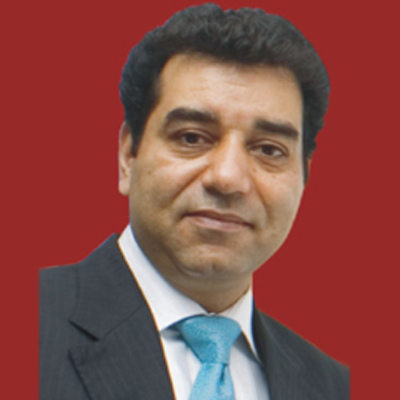
  • ‘It is a good time to launch specialised channels as they help break through the clutter’ : Rahul Johri – Discovery India senior VP

    ‘It is a good time to launch specialised channels as they help break through the clutter’ : Rahul Johri – Discovery India senior VP

     Discovery is in restructuring mode. Earlier this year, it announced a reshuffle at the top to handle India operations. And the India office, which was reporting directly in to the Discovery headquarters at Silver Spring, Washington DC, will now come under Singapore as part of the integration strategy.


    On the content front, Animal Planet introduced a Hindi feed in April to increase penetration. Discovery Travel and Living is eyeing to put its personality-driven shows at the 10 pm slot.


    The company is also adding new channels like Discovery HD to grow the market in India.


    Indiantelevision.com’s Ashwin Pinto caught up with Discovery India senior VP, GM Rahul Johri to find out more about the company’s aggressive plans in India.


    Excerpts:

    What is the main reason behind the restructuring that took place in Discovery recently?
    Discovery went into local markets in Europe a few years back, and this yielded very good results. Applying the same model, the Asia Pacific region has been broken up into six – the Saarc countries which include India, China, Japan, North Asia, Australia/New Zealand and South East Asia (Thailand, Malaysia, Indonesia, Singapore).


    In India, people have moved up a level. I have management responsibility for India while Rajiv Bakshi looks after marketing. Then there is a regional managing director who sits in Singapore.


    We now work and coordinate with Singapore. The response time is much quicker.


    Earlier when we reported to Washington, the time zones were different. Also, what is a priority for us may not be as important for them. Now operations are easier in terms of taking decisions and getting clearances.

    How does the new operational structure help Discovery India?
    Discovery Asia has a strong infrastructure. This will now be more accessible to us. We can approach opportunities on an Asia wide basis as opposed to simply focussing on one country. For instance if a local production is being done out of India or Singapore, it can then be expanded to include other Asian countries. Solutions can be provided to enable this. On the client side also, we can provide solutions more easily so that they get visibility across the region and not just in one country.

    What are the key focus areas for India?
    Collaborating with the other regions in Asia to drive growth will be important. Sharing of content and resources will be key. We will also strengthen the branding of our channels by making the content more definitive. We will keep refreshing content across all the channels so that audiences get what they want to watch.

    Are you looking at growth through launch of more channels?
    Yes! As the Indian television market matures, it is a good time for specialised channels to launch as they help break through the clutter.


    We have 14 channels and we will bring what we feel will click the best. Discovery HD is definitely a channel we are keen on bringing to India. Discovery Science is another channel that we feel would work well here. Of course, it is also important for cable to go digital. Otherwise getting carried gets difficult.

    Discovery has launched Planet Green, a new channel for environment, in the US. Do Are there plans to launch in India?
    The channel has just launched in the US. A band of the channel will launch in Southeast Asia. We will see how viewers respond to it. We will test the programming in India and then decide on whether or not to launch the channel here.

    Starting Hindi feed worked for our two channels as there is a lot of commentary. This won’t work in Discovery Travel and Living

    In terms of revenue, how important is India within Asia?
    India is one of the top markets along with Japan, Australia and New Zealand. Subscription plays a key role everywhere. In India there has been strong growth in ad sales.

    How is Animal Planet faring after going Hindi?
    The most important thing was the Hindi feed being introduced in April. Now we are able to compete better with National Geographic. Going Hindi was, thus, a progressive step. We play to the core strength of the channel which is focussing on the animal kingdom. We also have hosted shows.

    Will you be doing a Hindi feed for Discovery Travel and Living?
    No! It worked for our other two channels as there is a lot of commentary. In Discovery Travel and Living, though, it will not be natural to see, for instance, two Chinese people speaking in Hindi.

    How has Discovery Travel and Living evolved as a brand since launching four years back?
    DTL is perceived as being a distinctive lifestyle channel for upmarket viewers. People are now familiar with our anchors like Nigella Lawson. They also identify with individual shows like our biker content. We keep refreshing our programming. We bring new shows regularly.

    What have been the programming highlights for the channel this year?
    We did a show with Manish Arora. We are doing two more India productions which will premiere later this year. Our big show now is Cheese Slices. Food is a popular genre for us. So we will kick off a show, Indian Food Made Easy, which will be hosted by Anjum Anand.


    We will be launching a multimedia campaign to push our 10 pm slot. This is because our viewers tune in a little later. Personality-based shows will air at this time, seven days a week. The message of the campaign is that at this time you will see hosts like Nigella Lawson, Ian Wright and Anthony Bourdain; the campaign theme will focus on the most recognisable faces on the channel. This will be the largest campaign ever done for the channel.

    Is the aim to bring in appointment viewing?
    This is one of the goals. The campaign will showcase our biggest properties. We are hoping that it will help expand the reach of the channel and drive in new viewership. It is important that our campaign not focus on just one show. By pushing a band, the recall will be high among viewers.

    In what way is the programming strategy being fine tuned for local audiences?
    When we started, we had very little India content. We now produce shows from India. Every global show that is being produced, has a segment on India. So if Anthony Bourdain does a new season, he will visit India as well. This is how the relevance of India is growing. Ian Wright used to just host Globetrekker which is about backpack travel. Most of our viewers do not do that. So we tweaked it and now Wright does VIP Weekends. He visits the best hotels globally.

    Has the thematic weekend concept worked?
    It has done well and the thematic weekends are continuing. But over time our aim is to build a theme across a day – rather than having one theme continuing everyday. Our aim is to strengthen the genres. For instance if you take shows like Anthony Bourdain and Cheese Slices, it is not just about food. It is also about travel, visiting new places. Different genres get intertwined.

    What do you look for in a local show?
    We always look out for good local concepts. Our aim is to have a definitive show in a certain genre. Once we have decided on this, then we go with the best talent. So we roped in Manish Arora to do a fashion show. He is suited for television as he is so colourful.


    Our shows have to have an individual and distinctive personality. They need to be of the same class and quality as the other shows that we air. There can’t be any compromise as the same shows travel abroad and showcase India to the world.

    What are the other time bands that DTL is developing outside the 10 pm slot?
    We are also looking at the midnight to 1 am time slot. People watch us at that hour. I think that some channels are missing out on viewership by not concentrating on this audience. They simply run repeats at this hour. Many people work till late and then watch television.
    Is it difficult to get clients to commit serious monies for Discovery Travel and Living with the economy in a downturn?
    Our market is on an upswing. Our TG has not been impacted by the downturn. We have over 600 brands with us including L’Oreal and the car companies. Volkswagen is starting a marketing campaign and they are using our channel as a vehicle. Packaged good companies also advertise with us. Companies that want to target the premium audience cut out wastage completely when they come to us.

    What are the tentpole properties coming up for Discovery?
    Ultimate Olympics is a show that we will air. It looks at the work that has gone behind putting the Olympic Games together. The show gets over a day before the Games start. Another show that will air is Download. This focusses on stories from the internet like the competition between EBay and Amazon.


    We will also celebrate Nasa’s 50th anniversary with a show When We Left Earth. Nasa has given us footage of the Apollo Missions. This is the first time that Nasa has done this.

    What is Discovery’s new media strategy?
    We already have our website. For the mobile, 3G has to happen; the phones have to support rich media content. Right now one is still with ring tones and music tones.