Tag: discovery+

  • Discovery turbo brings new car restoration series

    Discovery turbo brings new car restoration series

    MUMBAI: Renowned design expert Chip Foose returns with OVERHAULIN’: DECONSTRUCTED– featuring his most amazing and imaginative automotive builds yet. As the father of the modern hot rod and head of the iconic Foose Designs, Foose is revered by gearheads in every corner of the world.In Discovery Turbo’s new car renovation series OVERHAULIN’: DECONSTRUCTED viewers follow Chip Foose and his team transform vehicles into the most amazing and imaginative automotives.

    Starting December 16,OVERHAULIN’: DECONSTRUCTED airs every night at 11 PM on Discovery Turbo.
    Chip’s car builds represent the ultimate combination of art, technology and ingenuity, resulting in some of the most unique and breathtaking vehicles anywhere. The all-new OVERHAULIN’: DECONTRUCTEDgoes beyond the garage, exploring engaging human stories and the strong emotional connection between man and machine. Viewers go behind the scenes with the cast and crew for insider producer’s notes, never before seen show footage and cool car factoids.

    The restoration projects feature deserving individuals ranging from returning veterans to those negatively impacted by the tough economy. Each altered auto becomes a life-changing surprise for its unknowing owner. Will Chip and his team of automobile wizards be able to pull it all off in a few short days and on a tight budget? And how will the owner react to his new ride?

    It’s a bumper-to-bumper journey to the final transformation into a cool set of wheels. And along the way, the hosts keep the owner guessing as to where his car is while the work is getting done.

    In addition to Foose, the OVERHAULIN’: DECONSTRUCTED team includes some of the most talented design professionals anywhere. Longtime collaborator and co-host Chris Jacobs returns to help lead an automotive dream team in the garage. Don’t miss any of the action, only on Discovery Turbo.

    Some of the episodes are: 
    1965 Impala – Chip Foose and the A-Team restore a Marine Corps veteran’s prized Chevy Impala that he’s been forced to sell in order to support his young family.
    Chevy Pick Up Truck – Chip Foose and the A-Team restore a newly-retired teacher’s 1954 Pickup Truck that he’s put off investing in until his twin daughters’ college tuition has been paid for.

    1967 Camaro – Chip Foose and the A-Team restore the Camaro of a man who thought he got a great deal on an internet auction, only to be left with project well beyond his budget and expertise.
    Volkswagen Bug – Chip Foose and the A-Team restore the VW of a young mechanic whose health problems have made his project come to a halt. Not only will his car be Overhauled he’ll get the experience of a lifetime working alongside the crew.

    BIOGRAPHY – CHIP FOOSE
    Chip Foose began working on automobiles at age seven for his father’s company, Project Design, in Santa Barbara. Foose attended the Art Center College of Design for two years in 1982, then began working at ASHA Corporation for four years before returning to the Art Center to complete his education, graduating in 1990. Following graduation, Foose then worked full-time for Sterenberger Design and part-time for Boyd Coddington. Later, Chip became the president of Coddington’s company Hot Rods by Boyd. While working for Coddington, Foose designed many of Coddington’s well-known creations such as the Boydster I and II.

    In 1998, Foose started his own automotive and product design company called Foose Design in Huntington Beach, California. In 2001, Foose began his TV career by acting as a consultant for the TV series “Titus” before going on to be the custom painting consultant for the 2006 movie “Cars”. Foose gained more exposure in 2003 as a result of a TLC documentary on his design and creation of a modified 2002 Ford Thunderbird called the Speedbird. In 2004, the TLC version of Overhaulin’ began to air with Foose as the star of show. Other television credits include hosting the series “American Icon: The Hot Rod” for Discovery’s HD Theater.


    Throughout his career Foose has been honored with several awards including induction into the Hot Rod Hall of Fame at Peterson Publishing’s 50th Anniversary at SEMA (Special Equipment Marketing Association); the prestigious AMBR (America’s Most Beautiful Roadster) Award in 1999 and 2000; the coveted Ridler Award in 2002, and in 2003 Foose was inducted into the Grand national Roadster Show Hall of Fame.

    Today, Foose continues to operate Foose Design and provide design consultations to the big three automakers.

  • Sky adds 4oD catch-up service to NOW TV Box

    Sky adds 4oD catch-up service to NOW TV Box

    MUMBAI: Channel 4’s 4oD has become the latest terrestrial catch-up TV service to launch on Sky’s NOW TV Box, which already offers access to BBC iPlayer and Channel 5’s Demand 5.

    Shows such as Homeland, Marvel’s Agents of S.H.I.E.L.D. and Made in Chelsea as well as box sets from classic series such as Black Books, Father Ted and Peep Show are now available on demand for owners of the NOW TV Box. This adds more than 3,000 hours of content to the service for customers to enjoy at no extra cost. NOW TV also offers catch-up entertainment from Sky Atlantic, Fox, Discovery and Comedy Central.

    NOW TV director Gidon Katz commented in a report: “The NOW TV Box provides millions of people with the opportunity to transform their regular TV into a Smart TV for less than a tenner. There is now even more to watch. The launch of 4oD means the NOW TV Box delivers an even bigger choice of on-demand TV. It’s available alongside flexible pay-as-you-go access to must-see sport, the latest movies you missed at the cinema and the TV shows everyone’s talking about. Offering convenient, contract-free accesses to such outstanding content, no wonder that NOW TV Boxes have been flying off the shelves.”

    Channel 4 director of commercial and business development Laurence Dawkin-Jones added: “Bringing 4oD on the NOW TV Box represents the latest device launch in a busy year for Channel 4 that has seen us extend our content reach to many new platforms. We’re always looking for new places we can ensure our viewers can enjoy our popular on-demand service, and are delighted to add this to the portfolio.”

  • Discovery Q3 results buoyed by international revenues

    Discovery Q3 results buoyed by international revenues

    MUMBAI: Discovery Communications President/CEO David Zaslaw has been quite clear about what’s going to drive revenues at the company: international expansion. He has stated that more than once and he did so at the industry’s leading get together MipTV in Cannes in 2013. If one goes by the financials for the broadcaster for the third quarter ended 30 September 2013, he seems to be living up to that statement.


    Discovery Communications’ international betworks’ revenues climbed 59 per cent to $ 620 million, as advertising revenues were up 127 per cent to $282 million and distribution revenues were up 29 per cent to $322 million. Overall, international revenues almost equaled US domestic revenues which grew a snail like 10 per cent to touch $733 million. Ad revenues grew 12 per cent to account for $383 million of that, while distribution fees went up 10 per cent to touch $329 million.


    Overall, Discovery saw a 28 per cent increase in revenues to $ 1,375 million; adjusted OIBDA rose 20 per cent to $ 597 million and net income climbed up by 24 per cent to $ 255 million. And while these numbers were lower than the Q2 2013 of 1,4
    On the international front, distribution revenues, excluding newly acquired businesses, in local currency terms grew 14 per cent mainly from increased subscribers, most notably in Latin America, and from higher rates, particularly in Latin America and Asia Pacific, as well as from additional contributions due to the consolidation of Discovery Japan.

    Zaslav had this to say on the occasion of the results: “As we continue to build new avenues of growth across the more mature US business, the bigger opportunity remains the potential of our international portfolio, where we are diligently applying our targeted investment approach to exploit our unparalleled market position and capitalise on those areas with significant upside from the evolution of pay television and the developing global advertising landscape.”


    International advertising revenues, excluding newly acquired businesses, were up 29 per cent in local currency terms, primarily due to increased viewership in Western Europe and higher pricing in Western Europe and Latin America.


    “Discovery’s thoughtful investment over the last two decades in securing distribution and establishing relationships with key affiliates, suppliers and advertisers in each market has given us a huge head start internationally. But it’s the additional steps we have taken over the last several years to take advantage of our market position that is driving such strong results today and will allow us to continue to grow even as pay-TV penetration growth begins to slow eventually,” Zaslav added.


    Adjusted OIBDA increased 34 per cent to $232 million on a reported basis and was up 17 per cent excluding newly acquired businesses and foreign currency fluctuations, reflecting the 18 per cent revenue growth partially offset by a 19 per cent increase in operating expenses. The higher operating expenses were primarily due to increased content amortisation, personnel costs and marketing expense as well as costs related to consolidating Discovery Japan.


    As markets have developed, Discovery Communications has aggressively opened new offices in key countries, like Turkey, the Ukraine and India, to closely connect with an evolving middle class. At the same time, it has established in-house sales functions in markets where the revenue opportunity dictated a more hands-on approach, such as Russia, Colombia and Argentina.


    On the content side, the network has increased its programming spend internationally by over 80 per cent since 2010 to capitalise on market opportunities, including broadening the reach of its female flagship, TLC, into over 165 countries, making TLC the most distributed women’s brand in the world from a standing start 24 months ago.
    It has also been expanding the footprint of its successful investigative and forensic channel Invesitgation Discovery (ID) into 150 countries, and expecting to approach 180 countries in the year ahead; or launching the kids network recently across Asia. All in, over the last three years, the network has launched over 60 new feeds and five new languages to satisfy the growing demand for its content, and the strong revenue growth Discovery Communications is delivering currently is certainly due in a large part to the targeted investment.


    “While it is certainly difficult to predict how the various international markets will perform going forward, we remain optimistic about our long-term growth prospects, given the platform we have built; the investments we have made and the growth we are delivering today, despite a relatively slow economic climate in many of the countries we operate in. As we continue to invest in our organic growth initiatives, we’re also making significant strides integrating our recent SBS Nordic acquisition. The joint ad sales team we’ve assembled is closing deals in the spot market, while preparing upfront presentations to message during the first quarter that lay out the compelling content offering and value proposition we can deliver to ad clients,” expounded Zaslav.

    Zaslav had in July 2013 downgraded its revenue expectations for the full year from 5.58-5.70 billion to $5.55-5.63 billion, following Discovery said it expected 2013 revenue of $5.55 billion to $5.63 billion, below its previous forecast for $5.58 billion to $5.70 billion. The company blamed unfavorable currency fluctuations and costs from its $1.7 billion acquisition of Scandinavian media company SBS in December 2012, apart from the 20 per cent investment in European sports network Eurosport.


    But it is quite likely that it is these very investments which will start adding oodles of revenue and cash to its bottomline going forward. We can only wait to discover if that will happen.

  • Ogilvy Bengaluru launches new campaign for Titan Raga

    Ogilvy Bengaluru launches new campaign for Titan Raga

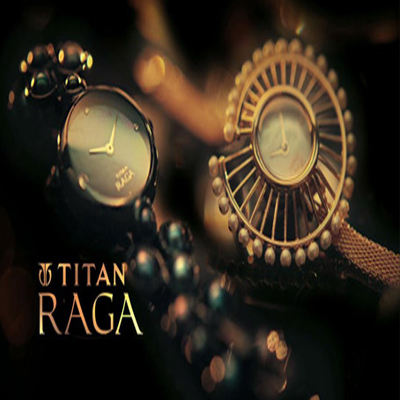
    MUMBAI: Titan Raga stands for grace, femininity and sensuality and these values make their way into its exquisite timepieces and reflect in its communication.

    Paying tribute to the charming, alluring woman, Raga unveils its latest collection – Raga Pearls with a campaign conceptualised by Ogilvy Bengaluru.

    The latest campaign pays homage to a woman who soaks in life, lives every moment to its fullest and lets the magic and romance of the world etch her path. In this depiction, the Raga woman takes a journey that unexpectedly opens doors to self-discovery and the joy of surrendering to the moment.

    On the campaign, Ogilvy South executive creative director Joono Simon said, “Everyone dreams of a chance encounter with an attractive, nameless stranger on a journey. The creative potential of this alluring fantasy has been explored brilliantly by movies and literature many a time. In the new commercial for Raga, we are trying to explore this accidental rendezvous between two absolute strangers. It celebrates the sensuous and spontaneous spirit of a woman and her Raga.”

    The film opens to the Raga woman, Katrina Kaif, on a journey aboard a luxury train directed by Shashanka Chaturvedi of Goodmorning Films, the chemistry and beauty of the film is accentuated with brilliant camera work by Tetsuo Nagata, who also worked on the Oscar winning La Vie En Rose.

  • Facebook making people cling to TV

    Facebook making people cling to TV

    CANNES: Whoever said Facebook and others of its ilk were responsible for driving audiences away from television would be forced to do a rethink after this gem of a revelation from Facebook VP of partnership, Dan Rose.

    “Facebook now talks of television. And discussions or comments between friends are more about content aired on television,” said Rose in his keynote address on the inaugural day of Mipcom.

    And it didn’t end there. He went on to announce: “We have expanded our list of data partners across the globe.”

    Among the ten global TV companies with whom Facebook has partnered is Star India for beta test- this being its first partnership in India. Says Star India, EVP marketing and communications Gayatri Yadav: Star India will be the first media brand in India to partner with Facebook as part of a beta to use their APIs in our programming. The goal is to work closely with Facebook to develop this offering and leverage this tool to gain rich insights into social conversations on Facebook related to our content. Today the first port of call for consumers when they want to talk about content is often social media people love sharing their thoughts and feelings about the latest shows online. This will help us better understand audience reactions to programming and deliver better real time consumer insight.”

    The other networks include: TF1, Esporte Interativo, Canal+, CBC, Food Network, Channel 4, ProSieben, and Discovery.”

    Rose explained how social media had become an inseparable part of television. “There is now an intersection of social media and TV. In fact, now, TV is leveraging new technology to improve its experience with social media,” he said, while addressing a packed auditorium at the Palais des Festivals in Cannes.

    Referring to Facebook as the second screen, Rose said: “So while everyone thought we were driving people away from TV, the second screen is in fact making them cling to TV.”

    Substantiating his statement with facts, Rose elaborated: “There were 29 million interactions on Facebook about Wimbledon. When MTV Video Music Awards was aired, there were 26.5 million interactions about the awards on Facebook. Also, NBA finals received close to 125 million interactions.”

    Statistically speaking, there are 1.15 billion people on Facebook today. An average mobile user in the US spends approximately 14 hours every month on FB and nearly six hours on Instagram. 18 million people in France are active users of Facebook, of which 11 million use mobile phones for it.

    Asked what keeps Facebook alive and ticking, Rose said: “There are three best practices to follow: One, to spark the conversation. Facebook has added #Hashtags and also come up with trending topics to spark conversations. Two, we connect with fans through public figures. People on Facebook love hearing from public figures. And thirdly, leverage tools. We launched public feed API that gives real time feed of public posts.”

  • Discovery’s Hollinger to step down in June 2014

    Discovery’s Hollinger to step down in June 2014

    MUMBAI: For many broadcast vets in Asia, Mark Hollinger is a familiar face. The president & CEO of Discovery Networks International has pushed growth for the network outside of the US, especially in Europe and Asia in its early days of expansion globally. Come June 2014, Hollinger will no longer be winging it to Asia on Discovery business. The reason: he has decided not to renew his contract with the network when in it expires mid next year.

    The 20 plus year old Discovery veteran informed president and CEO David Zaslav of his decision last week, the network says. What prompted him to do so was the fact that he is tired of the many air miles his job demands in countries in times zones out of kilter with the US (more than 150 days each year for the past several years). Hollinger added that he wants to spend more time staying rooted in Uncle Sam and with family.

    Hollinger joined Discovery in 1991 as Vice-President & Deputy General Counsel. In 1994, he was named Acting General Manager for Discovery Channel Asia. Based in Hong Kong, he was responsible for overseeing and coordinating all activities related to the operation and launch of the flagship network in Asia.

    Hollinger today oversees the strategic development and daily operations for a division that distributes 42 entertainment brands, in 45 languages, to more than 1.6 billion cumulative subscribers in 224 countries and territories across Europe, the Middle East, Africa, Asia-Pacific and Latin America.


    In 2012 and 2013, Hollinger oversaw the expansion Discovery’s international operations with the acquisitions of Takhayal Entertainment and its affiliated companies in Dubai and Egypt, including its flagship TV network, Fatafeat, the No 1 food network in the Middle East; Switchover Media in Italy and its portfolio of four free-to-air channels and one pay-TV channel, making Discovery the third largest broadcaster in the country; and the largest transaction in Discovery’s history with SBS Nordics, a top-three portfolio of television brands across Denmark, Norway, Sweden and Finland that feature leading nonfiction content, locally produced entertainment programs, sports and the best scripted series and movies from major studios. Hollinger also engineered the investment of a 20 per cent stake in TF1’s Eurosport, a top destination for live sporting action for viewers across Europe and Asia-Pacific.

    Said Zaslav: “Mark is a consummate professional and amazing leader who has made a huge impact on all of us at Discovery Communications over the 23 years he has been at the company, and I am so grateful for his contributions, leadership and unwavering integrity.”

    Discovery Communications announced that it would be looking for a successor for Hollinger immediately.

  • Move over Krrish, Kid Krrish is here

    Move over Krrish, Kid Krrish is here

    Before the third installment of the Hrithik Roshan-starrer Krrish hits theatres this November, another superhero by the same name, albeit in a kid avatar, is set to storm the home box office.


    Come 2 October, the first of a four-part animation series titled Kid Krrish – a joint venture between Rakesh Roshan’s production house Film Kraft, Turner, and Toonz Animation – will premiere exclusively on Cartoon Network at 12.00 pm (CN Popcorn hour).

    Krrish is a family film, whereas Kid Krrish is only targeted at children; so we are clear about our target group expounds Rakesh Roshan


    The animation telly-film will see superhero Krrish’s (kid) namesake fighting an evil scientist and keeping him from getting his hands on a precious artifact that he is eyeing. According to the makers, Kid Krrish is about Krishna’s journey of self discovery, and will surely resonate with children of all ages. Add to that, the film will have Jadoo, the lovable alien from the Krrish franchise, who helps Kid Krrish realise his true powers.

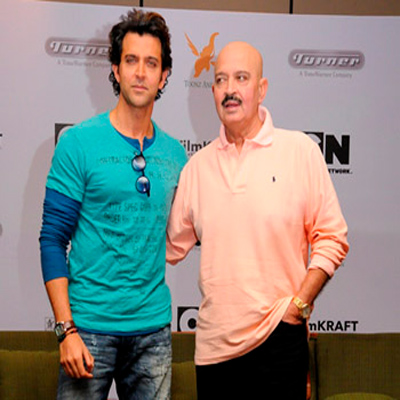
    The announcement was made in the presence of Film Kraft Productions’ director Rakesh and his superstar son Hrithik Roshan, while there was no representation for Toonz at the event.


    About Kid Krrish, Rakesh said: “It is for the first time that a Bollywood character is set to get an animated version. The character of Krrish has been idolised by every child in India and has become an iconic super hero. Krrish is a family film, whereas Kid Krrish is only targeted at children. So we are clear about our target group. Toonz Animation has done a great job and if the movie does well, we will continue making it for years to come.”

    Kid Krrish will premiere on Cartoon Network on
    2 October at 12 pm


    About the partnership, Turner International India Sr. director and network head – kids, south Asia Krishna Desai said: “Turner has been a pioneer in terms of content and we believe that with Cartoon Network and Pogo, we have always provided a full consumer experience and will continue to strive for that. The coming together of three legendary companies in the form of Film Kraft, Toonz Animation and Turner will certainly be a mutually beneficial endeavour.”


    What really led to this collaboration? “We were approached by Film Kraft to make a live animation movie on Krrish. We took things forward but tried to reason that if we were trying to connect with children, then we would have to portray Krrish as a kid. So that’s how the idea of Kid Krrish came about,” said Desai.

    So what did Hrithik think of Kid Krrish? “See, before you ask me what are my expectations from the film, I have already got the best compliment from my two sons Hrehaan and Hridhaan… They are completely in love with Kid Krrish,” said the actor.


    Asked about similarities about the two superheroes, he said: “See, I don’t know about similarities, but Kid Krrish is certainly better than Krrish (jokes). Well, both stand for the same thing, both have a child alive inside them, both have their share of struggles, and both fend off evil.”


    Taking a moment to relive some of his childhood memories, Hrithik said: “Animation has been a big influence in my formative years. I still remember watching Popeye but I never used to love spinach. Though later, I got to know its importance and now, I basically survive on it. I also loved Tom & Jerry and the Justice League.”

    Coming back to the children’s superhero franchise, the first film will air on CN on 2 October followed by three more films in the coming six months to one year. All four films will be exclusively premiered on Cartoon Network. While the second film is already in production, the third and fourth films are at different stages, and will get into production in the coming months.

    Krishna Desai believes the coming together of three legendary companies in the form of Film Kraft, Toonz Animation and Turner will certainly be a mutually beneficial endevour


    The music of Kid Krrish has been scored by Aditya Sorab and the lyrics have been penned by Kausar Munir. Apparently, the title song is extremely catchy and will strike a chord with children thanks to its simple lyrics and soulful rendition.


    Was there any reason for selecting 2 October as the date for the premiere? Said Desai: “Since it’s a national holiday, we are sure that everyone will be able to enjoy the movie. Also, as for the 12:00 pm telecast time, well that is the prime time for Cartoon Network.”


    Elaborating on the promotional plans, Desai said: “Well, 95 per cent of the promotional activity will be carried out by Cartoon Network itself. We will do our bit to promote it digitally and also push it through OOH presence.”


    But isn’t it a fact that creating an original animation in India would do better with our audiences? “See, what I believe is the fact that be it any language, content is what matters in the end. So whether it’s Kris in Roll No 21 speaking in Hindi or Ben 10 talking in Hindi, what eventually strikes a chord with children is – if they can relate with the characters on the show, the show will be a success, no matter which language it is in,” Desai shot back.


    Would Turner be venturing into more animation films after Kid Krrish? “It completely depends on the idea and the script, because making a live action animation is a tough task, but if something interesting and worthwhile comes along, we will definitely consider it,” Desai concluded.


  • Amazon launches fine art marketplace

    Amazon launches fine art marketplace

    MUMBAI: The online retail giant that peddles everything from e-readers to UFO detectors is looking to change that and make fine art more accessible for everyone.


    Amazon on Tuesday announced the launch of Amazon Art, an online marketplace that features more than 40,000 worlds of fine art from more than 150 galleries and dealers. At launch, Amazon Art features artworks from more than 4,500 artists. Amazon said it is one of the largest online collections of original and limited edition artwork for purchase from galleries and dealers.


    “We are excited to bring one of the largest selections of fine art direct from galleries to our customers. Amazon Art gives galleries a way to bring their passion and expertise about the artists they represent to our millions of customers. We’re thrilled to bring the excitement and emotional connection of art to our customers,” Amazon Marketplace VP Peter Faricy said in a statement.


    Like other Amazon Web properties, the new fine art marketplace features discovery tools to help you find pieces you might like, and detailed information about the works of art. You can search by using filters such as subject, style, color, size, price, and gallery.


    The marketplace includes art from galleries of all sizes in the US, UK, the Netherlands, and Canada, including Paddle8 in New York, Holden Luntz in Miami, McLoughlin Gallery and Modernbook in San Francisco and Catherine Person Gallery in Seattle.


    The store offers a little something for everyone, with pieces ranging from folk art to impressionism to modern art. Prices vary, with photographs starting at under $200 alongside iconic works from artists like Norman Rockwell, including the American master’s “Willie Gillis: Package from Home” available for a cool $4.85 million. Other available pieces include Andy Warhol’s “Sachiko” for $45,000 and Claude Monet’s “L’Enfant a la tasse, portrait de Jean Monet” for $1.45 million.

  • What now for broadcasters and advertisers?

    What now for broadcasters and advertisers?

    The clock is ticking down for the seven broadcast networks, (actually eight, if you include Discovery too that joined the fray over the weekend) which coerced TAM to report on them on a monthly basis unilaterally without consulting either the Indian Society of Advertisers (ISA) or the Advertising Agencies Association of India (AAAI).


    Late Friday evening, advertisers such as Levers, P&G, Loreal, ITC, Britannia, Marico and Godrej put these broadcast networks on notice that if they did not revert to weekly ratings within 72 hours, all advertising on their channels would be pulled off and release orders would stand cancelled, 48 of those hours have already gone past. These broadcasters have only 24 hours left to take a decision.


    More advertisers have been sending in their notices over the weekend and this is likely to continue over today. And their 72 hour time bomb notice will also continue to tick.


    Advertisers sent the emails over the weekend to probably show they too mean business. Senior managements and sales heads in broadcast networks normally head of for their weekend holidays or timeoffs and hence are normally loathe to convene for any major decisions. With two days out of the three day notice period gone, now broadcasters will be hard-pressed to congregate and do some brainstorming and decide on their way forward today itself.


    Above their heads is the guillotine of losing revenues. An estimate is that these broadcaster will lose Rs 22 crore a day collectively should there be a pullout.


    There’s more to worry about for the broadcasters. If there are no TVCs, what will they do with the time that has been left vacant by the absence of ads? Fill it with promos of their own shows? Film trailers? But for how long?


    They may have to incur further costs should they rely on extra content from 22-24 minutes being churned out currently to 26-27 minutes. That is going to mean writing out larger cheque amounts to TV producers as they will have to work their crew and casts for longer hours.


    Continuing being rigid is an option broadcasters have. But it could lead to advertisers being equally rigid, leading to a standoff. Somebody will have to blink.


    Even though some of the broadcast CEOs have been haw-hawing, saying that it is the advertisers who will do so, because they need the TV channels and history shows that they are prone to buckling under earlier when they are threatened with no ads, it need not hold true on this occasion.


    Advertisers have options today: there are close to 300 channels which are continuing with weekly ratings, while around 105 channels are on a monthly engine. They could put their ads on the weekly-rating- channels. Unless of course the eight “rogue” (in the eyes of the advertisers) networks convince the remainder to join the monthly ratings gang.


    At this stage, media observers feel, both sides are doing some grandstanding, watching each others’ moves closely. The squeeze will come when ads stop on TV, and if there is a stalemate. And it will be felt by both.


    The year has already seen a slowdown on the economic front, thanks to a weak rupee and a general slowdown. Financial results for most companies are not expected to be something that shareholders will take too kindly by end this year.


    Hence, it is in the interest of both to come to the negotiating table, and hammer out a face-saving solution, sooner than later, and keep the advertising cash flows going between each other. A week’s loss of advertising equates an estimated Rs 150 crore in revenue. And a possible further slow down in consumer off take of products from shop shelves for the advertisers. That’s something both cannot afford.

  • “We will focus on compelling sports content, across multiple sports and languages”

    “We will focus on compelling sports content, across multiple sports and languages”

    By the end of 2011, Star had clearly established itself as the premier entertainment network in India and for Indians worldwide, with 400 million people watching our drama and movie channels in seven languages every day. In one of the most competitive markets in the world, we had established substantial leadership in every genre and in most geographies.And while Star and Fox had built an attractive franchise in entertainment, in sports, very unlike our traditional approach, we had tucked the business away in a joint venture with ESPN that was not managed or controlled by us.
     

    Starting in April 2012, this started to change. We acquired the rights to India’s international cricket calendar that month; a few months later, our parent company bought out its partner from the ESPN Star Sports joint venture in Asia with the intent to roll the Indian part of the joint venture into Star; we launched two new domestic leagues in university cricket and hockey; and we renewed the rights to English Premier League football with a substantive bid. All in all, we invested a billion dollars in less than six months.As a result, by the end of 2012, we had established ourselves as India’s leading sports broadcaster.

    So, why did we get aggressive on a business where the traditional wisdom is that no one makes money?

    Many experts mused loudly that Star had found a way to quickly kill a highly profitable franchise built on leadership in entertainment across genres and languages. I still run into these questions every day. Just two days ago, a leading Indian business daily ran a big story wondering why Star had entered a business that usually never makes money. After all, one sports broadcaster had gone bankrupt trying to pay the bills for the Indian cricket rights, another is struggling to break even and yet another is trying to run a sports business without much sports content. Why would Star make such a big, bold move particularly at a time when the overall

     sentiment on the India story has gone cold?

    So, again, why did we do this? Did we lose the plot?

    In order to answer this question, it is important to take a close look at a few facts, some conventional wisdom and many myths that surround the Indian sports business.

    Everyone in this industry knows one thing. India is a single sport country. It is a country where cricket is a religion, where passion for the game is deep and where the country shuts down when the national team is playing.

    And yet, this is only half the truth. Even for a big match where India plays arch rival Pakistan, consumers do not view the entire match, they view only 15 per cent of the match on an average. The reality outside of really big tournaments is even starker. Out of more than 1000 hours that an Indian viewer spent watching television last year, only 20 hours was on cricket, about 2 percent.This is actually less than the time spent on a single successful show on Star Plus!Consumption of domestic cricket is even worse. Although matches are played round the year, only 50 matches are broadcast on television in a year.And very often, the best of the country’s talent do not participate in these games.

    Imagine if soccer crazy England manifested its interest in the game only by watching the FIFA World Cup once in four years and only really paid attention when England played Spain or Italy. That is the equivalent of India’s current state in cricket viewership. In fact, until the Board of Control for Cricket in India introduced the Indian Premier League, there was not even a domestic league, the equivalent of an EPL or an NFL.

    So, India is not a single-sport country, it is at the moment a zero-sport country that occasionally follows 11 Indian cricketers when they play a big marquee tournament.

    For us, though, the more interesting question is why this happened, and what has led to the current state of affairs. We believe that the biggest culprit is the Indian sports broadcaster. Let me explain why.

    A big shift happened in the last twenty years in cricket in the profile of its followership. It moved from being a sport for the urban elite to one that has a mass following across the country.The BCCI deserves credit for this transformation by making substantial investments to improve the quality of stadiums and infrastructure around the country.Today, some of the country’s best cricketers come from outside the large cities; and small towns host international matches on a regular basis. It is also a country where less than 1 per cent of the population has actually watched any sport in a stadium.

    And, yet, sports broadcasters have not made any effort to make their programming more relevant to the new audience.

    In a country where less than 10 per cent of the population understands English, and a much smaller number are native speakers, sports broadcasters programmed only in one language: guess which one? English. This, despite the fact that everyone knew that the big growth in entertainment consumption in the country came when programming on satellite switched to Hindi and other local languages. And even for the very few that actually understand English, it is quite a world they have to navigate to understand the diversity of commentator accents on television: from the Westernised Indian accent to the local Indian accent to the Aussie accent to the Kiwi accent to the Scottish accent to the West Indian accent. It is almost as if the sports broadcasters were not relaying sports, they were running extraordinarily painful accent training programs on television for the very small English speaking audience that came to watch in the first place.

    The pain did not stop there. Around the world, sports graphics is used to bring the game closer to the viewer and to help the viewer understand the game. Yet, in cricket, graphics is more a nuanced tool meant to tickle the sensibilities of the few deep masters of the game, not the 99 per cent of the country that has never even been to a stadium. The same story extends to television commentary too. Rather than being the anchors of the game who explain the game and bring the excitement of the stadium to the viewer’s living room, the cricket commentator is invariably an expert talking to his peers.

    It is no surprise then that the Indian viewer does not spend much time on sports on television.

    But, it would be unfair to put all the blame on just the sports broadcaster. The broadcaster has had many fellow partners-in-crime in ensuring that sports viewership remains miniscule.

    It’s biggest partner has been the cable and satellite platform. Around the world, sports have been a huge driver of revenue and profit for pay television operators. In India every operator complains about the low ARPUs they get from the business. And yet, instead of using compelling sports content to get more money from consumers and reduce churn, the cable and satellite operators make it difficult for their subscribers to discover and develop a habit of consuming sports.

    And this attitude shows up in the distribution of sports channels, which are treated less like the mass product that they should be, and more as premium add-on products for a small, rich, niche audience.

    To make matters worse, these platforms turn off the channel when a marquee event is not on. While this may have made sense in the old, bandwidth-limited analog world where you could only put 20-30 channels, it makes no sense that even DTH operators are employing the same tactic when they have 300 channels to offer. Compare this to other content categories. They do not switch off a news channel when a breaking news event is not on; they do not turn off the movies channel when a blockbuster is not on. But this is exactly what they do in sports. It is the worst kind of behaviour that limits the ability to build habit for the sports fan.

    Even worse is the behaviour of a few platforms that have created their own channels that switch to the most marquee sports events of multiple broadcasters. While they hide under the pretence that they are addressing a consumer need, what they are really doing is illegal piracy. But what is distressing is that they do not understand the long term damage they are doing to the business. Instead of multiplying choices and triggering demand, they are creating a structure that will ensure that viewers only watch a few cricket events.

    Put together, it is therefore not a surprise that the reach of sports channels lags that of even niche channels like Discovery and MTV!

    So in a zero-sport country, sports broadcasters and pay-TV platforms have worked very hard to make sure that it is only the deeply committed, rich expert fan comfortable with English that actually watches a match on television.

    Of course, if the sports broadcaster and the platform have done their part in eroding the value of sports franchise, the regulator and the government have not been far behind.

     
    For the regulator and the government, the overwhelming objective must be to further consumer interest. It is in the interest of consumers to have more and more sports available for them. It is in the interest of any country to have more and more people play sports. And the reality is that people play sports only when they passionately follow games and teams. If India has to break its poor status in international sports and use sports to create a virtuous cycle for the larger society, then the regulator and the polityhave a powerful role to play.

    I am reminded of an incident that happened in Canada last year. When the hockey union went on strike, the prime minister of the country got involved because his fear was that a prolonged strike would have an adverse impact on the GDP of Canada! More than anything, it showed the power of sports and its ability to be a huge economic growth engine. It also shows the lens with which politicians and executives approach sports globally.

    However, the regulator, the bureaucracy and the political class have not shown such an enlightened approach to sports in India.

    Of all things, the regulator has imposed a cap on prices. A price cap is never good for the long term health of a business but it is especially absurd in the context of sports, where the market we operate in is truly global, where the acquisition costs for rights reflects a global market.

     What is even more absurd is that a news channel, a general entertainment channel, an education channel and a sports channel are all capped at the same level, without any linkage to the underlying cost of content or the relevance of its shelf life. Shockingly, Star Sports which has the most compelling portfolio of content in the country can charge no more than the country’s weakest sports channel with practically no sports on it.

    To make matters worse, the government has mandated that the most expensive sports events are events of national importance that need to be made available to the public broadcaster – who in turn not only retransmits an unencrypted signal to all its subscribers for free, but also makes it available to private platforms to carry the content under a statutorily mandated ‘must carry’ law. So even as you are making no effort to ensure wider coverage for all sports for the long term, you are killing the economics of the sports broadcaster by forcing it to share the most popular content today without adequate compensationand also legitimizing piracy by permitting access to sports content by platforms for free.

    The entire eco system has therefore unwittingly conspired to ensure that sports broadcast is unprofitable, sports consumption is limited and sports followership is minimal.

    So, the question comes back to: if things are looking so bad, why did Star decide to make a big push into sports?

    For only one reason.The current state of affairs is just not right, is not sustainable and is not good for anyone. Somebody needs to change this unhealthy equilibrium which is hurtingthe country, the consumer and the media industry.

    And as the country’s media leader, and as a company that has faced such hurdles before and still managed to build an outstanding franchise, we believe that we can shape this change.

    Clearly, change will not happen overnight. It will require a lot of effort to break the status quo. We will have to ensure that we create compelling sports content, across multiple sports, across multiple languages, with an economic structure that will add value for all.

    But, we are patient, as we always have been in India. And our history, our parentage and the coherence of our approach gives us confidence that we will build India’s first successful and profitable sports franchise.