Tag: discovery+

  • Discovery to air ‘River Monsters’ throughout December

    Discovery to air ‘River Monsters’ throughout December

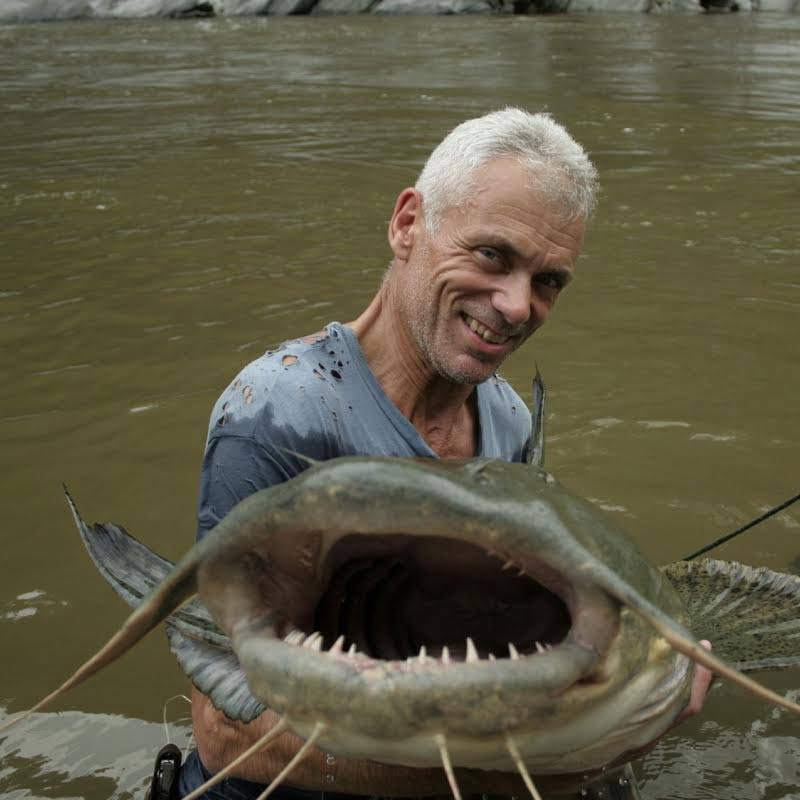
    MUMBAI: Freshwater detective, biologist and extreme angler Jeremy Wade has spent three decades traveling the world’s waterways in search of man-eaters that lurk beneath the surface of rivers and lakes in some of the most inhospitable locations in the world.

    Man-sized piranhas, fish that electrocute, nine-foot river sharks (yes, river sharks) … take a deep dive with Jeremy Wade and bring out these outlandish creatures to your living room weekdays at 8 PM.  The world’s greatest angling explorer takes Discovery viewers where no wildlife program has gone before, revealing the creatures that lurk in the murky depths of our planet’s inland waterways. Starting 5 December, River Monsters will air Monday to Friday at 8 pm.

    Jeremy grew up in southeast England on the banks of the Suffolk Stour, where his fascination with the underwater world and the desire to see “what’s around the next bend” began. His first overseas trip was to the mountain-rivers of India in 1982, and since then, he has increasingly spent his time tracking down large and little-known fish in rivers around the world – particularly in the Congo and the Amazon rainforests.  Over the last thirty years, Jeremy has travelled extensively to India in search of elusive fish in Kali (Brahmaputra), Kauvery and other iconic rivers.  At the Kali River, he found a little-known catfish species that can grow to a large size – the Goonch or Giant Devil Catfish.  His search continued to find the rare fish, a Golden Mahseer. 

    In the new episodes of River Monsters airing this December, the journey will continue with Jeremy visiting India in search of Goonch and Mahseer. He also tries fly fishing that takes a lot of practice to get right. Will he be able to compare it to catches of his past?  Jeremy heads to Southeast Asia in search of the mythological sea serpent. But will his freshwater knowledge be enough to tackle this monster of the deep?  He embarks on an epic mission to reveal the real creature behind the world’s most famous river monster; the Loch Ness Monster. But what will he uncover? Further in Africa’s Rift Valley, rife with killer crocs, hippos and warring gangs, he dives deep for a worthy prize: the Mputa Nile perch.  In Papua New Guinea rumours of flesh-eating pacu are haunting locals. How dangerous is this fish and has it really developed a taste for parts of the male anatomy?  In the Congo River lurks a super predator. Fast and ferocious, this killing machine has even snatched a local child. Can Jeremy catch this notorious fish?

    Why River Monsters?

    Nearly half the world’s fish species live in just 0.01% of the world’s water – our lakes and rivers. Yet most people know less about what lives in fresh water than they do about the oceans.

    Because some rivers are very hard to get to – and/or too murky to see into, using normal means – many of their inhabitants are rarely or never seen in conventional natural history programs.

    River Monsters takes a different approach. Biologist and fishing detective Jeremy Wade starts by examining myths and fishermen’s tales, subjecting them to scientific scrutiny to separate fact from fiction. Then he homes in on his targets using a fishing line. The results are some fish of staggering dimensions and appearance, including some spectacular TV ‘firsts’.


  • Discovery to air ‘River Monsters’ throughout December

    Discovery to air ‘River Monsters’ throughout December

    MUMBAI: Freshwater detective, biologist and extreme angler Jeremy Wade has spent three decades traveling the world’s waterways in search of man-eaters that lurk beneath the surface of rivers and lakes in some of the most inhospitable locations in the world.

    Man-sized piranhas, fish that electrocute, nine-foot river sharks (yes, river sharks) … take a deep dive with Jeremy Wade and bring out these outlandish creatures to your living room weekdays at 8 PM.  The world’s greatest angling explorer takes Discovery viewers where no wildlife program has gone before, revealing the creatures that lurk in the murky depths of our planet’s inland waterways. Starting 5 December, River Monsters will air Monday to Friday at 8 pm.

    Jeremy grew up in southeast England on the banks of the Suffolk Stour, where his fascination with the underwater world and the desire to see “what’s around the next bend” began. His first overseas trip was to the mountain-rivers of India in 1982, and since then, he has increasingly spent his time tracking down large and little-known fish in rivers around the world – particularly in the Congo and the Amazon rainforests.  Over the last thirty years, Jeremy has travelled extensively to India in search of elusive fish in Kali (Brahmaputra), Kauvery and other iconic rivers.  At the Kali River, he found a little-known catfish species that can grow to a large size – the Goonch or Giant Devil Catfish.  His search continued to find the rare fish, a Golden Mahseer. 

    In the new episodes of River Monsters airing this December, the journey will continue with Jeremy visiting India in search of Goonch and Mahseer. He also tries fly fishing that takes a lot of practice to get right. Will he be able to compare it to catches of his past?  Jeremy heads to Southeast Asia in search of the mythological sea serpent. But will his freshwater knowledge be enough to tackle this monster of the deep?  He embarks on an epic mission to reveal the real creature behind the world’s most famous river monster; the Loch Ness Monster. But what will he uncover? Further in Africa’s Rift Valley, rife with killer crocs, hippos and warring gangs, he dives deep for a worthy prize: the Mputa Nile perch.  In Papua New Guinea rumours of flesh-eating pacu are haunting locals. How dangerous is this fish and has it really developed a taste for parts of the male anatomy?  In the Congo River lurks a super predator. Fast and ferocious, this killing machine has even snatched a local child. Can Jeremy catch this notorious fish?

    Why River Monsters?

    Nearly half the world’s fish species live in just 0.01% of the world’s water – our lakes and rivers. Yet most people know less about what lives in fresh water than they do about the oceans.

    Because some rivers are very hard to get to – and/or too murky to see into, using normal means – many of their inhabitants are rarely or never seen in conventional natural history programs.

    River Monsters takes a different approach. Biologist and fishing detective Jeremy Wade starts by examining myths and fishermen’s tales, subjecting them to scientific scrutiny to separate fact from fiction. Then he homes in on his targets using a fishing line. The results are some fish of staggering dimensions and appearance, including some spectacular TV ‘firsts’.

  • Discovery APAC appoints Nikhil Madhok; strengthens corporate team with other hiring

    Discovery APAC appoints Nikhil Madhok; strengthens corporate team with other hiring

    MUMBAI: Discovery has announced key appointments in its APAC central corporate leadership team. Former Life OK GM and business head Nikhil Madhok has joined the channel as the senior vice-president (SVP) head of products.

    Madhok will spearhead the re-development of the company’s product suite and champion a strong maker culture in the organisation. He will formally join in January 2017, and will closely partner with the innovation team on future digital offerings.

    Operating leadership remains with the company’s five market clusters announced earlier in year. The move adds innovative, world-class capabilities and resources to accelerate the company’s stated ambition to evolve from a traditional linear Pay-TV to a true convergent media and entertainment business across market clusters in Asia.

    “We are laser focused on re-inventing our existing space and growing our business beyond linear across Asia. The new leadership team members bring with them strong entrepreneurial drive and a disruptive mindset. I am thrilled to welcome them on board as we step up our efforts to redefine our product and business portfolio in the region,” said Discovery Networks APAC president and MD Arthur Bastings.

    Other executives who have joined are — Rebecca Kent as the vice-president (VP) business transformation. Kent will oversee change management, and lead business process and operational optimisation. She joined in September from Discovery’s global business operations team in London.

    Darrell Chan joined as the vice-president (VP) regional counsel. He will manage the legal dossier, drive strong governance around Discovery’s growing portfolio of equity stakes in new businesses and coordinate external affairs. Chan will joined on 1 February 2017, from Expedia. He will partner with Dinkim Sailo, who manages Discovery’s external and government affairs brief.

    Dinkim recently joined from SOS International.

    Karun Arya will now be the director, head of corporate communications, and will represent the company’s voice as it implements its ambitious transformation and investment plans. He came in from Uber.

    Discovery’s new executives joined the chief financial officer and SVP corporate operations Nilesh Zaveri, the SVP Innovation Winradit Kasidit Kolasastraseni, the VP corporate development Jonathan Mills, the VP strategy Karan Paul and the VP HR Jin Tan in the APAC HQ team.

  • Discovery APAC appoints Nikhil Madhok; strengthens corporate team with other hiring

    Discovery APAC appoints Nikhil Madhok; strengthens corporate team with other hiring

    MUMBAI: Discovery has announced key appointments in its APAC central corporate leadership team. Former Life OK GM and business head Nikhil Madhok has joined the channel as the senior vice-president (SVP) head of products.

    Madhok will spearhead the re-development of the company’s product suite and champion a strong maker culture in the organisation. He will formally join in January 2017, and will closely partner with the innovation team on future digital offerings.

    Operating leadership remains with the company’s five market clusters announced earlier in year. The move adds innovative, world-class capabilities and resources to accelerate the company’s stated ambition to evolve from a traditional linear Pay-TV to a true convergent media and entertainment business across market clusters in Asia.

    “We are laser focused on re-inventing our existing space and growing our business beyond linear across Asia. The new leadership team members bring with them strong entrepreneurial drive and a disruptive mindset. I am thrilled to welcome them on board as we step up our efforts to redefine our product and business portfolio in the region,” said Discovery Networks APAC president and MD Arthur Bastings.

    Other executives who have joined are — Rebecca Kent as the vice-president (VP) business transformation. Kent will oversee change management, and lead business process and operational optimisation. She joined in September from Discovery’s global business operations team in London.

    Darrell Chan joined as the vice-president (VP) regional counsel. He will manage the legal dossier, drive strong governance around Discovery’s growing portfolio of equity stakes in new businesses and coordinate external affairs. Chan will joined on 1 February 2017, from Expedia. He will partner with Dinkim Sailo, who manages Discovery’s external and government affairs brief.

    Dinkim recently joined from SOS International.

    Karun Arya will now be the director, head of corporate communications, and will represent the company’s voice as it implements its ambitious transformation and investment plans. He came in from Uber.

    Discovery’s new executives joined the chief financial officer and SVP corporate operations Nilesh Zaveri, the SVP Innovation Winradit Kasidit Kolasastraseni, the VP corporate development Jonathan Mills, the VP strategy Karan Paul and the VP HR Jin Tan in the APAC HQ team.

  • Sameer Rao joining Discovery in senior role

    Sameer Rao joining Discovery in senior role

    MUMBAI: Sameer Rao, who was the creative director at UTV Studios in Mumbai, will be joining Discovery Channel, the flagship network of Discovery Communications, in a senior position this week. A source confirmed the news of Rao’s move to one of the most dynamic networks on television which is devoted to creating quality non-fiction programming.

    Although the alumnus of the Indian Institute of Management, Ahmedabad, is reportedly joining Discovery formally on 25 November, his official designation could not be confirmed.

    It was later made official that Rao joined as vice-president – real world products, south Asia, Discovery Networks Asia-Pacific.

    Prior to joining UTV in May last year where he conceptualised, ideated and developed scripts with screenwriters and directors, did cost/revenue analysis before approving feature film projects and oversaw pre-production, production, post-production and marketing of Hindi feature films, Rao worked with the acclaimed writer-director-producer Vidhu Vinod Chopra’s production company for over four years since November 2010 as the business head for films such as ‘3 Idiots’, Munna Bhai series and P.K.

    Before joining Chopra, Rao invested over six years in Star India from January 2005 to November 2010, starting as an assistant vice-president and rising up to the level of general manager, where his responsibilities included management of the overall channel team involved in acquisition of movies, programming of slots, marketing and promotion and working with the ad sales team on revenue maximisation.

    The trained chartered accountant was, earlier, the associate director at KPMG for two years. Later, he worked as a consultant to Arthur Anderson and then as the UBS AG manager.

  • Sameer Rao joining Discovery in senior role

    Sameer Rao joining Discovery in senior role

    MUMBAI: Sameer Rao, who was the creative director at UTV Studios in Mumbai, will be joining Discovery Channel, the flagship network of Discovery Communications, in a senior position this week. A source confirmed the news of Rao’s move to one of the most dynamic networks on television which is devoted to creating quality non-fiction programming.

    Although the alumnus of the Indian Institute of Management, Ahmedabad, is reportedly joining Discovery formally on 25 November, his official designation could not be confirmed.

    It was later made official that Rao joined as vice-president – real world products, south Asia, Discovery Networks Asia-Pacific.

    Prior to joining UTV in May last year where he conceptualised, ideated and developed scripts with screenwriters and directors, did cost/revenue analysis before approving feature film projects and oversaw pre-production, production, post-production and marketing of Hindi feature films, Rao worked with the acclaimed writer-director-producer Vidhu Vinod Chopra’s production company for over four years since November 2010 as the business head for films such as ‘3 Idiots’, Munna Bhai series and P.K.

    Before joining Chopra, Rao invested over six years in Star India from January 2005 to November 2010, starting as an assistant vice-president and rising up to the level of general manager, where his responsibilities included management of the overall channel team involved in acquisition of movies, programming of slots, marketing and promotion and working with the ad sales team on revenue maximisation.

    The trained chartered accountant was, earlier, the associate director at KPMG for two years. Later, he worked as a consultant to Arthur Anderson and then as the UBS AG manager.

  • Discovery’s high-octane drama series ‘Gold Rush’ starts today

    Discovery’s high-octane drama series ‘Gold Rush’ starts today

    MUMBAI: Since antiquity, gold has been the most cherished metal known to mankind. India’s passion for the yellow metal remains unparalleled. While an approximate 30% of world’s gold production is consumed by Indians; it produces only a fraction of its consumption and is the largest importer of gold.

    Gold mining has been a risky business – where one wrong move can cost a crew millions of dollars. Powered by magnetic storytelling and compelling characters, Discovery brings its highly acclaimed series Gold Rush where the miners take on greater risks in hopes of finding more gold than ever before. But not every gamble always pans out with massive profits. With a mix of high-stakes drama and gripping story, Gold Rush will air every Tuesday at 10 pm starting November 15.

    Returning from a record-breaking gold mining season is 21-year-old miner Parker Schnabel. The series begins with a sad start for Parker as he has lost his beloved grandfather, mentor and an expert miner – John Schnabel. In this reality series, Parker who attains the leadership role, will be tested more than ever as he navigates the many changes in his life. This year, he makes his biggest operational investment by ordering a customized $600,000 washplant. But will it be enough to beat out his rival Todd Hoffman? Parker’s gold mining plan is to go lean and mean on expenses in an attempt to make his biggest profit yet.

    Meanwhile, the competitor Todd Hoffman takes the biggest gamble of his life, turning his back on the Klondike region and moving his entire operation to Oregon (US). Todd is on a quest for huge gold nuggets at the High Bar mine, located high up in the mountains. It’s a bold move – with Todd so confident that he sets an ambitious 5,000 ounce goal – more than 2,000 ounces than his best-ever total in the previous seasons of Gold Rush. But with the first Oregon clean ups way below expectations, Todd begins to wonder if he’s made a massive mistake. Could this season mark the end of the Hoffman crew?

    In this season of Gold Rush, legendary Klondike miner Tony Beets, aka “The Viking,” is back and doubling down by investing US$2 million in resurrecting a second historic gold dredge – twice as big as his first. Last year, people thought he was crazy for investing in his first ancient dredge. But Tony is hoping that once again he can accomplish the impossible. But first, he must transport the 75-year-old abandoned dredge from a remote spot 150 miles down-river. He’ll need his family to step up to the plate and run the rest of his gold-mining empire. But when his first dredge sinks within days, Tony’s son, Kevin, finds himself in his father’s firing line.

    In advance of the new season of Gold Rush, beginning November 15, Discovery viewers can binge on prior seasons with a special ‘Story So Far’ at 10 PM.

    This year’s Gold Rush season is filled with the same excitement, as miners have upped the ante by setting up higher goals. This season the miners will take on even greater risks in hopes of finding more gold than ever before.
    Gold Trivia:

    1. Amongst the top gold producing countries in the world, China is in the lead in first place followed by Australia, Russia in third and United States holding fourth place.

    2. Canada’s Barrick Gold Corp. (TSE:ABX) holds first place in global ranking in gold production.

    3. Gold is one of the most recycled materials in the world. Amazingly gold recycling accounts for one third of the total production.

    4. United States tops the reported official holdings in the world. (source: IMF IFS; World Gold Council, Dec 2015). US holds 8,133.5 tonnes of Gold, whereas India ranks at no. 11 with 557.7 tonnes.

    5. In India, besides fascination for gold jewellery, it is considered the most pious metal. This charm is validated by the fact that India is the biggest importer of gold today.

    6. USA’s fascination with Gold Mining dates back to 1848 when the famous California Gold Rush happened. Miners extracted more than 750,000 pounds of gold during the California Gold Rush.

    7. ‘Klondike’marks the story of the last great Gold Rush in history. In 1897 two friends made the perilous journey through North American wilderness to the Klondike boom town Dawson City, “The Paris of the North”, which was filled with murders, revenge, riches and redemption.

    8. Gold mining always catches the attention of individuals, probably that’s the reason Discovery’s popular series Gold Rush has been the highest rated show not only in US but across the world.

  • Discovery’s high-octane drama series ‘Gold Rush’ starts today

    Discovery’s high-octane drama series ‘Gold Rush’ starts today

    MUMBAI: Since antiquity, gold has been the most cherished metal known to mankind. India’s passion for the yellow metal remains unparalleled. While an approximate 30% of world’s gold production is consumed by Indians; it produces only a fraction of its consumption and is the largest importer of gold.

    Gold mining has been a risky business – where one wrong move can cost a crew millions of dollars. Powered by magnetic storytelling and compelling characters, Discovery brings its highly acclaimed series Gold Rush where the miners take on greater risks in hopes of finding more gold than ever before. But not every gamble always pans out with massive profits. With a mix of high-stakes drama and gripping story, Gold Rush will air every Tuesday at 10 pm starting November 15.

    Returning from a record-breaking gold mining season is 21-year-old miner Parker Schnabel. The series begins with a sad start for Parker as he has lost his beloved grandfather, mentor and an expert miner – John Schnabel. In this reality series, Parker who attains the leadership role, will be tested more than ever as he navigates the many changes in his life. This year, he makes his biggest operational investment by ordering a customized $600,000 washplant. But will it be enough to beat out his rival Todd Hoffman? Parker’s gold mining plan is to go lean and mean on expenses in an attempt to make his biggest profit yet.

    Meanwhile, the competitor Todd Hoffman takes the biggest gamble of his life, turning his back on the Klondike region and moving his entire operation to Oregon (US). Todd is on a quest for huge gold nuggets at the High Bar mine, located high up in the mountains. It’s a bold move – with Todd so confident that he sets an ambitious 5,000 ounce goal – more than 2,000 ounces than his best-ever total in the previous seasons of Gold Rush. But with the first Oregon clean ups way below expectations, Todd begins to wonder if he’s made a massive mistake. Could this season mark the end of the Hoffman crew?

    In this season of Gold Rush, legendary Klondike miner Tony Beets, aka “The Viking,” is back and doubling down by investing US$2 million in resurrecting a second historic gold dredge – twice as big as his first. Last year, people thought he was crazy for investing in his first ancient dredge. But Tony is hoping that once again he can accomplish the impossible. But first, he must transport the 75-year-old abandoned dredge from a remote spot 150 miles down-river. He’ll need his family to step up to the plate and run the rest of his gold-mining empire. But when his first dredge sinks within days, Tony’s son, Kevin, finds himself in his father’s firing line.

    In advance of the new season of Gold Rush, beginning November 15, Discovery viewers can binge on prior seasons with a special ‘Story So Far’ at 10 PM.

    This year’s Gold Rush season is filled with the same excitement, as miners have upped the ante by setting up higher goals. This season the miners will take on even greater risks in hopes of finding more gold than ever before.
    Gold Trivia:

    1. Amongst the top gold producing countries in the world, China is in the lead in first place followed by Australia, Russia in third and United States holding fourth place.

    2. Canada’s Barrick Gold Corp. (TSE:ABX) holds first place in global ranking in gold production.

    3. Gold is one of the most recycled materials in the world. Amazingly gold recycling accounts for one third of the total production.

    4. United States tops the reported official holdings in the world. (source: IMF IFS; World Gold Council, Dec 2015). US holds 8,133.5 tonnes of Gold, whereas India ranks at no. 11 with 557.7 tonnes.

    5. In India, besides fascination for gold jewellery, it is considered the most pious metal. This charm is validated by the fact that India is the biggest importer of gold today.

    6. USA’s fascination with Gold Mining dates back to 1848 when the famous California Gold Rush happened. Miners extracted more than 750,000 pounds of gold during the California Gold Rush.

    7. ‘Klondike’marks the story of the last great Gold Rush in history. In 1897 two friends made the perilous journey through North American wilderness to the Klondike boom town Dawson City, “The Paris of the North”, which was filled with murders, revenge, riches and redemption.

    8. Gold mining always catches the attention of individuals, probably that’s the reason Discovery’s popular series Gold Rush has been the highest rated show not only in US but across the world.

  • 137 GEC and news pay channels violated ad cap rule in second quarter

    137 GEC and news pay channels violated ad cap rule in second quarter

    NEW DELHI: Even as the ad cap case drags on with the government failing to take a firm stand either way, a total of 137 pay channels including 25 news and current affairs channels continued to violate the regulations for telecasting a maximum of 12 minutes of commercials per hour in the second quarter of the year.

    The report released today by the Telecom Regulatory Authority of India for the period from 28 March to 2 June 2016 shows that the number of violators has remained almost the same as in the first quarter when the total was 133 between 28 December and 27 March.

    While there has been a very miniscule fall in the violators among news channels from 30 to 25, there is an increase in non-news channels from 103 as on 27 March to 112 as on 26 June.

    The average duration per hour of advertisements (commercial and self promotional) during peak hours (7pm‐10 PM) in pay news channels for the period 28 March to 26 June shows that the highest of these was by 21.95 minutes by ETV Rajasthan and the lowest was 12.01 minutes by Zee Telugu. Interestingly, the highest in the first quarter was also by ETV Rajasthan with 24.83 minutes. Times Now which had been at the bottom with 12.15 minutes in the first quarter does not even figure in the list of violators in the second quarter.

    Among pay non-news channels (general entertainment channels) for the same period, the highest was 24.54 minutes by B4U Movies (which had topped the list in the first quarter with 23.41 minutes and was also at the top in December last year) and the lowest was 12.03 minutes by Raj Digital Plus. Odisha TV’s Tarang which had been at the bottom in the first quarter increased its ad time to 12.22 minutes.

    There are at least 16 news and 30 non-news channels clocking more than 15 minutes per hour. While the number of news channels was the same in the first quarter, the number of GECs has risen from 24.

    TRAI has made it clear that “the information is based on the data submitted by the broadcasters and TRAI bears no responsibility for correctness. As per information available with TRAI, the rest of the pay news and non-news channels are carrying less than 12 minutes of average duration per hour of advertisements (commercial & self promotional) during peak hours (7PM – 10 pm).”

    Asking TRAI not to take any coercive action against any channel pending hearing of the case in the first hearing over two years earlier, the Delhi High Court had asked all channels and TRAI to keep a record of the advertising time consumed including commercials.

    The petition had been filed by the News Broadcasters Association and some channels challenging the TRAI decision to implement the directive of 12 minutes contained in the Cable Television Networks (Regulation) Act 1995. The Information and Broadcasting Ministry and TRAI are the respondents in the petition.

    After the Information and Broadcasting Ministry told the Court on 27 November 2015 that it was discussing the issue with broadcasters, the matter was put off several times. In the 11 February hearing, Discovery Communications moved for intervention while Home Cable sought early hearing.

    In its intervention, MSO Home Cable Network (P) Ltd said it wanted to intervene as it was directly affected by the outcome of the present petition. It wanted the NBA petition to be dismissed and added: “The Pay channel broadcasters are profiteering at the expense of subscribers and the DPOs. There is no justification for changing monthly subscription when commercial advertisements are inserted. The Standards of Quality of Service (Digital Addressable Cable TV Systems) Regulations 2012 (with Amendments thereafter) is justified to the extent they are applicable to pay channels. The pay channel broadcasters cannot charge the subscription fee while inserting commercials into the content or in the alternative, the subscribers have to be compensated for the revenue earned on the basis of their being subscribers of the channels.”

    In the petition, the news channels made the plea that most of them are free to air and therefore do not get any subscription fee from the viewers as the GEC channels do.

  • 137 GEC and news pay channels violated ad cap rule in second quarter

    137 GEC and news pay channels violated ad cap rule in second quarter

    NEW DELHI: Even as the ad cap case drags on with the government failing to take a firm stand either way, a total of 137 pay channels including 25 news and current affairs channels continued to violate the regulations for telecasting a maximum of 12 minutes of commercials per hour in the second quarter of the year.

    The report released today by the Telecom Regulatory Authority of India for the period from 28 March to 2 June 2016 shows that the number of violators has remained almost the same as in the first quarter when the total was 133 between 28 December and 27 March.

    While there has been a very miniscule fall in the violators among news channels from 30 to 25, there is an increase in non-news channels from 103 as on 27 March to 112 as on 26 June.

    The average duration per hour of advertisements (commercial and self promotional) during peak hours (7pm‐10 PM) in pay news channels for the period 28 March to 26 June shows that the highest of these was by 21.95 minutes by ETV Rajasthan and the lowest was 12.01 minutes by Zee Telugu. Interestingly, the highest in the first quarter was also by ETV Rajasthan with 24.83 minutes. Times Now which had been at the bottom with 12.15 minutes in the first quarter does not even figure in the list of violators in the second quarter.

    Among pay non-news channels (general entertainment channels) for the same period, the highest was 24.54 minutes by B4U Movies (which had topped the list in the first quarter with 23.41 minutes and was also at the top in December last year) and the lowest was 12.03 minutes by Raj Digital Plus. Odisha TV’s Tarang which had been at the bottom in the first quarter increased its ad time to 12.22 minutes.

    There are at least 16 news and 30 non-news channels clocking more than 15 minutes per hour. While the number of news channels was the same in the first quarter, the number of GECs has risen from 24.

    TRAI has made it clear that “the information is based on the data submitted by the broadcasters and TRAI bears no responsibility for correctness. As per information available with TRAI, the rest of the pay news and non-news channels are carrying less than 12 minutes of average duration per hour of advertisements (commercial & self promotional) during peak hours (7PM – 10 pm).”

    Asking TRAI not to take any coercive action against any channel pending hearing of the case in the first hearing over two years earlier, the Delhi High Court had asked all channels and TRAI to keep a record of the advertising time consumed including commercials.

    The petition had been filed by the News Broadcasters Association and some channels challenging the TRAI decision to implement the directive of 12 minutes contained in the Cable Television Networks (Regulation) Act 1995. The Information and Broadcasting Ministry and TRAI are the respondents in the petition.

    After the Information and Broadcasting Ministry told the Court on 27 November 2015 that it was discussing the issue with broadcasters, the matter was put off several times. In the 11 February hearing, Discovery Communications moved for intervention while Home Cable sought early hearing.

    In its intervention, MSO Home Cable Network (P) Ltd said it wanted to intervene as it was directly affected by the outcome of the present petition. It wanted the NBA petition to be dismissed and added: “The Pay channel broadcasters are profiteering at the expense of subscribers and the DPOs. There is no justification for changing monthly subscription when commercial advertisements are inserted. The Standards of Quality of Service (Digital Addressable Cable TV Systems) Regulations 2012 (with Amendments thereafter) is justified to the extent they are applicable to pay channels. The pay channel broadcasters cannot charge the subscription fee while inserting commercials into the content or in the alternative, the subscribers have to be compensated for the revenue earned on the basis of their being subscribers of the channels.”

    In the petition, the news channels made the plea that most of them are free to air and therefore do not get any subscription fee from the viewers as the GEC channels do.