Tag: Dirty Picture

  • Sequels & the need to cash in on previous successes

    The film industry is going through its worst period in a long time. Nothing seems to be working as film after films flop losing almost total investments. This, when private investors are staging a comeback to invest in film distribution business as the big houses have curtailed their activities.

    While the producers of recent films have been suffering, the main sufferers are the single screens as well as the multiplex chains who, besides servicing their investments, also need to tend to their fixed costs like, staff, power, maintenance and other such costs.

    This is a Catch 22 situation. While the independent producers, who are keeping the supply going, they have to do it in limited budgets. The multiplex chains won’t give them decent playtime or reduced admission rates and the paying audience won’t be lured otherwise.

    The stalemate continues.

    The recent trend seems to be of making wome- oriented films. That is fine. They do work at times as was the case with, Kahaani, Dirty Picture, Neerja, Chalk & Duster, Ki And Ka, Fitoor, Sarabjit, Begum Jaan, Maatr, Noor and so on. But, just a few worked.

    If Kahaani worked, why did Kahaani 2 did not? It did not because it came across as a product of greed. A need to cash in on the success of its predecessors. The makers did not even care that their ‘Dare It All’ protagonist of Kahaani was turned in to a helpless, hapless woman in Kahaani 2.

    Both new releases of the week, Noor and Maatr, were women centric films. Both faced disastrous outcome at the box office.

    Noor was much hyped as the Pakistani journalist writer Saba Imtiaz’s account of her life as a journalist in Karachi, among the most violent cities in the world. It was published as a book, Karachi, You Are Killing Me! The account had no story, looked like a dramatised and fictionalised writing. Nothing in the book seemed fit to incorporate it in the life of a Mumbai journalist.

    Maatr was a vehicle for one time sought-after star, Raveena Tandon, as a senior actor to return in her veteran avatar as a mother. She played a mother on revenge mission for her raped and killed young daughter. The film failed to get an opening of any kind.

    *Raveena’s comeback, Maatr, sadly, could not find enough footfalls to run a show. Turned into a ‘No audience No show’ affair as the collections remained in lakhs. The film’s promotion was poor too. The three day collections remained short of one crore at about Rs 70 lakh.

    *Sonakshi Sinha, essaying the role of a struggling journalist, lacked head or tail. Is a loser on all counts as the film barely manages to put together Rs 4.1 crore crore for the first weekend.

    *Begum Jaan, an outdated story told poorly, fails badly to incite the audience. After a poor opening weekend of Rs 10.6 crore, the film ends it first week with a total of Rs 15.1 crore.

    *Badrinath KI Dulhania has taken its six week total to Rs 114.7 crore.

    *Laali KI Shaadi Mein Laaddoo Deewana, Blue Mountain, Mirza Juuliet and Mukti Bhawan are also ran.

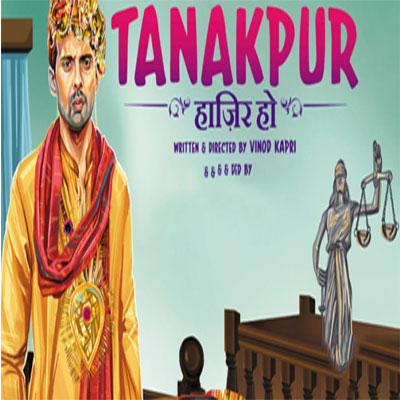
  • ‘Miss Tanakpur Haazir Ho’…Gayee bhens paani mei!

    ‘Miss Tanakpur Haazir Ho’…Gayee bhens paani mei!

    MUMBAI: The genres for film stories have become limited after television took over some of them, such as family dramas, mythological and to some extent, horror.  In a quest to find newer themes away from regular genres, filmmakers have been trying to experiment. While a few of them do find interesting themes that result in films like Dirty Picture, Queen, Vicky Donor and Piku, most come out as a poor spectacle resulting in the ‘No Audience, No Show’ genre. Miss Tanakpur Haazir Ho falls into an entirely new genre called ‘Bizarre.’


    Tanakpur, a small town in UP, has this annual best bhains (buffalo) contest. And the winner is… Annu Kapoor’s bhains, who has come to him as part of dowry from the family of Hrishita Bhatt, his wife. She is crowned Miss Tanakpur. Kapoor is the town head with a sidekick in Ravi Kissen. Kapoor has problems related to sex life and tries various remedies prescribed by a quack he finds at a local fair.


    Kapoor is much older to Hrishita and suspects his wife of having an affair with someone younger. For all such problems and others, the town has a kind of black magic man in Sanjay Mishra who is reputed to have turned a perfectly virile man into a eunuch and vice versa, among other such miracles. Kapoor seeks his help to find who his wife is having an affair with.


    Mishra is a full blown fraud tantric who mumbles some mumbo jumbo and asks his patron to perform weird and filthy rituals. (That’s the maker’s idea of comedy besides being obsessed with human faeces and animal dung. The film is generously peppered with reference to these substances.)


    Finally, Kapoor catches Hrishita’s sympathiser, Rahul Bagga, red-handed with her in his bedroom. Kapoor and his goons beat him to a pulp, with a crowd gathering to witness the scene. But now Kapoor and his men are not sure how to explain this beating of Bagga. Telling everyone that Kapoor’s wife was having an affair with him would ruin Kapoor’s reputation. After all, he was the town head and aspiring for an MLA ticket.


    Kapoor finds a way out. Bagga is accused of raping Kapoor’s bhains. The story gets weirder. With Om Puri as the local cop who is easy to bribe and a vet who is too weak to protest, reports of rape are generated and a case filed. The court case begins with finally the magistrate wanting to interrogate the ‘victim’. In the process, some more poorly conceived comic scenes are force-fitted in the film.


    There is an institution called Khap, active in parts of North India, whose help Kapoor seeks. Khap considers itself above the law. The Khap sits on a judgements on Bagga and issues a diktat that he marry the bhains for his misdeed. The marriage is being solemnised, when the bhains plays the role of a runaway bride, taking to the highway as fast as she could. Having run out of corny ideas, the makers call it quits. There is no climax as such. You are just told that the wrongdoers, Puri, Kapoor, Kissen and Sharma are booked and punished by the law. Bagga and Hrishita live happily ever after.


    With a poor conception, poorer scripting and amateur handling, this purported satire turns into an inane farce. The film has some good capable artistes in Puri, Kapoor, Sharma and Kissen but all are at sea here. Hrishita is in a few scenes and all of them seem to have been taken in one go even before she could change her expressions. Bagga wears a lost look through the film and one can’t blame him for that.


    Miracles don’t happen at the box office and none expected for Miss Tanakpur Haazir Ho.


    Producers: Crossword Films Production, Fox Star Studios’

    Director: Vinod Kapri.

    Cast: Om Puri, Annu Kapoor, Ravi Kissen, Hrishita Bhatt, Rahul Bagga. 

  • TV turning bold?

    TV turning bold?

    MUMBAI: Two years ago, the television premiere of Ekta Kapoor’s The Dirty Picture became a magnet for controversy, when at the nth hour the Information & Broadcasting Ministry banned Sony Entertainment Television from airing the film before 11pm, citing its adult content and sexual innuendo as reason.

    While the movie did eventually premiere on SET at 8pm, it was only after four months, and with as many as 56 cuts advised by the Censor Board for Film Certification (CBFC).

    In sharp contrast, the world television premiere of Sanjay Leela Bhansali’s Goliyon Ki Raasleela Ram-Leela on the same channel in February was a bit of a pushover.

    No reservations were raised by the government and the movie was aired during primetime and without any cuts. What’s more, the film garnered 8,900 TVTs and helped SET make it to the top four channels after struggling at the bottom for 20 weeks.

    One can see a similar trend with some of the current TV shows. Remember Ekta Kapoor’s show Bade Achche Lagte Hain? An intimate scene between the serial’s lead actors Sakshi Tanwar and Ram Kapoor was aired.

    So, is Indian television becoming bold or has the audience come of age to accept more and more of such content. We spoke to a cross-section of industry to find out.

    “It is not really so much about TV getting bolder as much as acceptance for this kind of content. The audience is becoming a lot more mature to accept it. It is not something you can say is limited only to GECs; it is across the board. It is largely media-driven than anything else. The awareness has gone up and there is so much international content that we are consuming that it doesn’t seem so odd,” said Lodestar UM vice-president Deepak Netram.

    “We consume the same kind of content in so many different places that it is really not alarming. At the same time, there is some amount of dissonance in the conservative mindset, which has always been there. I don’t think there is a dramatic shift; it is something that has been happening gradually over a period of time.”

    Unlike Netram, Sony Max EVP and business head Neeraj Vyas said he wouldn’t have gone ahead and aired the whole movie without cuts the way SET did. “A Ram-Leela kind of movie cannot be watched when you are with your family. When it comes to Max, I will ensure that I cut at least 10 minutes of the movie,” he said.

    Star India’s attitude has been completely different to that of SET. An upcoming episode of the celebrity chat show Koffee with Karan featuring Freida Pinto and Nargis Fakhri turned out so steamy that Star World decided to serve the ‘adults only’ brew at11pm instead of the usual 9pm slot.

    “Staying within the IBF guidelines, we didn’t want to air the episode before 11 pm. The alternative would have been to edit out a lot of the conversation, which we chose not to do. The episode is worth staying up late for,” said Star India content head, English GECs Rasika Tyagi.

    At the same time, Star Plus, another channel within the Star Network, remains unapologetic about airing an adult-themed show Ishq Kills every Sunday at 10pm. Interestingly, the very same channel telecast adult-themed shows such as Maryada – Aakhir Kab Tak and Kaali – Ek Agnipariksha during late primetime back in 2010.

    Meanwhile, a channel like Channel V, a lot of whose content tends to be edgy, maintains a fairly high standard of self regulation of censorship.

    “A lot of the content that we do tends to be edgy. If you look at Heroes or Gumraah, they are fairly edgy subjects. But a lot depends on how you actually create them and also on how you plan and execute. While Heroes by the nature of the subject is quite edgy, we feel it is a topic which needs to be discussed and spoken about. And the way we treat it does not really sensationalize it and does not make it difficult to watch with the family. Therefore, that is really the yardstick that we apply. The topics and subjects might be edgy, but we definitely don’t want to make them sensational,” said Channel V (designation) Channel V general manager and EVP Prem Kamath.

    “Everyone runs their own code of self regulation mechanisms and it depends on what the internal mechanism is allowing them to do. There is an overall body – the BCCCI, which puts down guidelines. If you speak about Channel V or even the Star network channels, we hold a fairly high standard of self regulation of censorship.”

    According to Kamath, there is a strong social responsibility. “If it’s a family viewing channel, there is a certain kind of content you can put out during the regular hours, and if we feel any content is pushing the envelope of boldness and is not suitable for general viewing, we push it to a time slot which is probably late night. Or a lot of times, we don’t air it at all. So, I don’t think there is one brush that paints all the channels, it’s different for different channels,” he said.

  • Shemaroo signs a deal with Jadoo TV

    Shemaroo signs a deal with Jadoo TV

    MUMBAI: Pearl Media Group Ltd (PMG) has closed an international distribution deal for Bollywood films with Shemaroo Entertainment Limited – one of the largest content houses of India.

    Shemaroo is known for its strength in content aggregation and distribution in the industry across multiple platforms including new media and broadcast television among others.

    PMG content acquisition and distribution, co-founder & VP Sumit Ahuja said, “We‘re excited about partnering with established distribution brand names like Shemaroo who have been leaders in bringing content to the digital space. Access to their large array of high quality content, allows us to offer our customers the best selection of Bollywood films in the market.”

    “Consumers today want on-demand access to content across multiple devices. Our tie up with PMG‘s leading edge OTT platform JadooPLUS is a step in that direction. We will offer JadooPLUS customers easy and legal access to high quality south Asian content across the globe. Consumers can choose from a wide array of films that range from the latest Bollywood hits like Dirty Picture, Kya Superkool Hain Hum and I M 24 to classics like Mughal-E-Azam, Khuda Gawah, Kaalia and Shiva” said Shemaroo Entertainment director Jai Maroo.

    Through this deal, Shemaroo‘s content will be offered on PMG‘s premium OTT entertainment service, JadooPLUS. The service consists of live TV and on-demand content offerings, targeting south Asian expatriates worldwide via connected devices such as smart TVs, PCs and Macs, tablets, set-top boxes, gaming consoles and mobile devices.

  • Heroine: Bhandarkar has nothing new to offer

    Heroine: Bhandarkar has nothing new to offer

    MUMBAI: Every time a heroine oriented film is due for release, which is not very often, I am asked to give my views on why heroine films don’t work. I used to give detailed explanations hoping that what I said was understood. I think Madhur Bhandarkar‘s latest film, Heroine, has made my job easier. Next time I am asked this question. I can just say, “Go watch Heroine and you will know why. Heroine is usually what our heroine films are all about, which is certainly not a Lara Croft movie; this is not even a The Dirty Picture or a Kahaani! Usually, those plotting a heroine oriented film end up making their heroine‘s character weak and exploited and this is not what people want to see.”

    Bhandarkar has a mould ready in which he can cast his fashion model, a corporate woman or a heroine. The profession changes but the shape, size and sound remain the same. The events, the ups and downs, the drama are rewritten around his new protagonist but the essence remains the same. Bhandarkar is supposed to be one of the progressive filmmakers but what he has been making since Chandni Bar is like what Jacqueline Susanne and Jackie Collins wrote and was filmed as long ago as 1970s!

    In Heroine, Kareena Kapoor is a whimsical girl with a troubled childhood. She has run away from her home in Delhi, come to Mumbai and has become a top film star; the film does not dwell on how. Her character in the film tells the story of what is supposed to be happening in our film industry, especially star relations, emotions, exploitations, betrayals, insecurities, media and PR stunts, almost all exaggerated.

    Kapoor is celebrating the success of one of her films and expects super star Arjun Rampal, who she is passionate about, to attend which he does not. Their romance is kept back successfully from the media in a scenario where, otherwise, each star bitches about the other and leaks scandals to media. Kapoor has self destructive tendencies coupled with her insecurities about her top slot. And her lover, Rampal, makes her pop pills, drink continuously and smoke like a chimney. Her suffering is generally self-inflicted. Her pressure on Rampal to marry her finally leads to him dumping her. In search of love, she falls for the successful cricketer, played by Randeep Hooda. If she was in a hurry to tie the knot with Rampal, here Hooda is in hurry which, she feels, will be detrimental to her career. The romance breaks. Kapoor‘s career is all but over when she engages the services of a noted PR person, Divya Dutta, who knows all the tricks, usually dirty, of keeping her client in limelight.

    Kapoor is back on covers and in the endorsement market but a big film offer eludes her. Always exploited, Kapoor decides to play dirty to get that one offer. But she dodges advances by Sanjay Suri and he in turn reduces her role to a cameo.

    Desperate, Kapoor says yes to two offers, one to do a shoestring budget film and the other to attend a wedding in Delhi for a fee. Rampal is on same flight on his way to attend the same wedding. The lovers unite and decide to do a film together. But, again, Kapoor‘s insecurities get the better of her and as a result she loses both, the film as well as Rampal. But before that she has played her last card: releasing her sex video with Rampal on the net to promote the shoestring budget film she did. If such tricks worked in real life, every willing-to-strip newbie would be a star on debut. However, here it works for Kapoor and people flock to theatres to watch her small budget film as if the sex video was its trailer!

    The basic plot of this film remains same as his earlier film. The problem in case of Heroine is that there is no story as such to hold a viewer‘s interest. The film tries to cram in all that is supposed to be evil about the film industry with all its stereotypes, including a bitching friend, a gay dress designer, a bisexual guy on hand when in need, a loyal secretary as well as a cunning one, party scenes, bought media loyalties, forgotten stars and so on. It is all used to deliver 147 minutes of tedium. So whose story is this, a heroine or the film industry?

    The casting is poor in that those vying for or competing with Kapoor for the top spot look like side actors. Kapoor and Rampal are the best the film has to offer. Stars draw people to the cinema; making an economical film with small timers does not mean low admission rates. Heroine does not have much to offer and the viewer is saddled with faces he does not care to watch. Bhandarkar disappoints both in writing as well as direction. Except at three or four places, dialogue is routine. Musically, the film has one item number in Halkat jawani, which is well choreographed, along with two hummable numbers, Tujhpe fida and Khwahishein. Photography is good.

    This was the film for Kapoor to show her acting skills but that does not happen because of her ill-defined character. The character lacks consistency due to which one fails to identify or empathise with her. Rampal is okay but looks spent in this film. Shahana Goswami impresses in a brief role. Others who do well are Ranvir Shorey, Datta, Helen, Govind Namdeo and Hooda.

    A comparison with The Dirty Picture becomes inevitable after watching Heroine and one concludes that Heroine has nothing of what made The Dirty Picture a hit.

    Heroine has had huge amount of promotion which has not helped it get a decent opening and the bad reports will only make it suffer further at the box office.

  • Small releases turn big flops

    Small releases turn big flops

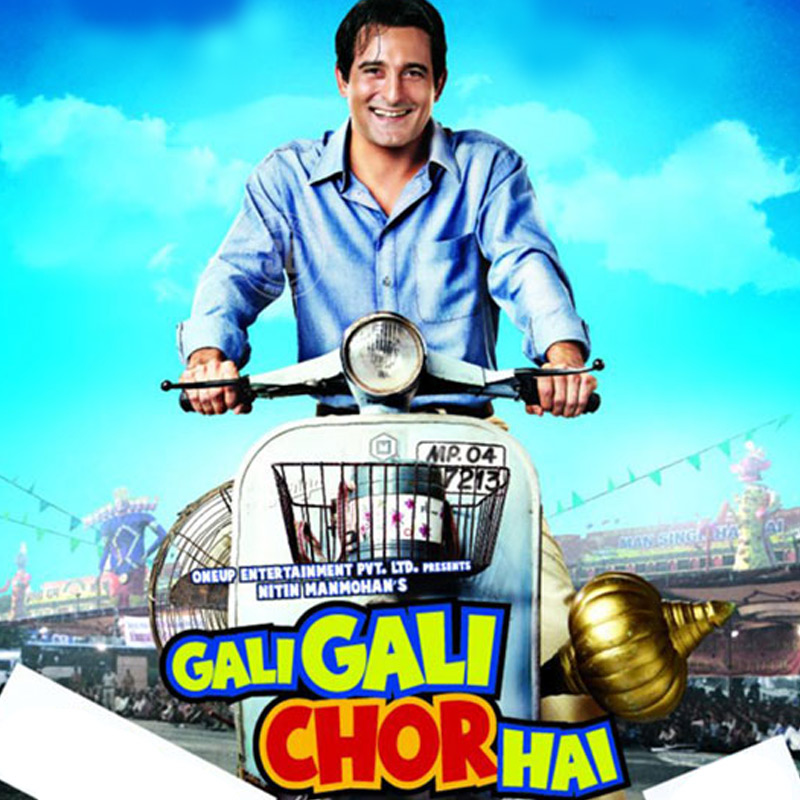
    Mumbai: Considering its making and face value, Gali Gali Chor Hai, made at an unseemly budget of Rs 190 million, stands to lose almost all with a poor opening weekend of about Rs 24 million and exhibitors looking to withdraw the film from cinema halls due to poor audience attendance.

    Love You To Death got a very poor box office response.

    With a seesaw like first week of ups and downs in collections, Agneepath finally managed to finish its first eight days at Rs 880 million with a major chunk of Rs 230 million coming from its 26th January opening day. The second weekend is faring well at select centres with collections of about Rs 130 million.

    Players collects a token Rs 500,000 in its fourth week to take its tally to Rs 290.5 million.

    Don2, coming at the end of its run, has collected Rs 500,000 in its sixth week to take its total to Rs 1.115 billion.

    Dirty Picture mopped up Rs 1 million in its ninth week, taking its total to Rs 838.5 million.

  • Pakistan Censor clears Dirty Picture for release

    Pakistan Censor clears Dirty Picture for release

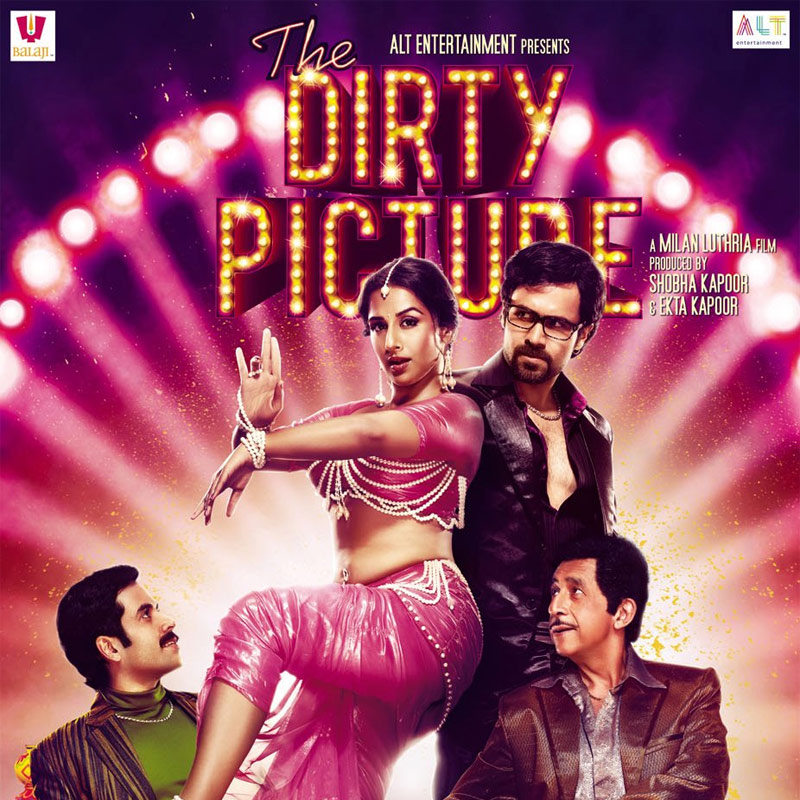
    MUMBAI: In a relief of sorts to the makers of The Dirty Picture, the Central Board of Film Censors, Islamabad has cleared Alt Entertainment‘s Vidya Balan-starrer movie for release in Pakistan.

    The screenings will begin from 9 December.

    Balaji Telefilms CEO Tanuj Garg said, “Yes, We have been told that the Pakistani Censor Board has cleared The Dirty Picture for release in the country.”

    “Earlier, the Pakistan Censor Board had refused to clear the film for release in the country I think they had gone on the title rather than the content of the film.”

    It may be recollected that the Pakistani Censors had said that the film was not suitable for theatrical release in Pakistan as they deemed it inappropriate for viewership in the country for its bold and controversial content.

    The Dirty Picture stars Vidya Balan, Emraan Hashmi, Naseeruddin Shah and Tusshar Kapoor in pivotal roles.

  • Balaji denies ‘Dirty Picture’ is based on life of Silk Smitha

    Balaji denies ‘Dirty Picture’ is based on life of Silk Smitha

    NEW DELHI: Balaji Motion Pictures has reiterated that the film “The Dirty Picture” is the romantic journey of a fiercely ambitious starlet Silk Smitha who dreams of making it big on the silver screen and is not inspired by the story of any person, living or dead.

    Reacting to the legal notice sent by the South star‘s brother V Naga Vara Prasad against the film‘s director Milan Luthria and producer Ekta Kapoor for making the biopic without any formal permission from the family, Balaji said the film “draws inspiration from the strugglers in the 80s whose indomitable spirit made them emerge triumphant and create a unique space for themselves in a male-dominated film industry.”

    ‘The film is not a formal biopic or biography, as is being speculated. It is a work of fiction, and any characters resemblance to real persons, living or dead, is coincidental.‘

    “The Dirty Picture” is in essence, a love story, and a celebration of the never-say-die spirit of every industry newcomer.

    The clarification comes in the wake of speculation that the Milan Luthria-directed film starring Vidya Balan is based on the life of the late actress Silk Smitha.

    Silk Smitha had started as a make-up girl in 1970s and then become a movie extra and subsequently the most wanted heroine of the early 80s. The sobriquet “Silk” came in 1979, with her first Tamil film Vandi Chakkaram, in which she played a bar girl named Silk. In a career spanning 17 years, she did over 450 films in Telugu, Tamil, Malayalam, Kannada and Hindi.

    She was found dead in her apartment in Chennai in 1996, and her death remains a mystery till today.