Tag: Directv

  • WPP snaps up InfoSum, promising a data-driven bonanza for brands

    WPP snaps up InfoSum, promising a data-driven bonanza for brands

    MUMBAI:  WPP has bagged InfoSum, the data collaboration cutting edge solutions provider. This acquisition, a proper “data-licious” deal, promises to supercharge WPP’s AI-driven marketing arsenal, giving clients access to a treasure trove of data signals.

    “At WPP, we have been building the technology and data infrastructure that will give our clients a unique competitive advantage in the AI era. Bringing InfoSum into WPP is a major step forward for our data capabilities and the results we can deliver for our clients,” said WPP CEO Mark Read. “It allows clients to stay in complete control of their first-party data, while also giving them access to vastly greater quantities of high-quality, privacy-compliant data and pioneering technology that is not available anywhere else in the market today.”

    InfoSum’s patented cross-cloud tech allows brands to mingle their data with billions of signals from big hitters Channel 4, DirecTV, ITV, Netflix, News Corp, and Samsung Ads, as well as major retailers around the world and five billion identifiers through identity and data partners like Experian, TransUnion, Circana, Dynata, and NCSolutions. 
     
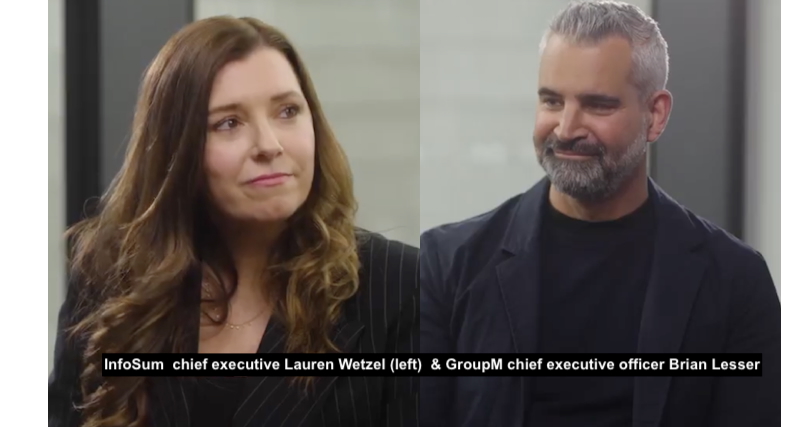
    “InfoSum’s mission has always been to reimagine how data powers marketing in a secure, privacy-first, and, most importantly, impactful way for advertisers and consumers. WPP and GroupM are the perfect partners to help us accelerate our impact on a truly global scale. We couldn’t be more excited to join forces with the team at GroupM as privacy and security become non-negotiables, and AI allows us to redefine what’s possible for advertisers and our network of media and data partners,” quipped InfoSum  chief executive Lauren Wetzel, who’ll now be pulling double duty as GroupM’s chief solutions officer.

    GroupM chief executive officer Brian Lesser was equally enthusiastic, stating, ” Directly integrating InfoSum’s global data network and technology infrastructure will allow our clients to create even more value from their first-party data and enable us to train client AI models against the most data, from the most places, at unprecedented scale and speed. Our approach recognizes the importance of identity data to today’s marketing strategies while allowing us to take advantage of the limitless opportunities for growth we can create by moving beyond them. As more and more clients leverage our AI-first solutions, every client model, every audience, and every campaign will benefit from network effects that will exponentially increase their intelligence and competitive advantage.” 

    The deal allows WPP’s clients to train custom AI models in secure environments, delivering smarter audiences, optimised campaigns, and better business outcomes. Basically, it allows the ability to get your hands on all the juicy information, without anyone else seeing your private bits.

    InfoSum’s network boasts hundreds of billions of data signals, and five billion identifiers, allowing for a level of insight that’s previously been the stuff of marketing fantasies. No more relying on those crumbling cookie-based systems, which are about as useful as a screen door on a submarine.

    This acquisition represents a bold leap into the future of predictive performance and AI-driven marketing intelligence. WPP is betting big on AI, and with InfoSum in its pocket, it’s ready to unleash a marketing storm that’ll leave competitors scrambling for cover.

  • DirecTV drops Dish acquisition deal

    DirecTV drops Dish acquisition deal

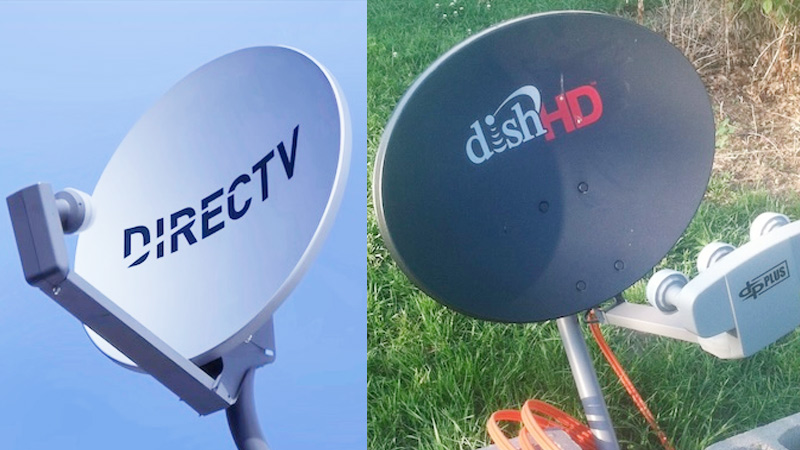
    MUMBAI: Pay TV is going through its travails. A second attempt to create one of the largest pay TV operators in the US  fizzled out on Thursday with DirecTV terminating its plan to acquire rival Dish Network. Bondholders rejected the debt swap proposal that Direct TV made as part of the buyout. 

    The deal construct required DirecTV to pay a nominal $1 for equity and Dish’s bondholders to swap $9.75 billion of existing debt into roughly $8 billion of new bonds, thus asking the latter to take a 20 per cent discount.

    The offer was sweetened by reducing the loss to Dish by around $70 million, which was also rejected. DirecTV then gave Dish the ultimatum to accept the deal by 22 November, following which they would walk out of the door. Which it did when Echostar (the owner of Dish) did not come to an agreement.

    DirecTV CEO Bill Morrow said that the decision was taken to terminate the transaction “because the proposed exchange terms were necessary to protect DIRECTV’s balance sheet and our operational flexibility. We will advance our mission to aggregate, curate, and distribute content tailored to customers’ interests by pursuing innovative products and providing customers with additional choice, flexibility, and control. We are well positioned for the future with a strong balance sheet and support from our long-term partner TPG.”

    With this failed merger, the two will continue to battle with each for other for subscribers in an already shrinking pay TV market place. Both Dish and DirecTV have lost more than half their subscribers since 2013 when pay TV was at its peak. 
     

  • DirecTV to acquire EchoStar’s video distribution business in the US

    DirecTV to acquire EchoStar’s video distribution business in the US

    MUMBAI: This is clearly a sign of the times: the impact that streaming is having on consumption of video by viewers at home. American DTH operators DirecTV and EchoStar today announced that they have entered into a definitive agreement under which the former will acquire the latter’s video distribution business Dish DBS, including DishTV and Sling TV through a debt exchange transaction. 

    A release issued by the companies stated that the acquisition will benefit US video consumers by creating a more robust competitive force in a video industry dominated by streaming services owned by large tech companies and programmers. The transaction will provide consumers with compelling video options while separately improving EchoStar’s financial profile as it continues to enhance and further deploy its nationwide 5G Open RAN wireless network.

    “DirecTV operates in a highly competitive video distribution industry,” said DirecTV CEO Bill Morrow. “With greater scale, we expect a combined DirectTV  and Dish will be better able to work with programmers to realize our vision for the future of TV, which is to aggregate, curate, and distribute content tailored to customers’ interests, and to be better positioned to realize operating efficiencies while creating value for customers through additional investment.”

    “This agreement is in the best interests of EchoStar’s customers, shareholders, bondholders, employees, and partners,” said EchoStar president & CEO Hamid Akhavan. “With an improved financial profile, we will be better positioned to continue enhancing and deploying our nationwide 5G Open RAN wireless network. This will provide US wireless consumers with more choices and help to drive innovation at a faster pace. We expect Dish and EchoStar bondholders to benefit from two companies with stronger financial profiles and more sustainable capital structures.”

    “DirecTV was founded 30 years ago to give consumers greater choices than incumbent cable companies for video content, and the its  acquisition of Dish TV and Sling TV positions it to again provide more choices and better value in an industry currently dominated by large streaming platforms,” said TPG partners David Trujillo and John Flynn. “Our ability to execute these transactions, alongside our proposed acquisition of AT&T’s 70 per cent stake in DirecTV announced earlier today, exemplifies the unique capabilities of the TPG platform and our experienced sector-focused investment approach as we support DirecTV’s continued investment in innovating the next generation of video services that benefit consumers.”

    Compelling Transaction Benefits
    A combination of DIRECTV and DISH will help the new company provide consumers with more choices and better value. The combined video company is expected to: 

    * Have increased scale to incentivise programmers to allow DirecTV to deliver smaller packages at lower price points.

     * Be better positioned to bring together multiple content sources in one easily accessible place.
     
    * Have an enhanced ability to make the investments required to improve its streaming services.
     
    * Improve the viability of the satellite platform by realizing efficiencies of some shared fixed infrastructure and operating expenses.
     
    * Continue to provide the broadest array of programming and diverse voices available on pay TV, including local news.
     

    The transaction will also benefit US wireless consumers by allowing EchoStar to focus on enhancing and further deploying its 5G Open RAN cloud-native wireless network. This transaction will: 

    * Alleviate a material portion of EchoStar’s financial constraints.
     
    * Free up operational and financial resources that EchoStar can dedicate to its mission of deploying a nationwide facilities-based wireless service to compete with dominant incumbent wireless carriers. 
     
    * Benefit consumers by enabling EchoStar (through its Boost Mobile brand) to strengthen its position as the fourth facilities-based carrier in the U.S.
     
    * Enable EchoStar to further leverage its satellite assets and experience, including developing innovative direct-to-device (D2D) solutions. 

    Highly Competitive Industry

    The video distribution industry has undergone a massive transformation and is highly competitive, now dominated by streaming services owned by large tech companies and programmers. 

    * Streaming services owned by large tech companies and programmers now have subscription numbers that far exceed those of pay TV distributors.
     
    * Content that was historically the mainstay of traditional pay TV – news, sports, and entertainment – is now available exclusively or first-run on direct-to-consumer streaming services.
     
    * The vast majority of consumers who leave satellite video are “cutting the cord” for streaming services – wherever they live.  

    * Combined, DirecTV and Dish have collectively lost 63 per cent of their satellite customers since 2016.
     
    * Traditional pay TV penetration in US households is now less than 50 per cent

    Improve Both Companies’ Financial Profiles

    The transaction is expected to strengthen the financial profiles of DirecTV and EchoStar, creating opportunities for additional investment.

    * Upon transaction close, DirecTV expects to have a leverage position just over 2.0x, and plans to reduce to under 2.0x within 12 months, consistent with its stated 1.5x – 2.0x financial policy on a pro forma basis. As a result, DirecTV will have one of the best leverage profiles in the pay TV industry.  
     
    * DirecTV estimates that the combination of DirecTV and Dish has the potential to generate cost synergies of at least $1 billion per annum. These synergies are expected to be achieved by the third anniversary of closing, assuming the closing is in late 2025.
     
    * The transaction will provide EchoStar with greater financial flexibility by improving its access to capital and reducing overall refinancing needs. 

    * At close, EchoStar will have reduced its total consolidated debt (excluding financing leases and other notes payable) by approximately $11.7 billion and reduced its consolidated refinancing needs through 2026 by approximately $6.7 billion (excluding financing leases and other notes payable).
     
    * The transaction, in conjunction with the exchange offer announced today (the exchange offer), will also result in the termination of all intercompany obligations between Dish Network and Dish DBS and creates the ability for EchoStar to fully unencumber the 3.45-3.55 GHz spectrum, unlocking incremental strategic and operating flexibility.

    Transaction Details 

    Under the terms of the purchase agreement, DirecTV will acquire EchoStar’s video distribution business, including DishTV and Sling TV, in exchange for a nominal consideration of $1 plus the assumption of Dish DBS’ net debt. Dish Network will also benefit from the releases of a substantial amount of intercompany receivables, including spectrum, but will have contractually limited access to the cash flow generated by its business between signing and closing. Dish DBS and DirecTV have commenced the exchange offer for five different series of Dish DBS notes with a total face value of approximately $9.75 billion, including seeking certain consents from the holders of such notes to facilitate the acquisition. 

    The indentures governing the new DishH DBS notes will provide for an amendment without the consent of holders of the new Dish DBS notes to allow for the mandatory exchange of such notes following receipt of certain regulatory approvals and provided the acquisition has been or will be consummated before the outside date described in the purchase agreement, into a reduced principal amount of DirecTV debt which will have terms and collateral that mirror its existing secured debt. Such mandatory exchange is conditioned, amongst other things, on an aggregate reduction in the principal amount of Dish DBS’ notes in such exchange of at least $1.568 billion. If noteholders do not accept the exchange offer on terms satisfactory to DirecTV, including to the extent the above mentioned minimum principal reduction is not achieved, it has the right to terminate the acquisition without closing.

    The transaction is subject to various closing conditions, including, but not limited to, a requisite amount of the outstanding Dish DBS notes being tendered into the exchange offer, completion of a pre-closing reorganization, and receipt of required regulatory approvals.

    In addition, TPG Angelo Gordon and certain of its co-Investors, as well as DirecTV, provided $2.5 billion of financing to fully refinance Dish DBS’ November 2024 debt maturity. The proceeds of the funding will be distributed to Dish DBS via a secured intercompany loan to fully repay Dish DBS’ November 2024 debt maturity and for general corporate purposes. The financing can be exchanged or refinanced into DirecTV debt at the closing of the acquisition.

    “We built our business to provide bespoke financing solutions. We are pleased to partner with DirecTV and Dish DBS on a transaction that is value-enhancing for all stakeholders,” said TPG Angelo Gordon partner Ryan Mollett and managing director Michael Ginnings.

    Upon closing of this transaction, DirecTV will be led by a proven management team that reflects the strengths and capabilities of both organizations. DirecTV will continue to be led by CEO Bill Morrow, and CFO Ray Carpenter. The combined company will be headquartered in El Segundo, California.

    TPG Inc. to Acquire AT&T’s 70 per cent Stake in DirecTV

    TPG  and AT&T  today announced a definitive agreement under which TPG will acquire from AT&T the remaining 70 per cent stake in DirecTV that it does not already own. TPG will invest in DirecTV through TPG Capital, the firm’s US and European private equity platform. The transaction between TPG and AT&T is expected to close in the second half of 2025, subject to customary closing conditions. Completion of this transaction is not contingent on DirecTV’s  acquisition of Dish.

  • Dish TV, Videocon d2h merger impacted global TV subscriber numbers

    Dish TV, Videocon d2h merger impacted global TV subscriber numbers

    MUMBAI: The merger of India’s two direct-to-home (DTH) players, Dish TV and Videocon d2h partly played a role in the loss of over five million subscribers or 1.14 per cent in the first quarter of 2018, as per the global report of TV subscribers released by Multiscreen Index.

    Excluding Dish TV and Videocon d2h, the index rose by just 1.49 million subscribers, or 0.36 per cent, which is the lowest quarterly increase Informitv has seen. The average quarterly gain over the previous three years has been around 4.5 million, or 1.15 per cent.

    Before the merger, it was reported that Dish TV and Videocon d2h will have a total 29.51 million subscribers. After merging in March, the enlarged Dish TV had 6.90 million more subscribers than it had the previous quarter, although overall there appeared to be an apparent loss of 6.51 million from the previous combined total.

    Informitv Multiscreen Index editor William Cooper said, “Traditional television subscriber numbers are flat or falling for some services and tracking them through mergers and acquisitions, together with changes in reporting methodologies is increasingly complex. Only 48 of the 100 services in the index reported subscriber gains in the first quarter. That does not include some services that only report figures once or twice a year.”

    Dish TV in India emerged with 23 million subscribers, sending it straight to the top of the Multiscreen Index, ahead of American operators Comcast with 21.21 million and DirecTV with 20.27 million.

    AT&T still has more subscribers overall in the US, with a total of 25.32 million including U-verse and DirecTV NOW. AT&T has the largest number of subscribers as a group, with 38.89 million across the Americas, up by 93,000.

    Satellite services in the US continue to see subscriber losses, with DirecTV losing 188,000, and Dish Network losing 185,000 subscribers. The top 10 services in the US lost 212,000 subscribers in the quarter, with only three of them reporting gains. The largest of these was from the online service DirecTV Now, which added 336,000 subscribers, taking its total to 1.42 million. Sling TV from Dish Network added 91,000, for a total of 2.30 million.

    With Sling TV and DirecTV Now regularly reporting subscriber numbers, the report now accounts for online distribution as a separate category, in addition to cable, satellite and telco networks. With a total of 3.71 million online subscribers in the index, it is far smaller than satellite, which still leads with 182.12 million subscribers.

  • India’s Siti leads in subs acquisition albeit global slowdown

    MUMBAI: The global TV subscriptions have slowed down. Around 100 top-ranking television services in the informitv Multiscreen Index, as compared to the 2016 corresponding period increase of 1.68 per cent (6.90 million subscribers), gained 3.46 million subs amongst them in the first quarter of 2017, an increase of 0.79 per cent.

    Modest gains were seen across the board, with Europe, Middle East and Africa up by 0.21 million, the Americas up by 0.85 million, and Asia Pacific gaining 2.39 million, Advanced Television reported. Only 46 in the index of 100 services reported net subs hike. Ten with the biggest gains added 3.58 million amongst them.

    Led by SITI, which added 800,000 subs, leading operators in India gained at least 1.67 million amongst them.

    Some of the greatest benefits were as a result of reporting changes made by Sky Brasil and AT&T for PanAmericana. Organic quarterly increases were 1.13 million lower.

    US’s top 10 services reported total losses of 559,000 subscribers, with only Comcast gaining majorly. For its U-verse service, AT&T suffered the biggest loss, with 233,000 fewer subs.

    In the European region, Canal+ lost 109,000 subs in France, while Sky added 73,000 in Germany and 40,000 in Ireland and the UK.

    DIRECTV subsidiary did not report any change and also did not report numbers for its DIRECTV NOW online.

    Multiscreen Index editor William Cooper says the figures for the first quarter showed the lowest rate of global subs growth they observed. There was still growth in the Asia Pacific region, he said, but at a lower than previous rate.

    Analyst Sue Farrell observed that 95 per cent of homes subscribing to Multiscreen services had access to services other than the traditional television.

  • Essel Group to acquire further 4.95 per cent in Dish TV Videocond2h from Dhoots

    Essel Group to acquire further 4.95 per cent in Dish TV Videocond2h from Dhoots

    MUMBAI: The Essel group today announced that it has agreed with the Dhoot family that it will acquire an additional 4.95 per cent equity of Dish TV Videocon d2h (DTV d2h) – the company being created out of the merger of Dish TV India Ltd (DTIL) and Videocon d2h Ltd (VD2h).

    The additional transaction will take place a day after the merged entity starts trading on the National stock exchanges at the first day’s closing price. The deal will take placed through Essel group company Veena Investments.

    The purchase will see the Essel group’s equity holding in Dish TV Videocon d2h (DTVd2h) go up to 40.95 per cent. The media group’s share of DTVd2h will further rise as it has agreed with the Dhoot family to acquire an additional 4.95 per cent equity shares from it a year after the merged entity starts trading on the NSE. Both will have a window of three months to complete the transaction then.

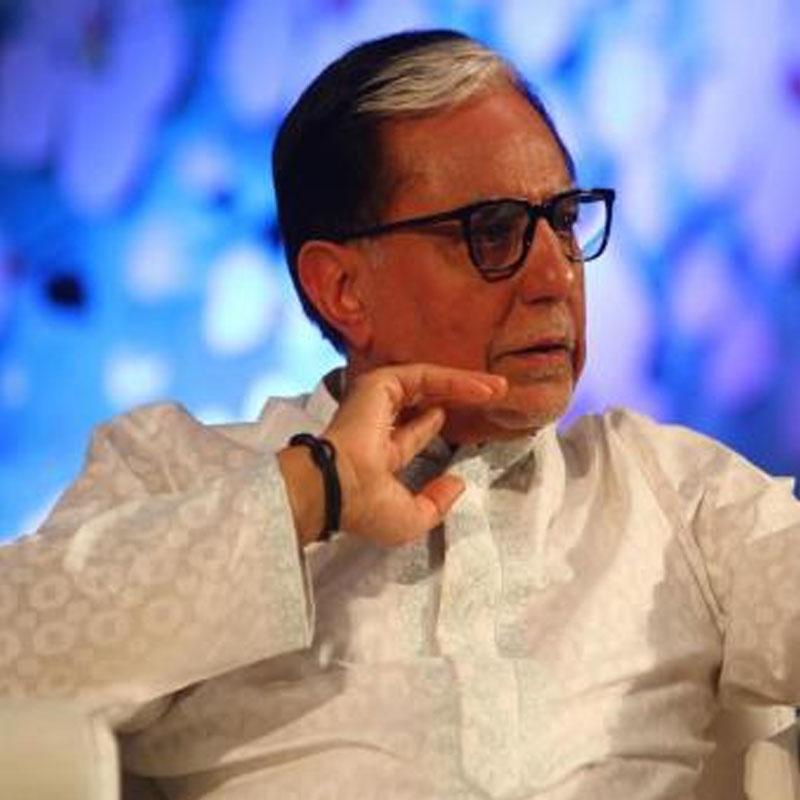
    The Dhoot family’s equity stake in DTVd2h will fall to 23.05 following the first sale and to 18.1 per cent following the second, while the Essel group’s holding will rise to 45.9 per cent at the end of the second transaction. This clearly indicates who will be in the drivers seat at DTVd2h – Jawahar Goel, the brother of media baron Subhash Chandra.

    The two family groups had earlier this month announced the merger of their two firms which would result in the creation of a pay TV provider with a subscriber base of 27.6 million, making it the second largest in the world just after the US pay TV giant DirecTV and ahead of John Malone’s Charter Communications.

    Pre-merger, the Essel group owns 64.44 per cent equity in DTIL, the Dhoot family owns 51.17 per cent in Vd2h. 35.95 per cent of the latter’s holding is in the hands of overseas depository holders on Nasdaq on which it is listed. The firm is to be delisted from the US exchange and the depositary receipt holders will have the option to directly get shares of DTVd2h or its GDRs as the latter is expected to be listed on the Luxemborg stock exchange apart from the Bombay stock exchange and the NSE.

  • Essel Group to acquire further 4.95 per cent in Dish TV Videocond2h from Dhoots

    Essel Group to acquire further 4.95 per cent in Dish TV Videocond2h from Dhoots

    MUMBAI: The Essel group today announced that it has agreed with the Dhoot family that it will acquire an additional 4.95 per cent equity of Dish TV Videocon d2h (DTV d2h) – the company being created out of the merger of Dish TV India Ltd (DTIL) and Videocon d2h Ltd (VD2h).

    The additional transaction will take place a day after the merged entity starts trading on the National stock exchanges at the first day’s closing price. The deal will take placed through Essel group company Veena Investments.

    The purchase will see the Essel group’s equity holding in Dish TV Videocon d2h (DTVd2h) go up to 40.95 per cent. The media group’s share of DTVd2h will further rise as it has agreed with the Dhoot family to acquire an additional 4.95 per cent equity shares from it a year after the merged entity starts trading on the NSE. Both will have a window of three months to complete the transaction then.

    The Dhoot family’s equity stake in DTVd2h will fall to 23.05 following the first sale and to 18.1 per cent following the second, while the Essel group’s holding will rise to 45.9 per cent at the end of the second transaction. This clearly indicates who will be in the drivers seat at DTVd2h – Jawahar Goel, the brother of media baron Subhash Chandra.

    The two family groups had earlier this month announced the merger of their two firms which would result in the creation of a pay TV provider with a subscriber base of 27.6 million, making it the second largest in the world just after the US pay TV giant DirecTV and ahead of John Malone’s Charter Communications.

    Pre-merger, the Essel group owns 64.44 per cent equity in DTIL, the Dhoot family owns 51.17 per cent in Vd2h. 35.95 per cent of the latter’s holding is in the hands of overseas depository holders on Nasdaq on which it is listed. The firm is to be delisted from the US exchange and the depositary receipt holders will have the option to directly get shares of DTVd2h or its GDRs as the latter is expected to be listed on the Luxemborg stock exchange apart from the Bombay stock exchange and the NSE.

  • Q3-16:  DIRECTV mitigates AT&T U-Verse TV subscriber numbers fall

    Q3-16: DIRECTV mitigates AT&T U-Verse TV subscriber numbers fall

    BENGALURU: AT&T acquired DIRECTV added 323,000 net subscribers and hence helped mitigate the company’s Entertainment and Internet Services Group (Entertainment) segment’s loss of 326,000 U-Verse subscribers for the quarter ended 30 September 2016 (Q3-16, current quarter). About 70 percent of DIRECTV net additions were consumers transitioning from U-Verse says the company. The Entertainment Group ended the quarter with 25.3 million (2.53 crore) video subscribers. Further, the company says it has added 156,000 broadband subscribers during the current quarter.

    However, the total number of video connections of the Entertainment Group were slightly lower than the 25.4 million connections in Q3-16. At September 30, 2016, Entertainment had approximately 51.0 million revenue connections, compared to 52.6 million at September 30, 2015,

    Total revenues of the segment were $12.7 billion ($1,270 crore), up 17.1 percent versus the year-earlier quarter mostly due to the acquisition of DIRECTV. Also contributing to the gain was continued growth in consumer IP services informs the company. Video and Ad sales constitute about 70 percent of the Entertainment Group’s revenue, IP Voice/Data about 19 percent legacy and other revenues the balance 11 percent.  Broadband revenues were up 5 percent in the quarter with IP broadband growing by 12 percent. AdWorks has grown to a $1.5 billion ($150 crore) annualized revenue stream with double-digit revenue growth year to date and strong margins.

    Consolidated Numbers

    AT&T’s consolidated revenues for the third quarter totaled $40.9 billion ($4,900 crore) , up 4.6 per cent versus the year-earlier period due to the July 24, 2015 acquisition of DIRECTV. Excluding the impact of the DIRECTV acquisition and foreign exchange, revenues were essentially flat, as growth in video and IP-based services mostly offset pressures from declines in wireless and legacy services. Compared with results for the third quarter of 2015, operating expenses were $34.5 billion ($3,450 crore) versus $33.2 billion ($3,320 crore); operating income was $6.4 billion ($s 640 crore) versus $5.9 billion ($590 crore) ; and operating income margin was 15.7 percent versus 15.2 percent. When adjusting for $0.14 of amortization, $0.03 in merger- and integration-related costs and $0.03 of employee-separation costs, operating income was $8.3 billion ($830 crore) versus $7.9 billion ($790 crore); and operating income margin was 20.3 percent, consistent with the year-ago quarter.

    Third-quarter net income attributable to AT&T totalled $3.3 billion ($330 crore) or $0.54 per diluted share, compared to $3.0 billion ($300 crore), or $0.50 per diluted share, in the year ago quarter. Adjusting for $0.20 of amortization, merger- and integration related costs and other expenses, earnings per diluted share was $0.74 compared to an adjusted $0.74 in the year-ago quarter.

    Time-Warner takeover

    As mentioned earlier, AT&T plans to take over Time Warner in a blockbuster $85.4 billion ($8,540 crore) that will completely change the media landscape, A Senate subcommittee responsible for competition will hold a hearing in November 2016. Media reports say that the announcement of the deal has raised concerns in the US, ‘with lawmakers, analysts and advocacy groups closely watching to see if the union, or any that follow in its wake, poses harm to consumers’ says a New York Times report.

    According to a BBC report, a spokesman for the Democratic presidential candidate Hillary Clinton has said there were “a number of questions and concerns” about the deal that regulators needed to scrutinise, but added “there’s still a lot of information that needs to come out before any conclusions should be reached”.

    The BBC report further alleges that Republican candidate Donald Trump has said that he would block the merger if he wins, because it was “too much concentration of power in the hands of too few”.


  • Q3-16:  DIRECTV mitigates AT&T U-Verse TV subscriber numbers fall

    Q3-16: DIRECTV mitigates AT&T U-Verse TV subscriber numbers fall

    BENGALURU: AT&T acquired DIRECTV added 323,000 net subscribers and hence helped mitigate the company’s Entertainment and Internet Services Group (Entertainment) segment’s loss of 326,000 U-Verse subscribers for the quarter ended 30 September 2016 (Q3-16, current quarter). About 70 percent of DIRECTV net additions were consumers transitioning from U-Verse says the company. The Entertainment Group ended the quarter with 25.3 million (2.53 crore) video subscribers. Further, the company says it has added 156,000 broadband subscribers during the current quarter.

    However, the total number of video connections of the Entertainment Group were slightly lower than the 25.4 million connections in Q3-16. At September 30, 2016, Entertainment had approximately 51.0 million revenue connections, compared to 52.6 million at September 30, 2015,

    Total revenues of the segment were $12.7 billion ($1,270 crore), up 17.1 percent versus the year-earlier quarter mostly due to the acquisition of DIRECTV. Also contributing to the gain was continued growth in consumer IP services informs the company. Video and Ad sales constitute about 70 percent of the Entertainment Group’s revenue, IP Voice/Data about 19 percent legacy and other revenues the balance 11 percent.  Broadband revenues were up 5 percent in the quarter with IP broadband growing by 12 percent. AdWorks has grown to a $1.5 billion ($150 crore) annualized revenue stream with double-digit revenue growth year to date and strong margins.

    Consolidated Numbers

    AT&T’s consolidated revenues for the third quarter totaled $40.9 billion ($4,900 crore) , up 4.6 per cent versus the year-earlier period due to the July 24, 2015 acquisition of DIRECTV. Excluding the impact of the DIRECTV acquisition and foreign exchange, revenues were essentially flat, as growth in video and IP-based services mostly offset pressures from declines in wireless and legacy services. Compared with results for the third quarter of 2015, operating expenses were $34.5 billion ($3,450 crore) versus $33.2 billion ($3,320 crore); operating income was $6.4 billion ($s 640 crore) versus $5.9 billion ($590 crore) ; and operating income margin was 15.7 percent versus 15.2 percent. When adjusting for $0.14 of amortization, $0.03 in merger- and integration-related costs and $0.03 of employee-separation costs, operating income was $8.3 billion ($830 crore) versus $7.9 billion ($790 crore); and operating income margin was 20.3 percent, consistent with the year-ago quarter.

    Third-quarter net income attributable to AT&T totalled $3.3 billion ($330 crore) or $0.54 per diluted share, compared to $3.0 billion ($300 crore), or $0.50 per diluted share, in the year ago quarter. Adjusting for $0.20 of amortization, merger- and integration related costs and other expenses, earnings per diluted share was $0.74 compared to an adjusted $0.74 in the year-ago quarter.

    Time-Warner takeover

    As mentioned earlier, AT&T plans to take over Time Warner in a blockbuster $85.4 billion ($8,540 crore) that will completely change the media landscape, A Senate subcommittee responsible for competition will hold a hearing in November 2016. Media reports say that the announcement of the deal has raised concerns in the US, ‘with lawmakers, analysts and advocacy groups closely watching to see if the union, or any that follow in its wake, poses harm to consumers’ says a New York Times report.

    According to a BBC report, a spokesman for the Democratic presidential candidate Hillary Clinton has said there were “a number of questions and concerns” about the deal that regulators needed to scrutinise, but added “there’s still a lot of information that needs to come out before any conclusions should be reached”.

    The BBC report further alleges that Republican candidate Donald Trump has said that he would block the merger if he wins, because it was “too much concentration of power in the hands of too few”.


  • Q4-2015: DirecTV’s subscription numbers up, but ATT Entertainment reports lower video subscribers

    Q4-2015: DirecTV’s subscription numbers up, but ATT Entertainment reports lower video subscribers

    BENGALURU:  AT&T Inc., (ATT), claimant to the largest Pay TV services title in the world reported a net QoQ decline of 26,000 subscribers for the quarter ended December 31, 2015 (Q4-2015, current quarter) for its Entertainment Group (Entertainment). This despite the fact that its recent acquisition DirecTV reported a 1.1 percent QoQ increase (214,000 net additions) in Q4-2015 at 197.84 lakh as compared to 195.70 lakh in Q3-2015. ATT’s other Entertainment segment, the triple play U-verse (broadband internet, IP Telephony and IPTV services) reported a decline of 240,000 video subscribers in the current quarter at 56.14 lakh as compared to 58.54 lakh in the immediate trailing quarter. ATT says that its Entertainment Group focused on profitability and increasingly emphasized satellite sales, including U-verse subscribers switching to satellite.


    At December 31, 2015, Entertainment had approximately 522 lakh revenue connections, compared to 344 lakh at December 31, 2014, which included:  Approximately 254 lakh video connections at December 31, 2015 compared to 59 lakh at December 31, 2014. DirecTV’s satellite subscribers as of the July 24, 2015 acquisition date was 195 lakh.; Approximately 143 lakh broadband connections at December 31, 2015 compared to 144 lakh at December 31, 2014. During Q4-2015, ATT’s Entertainment added 171,000 U-verse High Speed Internet subscribers, for a total of 124 lakh at December 31, 2015. Total broadband subscribers declined by 37,000 in the quarter due in part to fewer U-verse sales promotions; Approximately 125 lakh wired voice connections at December 31, 2015 compared to 140 lakh at December 31, 2014. Voice connections include switched access lines and VoIP connections.


    “We now have a unique set of capabilities that positions us for growth and also gives us a strategic advantage in providing consumers and businesses the integrated mobile, video and data solutions they want,” said AT&T chairman and CEO Randall Stephenson.


    “Our DirecTV integration is going well, and the customer response to our new integrated mobile and entertainment offers is strong. Throughout this year, we plan to launch a variety of new video entertainment packages that give customers even more choices. We’re also seeing terrific results from our expansion into the Mexican mobile market. Our LTE network now covers 355 million people and businesses, and in the quarter we had 2.8 million wireless net additions,” Stephenson added.


    ATT’s Entertainment Group (Entertainment) segment includes the results of the US satellite-based operations acquired in July 2015 through the acquisition of DirectTV as well as broadband and wired voice services to residential customers in the US Entertainment revenues for the fourth quarter Q4-2015 were $13.0 billion, more than double the year-ago quarter due to the acquisition of DirecTV as well as strong growth in consumer IP broadband and video, which more than offset lower revenues from legacy voice and data products. Q- 2015 Entertainment operating expenses totalled $11.5 billion compared to $5.9 billion in the fourth quarter of 2014, largely due to the acquisition of DirecTV. The Entertainment operating margin was 11.1 percent, compared to (5.3) percent in the year-earlier quarter with satellite and IP revenue growth and cost efficiencies largely offsetting programming content cost pressure and declines in legacy services.