Tag: Direct to Home

  • The LMO-MSO relationship will get clarified within six months: Sameer Manchanda

    The LMO-MSO relationship will get clarified within six months: Sameer Manchanda

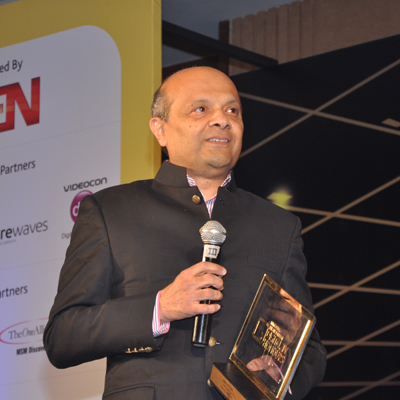
    NEW DELHI: Digitisation has given an opportunity for cable to compete with direct-to-home (DTH). There was a time when digital meant DTH and cable was largely analogue. But now, there is competition between digital and digital. While world over, cable is supposed to provide premium products, here in India, DTH was and is considered as a premium product. Digitisation has given cable an opportunity to show its might to DTH, compete with it, and provide customers television without interruption and with broadband internet and Value Added Services (VAS).


    We are in a highly competitive work environment. For smaller players to emerge, they will need scale, pure execution and vision of where they want to see themselves. They should be thinking big and along with that, should have the patience to wait for at least 5-10 years. There will be hiccups and ups and downs, but as long as they manage and maintain the course, they will achieve their goal. Cable has a unique proposition. It has scale, is a mass product, has mass appeal, is bigger than DTH, and every home has been watching cable since 1991. So just believe in the vision.


    Cable is a technology; we just have to leap frog from analogue to a complete different pipe, and that will happen in the next 5-10 years. As we saw in the case of mobile, even cable will go the same way as the world has gone.


    I know that there is a lot of pain, and in the beginning years, we have all faced it and will probably face it for a little longer too. But in the next 10 years, everyone will benefit. And every stakeholder, be it small Multi System Operators (MSOs), Last Mile Owners (LMO) or national MSOs, each one will gain. The industry can only be as vibrant and strong as each of its players. So, one player cannot remain vibrant while the other isn’t. The whole industry has to be vibrant and so, we all have to take a step forward in unifying the cable industry and making it vibrant.


    The LMOs and MSOs have to think that they are partners. Right now, there is a turf war of economics. But it will wear off once they realise that the customer will go wherever he/she wants to. He will go to DTH or the IPTV platform or 4G or any other platform where he/she gets better service. So, the LMOs and MSOs have to understand that they have to be together.


    If you see, the MSOs are ploughing in a lot of investment; they are dealing with broadcasters and are taking risks. They are also the ones who are making the pipe much stronger, so if you look at that, there is a role that the MSO plays and then there is a role that the LMO plays.


    Today, the turf war is on economics. But in six to nine months, each player will understand the strengths and weaknesses of each party. And if they play to the strengths, the customer will get a better product and then he/she will pay much more than what he/she earlier paid. Because if you see that from 70 channels, they will have 300-400 channels, then there will be VAS and much more. So you will see that the LMOs will be making much more than what they are making today.


    The revenue share needs to be sorted and these are things that need discussion. The MSO is also in a tight position. He has to deal with broadcasters and also ensure that the customer management is better than DTH. There are investments that need to be made. So I think that both parties need to understand each other.


    The first effect of digitisation has already been felt and that has happened from the customers’ end. The customer today has moved from some 70 channels to 300 channels and all this with no interference. He/she has been given a box for a reasonable sum and in a few minutes, with no wire and antenna, he has started getting the digital experience. This has been the real effect of digitisation, which has unfortunately gone unnoticed. And this was the reason that 21 million homes, which could have chosen DTH, chose digital cable instead. So the effect of digitisation has been felt, but now because of switch offs, the LMO issue, and under investment by some players, the impact is marred. So there will be good and bad times for cable, but then in a couple of years, it will all be sorted.


    The entire chain of media will become vibrant. The broadcaster, LMO and MSO will gain. Currently, since everybody is looking at getting the most, there are wars, but this will get resolved in six months, it can’t take longer. I want to see the industry getting stronger, more vibrant. Customers should be so happy with cable that they start moving from other players to cable. We all want cable to be strong and the whole chain to be very vibrant.


    I am an optimist. Media has a great future in the next 5-10 years. No one part can say that he will gain while others don’t. All stakeholders will benefit. Even the customers will have the option of close to 1,000 channels. Yes, they will have to pay more for that, but at least, they will have the option to pay for what they want to watch, which was not there earlier. But unfortunately, this will need them to cough up a lot of money. There will be pain, but eventually, every stakeholder will have to think about 5-10 years later.


    (The remarks above are a part of the acceptance speech by DEN Networks Chairman & Managing Director Sameer Manchanda during indiantelevision.com’s The First Indian Digital TV Honours held in New Delhi on 28 January 2014)

  • Airtel DTH becomes first player to release a feature film on digital TV

    Airtel DTH becomes first player to release a feature film on digital TV

    MUMBAI: Airtel Digital TV consumers have reasons to rejoice now. The direct to home (DTH) player has become the first operator in the country to release a feature film on its digital platform on the same day of the film’s theatrical release. Telugu movie titled Minukumanna Minugurulu (The Fire Flies) will release on both DTH and theatres using the pay per view (PPV) platform. The move will help Airtel Digital TV consumers experience an innovative opportunity packed with convenience.
     

    Releasing on 24 January, 2014 on Airtel Digital TV at 00.30 hours, the movie will be available to customers for five days until 28 January on channel number 157 enabling them to enjoy the movie with an exceptional viewing experience with an unmatched picture quality and sound on MPEG4 DVB-S2 technology in the comfort of their home along with family and friends.


    Customers can book the movie by sending the SMS <BOOK 157> to 54325 from their registered mobile number for just Rs 100 per day and can watch any or all the eight shows of the movie airing on the particular day. 


    Directed by Ayodhyakumar Krishnamsetty, the film’s cast includes national award winning actors Ashish Vidyarthi and Suhasini Maniratnam along with internationally acclaimed actor Raghubir Yadav. The movie portrays the lives of 40 visually impaired and orphaned children and seeks to inspire people to contribute to improving the lives of the visually impaired. The movie was showcased at the 18th International Children’s Film Festival India (ICFFI) held in the country in November, 2013 and received a great response from the audience. It has also been selected for six other international film festivals. 

  • Haasan approaches CCI in Vishwaroopam release row

    Haasan approaches CCI in Vishwaroopam release row

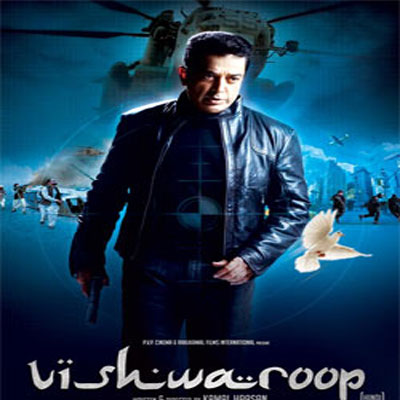
    MUMBAI: Actor and film maker Kamal Haasan has moved the Competition Commission of India (CCI) against certain theatre associations. Haasan alleged that these bodies restricted the release of his film Vishwaroopam report the Press Trust of India.

    A senior official from CCI told PTI, “”We have received a complaint from Kamal Haasan (related to Vishwaroopam)…We are likely to take a call on the issue next week.” The complaint has been filed by Haasan‘s production house Rajkamal Films International.

    Meanwhile, Haasan has virtually ruled out the premiere of his film Vishwaroopam on the Direct-to-Home (DTH) platform ahead of its release in theatres. He has reportedly admitted a ‘change of mind‘ on proceeding with his controversial decision that had met with stiff resistance from a section of exhibitors.

    “I have changed my mind on having the premiere (on DTH platform ahead of releasing it in theatres). I will discuss (with DTH partners) on how close or far to release date (will be a DTH show),” he said.

    Hassan observed that he had taken into account suggestions from many to consider the ‘good health‘ of Tamil cinema industry before going ahead with his decision.

    “Many had requested me to take into consideration the good health of the industry and proceed with DTH. It is my primary duty to make it happen,” he said after consulting with exhibitors and theatre owners here.

    He also said that talks were on with DTH players on the issue but declined to divulge on the matter. “They have been kind to me. Will say later when the film will come on DTH,” he said.

    Haasan said the film will be released in Tamil and Telugu on 25 January as announced earlier but its Hindi release will be finalized only after further talks with industry associates.

    The tech-savvy actor-filmmaker‘s decision to have a premiere of his much anticipated trilingual action film on DTH caused ripples in the multi-million rupee Tamil cinema industry, with a section of theatre owners deciding to boycott the film.

  • Guild seeks tax sops, to submit pre-Budget memorandum to I&B ministry

    Guild seeks tax sops, to submit pre-Budget memorandum to I&B ministry

    NEW DELHI: The film industry wants abolition of customs/excise duty, countervailing duty on import of broadcasting/post-production and animation equipment, set-top boxes (STBs) and removal of octroi on raw stock and exemption of service tax on duplication of prints to be removed on export sales.

    The Film and Television Producers Guild of India is meeting information and broadcasting minister Priya Ranjan Dasmunsi shortly to submit the Pre-Budget Memorandum highlighting issues concerning the entertainment industry.
    The demands will include an increase in proportion of foreign direct investment in media from 26 per cent to 74 per cent for Direct to Home (DTH).

    Subsidies and incentives will be sought for boosting export of animation content being driven out of India on the lines of tax benefits provided by Canadian Government for creating local animation content.

    There is also a demand for creation of Special Export Zones (SEZs) for the entertainment media to facilitate promotion of Indian exports content, and widening the definition of industrial undertaking under Section 72A of the Income Tax Act, 1961 to include electronic media (TV broadcasting).

    Another demand is for reduction of the base for fringe benefit tax from 20 per cent to 5 per cent for the broadcasting industry, as in the case of computer software industry and exemption for broadcasting industry from service tax as in the case of print media.