Tag: Direct to Home

  • Dish TV Videocon: Building a DTH powerhouse of global reckoning

    Dish TV Videocon: Building a DTH powerhouse of global reckoning

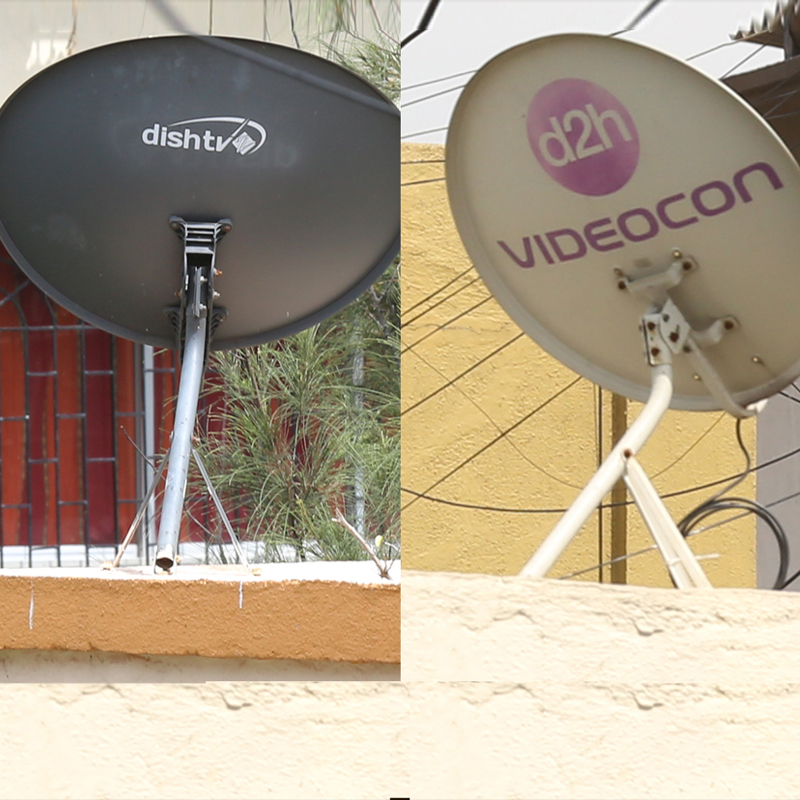
    MUMBAI: It’s a reflection of what’s hitting the corporate world globally – consolidate and build global scale. And scale is important in television distribution – whether cable, satellite or terrestrial or direct to home (DTH). Yesterday’s announcement of — what was speculated for nearly a year – the merger of India’s No 1 DTH operator Dish TV India with India’s fastest growing DTH player Videocon d2h – is a reflection of that trend and the building of a DTH powerhouse and pay TV operator.

    The merger has created a pay TV behemoth unrivalled in TV  distribution in the Indian market (let’s discount the public service terrestrial broadcaster Doordarshan and its satellite service FreeDish). The next Indian private DTH provider is less than half the size of the merged entity’s  size in pure net subscriber terms.

    A collective 27.6 million subs  for the combo firm Dish TV Videocon places it just behind the US-based DirecTV (which is now owned by AT&T) with its 37.6 million subs.  That’s a number which is hard to ignore. Much senior players such as Sky in the UK and dishnetwork in the US have just 21 million subs and 13.6 million subs, respectively.

    Of course, one may argue that ARPUs in India are wafer thin at about $3 or so per subscriber and revenues too are minuscule for the DTH operators.  ARPUs for Sky which is so much smaller than Dish TV Videocon are around pounds sterling 47 while these are at $111 at DirecTV which is far bigger.

    Team Dish TV led by Jawahar Goel and his CEO Arun Kapoor have reason to celebrate. For the fusion of the two players has created an enterprise that probably has overtaken his elder brother Subhash Chandra’s Zee Entertainment Enterprises in terms of EBIDTA and in revenue.  And what must be even more pleasing is that Dish TV has been operational for fewer years than Zee Entertainment which has led the cable and satellite TV revolution in India since the early nineties.

    Ditto for team Videocon d2h that is led by the executive chairman Saurabh Pradeep Kumar Dhoot and CEO Anil Khera. The last entrant in the DTH game, the merger has catapulted it into the leadership position in India.

    True, the market capitalization of Dish TV  (alone) is  Rs 9,321.1 crore  and Videocon d2h is being merged at an equity valuation of around Rs 7,200 crore and at an enterprise value of around  Rs 9,000-odd crore (as per reports) as compared to Zee Entertainment’s Rs 46,284 crore and Sun TV’s Rs 19,747 crore . The market capitalization value of  Dish TV Videocon has yet to be calculated at the time of writing but there’s no doubt it will skyrocket substantially post the completion of the merger in the next six to seven months.

    What does the fusion mean for DishTV Videocon?

    For one, lower costs. On almost every front.

    Imagine the negotiating power it will have with broadcasters on content pricing. Carriage and placement fees will end up being substantial. It  will be in a position to get better rates on hardware, middleware, ERP software, consumer premise equipment. And then, the two companies’ administration and sales teams could also be streamlined to form a formidable lean and mean sales force. Both have vast and deep distribution strengths. While Dish TV has 2,268 distributors, 244,688 dealers and 1090 service franchises across 9322 towns, Videocon d2h has 2280 distributors and direct dealers, 230,000 dealers/retailers and 320 direct service centres nationally. A consolidation of this could also yield cost benefits.

    A PhillipCapital estimate to CNBC TV18 was that the synergy benefit at the EBIDTA level would be between Rs 300 crore to 350 crore from year two onwards.

    The lower costs could allow Dish TV Videocon to also pass on the benefits to consumers and possibly start a price war, should it choose to, and thus attracting subscribers from cable TV or other DTH providers, in the process scaling up even further.

    Dish TV Videocon’s value-added services (VAS) will get a collective boost as these could be cross-promoted between the platforms. Its scale will allow it to negotiate better advertising deals for the two services opening screens, sponsorships and on TVCs.

    Most importantly, the combined entity will end up with a robust financial report card with revenues of Rs 5,915.8 crore ($883 million) for the year ended 31 March 2016.  The figure for the first half of the current fiscal (H1-2017) is at Rs 3,100 crore. That means one can expect it to cross the $1 billion topline milestone either by end this year or mid next.

    Dish TV Videocon’s EBIDTA margins too look  healthy at 31 per cent and absolute last-fiscal-year figures of Rs 1,826 crore ($274 million). The figure for H12017 is at Rs 1,040 crore. EBIDTA minus capex stands at a puny Rs 195 crore ($29 million) but that’s significantly higher than the Rs 116.5 crore of DishTV and Rs 78.5 crore of Videocon d2h, individually. In H12017, that figure had already climbed to Rs 190 crore. The merged entity will have a net debt load of Rs 2161 crore ($323 million). H1 2017, however,  saw that climb to Rs 2660 crore.

    How Dish TV Videocon will service this higher debt – whether it will be through internal accruals or through an external cash infusion – is a question. Both the firms have to also grapple with subscriber acquisition costs  – at around Rs 1500 for Dish TV at the end of March 2016 and at Rs 1,869 for Videocon d2h at the end of 30 September 2016. But, the good part is that both have generated net profits and free cash flows.

    The combined entity will end up with close to 2.8 million HD subscribers, which is around 10 per cent of the overall subscribers. These higher ARPU customers are also growing rapidly, forming around 50 per cent of the net adds.

    Now, one does not know the ambitions that the Goel and Dhoot families are harbouring. Will they go for further scale in a few years once the merger gets digested? Will they acquire other Indian DTH players as competitive forces compel further consolidation? Will they go outside and look for opportunities elsewhere in more mature and developed pay TV markets?

    It appears as if  the road to that journey may have just begun.

    Also read:

    http://www.indiantelevision.com/dth/dth-operator/videocon-d2h-to-merge-with-dish-tv-create-leading-cable-satellite-distribution-platform-in-india-161111


  • Dish TV Videocon: Building a DTH powerhouse of global reckoning

    Dish TV Videocon: Building a DTH powerhouse of global reckoning

    MUMBAI: It’s a reflection of what’s hitting the corporate world globally – consolidate and build global scale. And scale is important in television distribution – whether cable, satellite or terrestrial or direct to home (DTH). Yesterday’s announcement of — what was speculated for nearly a year – the merger of India’s No 1 DTH operator Dish TV India with India’s fastest growing DTH player Videocon d2h – is a reflection of that trend and the building of a DTH powerhouse and pay TV operator.

    The merger has created a pay TV behemoth unrivalled in TV  distribution in the Indian market (let’s discount the public service terrestrial broadcaster Doordarshan and its satellite service FreeDish). The next Indian private DTH provider is less than half the size of the merged entity’s  size in pure net subscriber terms.

    A collective 27.6 million subs  for the combo firm Dish TV Videocon places it just behind the US-based DirecTV (which is now owned by AT&T) with its 37.6 million subs.  That’s a number which is hard to ignore. Much senior players such as Sky in the UK and dishnetwork in the US have just 21 million subs and 13.6 million subs, respectively.

    Of course, one may argue that ARPUs in India are wafer thin at about $3 or so per subscriber and revenues too are minuscule for the DTH operators.  ARPUs for Sky which is so much smaller than Dish TV Videocon are around pounds sterling 47 while these are at $111 at DirecTV which is far bigger.

    Team Dish TV led by Jawahar Goel and his CEO Arun Kapoor have reason to celebrate. For the fusion of the two players has created an enterprise that probably has overtaken his elder brother Subhash Chandra’s Zee Entertainment Enterprises in terms of EBIDTA and in revenue.  And what must be even more pleasing is that Dish TV has been operational for fewer years than Zee Entertainment which has led the cable and satellite TV revolution in India since the early nineties.

    Ditto for team Videocon d2h that is led by the executive chairman Saurabh Pradeep Kumar Dhoot and CEO Anil Khera. The last entrant in the DTH game, the merger has catapulted it into the leadership position in India.

    True, the market capitalization of Dish TV  (alone) is  Rs 9,321.1 crore  and Videocon d2h is being merged at an equity valuation of around Rs 7,200 crore and at an enterprise value of around  Rs 9,000-odd crore (as per reports) as compared to Zee Entertainment’s Rs 46,284 crore and Sun TV’s Rs 19,747 crore . The market capitalization value of  Dish TV Videocon has yet to be calculated at the time of writing but there’s no doubt it will skyrocket substantially post the completion of the merger in the next six to seven months.

    What does the fusion mean for DishTV Videocon?

    For one, lower costs. On almost every front.

    Imagine the negotiating power it will have with broadcasters on content pricing. Carriage and placement fees will end up being substantial. It  will be in a position to get better rates on hardware, middleware, ERP software, consumer premise equipment. And then, the two companies’ administration and sales teams could also be streamlined to form a formidable lean and mean sales force. Both have vast and deep distribution strengths. While Dish TV has 2,268 distributors, 244,688 dealers and 1090 service franchises across 9322 towns, Videocon d2h has 2280 distributors and direct dealers, 230,000 dealers/retailers and 320 direct service centres nationally. A consolidation of this could also yield cost benefits.

    A PhillipCapital estimate to CNBC TV18 was that the synergy benefit at the EBIDTA level would be between Rs 300 crore to 350 crore from year two onwards.

    The lower costs could allow Dish TV Videocon to also pass on the benefits to consumers and possibly start a price war, should it choose to, and thus attracting subscribers from cable TV or other DTH providers, in the process scaling up even further.

    Dish TV Videocon’s value-added services (VAS) will get a collective boost as these could be cross-promoted between the platforms. Its scale will allow it to negotiate better advertising deals for the two services opening screens, sponsorships and on TVCs.

    Most importantly, the combined entity will end up with a robust financial report card with revenues of Rs 5,915.8 crore ($883 million) for the year ended 31 March 2016.  The figure for the first half of the current fiscal (H1-2017) is at Rs 3,100 crore. That means one can expect it to cross the $1 billion topline milestone either by end this year or mid next.

    Dish TV Videocon’s EBIDTA margins too look  healthy at 31 per cent and absolute last-fiscal-year figures of Rs 1,826 crore ($274 million). The figure for H12017 is at Rs 1,040 crore. EBIDTA minus capex stands at a puny Rs 195 crore ($29 million) but that’s significantly higher than the Rs 116.5 crore of DishTV and Rs 78.5 crore of Videocon d2h, individually. In H12017, that figure had already climbed to Rs 190 crore. The merged entity will have a net debt load of Rs 2161 crore ($323 million). H1 2017, however,  saw that climb to Rs 2660 crore.

    How Dish TV Videocon will service this higher debt – whether it will be through internal accruals or through an external cash infusion – is a question. Both the firms have to also grapple with subscriber acquisition costs  – at around Rs 1500 for Dish TV at the end of March 2016 and at Rs 1,869 for Videocon d2h at the end of 30 September 2016. But, the good part is that both have generated net profits and free cash flows.

    The combined entity will end up with close to 2.8 million HD subscribers, which is around 10 per cent of the overall subscribers. These higher ARPU customers are also growing rapidly, forming around 50 per cent of the net adds.

    Now, one does not know the ambitions that the Goel and Dhoot families are harbouring. Will they go for further scale in a few years once the merger gets digested? Will they acquire other Indian DTH players as competitive forces compel further consolidation? Will they go outside and look for opportunities elsewhere in more mature and developed pay TV markets?

    It appears as if  the road to that journey may have just begun.

    Also read:

    http://www.indiantelevision.com/dth/dth-operator/videocon-d2h-to-merge-with-dish-tv-create-leading-cable-satellite-distribution-platform-in-india-161111


  • Final Hearing matters may be affected till Alam’s successor is found in TDSAT

    Final Hearing matters may be affected till Alam’s successor is found in TDSAT

    NEW DELHI: Justice Aftab Alam, who has chaired the Telecom Disputes Settlement and Appellate Tribunal for the past three years, is laying down office in just under a week – but has made sure that work is not affected till a successor is appointed.

    With the other member Kuldip Singh retired at the end of March, the tribunal now only has Justice Alam who retires on 16 June and member Bipin Behari Srivastava.

    The Telecom Regulatory Authority of India Act 2000 clearly stipulates that the Chairman has to be either a former or sitting Supreme Court judge or a sitting or retired Chief Justice of a High Court.

    The selection of the chairman and a maximum of two members has to be made by the central government, and Department of Telecom sources have confirmed that the process has been initiated by the Communication and Information Technology ministry.

    But perhaps keeping in view the time that may elapse before his successor is found, Justice Aftab Alam had on 26 May issued a notice re-constituting work allocation.

    The chairperson said that with effect from 1 June, there will be two benches in TDSAT: the first will have the chairperson and one member, while Bench Two will have ‘Member/Members’.

    He also made clear that Bench two will deal with matters listed for ‘preliminary hearing, directions, and for orders for passing interim orders only.’  This bench may also dispose of cases where a settlement is arrived at either bilaterally or through the Mediation Centre of the tribunal.

    However, while TDSAT will not come to a standstill and will continue to hear new matters and also pass interim orders, this will affect those cases which have been listed for final arguments. These include cases such as the definition of adjusted gross revenue, the direct-to-home arrears case, and the matter relating to digital cable addressable tariffs for commercial establishments like hotels etc.

    Justice Alam directed that this arrangement – issued by him under Section 14B (4)(b) and 14B(5) read with Section 14-1 of the TRAI Act – will continue until further orders.   

  • Final Hearing matters may be affected till Alam’s successor is found in TDSAT

    Final Hearing matters may be affected till Alam’s successor is found in TDSAT

    NEW DELHI: Justice Aftab Alam, who has chaired the Telecom Disputes Settlement and Appellate Tribunal for the past three years, is laying down office in just under a week – but has made sure that work is not affected till a successor is appointed.

    With the other member Kuldip Singh retired at the end of March, the tribunal now only has Justice Alam who retires on 16 June and member Bipin Behari Srivastava.

    The Telecom Regulatory Authority of India Act 2000 clearly stipulates that the Chairman has to be either a former or sitting Supreme Court judge or a sitting or retired Chief Justice of a High Court.

    The selection of the chairman and a maximum of two members has to be made by the central government, and Department of Telecom sources have confirmed that the process has been initiated by the Communication and Information Technology ministry.

    But perhaps keeping in view the time that may elapse before his successor is found, Justice Aftab Alam had on 26 May issued a notice re-constituting work allocation.

    The chairperson said that with effect from 1 June, there will be two benches in TDSAT: the first will have the chairperson and one member, while Bench Two will have ‘Member/Members’.

    He also made clear that Bench two will deal with matters listed for ‘preliminary hearing, directions, and for orders for passing interim orders only.’  This bench may also dispose of cases where a settlement is arrived at either bilaterally or through the Mediation Centre of the tribunal.

    However, while TDSAT will not come to a standstill and will continue to hear new matters and also pass interim orders, this will affect those cases which have been listed for final arguments. These include cases such as the definition of adjusted gross revenue, the direct-to-home arrears case, and the matter relating to digital cable addressable tariffs for commercial establishments like hotels etc.

    Justice Alam directed that this arrangement – issued by him under Section 14B (4)(b) and 14B(5) read with Section 14-1 of the TRAI Act – will continue until further orders.   

  • Sky Cable partners with SES to launch DTH satellite TV in Philippines

    Sky Cable partners with SES to launch DTH satellite TV in Philippines

    MUMBAI: SES has announced a multi-year, multi-transponder agreement with Sky Cable, broadcasting direct-to-home (DTH) satellite TV channels via SES satellites at 108.2 degrees East – the SES-9 and NSS-11 satellites.

    The contracted capacity will enable Sky Cable to effectively roll out a nation-wide DTH satellite TV service across 251 cities and municipalities in the Philippine archipelago, complementing its existing cable offerings. The recently launched SES-9 is scheduled to enter service mid-year to provide incremental and replacement capacity at SES’s prime neighbourhood of 108.2 degrees East which reaches 22 million homes.

    Sky Cable will be drawing on SES’s capabilities and global expertise of serving more than 40 DTH platforms worldwide hosted on SES’s comprehensive satellite network, to deliver high-quality content to homes across the Philippines. This includes broadcasting linear TV content to remote locations and islands that are underserved by terrestrial networks. Sky Cable currently offers cable TV services for 55 High Definition (HD) channels to 800,000 subscribers in 19 cities and municipalities in the Philippines.

    “The geography of the Philippines presents a unique set of challenges for fibre or terrestrial connectivity. Our satellites are able to overcome these limitations and provide comprehensive and high-powered coverage over the entire archipelago including under-connected areas in the Philippines. We are glad to support Sky Cable as they use both ground and space infrastructure to expand their TV audience reach,” says SES Asia-Pacific and the Middle East senior vice president commercial Deepak Mathur.

    “This latest contract on SES-9 shows the continued momentum of serving our prime DTH neighbourhoods on our largest satellite dedicated for Asia-Pacific.”

    SkyCable COO Antonio S Ventosa said, “We are pleased to tap SES’s global expertise and extensive satellite footprint as we venture into providing satellite TV services for our growing subscriber base. We are confident that with our partnership with SES, we will be able to deliver content seamlessly to potential new customers all across the country.”

  • Sky Cable partners with SES to launch DTH satellite TV in Philippines

    Sky Cable partners with SES to launch DTH satellite TV in Philippines

    MUMBAI: SES has announced a multi-year, multi-transponder agreement with Sky Cable, broadcasting direct-to-home (DTH) satellite TV channels via SES satellites at 108.2 degrees East – the SES-9 and NSS-11 satellites.

    The contracted capacity will enable Sky Cable to effectively roll out a nation-wide DTH satellite TV service across 251 cities and municipalities in the Philippine archipelago, complementing its existing cable offerings. The recently launched SES-9 is scheduled to enter service mid-year to provide incremental and replacement capacity at SES’s prime neighbourhood of 108.2 degrees East which reaches 22 million homes.

    Sky Cable will be drawing on SES’s capabilities and global expertise of serving more than 40 DTH platforms worldwide hosted on SES’s comprehensive satellite network, to deliver high-quality content to homes across the Philippines. This includes broadcasting linear TV content to remote locations and islands that are underserved by terrestrial networks. Sky Cable currently offers cable TV services for 55 High Definition (HD) channels to 800,000 subscribers in 19 cities and municipalities in the Philippines.

    “The geography of the Philippines presents a unique set of challenges for fibre or terrestrial connectivity. Our satellites are able to overcome these limitations and provide comprehensive and high-powered coverage over the entire archipelago including under-connected areas in the Philippines. We are glad to support Sky Cable as they use both ground and space infrastructure to expand their TV audience reach,” says SES Asia-Pacific and the Middle East senior vice president commercial Deepak Mathur.

    “This latest contract on SES-9 shows the continued momentum of serving our prime DTH neighbourhoods on our largest satellite dedicated for Asia-Pacific.”

    SkyCable COO Antonio S Ventosa said, “We are pleased to tap SES’s global expertise and extensive satellite footprint as we venture into providing satellite TV services for our growing subscriber base. We are confident that with our partnership with SES, we will be able to deliver content seamlessly to potential new customers all across the country.”

  • TRAI explores methodology for QoS under DAS regime

    NEW DELHI: As the country moves towards the final phase of digital addressable systems, the Telecom Regulatory Authority of India wants to know if there should be a uniform regulatory framework for quality of service and consumer protection across all digital addressable platforms.

    TRAI has also sought opinion of stakeholders on the standards and essential technical parameters for ensuring good quality of service for digital cable TV, direct-to-home (DTH), head-end in the sky (HITS) and Internet Protocol Television (IPTV).

    The opinion has been sought in a detailed consultation paper on ‘Issues related to quality of services in Digital Addressable Systems and consumer protection’, and stakeholders have been asked to send in their comments by17 June and counter-comments if any by 1 July.

    In over fifty questions posed to stakeholders, it wants to know the broad contours for quality of rervice regulatory framework for digital addressable systems.

    The regulator has asked if timelines relating to various activities to get new connection should be left to the Distribution Platform Operators (DPOs) to be transparently declared to the subscribers.  What should be the time limits for various activities including consumer application form and installation and activation of service for new connections, it wants to know.  

    Referring to a query often asked by stakeholders, the Regulator wants to know if the minimum essential information to be included in the CAF should be mandated through regulations to maintain basic uniformity.  Should the use of e-CAF be facilitated, encouraged or mandated, it has asked.

    It wants to know whether the minimum essential information to be included in the Manual of Practice be mandated through regulations to maintain basic uniformity and to ensure that consumers get all relevant information about the services being subscribed.

    TRAI wants to know if an initial subscription period can be charged while providing a new connection to protect the interest of subscribers as well as DPOs, and the protections for subscribers and DPOs during initial subscription period.

    TRAI wants to know the methodology of reduction in subscription charges be calculated in case of discontinuation of channel from DPOs platform.

    Stakeholders have been asked to give their opinion on the maximum permissible time of disruption beyond  which subscriber must be compensated if there is disruption due to technical fault on the DPO network or at the subscriber’s end; disruption due to technical fault of Consumer Premises Equipment at the subscriber’s end.

    The stakeholders have been asked why the uptake of mandated schemes for set top box (Outright purchase, hire purchase, and on rent) is so low at present and whether this is due to lack of consumer awareness and what other methods should be used for this.

    Opinion has also been sought on the billing cycle both for pre-paid and post-paid and whether deduction of maintenance related charges for CPE from the pre-paid subscription account should be prohibited.

    Comments have been sought on call centre availability hours, multiple languages in Interactive Voice Response, response time for answering IVR and voice to voice calls and  d. Sub menu and accessibility of customer care executive.

    What should be the innovative ways to develop a speedy user friendly complaint registering and redressal framework using Mobile Apps, SMS, online system etc., the regulator has asked.


  • TRAI explores methodology for QoS under DAS regime

    NEW DELHI: As the country moves towards the final phase of digital addressable systems, the Telecom Regulatory Authority of India wants to know if there should be a uniform regulatory framework for quality of service and consumer protection across all digital addressable platforms.

    TRAI has also sought opinion of stakeholders on the standards and essential technical parameters for ensuring good quality of service for digital cable TV, direct-to-home (DTH), head-end in the sky (HITS) and Internet Protocol Television (IPTV).

    The opinion has been sought in a detailed consultation paper on ‘Issues related to quality of services in Digital Addressable Systems and consumer protection’, and stakeholders have been asked to send in their comments by17 June and counter-comments if any by 1 July.

    In over fifty questions posed to stakeholders, it wants to know the broad contours for quality of rervice regulatory framework for digital addressable systems.

    The regulator has asked if timelines relating to various activities to get new connection should be left to the Distribution Platform Operators (DPOs) to be transparently declared to the subscribers.  What should be the time limits for various activities including consumer application form and installation and activation of service for new connections, it wants to know.  

    Referring to a query often asked by stakeholders, the Regulator wants to know if the minimum essential information to be included in the CAF should be mandated through regulations to maintain basic uniformity.  Should the use of e-CAF be facilitated, encouraged or mandated, it has asked.

    It wants to know whether the minimum essential information to be included in the Manual of Practice be mandated through regulations to maintain basic uniformity and to ensure that consumers get all relevant information about the services being subscribed.

    TRAI wants to know if an initial subscription period can be charged while providing a new connection to protect the interest of subscribers as well as DPOs, and the protections for subscribers and DPOs during initial subscription period.

    TRAI wants to know the methodology of reduction in subscription charges be calculated in case of discontinuation of channel from DPOs platform.

    Stakeholders have been asked to give their opinion on the maximum permissible time of disruption beyond  which subscriber must be compensated if there is disruption due to technical fault on the DPO network or at the subscriber’s end; disruption due to technical fault of Consumer Premises Equipment at the subscriber’s end.

    The stakeholders have been asked why the uptake of mandated schemes for set top box (Outright purchase, hire purchase, and on rent) is so low at present and whether this is due to lack of consumer awareness and what other methods should be used for this.

    Opinion has also been sought on the billing cycle both for pre-paid and post-paid and whether deduction of maintenance related charges for CPE from the pre-paid subscription account should be prohibited.

    Comments have been sought on call centre availability hours, multiple languages in Interactive Voice Response, response time for answering IVR and voice to voice calls and  d. Sub menu and accessibility of customer care executive.

    What should be the innovative ways to develop a speedy user friendly complaint registering and redressal framework using Mobile Apps, SMS, online system etc., the regulator has asked.


  • Parliamentary Committee hopes Prasar Bharati will plan better in 2016-17

    Parliamentary Committee hopes Prasar Bharati will plan better in 2016-17

    NEW DELHI: Noting that delay in Plan Expenditure has affected studio modernization, a Parliamentary Committee has expressed the hope that Prasar Bharati would resort to better planning during 2016-17 in execution of schemes for Doordarshan and All India Radio with available state of-the-art technology and gainfully utilize the allocated funds.

    The Parliamentary Standing Committee on Information Technology which goes into I and B issues took note of the assurance of the pubcaster’s chief executive officer Jawhar Sircar in this connection.

    Sircar told the Committee that the reason for under-utilization of Plan funds during 2015-16 as a policy decision was to avoid expenditure on obsolete technology such as analogue transmission, short wave and medium wave radio transmission etc.

    Observing there had been delay in procurement of Camera Chains, XD Cam, Recorders and digitisation of transmitters, the Committee said less utilization of funds is likely to result in spill over of schemes to the next year.

    The Committee noted that for the 12th Five Year Plan, the Government approved a total outlay of Rs 3,826 crore for Prasar Bharati – Rs 2,614.86 crore for Continuing Schemes and Rs 1,211.14 crore for New Schemes.

    The outlay for Broad schemes namely ‘Broadcasting and Infrastructure Network Development’ was Rs 3,500 crore, for ‘Content Development and Dissemination’ Rs 186 crore and for ‘Special Project’ Rs 140 crore.

    In addition, a separate outlay was being provided for ‘Kisan Channel’ – Rs 26 crore in 2014-15, Rs 45 crore in 2015-16 and Rs 60 crore for the year 2016-17.

    For the Annual Plan 2016-17, the total outlay is Rs 450 crore which includes Rs 60 crore for the Kisan Channel and Rs 390 crore for Schemes ‘Broadcasting Infrastructure Network Development’ and ‘Special Projects’.

    The Committee was told that there had been reduction in funds at the Revised Estimates stage as compared to the Broadcast Estimates given in 2015-16 for certain schemes as these were not expected to be executed by the Prasar Bharati during the remaining period of that  financial year. These pertained to Digital Terrestrial Television (DTT) transmitters, Direct to Home (DTH), Set Top Boxes (STBs), Digital Satellite News Gathering Vehicles (DSNGs) etc., in the case of DD. In the case of AIR, the requirement of funds was reduced, broadly because various schemes of AIR were reviewed in 2013-14 and 2014-15, and those found as having negative cost benefits were ordered to be ceased or tapered off.

    The Committee noted that the Ministry had released Rs 453.77 crore to Prasar Bharati during the year 2015-16 and this amount was construed as expenditure by the ministry. However, Prasar Bharati said out of this, an amount of Rs 246.42 crore had been actually booked as expenditure by them which includes Rs 220.17 crore on Plan Capital in AIR and DD and Rs 26.25 crore for Content Development and Dissemination for DD Kisan.

  • Parliamentary Committee hopes Prasar Bharati will plan better in 2016-17

    Parliamentary Committee hopes Prasar Bharati will plan better in 2016-17

    NEW DELHI: Noting that delay in Plan Expenditure has affected studio modernization, a Parliamentary Committee has expressed the hope that Prasar Bharati would resort to better planning during 2016-17 in execution of schemes for Doordarshan and All India Radio with available state of-the-art technology and gainfully utilize the allocated funds.

    The Parliamentary Standing Committee on Information Technology which goes into I and B issues took note of the assurance of the pubcaster’s chief executive officer Jawhar Sircar in this connection.

    Sircar told the Committee that the reason for under-utilization of Plan funds during 2015-16 as a policy decision was to avoid expenditure on obsolete technology such as analogue transmission, short wave and medium wave radio transmission etc.

    Observing there had been delay in procurement of Camera Chains, XD Cam, Recorders and digitisation of transmitters, the Committee said less utilization of funds is likely to result in spill over of schemes to the next year.

    The Committee noted that for the 12th Five Year Plan, the Government approved a total outlay of Rs 3,826 crore for Prasar Bharati – Rs 2,614.86 crore for Continuing Schemes and Rs 1,211.14 crore for New Schemes.

    The outlay for Broad schemes namely ‘Broadcasting and Infrastructure Network Development’ was Rs 3,500 crore, for ‘Content Development and Dissemination’ Rs 186 crore and for ‘Special Project’ Rs 140 crore.

    In addition, a separate outlay was being provided for ‘Kisan Channel’ – Rs 26 crore in 2014-15, Rs 45 crore in 2015-16 and Rs 60 crore for the year 2016-17.

    For the Annual Plan 2016-17, the total outlay is Rs 450 crore which includes Rs 60 crore for the Kisan Channel and Rs 390 crore for Schemes ‘Broadcasting Infrastructure Network Development’ and ‘Special Projects’.

    The Committee was told that there had been reduction in funds at the Revised Estimates stage as compared to the Broadcast Estimates given in 2015-16 for certain schemes as these were not expected to be executed by the Prasar Bharati during the remaining period of that  financial year. These pertained to Digital Terrestrial Television (DTT) transmitters, Direct to Home (DTH), Set Top Boxes (STBs), Digital Satellite News Gathering Vehicles (DSNGs) etc., in the case of DD. In the case of AIR, the requirement of funds was reduced, broadly because various schemes of AIR were reviewed in 2013-14 and 2014-15, and those found as having negative cost benefits were ordered to be ceased or tapered off.

    The Committee noted that the Ministry had released Rs 453.77 crore to Prasar Bharati during the year 2015-16 and this amount was construed as expenditure by the ministry. However, Prasar Bharati said out of this, an amount of Rs 246.42 crore had been actually booked as expenditure by them which includes Rs 220.17 crore on Plan Capital in AIR and DD and Rs 26.25 crore for Content Development and Dissemination for DD Kisan.