Tag: Direct to Home

  • TRAI telecom data:  India’s rural surge, internet binge and DTH downfall ring loud in March

    TRAI telecom data: India’s rural surge, internet binge and DTH downfall ring loud in March

    MUMBAI: India’s telecom scene in March 2025 was a tale of two Indias—rural Bharat rising on data dreams and legacy players like BSNL and MTNL gasping for bars. According to TRAI’s fresh data, it was a month of gains for mobile and broadband, and growing static for DTH.

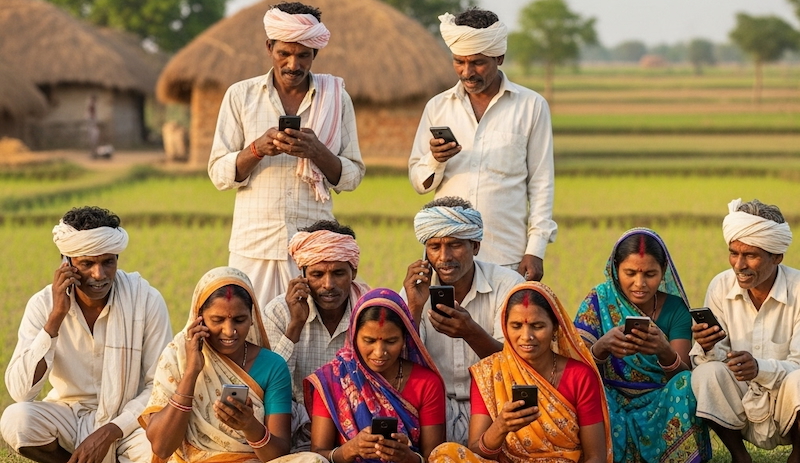
    The total number of wireless subscribers climbed slightly to 1,160.65 million, with rural India accounting for nearly 80 per cent of new additions. Villages added 1.1 million users, urban India added just 296,000—proof that the real action is beyond city limits.

    Reliance Jio was on fire, gaining 2.15 million wireless users and reinforcing its market leadership with 39.6 per cent share. Bharti Airtel added 1.03 million, keeping pace. Vodafone Idea lost nearly 700,000 subscribers, and BSNL continued its freefall with a 1.25 million loss.

    India’s broadband subscriber base touched 946.32 million, a monthly growth of 0.21 per cent. Unsurprisingly, 4G/5G mobile broadband accounted for 921.4 million of those connections—soaring on reels, reels, and more reels.

    On the wireline broadband front, Jio continued to hustle, adding over 320,000 subscribers, bringing its fixed-line share to 33.6 per cent. Airtel stayed solid with over 100,000 adds, while government dinosaurs BSNL and MTNL lost tens of thousands more. Between sluggish service and vanishing relevance, they’ve become the landline’s last rites.

    In the home entertainment arena, the direct-to-home (DTH) sector saw a slide. Total active DTH subscribers dropped to 64.17 million from 64.45 million—a fall of over 278,000 users in just one month.

    Cord-cutting is no longer a western trend; it’s happening across Indian homes as OTT apps and smart TVs eat into satellite’s share. Operators like Tata Play and Airtel Digital are still holding their ground, but the writing is on the (living room) wall.

    The big takeaway? Rural India is dialling up, streaming more, and finally enjoying digital parity. Jio’s aggressive expansion is paying off across both mobile and fibre, while BSNL’s steady subscriber bleed raises existential questions.

    DTH is beginning to look like the landline of television. The OTT wave is here, and it’s pulling viewers—and revenue—away from satellite.

    With spectrum auctions around the corner and AI-fuelled data demands skyrocketing, India’s telecom race is less about who picks up the call—and more about who controls the cloud.

  • Indian DTH subscriber base drops further to 59.9 million in June-Sept ’24 quarter

    Indian DTH subscriber base drops further to 59.9 million in June-Sept ’24 quarter

    MUMBAI: Almost every leading TV executive – whether Uday Shankar or Punit Goenka or Gaurav Banerjee – has spoken about his or her belief that television  in India has legs. No doubt they have to speak optimistically. Linear television revenues are what are currently funding their hard-pressed-for-earnings streaming businesses.

    That television is under further duress has become even clearer from the latest Telecom Regulatory Authority of India (TRAI) quarterly report of telecom performence indicators for the period Jul y 2024 to September 2024.

    The continued drop in DTH  active subscriptions is alarming: the figure for end September 2024 is 59.9 million. The comparative figure for June 2024 was 62.17 million subscribers. In September 2023, there were 64.18 million active subs

    With four DTH operators in operation,  it’s not as if they are doing nothing to retain customers. They have been giving customers the freedom to create their own packs, they have slashed prices for their set top boxes, they have been offering easier payment terms and HD services, they have been doling out value-added services for cheap, and they have started OTT aggregator services,  broadband is being offered by them  at reasonable prices.

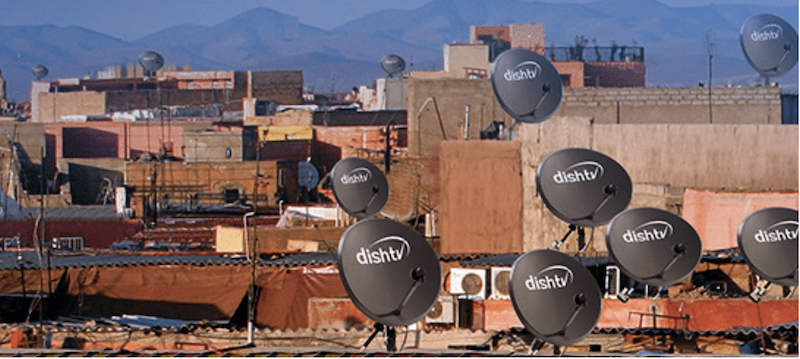
    But lo and behold, nada, nothing seems to be halting the slide of consumers dumping their satellite TV dishes.

    A few thoughts to ponder  for DTH operators:  

    When will the law of diminishing returns come into play as subscribers drop off? 

    At what level will the business become unviable? 40 million subs, 30 million, to service the well-spread-out India? 

    When will there be a major shakeup? 

    And what will lead to one or two players falling off the treadmill?

    Already, reports keep popping up that talks are continuing between Tata Play and Airtel for the latter to acquire the former. When and if it does happen, we’ll be down to three DTH operators.

    Also, solutions need to be evolved to stop the slide –   complaining about the gold rush towards DD Free Dish is not the best answer.

    2025 is a new year.

    A chance to relook at the business.

    A chance to see if Tata Play’s white-label-service model can be replicated and monetised by licensing it to other  players  in less developed markets to keep revenues coming in.

    A chance to experiment on how customers can be retained..

    Is customer service of the platinum class a good bait?  

    This has been talked about ad nauseum for quite some time; service can be the big differentiator.

    Convenience  be brought in and, if possible, local programming which can be picked up from the more advanced cable TV MSOs and retransmitted.

    There will come a time when subscribing to a nice plateful of streamers will become too expensive. Already some complaints are being voiced about the OTT bundles in the US. The commonly heard plaint is that they are  as – if not more – expensive than the pay TV bundles

    In India, we don’t have to wait for that to happen – Indian pay TV is cheap – very cheap. More than 400 linear channels are available in India for as low as Rs 300-350  on DTH and cable TV. An OTT aggregator will have to struggle to offer as much content at that price.

    The reality is both free TV and OTTs are here to stay. The question is: is India’s pay TV?

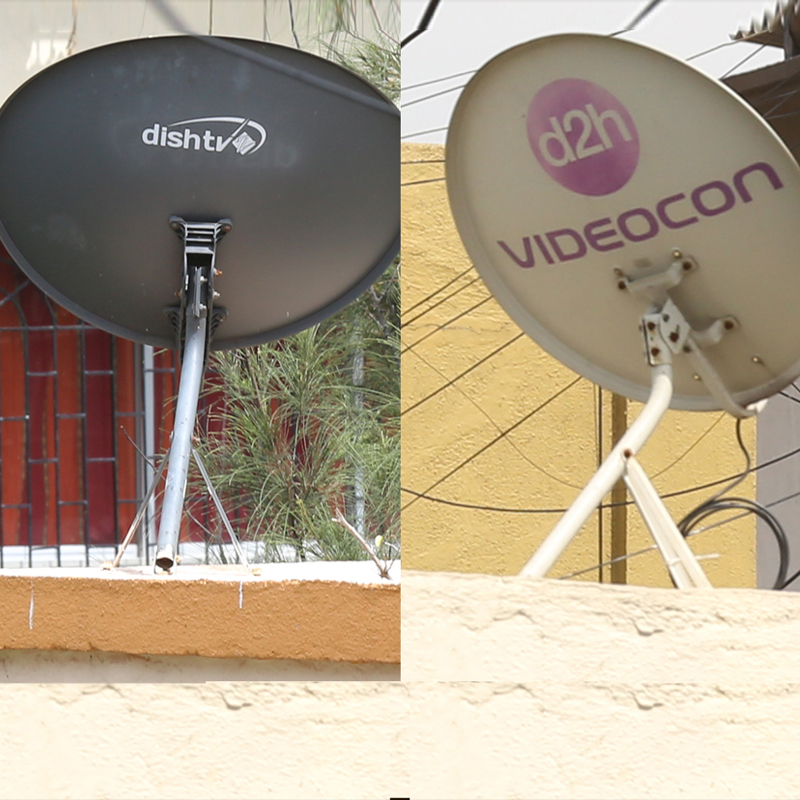
    (Picture of Dishes atop house courtesy Dish TV India) 

  • Dish TV’s D2H repositions itself as direct-to-heart

    Dish TV’s D2H repositions itself as direct-to-heart

    Mumbai : Dish TV India’s D2H has rolled out a campaign introducing the new brand positioning “direct-to-heart.” The campaign shows how D2H brings families together and gives them the sheer joy of sharing happy moments while watching TV.

    Featuring brand ambassador Rishabh Pant, the campaign was conceptualised by Lowe Lintas. The brand will run the campaign through TV, BTL, digital platforms, and home channels to amplify it.

    D2H in its new brand avatar focuses on its connection, going beyond just a provider of content to an enabler of collective viewing for Indian families. This is captured in the main thought, as the brand reframes itself in the “direct-to-home” (DTH) category by positioning itself as a connection that touches the lives of consumers and forms a bond that’s “direct-to-heart.”

    The industry has changed over the last two years owing to the pandemic. The budget-conscious subscribers’ pockets have stretched because of successive lockdowns, while consumers in the upper and middle segments are moving towards HD and OTT platforms. To cater to the changing needs of its customers, D2H overhauled the complete packaging. Over the years, the brand has designed affordable monthly SD and HD combos, made HD add-ons economical, and made the combos simple and easy to understand. It has also come up with competitive market offers and lucrative trade schemes for the partners.

    Speaking of the repositioning campaign, Dish TV India group CEO Anil Dua said, “As a DTH company, we have the unique advantage of having two brands, and we are leveraging this by using the power of both our brands. In this context, for our D2H brand, we have launched completely new packaging, introduced extremely competitive customer offers to the market, brought in a new brand ambassador, and have now launched a new brand campaign. This campaign is the culmination of a year-long deep dive into the brand’s connection with its loyal customers to draw out key insights. The new campaign leverages these insights and brings together the association of the D2H brand with cricket and family viewing into the creative platform of “direct-to-heart.””

    Commenting on the new D2H campaign, Dish TV India D2H corporate head-marketing Sugato Banerji said, “We are increasingly witnessing a fragmentation of families, each one busy with different things and pursuits. In this context, the new brand view we are taking in D2H is that TV has a large role in bringing families together. Our new campaign is built on this understanding and draws from the new positioning of D2H, direct-to-heart. With the large-scale investments we are making in strengthening the D2H brand. I am confident that we will gain market share in the next few months.”

    Speaking from the creative side, Lowe Lintas regional creative officer Vasudha Misra said, “In an age of fragmented content consumption, the new brand expression of “direct-to-heart” touches upon the joy that single-platform access to great entertainment can bring to the entire family. Our story revolves around an exuberant kid as he ‘breaks the fourth wall’ with his favourite cricketer, Rishabh Pant, seeking his help so that he can rally his family members to witness a nail-biting finish. A sweet and innocent take that leaves you with a smile.”

  • Fawad Khan, Mahira Khan is back on Indian screen after Airtel & Zindagi announce partnership

    Fawad Khan, Mahira Khan is back on Indian screen after Airtel & Zindagi announce partnership

    Mumbai: The popular Pakistani channel Zindagi is set to launch as a special service on Airtel from 15 September, 2022.

    Zindagi will aim to bring audiences a plethora of unique and entertaining offerings. The channel has consistently been at the forefront of bringing thought-provoking and distinct stories to the masses.This service will be free of charge on Airtel for the first 10 days, followed by Rs 2.5 per day.

    The night started with Dumpukht Aatish-e-Ishq at 7 p.m., starring the talented Nauman Ijaz, Bilal Abbas Khan and Sonia Mishal, followed by Digest Writer at 8.30 p.m., starring actor Saba Qamar. Besides, another power-packed line-up for September includes Mann Mayal, starring actors Maya Ali and Hamza Ali Abbasi; the show will air on 19 September at 5:30 p.m. Tracing the journey of a single mother, the teleplay Behadd, starring actors Fawad Khan, Nadia Jamil, and Sajal Ali, will air on 25 September at 8 p.m.

    Speaking of the launch of this channel on Airtel, Zee special projects chief creative officer Shailja Kejriwal said, “We are elated to have received immense love and support from our audiences across the globe. It is a proud moment for us as we announce Zindagi’s association with Airtel and partner with them to provide audiences with stories they can resonate with. We continue to reinstate our belief in growing together and reaching out to a larger audience base. Launching on Airtel as a special service drives us to inspire our audiences as we work towards making Zindagi a part of every household.”

    Zindagi has been widely appreciated by the audience for showcasing stories that are relevant, relatable, and impactful.

  • HITS combines flexibility of DTH and reliability of cable: NXT Digital CEO Vynsley Fernandes

    HITS combines flexibility of DTH and reliability of cable: NXT Digital CEO Vynsley Fernandes

    Mumbai: Headend-in-the-sky (HITS) combined the flexibility and quality of direct-to-home (DTH) services and the reliability and pricing of cable television, said NXT Digital managing director and chief executive officer Vynsley Fernandes on Wednesday. NXT Digital is the only HITS operator in India and Fernandes is bullish on the prospects of video and broadband aggregation using HITS technology.

    In a conversation with Media Partners Asia co-founder and senior partner Vivek Couto at the Apos India summit on Wednesday, Fernandes spoke about structural developments in the TV distribution ecosystem, pricing parity for consumers, satellite broadband policy and more.

    Cable TV has been around since 1995 and the Hinduja Group introduced HITS to India in 2015. The way HITS technology works is that channels are aggregated at an Earth Station, uplinked to a satellite and instead of being downlinked directly to the customers, like DTH, they are received by cable operators via a refrigerator-sized unit and redistributed to customers, explained Fernandes. HITS allows local cable operators to digitise overnight in remote markets such as Lakshadweep, Andaman and Kargil.

    HITS is a capex light model. Post pandemic, there were last mile owners who wanted to be relevant and grow. The challenge was investing in the back-end and connecting to consumers. Fernandes said, “We already have access to 4400 pin codes and we’ve launched 40 NXT Hubs across the country. These NXT Hubs are owned and operated by us and are future-ready. Any last mile owner within 150 square feet can approach a NXT Hub and offer 650 TV channels and broadband speeds of 100 mbps overnight. It empowers the last mile owner to become a digital services provider. By the end of this financial year (March 2022) we will have 100 such NXT Hubs across the country.”

    “Last year, cyclones hit India and MSO fibre got damaged. They had the option to lay fibre but that would take a couple of months or move to another platform. We thought, what if they used our infrastructure to go digital? So, we approached the ministry and shared this idea. Credit to the ministry of information and broadcasting, literally in a few months by November 2020 it was promulgating infrastructure sharing for HITS with MSOs,” he added.

    Speaking about structural developments in the content distribution ecosystem, Fernandes said, “There are two things happening that are changing the structural makeup of distribution in terms of consumption – NTO 1.0 which is bringing parity and transparency and the pandemic.”

    “Post-pandemic, OTT platforms have realised that they can be more relevant to customers as part of an aggregated offering rather than as a standalone service,” observed Fernandes. “In metros where broadband speeds are 100 mbps and above, in towns and smaller markets, people want the same product but in smaller bundles or what we call ‘skinny bundles’. These customers have broadband speeds of 10mbps and their main consumption is not entertainment but access to e-medicine or e-education.”

    In terms of how much a consumer is willing to pay for content, Vynsley noted, “The actual prices differ widely across the country. There are markets where consumers average revenue per user (ARPU) is under $3, content cost is $2-3. In these markets, there’s not much offtake in terms of paid OTT services, instead consumers access YouTube and other freemium platforms. If you move to cities, the pricing is $300 (Rs 28,000-30,000) for an annual subscription. This is a significant opportunity for multi-system operators for flexi-play.”

    Fernandes is of the view that HITS will increase revenues for the entire ecosystem. “Today, a lot of MSOs look at certain markets as not viable because the cost of connectivity is still significant,” he said. “That’s why infrastructure sharing will benefit MSOs and broadcasters. MSO will share capacity and be able to deliver value to customers and better quality of service, while broadcasters will improve their bottom lines.”

    In Q1, NXT Digital reported five million video subscribers and one million broadband users growing at 7-10 per cent year-on-year. “There is a 30 per cent overlap between our video and broadband user base,” said Fernandes. “That means a quarter of a million customers are consuming both linear/digital products. There is a runway to grow that base to a healthy 50-60 per cent and that’s our target vision for the business. We’ve just launched our OTT product and are looking at bundled ARPUs. Linear TV ARPUs are currently at Rs 300 and OTT delivers higher ARPUs for us. It doesn’t concern me too much which part of revenue delivers but our offering should reach every demographic in the country.”

    During the pandemic, the government couldn’t reach out of several million people who resided in areas where connectivity was patchy. It was prompted to launch e-agriculture and e-medicine services and Telecom Regulatory Authority of India (Trai) has released recommendations on satellite-based connectivity for low bit rate applications. “The government is working on a clear plan and sees the tremendous need for broadband over satellite,” noted Fernandes.

    “Satellite broadband is a clear parallel to HITS which was needed to deliver video in markets that could not be serviced by terrestrial networks,” said Fernandes. “Broadband serves the same void by catering to markets that cannot be serviced by terrestrial fibre. Today, a broadband over satellite provider needs four things – reach and footprint, a company with experience working with satellite, regulatory knowledge and ability to work with industry stakeholders.”

  • Yes Bank seeks removal of current directors of Dish TV

    Yes Bank seeks removal of current directors of Dish TV

    New Delhi: YES Bank, which holds 25.63 per cent stake in Dish TV India Ltd has sought the removal of the current directors and managing director of the direct-to-home service provider. The bank has recently issued a special notice asking the company to put its proposal to vote at Dish TV’s upcoming annual 33rd general meeting to be held on 27 September.

    “The present board of directors of the Company (“Board”) has approved a rights issue process, pending objections raised with the Board by the Bank time and again, solely to dilute the shareholding of the Bank and to prejudice the interests of inter alia the Bank which is the single largest shareholder of the Company as of date,” it said in its notice.

    Yes Bank has sought the removal of Rashmi Aggarwal, Shankar Aggarwal, Bhagwan Das Narang, and Ashok Mathai Kurien as directors, along with Jawahar Lal Goel as managing director of the company under Section 169 of the Companies Act, 2013. “Moreover, consequent to such removal, Goel shall cease to be the chairperson of the Company with effect from the date of this meeting,” the notice read.

    According to the bank, the Board “is not acting in line with good corporate governance standards and is not a fair representation of the incumbent significant shareholders of the Company” which hold about 45 per cent shareholding in the Company.

    “The Board is purportedly acting at the behest of certain minority shareholders holding merely six per cent of the shares in the Company. This is reflected from the fact that even though the Bank, vide various letters issued to the Board, asked the Board to desist from approving/conducting the proposed capital raising exercise by way of rights issue, the Board, without consulting the significant shareholders of the Company, went ahead to make a press announcement dated 28 May, 2021 regarding its intention to proceed with a Rs 1000 Cr. rights issue,” read the notice.

    According to the bank, the Board has “completely side-lined the multiple requests of the Bank to reconstitute the Board, inter alia, by appointment of the nominee directors.”

    In its notice, Yes Bank has also proposed to reconstitute the board with – Yes Bank senior group president and general counsel Sanjay Nambiar, Yes Bank, country head, stressed asset management, Akash Suri, former KPMG executive Viiav Bhatt, litigation counsel Haripriya Padmanabhan,  Wipro’s IT business former Co-CEO Girish Paranjape, independent management consultant Narayan Vasudeo Prabhutendulkar and Arvind Nachaya.

    Dish TV has responded to the notice, stating that the proposed new directors could be appointed only after obtaining approvals from the ministry of information and broadcasting. and other requisite approvals for appointment of new directors, within the statutory timelines.

  • Dish TV asks Yes Bank to get MIB go-ahead on its share acquisition

    Dish TV asks Yes Bank to get MIB go-ahead on its share acquisition

    MUMBAI: Last Friday, YES Bank informed the stock exchanges that it had acquired 24.19 per cent stake in direct-to-home (DTH) operator Dish TV India Ltd. The latter said on Monday that the disclosure filed by the bank regarding the acquisition contains certain incorrect facts.

    Moreover, it has highlighted another important aspect as per DTH License guidelines which clearly prohibit any change in equity structures of licensee company without prior approval from the ministry of information & broadcasting (MIB). Hence, it has stated that the acquisition of shares by Yes Bank without the ministry’s consent is against the DTH guidelines and has requested Yes Bank to obtain the green signal from the MIB prior to effecting their transfer.

    "We would like to mention that your statement, ‘shares acquired on invocation of pledge subsequent to default/breach of terms of loan to Dish TV India Limited’ is an incorrect statement," Dish TV said in a filing to the BSE.

    It also clarified that as on the date of the communication, the DTH platform was not in default of any payment obligations to Yes Bank under the financing facility availed from the lender.

    “Further, you are also well aware that ‘no shares have been pledged by the promoters of Dish TV or any other entity for the loans availed by Dish TV from Yes Bank Ltd. Therefore, there cannot be any question of invocation of any pledged shares in relation to the loans availed by Dish TV from Yes Bank,”’ the DTH company's official added in the note filed with the BSE yesterday.

    The bank had earlier in a note to the exchange informed that it  had acquired 44,53,48,990 equity shares having a nominal value of Re 1 per share.  “Shares have been acquired pursuant to invocation of pledge of the shares subsequent to default/breach of terms of credit facilities sanctioned by Yes Bank to Essel Business Excellence Services Ltd, Essel Corporate Resources Private Ltd, Living Entertainment Enterprises Private Ltd, Last Mile Online Ltd, Pan India Network Infravest Ltd, RPW Projects Private Ltd, Mumbai WTR Private Ltd,” Yes Bank had said.

    Dish TV has also requested Yes Bank to issue corrigendum to its earlier statement and inform the stock exchanges of the same.

  • Prasar CEO reiterates implementation of SC verdict on DD’s shared sports feed retransmission

    Prasar CEO reiterates implementation of SC verdict on DD’s shared sports feed retransmission

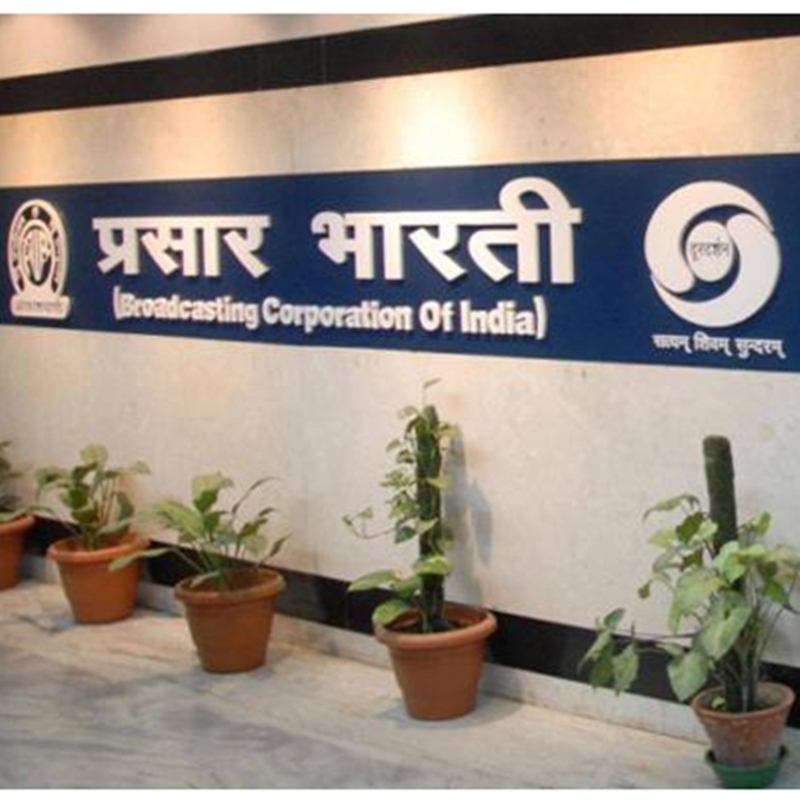
    NEW DELHI: Prasar Bharati CEO Shashi Shekhar Vempati has directed all private direct-to-home and cable operators not to telecast the sporting events’ live feed from Doordarshan that have originally been shared by rights-holding private broadcasters.

    This was conveyed through a tweet by Vempati. Interestingly, some tweets in response vowed to switch over from private DTH to FreeDish.

    This follows orders of the Supreme Court on 22 August 2017 which stated that shared feed of sporting events can only be carried on the terrestrial network of Doordarshan or DD FreeDish, and not retransmitted.

    In the judgment, a division bench headed by Justice Ranjan Gogoi had said though the Sports Broadcasting Signals (Mandatory Sharing with Prasar Bharati) Act 2007 allows the feed of a sporting event of national importance to be shared mandatorily with Prasar Bharati, the public broadcaster cannot utilise it on a notified channel which has to be compulsorily carried by private distribution platforms.

    While the judgment enables Prasar Bharati to expropriate the feed, the private sports channels will not be competing against Prasar Bharati on a commercial basis for the same content.

    The judgment came on an appeal by the pubcaster against an order obtained by Star India Pvt. Ltd. from a two-judge bench of the Delhi High Court comprising Justice B D Ahmed and Vibhu Bakhru.

    The judgment would help private broadcasters like Star India from possible losses in subscription and advertising revenues due to sharing of signals with Prasar Bharati which were eventually carried by private DTH and cable operators.

    ALSO READ :

    Star India wins: SC disallows Prasar from retransmitting shared sports feed live


  • DTH-aiding GSAT-19 launch plan under way

    DTH-aiding GSAT-19 launch plan under way

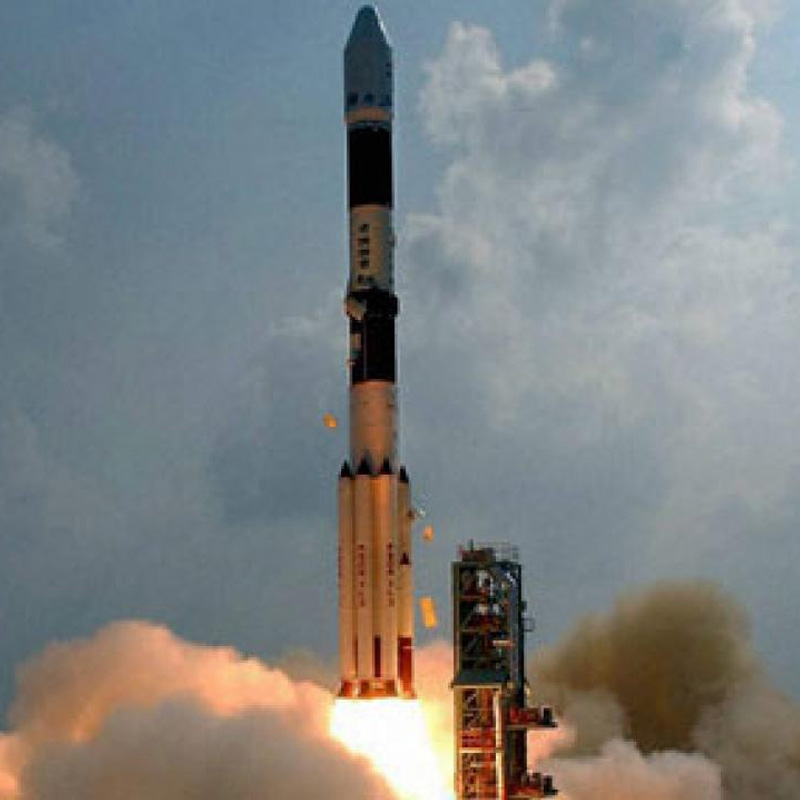
    NEW DELHI: The Indian Space Research Organisation is working towards putting into orbit an indigenous communication satellite GSAT-19, weighing 3.3 tonne and carrying Ka/Ku band payloads. Ku Band is suitable for direct-to-home platforms.

    The satellite assembly is in an advanced stage, the space minister Jitendra Singh told the Rajya Sabha yesterday.

    Meanwhile, the launch campaign for the first developmental flight of GSLV Mk-III commenced on 29 September 2016 at Satish Dhawan Space Centre (SDSC), Sriharikota.

    ISRO is working towards increasing the payload capacity of GSLV Mk-III beyond four tonnes in the coming years. The strategies identified to achieve the increased payload capacity include performance improvement of propulsion systems, inert mass optimisation and miniaturisation of avionics system.

    The Chandrayaan-2, comprising Orbiter, Lander and Rover, with a total payload mass of 3250 kg is planned to be launched on board GSLV Mk-II during the first quarter of 2018.

    Also read:

    http://www.indiantelevision.com/satellites/satellite-launches/isro-to-launch-83-satellites-on-single-rocket-create-world-record-161029

    http://www.indiantelevision.com/satellites/satellite-launches/gsat-18-successfully-launches-new-capacity-for-dth-operators-tv-channels-161006

  • DTH-aiding GSAT-19 launch plan under way

    DTH-aiding GSAT-19 launch plan under way

    NEW DELHI: The Indian Space Research Organisation is working towards putting into orbit an indigenous communication satellite GSAT-19, weighing 3.3 tonne and carrying Ka/Ku band payloads. Ku Band is suitable for direct-to-home platforms.

    The satellite assembly is in an advanced stage, the space minister Jitendra Singh told the Rajya Sabha yesterday.

    Meanwhile, the launch campaign for the first developmental flight of GSLV Mk-III commenced on 29 September 2016 at Satish Dhawan Space Centre (SDSC), Sriharikota.

    ISRO is working towards increasing the payload capacity of GSLV Mk-III beyond four tonnes in the coming years. The strategies identified to achieve the increased payload capacity include performance improvement of propulsion systems, inert mass optimisation and miniaturisation of avionics system.

    The Chandrayaan-2, comprising Orbiter, Lander and Rover, with a total payload mass of 3250 kg is planned to be launched on board GSLV Mk-II during the first quarter of 2018.

    Also read:

    http://www.indiantelevision.com/satellites/satellite-launches/isro-to-launch-83-satellites-on-single-rocket-create-world-record-161029

    http://www.indiantelevision.com/satellites/satellite-launches/gsat-18-successfully-launches-new-capacity-for-dth-operators-tv-channels-161006