Tag: Digitization

  • TV ad spends to grow to over Rs 15,500 crore in 2015: Pitch Madison report

    TV ad spends to grow to over Rs 15,500 crore in 2015: Pitch Madison report

    MUMBAI: 2015 seems to be an exciting year for television spends. According to the Pitch Madison report, in 2015 television spends are projected to grow to over Rs 15,500 crore, up from Rs 14,158 crore in 2015, showing a growth of 9.5 per cent.


    The report further states that for last year, television grew by 14 per cent on par with its projected growth rate of 15 per cent and maintained its contribution to the total advertising pie at 38 per cent. TV advertising, which grew by approximately Rs 1,700 crore, saw two giants – the elections and the e-commerce segment spending in excess of Rs 1,050 crore.


    This year’s biggest sports extravaganza, the International Cricket Council (ICC) Cricket World Cup 2015 is expected to bring in revenue of Rs 1,000 crore of which Rs 500 crore is likely to be additional revenue. The balance will be part of organic growth across segments like BFSI, telecom, consumer durables, automobiles and others.


    With regards to new channel launches, the report states, “The Hindi general entertainment channel (GEC) space saw three launches – Zindagi, Sony Pal and Epic and the re-positioning of Big Magic as a national channel last year. 2015 is expected to see the trend to continue with many more new channel launches from existing networks. This increased inventory supply will in turn lead to a hike in advertising revenue.”


    With the government extending the deadline for phase III of digitization, the increased penetration of digitization will also see increased spending not only on SD and HD channels but also on niche channels. The report also mentions that the facility of geo targeting ads on TV (as seen recently with Star picking up the initiative for the World Cup) will pull in more premium, local and retail advertisers. E-commerce along with marketers of mobile social apps are expected to continue their intensive push through higher advertising spends.


    The report also mentions that while Hindi GECs contributed nearly 27 per cent of their overall TV revenue and continue being the leaders, a change in the order saw Tamil Cable and Satellite (TN CS) garnering the second largest chunk of ad revenues, as it grew from 7.2 per cent to 8.5 per cent in 2014, thereby overtaking Hindi news channels.

  • DD digitizes 20,000+ hours of archival recordings; to outsource digitization

    DD digitizes 20,000+ hours of archival recordings; to outsource digitization

    NEW DELHI: Doordarshan, which commenced digitization of its archival recordings in 2003, had spent Rs 9.57 crore until October last year out of the allocation of Rs 19.21 crore allocated for the purpose under the Eleventh Plan.


    DD was allocated a further Rs 16.32 crore under the 12th Plan, which as remained unutilized until October last year.


    In addition, DD spent sums of Rs 4.59 crore (out of the available Rs 4.82 crore), Rs 3.35 crore (out of the available Rs 3.56 crore), Rs 3.47 crore (out of the available Rs 4.27 crore and Rs 2.89 crore (from the Rs 4 crore) for 2010-11, 2011-12, 2012-13 and 2013-14 respectively for this digitization from the Internal Extra Budgetary Resources (IEBR) of Prasar Bharati.


    Doordarshan has digitized 20,139 hours of recordings. Among these, AIR digitized material include archival records of Mahatma Gandhi, Sardar Patel, Dr. B.R. Ambedkar, Maulana Azad, Netaji Subash Chandra Bose, Dr. Rajendra Prasad and many other national leaders and Doordarshan recordings are under 38 categories, which include rare archival records of several national leaders.


    Prasar Bharati sources told Indiantelevision.com that it plans to outsource the digitization process, and has issued an Expression of Interest (EOI) calling for applications from private entities for digitization of its archival / legacy programmes.


    However, as per sources, digitized archives of Doordarshan are not accessible to the people through mobile phone applications.

  • TDSAT directs Hathway Cable to pay Rs 9 crore to Star Sports

    TDSAT directs Hathway Cable to pay Rs 9 crore to Star Sports

    MUMBAI: The country’s leading mult-system operator (MSO) Hathway Cable and Datacom and Rupert Murdoch-owned sports broadcaster Star Sports are engaged in two legal battles in the Telecom Disputes Settlement and Appellate Tribunal (TDSAT).


    In the first case, the TDSAT has directed the two parties to settle their dispute over the outstanding dues in the tribunal’s mediation centre. In the interim, in an order last week, the TDSAT had ordered Hathway Cable to pay Rs 8.57 crore to Star Sports within one week in settlement of some of the dues.


    Hathway Cable has already made the Rs 8.57 crore payment. The MSO and the sports broadcaster will meet at the mediation centre on 27 March to discuss and settle issues over other payments that are due to Star Sports.


    The order reads: “The petitioner admits the dues to the tune of Rs 8,57,18,075. It is further stated on behalf of the petitioner that Rs 1,16,12,554  was  deducted as tax payable at source and the petitioner will give the requisite certificates to the respondent within a week from today. The difference between the dues claimed by the respondent and admitted by the petitioner is thus in the vicinity of Rs 1.93 crore and odd. At this stage, it also needs to be noted that according to the respondent two cheques which added up to Rs 60,27,135 and which are shown in the petitioner’s statement of accounts as having been given to the respondent were not actually received by it. This amount would, therefore, be subject to verification.  In case the cheques have in fact not been given to the respondent the petitioner must pay the admitted amount of Rs 8,57,18,075 plus Rs 60,27,135. The aforesaid payment must be made to the respondent within one week from today i.e. by 17.03.2014.”


    In another case filed by Star Sports against the MSO, the sports broadcaster has claimed that in the DAS phase I cities of Mumbai and Delhi, Hathway Cable has been violating the regulatory process by removing Star Sports out of its channel packs and placing them as a la carte without reducing the pack price or substituting the channels. It claims that the MSO is charging additional money for adding the channels above the pack.


    This case will come up for hearing on 19 March. TDSAT has already asked Hathway Cable to file an affidavit showing that it is complying with the regulations, the number of subscribers who have requested Star Sports and the number of subscribers for whom Star Sports has been activated.

  • Once we move to gross billing, revenue will increase three-fold: V D Wadhwa

    Once we move to gross billing, revenue will increase three-fold: V D Wadhwa

    These are changing times for the Indian cable TV industry, what with gross (consumer) billing starting in phase I cities and 27 January being the last date for submission of duly-filled Consumer Application Forms (CAF), following which, multi system operators (MSOs) will need to start major switch-off of signals.


    In all of this, Essel Group-owned SitiCable Network, earlier known as Wire and Wireless (India) Ltd, has proved to be a game changer of sorts. Under the leadership of chief executive officer V D Wadhwa, the company has been at the forefront of change; whether it is giving access to the Subscriber Management System (SMS) to local cable operators (LCOs), launching local cable TV channels or the latest plan to launch a service on iOS and Android for consumers to view TV content on their Apple devices and smart phones.


    An alumnus of Harvard Business School and a fellow member of the Institute of Company Secretaries of India, Wadhwa served as managing director and CEO for business operations in India and SAARC countries with the Timex Group before taking charge as the CEO of SitiCable Network in May 2013.


    An avid squash player who dabbles in adventure sports, travelling and driving, Wadhwa took some time out from his busy schedule to speak to Seema Singh of indiantelevision.com on gross billing, setting up of cooperatives and the road ahead for SitiCable.


    How has phase I and II of digitisation been for SitiCable? How much has been invested and what have been the returns?


    We have approximately 10 million subscribers in the analogue universe. Of these, we have seeded 3.6 million Set Top Boxes (STB) in phase I and II of digitisation. The total investment so far has been to the tune of more than Rs 500 crore.


    As far as the returns are concerned, the investment has been done with a payback period of four years. Expecting anything in the short term is not a realistic scenario. No one gets returns on investments immediately.


    How many set top boxes will be needed for completing phase III and IV? What is the proposed investment for these phases? How are you looking at generating investment in the company?


    Phases III and IV of digitisation has a total universe of about 90 million. Of these, we are targeting 6-7 million homes. At a gross level, we will require an investment of Rs 1200 crore. On a net basis, we are expecting an investment to the tune of Rs 600 crore.


    The funding of Phase III will be largely done through warrants’ funding of Rs 243 crore, which is likely to be invested by promoters before March 2014. Balance funding requirement will be met through internal accruals and raising of further equity, as may be required.


    By when do you think you will be able to reap the benefits of digitisation? By what percentage do you see the revenue going up?


    The benefits of digitisation have already started trickling in and the full benefits will be visible from FY16.


    Once we move to gross billing, the revenue will increase over threefold of what it is currently. Right now, whatever revenue is booked in the books of accounts is on net and not gross basis. Last year for the year ended March 2013, our top line was Rs 483 crore. In the last two quarters, we have achieved revenue of over Rs 300 crore and this growth trend in the current quarter continues. Once gross billing starts, the revenue will increase to over three-fold. 


    Have you come to any consensus on revenue share and billing with Last Mile Owners (LMOs) in Maharashtra? Are you going to allow LMOs to bill in Mumbai? By when do you see billing starting in Mumbai?


    We have a 33 per cent revenue share with all our local cable operators (LCOs) and we do share 25 per cent of the carriage revenue with them, which is not the case with other Multi System Operators (MSOs). So, we are not facing any problem anywhere in the country. We have also given access to the Subscriber Management System to LCOs. Our approach is to consider the LCO as an integral part of the business and both the MSO and LCO have to co-exist. We, therefore, believe in empowering the LCOs by training them and providing them the backend support to enable them provide better customer services. This is the biggest advantage for SitiCable and this is helping us to significantly improve our subscription revenues as compared to other MSOs.


    Now that billing has started in Phase I cities, how has the response been? Do you think billing has succeeded in bringing in greater transparency? How is it helping the MSOs?


    It is too early to comment. The LCOs are not habituated to the system of gross billing. According to me, it will take at least two to three months for billing and collection to stabilise as per package. But there is gradual acceptance among the LCOs for the gross billing regime. .


    Also, I would like to add that in Delhi, between Hathway Cable & Datacom, DEN Networks and SitiCable, we have engaged Mckinsey to help us stabilise the gross billing and gross collection. They will ensure that all MSOs follow the common policy of billing, collection and dunning. Since gross billing started in December, it is expected to stabilise in the current quarter.


    The Telecom Regulatory Authority of India (TRAI) had given 27 January as the deadline to MSOs for collection of all Consumer Application Forms (CAFs) and feeding of details in the SMS for phase II cities. Are you switching off signals or is the process complete?


    We received 94-95 per cent CAFs in phase I cities and for the remaining, the signals have been switched off. So in that way, we have completed 100 per cent CAF in phase I and submitted the compliance report to the TRAI. For phase II, 91 per cent of CAF has been completed. The regulator for all these months has been patient in giving us extensions. And, I personally believe if the deadline goes on getting postponed, the work will never be completed. The ultimate solution for these problems is to switch off signals for those who have not filled the forms and that is what we are doing, which is in complete compliance with TRAI’s order. In fact, in the last one week, we have switched off 50,000 subscribers nationally. This is to ensure that compliance as per TRAI regulation is achieved.


    Where do you see entertainment tax headed? What led to taking the matter to court? Do you think the ruling will be passed in your favour? Do you believe that entertainment tax should be reduced?


    As per the law, the MSO is responsible for entertainment tax. We approached the Delhi High Court, since we have always been collecting and depositing entertainment tax, and we did not want to face any coercive action being taken by the tax authorities. As per our information and inputs received from the market, other MSOs are also collecting tax from LCOs regularly. While the H’ble high court has asked SitiCable to keep submitting the entertainment tax, the high court has given the stay against any coercive action being taken by the Tax Department against other MSOs since they have taken the plea that they are not invoicing and collecting tax so far. No decision has been taken on who will be responsible for collecting and paying the entertainment tax as yet.


    In SitiCable, we firmly believe that the payment of entertainment tax should be with the MSOs. Since the invoice is being raised by the MSO and the LCO is collecting the subscriber fee, I feel the power of collecting and depositing entertainment tax should be with the MSOs.


    I have a very different view on entertainment tax. I do not understand why a consumer needs to pay both service tax and entertainment tax. When we provide them with cable TV, what is it? Is it a service or entertainment? Even for movies, consumers pay only entertainment tax, then why is it that the consumer has to pay entertainment tax and service tax for cable TV. We have raised this issue on several occasions to both the Information and Broadcasting Ministry and the TRAI, but without any heed.


    The tax rate has to rationalise across the country. In UP, the monthly entertainment tax is 25 per cent of the subscription fee, while in Maharashtra, it is Rs 45; Delhi – Rs 20; Bengaluru – 6 per cent of the total subscription fee; and Kolkata, it is Rs 10. This differential tax structure will not allow the industry and gross billing to stabilise in these respective states.


    I am hopeful that the tax will come down once the process of digitisation is complete. Currently, the tax department is unable to gain significantly due to digitisation. With complete digitisation, there will be transparency and hence, more tax collection. Then there will be rationalisation of tax.


    By when do you think the process of digitisation will be complete?


    There is no reason why digitisation will get delayed. The I&B Ministry is dedicated and so is the TRAI. Even the MSOs are gearing up for funding, getting STBs and seeding them. So I don’t see any delay in completion of digitisation.


    Is the cable TV industry prepared to offer consumer service as available internationally?


    I think there is a long way to go for that. We are taking one thing at a time. Currently, the Indian consumer is not even habituated to gross billing and taxation. The Indian cable TV market has not matured enough to be able to offer services like those internationally. Once gross billing is stabilised and every one becomes habituated with the system, only then we can move forward.


    However, from the Value Added Services (VAS) point of view, we have started broadband service in the east and soon, we will be starting in the north. Also, we will be providing content on multiple screens to our subscribers.


    Is broadband a key play in your revenues going forward? How will it be delivered?


    Of course, broadband will play a key role. We will also soon introduce Docsis 3.0, which is the future. Besides broadband, by the end of this quarter, the content available on TV will also be available on iOS and Android platforms. The technical team is working on it and if there are no glitches, we will be launching the service on both the platforms together. We are the first cable TV operator to have thought of this service.


    Do you believe building local cable TV channels is the way forward? How much will you invest in this? And what is the monetisation opportunity?


    Local cable TV channels help in connecting with the consumers. We plan to launch four to five channels in each geography. While we have seven channels in central India, seven in Jaipur and four in Delhi, we plan to continue with this in other parts as well.


    Launching local cable TV channels does not cost much since we already have a studio facility in areas where we have a presence. Such endeavours give a competitive edge over the Direct-to-home operator, since they cannot operate a local channel with local content and the MSO, as they do not have the facility for launching a local channel or have a rather small presence.


    A local channel helps in giving out local news in local languages and most people prefer this. Then, advertisements help in generating revenue. So commercially launching such channels makes sense for the MSO.


    How do we see the national landscape panning out: will there be a few key national MSOs? Who will these be?


    Like in phase I and II of digitisation, the market will be dominated by four national MSOs: Hathway, DEN, SitiCable and InCable. It is only after complete digitisation that the country can expect foreign players to enter the market. These foreign players will bring better technology, transparency and competition. This will prove beneficial for the national players as well.


    How do you see the MSOs coping with phase III and phase IV? Will DTH benefit? Or will we see new local players emerging?


    While in phase III, the existing MSOs will play a major role and benefit, phase IV will witness DTH playing a major role. In phase IV, with towns having 5,000-10,000 households, it will not be commercially viable for cable TV operators unlike DTH players.


    Local players may emerge in some markets, but as seen in phase I and II, the industry has been going through consolidation since digitisation requires huge Capex. The local players emerge since they can manage initial investments. But, they are not technology ready to serve consumers. Also, this is a highly regulated industry, which will be difficult for them to cope with. Considering they do not get placement fee from broadcasters, they can operate for a maximum of one to two years. 


    What challenges do you anticipate in Phase III and Phase IV?


    Content is the biggest challenge. Currently, the ARPUs for phase I and II cities is not more than Rs 150. If it remains the same for phase III and IV, it will be difficult for us to operate in these towns. Broadcasters need to have differential pricing for these markets.

  • Cable TV prediction: US to phase out STBs by 2015

    Cable TV prediction: US to phase out STBs by 2015

    MUMBAI: The year 2013 was a big year for the Indian cable TV industry. The country that was till now running on analogue signals opened up to digitization, even if it was in few regions. While we can celebrate this achievement as we enter into 2014 and also gear up for the phase III and phase IV of digitisation, there is some food for thought coming from the US cable industry for the Indian cable TV industry. 

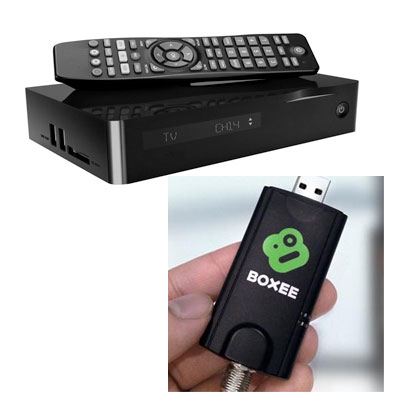
    According to the CEO of TV Predictions, Inc Phillip Swann, the Americans will see phasing out of cable TV set top boxes (STBs) by 2015 and witness an upsurge in USB dongle or CableCard like products that can be connected to a TV and signals can be received from the operator’s facility. And all this to reduce the expenses incurred due to huge sums paid to the box manufacturers.

    The predictions suggest that consumers would anytime prefer the simplicity and convenience of cable dongle over the set top boxes. That apart, the cable TV operators will also appreciate the savings.

    When the Google Chromecast Net TV device was launched, it was surely a step ahead in the cable TV industry. The dongle is one of the best-selling electronic products at Amazon.com currently.
    Some of the dongles available in the market currently are Boxee’s Live TV dongle and TBS USB DVB-C TV Stick amongst others.

    The predictions make it pretty obvious that the Americans are moving at a faster pace in the sector. Another point to ponder over here is that while in India the cable TV operators are still struggling to seed the STBs, another country is in the process of its phase out and switch to a compact technology.

    It’s not that in India, technology hasn’t improved. The direct-to-home (DTH) operators by introducing new and better facilities like recording as per preference, authority to choose channels with their high-definition (HD) boxes has already become a threat to the Indian cable TV operators who have just started seeding the standard definition STB with no added feature.

    With the world shrinking, it would not take the consumers much time to get exposed to the advancement happening in the TV/Cable industry the world over. The Indian consumers would soon wish for a compatible technology like the dongle. The New Year seems to be an alarm for the cable operators to start preparing for the huge shift.

  • UFO bags best Digital Cinema Solutions award at Chhattisgarhi film award ceremony

    UFO bags best Digital Cinema Solutions award at Chhattisgarhi film award ceremony

    MUMBAI: Satellite delivered Digital Cinema network UFO Moviez has won the ‘Best Digital Cinema Solutions’ award at the Chhattisgarhi film award ceremony 2013.

    Averred UFO Moviez director Satish Jain, “UFO Moviez has brought about a major revolution in the Chhattisgarhi film industry. The number of Chhattisgarhi films releasing in the last three years has increased sharply from just 1 or 2 each in 2007, 2008 & 2009 to 14 in 2010, 18 in 2011 and 14 in 2012, thanks to UFO’s Digital Cinema solutions.

    In the pre-digitization era, hardly one Chhattisgarhi film used to release every 2-3 years, but the numbers have shot up to 12-15 films annually in the post UFO era. Today, Chhattisgarhi films are only shot digitally thanks to the availability of UFO’s Digital Cinema exhibition technology.”

    Said UFO Moviez India COO Pankaj Jaysinh, “We are thankful for this recognition and proud to be associated with a forum supported by a State Government body as well as local film industry stakeholders. UFO Moviez is a leader and pioneer in converting existing theatres in Chhattisgarh into digital ones so that film producers and distributors can showcase the latest local language films on a first-day-first-show basis to wider set of audiences in the state and even across India.

    UFO Moviez has been bridging the geographic divide and increasing the number of Chhattisgarhi films on its digital network over the years. Digital medium of film exhibition has not only benefitted the Chhattisgarhi film industry, but also other regional film industries like Bhojpuri, Gujarati, Marathi, Assamese, Punjabi to flourish. Theatre owners are also reaping the benefits of the digitization of films including higher footfalls in the theatre premises, more ticket collections and enhanced advertising revenue earnings. It’s a win-win situation for all stakeholders of the Chhattisgarhi film business and the industry benefits the most.

    Chhattisgarhi film ‘Mayaa’, which was directed by Jain and produced by Rocky Daswani, released in June 2009 and was the first blockbuster Chhattisgarhi movie to release on the digital platform through UFO. As a matter of fact, Mayaa even crossed the collections of Aamir Khan’s Ghajini in Maa Bhuwneswari Talkies, Vinay Talkies and New Raj Talkies.

    UFO’s platform has enabled filmmakers to get the maximum revenue which wasn’t possible earlier. Toora Rickshawala, which was produced by Dawsani and directed by Jain was also a blockbuster. The film released on the UFO platform on 4 June 2010 and completed 100 days in Apsara Talkies (UFO Cinema) in Durg.

    The ceremony was organized by Filmi Chhattisgarh and sponsored by Credible Chhattisgarh, Cultural Division, Government of Chhattisgarh and Bhatia Film Production. The third edition of Chhattisgarhi Film Award Ceremony 2013 was held on 30 January.