Tag: Digitization

  • ‘Digitization helped us become Maharashtra’s No. 1 channel in reach:’ Bavesh  Janavlekar

    ‘Digitization helped us become Maharashtra’s No. 1 channel in reach:’ Bavesh Janavlekar

    MUMBAI: Even as the third phase of Dgiital Addressable System (DAS) is witnessing implementation issues across some states, the completion of Phase I and II has changed the broadcasting landscape to a large extent. One of the first genres to feel the benefits of digitization are the regional channels.


    Speaking to Indiantelevision.com about the same, Zee Talkies business head Bavesh Janavlekar says, “Earlier visibility of the channel was an issue in some of the areas but now with digitization, we don’t face that problem. Digitization helped us become the number one movie channel of Maharashtra and Phase III will also contribute considerably towards it.”


    In the Marathi regional channels’ genre, Zee Talkies was in second spot in week 2 of Broadcast Audience Research Council (BARC) India data. Speaking about the strategy to stay on top in the pecking order, Janavlekar says, “We ensure that when it comes to our channel, we continue to have high points, which are relevant to our audience. We also make sure that the audience remains engaged with our brand. It’s not only about watching Zee Talkies but also living it. Last year we had a contest in August – September wherein we received approximately 1.3 crore votes with people participating in our month long activity. One doesn’t get these kinds of numbers in Hindi mainline channels and hence the engagement is very important.”


    While many free to air channels like Zee Anmol and Star Utsav benefitted with the roll out of BARC’s rural data, Janavlekar says that Zee Talkies’ viewership numbers drastically reduced in the all India data. Before the industry starts trading on the BARC all India data, which will in turn also see a change in advertising rates, the channel has addressed this issue with BARC. “We are in conversation with BARC to deal with the issues that we are facing. Ad rates on the Marathi regional genre have not really gone up,” he says.


    Over the last couple of years, multiplexes have contributed immensely in the blossoming of regional cinema, specially Marathi films. While being critically acclaimed, movies have also been money churners at the box office. Some have even won National Awards. What’s more, this year the Marathi movie Court was India’s official entry to the Oscars. In the light of this development, the satellite rights of Marathi films have also seen a rise of approximately 10 – 20 per cent.


    “While there has been a rise in satellite rights acquisition price of Marathi films, there have been only a few examples of movies crossing a certain threshold. But undoubtedly the movies are doing well and an increase in box office collections, is good news for us,” informs Janavlekar.


    Explaining the dynamics of acquisition costs, he says that while the acquisition price of South Indian movies would be almost similar to Hindi movies, Marathi consumption was very exclusive. “There is a very minuscule population that watches only Marathi movies and 90 per cent of Maharashtrians in Maharashtra watch Hindi channels. However, that is not the case in the South, where only about 10 per cent of the population would watch Hindi channels,” he says.


    On the programming front, Zee Talkies launched a first of its kind short film format for the audience of Maharashtra with Talkies Lighthouse. The band was launched earlier this month wherein a series of handpicked short films are telecast in a 90-minute format.


    The short films will be showcased by television and theatre actor Lalit Prabhakar and Neha Mahajan from the Coffee Aani Barach Kahi fame.


    “There are lot of beautiful Marathi movies in short format and the access to those films was primarily confined to the digital space. Being the number one movie channel in Maharashtra, we thought of giving a larger platform to those stories and storytellers to reach out to the audiences. Another objective was to unearth new talent for the industry via this initiative. We believe this is the right time for us to experiment,” says Janavlekar.


    Come February, Zee Talkies will also invite people to participate in a contest after the series of short films are telecast. The contest will run from 20 February – 20 March and will ask people to send in their short films. The channel is planning to hold an on-ground film festival of the shortlisted entries. 


    Zee Talkies has roped in Hero Motocorp – Duet as the presenting sponsor along with Mcvities and Whisper as the co-powered by sponsors for Talkies Lighthouse. Apart from these, the channel also has Dish TV, Parachute and Santoor as associate sponsors.


    “The response has been good as many P&G brands for the show including Gillette and Olay came onboard. While the whole initiative was not commercially driven, I think we need to have a case study to have a rigorous sales pitch for the next year. In terms of advertising, we are very fortunate that P&G brands came on board. However, having said that, there is a long way to go in terms of brands coming on board for such formats,” says Janavlekar.


    Experiential marketing is the buzz word these days and not the one to be left behind, Zee Talkies has also adopted that route while targeting its audience. “We focus more on engagement activities and contests. Apart from that, we try to do a lot on the digital platforms around Zee Network’s properties. We don’t really go for print advertisement,” he says.

  • ‘Digitization helped us become Maharashtra’s No. 1 channel in reach:’ Bavesh  Janavlekar

    ‘Digitization helped us become Maharashtra’s No. 1 channel in reach:’ Bavesh Janavlekar

    MUMBAI: Even as the third phase of Dgiital Addressable System (DAS) is witnessing implementation issues across some states, the completion of Phase I and II has changed the broadcasting landscape to a large extent. One of the first genres to feel the benefits of digitization are the regional channels.


    Speaking to Indiantelevision.com about the same, Zee Talkies business head Bavesh Janavlekar says, “Earlier visibility of the channel was an issue in some of the areas but now with digitization, we don’t face that problem. Digitization helped us become the number one movie channel of Maharashtra and Phase III will also contribute considerably towards it.”


    In the Marathi regional channels’ genre, Zee Talkies was in second spot in week 2 of Broadcast Audience Research Council (BARC) India data. Speaking about the strategy to stay on top in the pecking order, Janavlekar says, “We ensure that when it comes to our channel, we continue to have high points, which are relevant to our audience. We also make sure that the audience remains engaged with our brand. It’s not only about watching Zee Talkies but also living it. Last year we had a contest in August – September wherein we received approximately 1.3 crore votes with people participating in our month long activity. One doesn’t get these kinds of numbers in Hindi mainline channels and hence the engagement is very important.”


    While many free to air channels like Zee Anmol and Star Utsav benefitted with the roll out of BARC’s rural data, Janavlekar says that Zee Talkies’ viewership numbers drastically reduced in the all India data. Before the industry starts trading on the BARC all India data, which will in turn also see a change in advertising rates, the channel has addressed this issue with BARC. “We are in conversation with BARC to deal with the issues that we are facing. Ad rates on the Marathi regional genre have not really gone up,” he says.


    Over the last couple of years, multiplexes have contributed immensely in the blossoming of regional cinema, specially Marathi films. While being critically acclaimed, movies have also been money churners at the box office. Some have even won National Awards. What’s more, this year the Marathi movie Court was India’s official entry to the Oscars. In the light of this development, the satellite rights of Marathi films have also seen a rise of approximately 10 – 20 per cent.


    “While there has been a rise in satellite rights acquisition price of Marathi films, there have been only a few examples of movies crossing a certain threshold. But undoubtedly the movies are doing well and an increase in box office collections, is good news for us,” informs Janavlekar.


    Explaining the dynamics of acquisition costs, he says that while the acquisition price of South Indian movies would be almost similar to Hindi movies, Marathi consumption was very exclusive. “There is a very minuscule population that watches only Marathi movies and 90 per cent of Maharashtrians in Maharashtra watch Hindi channels. However, that is not the case in the South, where only about 10 per cent of the population would watch Hindi channels,” he says.


    On the programming front, Zee Talkies launched a first of its kind short film format for the audience of Maharashtra with Talkies Lighthouse. The band was launched earlier this month wherein a series of handpicked short films are telecast in a 90-minute format.


    The short films will be showcased by television and theatre actor Lalit Prabhakar and Neha Mahajan from the Coffee Aani Barach Kahi fame.


    “There are lot of beautiful Marathi movies in short format and the access to those films was primarily confined to the digital space. Being the number one movie channel in Maharashtra, we thought of giving a larger platform to those stories and storytellers to reach out to the audiences. Another objective was to unearth new talent for the industry via this initiative. We believe this is the right time for us to experiment,” says Janavlekar.


    Come February, Zee Talkies will also invite people to participate in a contest after the series of short films are telecast. The contest will run from 20 February – 20 March and will ask people to send in their short films. The channel is planning to hold an on-ground film festival of the shortlisted entries. 


    Zee Talkies has roped in Hero Motocorp – Duet as the presenting sponsor along with Mcvities and Whisper as the co-powered by sponsors for Talkies Lighthouse. Apart from these, the channel also has Dish TV, Parachute and Santoor as associate sponsors.


    “The response has been good as many P&G brands for the show including Gillette and Olay came onboard. While the whole initiative was not commercially driven, I think we need to have a case study to have a rigorous sales pitch for the next year. In terms of advertising, we are very fortunate that P&G brands came on board. However, having said that, there is a long way to go in terms of brands coming on board for such formats,” says Janavlekar.


    Experiential marketing is the buzz word these days and not the one to be left behind, Zee Talkies has also adopted that route while targeting its audience. “We focus more on engagement activities and contests. Apart from that, we try to do a lot on the digital platforms around Zee Network’s properties. We don’t really go for print advertisement,” he says.

  • “Think mobile as ad dollars are heading there”: CVL Srinivas

    “Think mobile as ad dollars are heading there”: CVL Srinivas

    MUMBAI: Several market forecasts that we have seen in the past couple of months project digital advertising and marketing growing by leaps and bounds this year. The historical galloping growth rates have led marketers and planners to consider the possibility that the medium will overtake television spends in the near future.
     

    Brand custodians are no longer investing in digital as an added benefit but are thinking about investments on that front from the get-go. So is digital gnawing away at television’s share of ad spends or is its growth coming courtesy a new breed of brand builders?


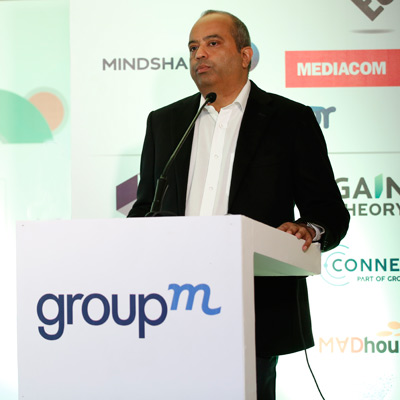
    Group M South Asia CEO CVL Srinivas does not think that TV is losing its edge. “Television is riding the digital wave, and smartly so”, says the veteran waving off any worries of television ad revenues seeing a dip this year. Not denying the obvious growth one sees in the digital space, Srinivas gives indiantelevison.com a complete breakdown of  how the digital growth works in favor of broadcasters and content providers, while also touching upon the key trends in the market, the changing role of media agencies and his take on the currently mushrooming of several digital agencies in the market. Excerpts from an interview with indiantelevision.coms Papri Das. 


    Here it is:


    How was 2015 for GroupM as a whole? What were the agency’s benchmark developments?


    2015 was a great year for us in GroupM. All our agencies performed well, especially when it comes to client retention which I consider most important. On the client acquisition front as well, we grew our business with several new accounts.


    Last year has also been kind to us when it came to awards. The GroupM Office of Year award, which is given out by GroupM APAC, was given to us last year. That’s something I consider as another high for us.


    For me, 2015 would be the year when we truly broke out of the mould of pure play media agency and delivered a range of different services to our clients to help them keep ahead of the curve. Over the years we have made investments in data, analytics and experiential marketing, cinema advertising and rural marketing and so on. All of that delivered excellent value to our clients last year. That has helped us diversify our offerings and in turn win us new and interesting mandates as well. Apart from that we have actively involved ourselves in the Mobile Marketing Association to help set standards and get some measurements going.


    Out of the four agencies under GroupM in India, which one do you think performed the best?


    I think all of them did exceptionally well and I say this with confidence based on each of the agency’s client retention and the newer arenas that they ventured successfully into.


    How was the year for the industry at large? Did you notice any changes that majorly impacted the industry?


    Last year we projected 12.7 per cent growth in ad expenditure and I must say we erred on the conservative side at the start of the year and we ended up with 14.2 per cent, but no one’s complaining!


    Several factors led to this development. The FMCG sector despite all the pressure it is facing continues to invest big money behind brands. You also saw huge growth coming in through e-commerce and there were quite a few brands that continued to invest throughout the year.


    What key trends do you see emerging in the market in 2016?


    Very clearly, our clients and brands in general are adapting to mobile as a medium. Till few years ago we hardly had ten or twenty clients, today the count is around 150. Advertisers are actively investing in campaign after campaign, month after month, by experimenting with new formats and following the measurements.  That is something I see taking off in a major way this year as several enablers are supposed to come into place in 2016.


    E commerce is emerging as a platform for advertisers in 2016 which can give an interesting spin to ecosystem.


    Apart from this we see several interesting initiatives happening in the content space, especially in the video and branded content space. This can give a further push to mobile advertising. The real big headline for me is mobile driving digital growth and in turn driving ad growth in India, and getting all traditional medium owners – be it broadcasters or be it print publication – to think mobile fast and think mobile first, because that’s where most of the advertising dollars are gonna flow to.


    What do you think will dictate how marketers spend this year?


    Right now we observe that marketers are a bit circumspect on where and when to invest. We are not yet seeing any major budget cuts otherwise our numbers in the GroupM This Year Next Year report for 2016 wouldn’t have looked so good.  But there is definitely an amount of cautiousness creeping in amongst advertisers.


    I think this year they are going to look at a lot more Return On Investment (ROI) and accountability across different media platforms. I also think they will wait and watch the market before deploying any of their long term campaigns and investments across media channels. Unless a property is tried and tested it will go through intense scrutiny before marketers decide to invest. Tracking of ROI and tracking of what the marketing spends are doing to the overall business will be key drivers for brands this year.


    Brands are increasingly seen as the sum of all customer touch points and this in turn increases the scope of marketing. In this context, how is the role of agencies changing?


    We think we are becoming even more relevant in the current scenario and important at the end of the day given the way the marketing and the media landscapes are shaping. Today consumers have multiple choices when it comes to brands and media consumption channels. In the same way advertisers and marketers also have multiple options to invest in. It can become highly confusing for the clients. That’s where GroupM  went ahead of the curve and started investing in multiple media investment management  services so that our clients can have a holistic marketing strategy and solution.


    What percentage of your business is “traditional” or core media now?


    I can’t share the break up but if you look at the market split, and the fact that we are future focused we tend to concentrate on wherever the marketing is moving to step ahead of it.


    A lot has been said about digital advertising overtaking television as the primary medium. What’s the ground reality?


    If you look at the trends in the last few years, not just in India but across markets we see a lot of synergy between television and digital. Looking at it from a consumer’s lens, you and I watch television and also consumer media on our second screen be it mobile or laptop. There is some amount of interplay happening between the screens.


    Looking at it from a broadcaster or content providers angle, most major broadcasters today have their own digital arms. And hence, I say television is actually riding the digital wave. Broadcasters are doing it very smartly, unlike other media which are getting swamped by digital. We see that trend continuing. Inf act if you look at our forecast figures, TV and digital account for close to 60 per cent of the market share of the total ad expenditure, and we see that number move to 70 to 80 per cent in near future.


    Is India truly ready for mobile marketing? Do we have a road map for it?


    There are several developments that have happened in the recent past. I have been personally involved in setting up the Mobile Marketing Association (MMA). Despite India being one of the top markets globally for mobile, we did not did not earlier have a body that monitors the digital marketing space. Therefore we needed this body where all stakeholders can come and ideate and put in place systems and structures for the medium. A lot of useful discussions have happened in the recent past be it on measurement and advertising standards and MMA as a body has done phenomenal work across the market. That is one of such several initiatives that will show its effect in 2016.


    What impact did BARC rural inclusive data have on the TV industry and on advertisers?


    I think it’s still early days to comment on BARC’s rural ratings. It’s only few weeks that they have come out. It is a very positive development. Rural India’s viewership accounts for a sizable chunk of our market. It’s a very aspirational class and important segment for many products and categories. To have data for this segment is a very good development.


    Though we will have to wait on watch how the data impacts the market, it is sure that advertisers are going to look at rural markets a lot more seriously especially in terms of media investment deployment across TV and other media options. Similarly content creators are also going to look at that space a lot more seriously today and come up with relevant products and offerings.


    And over all it is good for the economy and the country because we are finally becoming a lot more inclusive.


    How will the advertising landscape change with the completion of cable television digitization in India?


    Funny thing about India is that nothing ever happens sequentially…..everything happens together….somehow amalgamating. This actually makes our job fun because on the one hand you have the whole cable TV digitization playing out and DAS phase III being rolled out, and a lot of DTH players have gotten very active. On the other hand you have the 4 G launch that will open up a lot more bandwidth and infrastructure in digital and you have mobile crossing 1 billion connections.


    For marketers and advertisers what this means is to be aware of the developments, keep a close eye on them and see what are the opportunities they can capitalize on in short term and where is it that they need to invest, test and learn so that they can start capitalizing on them in the long term.


    The big lesson for us and specially me has been that we need to be constantly in a state of beta. What do we keep testing and learning today which could become a big thing tomorrow. Staying dynamic is the way to go.


    2015 also saw several well-known creatives and executives setting up their own startups, resulting in a mushrooming of several branded content and digital agencies. What is your take on this development?


    I think it is a good thing that bright young individuals are setting up companies on their own.  In fact some of us wouldn’t have jobs if this wasn’t done earlier. It also shows that today there are so many different areas that are emerging, and with the way the industry is being revolutionized there are many different expertise and special skill sets that the marketers need. I believe all of us can co-exist as one happy family because of the way the whole pie is getting fragmented. A lot of them are my dear friends and I wish them all the best.
     

  • “Think mobile as ad dollars are heading there”: CVL Srinivas

    “Think mobile as ad dollars are heading there”: CVL Srinivas

    MUMBAI: Several market forecasts that we have seen in the past couple of months project digital advertising and marketing growing by leaps and bounds this year. The historical galloping growth rates have led marketers and planners to consider the possibility that the medium will overtake television spends in the near future.
     

    Brand custodians are no longer investing in digital as an added benefit but are thinking about investments on that front from the get-go. So is digital gnawing away at television’s share of ad spends or is its growth coming courtesy a new breed of brand builders?


    Group M South Asia CEO CVL Srinivas does not think that TV is losing its edge. “Television is riding the digital wave, and smartly so”, says the veteran waving off any worries of television ad revenues seeing a dip this year. Not denying the obvious growth one sees in the digital space, Srinivas gives indiantelevison.com a complete breakdown of  how the digital growth works in favor of broadcasters and content providers, while also touching upon the key trends in the market, the changing role of media agencies and his take on the currently mushrooming of several digital agencies in the market. Excerpts from an interview with indiantelevision.coms Papri Das. 


    Here it is:


    How was 2015 for GroupM as a whole? What were the agency’s benchmark developments?


    2015 was a great year for us in GroupM. All our agencies performed well, especially when it comes to client retention which I consider most important. On the client acquisition front as well, we grew our business with several new accounts.


    Last year has also been kind to us when it came to awards. The GroupM Office of Year award, which is given out by GroupM APAC, was given to us last year. That’s something I consider as another high for us.


    For me, 2015 would be the year when we truly broke out of the mould of pure play media agency and delivered a range of different services to our clients to help them keep ahead of the curve. Over the years we have made investments in data, analytics and experiential marketing, cinema advertising and rural marketing and so on. All of that delivered excellent value to our clients last year. That has helped us diversify our offerings and in turn win us new and interesting mandates as well. Apart from that we have actively involved ourselves in the Mobile Marketing Association to help set standards and get some measurements going.


    Out of the four agencies under GroupM in India, which one do you think performed the best?


    I think all of them did exceptionally well and I say this with confidence based on each of the agency’s client retention and the newer arenas that they ventured successfully into.


    How was the year for the industry at large? Did you notice any changes that majorly impacted the industry?


    Last year we projected 12.7 per cent growth in ad expenditure and I must say we erred on the conservative side at the start of the year and we ended up with 14.2 per cent, but no one’s complaining!


    Several factors led to this development. The FMCG sector despite all the pressure it is facing continues to invest big money behind brands. You also saw huge growth coming in through e-commerce and there were quite a few brands that continued to invest throughout the year.


    What key trends do you see emerging in the market in 2016?


    Very clearly, our clients and brands in general are adapting to mobile as a medium. Till few years ago we hardly had ten or twenty clients, today the count is around 150. Advertisers are actively investing in campaign after campaign, month after month, by experimenting with new formats and following the measurements.  That is something I see taking off in a major way this year as several enablers are supposed to come into place in 2016.


    E commerce is emerging as a platform for advertisers in 2016 which can give an interesting spin to ecosystem.


    Apart from this we see several interesting initiatives happening in the content space, especially in the video and branded content space. This can give a further push to mobile advertising. The real big headline for me is mobile driving digital growth and in turn driving ad growth in India, and getting all traditional medium owners – be it broadcasters or be it print publication – to think mobile fast and think mobile first, because that’s where most of the advertising dollars are gonna flow to.


    What do you think will dictate how marketers spend this year?


    Right now we observe that marketers are a bit circumspect on where and when to invest. We are not yet seeing any major budget cuts otherwise our numbers in the GroupM This Year Next Year report for 2016 wouldn’t have looked so good.  But there is definitely an amount of cautiousness creeping in amongst advertisers.


    I think this year they are going to look at a lot more Return On Investment (ROI) and accountability across different media platforms. I also think they will wait and watch the market before deploying any of their long term campaigns and investments across media channels. Unless a property is tried and tested it will go through intense scrutiny before marketers decide to invest. Tracking of ROI and tracking of what the marketing spends are doing to the overall business will be key drivers for brands this year.


    Brands are increasingly seen as the sum of all customer touch points and this in turn increases the scope of marketing. In this context, how is the role of agencies changing?


    We think we are becoming even more relevant in the current scenario and important at the end of the day given the way the marketing and the media landscapes are shaping. Today consumers have multiple choices when it comes to brands and media consumption channels. In the same way advertisers and marketers also have multiple options to invest in. It can become highly confusing for the clients. That’s where GroupM  went ahead of the curve and started investing in multiple media investment management  services so that our clients can have a holistic marketing strategy and solution.


    What percentage of your business is “traditional” or core media now?


    I can’t share the break up but if you look at the market split, and the fact that we are future focused we tend to concentrate on wherever the marketing is moving to step ahead of it.


    A lot has been said about digital advertising overtaking television as the primary medium. What’s the ground reality?


    If you look at the trends in the last few years, not just in India but across markets we see a lot of synergy between television and digital. Looking at it from a consumer’s lens, you and I watch television and also consumer media on our second screen be it mobile or laptop. There is some amount of interplay happening between the screens.


    Looking at it from a broadcaster or content providers angle, most major broadcasters today have their own digital arms. And hence, I say television is actually riding the digital wave. Broadcasters are doing it very smartly, unlike other media which are getting swamped by digital. We see that trend continuing. Inf act if you look at our forecast figures, TV and digital account for close to 60 per cent of the market share of the total ad expenditure, and we see that number move to 70 to 80 per cent in near future.


    Is India truly ready for mobile marketing? Do we have a road map for it?


    There are several developments that have happened in the recent past. I have been personally involved in setting up the Mobile Marketing Association (MMA). Despite India being one of the top markets globally for mobile, we did not did not earlier have a body that monitors the digital marketing space. Therefore we needed this body where all stakeholders can come and ideate and put in place systems and structures for the medium. A lot of useful discussions have happened in the recent past be it on measurement and advertising standards and MMA as a body has done phenomenal work across the market. That is one of such several initiatives that will show its effect in 2016.


    What impact did BARC rural inclusive data have on the TV industry and on advertisers?


    I think it’s still early days to comment on BARC’s rural ratings. It’s only few weeks that they have come out. It is a very positive development. Rural India’s viewership accounts for a sizable chunk of our market. It’s a very aspirational class and important segment for many products and categories. To have data for this segment is a very good development.


    Though we will have to wait on watch how the data impacts the market, it is sure that advertisers are going to look at rural markets a lot more seriously especially in terms of media investment deployment across TV and other media options. Similarly content creators are also going to look at that space a lot more seriously today and come up with relevant products and offerings.


    And over all it is good for the economy and the country because we are finally becoming a lot more inclusive.


    How will the advertising landscape change with the completion of cable television digitization in India?


    Funny thing about India is that nothing ever happens sequentially…..everything happens together….somehow amalgamating. This actually makes our job fun because on the one hand you have the whole cable TV digitization playing out and DAS phase III being rolled out, and a lot of DTH players have gotten very active. On the other hand you have the 4 G launch that will open up a lot more bandwidth and infrastructure in digital and you have mobile crossing 1 billion connections.


    For marketers and advertisers what this means is to be aware of the developments, keep a close eye on them and see what are the opportunities they can capitalize on in short term and where is it that they need to invest, test and learn so that they can start capitalizing on them in the long term.


    The big lesson for us and specially me has been that we need to be constantly in a state of beta. What do we keep testing and learning today which could become a big thing tomorrow. Staying dynamic is the way to go.


    2015 also saw several well-known creatives and executives setting up their own startups, resulting in a mushrooming of several branded content and digital agencies. What is your take on this development?


    I think it is a good thing that bright young individuals are setting up companies on their own.  In fact some of us wouldn’t have jobs if this wasn’t done earlier. It also shows that today there are so many different areas that are emerging, and with the way the industry is being revolutionized there are many different expertise and special skill sets that the marketers need. I believe all of us can co-exist as one happy family because of the way the whole pie is getting fragmented. A lot of them are my dear friends and I wish them all the best.
     

  • DTH players capitalize on DAS phase III areas with aggressive campaigns

    DTH players capitalize on DAS phase III areas with aggressive campaigns

    MUMBAI/NEW DELHI: DTH players like Videocon d2h, DishTV et al have been shouting from rooftops about being DAS Phase III ready for a few months now. And since the DTH sector stands to benefit the most with the cable TV digitisation drive in India, most players have rolled out aggressive advertising campaigns to acquire more customers.


    While Videocon d2h expects Phase III to be 50 million TV households in terms of size, the scope for customer acquisition is vast.


    More so now with the ongoing High Court cases filed by various multi system operators (MSOs) and cable operators to extend the Digital Addressable System (DAS) Phase III implementation deadline, as many as five states have got temporary respite. With cable operators in several states facing shortage of set top boxes (STBs), the situation proves beneficial to DTH players in acquiring new subscribers in DAS Phase III.


    Dish TV, which is the oldest direct-to-home player in the country, has stepped up its campaign following the deadline of the Government for switching off analogue signals in all urban areas covered by DAS Phase III.


    In fact, the DTH player has been very upfront about their marketing strategy that capitalises on the confusion over digitisation in Phase III areas, as seen from their latest aggressive campaign titled Dish99. Targeting the Hindi speaking market, the catch phrase for this new campaign reads “Set-Top-Box Matlab DishTV” (Set-Top-Box Means DishTV).


    The TVC features popular TV actress Radhika Madan, who is a household name for daily soap watchers, addressing two housewives to tell them that their serials would be off air soon.


    When the panic-stricken women ask what they should do, she urges them to switch to Dish TV that offers service starting at just Rs 99 before their analogue signals are disrupted and they miss out on their daily entertainment.


    Explaining their current marketing strategy, Dish TV MD Jawahar Goel said, “DishTV’s advertising has always been very pro-active, but the ongoing campaign has been designed in view of the obvious shortage of set top boxes with cable operators. With the deadline of phase III of TV digitisation coming to a close, we aim to capitalise the huge captive user base that will eventually be on digital platform.”


    With this product, further, to augment the digitisation drive in Phase III, DishTV has introduced a 360 degree multi-media campaign spanning TV (across leading entertainment, sports and news channels), outdoor, radio, digital, online and direct marketing that leverages the power of popular TV celebrities. This DAS campaign features DishTV’s relatable faces to strike a chord amongst the audience and create awareness about TV digitisation among every household to shift from analog to digital platform,” added another DishTV spokesperson.


    Earlier Tata Sky too had rolled out a similar engaging campaign with Kangana Ranaut as its brand ambassador reaching out to people and telling them why they should switch to Tata Sky and enjoy paying for selective channels.


    However, Tata Sky points out that their campaign was not intentionally targeted to capitalise the digitisation situation.


    Tata Sky CEO and MD Harit Nagpal says, “We didn’t do any special campaign and the ads with Kangana Ranaut had commenced last year before the deadline. The ad simply says that if the viewer gives a missed call on the displayed number, Tata Sky will call back for installing their system. Thus, the viewer will save money as well as get the work done.”


    The campaign kick started earlier in June 2015, saw itself drawing several eyeballs from both consumers and industry experts by virtue of its casual and conversational style of narrative.


    On the other hand, sources share that Doordarshan’s free to air DTH service FreeDish has no plans to step up its publicity or marketing in view of the extension orders by High Courts of the DAS Phase III.


    “FreeDish was in a market that was different from the other DTH players as it was a free to air platform. DD generally publicised FreeDish only on its own channels and has no intention of any cross-channel promotion,” a source informs.


    It is undeniable that the current situation of DAS Phase III poses an opportunity for several DTH players to provide an easier alternative to consumers and bring them on board as subscribers while cable operators find a solid ground on the digitisation proceedings. What’s more, even as the government has announced 31 December, 2016 as the deadline for DAS Phase IV, it now remains to be seen how DTH players get even more aggressive on the marketing front as the year progresses.

  • DTH players capitalize on DAS phase III areas with aggressive campaigns

    DTH players capitalize on DAS phase III areas with aggressive campaigns

    MUMBAI/NEW DELHI: DTH players like Videocon d2h, DishTV et al have been shouting from rooftops about being DAS Phase III ready for a few months now. And since the DTH sector stands to benefit the most with the cable TV digitisation drive in India, most players have rolled out aggressive advertising campaigns to acquire more customers.


    While Videocon d2h expects Phase III to be 50 million TV households in terms of size, the scope for customer acquisition is vast.


    More so now with the ongoing High Court cases filed by various multi system operators (MSOs) and cable operators to extend the Digital Addressable System (DAS) Phase III implementation deadline, as many as five states have got temporary respite. With cable operators in several states facing shortage of set top boxes (STBs), the situation proves beneficial to DTH players in acquiring new subscribers in DAS Phase III.


    Dish TV, which is the oldest direct-to-home player in the country, has stepped up its campaign following the deadline of the Government for switching off analogue signals in all urban areas covered by DAS Phase III.


    In fact, the DTH player has been very upfront about their marketing strategy that capitalises on the confusion over digitisation in Phase III areas, as seen from their latest aggressive campaign titled Dish99. Targeting the Hindi speaking market, the catch phrase for this new campaign reads “Set-Top-Box Matlab DishTV” (Set-Top-Box Means DishTV).


    The TVC features popular TV actress Radhika Madan, who is a household name for daily soap watchers, addressing two housewives to tell them that their serials would be off air soon.


    When the panic-stricken women ask what they should do, she urges them to switch to Dish TV that offers service starting at just Rs 99 before their analogue signals are disrupted and they miss out on their daily entertainment.


    Explaining their current marketing strategy, Dish TV MD Jawahar Goel said, “DishTV’s advertising has always been very pro-active, but the ongoing campaign has been designed in view of the obvious shortage of set top boxes with cable operators. With the deadline of phase III of TV digitisation coming to a close, we aim to capitalise the huge captive user base that will eventually be on digital platform.”


    With this product, further, to augment the digitisation drive in Phase III, DishTV has introduced a 360 degree multi-media campaign spanning TV (across leading entertainment, sports and news channels), outdoor, radio, digital, online and direct marketing that leverages the power of popular TV celebrities. This DAS campaign features DishTV’s relatable faces to strike a chord amongst the audience and create awareness about TV digitisation among every household to shift from analog to digital platform,” added another DishTV spokesperson.


    Earlier Tata Sky too had rolled out a similar engaging campaign with Kangana Ranaut as its brand ambassador reaching out to people and telling them why they should switch to Tata Sky and enjoy paying for selective channels.


    However, Tata Sky points out that their campaign was not intentionally targeted to capitalise the digitisation situation.


    Tata Sky CEO and MD Harit Nagpal says, “We didn’t do any special campaign and the ads with Kangana Ranaut had commenced last year before the deadline. The ad simply says that if the viewer gives a missed call on the displayed number, Tata Sky will call back for installing their system. Thus, the viewer will save money as well as get the work done.”


    The campaign kick started earlier in June 2015, saw itself drawing several eyeballs from both consumers and industry experts by virtue of its casual and conversational style of narrative.


    On the other hand, sources share that Doordarshan’s free to air DTH service FreeDish has no plans to step up its publicity or marketing in view of the extension orders by High Courts of the DAS Phase III.


    “FreeDish was in a market that was different from the other DTH players as it was a free to air platform. DD generally publicised FreeDish only on its own channels and has no intention of any cross-channel promotion,” a source informs.


    It is undeniable that the current situation of DAS Phase III poses an opportunity for several DTH players to provide an easier alternative to consumers and bring them on board as subscribers while cable operators find a solid ground on the digitisation proceedings. What’s more, even as the government has announced 31 December, 2016 as the deadline for DAS Phase IV, it now remains to be seen how DTH players get even more aggressive on the marketing front as the year progresses.

  • Zee’s Ali Zaidi sheds light on the English entertainment genre

    Zee’s Ali Zaidi sheds light on the English entertainment genre

    MUMBAI: The English entertainment genre is passing through a wave of evolution with more entrants, digitization, home-grown content, with acquisition of rights of more international shows and has shaped effectively due to key factors such as literacy, change in lifestyle, etc. The entire genre, both in terms of the share and viewership has grown exceptionally since its inception, by providing a great space for advertisers to target larger audiences and get effective results.


    According to the FICCI-KPMG M&E report 2015, the entire genre enjoys a viewership share of 0.9 per cent  of the total share, higher than 0.1 per cent of English News while the genre’s AdEx share stands at 4.6 per cent of the Rs 17,500 crore ad spends for 2014.


    There is no exclusivity in the TV shows screened on these channels. A majority of the English entertainment channels are just acquiring rights for international shows; hence the need for channels to differentiate exists more than ever. Despite the diverse range of content available on the channels, the genre hasn’t seen a rise in viewership. However, things are expected to change after BARC (Broadcast Audience Research Audience India) stabilizes its data.

    Indiantelevision.com got in touch with Zee Studio and Zee Café’s business head English cluster Ali Zaidi to throw some light on the genre, the challenges that it faces, about original content production in India, and the bouquet’s future plans.


    The genre has seen a decline this year by 0.2 per cent from last year as per the FICCI-KPMG M&E report 2015, while the AdEx share has remained constant. “The genre as a whole is growing day by the day as we have more English literate people in India. English language is getting more common in India which is a plus point for us. The genre will see a positive growth in the coming calendar”, says Zaidi.


    Zee Cafe and its foray into HD


    Zee Cafe has grown from 21-22 per cent to 42per cent while Zee Studio has seen a growth from 7-8 per cent to 13 per cent this year. Zee Cafe has recently been converted to a HD channel. Zaidi says out that the over the years, the demand for English entertainment content has just increased and the audiences are willing to invest their time and money to watch the best and the latest. With this new step, the bouquet is taking TV viewing experience a notch higher. The channel is home to popular shows and is a trendsetter in the industry. There was a demand for a high definition experience of the shows that are aired on Zee Cafe. Due to the technological advancements and with the advance of 4K television in the metro cities, the audience wants a detailed viewing experience. Zaidi says that this conversion is a natural progression for the premium channel.


    Commenting about the response the HD channel has received so far, Zaidi asserts “The response for Zee Café HD has been great. It was a pull strategy rather than push approach. We always want to give the audience a better viewing experience.” The channel will also see a 4K conversion once the market gets digitalised with better availability of infrastructure.


    Original content production in India and simulcast


    Zaidi says, “India has seen the launch of a new channel with home-grown content on it. Successful English entertainment channels are just acquiring rights for international content to be broadcasted in India. Even though our motherland has a huge talent pool, the channels have yet not resorted to use the resources available”. Zaidi backs up this fact by mentioning the immense content available in India, while also pointing out that such decisions lay with the channel heads and it was their call on what kind of content was to be shown to its viewers. 


    Channels have to follow certain ethics and have to be careful about not hurting any person’s or community’s sentiments. Talking about the idea of producing original home-grown content, Zaidi says, “The quality that Hollywood studios are providing right now is something that is far for India to reach for now. A simple fact behind this is that Hollywood studios have a worldwide market to recover the cost, whereas in India, the market is limited and only caters to a niche audience”. He strongly believes that shows would get traction only when the channels provided some different content to which the audience could relate to. Linear English shows should strongly be dependent on their concept and had to be stand out of the box to compete with the existing standard quality of production in the world.


    Zaidi also mentions the quality that is being provided by international studios.  “Quality plays a vital role as you want to retain your audience by giving the best to them. India is not in that position as yet to give that quality, says Zaidi, though he thinks that providing home-grown content and making it popular in US as well as in India at the same time through strategic marketing is a goal that is not too far.


    Zaidi points out that for a simultaneous release, it was important for the production house to ensure that it had a worldwide reach. “It cannot just be Hollywood and India as studios recover costs from various markets. We don’t have that right now and therefore if we get into producing a high budget show, we are unlikely to recover costs”, he adds.


    Perception or Ratings

    According to Zaidi, both the elements are important, because the genre is small in size and caters to a limited audience. Ratings are the indicators of what people are watching as trends, and the genre is represented by a small number when it comes to ratings and that is why perception also plays an important role when it comes to trading.


    “People already know what is airing in the US and that is followed to India. We are talking about an audience that’s well informed. We pick our shows with lot of research and the shows which will work for our viewers in India. One needs to buy the right content and have a programming strategy in place to air the shows at the right time”, mentions Zaidi.


    At the same time he also points out that it all depended on the strategies that a channel followed. Channels have to decide on various factors like how they wanted to acquire the show, how they wanted to place it what timeline were they strategizing for the show, etc.


    Challenges for the genre


    Zaidi says that the biggest challenge for the English entertainment industry is the way it is being represented in the ratings system. He believes that once the rating gets steady, there would be no other major challenge that would affect the genre as a whole. “We are waiting for BARC to stabilize its data and give the right kind of representation. We are sure that it will happen in the assured time period of three months”, Zaidi hopes.


    With Indian audiences getting more television oriented and with everything available on the internet, piracy has been one of the threats to the genre since a long time. Every show and movie faces piracy issues in today’s era. Zaidi strongly believes that the entire industry, be it the studios, content providers, content aggregators or the broadcasters, everyone has to come together and understand that piracy needs to be fought.


    According to Zaidi, though this threat has been around for many years, it does not affect the viewership, as the audience, even after downloading the content, is interested and curious to watch it again on television sets. “There is enough audience that will watch content on the television box and I don’t think piracy will make that kind of a big dent, as people pirate also watch shows on TV”, adds Zaidi.


    The way forward


    Channels need to observe the viewing pattern that is followed in India before broadcasting a show. They need to strategize based on what viewers are expecting, when they will consume most of the content, what time will be convenient for them, which content is followed and viewed for a longer period of time? When they follow these pointers, the channels will naturally get viewers.


    Channels should opt for content acquisition for longer periods of time. “The channels are not in the ecosystem for a short period of time; they are and want to be in the business for years to come. It makes more sense to block content for a longer period of time”, explains Zaidi.


    Talking about the Ad spends on HD channels Zaidi informs that they were growing at 100 per cent year on year, but the base was low. The English genre is expected to grow by 25 per cent in 2016.


    He also points out the Ad spends are not a major problem, because more and more people watch this genre and know that HD definitely gives an opportunity to brand managers to watch this channel. The discussions between advertisers about the content shown on different channels is always helpful to decide which shows are popular and where should they invest in.

  • Videocon d2h reports higher EBITDA, revenues,  adds 0.2 mn net subs in Q2 FY 2016

    Videocon d2h reports higher EBITDA, revenues, adds 0.2 mn net subs in Q2 FY 2016

    MUMBAI: Indian pay TV platform and DTH operator Videocon d2h is slowly but surely getting its act together. At least if one goes by the financials for the quarter ended 30 September 2015 it has filed with Securities Exchange Commission in the US. The company is listed on the US Nasdaq.


    It has announced lower net losses, higher subscription and activation revenues, higher  EBITDA,  and an increase in both gross and net subscribers in the latest quarter as compared to the previous fiscal quarter and Q1 FY 2016.


    Net loss for the second quarter of the 2016 fiscal year at Rs 24.6 crore is a 59.9 per cent improvement over the net loss in the second quarter of the 2015 fiscal year which stood at Rs 61.4 core. It is, however,  marginally higher than the Rs 24.6 crore loss it suffered in Q1 FY 2016.


     It has reported a sales growth in both subscription and activation revenue and revenue from operations to Rs 629 crore (Rs 505 crore previous fiscal quarter – a growth of 24.6 per cent) and Rs 690 crore (Rs 507.30 crore  in Q2 FY 2016 – a growth of 20.3 per cent growth) respectively.  The comparitive Q1 FY 2016 figures for subscription and activation revenue  and overall revenues for Q1 FY 2016 were Rs 599.61 crore and 662.83 crore.


    The company notched up higher net subscribers (10.84 million in Q2 FY 2016 vs 9.46 million in Q2 FY 2015).  Average revenue per user (ARPU) growth  was higher at Rs 205 in Q2 2016 vs Rs 190 in Q2 FY 2015 but stagnated when compared to Rs 205.30 in Q1 FY 2016.


    It added 0.20 million net subscribers in this quarter, while adding 0.57 million gross subscribers to end Q2 FY 2016 with 14.27 million gross subscribers.


    As a comparitive, the  DTH service provider addded 0.61 million gross subscribers and 0.46 lakh net subscribers in Q1-FY 2016.


    Churn was higher in Q2 FY 2016 at 1.19 per cent as against 0.85 per cent in the previous corresponding fiscal quarter. 


    The company’s adjusted EBITDA has also improved 32.3 per cent to Rs 191 crore in the quarter ended 30 September 2015 as against Rs 145 crore for Q2 30 September 2014. This is a 2.50 per cent rise in adjusted EBITDA margin to 27.7 per cent in the latest quarter, despite significant increases in content costs as a percentage of revenue. Videocon d2h has clarified that the adjusted EBITDA is calculated after accounting for impact of its ESOP Plan 2014 which amounted to Rs 2.94 crore. The company’s EBIDTA in Q1-2016 was  Rs 187.43 crore (28.3 per cent margin).


    Videocon d2h says it began operating under new long term content agreements in the second half of the 2015 fiscal year. Content costs as a percentage of revenue in Q2 FY 2016 stood at 38.1 per as against 34.8 per cent in Q2 FY 2015.  Comparitively, content cost as a percentage of revenue in Q1 FY 2016 was  37 per cent. 


    Subscriber acquisition costs in the form of hardware subsidies were Rs 1,775 per subscriber during the second quarter of the 2016 fiscal year as against Rs 1,793 in Q1 FY 2016.


    Commenting on the results, Videocon d2h executive chairman Saurabh Dhoot said,  “I am happy to share that we have achieved EBITDA growth of 30.3 per cent in the first half of the current fiscal as against our guidance of 25-30 per cent growth. We are on track to deliver even stronger growth in the second half of this year, in line with the guidance shared earlier. During the quarter, we focused on enhancing our channel offering and added 14 Standard Definition and 4 High Definition channels. We have recently launched two proprietary services, namely d2h Hollywood HD and Darshan. With more than 50 million eye balls we also continue to gain traction on advertising revenue with marque advertisers coming on our platform.”


    Speaking on the near term subscriber growth outlook Videocon d2h CEO Anil Khera said,  “We estimate around 50 million television homes come under Phase III digitization, of which 24-25 million television homes are already on the digital platform. Thus, the target market under Phase III digitization is the remaining 25-26 million television homes that are currently on analog cable.”


    The company has also stated that its estimated market share stands at 21 per cent and it is among India’s fastest growing pay TV platforms.


    The Videocon d2h stock was trading at around $9.49  on Nasdaq at the time of writing as against $12.05 at the beginning of 2015.


  • “Under Arnab’s guidance, ET Now will innovate & redefine biz news genre:” MK Anand

    “Under Arnab’s guidance, ET Now will innovate & redefine biz news genre:” MK Anand

    Launched on 17 June, 2009 Times Group’s business news channel ET Now, has now completed six years in the Indian television industry. ET Now is the youngest player in the English business news space and faces firm competition from CNBC TV 18, NDTV Profit and UTV Bloomberg.

    On numerous occasions the channel has grabbed the pole position in terms of viewership. What’s more, as per the recent Broadcast Audience Research Council (BARC) India ratings it is placed in second place with 136 (000s) sum, while CNBC TV 18 holds the pole position with 154 (000s) sum.

    Times Network has been strongly promoting the business venture and in order to strengthen it further, the network has now given Arnab Goswami the additional responsibility of being its editor-in-chief. Speaking to Indiantelevision.com’s Anirban Roy Choudhury, Times Network CEO and managing director MK Anand shares the network’s plans and proposals for the future.

    Excerpts:

    How has ET Now’s journey been so far?

    It has been a splendid journey. In just three and a half years, ET Now had established itself as the No.1 business news channel of India, beating a global giant competitor and creating history of sorts. Recently, the BARC measurement system has re-validated our position as India’s Number 1 business news channel. ET Now was launched on 17 June, 2009 in a challenging economic environment, and practically rewrote the script for the genre.

    Over the years, the channel has not just gained its viewers’ trust but has also gone on to become the preferred choice of India Inc. and policy makers alike.

    What’s your take on the business news market? Do you see it growing?

    The business news market, like the Indian media market in general, is most definitely poised for strong growth. Despite recent volatility, we are in the middle of a structural bull run that could see a whole new set of viewers tuning into business channels like ET Now, for unbiased news coverage and analysis. We believe in re-imagining and creating new value with our products. If last year is any indication, our bet on the English audience and more specifically on the English news category will pay us handsomely. We see geometric growth in the medium term.

    What will be your strategy to stay ahead of competitors?

    ET Now has built its leadership on three key pillars – speed, integrity and expertise. We will continue to up the ante on all three pillars and further consolidate our leadership by reaching out to a wider catchment of viewers. Our distribution has already been scaled up substantially. We also have the best in class content team. The trick is to relentlessly be ahead on quality. We are confident to be able to do it.

    Over the years, what has been advertisers’ reaction towards the channel?

    Advertisers and brand owners have been extremely positive and encouraging; they have continuously reposed their confidence in us, for we cater to the audience that matters the most. ET Now continues to reach out to maximum viewers in the English business news category and we ensure our advertisers get the maximum ROI for their spends. Our ad growth is the best indicator of our advertiser confidence.

    How aggressively will Times Network push to promote ET Now?

    ET Now is an integral and important part of Times Network’s news portfolio. The recent clutter breaking consumer and trade engagements, never-seen-before budget campaign and the recent leadership drive, reinforces Times Network’s intent towards ET Now’s growth and success.

    Can you throw some light on the channel’s distribution numbers? How do you plan to improve it further?

    For ET Now, the focus earlier was only on metros. However, with digital addressable system (DAS) implementation in Phase II and the demand of the channel growing in markets beyond metros, ET Now’s penetration has increased to almost 100 per cent in all 1 Mn+ markets. We have also doubled the penetration in 0.1 to 1 Mn markets, in the last 10-12 months.

    With the impending DAS III & IV phases, the focus on LC1 has also increased for all broadcasters and likewise for ET Now, where language is no longer a barrier considering the kind of content it provides.

    With Arnab Goswami as the new editor-in-chief, will there be any change in programming?

    Arnab has been a champion of innovation in the general news genre. Under his guidance, ET Now will continue to innovate and redefine the business news genre. We have a winning team and a champion leader.

    What is the channel’s stand on the new rating body BARC? Do you see enough difference when compared to TAM?

    We are happy with the new measurement system. BARC is technologically advanced and is larger than the erstwhile base of meters by almost two-and-a-half times. An extended viewer base has certainly helped bring in more consumers into the analysed set and helped us improve our services to them and thus generate more value. With BARC, we have retained the No.1 spot across channels, and we continue to lead the broadcast space in the respective genre with a clear margin. Times Network’s ‘Now or Nothing’ philosophy, helps us sustain our leadership across genres with differentiated and hard hitting content and stay on top of the audience pyramid as always.

    As ET Now celebrates its sixth anniversary, will there be any special programming to celebrate the occasion?

    This is ET Now’s anniversary week and we thought we must delight our loyal viewers. So we have launched a ‘Built on Six’ contest, where in six lucky viewers have the chance to win an iPhone.

    On the programming front, we have a power packed line of shows and experts this week. Some of the most seasoned market experts like Vallabh Bhanshali and Ramesh Damani will be speaking exclusively to ET Now and sharing their insights on the market. We also have some exclusive interviews lined up with key ministers and govt officials. That’s not all, we also have a special show on 17 June (anniversary day) called Stocks and Stars, which will feature Bollywood superstar- Amitabh Bachchan.

  • STB market set to grow globally with HD channels & falling prices of smart TVs

    STB market set to grow globally with HD channels & falling prices of smart TVs

    NEW DELHI: Even as India has embarked on a Make in India programme, an international research says that availability of High Definition (HD) channels and falling prices of smart TVs are expected to surge set top box (STB) market growth between 2015 and 2022.


    Cooperation between STB operators and the manufacturers along with efficient customer support is expected to positively contribute towards market growth, according to Grand View Research.


    The Asia Pacific STB market is expected to witness rapid growth due to growing consumer adoption and favorable government mandate in the region.


    Regulations mandating the digitization of traditional cable television and the subsequent migration from analog to digital TV have led to an increased demand for STBs over the past few years. Technological advancements and better quality of signal transmission may further supplement STB market growth over the next seven to eight years.


    The improvements in technology and better quality of signal transmission in digital television are expected to spur market growth over the forecast period. Moreover, features such as recording, live streaming through internet, and remote viewing through smartphones and tablets are further expected to drive STB market growth.


    However, high costs of such STBs and associated costs of pay channels could challenge market growth. Cable service providers who are unwilling to participate in rolling out of STB due to major capital expenditure amidst business uncertainties may also challenge market growth. Factors such as operator upgrades to high definition technologies, attractive development policies, plans, growth interest in over-the-top hybrid set top box designs, and rising global penetration of pay-TV are expected to provide growth opportunities for the set top box market over the forecast period.


    Types of set top box include Internet Protocol Television (IPTV), satellite Direct-To-Home (DTH), cable, and Digital Terrestrial Transmission (DTT). The IPTV segment is expected to account for a major share in the market.


    Strategic acquisitions and mergers are expected to play a key role in expanding market share. For instance, in April 2015, ArrisGroup Inc., a broadband media technology, and Pace PLC, a UK-based technology provider for the Pay-TV and Broadband industries, announced that Arris would acquire Pace for a cash consideration of $2.1 billion. The acquisition is expected to enhance the company’s product portfolio and its presence in the satellite segment, the California-based research group said.