Tag: digitisation

  • Despite roadblocks, India attains 48% digital pay-TV penetration in 8 years: MPA

    Despite roadblocks, India attains 48% digital pay-TV penetration in 8 years: MPA

    MUMBAI: Following a blitzkrieg of cable set-top box (STB) deployment, the digitisation process is taking a breather as operators shift focus from deployment to monetisation in order to ensure growth with profitability. 


    As per a recent Media Partners Asia (MPA) report, the pace of India’s pay-TV growth story may appear to be in trouble. However, the report also points out that the process of profitable digitisation typically takes 15-20 years. “In this context, for a market characterised by low average revenue per user (ARPUs), absence of tiering and fragmented last mile cable distribution, India has done well to attain 48 per cent digital pay-TV penetration in eight years,” the report highlights. 


    As the industry consolidates and regroups, the current phase of India’s pay-TV industry offers significant opportunities for value creation across various business segments. The key opportunities and levers, according to MPA are as follows:


    Cable


    Initial STB seeding by cable operators has improved subscriber declarations. Accordingly, with the transition from analog to digital, net ARPUs to multi system operators (MSOs) have grown 10x, to Rs 100 per subscriber per month. However, the current balance sheet position of most MSOs does not justify market expansion. MSOs are therefore compelled to drive operational efficiencies through prepaid services and packages. This helps improve yields from existing digital subscribers. Operators successful in executing such moves will attract refinancing (of existing debt) to expand their consumer offerings with bundled broadband and HD services. Over time, MSOs will also gain more operational control of their networks through majority ownership of joint ventures, and eventually acquire primary points at affordable prices.


    At each stage of cable’s evolution, the operating margin for MSOs will grow multifold. The business will remain capital-intensive but as operators grow to become full-service providers, they hold the potential to generate significant returns on capital employed (RoCE). Cable assets should not just be evaluated on reach and the digital subs base but also on their ability to cross-sell high value services such as HD and broadband. Also important is their effective economic interest in the last mile business. As the approach for MSOs shifts from width to depth, structurally, cable platforms will remain concentrated in the top 50 cities. This could change dramatically, however, with the entry of deep-pocketed players such as Reliance Jio and the growth of Headend-in-the-Sky (HITS) platforms, which seek to digitise rural markets.


    Several international and long-term financial strategics have also been eyeing partnerships with India’s cable and broadband players. This would help expedite capital as well as technical, operational expertise.


    DTH


    Since its inception, the DTH sector has made cumulative investments of Rs 275 billion and has been primarily responsible for driving penetration of digital pay-TV. With a base of more than 41 million active subscribers, DTH is poised to benefit from greater economies of scale. In 2014, the DTH industry reported an average EBITDA of Rs 38 per sub per month, with margins at 16 per cent. Moreover, two of the leading operators, Dish TV and Airtel Digital, have already started generating positive free cash flow (FCF). 


    Over time, MPA expects the DTH industry at large to generate meaningful FCF through: 


    (1) EBITDA margin expansion, as operating leverage starts to play out with subscriber acquisitions in Phase III and Phase IV DAS markets; and 


    (2) The composition of incremental revenue becoming driven more by ARPU growth rather than subscriber volumes. Leading players will be able to self finance future growth as well as consolidate the market, creating significant value in the process.


    Broadcasting


    India’s $3.5 billion broadcast industry remains in a sweet spot. The dual revenue stream of advertising and subscription is expected to benefit from a resurgent economy as well as improved structural dynamics anchored to steady growth in the number of TV households (TVHH) and higher digital pay-TV penetration.


    At 60 per cent TVHH penetration, India continues to add seven million new TV homes each year. In other words, at an average family size of 4.5 members, TV is gaining more than 30 million potential viewers each year. Television will continue to offer the highest reach to advertisers, relative to other media. As a result, advertisements will remain the major revenue stream for broadcasters, while an increase in affiliate sales will help stabilise the business and drive profitability.


    As of end-2014, total affiliate sales for broadcasters reached $1.1 billion, according to MPA. Significantly, 80 per cent of affiliate revenues were derived from digital subscribers (cable DAS + DTH), while India’s digital pay-TV penetration stood at 48 per cent for the same period. Digitisation has therefore improved subscription yields for broadcasters.


    In 2014, an average broadcaster’s yield from digital subscribers stood at Rs 74 per sub per month, against Rs 18 per sub per month from analog. There is therefore upside on affiliate sales, as analog subscribers in Phases III and IV convert to digital.


    Besides leading to greater addressability, digitisation has also improved channel distribution economics by lowering the cost of distribution and allowing multiple modes on content delivery (SD, HD SVoD, TVE etc). Although cable continues to account for more than 80 per cent of the carriage and placement (C&P) market in India, since the roll-out of DAS in 2012, the cable net distribution income (or NDI, which is essentially subscription income minus C&P costs) for broadcasters has grown by 137 per cent, to $218 million. 


    Going forward, the growth of the broadcasting industry will be driven by:


    (1) Expansion in advertising through sub-segmentation and identifying new genres


    (2) An increase in the addressable subscriber base with more digital homes


    (3) Growth in subscription yields: MPA projects total pay-TV channel revenues for broadcasters to grow from $3.5 billion in 2014 to $6.1 billion by 2019, and to $7.9 billion by 2023.


    Based on the relative growth for other markets in Asia- Pacific (ex-China), India is expected to contribute more than one-third of the total channel revenue business in the region by 2023. India’s strategic importance in the region cannot be ignored. For major international networks,

    India already contributes a significant part of their overall APAC business.


    Broadband to sow seeds for new digital assets


    Significant investments are also being made in India’s fixed and wireless broadband infrastructure. This will help boost internet penetration and improve average broadband download speeds. To address the challenge of last mile connectivity, the Department of Telecom (DoT) is considering joining forces with cable MSOs and local cable operators to help boost broadband penetration in smaller cities and towns. The above proposal, if implemented, can open new avenues for cable broadband.


    MSOs have already increased their investments in broadband. As of end-2014, cable broadband subscribers stood at one million, or only 0.3 per cent penetration of total households in the country. However, the entry of new players such as Reliance Jio could dramatically change the fixed broadband landscape. Having recently secured a pan-India MSO license, the company claims to have built the capacity to serve 20 million fiber-to-the-home (FTTH) customers.


    Traditional broadcasters are looking to capitalise on the emerging digital opportunity by investing to create long-term assets. For instance, incumbent broadcasters Zee, Star and Sony have started to aggressively invest in delivering branded OTT services. The belief is that online video consumption will complement the existing linear pay-TV business. Eventually, subscription OTT services will take off as bandwidth costs become more affordable and compelling exclusive content is made available for online audiences. Nonetheless, revenue monetisation will require more scalability, as online video revenues are projected to account for not more than 10 per cent of total video industry revenues over the next decade.
  • “I am delighted that PM has given preference and priority to digitise India:” Ratan Tata

    “I am delighted that PM has given preference and priority to digitise India:” Ratan Tata

    MUMBAI: In a marquee philanthropic move, Tata Trusts has teamed up with Google India to take internet closer to women of rural India with its ‘Internet Saathi’ initiative. The move comes at a time when India is celebrating ‘Digital India Week’.


    The initiative has been built on the philosophy that it is important to digitise the entire country and not just a particular geography or gender.


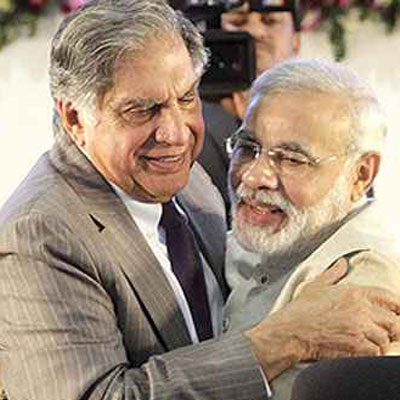
    Tata Group chairman Ratan Tata at the time of launch of the initiative said, “It’s a privilege for us (Tata Trusts) to join hands with Google, a company I vastly admire because of the way it has digitised billions of people with its broad connectivity.”


    Tata further added, “It took 7 to 10 years for India to popularise telephone, but today, right from a pan wala to a rickshaw driver, there are millions using the mobile phone. They can buy a prepaid sim and use the device and that has helped in enhancing their self respect and has brought education and knowledge closer to them. Such is the power of internet. I am delighted that our Prime Minister (Narendra Modi) has given preference and priority to digitise India.”   


    India is a booming market when it comes to mobile phones and wireless internet. “It’s absolutely unbelievable. No one thought India would have so many mobile phone users who are now gradually transforming into smartphone consumers. It’s very essential for women in rural India to earn their livelihood and be self dependent. I hope this initiative takes internet closer to them and takes commerce closer to them. I wish luck to Google, Intel and my colleagues at Tata Trusts,” he concluded. 

  • “I dream of digital India where 1.2 billion connected Indians drive innovation:”NaMo

    “I dream of digital India where 1.2 billion connected Indians drive innovation:”NaMo

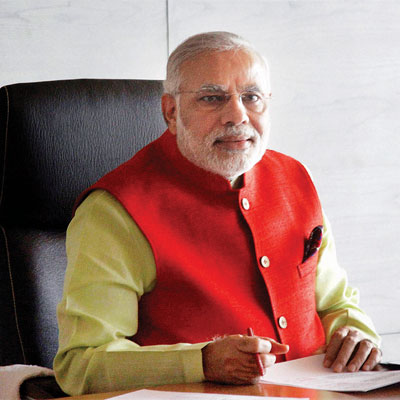
    MUMBAI: Prime Minister Narendra Modi’s vision of ‘Digital India’ took a step forward on 1 July as the PM launched ‘Digital India Week’ in New Delhi. Modi, who foresees an impending “bloodless” cyber war as a global risk has called upon the nation’s IT community to become world leaders in providing credible cyber-security systems to the entire world. “Can’t India innovate in providing cyber security to the world and be a world leader in it?” he questioned.


    The Prime Minister encouraged the leaders in IT manufacturing to boost production of electronic services and goods in the country as part of the ‘Make in India’ initiative. “We need to manufacture qualitatively globally competitive electronic goods in India and reduce our enormous dependency on imports,” he added.


    Modi noted that there is a risk of digitization creating a barrier between the ‘haves’ and ‘have not’s and result in a digital divide. To avoid that, he outlined his vision of e-governance and mobile governance, where all important government services will be available on the mobile phone and digital platforms.


    “I dream of a digital India where high-speed digital highways unite the nation; 1.2 billion connected Indians drive innovation; technology ensures the citizen-government interface is incorruptible, where government proactively engages on social media platforms, quality education reaches inaccessible places of country, quality healthcare comes to remotest places through e health care,” he said.


    He stressed on making India as paperless as possible, especially in terms of government documentations, banking and other bureaucratic services. A key aspect of this is ‘Digital India’s’ eLocker initiative which enables citizens to store their important documents in an online database and access it using a digital signature that will be unique to every citizen and used with their AADHAAR number. “With eLocker, one doesn’t need to carry all their paperwork to government offices when they are applying for any government or other services. It makes official work easier, economic and secure,” said Modi, who is rightly addressed as a ‘digital native man’ by industry leaders.


    Apart from this, ‘Digital India’ aspires to spread its reach to the remotest parts of the country and enable citizens from all walks of society to enjoy its services like eHealth, eEducation, eScholarship, eSignature, ‘Digital India’ apps and weather reports for farmers among others.


    To achieve that, the mammoth-size challenge lies in infrastructure and availability of high speed broadband throughout the country. “There was a time when highways were in demand and were crucial to settlements and industries. Today a developed city can only be built where fiber optics pass through,” he opined, enlisting Broadband Highway as a top priority in his ‘Digital India’ plan.


    The Prime Minister cleverly tweaked his definition of IT and devised the formula ‘IT +IT =IT’ which breaks down to Indian Talent plus Information Technology which will give ‘India Tomorrow.’ He assured full support to young entrepreneurs who wished to launch start-ups and called upon the youth to innovate.


    “In a few years we will be second globally in startups after America, and the government is willing to invest in entrepreneurs. We need to make products and technology based on the target age group, its utility in our Indian society and thus ‘Design in India’ is as important as ‘Make in India’,” he concluded.

  • DTH & cable ops miffed as AAP hikes entertainment tax in Delhi

    DTH & cable ops miffed as AAP hikes entertainment tax in Delhi

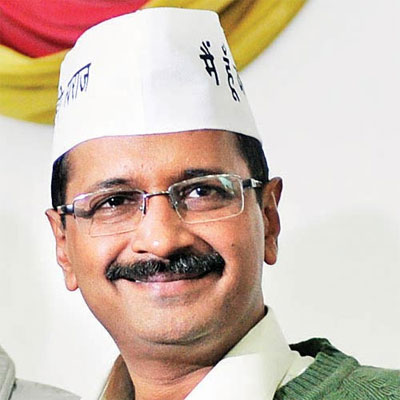
    MUMBAI: Delhiites can expect to dole out more cash for their weekly dose of entertainment courtesy the new budget presented by the Arvind Kejriwal led Aam Aadmi Party (AAP). Under the new budget, while entertainment tax (ET) on cable TV and direct to home (DTH) in the national capital has gone up from the current Rs 20 to Rs 40, that for cinema halls has been hiked by 20-40 per cent. This, even as Maharashtra based cable operators, paying a hefty sum of Rs 45 as entertainment tax, are still fighting a case in the Bombay High Court for slashing the taxes, with little respite.

    According to Delhi based cable operators, while there aren’t any issues per se with increasing the entertainment tax, their grouse is that the government should have devised a way of collection from consumers before increasing the ET.


    As for now, it is the local cable operator who collects the ET from consumers and then gives it to the multi system operator (MSO). The system sees a number of leakages and blame game. While LCOs lament that the customer does not pay ET, MSOs believe that the LCO fail to pass on the collected ET to them. Since the onus of finally submitting the ET collection to the government is on the MSO, not surprisingly they are held guilty more often than not.


    While Delhi fell in phase I of DAS, where interconnect agreement should have been signed and billing started, thus protecting leakages, the same has yet not been achieved. Thus, increasing the ET by Rs 20 seems no less than a burden to both LCOs and MSOs.


    “The government can increase the entertainment tax, but then what are the measures it has put in place to be able to facilitate collection,” says Cable Operators Federation of India (COFI) president Roop Sharma.

    Sharma believes that the government should give incentives to cable operators for collecting entertainment tax from consumers. “The LCOs are the biggest sufferers in the whole process as they face the task of extracting this additional amount from their customers,” she adds.


    According to a Delhi based MSO, hiking entertainment tax is an unwelcome move. “With the earlier tax system, the exact amount was not being collected and this resulted in the MSOs getting penalized. The LCOs will not be able to collect the extra money from the ground, which will mean that the MSOs will have to pay the remaining from their own pocket,” the MSO tells Indiantelevision.com on condition of anonymity.


    The MSO is also of the opinion that while digitization was aimed at bringing in transparency, which ensured lesser leakages, hiking taxes and thus increasing the cable bill was unjustified.


    DTH Operators Association of India president and Videocon d2h CEO Anil Khera said, “The recent announcement of doubling of entertainment tax on cable TV and DTH services made by the Aam Admi Party government seems unfair and illogical. DTH as a platform is considered as critical to citizen’s right to information, news, education and entertainment. The sector is already saddled with high tax, where 33 per cent of revenues are taxed between the Centre and State. DTH operators that comprises Tata Sky, Dish TV, Airtel Digital TV, Videocon d2h, Sun Direct and Reliance Big TV, will have no choice but to hike their tariffs in Delhi to accommodate this hike in entertainment tax and the load will finally fall on the customer. By dropping electricity prices on the one hand and increasing entertainment tax on DTH on the other, does not seem like a move in favour of the aam aadmi! Is this how we plan to achieve a balance budget and reduce fiscal deficit?”


    On the other hand, Sharma informs that while the hike in entertainment tax is applicable for private DTH players, DD Freedish has been kept away from it. “Surprisingly the DD Freedish service is not taxed, but the same channels forced upon the cable TV networks will demand a tax. It appears there is no co-ordination between the central and Delhi government and in the bargain the aam aadmi has to suffer,” she adds.


    MSOs and DTH players will now have to come up with a campaign to inform consumers of the hike in entertainment tax, so that it is easier to collect from the ground.


    This also could be the trigger for going prepaid, something that Mumbai based MSO IMCL has started, where the customers pays for the channels they want to watch in advance. Defaulters, if any, face disconnection of set top boxes. The mechanism can at least help in collection and not make the LCOs or MSOs fall in the defaulter category. However, one thing remains unchanged, which is that the consumer will surely have to have deep pockets for their entertainment needs and demands going forward. 

  • Archival Neglect

    Archival Neglect

    It is a matter of prime cultural concern in any nation of heritage to preserve its invaluable assets of antiquity and inherited monuments of fine arts that pass through generations of artistic brilliance.   Traditionally, a culture rich nation plans and preserves its monuments of immense cultural value with pride, adequate funds and a sustainable infrastructure.  Alas! India has hundreds of so-called protected monuments, but in fact have none to actually guard and protect them and prevent unruly defacing of artefacts that once laboriously were sculptured by efficient hands devoting weary long years.


    A population which does not realise the intrinsic value in cultural terms does not even object visitors writing their names or of their loved ones indiscriminately on the walls of our monuments. Our predecessors could not prevent the Portuguese soldiers from using the statues and carvings of immense historic value and elegance as targets for shooting practice in the Elephanta Caves without remorse and defacing cultural treasures on stone preserved for centuries.


    The criminal disintegration and powdering of Bamiyan Buddhas in Afghanistan by Taliban rebels could not be averted even by a well meaning and civilised world community.  Stealing of deities in stone from the sanctum sanctorum of celebrated Indian temples for money continues even today.  India in fact is fortunate to get back its famous dancing Bronze Nataraja Statue of Chola era from the Australian Museum illegally smuggled by cultural traffickers.


    India is replete with examples of events missed in history running to thousands of years due to our national character not giving due importance to preservation of invaluable historic cultural works and monuments for varieties of religious and reasons of cultural conflicts. We owe rediscovery of most of our treasures to British pathfinders and inquisitive soldiers, be it Ajanta, Ellora or so many monuments of Buddhist origin. 


    With preservation of our historical assets not being our national priority and character, we already have lost substantial works of wisdom of our ancestors in Indigenous Medicines, Astronomy, Mathematics and other applied sciences.  But the present scientific tools that enable easy preservation of great monuments through chemical and mechanical means and digitisation of potential audio and video materials are being fruitfully utilized the world over.  The information technology with its current scientific leap has immensely enabled the world community to preserve great works in print through digitisation instead of managing huge libraries of printed books.


    The advent of new media and possibility of preservation of digitised content in cloud form has eased archiving process with excellent networking and retrieval arrangements.  Given the wealth of skilled human resource in IT available in our own country, the delay in archiving assets of audio and video content of Prasar Bharati is inexplicable. 


    The sound archives of All India Radio (AIR) came into existence in April 1954 and can well be termed as the National Audio Archives of the nation being the treasure house of precious recordings in more than 53,000 tapes comprising music and spoken words. 


    The library has invaluable collection of prayer speeches of Mahatma Gandhi recorded in 1947 at Sodepur Ashram, Kolkata and in 1948 at Birla House, Delhi in addition to his famous broadcast from the Broadcasting House, New Delhi on 12.11.1947.  All India Radio has recordings of all the Presidents and Prime Ministers of India besides important voice recordings of eminent personalities like Gurudev Rabindranath Tagore, Constitutional architect, Dr. B.R. Ambedkar, Bismarc of India, Sardar Vallabhbhai Patel and Nightingale of India Ms Sarojini Naidu and many others.


    The library is further enriched with numerous radio drama features, documentaries, memorial lectures and radio autography of eminent personalities from various walks of life.  Although release of archival materials of All India Radio started in April 2002 under the banner ‘Akashvani Sangeet’, only 76 Albums containing legends of Hindustani and Carnatic Classical and light music have been released so far. This despite AIR holding the richest cachet of sound recordings of almost of all genres of Radio Broadcasting including the rare recordings of freedom fighters, unforgettable and resounding voices of great maestros like Bade Ghulam Ali Khan, Abdul Karim Khan, Krishna Rao Shankar Pandit, Begum Akhtar, Siddeshwari Devi, Rasoolan Bai, Ariayakkudi, Chembai Vadyortha Bhagavatar and others.


    On instrumental music, there are invaluable recordings of Pandit Pannalal Ghosh, Dwaram Venkataswamy Naidu, Pandit V.G. Jog, T. Chowdiah, Pandit Nikhil Banerjee and the like preserved for posterity.  There are oral histories which provide direct insight into lives and creative process of great writers and artists.  In the realm of dramatics, the greatest contribution of radio is Radio play which evolved into an independent creative genre in the hands of very eminent directors and writers.


    As of today, AIR has been able to digitize only 6,000 hours since 2002 out of a total of 75,000 hours of archival materials available with Prasar Bharati.  The archives have rare collections of speeches by Quaid-I-Azam Muhammad Ali Jinnah and sensational addresses during ‘Bangladesh Liberation’ by Bangabandhu Sheikh Mujeebur Rahman and Ms Indira Gandhi.


    Doordarshan archives started in 2003 involving digital restoration, preservation, digitisation of the content, creation of meta-data for easy access and retrieval of archived programmes.   The laborious process of cleaning and finally preserving digitised content in file format through Media Assets Management (MAM) saving files on Linear Tape Open (LTO-4) format is on for a very long time.


    Doordarshan has digitised programme in 38 subjects to include animation and puppetry, ballot, documentary series, environment and ecology, fair and festival, game show, interview and conversation, light music, literature and poetry, variety entertainment, etc.  Out of 21,000 hours of digitised content, Doordarshan is able to bring out only 77 DVDs so far.


    The process of digitisation is painfully slow with no technical road map, finalised plan for marketing digitised content as also making free accessibility of speeches by great national leaders to the world at large as decided by Prasar Bharat Board. 


    Other developed nations which have successfully archived their contents like NHK, Japan and Deutche Welle, Germany in High Definition have their Central Archives networked with programme generating facilities dealing with a single or couple of languages with few dialects. But India suffers from a complex need to document archival materials available in multiple languages and hundreds of dialects in stations and kendras spread over the length and breadth of the nation as also link them up.


    Learning from its experience, Prasar Bharati needs to create meta-data at the time of programme production itself, secure produced content online and avoid piracy with a central archive in New Delhi networked with regional centres of rich cultural content.  It would be worthwhile for Prasar Bharati either to create a vertical for archives or expedite digitisation of its archival content of historical and monetary value by outsourcing to reputed media houses or facilities with domain experts without any further delay to save on precious tapes from open wooden shelves and gunny bags exposed to vagaries of adverse weather conditions.


    While Prasar Bharati Board has conceptually cleared creation of a well-networked data house on the programmes of AIR and DD stations all over India, procurement of equipments connected to MAM needs to be compatible.  Piecemeal procurements due to lack of funds should be avoided at all costs and avert resultant obsolescence of technology.  Aggressive strategy and an action plan to promote products released by AIR and DD could earn huge dividends and benefit Prasar Bharati monetarily.


    The revenue receipts of DVDs and footage sale of Doordarshan has declined by 70 per cent in the year 2015.  Despite its rich archival content, Prasar Bharati has been able to earn about only Rs 50 lakh in the last financial year compared to its revenue of Rs 1.5 crore in 2012. 


    Fast tracking of digitisation and archiving of its audio and video content is workable by an active national level steering committee duly monitored by Prasar Bharati Board on monthly basis for speedy accomplishment of digitisation of born content as also legacy content in gramophone records and analogue magnetic tapes.


    Prasar Bharati does not have a recruitment mechanism and in the absence of a statutory body, Prasar Bharati Recruitment Board, there is an emergent need to put dedicated personnel in place to supervise handling of invaluable archival content with inherent security even if outsourced for digitisation to private players.


    Establishing an exclusive web portal for AIR and DD archives with a payment gateway for purchase of archived programmes and expeditiously installing digital kiosks of Prasar Bharati in airports and railway stations to access its popular archival content would enable Prasar Bharati Archives self sustain. Prasar Bharati Board on its part had already cleared development of ‘Leaders of India’ website with facility to download famous video clippings and sound byte free of cost.


    Training of staff at grass root level with proficient archival procedures would enable Prasar Bharati to achieve its archival goals in a shorter duration. The nation could expect speedy action on the archival front especially with an ex-Secretary of Culture, Jawhar Sircar, CEO who initiated the process and is leading from the front. 


    (The views expressed here are purely personal views of Prasar Bharati principal advisor, personnel and administration VAM Hussain and Indiantelevision.com does not necessarily subscribe to them.)

  • “India will be a huge broadband market over the next 3 years:” Rajiv Kapur

    “India will be a huge broadband market over the next 3 years:” Rajiv Kapur

    MUMBAI: The Indian Cable TV sector has a gargantuan task at hand. Not only does it have to work towards converting analogue cable TV homes to digital, but it also needs to work towards connecting India with high-speed broadband pipes.


    Multi system operators (MSOs) are now working towards strengthening their broadband services. While Hathway Cable & Datacom was the first to launch a 50 mbps broadband service on its Docsis 3.0 ultra high speed network in 2013, Siti Cable and Den Networks were quick to follow suit in 2014. Not only this, several cooperatives that mushroomed post the digitization announcement, are also looking at offering more broadband services. And all this, to improve business as well as their average revenue per user (ARPU).


    So are MSOs in India taking the right approach to build a broadband base in the country? Broadcom India managing director Rajiv Kapur tells Indiantelevision.com, “I applaud the MSOs in the country for what they are doing. They are taking the right approach. If anything, they should do more of it.”


    The satellite versus cable versus IPTV is probably the biggest war in the broadcast universe, where three different ways of delivering live TV compete with each other. “India is at a very nascent stage for IPTV, and that brings us to the satellite versus cable TV war. Like in any other market, both will co-exist with their own unique offerings. Both have existed with a large enough pie of their own and both bring something unique to the table,” opines Kapur.


    Kapur believes that a reason why cable benefits over satellite is because it can provide a two way service. “While one way service is very limited, two way services are way more powerful in customizing things to make them more entertaining, or in gaming context more interactive. Taking a cue from what has happened in the rest of the world, I foresee that the sheer desire to remain competitive against satellite will again lead cable to bring broadband more aggressively in Indian cable market. The market itself isn’t exactly demanding it, so there has to be a little bit of a push to create the demand,” he adds.


    Since Indian subscribers are currently not aware of the advantages of a two way pipe, cable operators will need to start making creative use of the pipe that gives two way cable services, which enhances one’s TV watching experience and not just leave it as a pipe. “Even if it is left as a pipe, there are still some benefits for cable operators because the ARPU will still be way higher,” Kapur informs.


    Broadband will not only benefit cable operators, but also subscribers as there will be less capital expenditures (CAPEX) and a lower total bill, if they get the services from one operator. “So everyone benefits and this will happen whether it’s a sheer data pipe or there are services in the data pipe, which embellishes TV watching experience,” says Kapur.


    According to him, one needs to be a little more patient with broadband as India is going through the basic steps of digitization. “As a country, barely have we been able to figure out how to get such a large footprint of analogue converted to digital. It is a very large market and that makes it that much more difficult. One needs to keep in mind that business relations between broadcasters, MSOs and LCOs are still settling down,” points out Kapur.


    The country definitely needs a broadband push and now. Talking about how it will happen, Kapur suggests two types of push mechanism. “The first push is much easier and has already started, which is offering a higher bandwidth speed at aggressive pricing. This kind of push takes a progressive operator to initiate it and we have seen it happening. The second level of push is TV embellishing two way service. If you fast forward into 2016, there will be at least one progressive like-minded large cable operator who will begin showcasing interactive services that others will either be forced to follow or would want to follow,” he suggests.


    Talking about the right pricing for broadband, Kapur says that the sweet spot of bandwidth and price is between Rs 800 – 1000. “There is always a package, which is above it and there is a package below it. What will happen with time is that higher speeds will come at the same price. This is the beauty of a competitive market. In a year from now, at least a few operators will start aggressive broadband packages in the market. The side effects of this on other operators starting the same, will take another year or two. So in the next two-three years, India will be a much larger broadband market than it is today,” feels Kapur.


    Delay in Digitization


    Kapur believes that even if the country sees a large percentage of digitized homes and not 100 per cent, is still a big step forward. “The only benefit of 100 per cent digitization is that one can do an analogue shut off,” he says.


    Citing the positives of the delay of digitization, Kapur says, “The sheer magnitude of what needs to be done is very large. The delay gives time and opportunity to MSOs, LCOs and broadcasters to sort out their complex relations and their businesses.”


    The pressure to complete seeding of set top boxes (STBs) on time in phase I and II saw many MSOs compromising with the STB quality. “If we have to deploy 50-100 million boxes, it will be a shame to do it without keeping quality in mind. This country shouldn’t waste money in replacing boxes. So there is a big positive in the delay as now the quality matrix of what needs to be looked in hardware procurement will be left uncompromised,” he adds.


    Pay TV channel revenues post digitization


    Currently there is fear in the masses that prices of pay TV channels post digitization will go up. Kapur feels that while there is an element of truth in that, it is only because in the analogue regime, people were not paying for what they were viewing. “The second television was not being paid for and people were slicing the cable and taking feeds. So in the bigger picture, prices will go up just because of that.”


    Citing examples from the telecom sector, where high competition and usage led to reduction of prices, Kapur suggests that hyper competition will force price control even in the cable TV sector. “More services will come, which if taken by subscribers, will increase the ARPU for operators,” he opines.


    In satellite, DTH players have existed since over 10 years, however the country witnessed hyper competition amongst players only in 2008-2009. As the DTH market enters its early stage of maturity, more services are being considered and offered to consumers. “All this took a decade. Cable will not take that long because the market is established due to DTH, but it still needs to go through it,” informs Kapur.

  • 191 MSOs get 10 year licences under DAS for specified areas, 7 allowed to cover more areas

    191 MSOs get 10 year licences under DAS for specified areas, 7 allowed to cover more areas

    NEW DELHI: Pursuant to the Information and Broadcasting Ministry (I&B) urging the Home Ministry to expedite security clearances if digital addressable system (DAS) deadline for phase III has to be achieved, the past 10 weeks have seen a quantum jump in the number of multi-system operators (MSOs) getting 10 year registration: from 169 as on 10 April to 191 as of 22 June 2015.


    While there have been licences given, there are a few who have lost their licences. These include – SR Cable of Bangalore ceasing activity, and the Sun-owned Kal Cables of Chennai and Digicable Network India of Mumbai being refused security clearance.


    Some others have had their areas modified. These include one in Maharashtra (JPR Channel of Mumbai to cover pan India), Madhya Pradesh (CAN Digital of Indore to also cover Bhopal and Indore), Barak Communication of Assam (to cover more areas in the state), Delhi Distribution Company (to cover Pan India), Technobile Systems of Haryana (to cover more areas in Uttar Pradesh, Uttaranchal, Haryana and Rajasthan) and Sea TV Network of Agra, and Novabase Digital Entertainment of Delhi that have got revised licences.


    Most of these MSOs had been given provisional permission earlier.

  • Digital fallout: DTH cos set to lose, broadcasters poised to reap benefits

    Digital fallout: DTH cos set to lose, broadcasters poised to reap benefits

    MUMBAI: Change is constant and change is good…. however, it seems like change isn’t good for all. While the proliferation of digital platforms giving an impetus to online videos, will turn out to be a boon for broadcasters, direct to home (DTH) operators however, are set to lose out.


    According to a research report by Bank of America-Merrill Lynch, just like in the West, online video content will disrupt India’s Pay TV market. While broadcasters will benefit because of ad supported content monetisation, DTH players will suffer because of pressure on ARPUs. Moreover DTH companies are also poised to lose most as the price-sensitive Indian consumers will refrain from paying premium for content on live television when they have online alternatives.


    Broadcasters are well placed to monetise content on digital platforms as it only increases the opportunities. As a result, ad revenues are expected to improve following a pick up in economy. The report states that broadcasters will be able to improve their content monetisation through increased ad revenues and better declaration of subs in a digitised environment.


    For DTH companies, despite digitisation delay, there will be improvements in the average revenue per user (ARPU) driven by the following factors: 1) HD channel penetration increase; 2) Differential tariff hikes; and 3) MSOs hiking tariffs to maintain profitability – offering DTH players more headroom to raise tariffs.


    Creating a scenario comprising Zee TV (broadcaster) and Dish TV (DTH), Bank of America-Merrill Lynch’s analysis suggests that the overall risks are skewed to the upside for broadcaster Zee and to the downside for DTH operator Dish TV.


    According to the report, Zee has underperformed the markets by eight per cent year-to-date (YTD) on concerns about the loss in market share due to channel fragmentation and investments in new channels. “Post the share-price underperformance, we see the risk-reward as favourable since, in our view, the market is now factoring in all the risks, but not giving full benefits of strong ad growth, monetisation of new content and digitisation benefits,” the report states.


    Factoring in the positives for Dish TV, the report says that though digitisation is inevitable, the expectations on timelines are optimistic and complete benefits of digitisation will be seen only by FY2020-21. However, over the next 12 months, ARPU improvements are expected due to: 1) MSOs hiking tariffs to maintain margins; 2) Increased penetration of HD channels; and 3) Differential price hikes in urban areas. “However, Dish TV has outperformed the market by 65 per cent YTD, and we see most of the positives are priced in,” says the report.


    The upside of digitisation will be gradual. Citing risks and benefits of digitisation, the report says that it sees the risk of distributors (MSOs and DTH players) not realising the full potential of digitisation as the pace of roll out is slower than what the market is anticipating. Moreover, by the time the full benefits of digitisation are realised, the new-age video disruptors, internet-enabled smart devices like mobile, TV and PC will start eating into the revenues of Pay TV and MSOs like they have done in the West. Additionally, though phase-I and II of digitisation is complete, the expected benefits have not flowed to the players because of issues like MSOs/LCOs tussle and absence of customer billing. “There has been some progress on resolving the issues but it has been slow. These problems will only increase with roll out in phase-III and IV areas,” the report states.


    In the next few years, the Indian media sector is expected to evolve as digitisation gradually picks up, fragmentation of channels increases and all companies (broadcasters, DTH and MSOs) evolve their business models in face of online content proliferation.


    Positive on broadcasters: Content still the king


    According to the report, companies like Zee will benefit from an improvement in ad growth (led by GDP uptake) and expect to benefit from content fragmentation as it is one of the better companies leveraging this trend. “Over time, as traffic will shift to smart devices, we expect consumption of video content to increase. This presents increasing opportunities for broadcasters to monetise content. With improving economic activities, digitisation rollout and pressure on distributors’ P&L, we expect both advertisement and subscription revenues of broadcasters to increase. On the other hand, we believe that given the reluctance of Indian consumers to pay for online consumption, content on smart devices (smartphones, PCs, tablets) will be monetised primarily through advertisements,” the report states.


    DTH: Digitisation is gradual; ARPU improvement to flow in


    Despite slow digitisation, companies like Dish TV are likely to improve their ARPUs and EBITDA margins over next 12-18 months. The ARPU improvement will be led by the following factors: 1) MSOs facing some pressure from broadcasters to hike tariffs allowing DTH operators to follow them; 2) Increased penetration of HD channels; and 3) Players like Dish TV implementing differential pricing across cities to improve realisations and monetising on its “Zing” offering.


    MSOs: Broadband push is the next big story


    With the ongoing tussle between MSOs and LCOs, the full benefits of digitisation will come gradually for MSOs. As a result, MSOs are likely to focus on other revenue streams like broadband subs. According to checks carried out by Bank of American-Merrill Lynch, there’s increasing focus by MSOs to improve their broadband coverage, which would help cross-sell services overtime and have direct control over subs. The major MSOs have already started experimenting with high-speed broadband in high-density urban areas, and slowly they will start rolling out in Tier-2 and Tier-3 cities.


    Key risks:


    1) Economy not picking up: Any slower-than-expected economic uptake may lead to material downgrades to our consensus ad revenue numbers for Zee. 


    2) LCOs/MSOs tussle unable to reach a solution: Continued tussle between LCO and MSO (LCOs are unwilling to share consumer details with MSOs in order to guard their turf) will impact ARPU improvements for the sector. 


    3) Rise in piracy: With the proliferation of online content and new mediums of consumption, we may see a rise in piracy. In such a scenario, it will impact the entire industry negatively as it would be difficult to monetise the content effectively.

  • What’s in store for the Indian broadcast industry?

    What’s in store for the Indian broadcast industry?

    MUMBAI: The Indian media and entertainment industry is on the cusp of growth with phase-III and IV digitisation underway. However, even as the government is optimistic about meeting digitisation deadlines, multiple stakeholders are of the opinion that to meet the 2016 yearend deadline is unrealistic and far-fetched to say the least.

    Reiterating the sentiment is a research report by Bank of America-Merrill Lynch, which says that digitisation will be a slow process and will be complete only by FY2020-21. 

    The Bank of America-Merrill Lynch lists out four things that the Indian media industry should watch out for. They are as follows:  

    1) Digitisation: A Slow Process

    Even though the government has mandated full digitisation by December 2016, the research says that digitisation will be a slow process as on-ground checks show that it is nearly impossible for stakeholders to stick to the deadline. Bank of America-Merrill Lynch expects the entire roll out to be complete only by FY2010-21, with bulk of the benefits flowing in FY’18-19.

    Larger MSOs don’t have a local presence: In phase-I and II DAS-mandated areas, the large MSOs already had their infrastructure laid out and had knowhow of the local conditions. However, phase-III and IV are more remote areas where the MSOs do not have an established network, and hence will take time to rollout their network. These areas have been dominated by the local/ smaller MSOs, who may not have the wherewithal to invest capex and fund set-top-boxes (STB) for consumers. The report says that if digitisation happens slowly, the local MSOs will be able to capture this market (wherever analog cable is present), thus limiting the land grab of DTH operators.

    Government has reasons to be ambivalent on digitisation: The government benefits from digitisation in way of increased tax collections. At the same time, it will be vary of making voters pay a higher tariff for Pay TV bills. The ARPUs for phase-III and IV areas are lower; and a move to digital TV will entail a significant rise in their pay TV bills. Considering that TV is the main source of entertainment for Indians, the government may look to ease the digitisation roll-out slowly, rather than sticking to tight deadlines.

    ARPUs are lower: The phase-III and IV DAS-mandated areas have a lower ARPUs compared to phase-I and II geographies, which would make it difficult for MSOs and DTH companies to push through a premium ARPU product. As per the research, more innovations like Dish’s low-ARPU Zing proposition (focusing on low-cost local content), lower price points and differential geographical pricing to drive adoption are likely to be seen.

    2) Ad revenue growth to be strong in FY2016

    Advertisement revenues strong: Ad revenue growth is expected to be strong in FY16, on back of: 1) A pick up in economy and the resultant rise in ad spends; 2) Increased ad spending by e-commerce companies; and 3) Television maintaining its share of the advertisement pie. Ad spends have a strong correlation with nominal GDP. Considering that the economy is expected to pick up going forward, the Bank of America-Merrill Lynch report forecasts 13 per cent ad revenues growth for the industry, which is in line with industry estimates. (Source: KPMG-FICCI Annual report 2015).

    Implementation of BARC: The prevalent industry TV rating data (TAM) has often been cited for inconsistencies by broadcasters and advertisers. Hence, the industry bodies representing the three key stakeholders – broadcasters, advertisers, and advertising and media agencies – launched a new rating system – BARC India. Since it has the support of the industry, the report suggests that it will eventually replace TAM as the industry standard for determining TV ratings. Given that the new rating uses different methodology and sample set, the status quo TV ratings is at a risk of being upset. Though Zee has managed to hold on to third spot among Hindi GECs in the recently released data, as BARC moves towards a countrywide coverage, volatility in future ratings will remain a concern.

    Smart devices will lead to increasing viewership and ad revenues: With increasing penetration of smart devices, overall video consumption will increase. Since Indians are quite willing to watch ad-supported free content, the ad revenues will increase with the rise in online viewership.

    3) DTH: Factoring ARPU hike for 2-3 years

    Impending move to RIO to increase ARPUs: Star India has made the first move by completely moving its channel bouquets to RIO pricing, without materially impacting its viewership. Even as other broadcasters are still debating on whether to move to RIO, according to the Bank of America-Merrill Lynch report, Star’s successful move makes it only a matter of time before other broadcasters move to RIO pricing as well. Moving to RIO will increase the content cost for MSOs, necessitating an increase in tariffs to protect profitability. This does not factor in the RIO sing-ups in the base case. As per the report, an upside to subscription revenue estimates will be seen for both broadcasters and DTH operators in case market moves to RIO pricing.

    Subscribers in low-ARPU areas may opt for ala carte subscription: Unlike in the West, regulation in India mandates broadcasters to make available their channels on a piece meal basis. Since the average Indian watched just 17 channels, there is a risk of consumers in the low ARPU phase-III and IV DAS- mandated areas shifting to subscribe on a per-channel basis to reduce their monthly bills.

    Reduction in carriage and placement fees: Digitisation of Pay TV will reduce the carriage and placement fees (C&P fees) that are paid to MSOs for beaming their content. Digitisation mandates complete removal of the placement fees. Additionally, digitisation of the channel signals has resulted in a 3-4x decrease in the bandwidth needed to broadcast individual channels, allowing MSOs to beam as many as 2,000 channels within the allotted bandwidth, and thus weakening the case for MSOs to charge for a non-existent constraint. While the broadcasters are still paying carriage charges, the charges on a per-channel basis have been reducing. According to the report, this trend is expected to continue in the future.

    HD channels to increase ARPUs: Subscription to HD channels have increased in recent months, due to: 1) HD content being made available; 2) Costs of HD STBs have fallen and the non HD boxes point that distributors have stopped procuring non-HD boxes; and 3) Penetration of HD-enabled television sets have increased. As per the estimates by Bank of America-Merrill Lynch, HD subscribers on an average have ARPUs higher by about Rs 100. And with the HD take-up increasing up to 22 per cent for the DTH operators, HD is expected to positively drive up ARPUs.

    4) Fragmentation of channels & content costs

    Ad cap and the fragmentation of channels: The government has recently implemented the 12-minute ad cap (per hour). As a result, the sector has seen a slew of new channel launches and increase in ad rates to offset the impact. The report expects that investment in new channel launches will continue in the near term.

    Content to become increasingly more important: In a digitised world, quality content is going to be increasingly more important. With the likely kicking in of RIO pricing, and possible move to ala carte packages, broadcasters will need the content “hook” to lure the subscriber to pay a higher price for the same content.

    Content costs to rise: As more channels compete for the revenue pie, and channels move to RIO pricing, broadcasters are likely to increase their investments to produce quality content. In this context, the larger broadcasters will be in a better place to cope with the change with them having deeper pockets to invest in new content.

  • Africa harmonizing laws to ensure smooth transition from analogue to digital broadcasting

    Africa harmonizing laws to ensure smooth transition from analogue to digital broadcasting

    NEW DELHI: African countries are harmonizing policy and regulatory frameworks for smooth transition from analogue to digital broadcasting.


    The information technology sector is rapidly growing in Africa, providing a plethora of opportunities for global companies to share their technologies and do business in this continent, and as digitization spreads, internet on mobile phones will increase 20-fold in the next five years. This is double the rate of growth in the rest of the world. These were some of the points made during the Convergence Africa World 2015.


    The three-day exposition from 17 to 19 June in Nairobi, Kenya, was organized by Exhibitions India Group (EIG), which organizes the annual Convergence India in Delhi. The event was jointly developed by Exhibitions India Group and AfriEXPOS, a Nairobi based expo organizer.


    Over 120 participants and top executives from over 300 companies took part in the expo.


    The exhibition was being organized at Oshwal Centre in Nairobi. The exhibition and conference was inaugurated by Ambassador D. N. O Awori, chairman of the Kenya Private Sector Alliance (KEPSA).


    The expo also hosted a two day conference consisting of knowledgeable sessions with senior dignitaries from government and corporate sectors. Connecting Africa, Internet for All, Future of Africa’s Telecom, Digital Media and ICT Markets, Kenya Vision 2030, Pay TV, The Evolution of Television in Africa and Cloud & Big Data were among some of the key conferences held at Convergence Africa World 2015 expo.


    A first of its kind in Africa, the exhibition and conference showcased the convergence of telecoms, digital media, broadcast and IT industries. The inaugural expo was intended to facilitate B2B contacts, joint ventures, technology transfers, and financial investments, thereby presenting the most comprehensive one-stop shop in Africa.


    Some of the companies that exhibited at Convergence Africa World 2015 included brands like Airtel, MediaGuru, RiverSilica Technologies, Matrix Comsec, Conax AS, Horizon Broadcast Electronics, ABOX42 GmbH, and Birla Ericsson Optical Limited.


    On the successful completion of the expo, Exhibitions India chairman Prem Behl said, “With Convergence Africa World 2015 expo, our objective was to provide a platform to deliberate on convergence of services, focusing on new-age technologies and merging business solutions that harness the young population to create a wave of technological transformation in the continent.”


    Exhibitions India President S.J. Singh added, “Overall the expo rendered a prolific experience for all participating delegates, exhibitors and visitors. Convergence Africa World will return with a succeeding chapter in June 2016.