Tag: digitisation

  • “Our metric for National Geographic is different (from BARC)” :  Swati Mohan

    “Our metric for National Geographic is different (from BARC)” : Swati Mohan

    Maintaining the legacy of a top-ranking brand is not smooth. 2016 saw increased focus on localisation in the infotainment and lifestyle genre, both, in terms of local content and Indian language audio feeds. National Geographic began the year with a major announcement in February about its rebranding which came into effect on 14 November.

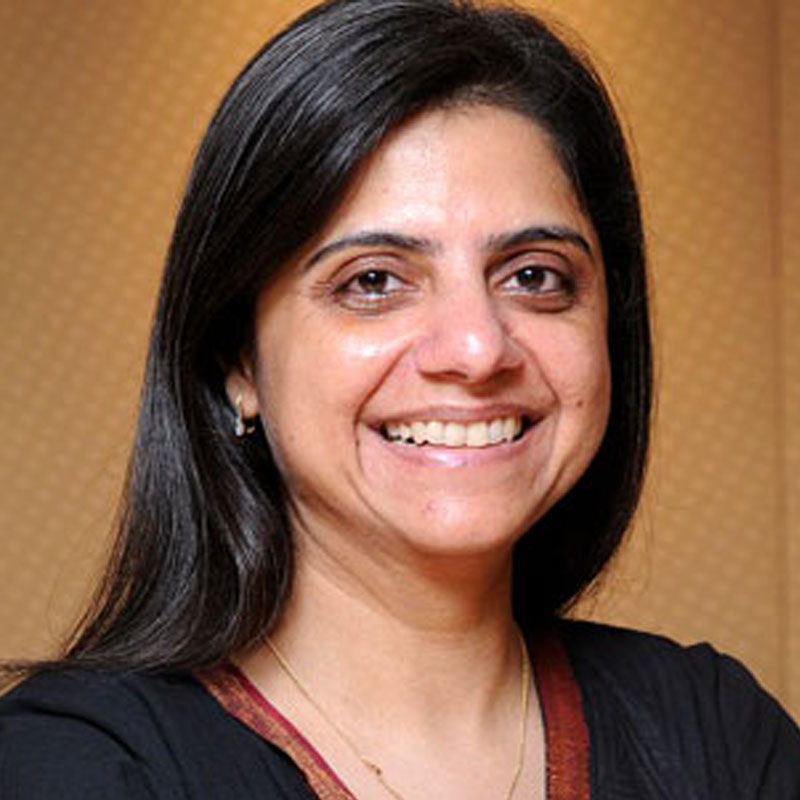
    At the helm of it is the National Geographic India and Fox Networks group business head Swati Mohan. It has just been a year for her at the company, and Mohan has already mapped several strategies for the channels she heads.

    With a refreshed National Geographic, Mohan and her team are all geared up to provide high-quality premium quality content to its viewers which will be a mix of both, local and global. In an interview with indiantelevision.com’s Megha Parmar, Mohan sheds light on the channel’s rebranding, its purpose and vision, local content, digitisation, 4K, the infotainment genre, BARC, the channel’s next big production, etc.

    Excerpts:

    Congratulations on National Geographic’s rebranding. What is your vision and strategy, going forward?

    The timing, the consolidation of assets and a new National Geographic channel – these are the three reasons for re-branding. I think it really brings out and underlines the brand purpose stronger than ever before. With ‘Further’ as the new philosophy, there are four things we have kept in mind. First, the look, feel, treatment, style, font and packaging of the channel has completely changed. Secondly, it is the depth of the content. For eg., Mars is a completely different format of blending Hollywood-stature scripted entertainment with world-class documentary style sequences and stunning visual effects.

    There will be a lot more delving into newer formats and scripted entertainment, which would really bring out cinematic experience.

    Underlining ‘Further’, our third strategy would be going ahead with the talent that we are bringing on the channel and with producers who are creating this content. A few weeks ago, we premiered Leonardo DiCaprio’s ‘Before the Flood’( which generated 12 per cent viewership in India for the channel),  Years of Living Dangerously, etc., this is just onscreen talent. If I look at the behind the scene talent, we have Mars, then we will have the likes of James Cameron, Martin Scorsese, Ridley Scott and many more Hollywood directors. All of them will be coming forward to make content for us, which is important.

    Lastly, the topic of content for the world, and especially India. Several conversations and activations will happen around the need to drive change. All this could be seen as content which may not resonate very well and might look international in nature. But, we have a data point where we can say this is testament to the fact that it will work in India. New content brings together scale, purpose, talent, which is a combination that is resonating well in India.  We will also have localised content which will tick off all these points. But, it’s not that the global content is not working. It’s equally important for us.

    When you talk about original/local content, who is providing this content? Is the production done in-house or outsourced? Which major production houses are involved?

    Yes, we are in talks with different film-makers, production houses, to really try and embrace not just the local need but also the global vision of the kind of scale and breadth of the content that we are looking at. We will talk about it in the next few months. National Geographic is not just a channel, it has never has been; it is an institution. People have experienced the brand’s magazine much before the channel was launched. It is important for us to provide them world-class high-quality, premium experience with everything that we do.

    It is important to balance our global content with local content which also needs to measure up to that high quality and premium stature of the way we have always done.

    What will be the percentage of acquired versus original content on Nat Geo, going forward?

    There is no particular percentage really. We are working with our global teams to have co-productions which will also focus on India.

    For us, it is irrespective of who is producing out of which market. India as a topic is important for us. We have David Letterman interviewing PM Narendra Modi. We are doing our own work with local production houses here and we are also working with the global team to see what we can do for the world, and India in particular.

    Fox Life has Kalki’s Great Escape, Twist of Taste — what are your plans going forward? Are you delving more into original content production? Who are your partnering with?

    Fox Life is something which attracts a lot of advertisers. We get a lot of demand for associations, integrations and, of course, the local content has done very well for us. That is why we do 4-5 series on the channel every year.

    What is the criteria for acquiring international content or creating original for the Indian audience?

    Well, I think the criteria will not change from what we have, which is access, never seen before content and world-class quality. And now, we will also drive this entire thing of purpose, change, higher scale and access to great talent who will associate while making the content.

    Though it has just been two days, how have the advertisers reacted to the channel’s rebranding?

    So far, we have got some astounding results on the new look, feel and proposition. Some very good results and buzz around Mars from across leading film-makers, industry leaders and the marketing head. Some feedback stated that this was the required leap and something that they were waiting for — which has taken them back to the roots of National Geographic. We are not here to create a new brand, we are here to bring together all the assets in one line and consolidate the mission on one term which can be followed.

    Heading nine channels is not an easy job. What are the key elements that you keep in mind to have differentiated content for each of the channels? What are the challenges that you face?

    The rebranding is only for the National Geographic channel and its assets. It will not have a bearing on other channels such as Baby TV or Fox Life. That is separate. I think they are still unique and global brands with differentiated content and purpose.

    What do you think about 4K? Are you looking at providing UHD feed on any of the channels?

    When it comes to categories with spectacular vision and stunning quality, we have a few genres, and infotainment is definitely up there. We are well placed when it comes to having 4K content. We are just waiting for a lot of technology to just make way for this to be received by the consumers. There are enough and more opportunities and challenges in the world of content distribution, and I think this will happen simultaneously and in parallel. We will not be left behind that curve as we have content that lends itself to that spectacular experience.

    With DAS IV to roll out soon in India, what traction are you expecting from rural India?’

    It depends. We are available in four languages and I can’t say that rural is not the focus for it. We are at an interesting place where we cut across all markets, demographics and age-groups, which we are proud of. I think we are getting at par with the info genre in terms of the traction that we see for rural. And, our languages just help us to cut across these various TGs. For us, the metric is way beyond what ratings may provide. It is the brand’s worth, and it helps us in getting partnerships from advertisers and platforms which has been reassuring for us in the past few years.

    Our position on digitisation is very clear, it is going to help the industry. Our partnership with Star really help us to distribute our channels. As a brand and with Star, we are ready to take on this new development.

    But, National Geographic is not the dominating channel in the genre going by BARC data. How important is BARC as a metric for the channel?

    Our metric for National Geographic is different. We just don’t measure metric. We have top of the genre shows, both local and global in many weeks. The growth of the brand is becoming stronger. It is also our performance on the social and digital platforms. It would not be fair to measure the power of a brand and conversations that it can drive.

    Is infotainment a profitable space in India? If yes, do we have space for more entrants?

    For us, we welcome more people making this content and getting into the genre. The more the merrier — is how we are seeing it. As long as they are driving a purposeful conversation, they are changing the face of the industry which is very important to do, we absolutely welcome them. It will just be a compliment to us. We see that as a positive thing with more players driving the agenda. The agenda is way more important than anything else. Our company gives 27 per cent of the profit back to the National Geographic Society which further fuels more exploration in the world of science. We are very proud of it and I don’t think many companies can say that.

    I think, if someone has a unique proposition, then there definitely is space. There are so many clever and strategic minds out there and I think everyone is looking forward to the changes in the industry, digital, affordable data and everything that it can offer for consumption of data. If there are people who can make a difference in the same space, we are in, its fine.

    You once stated that the network is in the process of developing new platforms and that will be the focus, going forward. Though you are available on Hotstar, what is this new platform all about? Are you looking at launching an OTT or VOD kind of a platform?

    Yes, there is something in the pipeline that we can talk early next year. It will be a global offering with a local connect as well. All our content including Mars is available on Hotstar.

    What are the marketing and promotion strategies for your channels?

    We are a platform with a high and wide reach. That is something which will drive the fact that the channel has changed, it has got a new tagline, entire assets will carry that and of course we are focussed on getting viewers to the channel through the premiere of Mars. We have got fantastic response for it from the industry. True to our style of having imagery and experience leading the way, we had a significant 360-degree marketing campaign in three cities across print, TV, on-ground activation, cinema halls, etc. Our on-ground campaign with virtual reality has been extremely successful and has told us how curious, and how the sense of awe and wonder that continues to remain in the people. The response for Mars has been outstanding.

    We have done a mix of all markets. Since we are across a lot of markets in terms of our priorities, we have chosen TV channels and the top six cities for print and cinema. Other than that, we have used high-reach platforms to make sure we reach the country far and wide. Our sister network, Star, has also helped us in the process.

    Which is the next big production (show) planned? Is it acquired or local content?

    The next big production that we have planned is a global show called Facing Icons. It’s a show which has the greatest two in a particular industry whether it is sports, movies, etc. It is a very interesting take in biography format, and has the top two opponents in any field who talk about what they are feeling when they were really facing the other opponent. The show goes on air by the end of this month, which is a global premiere.

    Our local production would sometime be in December which we can talk about after some time.

  • “Our metric for National Geographic is different (from BARC)” :  Swati Mohan

    “Our metric for National Geographic is different (from BARC)” : Swati Mohan

    Maintaining the legacy of a top-ranking brand is not smooth. 2016 saw increased focus on localisation in the infotainment and lifestyle genre, both, in terms of local content and Indian language audio feeds. National Geographic began the year with a major announcement in February about its rebranding which came into effect on 14 November.

    At the helm of it is the National Geographic India and Fox Networks group business head Swati Mohan. It has just been a year for her at the company, and Mohan has already mapped several strategies for the channels she heads.

    With a refreshed National Geographic, Mohan and her team are all geared up to provide high-quality premium quality content to its viewers which will be a mix of both, local and global. In an interview with indiantelevision.com’s Megha Parmar, Mohan sheds light on the channel’s rebranding, its purpose and vision, local content, digitisation, 4K, the infotainment genre, BARC, the channel’s next big production, etc.

    Excerpts:

    Congratulations on National Geographic’s rebranding. What is your vision and strategy, going forward?

    The timing, the consolidation of assets and a new National Geographic channel – these are the three reasons for re-branding. I think it really brings out and underlines the brand purpose stronger than ever before. With ‘Further’ as the new philosophy, there are four things we have kept in mind. First, the look, feel, treatment, style, font and packaging of the channel has completely changed. Secondly, it is the depth of the content. For eg., Mars is a completely different format of blending Hollywood-stature scripted entertainment with world-class documentary style sequences and stunning visual effects.

    There will be a lot more delving into newer formats and scripted entertainment, which would really bring out cinematic experience.

    Underlining ‘Further’, our third strategy would be going ahead with the talent that we are bringing on the channel and with producers who are creating this content. A few weeks ago, we premiered Leonardo DiCaprio’s ‘Before the Flood’( which generated 12 per cent viewership in India for the channel),  Years of Living Dangerously, etc., this is just onscreen talent. If I look at the behind the scene talent, we have Mars, then we will have the likes of James Cameron, Martin Scorsese, Ridley Scott and many more Hollywood directors. All of them will be coming forward to make content for us, which is important.

    Lastly, the topic of content for the world, and especially India. Several conversations and activations will happen around the need to drive change. All this could be seen as content which may not resonate very well and might look international in nature. But, we have a data point where we can say this is testament to the fact that it will work in India. New content brings together scale, purpose, talent, which is a combination that is resonating well in India.  We will also have localised content which will tick off all these points. But, it’s not that the global content is not working. It’s equally important for us.

    When you talk about original/local content, who is providing this content? Is the production done in-house or outsourced? Which major production houses are involved?

    Yes, we are in talks with different film-makers, production houses, to really try and embrace not just the local need but also the global vision of the kind of scale and breadth of the content that we are looking at. We will talk about it in the next few months. National Geographic is not just a channel, it has never has been; it is an institution. People have experienced the brand’s magazine much before the channel was launched. It is important for us to provide them world-class high-quality, premium experience with everything that we do.

    It is important to balance our global content with local content which also needs to measure up to that high quality and premium stature of the way we have always done.

    What will be the percentage of acquired versus original content on Nat Geo, going forward?

    There is no particular percentage really. We are working with our global teams to have co-productions which will also focus on India.

    For us, it is irrespective of who is producing out of which market. India as a topic is important for us. We have David Letterman interviewing PM Narendra Modi. We are doing our own work with local production houses here and we are also working with the global team to see what we can do for the world, and India in particular.

    Fox Life has Kalki’s Great Escape, Twist of Taste — what are your plans going forward? Are you delving more into original content production? Who are your partnering with?

    Fox Life is something which attracts a lot of advertisers. We get a lot of demand for associations, integrations and, of course, the local content has done very well for us. That is why we do 4-5 series on the channel every year.

    What is the criteria for acquiring international content or creating original for the Indian audience?

    Well, I think the criteria will not change from what we have, which is access, never seen before content and world-class quality. And now, we will also drive this entire thing of purpose, change, higher scale and access to great talent who will associate while making the content.

    Though it has just been two days, how have the advertisers reacted to the channel’s rebranding?

    So far, we have got some astounding results on the new look, feel and proposition. Some very good results and buzz around Mars from across leading film-makers, industry leaders and the marketing head. Some feedback stated that this was the required leap and something that they were waiting for — which has taken them back to the roots of National Geographic. We are not here to create a new brand, we are here to bring together all the assets in one line and consolidate the mission on one term which can be followed.

    Heading nine channels is not an easy job. What are the key elements that you keep in mind to have differentiated content for each of the channels? What are the challenges that you face?

    The rebranding is only for the National Geographic channel and its assets. It will not have a bearing on other channels such as Baby TV or Fox Life. That is separate. I think they are still unique and global brands with differentiated content and purpose.

    What do you think about 4K? Are you looking at providing UHD feed on any of the channels?

    When it comes to categories with spectacular vision and stunning quality, we have a few genres, and infotainment is definitely up there. We are well placed when it comes to having 4K content. We are just waiting for a lot of technology to just make way for this to be received by the consumers. There are enough and more opportunities and challenges in the world of content distribution, and I think this will happen simultaneously and in parallel. We will not be left behind that curve as we have content that lends itself to that spectacular experience.

    With DAS IV to roll out soon in India, what traction are you expecting from rural India?’

    It depends. We are available in four languages and I can’t say that rural is not the focus for it. We are at an interesting place where we cut across all markets, demographics and age-groups, which we are proud of. I think we are getting at par with the info genre in terms of the traction that we see for rural. And, our languages just help us to cut across these various TGs. For us, the metric is way beyond what ratings may provide. It is the brand’s worth, and it helps us in getting partnerships from advertisers and platforms which has been reassuring for us in the past few years.

    Our position on digitisation is very clear, it is going to help the industry. Our partnership with Star really help us to distribute our channels. As a brand and with Star, we are ready to take on this new development.

    But, National Geographic is not the dominating channel in the genre going by BARC data. How important is BARC as a metric for the channel?

    Our metric for National Geographic is different. We just don’t measure metric. We have top of the genre shows, both local and global in many weeks. The growth of the brand is becoming stronger. It is also our performance on the social and digital platforms. It would not be fair to measure the power of a brand and conversations that it can drive.

    Is infotainment a profitable space in India? If yes, do we have space for more entrants?

    For us, we welcome more people making this content and getting into the genre. The more the merrier — is how we are seeing it. As long as they are driving a purposeful conversation, they are changing the face of the industry which is very important to do, we absolutely welcome them. It will just be a compliment to us. We see that as a positive thing with more players driving the agenda. The agenda is way more important than anything else. Our company gives 27 per cent of the profit back to the National Geographic Society which further fuels more exploration in the world of science. We are very proud of it and I don’t think many companies can say that.

    I think, if someone has a unique proposition, then there definitely is space. There are so many clever and strategic minds out there and I think everyone is looking forward to the changes in the industry, digital, affordable data and everything that it can offer for consumption of data. If there are people who can make a difference in the same space, we are in, its fine.

    You once stated that the network is in the process of developing new platforms and that will be the focus, going forward. Though you are available on Hotstar, what is this new platform all about? Are you looking at launching an OTT or VOD kind of a platform?

    Yes, there is something in the pipeline that we can talk early next year. It will be a global offering with a local connect as well. All our content including Mars is available on Hotstar.

    What are the marketing and promotion strategies for your channels?

    We are a platform with a high and wide reach. That is something which will drive the fact that the channel has changed, it has got a new tagline, entire assets will carry that and of course we are focussed on getting viewers to the channel through the premiere of Mars. We have got fantastic response for it from the industry. True to our style of having imagery and experience leading the way, we had a significant 360-degree marketing campaign in three cities across print, TV, on-ground activation, cinema halls, etc. Our on-ground campaign with virtual reality has been extremely successful and has told us how curious, and how the sense of awe and wonder that continues to remain in the people. The response for Mars has been outstanding.

    We have done a mix of all markets. Since we are across a lot of markets in terms of our priorities, we have chosen TV channels and the top six cities for print and cinema. Other than that, we have used high-reach platforms to make sure we reach the country far and wide. Our sister network, Star, has also helped us in the process.

    Which is the next big production (show) planned? Is it acquired or local content?

    The next big production that we have planned is a global show called Facing Icons. It’s a show which has the greatest two in a particular industry whether it is sports, movies, etc. It is a very interesting take in biography format, and has the top two opponents in any field who talk about what they are feeling when they were really facing the other opponent. The show goes on air by the end of this month, which is a global premiere.

    Our local production would sometime be in December which we can talk about after some time.

  • Seven mfrs making set top boxes locally, MSOs adopt iCAS

    Seven mfrs making set top boxes locally, MSOs adopt iCAS

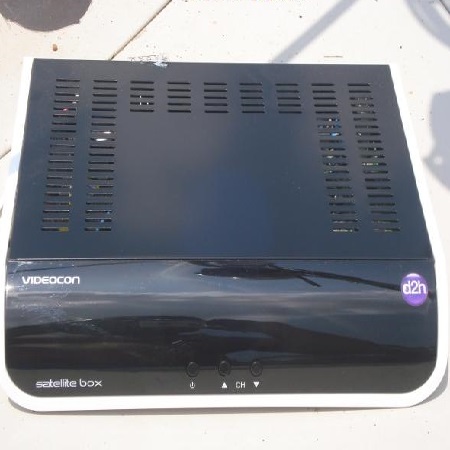
    NEW DELHI: Even as most high courts extended the deadline for phase III of digital addressable system citing shortage of set top boxes, a total of seven local manufacturers are now producing STB.

    This figure is almost double compared to the details given during the last meeting of the DAS Task Force on 16 February 2016.

    The 15th Task Force meeting on 30 May was informed that seeding of about 41 million (4.1 crore) STBs had been completed.

    However according to a representative of Consumer Electronics and Appliances Manufacturers Association (CEAMA), there was a lull in the market and no orders had been received in the recent past.

    The representative said seven indigenous STB manufacturers had taken Indian Conditional Access System (iCAS) licenses and five out of them are in the process of implementing iCAS in their STBs.

    He said 22 MSOs’ had placed orders for iCAS-based STBs. Twelve MSOs’ had deployed iCAS by 15 February, the 14th meeting had been told.

    Meanwhile, the Department of Electronics and Information Technology is planning a meeting with the operators and stakeholders on 24 June 2016.

    In the meeting on 16 February 2016 which was the first after the deadline for phase III covering all urban areas, it was claimed that the seeding of STBs by multi system operators increased from 6.91 million to 12.43 million between 31 December 2015 and 15 February 2016.

    The Indian Conditional Access System (iCAS) had been developed by DeITY and will be initially available to indigenous STB manufacturers for three years at a nominal fee of $ 0.5 per STB. .

  • Seven mfrs making set top boxes locally, MSOs adopt iCAS

    Seven mfrs making set top boxes locally, MSOs adopt iCAS

    NEW DELHI: Even as most high courts extended the deadline for phase III of digital addressable system citing shortage of set top boxes, a total of seven local manufacturers are now producing STB.

    This figure is almost double compared to the details given during the last meeting of the DAS Task Force on 16 February 2016.

    The 15th Task Force meeting on 30 May was informed that seeding of about 41 million (4.1 crore) STBs had been completed.

    However according to a representative of Consumer Electronics and Appliances Manufacturers Association (CEAMA), there was a lull in the market and no orders had been received in the recent past.

    The representative said seven indigenous STB manufacturers had taken Indian Conditional Access System (iCAS) licenses and five out of them are in the process of implementing iCAS in their STBs.

    He said 22 MSOs’ had placed orders for iCAS-based STBs. Twelve MSOs’ had deployed iCAS by 15 February, the 14th meeting had been told.

    Meanwhile, the Department of Electronics and Information Technology is planning a meeting with the operators and stakeholders on 24 June 2016.

    In the meeting on 16 February 2016 which was the first after the deadline for phase III covering all urban areas, it was claimed that the seeding of STBs by multi system operators increased from 6.91 million to 12.43 million between 31 December 2015 and 15 February 2016.

    The Indian Conditional Access System (iCAS) had been developed by DeITY and will be initially available to indigenous STB manufacturers for three years at a nominal fee of $ 0.5 per STB. .

  • DAS Phase III stay extended in Uttar Pradesh, Telangana and Andhra Pradesh

    DAS Phase III stay extended in Uttar Pradesh, Telangana and Andhra Pradesh

    New Delhi: With the Supreme Court stating that the stay on Phase III of digital addressable system by the Bombay High Court is not pan-India, stakeholders in three states – Andhra Pradesh, Telangana, and Uttar Pradesh – have received further extensions for varying periods.

    While the Hyderabad High Court has clubbed the two cases of Andhra Pradesh and Telangana and granted a four week extension, the Allahabad High Court extended the stay for three more months.

    The Hyderabad High Court which received the counter-affidavit from the Information and Broadcasting Ministry, gave time to the petitioners in both Andhra Pradesh and Telangana – AP MSOs Federation and Federation of Telangana MSOs – to file their replies,

    The plea taken by both the petitioners had been the shortage of set top boxes, which had in late December led to a two month extension.

    The Supreme Court had made the observation on an appeal by the Indian Broadcasting Foundation, which was subsequently withdrawn.

    In Allahabad, where the petitioners have also taken the plea of shortage of STBs, the High Court directed I&B Ministry as well as the Telecom Regulatory Authority of India to file counter-affidavits within four weeks.

     “In the meanwhile, we direct the respondents not to disconnect the cable TV network operated by the petitioner through the analogue system for a period of three months from today,” the court said.

    DAS Phase III has already been stayed for varying periods by High Courts in Assam, Maharashtra, Sikkim, Odisha, and Chhattisgarh, for the entire states, apart from Tamil Nadu where prolonged legal cases have been pending since Phase I.

    In Karnataka, three individual stakeholders have got stay orders in Mangalore and Mysore areas while there is no state-wide stay. However, MSOs and Local Cable Operators in various parts of Karnataka told indiantelevision.com that transmission is still being use in analogue mode even in areas that fall in Phase III but for which no stay has been obtained.

    Interestingly, Ministry sources admitted to indiantelevision.com that there was a misreading of the Bombay High Court directive. The Court had merely refereed to the Kusum Ingots & Alloys Ltd vs the Union of India 2004 case to say that if one High Court gives a stay, another High Court can act in similar fashion if the facts are similar – in this case, shortage of STBs. Thus, they agree that the High Court stay was only confined to Maharashtra and not pan-India.

    The Bombay High Court passed a unique judgment stating that the Hyderabad High Court order would be applicable across India as per the Supreme Court judgment in.

    Meanwhile, The Ministry has filed a similar petition and sought not merely vacation of the stay orders by various High Courts, but also clubbing the cases together.

    The meeting of the Phase III and Phase IV Task Force – the first to be held after the 31 December deadline of Phase III – was told by Ministry Joint Secretary (Broadcasting) R Jaya that the percentage achievement had increased from 76.45 per cent as on 30 December 2015 to 90.44 per cent as on 15 February 2016.

    It was also claimed that the seeding of set top boxes by multi system operators increased from 6.91 million (69.1 lakh) to 12.43 million (124.3 lakh) for the same period.

    DAS Phase III covers 33.18 million (331.8 lakh( TV households across 29 states and five Union Territories, after changes made in updates for various states.

    Although Phase III was aimed at covering all remaining urban areas in the country, Ministry sources admitted that several urban may now be clubbed with the rural areas where the deadline is 31 December 2016.

  • DAS Phase III stay extended in Uttar Pradesh, Telangana and Andhra Pradesh

    DAS Phase III stay extended in Uttar Pradesh, Telangana and Andhra Pradesh

    New Delhi: With the Supreme Court stating that the stay on Phase III of digital addressable system by the Bombay High Court is not pan-India, stakeholders in three states – Andhra Pradesh, Telangana, and Uttar Pradesh – have received further extensions for varying periods.

    While the Hyderabad High Court has clubbed the two cases of Andhra Pradesh and Telangana and granted a four week extension, the Allahabad High Court extended the stay for three more months.

    The Hyderabad High Court which received the counter-affidavit from the Information and Broadcasting Ministry, gave time to the petitioners in both Andhra Pradesh and Telangana – AP MSOs Federation and Federation of Telangana MSOs – to file their replies,

    The plea taken by both the petitioners had been the shortage of set top boxes, which had in late December led to a two month extension.

    The Supreme Court had made the observation on an appeal by the Indian Broadcasting Foundation, which was subsequently withdrawn.

    In Allahabad, where the petitioners have also taken the plea of shortage of STBs, the High Court directed I&B Ministry as well as the Telecom Regulatory Authority of India to file counter-affidavits within four weeks.

     “In the meanwhile, we direct the respondents not to disconnect the cable TV network operated by the petitioner through the analogue system for a period of three months from today,” the court said.

    DAS Phase III has already been stayed for varying periods by High Courts in Assam, Maharashtra, Sikkim, Odisha, and Chhattisgarh, for the entire states, apart from Tamil Nadu where prolonged legal cases have been pending since Phase I.

    In Karnataka, three individual stakeholders have got stay orders in Mangalore and Mysore areas while there is no state-wide stay. However, MSOs and Local Cable Operators in various parts of Karnataka told indiantelevision.com that transmission is still being use in analogue mode even in areas that fall in Phase III but for which no stay has been obtained.

    Interestingly, Ministry sources admitted to indiantelevision.com that there was a misreading of the Bombay High Court directive. The Court had merely refereed to the Kusum Ingots & Alloys Ltd vs the Union of India 2004 case to say that if one High Court gives a stay, another High Court can act in similar fashion if the facts are similar – in this case, shortage of STBs. Thus, they agree that the High Court stay was only confined to Maharashtra and not pan-India.

    The Bombay High Court passed a unique judgment stating that the Hyderabad High Court order would be applicable across India as per the Supreme Court judgment in.

    Meanwhile, The Ministry has filed a similar petition and sought not merely vacation of the stay orders by various High Courts, but also clubbing the cases together.

    The meeting of the Phase III and Phase IV Task Force – the first to be held after the 31 December deadline of Phase III – was told by Ministry Joint Secretary (Broadcasting) R Jaya that the percentage achievement had increased from 76.45 per cent as on 30 December 2015 to 90.44 per cent as on 15 February 2016.

    It was also claimed that the seeding of set top boxes by multi system operators increased from 6.91 million (69.1 lakh) to 12.43 million (124.3 lakh) for the same period.

    DAS Phase III covers 33.18 million (331.8 lakh( TV households across 29 states and five Union Territories, after changes made in updates for various states.

    Although Phase III was aimed at covering all remaining urban areas in the country, Ministry sources admitted that several urban may now be clubbed with the rural areas where the deadline is 31 December 2016.

  • Airtel DTH revenue up 19% on higher subscriber additions & ARPU

    Airtel DTH revenue up 19% on higher subscriber additions & ARPU

    BENGALURU: The 31 December, 2015 deadline for Digital Addressable System (DAS) Phase III has been a boost for the carriage industry in subscriber additions, revenues, and operating profits. Buoyed by the government’s decision to stick to deadlines for digitisation, the direct-to-home (DTH) industry in India is continuing its bloom run, if one were to go by the results reported by Bharti Airtel for its Digital TV services (Airtel DTH) for the quarter ended 31 December, 2015 (Q3-2016, current quarter).


    Revenue in Q3-2016 increased 19 per cent to Rs 742.2 crore, up 19 per cent YoY as compared to Rs 623.4 crore. EBIDTA for Q3-2016 grew 45 per cent to Rs 247.4 crore (33.3 per cent margin) as compared to Rs 170.7 crore (27.4 per cent margin).


    Note: 100,00,000 = 100 lakh = 10 million = 1 crore


    The segment’s subscriber base grew 13.2 per cent YoY to 111.06 lakh in the current quarter as compared to 98.10 lakh and grew five per cent as compared to 105.76 lakh in the immediate preceding quarter. Though in US dollar terms, average revenue per user (ARPU) was constant YoY and QoQ at $3.5, in Indian rupees it has increased seven per cent YoY to Rs 229 from Rs 214 and increased two per cent QoQ from Rs 224. Given that the deadline for DAS phase III was 31 December, 2015, Airtel DTH segment reported 5.30 lakh net subscriber additions in the current quarter, which was almost double (1.96 times) the 2.70 lakh subscriber additions in Q3-2015 and more than triple (3.2 times) the 1.64 lakh subscribers added in Q2-2016.


    Subscriber churn in Q3-2016 was lower at 0.7 per cent as compared to one per cent in Q3-2015 and 1.3 per cent in the immediate trailing quarter.


    Airtel’s CAPEX for its DTH segment more than doubled (by 2.1 times) to Rs 342.2 crore as compared to Rs 163 crore in Q3-2015. Airtel’s cumulative investments in its DTH segment increased 17 per cent YoY to Rs 6177 crore as compared to Rs 5494.8 crore.

  • Airtel DTH revenue up 19% on higher subscriber additions & ARPU

    Airtel DTH revenue up 19% on higher subscriber additions & ARPU

    BENGALURU: The 31 December, 2015 deadline for Digital Addressable System (DAS) Phase III has been a boost for the carriage industry in subscriber additions, revenues, and operating profits. Buoyed by the government’s decision to stick to deadlines for digitisation, the direct-to-home (DTH) industry in India is continuing its bloom run, if one were to go by the results reported by Bharti Airtel for its Digital TV services (Airtel DTH) for the quarter ended 31 December, 2015 (Q3-2016, current quarter).


    Revenue in Q3-2016 increased 19 per cent to Rs 742.2 crore, up 19 per cent YoY as compared to Rs 623.4 crore. EBIDTA for Q3-2016 grew 45 per cent to Rs 247.4 crore (33.3 per cent margin) as compared to Rs 170.7 crore (27.4 per cent margin).


    Note: 100,00,000 = 100 lakh = 10 million = 1 crore


    The segment’s subscriber base grew 13.2 per cent YoY to 111.06 lakh in the current quarter as compared to 98.10 lakh and grew five per cent as compared to 105.76 lakh in the immediate preceding quarter. Though in US dollar terms, average revenue per user (ARPU) was constant YoY and QoQ at $3.5, in Indian rupees it has increased seven per cent YoY to Rs 229 from Rs 214 and increased two per cent QoQ from Rs 224. Given that the deadline for DAS phase III was 31 December, 2015, Airtel DTH segment reported 5.30 lakh net subscriber additions in the current quarter, which was almost double (1.96 times) the 2.70 lakh subscriber additions in Q3-2015 and more than triple (3.2 times) the 1.64 lakh subscribers added in Q2-2016.


    Subscriber churn in Q3-2016 was lower at 0.7 per cent as compared to one per cent in Q3-2015 and 1.3 per cent in the immediate trailing quarter.


    Airtel’s CAPEX for its DTH segment more than doubled (by 2.1 times) to Rs 342.2 crore as compared to Rs 163 crore in Q3-2015. Airtel’s cumulative investments in its DTH segment increased 17 per cent YoY to Rs 6177 crore as compared to Rs 5494.8 crore.

  • DAS Phase III: MSO Alliance heading towards Caveat route in multiple states

    DAS Phase III: MSO Alliance heading towards Caveat route in multiple states

    MUMBAI: The Digital Addressable System (DAS) Phase III deadline came and went and what it’s left behind is chaos and carnage. The analogue signals, which went off for a day or two in some territories, are all back now. Last mile operators (LMOs) who faced the set-top-box shortage crisis have taken the judicial route to challenge the deadline given by the Ministry of Information and Broadcasting (MIB). In six states so far the High Court has permitted an extension where as in Assam’s Kamrup district, the District Magistrate after reviewing the petition allowed an extension.


    Now multi system operators (MSOs) are also exploring various legal routes and if sources are to be believed, then the MSO Alliance is moving the Uttaranchal and Jharkhand High Courts to file a Caveat. “We sense that the LMOs will go to the honorable court in the two states and hence before they reach out in order to aware the court about the scenario, we are filing a caveat,” a source close to the development tells Indiantelevision.com
     
    The DAS Phase III dilemma has also opened the piracy floodgates says a senior cable operator in Assam. “We have migrated from analogue to digital and therefore did not have the infrastructure to provide analogue signals, which we were ordered to be discontinued. But others continued with their analogue signals. ACC in Assam had the analogue signals running all throughout, which is piracy. Now the district magistrate has also ordered the extension in a particular territory, but the analogue signals are running all across Assam. Is it not piracy?” he questions. 
     
    The path ahead will be watched keenly as various stakeholders pull rabbits out of their hats in the coming days.
  • DAS Phase III: Govt claims 75% STB seeding; MSOs claim 50% across India

    DAS Phase III: Govt claims 75% STB seeding; MSOs claim 50% across India

    NEW DELHI: Even as the Government claimed total success in the switchover to Phase III of Cable TV Digitisation from today (1 January, 2016), there were reports from various multi system operators (MSOs) in different parts of the country who complained of shortage of set top boxes (STBs).
     
    An MSO in a city that came under Phase II in Madhya Pradesh told Indiantelevision.com that he had received frantic calls from some MSOs wanting STBs.
     
    Similarly, an LCO in Mumbai said that he had received similar calls from other parts of Maharashtra. He claimed that there was just around 50 per cent seeding across the country.
     
    The Hyderabad High Court has already extended the Digital Addressable System (DAS) deadline for two months in Andhra Pradesh and Telengana.
     
    Meanwhile, the 13th meeting of the Task Force was told on 30 December that more than 75 per cent seeding of STBs had been acomplished.
     
    Describing the progress as “very positive,” an official release today noted that seeding has taken place in most of the notified urban areas with STBs, while the seeding-dark area were only around 400 out of more than 6000 urban areas, many of which had population below 1000 while the rest were in areas having population of less than 5000. 
     
    The seeding figures as shared in the meeting indicated a high level of seeding in the country, to the extent of more than 75 per cent, excluding Tamil Nadu where certain legal matters have restricted the process of digitisation. This figure was expected to be higher when all the registered MSOs provide their final figures. 

    Broadcasters were advised to ensure that no analogue signals are transmitted in Phase III areas after 31 December but without affecting analogue signals in Phase IV areas. 

    It was unanimously decided at the meeting presided over by Special Secretary J S Mathur that looking to the positive outcome of the Digitisation Phase III exercise and the fact that the notification for the cut-off date for phase III was issued more than a year ago, there was absolutely no requirement for extension of the cut-off date. 

     
    The Task Force, where Joint Secretary (Broadcasting) R Jaya and Adviser Yogendra Pal were present, noted that various awareness campaigns, Task Force and MSO sub-group meetings and orientation workshops for the state and district Nodal officers have been held during this period. A multilingual toll free helpline (1800 180 4343) has also been made operational.