Tag: digitisation

  • TV industry gives mixed reaction to MIB’s DAS III & IV extension

    TV industry gives mixed reaction to MIB’s DAS III & IV extension

    MUMBAI: Even as recently as a month ago, India’s ministry of information and broadcasting (MIB) and the industry regulator the Telecom Regulatory Authority of India announced that the DAS IV deadline of 31 December 2016 was sacrosanct and that the cable TV industry would have to bite the bullet. So, when the MIB announced on 22 December that it was pushing forward the Phase IV date to 31 March 2017 and the Phase III date to 31 January 2017, eyebrows were raised once again globally.

    Can the MIB ever stand firm on deadlines or can it set realistic ones, asked potential international investors who have been waiting to hear some positive developments about India’s digitizing-in-stops-and-starts cable TV sector?

    But, the response on the ground amongst India’s TV broadcasters and cable TV operators was mixed. Some have welcomed the decision; others have been harshly critical of the MIB’s postponement rationale.

    The MIB said the extension was being done “in lieu of uncertainty in the market due to pending court cases and unsatisfactory progress of installation of set-top boxes (STBs) in Phase IV areas.”

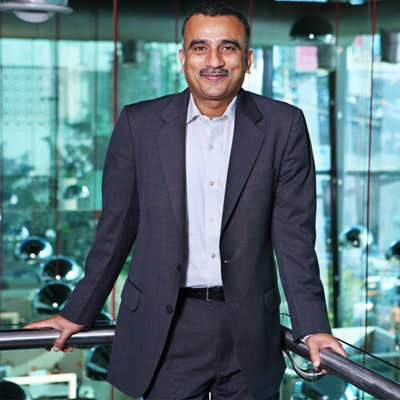
    Speaking to Indiantelevision.com, Viacom 18 group CEO Sudhanshu Vats said, “Owing to lack of preparedness of the industry toward digitisation, it is a good move provided there are no more extensions at all.”

    Questions an investment banker unwilling to be identified: “The cable TV trade has been given four to five years to digitize. And, they have not managed to do the job well over this period. What miracle will they perform in one month and three months? What’s to guarantee that the court cases will be settled and that government will not once again become weak-kneed and go in for a further postponement when these fresh deadlines come up? Investors want certainty, not this joke that the government has made of DAS.”

    Hathway Cable & Datacom’s Delhi distributor Vinod Chauhan said, although the order does not directly impact his operation since he was in the area covered under DAS I, it was a good move, but he questioned the logic behind it. Hathway Cable has been expanding into Phase III markets and had hopes that broadband and this expansion would help it increase its ARPUs.

    Siti Networks Ltd COO strategy & compliances Anil Malhotra said that the MSO’s planning for switching over to digital coincided with the government’s deadline of 31 December 2016. He said that there was pickup in demand for digital STBs of late. “We are not worried at all since we have a huge inventory of imported STBs,” Malhotra said.

    As the brief talk veered toward the effect of demonetisation, he said that entertainment was one of the primary essentials in the hectic lives of people today. “Everyone is ready and prepared to shell out Rs 1000-1100 for good quality STBs,” Malhotra added.

    Star India legal and regulatory affairs president and general counsel Deepak Jacob expresed his disappointment about the government’s decision. “When the DAS IV deadline was finally set for 31 December 2016 as per a government notification approved by Parliament, the ministry ideally cannot and should not extend the deadline at all,” he said emphatically. “Now, the government should stick to its new deadline and not allow any posptonment.”

    Smaller cable TV operators are however pleased about the lifeline they have got. Said Maharashtra Cable Operators Foundation (MCOF) president Arvind Prabhoo: “I think the MIB realised that covering diverse areas in a vast country like India was a challenge. Also, taking into consideration the pending court cases against digitisation, the ministry has rightly extended the deadline. It is a good, welcome move.”

    MSO Den Network CEO S N Sharma pointed out that the decision was not going to play a spoiler. He said, “It is not a six month or a year’s extension. It is just three months. The decision looks fine to me. I think this will give everyone sufficient time to do the seeding.”

    Most small cable networks in DAS IV service very few consumers. They are well below the size to viably provide digital cable TV. Most of these have resigned to the fate of losing their business and only livelihood, opined Hyderabad based Sky Vision MD R.S. Raju . “The currency demonetisation put a further damper. Consumers completely stopped spending on non-essential purchases, and STB deployment has been badly hit in rural areas, where plastic money is not prevalent, and new currency notes are in short-supply,” he said.

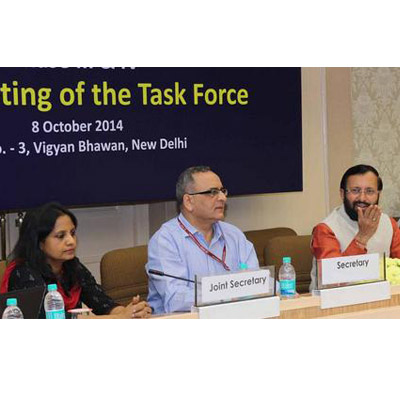
    He revealed that the MIB had some none to encouraging facts to reveal at the 18 th task force meeting.

    “The I&B ministry has declared certain (un-encouraging) data on STB deployments, up to 25 October 2016. Between 31 August & 25 October 2016, 1.97 million STBs were seeded in DAS IV areas. In Phase III, 0.876 million STBs were seeded in the same period. Combined, 2.84 million STBs were deployed in these two months. To date, pan-India, 92.4 million STBs have been deployed till 25 October 2016, according to MIB data,” Raju said.

    “As per earlier MIB data till 26 July 2016, 17.8 million STBs were seeded in DAS IV areas. Combined with the new data, this indicates that 19.77 million STBs have been seeded in DAS IV areas. DAS IV covers 61.08 million rural TV households spanning 28 states & 6 union territories (2011 Census),” Raju added.

    Raju further informed, “With very low ARPUs and the high cost of laying long length fibre networks to small pockets of Phase IV areas, most MSOs have only ‘cherry picked’ a few DAS IV areas to expand their operations. Few new headends have been set up or are planned in DAS IV areas. Generally, DAS IV areas are serviced from existing headends in neighbouring DAS III areas.”

    He revealed that a representative of the Consumer Electronics and Appliances Manufacturers Association (CEAMA) mentioned that no major purchase orders were received recently by the indigenous STB manufacturers (from MSOs) at the same task force meeting.

    A representative of the Indian Broadcasting Foundation (IBF) mentioned that very few requests had so far been received by its broadcaster members from MSOs for interconnect agreements for Phase IV areas.

    It would be logical to conclude that rural TV viewers will either shift to Doordarshan’s FreeDish or one of the six private, pay DTH platforms, stated Raju.

    At the same meeting, MIB joint secretary (P&A) Mihir Kumar Singh asked the members to suggest measures to implement Phase IV by the notified cut-off date, added Raju.

    And since none of them could offer logical feasible solutions, the MIB has had to take the stance it has. Additionally, the letter from the Andhra Pradesh chief minister N. Chandrababu Naidu to MIB minister M Venkaiah seeking postponement Naidu could have also forced the government to take the decision.

  • TV industry gives mixed reaction to MIB’s DAS III & IV extension

    TV industry gives mixed reaction to MIB’s DAS III & IV extension

    MUMBAI: Even as recently as a month ago, India’s ministry of information and broadcasting (MIB) and the industry regulator the Telecom Regulatory Authority of India announced that the DAS IV deadline of 31 December 2016 was sacrosanct and that the cable TV industry would have to bite the bullet. So, when the MIB announced on 22 December that it was pushing forward the Phase IV date to 31 March 2017 and the Phase III date to 31 January 2017, eyebrows were raised once again globally.

    Can the MIB ever stand firm on deadlines or can it set realistic ones, asked potential international investors who have been waiting to hear some positive developments about India’s digitizing-in-stops-and-starts cable TV sector?

    But, the response on the ground amongst India’s TV broadcasters and cable TV operators was mixed. Some have welcomed the decision; others have been harshly critical of the MIB’s postponement rationale.

    The MIB said the extension was being done “in lieu of uncertainty in the market due to pending court cases and unsatisfactory progress of installation of set-top boxes (STBs) in Phase IV areas.”

    Speaking to Indiantelevision.com, Viacom 18 group CEO Sudhanshu Vats said, “Owing to lack of preparedness of the industry toward digitisation, it is a good move provided there are no more extensions at all.”

    Questions an investment banker unwilling to be identified: “The cable TV trade has been given four to five years to digitize. And, they have not managed to do the job well over this period. What miracle will they perform in one month and three months? What’s to guarantee that the court cases will be settled and that government will not once again become weak-kneed and go in for a further postponement when these fresh deadlines come up? Investors want certainty, not this joke that the government has made of DAS.”

    Hathway Cable & Datacom’s Delhi distributor Vinod Chauhan said, although the order does not directly impact his operation since he was in the area covered under DAS I, it was a good move, but he questioned the logic behind it. Hathway Cable has been expanding into Phase III markets and had hopes that broadband and this expansion would help it increase its ARPUs.

    Siti Networks Ltd COO strategy & compliances Anil Malhotra said that the MSO’s planning for switching over to digital coincided with the government’s deadline of 31 December 2016. He said that there was pickup in demand for digital STBs of late. “We are not worried at all since we have a huge inventory of imported STBs,” Malhotra said.

    As the brief talk veered toward the effect of demonetisation, he said that entertainment was one of the primary essentials in the hectic lives of people today. “Everyone is ready and prepared to shell out Rs 1000-1100 for good quality STBs,” Malhotra added.

    Star India legal and regulatory affairs president and general counsel Deepak Jacob expresed his disappointment about the government’s decision. “When the DAS IV deadline was finally set for 31 December 2016 as per a government notification approved by Parliament, the ministry ideally cannot and should not extend the deadline at all,” he said emphatically. “Now, the government should stick to its new deadline and not allow any posptonment.”

    Smaller cable TV operators are however pleased about the lifeline they have got. Said Maharashtra Cable Operators Foundation (MCOF) president Arvind Prabhoo: “I think the MIB realised that covering diverse areas in a vast country like India was a challenge. Also, taking into consideration the pending court cases against digitisation, the ministry has rightly extended the deadline. It is a good, welcome move.”

    MSO Den Network CEO S N Sharma pointed out that the decision was not going to play a spoiler. He said, “It is not a six month or a year’s extension. It is just three months. The decision looks fine to me. I think this will give everyone sufficient time to do the seeding.”

    Most small cable networks in DAS IV service very few consumers. They are well below the size to viably provide digital cable TV. Most of these have resigned to the fate of losing their business and only livelihood, opined Hyderabad based Sky Vision MD R.S. Raju . “The currency demonetisation put a further damper. Consumers completely stopped spending on non-essential purchases, and STB deployment has been badly hit in rural areas, where plastic money is not prevalent, and new currency notes are in short-supply,” he said.

    He revealed that the MIB had some none to encouraging facts to reveal at the 18 th task force meeting.

    “The I&B ministry has declared certain (un-encouraging) data on STB deployments, up to 25 October 2016. Between 31 August & 25 October 2016, 1.97 million STBs were seeded in DAS IV areas. In Phase III, 0.876 million STBs were seeded in the same period. Combined, 2.84 million STBs were deployed in these two months. To date, pan-India, 92.4 million STBs have been deployed till 25 October 2016, according to MIB data,” Raju said.

    “As per earlier MIB data till 26 July 2016, 17.8 million STBs were seeded in DAS IV areas. Combined with the new data, this indicates that 19.77 million STBs have been seeded in DAS IV areas. DAS IV covers 61.08 million rural TV households spanning 28 states & 6 union territories (2011 Census),” Raju added.

    Raju further informed, “With very low ARPUs and the high cost of laying long length fibre networks to small pockets of Phase IV areas, most MSOs have only ‘cherry picked’ a few DAS IV areas to expand their operations. Few new headends have been set up or are planned in DAS IV areas. Generally, DAS IV areas are serviced from existing headends in neighbouring DAS III areas.”

    He revealed that a representative of the Consumer Electronics and Appliances Manufacturers Association (CEAMA) mentioned that no major purchase orders were received recently by the indigenous STB manufacturers (from MSOs) at the same task force meeting.

    A representative of the Indian Broadcasting Foundation (IBF) mentioned that very few requests had so far been received by its broadcaster members from MSOs for interconnect agreements for Phase IV areas.

    It would be logical to conclude that rural TV viewers will either shift to Doordarshan’s FreeDish or one of the six private, pay DTH platforms, stated Raju.

    At the same meeting, MIB joint secretary (P&A) Mihir Kumar Singh asked the members to suggest measures to implement Phase IV by the notified cut-off date, added Raju.

    And since none of them could offer logical feasible solutions, the MIB has had to take the stance it has. Additionally, the letter from the Andhra Pradesh chief minister N. Chandrababu Naidu to MIB minister M Venkaiah seeking postponement Naidu could have also forced the government to take the decision.

  • DAS 4 deadline extended to 31 Mar

    DAS 4 deadline extended to 31 Mar

    NEW DELHI: Digitisation of the final (fourth) phase of Digital Addressable System has been put off to 31 March 2017.

    The information and broadcasting ministry said this was being done “in lieu of uncertainty in the market due to pending court cases and unsatisfactory progress of installation of set-top boxes (STBs) in Phase IV areas.” Digitisation in rural areas was targeted to be achieved by 31 December, 2016, under Phase IV.

    The ministry said a notification in this regard will be issued shortly.

    The ministry is also providing additional time for the remaining subscribers in Phase III areas to switch over to digital mode of transmission by 31 January 2017 on account of ongoing court proceedings.

    In Phase III areas, digitisation in remaining urban areas in the country was to be completed by 31 December, 2015. However, some MSO associations/individuals had moved various High Courts and obtained either extension of cut-off date / stay on the operationalisation of the notifications of the ministry dated 11 November 2011 and 11 September 2014.

    The matter was raised before the Supreme Court by the ministry, which transferred all the cases to the Delhi High Court for hearing in an order on 1 April 2016. The Delhi High Court disposed of most of the cases, and the ministry said, “It is very likely that the remaining cases would also be finally disposed of in very near future.”

    The ministry will be issuing instructions to all the broadcasters, multi-system operators (MSOs), local cable operators (LCOs) and the authorised officers to ensure that no analog signals would be transmitted over the cable networks in Phase III areas after 31 January 2017.

    The ministry also made clear that no further extension of time would be allowed.

    The Cable Television Networks (Regulation) Amendment Act, 2011, made it mandatory for switch-over of the existing analogue Cable TV networks to Digital Addressable System (DAS) in four phases. Digital switch-over has already taken place in Phase-I and II areas.

    However, a case is pending relating to Phase I in Chennai in the Madras High Court.

  • DAS 4 deadline extended to 31 Mar

    DAS 4 deadline extended to 31 Mar

    NEW DELHI: Digitisation of the final (fourth) phase of Digital Addressable System has been put off to 31 March 2017.

    The information and broadcasting ministry said this was being done “in lieu of uncertainty in the market due to pending court cases and unsatisfactory progress of installation of set-top boxes (STBs) in Phase IV areas.” Digitisation in rural areas was targeted to be achieved by 31 December, 2016, under Phase IV.

    The ministry said a notification in this regard will be issued shortly.

    The ministry is also providing additional time for the remaining subscribers in Phase III areas to switch over to digital mode of transmission by 31 January 2017 on account of ongoing court proceedings.

    In Phase III areas, digitisation in remaining urban areas in the country was to be completed by 31 December, 2015. However, some MSO associations/individuals had moved various High Courts and obtained either extension of cut-off date / stay on the operationalisation of the notifications of the ministry dated 11 November 2011 and 11 September 2014.

    The matter was raised before the Supreme Court by the ministry, which transferred all the cases to the Delhi High Court for hearing in an order on 1 April 2016. The Delhi High Court disposed of most of the cases, and the ministry said, “It is very likely that the remaining cases would also be finally disposed of in very near future.”

    The ministry will be issuing instructions to all the broadcasters, multi-system operators (MSOs), local cable operators (LCOs) and the authorised officers to ensure that no analog signals would be transmitted over the cable networks in Phase III areas after 31 January 2017.

    The ministry also made clear that no further extension of time would be allowed.

    The Cable Television Networks (Regulation) Amendment Act, 2011, made it mandatory for switch-over of the existing analogue Cable TV networks to Digital Addressable System (DAS) in four phases. Digital switch-over has already taken place in Phase-I and II areas.

    However, a case is pending relating to Phase I in Chennai in the Madras High Court.

  • Digitisation vital for transparent governance, says Prasad

    Digitisation vital for transparent governance, says Prasad

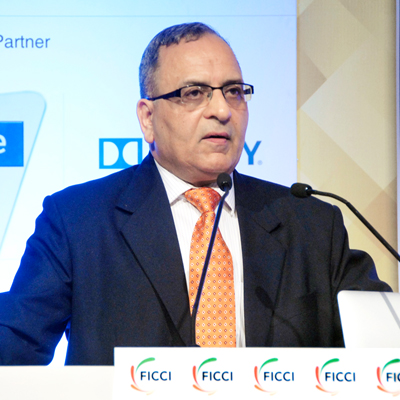
    NEW DELHI: Electronics & information technology minister Ravi Shankar Prasad feels “Digital governance is good governance, digital governance is transparent governance and digital governance is honest governance.”

    Speaking at a Special Session at FICCI’s 89th Annual General Meeting, he said with a population more than 1.25 billion, India has 1.04 billion mobile phone users, of which 350 million are smart phone users with 500 billion internet users.

    Backed up by initiatives like Make in India, Digital India and Startup India, the nation is at the cusp of a big transformation.

    With government emphasizing on electronics manufacturing sector, India has established 40 mobile phone manufacturing centres in the last one year and with conducive policy initiatives and framework India aims to become global manufacturing hub.

    Prasad also gave examples of how citizens from remote parts of India are utilising the digital tools as epicentre of socio-economic development.

  • Digitisation vital for transparent governance, says Prasad

    Digitisation vital for transparent governance, says Prasad

    NEW DELHI: Electronics & information technology minister Ravi Shankar Prasad feels “Digital governance is good governance, digital governance is transparent governance and digital governance is honest governance.”

    Speaking at a Special Session at FICCI’s 89th Annual General Meeting, he said with a population more than 1.25 billion, India has 1.04 billion mobile phone users, of which 350 million are smart phone users with 500 billion internet users.

    Backed up by initiatives like Make in India, Digital India and Startup India, the nation is at the cusp of a big transformation.

    With government emphasizing on electronics manufacturing sector, India has established 40 mobile phone manufacturing centres in the last one year and with conducive policy initiatives and framework India aims to become global manufacturing hub.

    Prasad also gave examples of how citizens from remote parts of India are utilising the digital tools as epicentre of socio-economic development.

  • TRAI chief: Pending DAS tariff, interconnect, QoS norms by year-end

    TRAI chief: Pending DAS tariff, interconnect, QoS norms by year-end

    NEW DELHI: India’s telecoms and broadcast carriage regulator Telecom Regulatory Authority of India (TRAI) has said it would issue final guidelines relating to broadcast tariff, interconnect and quality of service issues by this month-end and reiterated its overall aim is to “harmonise” norms so as to facilitate growth of the industry in an ambiguity-free regulatory environment.

    “We are bringing out a comprehensive and common framework for all platforms relating to quality of service (QoS), tariff and interconnect. We have been working on it for many months now,” TRAI chairman RS Sharma told indiantelevision.com in an exclusive interview, adding that criticism of draft guidelines were part of a democratic consultation process.

    According to Sharma, the final recommendations of the regulator, which are being framed after a lengthy process of consultation with all stakeholders spread over several months, will be “issued by the end of this month (2016 end).”

    Sharma, who spoke on a whole range of issues on telecoms and broadcast sectors that it oversees, said the overall effort of TRAI was to create a framework for industry players that will boost digitization making the dream of Digital India come true. “We are working towards an environment that will reduce ambiguity in regulations and help all stakeholders, including the consumer,” he added.  

    Last week, the Delhi High Court removed almost all legal hurdles to complete digital rollout of TV services in the country by vacating all interim court orders that had been passed by other courts in the country extending the deadline for implementation of Phase III of digital addressable system (DAS).

    Though Sharma pointed out that the legal cases (taken care by Delhi HC on direction from Supreme Court) had no direct bearing on TRAI’s efforts to bring about a comprehensive regulatory framework for digital TV services in India, Sharma said, “It is the Ministry of Information and Broadcasting (MIB) that will have to enforce the (digitization) schedule, but we are ready to provide any assistance to MIB if needed.”

    On the entry of new technologies in India, which give window to innovations, the TRAI chief opined new technologies should be actively promoted without an attempt to throttle them through regulations.

    “We should not try to throttle them (new technologies) just because there are legacy business models. Business models must adapt to technology rather that technology being stifled in order to protect business models,” Sharma said.

    Quizzed, on the issue of Net Neutrality and new techs like OTT, Sharma explained, “We have already dealt with the issue of Net Neutrality from the tariff perspective (TRAI banned zero-tariff plans by telcos earlier this year). But as the government has asked us to provide it with comprehensive recommendations on the issue, we are in the final stages… (but) it may take a couple of months more.”

    While agreeing with the broad idea that time has arrived for India to have a comprehensive convergence law and regulator, Sharma made it clear that TRAI was not a competent authority to take a call on such policy matters and it was the government’s prerogative. “What should be the methods of regulatory structure (for a convergence law)? How will it be governed? Who will do it? I am not the competent person (on such issues) as it’s for the government to decide. But I certainly agree that because of technological developments, lot of convergence is happening in various sectors.”

    Asked to comment on a common criticism that India is an over-regulated market, Sharma disagreed and said, “We don’t believe in unnecessary regulations. However, at the same time, some regulation is necessary for an orderly growth of the industry; especially so consumers don’t suffer because of ambiguities in rules.”   

    Keep tuned in to read the full interview of TRAI chief, which is coming soon.

    ALSO READ:

    Delhi HC removes legal hurdles to implement DAS IV by 1 Jan 2017


  • TRAI chief: Pending DAS tariff, interconnect, QoS norms by year-end

    TRAI chief: Pending DAS tariff, interconnect, QoS norms by year-end

    NEW DELHI: India’s telecoms and broadcast carriage regulator Telecom Regulatory Authority of India (TRAI) has said it would issue final guidelines relating to broadcast tariff, interconnect and quality of service issues by this month-end and reiterated its overall aim is to “harmonise” norms so as to facilitate growth of the industry in an ambiguity-free regulatory environment.

    “We are bringing out a comprehensive and common framework for all platforms relating to quality of service (QoS), tariff and interconnect. We have been working on it for many months now,” TRAI chairman RS Sharma told indiantelevision.com in an exclusive interview, adding that criticism of draft guidelines were part of a democratic consultation process.

    According to Sharma, the final recommendations of the regulator, which are being framed after a lengthy process of consultation with all stakeholders spread over several months, will be “issued by the end of this month (2016 end).”

    Sharma, who spoke on a whole range of issues on telecoms and broadcast sectors that it oversees, said the overall effort of TRAI was to create a framework for industry players that will boost digitization making the dream of Digital India come true. “We are working towards an environment that will reduce ambiguity in regulations and help all stakeholders, including the consumer,” he added.  

    Last week, the Delhi High Court removed almost all legal hurdles to complete digital rollout of TV services in the country by vacating all interim court orders that had been passed by other courts in the country extending the deadline for implementation of Phase III of digital addressable system (DAS).

    Though Sharma pointed out that the legal cases (taken care by Delhi HC on direction from Supreme Court) had no direct bearing on TRAI’s efforts to bring about a comprehensive regulatory framework for digital TV services in India, Sharma said, “It is the Ministry of Information and Broadcasting (MIB) that will have to enforce the (digitization) schedule, but we are ready to provide any assistance to MIB if needed.”

    On the entry of new technologies in India, which give window to innovations, the TRAI chief opined new technologies should be actively promoted without an attempt to throttle them through regulations.

    “We should not try to throttle them (new technologies) just because there are legacy business models. Business models must adapt to technology rather that technology being stifled in order to protect business models,” Sharma said.

    Quizzed, on the issue of Net Neutrality and new techs like OTT, Sharma explained, “We have already dealt with the issue of Net Neutrality from the tariff perspective (TRAI banned zero-tariff plans by telcos earlier this year). But as the government has asked us to provide it with comprehensive recommendations on the issue, we are in the final stages… (but) it may take a couple of months more.”

    While agreeing with the broad idea that time has arrived for India to have a comprehensive convergence law and regulator, Sharma made it clear that TRAI was not a competent authority to take a call on such policy matters and it was the government’s prerogative. “What should be the methods of regulatory structure (for a convergence law)? How will it be governed? Who will do it? I am not the competent person (on such issues) as it’s for the government to decide. But I certainly agree that because of technological developments, lot of convergence is happening in various sectors.”

    Asked to comment on a common criticism that India is an over-regulated market, Sharma disagreed and said, “We don’t believe in unnecessary regulations. However, at the same time, some regulation is necessary for an orderly growth of the industry; especially so consumers don’t suffer because of ambiguities in rules.”   

    Keep tuned in to read the full interview of TRAI chief, which is coming soon.

    ALSO READ:

    Delhi HC removes legal hurdles to implement DAS IV by 1 Jan 2017


  • TRAI unlikely to take final call on draft orders soon

    TRAI unlikely to take final call on draft orders soon

    NEW DELHI: The Telecom Regulatory Authority of India (TRAI) is unlikely to come out soon with its final recommendations on broadcast sector tariffs, interconnect and quality of service issues.

    “Considering the responses from stakeholders to our draft guidelines are exhaustive and lengthy running into over 100 pages, we would also need time to study them properly before taking a final call,” a senior TRAI official told indiantelevision.com.

    The broadcast companies, in particular, have been strident in criticising the draft orders and subsequent consultation papers from TRAI. The Indian Broadcasting Foundation (IBF) has gone to the extent of questioning whether TRAI can issue such guidelines as they conflict with international copyrights law and the Indian Copyright Act, 1957.

    In general, TRAI officials opine that if all the comments were to be taken into consideration, including IBF’s, then there would be no guidelines at all, draft or otherwise.

    A section of the broadcast and cable industry were hoping that if  TRAI came out with its final recommendations on issues related to tariff and interconnect by first half of January 2017, the big picture on digital rollout of TV services would have become clearer.

    Officially, the sunset date for all analog TV services in India is 31 December, 2016. However, a section of the MSO community contends that, apart from the last and Phase IV, there are still some 10 million homes in Phase III of digitisation left to be seeded with boxes.

    Also Read:

    TRAI draft tariff order skewed in favour of DPOs, will harm industry: IBF

    Slow pace of court cases, MSO registration may delay DAS deadline


  • TRAI unlikely to take final call on draft orders soon

    TRAI unlikely to take final call on draft orders soon

    NEW DELHI: The Telecom Regulatory Authority of India (TRAI) is unlikely to come out soon with its final recommendations on broadcast sector tariffs, interconnect and quality of service issues.

    “Considering the responses from stakeholders to our draft guidelines are exhaustive and lengthy running into over 100 pages, we would also need time to study them properly before taking a final call,” a senior TRAI official told indiantelevision.com.

    The broadcast companies, in particular, have been strident in criticising the draft orders and subsequent consultation papers from TRAI. The Indian Broadcasting Foundation (IBF) has gone to the extent of questioning whether TRAI can issue such guidelines as they conflict with international copyrights law and the Indian Copyright Act, 1957.

    In general, TRAI officials opine that if all the comments were to be taken into consideration, including IBF’s, then there would be no guidelines at all, draft or otherwise.

    A section of the broadcast and cable industry were hoping that if  TRAI came out with its final recommendations on issues related to tariff and interconnect by first half of January 2017, the big picture on digital rollout of TV services would have become clearer.

    Officially, the sunset date for all analog TV services in India is 31 December, 2016. However, a section of the MSO community contends that, apart from the last and Phase IV, there are still some 10 million homes in Phase III of digitisation left to be seeded with boxes.

    Also Read:

    TRAI draft tariff order skewed in favour of DPOs, will harm industry: IBF

    Slow pace of court cases, MSO registration may delay DAS deadline