Tag: digitisation

  • MIB favours switching to DTH if consumers have problems with MSOs or LCOs

    NEW DELHI: The ministry of information and broadcasting (MIB) has said that HITS (Head-end In The Sky), private DTH and DD FreeDish are the options in remote rural areas while discussing the issue of the concerns expressed by operators that over 20 per cent of rural and remote areas were not financially and technically viable.

    DTH operators were advised by MIB to pay special attention to such area enabling customers in these areas to readily adopt these services given by them and to explore the possibility of cost effective packages especially for these remote and inaccessible areas.

    About the issue of sharing infrastructure cost with MSOs & Local Cable Operators (LCOs) keeping in mind high cost of providing signals in remote areas, the Ministry said it felt consumers have the option to take services from DTH operators and/or DD Free Dish and it may not be administratively feasible by the Ministry to share cost for infrastructure as a large number of MSOs and LCOs are operating in these areas.

    MeITY to solve problems relating to STB manufacturers

    A Parliamentary Committee was told that the Electronics and IT (MeitY) Ministry was attempting to address the entire value-chain holistically and was in active consultation with the concerned Ministries in view of the demands by the Association of domestic STBs manufacturers of long term financing to the MSOs and 0% import duty with effect from 1 January 2016 under India-ASEAN FTA which has also adversely affected the production of domestic STBs.

    The Committee noted that though there was no stay now after all cases relating to Phase III were transferred to the Delhi High Court, the cut-off date was extended “due to poor seeding of STBs because of the uncertainty caused due to the court cases.”

    Under-utilisation of funds due to market uncertainty

    It was also noted that Rs 50 million was allocated at budget estimate stage 2016-17 which was reduced to Rs 30 million at Revised estimates 2016-17 due to the large number of court cases filed in various High Courts and “total uncertainty in the market” about the implementation of cut-off date of 31 December 2015 & 31 December 2016 for Phase III and Phase IV of digitisation respectively.

    As a result, workshops with the nodal officers could not be conducted, which resulted in the underutilisation of funds from the projections made at BE stage.

  • Final phase STB seeding is 35% even as deadline nears

    NEW DELHI: Even as the country has set a deadline of 31 March this year for full digitisation of cable TV, a Parliamentary Committee has been told that only 35 per cent seeding of set-top boxes (P-IV) has been achieved in rural India though the Parliament was told last week that 66.79 per cent (P III & IV) seeding had been achieved in the last two phases minus Tamil Nadu.

    Admitting that digitisation in the first phase is total minus Chennai, the Parliamentary Standing Committee on Information Technology which also examines issues relating to the information and broadcasting ministry has been told that digitisation has also not been done in one city – Coimbatore – of Phase II in view of court cases though the other 37 cities having more than one million population and spanning 14 states and one union territory had been covered.

    The committee recommended that the I and B Ministry follow up the issue of financial and technical viability in rural and remote areas, promote and increase share of iCAS (Indian Conditional Access System) to leverage ‘Make in India’ programme, popularise Doordarshan Free Dish in small town/cities/rural and remote areas, address the legitimate concerns of domestic STB producers and rigorously pursue interoperability of STB with the Telecom Regulatory Authority of India.

    The committee therefore expressed the hope that the I and B Ministry will be able to meet the targets of cable TV digitisation as almost all the pending cases have now been dismissed and there is no stay in any case except in case of Chennai and Coimbatore.

    Cable TV Digitisation in Phase III and Phase IV areas was to be achieved by 31 December 2015 and 31 December 2016 respectively, now extended to 31 January 2017 and 31 March 2017.

    Interoperability: TRAI working with IIT Bombay

    It was told that technical interoperability, as envisaged in the existing Direct to Home Guidelines has so far not proved to be effective due to various techno-commercial issues. The TRAI has decided to collaborate on the issue of technical interoperability with the Department of Electrical Engineering of Indian Institute of Technology, Bombay (IIT-B).

    To ensure commercial interoperability TRAI has notified tariff orders and this has been challenged by a couple of DTH operators in the Telecom Disputes Settlement and Arbitration Tribunal and the matter is sub judice.

    The Committee was given to understand that after the roll out of iCAS in January 2016, about 10 million STBs have been installed by multi-system operators out of which about 300,000 are with iCAS, which gives a market share of about 3%.

  • Guest Column: TRAI’s radical tariff & interconnect norms will usher in major changes

    At the onset one must appreciate the efforts put in by the TRAI in coming out with path-breaking orders involving tariff, services inter-connection and quality of services. The effort of the regulator is clearly to increase choice in the hands of consumers to pay for what they want to watch.

    The TRAI guidelines are aimed at encouraging moving away from a push-based model to a pull-based one where demand and supply will be the deciding factors. Still, it’s a known fact that consumers themselves find it difficult to pick and chose, preferring packages instead. But time will tell how the Indian consumer behaves this time around. But if the industry and the government/regulator work together, a lot can be made possible. However, there are some actions that need to be acted upon urgently. In my opinion, they are the following:

    1. TRAI guidelines pre-suppose that all distribution platform operators (DPOs) have the built in capability to create packages and also bill on a la carte basis. While it might be possible for the bigger DPOs who have invested in the backend to have this capability, I am less confident of smaller DPOs. Unfortunately, for many of them digitalization was just converting analog signals to digital. Such DPOs selected weak support players resulting in inadequate capabilities in the backend, which is the heart of digitalization (packaging and bundling). For them to make adequate changes will also mean making huge investment and technology upgrade. One way to make this possible quickly and in a cost efficient way is to implement infrastructure sharing at every level keeping advancing technology in mind. And, to make this aspect possible, it’s necessary to make licensing norms amendments in the statutory regulations relating to cable TV, HITS, and DTH.

    2. As of today, the balance of negotiating power is clearly in the hands of broadcasters and, while the TRAI orders are quite exhaustive in terms of various provisions, lets us not underestimate the capability/ingenuity/creativity of the broadcasters. I personally do not think any broadcaster will absorb the DPO margins. As broadcasters have an in-built minimum return they expect from their channels, in all probability, they will add this margin to the channels’ prices. The regulator should consider setting up a mechanism by which it can review and intervene in a time-bound manner.

    3. DPOs must move away from their analog mindsets and embrace digitalization and its implications by being more honest and transparent in their dealings with broadcasters and other stakeholders.

    4. While TRAI has outlined the terms and conditions of providing TV channels to DPOs, it has been observed that commercial negotiations are fairly simpler than the legal terms and conditions. In my view, this is a result of legacy mistrust between a broadcaster and an MSO. I would, therefore, suggest that a model interconnect be prepared by TRAI, which must be the document entered into by the said parties till the industry settles down to this new environment and mutual trust develops.

    5. Broadcasters and DPOs must work together to jointly grow the business. At the end of the day, both will benefit only if the consumer pays. I think a working group comprising representatives from various industry organizations like the IBF, NBA, AIDCF, DTH Association and TRAI/MIB should be constituted along with some independent experts to facilitate the process. This should be a small group that could make valuable suggestions. Trust and transparency will need to be the hallmark for the industry to move forward and litigations must be kept out as far as possible.

    6. The government should provide more clarity on taxation issues; especially in view of the new GST regime set to be rolled out from later this year. Simultaneously, the government must seriously consider giving `industry status’ to the broadcast sector.

    7. As far as the tariff order is concerned, DPOs have an opportunity, with the different margin structures, to set their houses in order. They need to invest in the backend, introduce VAS (value added services) and look at having some unique content.

    8. From the tariff point of view broadcasters have a challenge on their hands as they know there is a price cap with restrictions on packaging (sports channels). They should seriously consider promoting events on short-term basis as there is no minimum period for subscription. We all know consumers by and large watch 12 to 15 channels. It will be interesting to see how competing broadcasters price channels in specific genres as consumers in the short-term are likely to cap their spends on TV entertainment.

    9. DPOs in smaller towns should consider forming co-operatives to work together, while at the same time retaining their individual identities.

    As a result of fresh TRAI orders, I hope there will be more discipline and transparency in the industry, which could also see mergers within platforms as this is a time to consolidate. The Indian broadcast and cable sector is on the cusp of major changes. Those who embrace change, will flourish, while the rest will slowly perish.

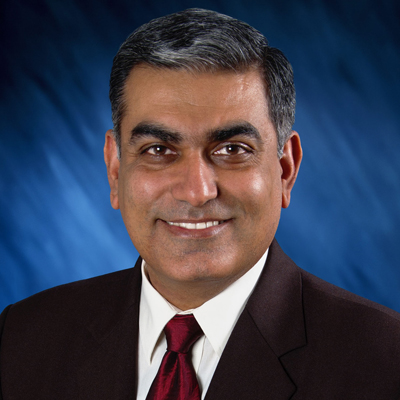
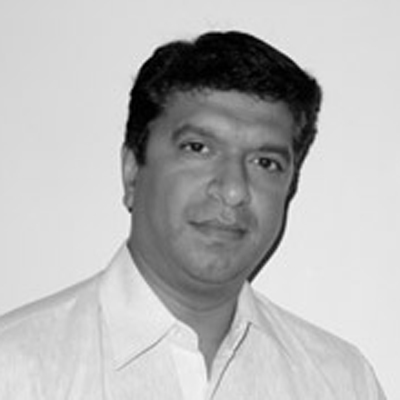
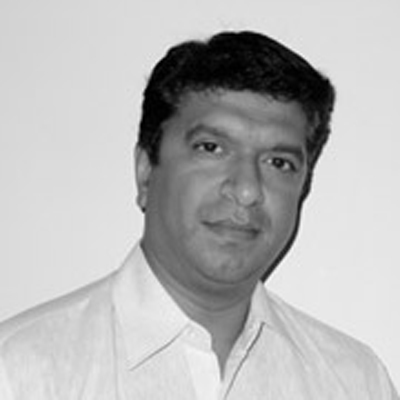
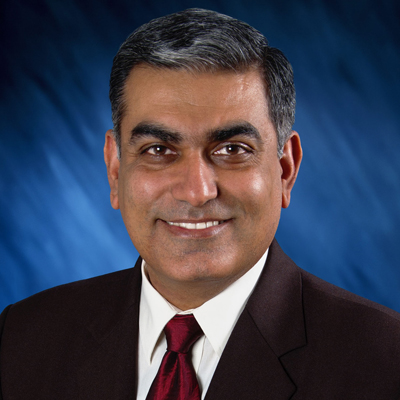
    public://tony_0.jpg (The author, an Indian media industry veteran, is the former CEO-Media, Hinduja Group. The views expressed here are personal, and Indiantelevision.com need not necessarily subscribe to them.)


  • MIB report: 50% digital STBs seeded during DAS’ first three phases

    NEW DELHI: If the Ministry of Information and Broadcasting (MIB) is to be believed, then first three phases of on going rollout of digital addressable system have already accounted for 50 per cent of digitisation as out of targeted 140 million set-top-box requirement, 70 million have been installed. Evolving ground realities may be different, however.

    The catch in the MIB’s annual report for 2016-17, put on the ministry’s website Thursday, is that the government has taken the Census 2011 as the base for calculating the total number of TV households in India, which has been pegged at 117 million. Adding an incremental 20 per cent for multiple TV homes and TV sets at offices and other places like restaurants, etc, MIB states total requirement for boxes was 140 million — a figure that may be different from ground realities.

    “Total STBs required by adding 20 per cent provision for multiple TV (sets) in houses and TVs in offices/shops is 14 crore (140 million),” MIB’s annual report says, while adding that in digitisation’s first three out of the total four phases, “7 crore (70 million) STBs have already been installed.”

    However, in an evolving world while BARC’s latest data, unveiled February 2017, estimates the Indian TV households at 183 million, the MIB annual report itself quotes, at another place, a FICCI-KPMG report of 2016 as India being “the world’s second largest TV market after China” having “175 million TV households…”

    The MIB report goes on elaborate that the first two phases of digitisation achieved 30 million seeding of boxes, while estimating the requirement for boxes for ongoing Phase IV, which comprises small towns and villages in rural hinterlands of India, to be 70 million.

    But amidst these confounding and confusing numbers being bandied around by the government, it admits that digitisation, pushed by MIB and regulator TRAI since 2012, has increased tax collections both for the State and the Central governments.

    Pointing out that cable TV digitisation has brought transparency in the whole eco-system, making it difficult for MSOs and LCOs to under-declare subscriber base and evade taxes, the MIB report highlights, entertainment tax collection in states increased from Rs. 157 crore (Rs. 1570 million)  in 2012-13 to Rs. 358 crore (Rs. 3580 million) in 2015-16.

    Further, the government also admits that digital cable TV networks were vital infrastructure for penetration of broadband through which e-government services could be deployed. Listing out the benefits of digitisation, the MIB report says, “(Though) no formal impact assessment of the cable TV digitisation has been carried out, data has been collected from different stakeholders, which indicates…major benefits from digitisation have started accruing.”

    The benefits are not restricted to government in the form of tax revenues, but also increased choice to consumers, including HD channels. “From the data received from the MSOs, it is observed that in Delhi, Mumbai and Kolkata, on an average, 300 SD and 20 HD channels are being carried by each MSO. Subscribers have choice to choose from these large numbers of channels…not possible in an analog regime,” MIB clarifies.

    Action Taken Report on Complaints Against TV Channels

    During the period 1 April 2016 to 21 December 2016, MIB issued advisories, warnings and orders to TV channels on receiving complaints from various sections of the population.

    There was one general advisory given to news &current affairs TV channels regarding telecast of incidents related to Cauvery water dispute with due caution and restraint; nine specific advisories to adhere to the Programme & Advertising Codes; four warnings directing the TV channel to strictly comply with programme and advertising norms and three orders to TV channels to go off air for varying number of days.

    According to the MIB, the News Broadcasters Association (NBA), as part of its self-regulation mechanism, has formulated a Code of Ethics and Broadcasting Standards. The News Broadcasting Standards Authority (NBSA) received and considered 1,451 complaints from 2014 to July, 2016 and passed 26 orders. It also issued one guideline and nine advisories.

    The Broadcast Content Complaints Council (BCCC), according to MIB, received 16,257 complaints from 16 April, 2014 to 20th June, 2016. During the period April, 2015 to July, 2016 industry-formed advertising regulator ASCI received and considered 2,020 complaints against advertisements, upholding 1,271 of them.

    Transponder Capacity Constraints

    While enumerating the highlights, achievements and also hurdles in the Indian broadcast and cable sector, MIB holds out some hope for all those Indian users of  satellite services that capacity crunch could get addressed

    “There is some constraint with regard to availability of transponder capacities, but it is expected that with greater demand will also come the supply,” MIB says without divulging how the growing demand for satellite capacity would be met.

    User s of satellite services in India, including teleports, DTH ops and Vsat players, have been severely constrained by lack of KU-band transponders as India’s space agency ISRO has not been able to fill the demand-supply gap despite several launches, while steadfastly refusing to ease norms for renting capacity on foreign satellites.

  • Budget ’17: Prasar Bharati grant-in-aid down, film sector’s aid up

    Budget ’17: Prasar Bharati grant-in-aid down, film sector’s aid up

    NEW DELHI: The grant-in-aid for Prasar Bharati has come down marginally from the revised estimates from Rs 4500 million in 2016-17 to Rs 4300 million for 2017-18.

    This includes a grants-in-aid to the pubcaster of Rs 3500 million and a separate grant-in-aid to it for the Kisan Channel of Rs 800 million which is higher than last year’s Rs 600 million.

    In addition, there is support of Rs 29,967 million for 2017-18 against Rs 27,168.6 million in 2016-17 in the allocation of support to autonomous bodies. But, there is no investment in the head of public sector undertakings in Prasar Bharati, unlike last year.

    An explanatory note says the grants-in-aid is being provided to cover the gap in resources of Prasar Bharati in meeting its revenue expenditure.

    (Expenditure on salaries of Prasar Bharati has fallen on the shoulders of the government since all Prasar Bharati employees who were in employment as on 5 October 2007 have been given deemed deputation status.)

    The total budget of the information and broadcasting ministry has been raised to Rs 44,090 million against Rs 40836.3 million.

    There is a separate allocation of Rs 230 million for strengthening broadcasting activities which covers community radio (Rs 40 million), Electronic Media Centre (Rs 120 million), Mission Digitisation (Rs 50 million) and automation of broadcasting wing (Rs 20 million).

    This is less than last year’s allocation in this head of Rs 308.3 million.

    The allocation for the film sector has been raised to Rs 2070 million, and covers the National Museum of Cinema, Development communication and Dissemination of filmic content, Infrastructure Development Programme relating to the film sector, and Mission/Special projects which gets a massive increase to Rs 1100.1 million as compared to Rs 170.1 million last year. This allocation is for the Umbrella Programme Missions / Special Project includes the following Schemes:

    National Film Heritage Mission (Main Secretariat), Anti-Piracy Initiatives and Setting up a National Centre of Excellence for Animation, Gaming and Special Effects (coming up in Mumbai).

    There is an allocation of Rs 180 million for mass communication which includes upgradation of the Indian Institute of Mass Communication to international standards and opening regional centres of IIMC.

    The allocation under ‘Secretariat – Social services’ has been raised Rs 795.2 million as compared to Rs 703.2 million, and art and culture to Rs 102.3 million. information and publicity gets Rs 4059.9 million for various programmes which include Directorate of Advertising and Visual Publicity; Press Information Bureau, Field Publicity, Song and Drama Division, Publications Division, Photo Division, Registrar of Newspapers in India and other media units.

    After seven years in a row, the government has announced investment in the National Film Development Corporation to the tune of Rs 125.4 million.

    There is a marginal increase in the lump sum provision for projects/schemes for development of North-eastern areas including Sikkim to Rs 842 million against Rs 800 million last year.

    There is an allocation of Rs 30,732.6 million as support to autonomous bodies which apart from Prasar Bharati, also has allocations for the Film and Television Institute of India, Satyajit Ray FTII, Press Council of India, IIMC, and Children’s Film Society, India.

  • Budget ’17: Prasar Bharati grant-in-aid down, film sector’s aid up

    Budget ’17: Prasar Bharati grant-in-aid down, film sector’s aid up

    NEW DELHI: The grant-in-aid for Prasar Bharati has come down marginally from the revised estimates from Rs 4500 million in 2016-17 to Rs 4300 million for 2017-18.

    This includes a grants-in-aid to the pubcaster of Rs 3500 million and a separate grant-in-aid to it for the Kisan Channel of Rs 800 million which is higher than last year’s Rs 600 million.

    In addition, there is support of Rs 29,967 million for 2017-18 against Rs 27,168.6 million in 2016-17 in the allocation of support to autonomous bodies. But, there is no investment in the head of public sector undertakings in Prasar Bharati, unlike last year.

    An explanatory note says the grants-in-aid is being provided to cover the gap in resources of Prasar Bharati in meeting its revenue expenditure.

    (Expenditure on salaries of Prasar Bharati has fallen on the shoulders of the government since all Prasar Bharati employees who were in employment as on 5 October 2007 have been given deemed deputation status.)

    The total budget of the information and broadcasting ministry has been raised to Rs 44,090 million against Rs 40836.3 million.

    There is a separate allocation of Rs 230 million for strengthening broadcasting activities which covers community radio (Rs 40 million), Electronic Media Centre (Rs 120 million), Mission Digitisation (Rs 50 million) and automation of broadcasting wing (Rs 20 million).

    This is less than last year’s allocation in this head of Rs 308.3 million.

    The allocation for the film sector has been raised to Rs 2070 million, and covers the National Museum of Cinema, Development communication and Dissemination of filmic content, Infrastructure Development Programme relating to the film sector, and Mission/Special projects which gets a massive increase to Rs 1100.1 million as compared to Rs 170.1 million last year. This allocation is for the Umbrella Programme Missions / Special Project includes the following Schemes:

    National Film Heritage Mission (Main Secretariat), Anti-Piracy Initiatives and Setting up a National Centre of Excellence for Animation, Gaming and Special Effects (coming up in Mumbai).

    There is an allocation of Rs 180 million for mass communication which includes upgradation of the Indian Institute of Mass Communication to international standards and opening regional centres of IIMC.

    The allocation under ‘Secretariat – Social services’ has been raised Rs 795.2 million as compared to Rs 703.2 million, and art and culture to Rs 102.3 million. information and publicity gets Rs 4059.9 million for various programmes which include Directorate of Advertising and Visual Publicity; Press Information Bureau, Field Publicity, Song and Drama Division, Publications Division, Photo Division, Registrar of Newspapers in India and other media units.

    After seven years in a row, the government has announced investment in the National Film Development Corporation to the tune of Rs 125.4 million.

    There is a marginal increase in the lump sum provision for projects/schemes for development of North-eastern areas including Sikkim to Rs 842 million against Rs 800 million last year.

    There is an allocation of Rs 30,732.6 million as support to autonomous bodies which apart from Prasar Bharati, also has allocations for the Film and Television Institute of India, Satyajit Ray FTII, Press Council of India, IIMC, and Children’s Film Society, India.

  • Regulations 2016: Of DeMon challenges, changing goalposts & rampant litigation

    Regulations 2016: Of DeMon challenges, changing goalposts & rampant litigation

    The regulatory regime in 2016 not only continued to struggle keeping pace with fast-marching technology (4G is passé, 5G is being talked in some countries), but lack of consensus amongst stakeholders on major issues meant that litigation was rampant, thus leading to changing milestones. It was also about the government trying to enforce censorship via the backdoor and, hence, despite the best of intentions, only average dividends accrued to the media and entertainment sector in India, which is still described as a market with huge potential, but also a challenging place to do business.

    The biggest policy (that ultimately turned into a regulatory challenge) initiative of 2016 — some would say the biggest hiccup — was PM Modi’s demonetisation bomb aimed at unleashing a surgical strike on black money and parallel economy in the country that, according to an earlier government narrative, made the poor poorer and gave a fillip to corruption. Debatable long term gains of such a move, notwithstanding, the media industry immediately felt the heat of cash crunch.

    As collections from the ground dropped for LCOs, it affected the MSOs too, though many big MSOs insisted that making high-value currency notes illegal from November 9, 2016 could act as a catalyst for LCOs to make their business more transparent.

    From an earlier estimate of Rs. 600 crore or Rs. 6 billion loss to the media and advertising segments owing to demonetisation, loss estimates ballooned to almost Rs 300 billion towards the end of the year when most corporate adspends were slashed owing to low on-ground collections. FMCG companies led this trend and are likely to do so the in the last quarter of the 2016-17 financial year too. The cascading effects on all segments made them yelp with pain.

    Demonetisation also made the telecoms and broadcast carriage regulator the Telecom Regulatory Authority of India (TRAI) scurry to issue guidelines to facilitate the government push towards a cashless economy. For example, reduction of the ceiling tariff for the use of unstructured supplementary service data (USSD)-based mobile banking services from Rs 1.50 to Rs.0.50 and amendment to the mobile banking (quality of service) regulations to increase the number of stages from 5 to 8 per USSD session.

    Though the government’s reluctance to interact with the media directly continued throughout the year as government representatives, led by PM Modi, relied more on social media to communicate with the country at large, like many regimes in the past this government too attempted to curb media freedom. The Ministry of Information and Broadcasting (MIB) directive to NDTV India, on suggestions from an inter-ministerial committee, to shutter for a day as a penalty for breaching content code on issues related to national security was one such example.

    The government initially tried to justify the move saying national security was compromised by NDTV India, a Hindi news channel, but ultimately MIB buckled under pressure from a large section of the media frat and populace in general to go in for a face saver and the directive was kept in abeyance. However, the message couldn’t have been louder and clearer to not only the media, but also the critics: don’t underestimate the government’s resolve to crack the whip even though the Constitution grants Indians certain freedom of expression and free media be damned.

    However, it would be unfair to criticise the government for doing nothing except increasingly crack the whip. As part of overall reforms, the government did liberalise FDI norms for several sectors, including the media, in June. Foreign direct investment limits in broadcast carriage services like DTH, cable distribution, teleports, HITS, mobile TV, etc were allowed up till 100 per cent with certain caveats. Norms for FM radio broadcasts too were liberalised.

    Still, foreign or global media players didn’t start pouring money immediately in ops in India. Government data on FDI till September 2016 makes it clear that the media and entertainment sector was not amongst the top 10 sectors where foreign investment flowed in and its share was comparatively small despite liberalised norms and New Delhi’s attempts to further work on ease of doing business in India.

    The MIB did manage to shave off to an extent the time period taken to obtain a licence for uplink or downlink for TV channels and teleports, but failed on many counts to be proactive on developing issues (like controversial appointments in several MIB-controlled media institutions and attempted content regulation by non-authorised organisations), for example. Its reactionary approach complicated matters further.

    Widely criticised for over regulating the telecoms and broadcast & cable sectors, the TRAI stuck to its avowed and stated aim of attempting to create a regulatory regime that would reduce ambiguities and create a level playing field for all stakeholders.

    From trying to deal with issues in a piecemeal fashion (Net Neutrality being one) to smoothening the road ahead for the players via various guidelines and recommendations, TRAI, under chairman RS Sharma, has not shied away from confronting any bull (like Facebook) — some players, however, say it acted like a bull in a China shop.

    Whether it was the issue of Net Neutrality or zero tariffs offered by telcos for certain services or tariffs, interconnect and quality of services in the broadcast carriage sector or pushing MSOs on digital rollout or suggesting free limited data to rural India to give a fillip to the digital economy or cracking the whip on mobile phone call drops, or interoperable boxes for DTH and cable TV services, the TRAI has been trying to walk the tight rope between regulations and industry and political lobbying.

    But it must be agreed that TRAI has done less of flip-flops compared to organisations like the MIB or ministry of telecommunications and stuck on its stated route to regulation. It also has been talking straight. For example, TRAI could not have been more apt when Chairman RS Sharma told indiantelevision.com in a year-end interview that the regulator has to step in only when industry stakeholders fail to resolve issues amongst themselves. Because the industry has consitently been disastrous on managing this and thrives on ambiguities and rampant litigations, the regulator has had to time and again had to step in to remove doubts, even if that means minimalistic regulations, Sharma opined.

    On cue, it seems, towards the fag end of the 2016, Star TV and Vijay TV moved the courts against draft TRAI regulations on tariff, interconnect and quality of services, pleading the regulator could not hold sway in areas where already established domestic and international laws are there. Till further hearing later this month, the Madras High Court directed TRAI to maintain the status quo.

    With the digitisation goalpost shifted to March 2017 it is to be seen whether MIB can push through some ongoing reforms and withstand pressures arising out of demonetisation and from political allies.

  • Regulations 2016: Of DeMon challenges, changing goalposts & rampant litigation

    Regulations 2016: Of DeMon challenges, changing goalposts & rampant litigation

    The regulatory regime in 2016 not only continued to struggle keeping pace with fast-marching technology (4G is passé, 5G is being talked in some countries), but lack of consensus amongst stakeholders on major issues meant that litigation was rampant, thus leading to changing milestones. It was also about the government trying to enforce censorship via the backdoor and, hence, despite the best of intentions, only average dividends accrued to the media and entertainment sector in India, which is still described as a market with huge potential, but also a challenging place to do business.

    The biggest policy (that ultimately turned into a regulatory challenge) initiative of 2016 — some would say the biggest hiccup — was PM Modi’s demonetisation bomb aimed at unleashing a surgical strike on black money and parallel economy in the country that, according to an earlier government narrative, made the poor poorer and gave a fillip to corruption. Debatable long term gains of such a move, notwithstanding, the media industry immediately felt the heat of cash crunch.

    As collections from the ground dropped for LCOs, it affected the MSOs too, though many big MSOs insisted that making high-value currency notes illegal from November 9, 2016 could act as a catalyst for LCOs to make their business more transparent.

    From an earlier estimate of Rs. 600 crore or Rs. 6 billion loss to the media and advertising segments owing to demonetisation, loss estimates ballooned to almost Rs 300 billion towards the end of the year when most corporate adspends were slashed owing to low on-ground collections. FMCG companies led this trend and are likely to do so the in the last quarter of the 2016-17 financial year too. The cascading effects on all segments made them yelp with pain.

    Demonetisation also made the telecoms and broadcast carriage regulator the Telecom Regulatory Authority of India (TRAI) scurry to issue guidelines to facilitate the government push towards a cashless economy. For example, reduction of the ceiling tariff for the use of unstructured supplementary service data (USSD)-based mobile banking services from Rs 1.50 to Rs.0.50 and amendment to the mobile banking (quality of service) regulations to increase the number of stages from 5 to 8 per USSD session.

    Though the government’s reluctance to interact with the media directly continued throughout the year as government representatives, led by PM Modi, relied more on social media to communicate with the country at large, like many regimes in the past this government too attempted to curb media freedom. The Ministry of Information and Broadcasting (MIB) directive to NDTV India, on suggestions from an inter-ministerial committee, to shutter for a day as a penalty for breaching content code on issues related to national security was one such example.

    The government initially tried to justify the move saying national security was compromised by NDTV India, a Hindi news channel, but ultimately MIB buckled under pressure from a large section of the media frat and populace in general to go in for a face saver and the directive was kept in abeyance. However, the message couldn’t have been louder and clearer to not only the media, but also the critics: don’t underestimate the government’s resolve to crack the whip even though the Constitution grants Indians certain freedom of expression and free media be damned.

    However, it would be unfair to criticise the government for doing nothing except increasingly crack the whip. As part of overall reforms, the government did liberalise FDI norms for several sectors, including the media, in June. Foreign direct investment limits in broadcast carriage services like DTH, cable distribution, teleports, HITS, mobile TV, etc were allowed up till 100 per cent with certain caveats. Norms for FM radio broadcasts too were liberalised.

    Still, foreign or global media players didn’t start pouring money immediately in ops in India. Government data on FDI till September 2016 makes it clear that the media and entertainment sector was not amongst the top 10 sectors where foreign investment flowed in and its share was comparatively small despite liberalised norms and New Delhi’s attempts to further work on ease of doing business in India.

    The MIB did manage to shave off to an extent the time period taken to obtain a licence for uplink or downlink for TV channels and teleports, but failed on many counts to be proactive on developing issues (like controversial appointments in several MIB-controlled media institutions and attempted content regulation by non-authorised organisations), for example. Its reactionary approach complicated matters further.

    Widely criticised for over regulating the telecoms and broadcast & cable sectors, the TRAI stuck to its avowed and stated aim of attempting to create a regulatory regime that would reduce ambiguities and create a level playing field for all stakeholders.

    From trying to deal with issues in a piecemeal fashion (Net Neutrality being one) to smoothening the road ahead for the players via various guidelines and recommendations, TRAI, under chairman RS Sharma, has not shied away from confronting any bull (like Facebook) — some players, however, say it acted like a bull in a China shop.

    Whether it was the issue of Net Neutrality or zero tariffs offered by telcos for certain services or tariffs, interconnect and quality of services in the broadcast carriage sector or pushing MSOs on digital rollout or suggesting free limited data to rural India to give a fillip to the digital economy or cracking the whip on mobile phone call drops, or interoperable boxes for DTH and cable TV services, the TRAI has been trying to walk the tight rope between regulations and industry and political lobbying.

    But it must be agreed that TRAI has done less of flip-flops compared to organisations like the MIB or ministry of telecommunications and stuck on its stated route to regulation. It also has been talking straight. For example, TRAI could not have been more apt when Chairman RS Sharma told indiantelevision.com in a year-end interview that the regulator has to step in only when industry stakeholders fail to resolve issues amongst themselves. Because the industry has consitently been disastrous on managing this and thrives on ambiguities and rampant litigations, the regulator has had to time and again had to step in to remove doubts, even if that means minimalistic regulations, Sharma opined.

    On cue, it seems, towards the fag end of the 2016, Star TV and Vijay TV moved the courts against draft TRAI regulations on tariff, interconnect and quality of services, pleading the regulator could not hold sway in areas where already established domestic and international laws are there. Till further hearing later this month, the Madras High Court directed TRAI to maintain the status quo.

    With the digitisation goalpost shifted to March 2017 it is to be seen whether MIB can push through some ongoing reforms and withstand pressures arising out of demonetisation and from political allies.

  • 68 per cent SMEs offline; Google plans smartphone-optimised regional websites

    68 per cent SMEs offline; Google plans smartphone-optimised regional websites

    MUMBAI: Google has announced the launch of Digital Unlocked, a training program to empower thousands of Indian SMBs with essential digital skills that will enable them to get online and start using the power of the internet to grow their business. Google also previewed My Business Websites, an easy-to-use offering to help businesses to have a rich, mobile optimised digital presence that will be launched later this year. Making the announcements at an event held in the city today, Google CEO Sundar Pichai spoke to representatives from hundreds of small and medium business from across the country on the benefits of the web and digital technology.

    My Business Websites will be available in English, Hindi, Bengali, Telugu, Marathi, Tamil, Urdu, Gujarati, Kannada, and Malayalam.

    Google India reaffirmed its commitment to digitally empower India’s 51 million strong small and medium business community.

    During his address, Sundar Pichai said, “The Internet is a powerful equalizer and we are motivated to bring the benefits of information and technology to as many people as possible. Building for everyone and making it available in the hands of as many people is at the heart and core of what we do. And we do this by investing in open ecosystems.”

    Referring specifically to small and medium businesses, Pichai added, “the Internet and digital technology will be an engine of growth for the Indian economy. Today, anyone can become an entrepreneur, a developer, or a creator, but it is important that they have the right tools and skills to digitize. We believe it is important for us to invest in training and equipping these individuals and small businesses to accelerate their journey of growth.”

    Setting the context for the initiative Google unveiled a joint research study with KPMG titled “Impact of internet and digitisation on SMBs in India”. The study reiterates that 68 per cent of the 51m Indian SMBs are offline. Highlighting the macro-economic impact of the internet, the research found that rising penetration and greater uptake for digital by SMBs could help increase their contribution to India’s GDP by 10 percentage points, taking it up to 46-48 per cent by 2020. Ascertaining the benefits of going digital for small businesses, it determined that profits of digitally engaged SMBs grow twice as fast compared to offline SMBs. Likewise digitally engaged businesses are able to grow their customer base significantly with 52 per cent catering to customers beyond their home city versus only 29 per cent offline SMBs. The report cites the lack of understanding of the benefits of digital technologies and technical skills as the essential reasons for being offline.

    With Digital Unlocked, Google is committed to ensuring that every single small business in India that wants to go digital has access to quality training. In keeping with the varied learning needs of the millions of businesses in India, we’ve built this program across online, offline and mobile. The offline training is being conducted in partnership with FICCI and over the next three years, 5,000 workshops will be held across 40 Indian cities. The online training comprises a set of 90 self-paced video tutorials, curated specifically for India and is available free of charge at g.co/digitalunlocked. The tutorials cover a comprehensive set of topics ranging from building a web presence and driving online growth to reaching customers over mobile and video. The trainings are certified by Google, Indian School of Business and FICCI.

    Further, for India’s mobile-first audience, Google also launched Primer, a free mobile app uniquely designed to teach digital marketing skills in a quick, easy and interactive way. It is available for download through the Google Play and iOS app store. Primer also works offline and is currently available in English and Hindi with Tamil, Telugu and Marathi versions coming shortly.

    At the event, Google also previewed My Business Websites, aimed at equipping the vast majority of small businesses with a simple way to start their digital journey by creating a free, mobile optimised website, easily and instantly. Available for Google My Business users later in the year, this new feature will provide simple, templated, editable websites for small businesses created from their data and photos on Google Maps.

    Several small businesses that have leveraged Google’s products and technologies were also present at the event. Three of them – Walnut, Go Co-op and Maganlal Dresswalla – were in conversation with Sundar Pichai and shared their journey to digital using Google offerings including Google My Business, Google AdWords as well as the Google Cloud Platform.

    The announcement today is a continuation of Google’s efforts to support Digital India. Last year Google had launched Google My Business, a program aimed at helping small medium businesses get an online presence on Google Search and Google Maps, without having to invest in a website or domain. Over 8 million Indian SMBs are already on these platforms, with thousands more coming online every month.

  • 68 per cent SMEs offline; Google plans smartphone-optimised regional websites

    68 per cent SMEs offline; Google plans smartphone-optimised regional websites

    MUMBAI: Google has announced the launch of Digital Unlocked, a training program to empower thousands of Indian SMBs with essential digital skills that will enable them to get online and start using the power of the internet to grow their business. Google also previewed My Business Websites, an easy-to-use offering to help businesses to have a rich, mobile optimised digital presence that will be launched later this year. Making the announcements at an event held in the city today, Google CEO Sundar Pichai spoke to representatives from hundreds of small and medium business from across the country on the benefits of the web and digital technology.

    My Business Websites will be available in English, Hindi, Bengali, Telugu, Marathi, Tamil, Urdu, Gujarati, Kannada, and Malayalam.

    Google India reaffirmed its commitment to digitally empower India’s 51 million strong small and medium business community.

    During his address, Sundar Pichai said, “The Internet is a powerful equalizer and we are motivated to bring the benefits of information and technology to as many people as possible. Building for everyone and making it available in the hands of as many people is at the heart and core of what we do. And we do this by investing in open ecosystems.”

    Referring specifically to small and medium businesses, Pichai added, “the Internet and digital technology will be an engine of growth for the Indian economy. Today, anyone can become an entrepreneur, a developer, or a creator, but it is important that they have the right tools and skills to digitize. We believe it is important for us to invest in training and equipping these individuals and small businesses to accelerate their journey of growth.”

    Setting the context for the initiative Google unveiled a joint research study with KPMG titled “Impact of internet and digitisation on SMBs in India”. The study reiterates that 68 per cent of the 51m Indian SMBs are offline. Highlighting the macro-economic impact of the internet, the research found that rising penetration and greater uptake for digital by SMBs could help increase their contribution to India’s GDP by 10 percentage points, taking it up to 46-48 per cent by 2020. Ascertaining the benefits of going digital for small businesses, it determined that profits of digitally engaged SMBs grow twice as fast compared to offline SMBs. Likewise digitally engaged businesses are able to grow their customer base significantly with 52 per cent catering to customers beyond their home city versus only 29 per cent offline SMBs. The report cites the lack of understanding of the benefits of digital technologies and technical skills as the essential reasons for being offline.

    With Digital Unlocked, Google is committed to ensuring that every single small business in India that wants to go digital has access to quality training. In keeping with the varied learning needs of the millions of businesses in India, we’ve built this program across online, offline and mobile. The offline training is being conducted in partnership with FICCI and over the next three years, 5,000 workshops will be held across 40 Indian cities. The online training comprises a set of 90 self-paced video tutorials, curated specifically for India and is available free of charge at g.co/digitalunlocked. The tutorials cover a comprehensive set of topics ranging from building a web presence and driving online growth to reaching customers over mobile and video. The trainings are certified by Google, Indian School of Business and FICCI.

    Further, for India’s mobile-first audience, Google also launched Primer, a free mobile app uniquely designed to teach digital marketing skills in a quick, easy and interactive way. It is available for download through the Google Play and iOS app store. Primer also works offline and is currently available in English and Hindi with Tamil, Telugu and Marathi versions coming shortly.

    At the event, Google also previewed My Business Websites, aimed at equipping the vast majority of small businesses with a simple way to start their digital journey by creating a free, mobile optimised website, easily and instantly. Available for Google My Business users later in the year, this new feature will provide simple, templated, editable websites for small businesses created from their data and photos on Google Maps.

    Several small businesses that have leveraged Google’s products and technologies were also present at the event. Three of them – Walnut, Go Co-op and Maganlal Dresswalla – were in conversation with Sundar Pichai and shared their journey to digital using Google offerings including Google My Business, Google AdWords as well as the Google Cloud Platform.

    The announcement today is a continuation of Google’s efforts to support Digital India. Last year Google had launched Google My Business, a program aimed at helping small medium businesses get an online presence on Google Search and Google Maps, without having to invest in a website or domain. Over 8 million Indian SMBs are already on these platforms, with thousands more coming online every month.