Tag: digitisation

  • Zeel Q2-2014 results exceed Q2-2013 results

    Zeel Q2-2014 results exceed Q2-2013 results

    BENGALURU:  The Subhash Chandra led content and broadcast player Zee Entertainment Enterprises Limited (Zeel) reported total income from operations of Rs 1,101.28 crore for Q2-2014, up 15.5 per cent as compared to the Rs 953.50 crore for the corresponding quarter of FY-2013  and  13.2 per cent higher than the Rs 973.25 crore for the preceding quarter Q1-2014. PAT for Q2-2014 at Rs 236.31 crore was 26 per cent higher than the Rs 186.7 crore for Q2-2013 and 5.5 per cent more than the Rs 223.9 crore for Q1-2014.

    Let’s take a look at Zeel’s Q2-2014 performance

    Advertising revenue for Q2-2014 at Rs 583.3 crore was 10.5 per cent higher than the Rs 528.1 crore for Q2-2013 and 10 per cent more than the Rs 530.1 crore for Q1-2014. Zeel claims that without sports, its ad revenues would have grown by more than 20 per cent in Q2-2014 as compared to Q2-2013.

    Zeel’s subscription revenue jumped 16 per cent in Q2-2014 to Rs 458.1 crore from Rs 394.95 crore in Q2-2013 and was higher by eight per cent as compared to the Rs 424.1 crore for Q1-2014.

    The company’s total expense for Q2-2014 at Rs 799.9 crore was 7.3 per cent more than the Rs 745.4 crore for Q2-2013, and 15.9 per cent more than the Rs 690.4 crore during Q1-2014. Operating cost which formed a major chunk of expense for Q2-2014 at Rs 504.1 crore was 5.2 per cent more than the Rs 479 crore for Q2-2013, and substantially higher by 22.7 per cent as compared to the Rs 410.8 crore for Q1-2014.

    Selling and other expense for Q2-2014 at Rs 187.5 crore was 24 per cent more than the Rs 169.5 crore for Q2-2014.

    Zeel chairman Subhash Chandra said, “The M&E industry growth is marginally impacted by the overall slowdown of the economy. The television sector, in particular, continues to grow on the back of better subscriber growth linked to increasing digitisation. There was an apprehension about the trends in advertising spends given the overall weakness in the economy, but the television media industry has continued to grow in double digits during the second quarter. Zeel has outpaced the industry advertising revenue growth once again.”

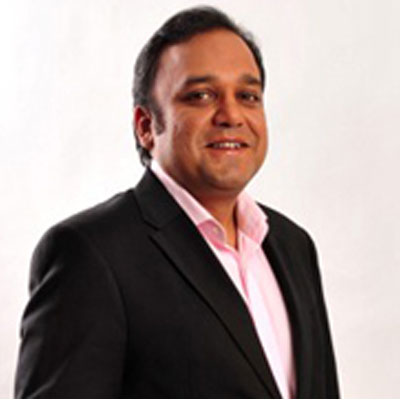
    Zeel managing director and CEO Punit Goenka said, “Sports performance for the quarter has been good, but due to a heavy sports calendar and rupee depreciation, the business is expected to be in losses for some time to come.”

    “Beginning next quarter, we will see a reduction in advertising inventory across the network in line with TRAI regulations. We are in the process of negotiations with advertisers and are confident that this will not have any major impact on revenue monetization. Digitisation will lead to fragmentation of audiences. At Zeel, we believe that this creates a huge opportunity to create new products for specific segments, which will allow us to monetise this opportunity, both from advertising and subscription standpoint. Therefore, we continue to innovate in terms of our format and content,” added Goenka.

  • At Zee, we dont believe in growth without profitability : Punit Goenka MD & CEO Zeel

    At Zee, we dont believe in growth without profitability : Punit Goenka MD & CEO Zeel

    Mipcom is the biggest event for all those in the broadcast industry. But this years Mipcom was even more special. For the first time in the history of Mipcom, an Indian addressed the gathering as a key note speaker. Present today was Zeel MD and CEO Punit Goenka, who elaborated on Zee, the changing Indian broadcast industry and the role of digitisation and the growth of new media.

    Digitisation is one big opportunity that everyone is looking at. It will also impact the advertising market positively. If you look at the advertising market; the growth in the past five years has been roughly nine per cent and television has been growing at 15 to 16 per cent. The advertising industry will see a great boost whether it is captured on traditional media or new media.

    Zee Entertainment Television was started in 1992 with just two hours of programming scheduled at that point of time; today we have 34 channels in India, 29 on a global basis.
    Our journey outside India started in 1995 so the international business is now 18 years old, but truly, the international business started only a few years back. In the first 15 years, we concentrated on the Indian diaspora.

    In the international market, to start with, we picked up the Middle East, Russia and Malaysia, where our content is re-purposed and re-formatted to suit the local audience. Our goal is to reach one billion audiences by 2020, thereby taking Zee to the top ten channels. These markets have a lot of connection with India, especially on the Bollywood side.


    Opportunities ahead of digitisation in India


    In the traditional analogue market, there was huge piracy, approximately 70 per cent. So a broadcaster like Zee did not get its fair share of valuation. This will change with digitisation.

    The second opportunity is that India is still the cheapest content market. The ARPUs that the consumers pay is $ 3 per month for almost 200 channels. I feel this number will go up to $ 10-12 with digitisation. So the opportunity is two-fold.

    Digitisation is one big opportunity that everyone is looking at. It will also impact the advertising market positively. If you look at the advertising market; the growth in the past five years has been roughly nine per cent and television has been growing at 15 to 16 per cent. The advertising industry will see a great boost whether it is captured on traditional media or new media.

    Another development taking shape in India is the new measuring body called Broadcast Audience Research Council (BARC). The advertisers, broadcasters and agencies have come together to form this measurement system. Currently, the sample size in India is less than 10,000 homes, which in the next five years will go up to 100,000 sample households. This again will prove beneficial for advertisers who can find the right consumers.


    The profit mantra…


    Revenue growth is first and profitability comes in later. But at Zee, we have always followed the mantra that growth without profitability is not good. So according to us, any investment on a sustained basis that does not give a 20-25 per cent return on the capital invested is a bad investment. So when the Indian broadcast industry operates at an average of seven to eight per cent, Zee operates at a healthy 25 per cent plus.


    Viewer segmentation…


    Going forward, both digitisation and the need of advertisers will lead to further segmentation. Also, fragmentation is the order of the day. We are continually developing more content and more products to further segment the audience and grow and reach the billion mark.

    As long as there are consumers at the end of it; yes, we will move to the second screen. In India, the concept of second screen is at an early stage. It is largely the same content that is being reformatted. For example a show which is 40 minutes on traditional media, is shortened to 15 minutes for the small screen or second screen. There have been some investments specifically for this content, largely to get the youth. But, this is still at an early stage. 


    Content creation…


    We have a strong internal team working towards ideation and content creation for shows. India is traditionally known for importing formats, Zee was the first one to develop local formats in India. A lot of credit goes to the in-house team, but the credit also goes to the execution department, because investing in formats is not easy, it is expensive and the returns come in only after three or four years. So we have to continuously innovate in terms of our content and formats. The taste changes and so we have to adapt to the changing needs.


    Criteria for choosing international partners…


    The first thing we see is if my partner shares the same passion and vision. The world today is moving towards more co-operation than competition. We are actually collaborating with our competitors to see how we can mutually create content. So we have partnered with our key competitors in India. So as long as the industry grows, a company like Zee will grow.


    Indian talent pool…


    India has a dearth of talent in this industry and this is because there are no specialised schools to train people. We at Zee recruit fresh talent every year and put them through rigorous training through institutes that we have partnered with. We have created an environment where people are given the right to decide and build a culture of entrepreneurship. And therefore they take ownership which leads to positive results. I have been talking to schools as well to see if a programme can be created to develop this pool.


    Attrition rate in the Indian broadcast industry…


    Being a traded organisation, we can give equity stock options to people and that has worked for us. Currently, almost three per cent of the company is owned by the people and this combined with the environment that we create helps us keep the attrition rate as low as possible. In India, people are still moving within the Indian broadcast industry. We are not really seeing too many attritions happening from Indian companies to international markets, but the day isnt far.


    Moving towards second screen…


    As long as there are consumers at the end of it; yes, we will move to the second screen. In India, the concept of second screen is at an early stage. It is largely the same content that is being reformatted. For example a show which is 40 minutes on traditional media, is shortened to 15 minutes for the small screen or second screen. There have been some investments specifically for this content, largely to get the youth. But, this is still at an early stage. As a content creator, we will catch up soon. We were the first in the country to launch a Video on Demand service on mobile called Ditto TV, under a subscription model. Today we have 200,000 subscribers for it. I think the biggest hindrance is lack of a good broadband service. As the infrastructure improves, in the next three to five years, we will grow in this segment as well.

  • An epic wait for Epic

    An epic wait for Epic

    MUMBAI: What do &Pictures, Star World Premier HD and Romedy Now have in common? The three channels have had a smooth run-up to their recent launch.

    However, starting a new channel isn’t an easy task. One has to get approvals from various ministries which can be labeled as the biggest hurdle (at least in some cases), apart from want of money and resources, in premiering a new channel.

    A classic case of such a channel which is yet to see the light of day despite everything being ready is Mahesh Samat’s Epic Television, a venture invested in by Mukesh Ambani and Anand Mahindra.  

    Epic, which will air content based on the country’s history, folklore, and mythology, albeit in a contemporary format, was slated for a mid-August launch. However, it’s end-September and there’s still no sign of the channel going live.

    Apparently, production of the shows is already on floors and various agencies too have been decided, but there’s no clarity even about when the channel will go on test signals. This, despite the hope that Epic would cash in on rising demand for specialty channels, given the increasing speed of digitisation.

    So what’s keeping it from going on air? Among the series of approvals to be procured before a new channel can be launched: first comes the foreign ministry, next the home ministry, and most importantly, the I&B ministry. Only when all of them have looked into the nitty-gritties and given their clearance can the newbie go live. Again, clearances may take as little as three months, or as long as three years. In the meanwhile, if a file gets stuck with a ministry for more than six months, it has to go for re-approval.

    While we may keep wondering as to which phase of this bureaucratic process, the Epic file is stuck in, according to sources, the channel isn’t alone in its predicament. Nearly 45 to 50 files are stuck with various ministries owing to a variety of issues.

    With elections round the corner, one wonders whether these would stand a fighting chance versus the many issues the ruling party may want to deal with first, even if just to guard their turf.

    So, we will have to continue playing the waiting game…

  • IDOS 2013 to kick off in Goa on 27 Sep

    IDOS 2013 to kick off in Goa on 27 Sep

    MUMBAI: The countdown to the ninth edition (and second under its current
    nomenclature) of the annual India Digital Operators Summit (IDOS) has begun with the two-day event kicking off tomorrow at The Leela in Goa.

    A joint initiative of the Indiantelevision.com Group and Media Partners Asia, the summit will discuss and debate the hot-button topic of the digital television opportunity in India, what with the implementation of Phase II of digitisation nearing completion in three major metros – Delhi, Kolkata and Mumbai and in another 38 cities all over India.

    IDOS 2013, themed ‘Harvesting the fruits of digitisation’ will highlight pertinent issues faced by industry and offer valuable insights into how other key Asian markets have succeeded in their digital transition.

    Participants include leaders from regulatory, cable distribution, DTH, broadcast, TV distribution and technology segments as also content providers and investors in the broadcasting and pay TV industries.

    Flagging off the summit will be Indiantelevision.com Group founder, CEO and Editor-in-Chief Anil Wanvari, who will share the vision behind the event. Following suit will be Media Partners Asia executive director Vivek Couto with a presentation on India’s digital TV ecosystem and lessons learnt from other global markets.

    Day one’s inaugural session titled ‘Opening Keynotes and In Conversation’
    will discuss how digitisation is no longer a goal but the means to a critical end, where national economic benefit, advanced infrastructure and content democratisation converge to create a win-win for all. The panelists include TRAI principal advisor N Parameswaran, DEN Networks chairman & MD Sameer Manchanda, Tata Sky CEO Harit Nagpal and Star India president & general counsel Deepak Jacob. They will share their views on the progress so far in Phase II of digitisation. The session will be moderated by Couto and Wanvari.
        
    The second session, ‘Cable 2.0 – Profits across the pipe’ will see leaders across the cable and distribution industry share insights into the key challenges faced by industry as it moves into billing, tiering and rolling out of new services. The session will be moderated by NDTV head-affiliate sales & network distribution Rahul Sood while the panellists include Hathway Cable and Datacom MD & CEO Jagdish Kumar, Den Network CEO S N Sharma, HSBC Securities lead analyst – telecom & media Rajiv Sharma, Media Pro COO Gurjeev Singh Kapoor, Digicable MD & CEO Jagjit Singh Kohli, SITI Cable Network ED & CEO VD Wadhwa and Indiacast Group COO Gaurav Gandhi.

    Next up, ‘DTH – Driving the value equation’, will be moderated by Couto with panelists including Dish TV India’s Gaurav Goel, Videocon D2H CEO Anil Khera, Kotak Securities senior analyst Amit Kumar and Macquarie Capital Sr
    VP Ausang Shukla. The session will seek to answer the question: What are the key catalysts for the next phase of DTH’s value creation story?

    Titled ‘The business of specialised and premium channels’ and powered by BBC World News, the fourth session will study the proliferation of niche channel launches. To be moderated by BBC Global News COO – Indian Operations Preet Dhupar, the participants include Viacom18 SVP & GM – English Entertainment Ferzad Palia, Discovery Networks Asia-Pacific SVP and GM -South Asia Rahul Johri, FoodFood promoter & director Sanjeev Kapoor, Disney UTV Media Networks MD MK Anand and HBO India MD Monica Tata.

    This will be followed by a session on ‘HD as a mass driver for distribution platforms’ chaired by Castle Media director Vynsley Fernandes along with Videocon D2H deputy CEO Rohit Jain, Times Television Network CEO – English Entertainment Channels Ajay Trigunayat, Dolby Laboratories India country manager Pankaj Kedia and Chrome Data Analytics & Media founder & MD Pankaj Krishna.

    The next session, ‘Hidden gems riding the digital wave’ will look at how on the back of digitisation, distribution majors (MSOs and DTH) hold the promise to create ample value. The panelists include What’s-On CEO Atul Phadnis, Amagi Media Labs co-founder Srinivasan K A and Cisco Sr. business development manager – APAC Fabien Gauthier with Castle Media director Vynsley Fernandes as moderator.

    Day one’s closing session, ‘New media monetisation’ will discuss how Hindi GECs and youth channels are increasingly making content available across newer media platforms. Chaired by Wanvari, the discussion will see participation from Zenga TV CTO & MD Shabir Momin, IBM India ED & partner Raman Kalra and Exset global head – sales and marketing Rahul Nehra.
        
    Day two will start with a presentation on ‘Sports & Pay-TV – The Path to Value Creation’ by Couto followed by a Q&A session. The Last mile operator community will be represented by a presentation by Maharashtra Cable Operators Federation head Arvind Prabhu, who will talk about their role in a digitised ecosystem.

    The closing session ‘Driving digitisation deeper’ will be moderated by Wanvari and Couto and will analyse how action is going to shift next to India’s heartland which houses nearly 70-80 million TV homes among other key issues. The panellists include DEN Networks CEO S N Sharma, Hathway Cable and Datacom MD & CEO Jagdish Kumar, TRAI principal advisor N Parameswaran, Indian Broadcasting Foundation secretary general Shailesh Shah, Chrome Data Analytics & Media founder and MD Pankaj Krishna, Founder & MD, Magnaquest CMO Ramakrishna Mashetty and HSBC Securities lead analyst – telecom & media Rajiv Sharma.

    “As organizers of IDOS, our aim is to provide unity and strategic vision to drive forward digitalization and bring new value, profit and sustainable growth across the television ecosystem,” read a joint statement by Indiantelevision.com group founder Anil Wanvari executive director and cofounder Media Partners Asia Vivek Couto.

    “The next year is critical as the cable industry steps up on its B2C execution with billing, tiering and subscriber management,” added VivekCouto.”IDOS will explore the issue of co-operation with last mile local cable partners to create a valuable ecosystem for the consumer; one in which differentiated content, customer service and value added offerings are at the highest level. That will be worth paying more for and will drive ARPUs higher.”

    “It’s an important evolution,” said Wanvari, “as it helps scale and grow the cable industry and enables broadcasters and content providers gain the ROI they so desperately need to invest. It also eases the burden on the DTH sector and provides effective competition at the ground and consumer level And the entire evolution gives the regulators to mull over deregulating pricing.”

    *IDOS 2013 is powered by Star India, while summit partners include Discovery Channel, Dolby, CISCO, Hathway Cable and Datacom, SES, and Videocon d2h. The associate partners are BBC World News, Exset, Indiacast and Media Pro. 24 Frames is the webcast partner.
  • Entertainment &Media sectors to grow steadily: CII-PwC

    Entertainment &Media sectors to grow steadily: CII-PwC

    MUMBAI:  India’s Entertainment & Media sector is expected to grow steadily over the next five years as per Confederation of Indian Industry-Price Waterhouse Cooper (CII-PwC) latest report titled ‘India Entertainment & Media Outlook 2013’.

    The industry is expected to exceed Rs 224,500 crore growing at a CAGR of 18 per cent from 2012 to 2017. The CII-PwC report was released today at the second edition of the CII Big Picture Summit held in New Delhi.

    The Summit which brought together the finest business and creative minds of the E&M industry with `Embracing Innovation in Media’ was themed towards achieving $100 billion by the end of this decade.  Over 70 M&E leaders spoke at the two-day summit organised by the CII.

    Today, the size of the Indian M&E sector has increased from about Rs 805 billion in 2011 to almost Rs 965 billion in 2012 representing a year-on-year growth of 20 per cent. This growth was achieved in spite of a relative slowdown in the broader economy, underlining the resilience of the E&M sector. It is expected to grow at about 18 per cent CAGR over 2012-2017 and reach revenues of about Rs 2,245 billion in 2017.

     “This growth is driven by the introduction of cable TV digitisation, continued growth of regional media, continued strength of the filmed entertainment sector, fast increasing new media businesses and transparency,’’ said CII director general Chandrajit Banerjee. “We believe that innovation – faster, better, more efficient, thinking out of the box (and within the box) – would be one of the game changers in this space,’’ he added.

    An entire chapter on “The Innovation Imperative in the rapidly evolving E&M sector’’ has documented strategies for E&M companies in the CII-PwC report.  Indian E&M businesses, like its peers abroad, needs to raise its game in operational agility and customer insight.

     “To achieve this successfully, every industry participant will need to invest in constant innovation that encompasses products and services, business and operating models and most importantly, customer experience and engagement. Innovation should be seen as an important enabler to get closer to consumers and profitably deliver relevant content and services,” said the report.

     India’s television market grew at 13 per cent with revenues increasing from Rs 340 billion in 2011 to Rs 383 billion in 2012. Filmed entertainment also demonstrated stellar growth in 2012 with sector revenues increasing by about 17 per cent from Rs 96 billion in 2011 to Rs 112 billion in 2012. The print sector revenues are expected to increase at over nine per cent CAGR to reach Rs 331 billion in 2017 from Rs 212 billion in 2012.

    Year-on-year sectors such as internet access (30 per cent), internet advertising (29 per cent), gaming (19 per cent), and music (15 per cent) are expected to continue on their high growth trajectory. The radio sector is also expected to receive a fillip with the successful conclusion of Phase III license auctions and it is expected to grow at a robust CAGR of about 16 per cent.

     The rapid rise of Internet usage, high penetration of smart phones, digital advertising, wireless broadband, digital content consumption, regulatory interventions have had a significant impact on the E&M sector.

    The television and print sectors dominate the industry with about 40 per cent and 22 per cent contribution to industry revenues respectively in 2012. Internet access now commands about 18 per cent share and films 12 per cent of industry revenues.

     Nonetheless, in 2017, television will continue to lead the industry in terms of revenue contribution with 39 per cent share, followed by internet access with 28% share. The share of print and films are likely to decrease 15 per cent and nine per cent in 2017.

    If we take the E&M growth without taking internet access and internet advertising into account the size of the Indian M&E sector increased from about Rs 690 billion in 2011 to almost Rs 795 billion in 2012. It is expected to grow at about 15 per cent CAGR over 2012-2017 and reach revenues of about Rs 1,615 billion in 2017.

     Overall, the Indian E&M industry is on the cusp of a strong phase of growth, backed by rising consumer payments and advertising revenues across all sectors.

  • Festive fervour on Life OK

    Festive fervour on Life OK

    MUMBAI: The festive season is already upon us and Life OK, Star Plus’s sister channel, is going all out to meet the celebratory mood head on. The channel, which plans to aggressively invest in content in the coming months, has a set of brand new shows up its sleeve, promising viewers a never-before-seen experience.

    As we all are aware, in this January when LC1 got added to the measurement, everybody crashed. In April, when digitisation phase II happened, the channel was down to 110GRPs. If we further break it down, from January onwards the ratings have increased in both the categories – men and women. For men, the viewership ratings witnessed a rise by 50 per cent and a similar rise of 25 per cent for women.

    The recently launched Ek Boond Ishq – BBC Worldwide’s first daily fiction series in India – offers a flavour of the kind of programming to follow on the channel.
    This tale of a girl who realises she is about to tie the knot in a prison cell, is telecast every week, Monday to Friday, at 8:30pm. One wonders however if airing such a show at a time slot when most other GECs boast strong programming, poses a risk more than an opportunity for the channel?

    “Definitely not!” shoots Life OK general manager Ajit Thakur, confident their modest attempt at providing quality entertainment will be appreciated.

    “What sells more is content. If the content is good, viewers will come anyway and watch the show,” he adds.

    Another show the channel has lined up as part of its festival bouquet is Katha Mahadev Putra Bal Ganesh Ki, a spin-off of its flagship property Mahadev, which airs on 14 September. The 16-episode series to be telecast every Saturday and Sunday at 7:00 pm, showcases the adventures of Lord Ganesh as a child, and is part of Life OK’s larger mission to replicate the success of Star Plus.

    It’s a show targeted at the entire family, particularly kids. “It’s a finite show. No other GEC has original content at this particular time slot. So we thought of taking advantage of that and occupying the slot. We not only aim to target women but also children with this show,” explains Thakur.

    Adding to the fresh batch of programming is Shakuntalam Telefilms’ edgy thriller titled Rakshak, which launches end of this month. To be aired every Saturday and Sunday at 11:00 pm, it goes without saying the limited series faces tough competition from the likes of Crime Petrol (Sony), Comedy Nights with Kapil Repeats (Colors), Star Verdict Repeats (Star Plus), Fear Files (Zee TV), Taarak Mehta ka Oolta Chashma Repeats on Saturdays and Lapataganj – Ek Baar Phir on Sundays.

    Yet another feather in the channel’s programming cap is the new reality series, SOL Productions’ The Bachelorette India featuring Bollywood actor Mallika Sherawat. As reported by this website earlier, the non-fiction show will see 30 eligible bachelors battling it out to win the sex siren’s heart… and hand.

    With the concept derived from an earlier show named Swayamvar on NDTV Imagine, comparisons between the two are inevitable. Especially since the likes of Rakhi Sawant (who ended up separating from her partner post the series) and Rahul Mahajan, who participated in Swayamvar. The Bachelorette India is not the first of the channel’s trysts with reality shows. An earlier attempt, Welcome – Baazi Mehmaan Nawazi Ki, failed badly at winning the hearts of its audience.

    While the channel has pinned high hopes on these programs, whether they will succeed is a separate story altogether. Says a highly placed media planner (name withheld on request): “I don’t think the channel is doing something new in terms of content. Viewers have already seen all this. It depends on the channel how they modify and show it to audiences. If viewers are interested, it might be a green signal for them. Talking about the upcoming shows, one will have to wait and see how they fare as it is too early to predict.”

    Many other media planners though agreed the channel has been innovating and launching new shows time and again to sustain viewership and maintain numbers.

    All said, it’s now up to the viewers to decide whether they like Life OK’s bag of goodies…

  • I&B ministry’s ad cap succor for broadcasters

    I&B ministry’s ad cap succor for broadcasters

    MUMBAI: On the one hand, the Telecom Regulatory Authority of India (TRAI) is putting the squeeze on broadcasters. On the other, the ministry of information and broadcasting (I&B) is proving to be an angel in disguise all ready to provide it with some succor. At least in the area of the 12 minute cap on advertising per hour allowed on television which TRAI activated earlier this year, and which is to be implemented next month.

    Reports are that the ministry is collecting data from broadcasters to ascertain the loss that they would incur on account of the TRAI-mandated ad cap.  It is then expected to prepare a consultation paper within the next 10 days, say these reports.

     
    Broadcasters – especially news broadcasters – have been yelping about how any reduction in air time would lead to a shriveling of revenues for them; in fact it might make it unviable for them to sustain their operations. Their constant wailing caught the attention of I&B minister Manish Tewari who last month requested the TRAI to post-pone the ad cap to end-2014 to coincide with the inflow of subscription revenues which are expected to accrue to broadcasters post the completion of cable TV digitisation.

    The Telecom Disputes Settlement & Appellate Tribunal (TDSAT) concurred with the news broadcasters’ appeal and put a freeze on the applicability of the ad cap, till their plea was heard on 11 November 2013. General entertainment channels have, however, agreed to comply with TRAI’s directions and have even gone ahead and reduced their commercial advertising air time.

    Says a media observer: “All the players – TRAI, I&B, broadcasters – need to get together to have a road map for the reduction of the ad cap gradually and periodically over time and not in one fell swoop as TRAI has been suggesting. It’s good that the I&B ministry and TDSAT have been supporting the broadcasting sector as far as the ad cap is concerned. It is imperative for its survival.”

  • DEN lends its ears to LCOs’ apprehensions


    MUMBAI: As India‘s government-mandated cable TV digitisation rolls out, one person who has been feeling threatened is the local cable operator (LCO). To address this concern, DEN Networks, Star India and Dolby in collaboration hosted a road show ‘DAS: Daulat aur Shahrat’. The initiative was an effort to reaffirm the trust and also appreciate the LCOs for their efforts for successful implementation of phase II of digital addressable systems (DAS).


    The first set of the roadshows, attended by 50 LCOs, was conducted in Kanpur on 19 August and in Lucknow on 21 August. Hosted by Star India on behalf of DEN in association with Dolby, the road show educated the LCOs about the opportunities created by digitisation. “This was the first initiative where the broadcaster, MSO and LCO all came together to talk about the latest in digitisation,” says DEN Networks CEO S.N. Sharma.


    The road show was a step towards creating a platform for the various players in the ecosystem. “This was an effort to inform them that digitisation will help them increase proportionate revenue for their services,” he adds.


    The implementation of DAS across India is a massive undertaking which promises a complete transformation of the Indian media landscape. “This initiative was aimed at DEN’s LCOs, who are the face of the MSO for the subscriber and focused at informing and educating them about the tremendous opportunities that digital cable has to offer,” informs Sharma.


    The LCOs were also made aware of the potential revenue streams due to a wider and better service offering bought in by digitisation such as multiple TV connections, HD, value added services and broadband.

    Digitisation brings with it opportunities even for LCOs says S.N. Sharma

    The conference also elaborated on the challenges lying ahead. “Concerted and continuous efforts from stakeholders can make digitisation a grand success in the remaining territories.”


    To ensure that the transition is more seamless for the subscriber and the LCO, DEN also announced a plethora of schemes on educating the consumer regarding channel packages and filling of package authorisation forms (PAF) before the TRAI deadline of 20 September, 2013.


    Speaking on the concerns of the LCOs, Sharma says, “The LCO feels that his livelihood will be affected post implementation of digitisation and channel packaging. We through the road show have informed them of the benefits of digitisation and explained that life will be great post digitisation.”


    DEN last year conducted a training programme before implementing its digitisation rollout. “That was to make them aware and also address their concerns.”


    The current roadshow, which involved the broadcaster and also the technology partner Dolby, was well received. “It has given us the confidence to try and explore more such forums in other cities and states.”


    Though no specific timeline has yet been set, but the MSO is exploring many more such modes of getting the LCOs together and addressing their concerns. “We will spread out across all markets in tier II cities and also those in the phase III of digitisation,” he informs.


    Clearly, the idea is to have a more joyous ride together on the road to digitisation.

  • DAS crosses 100% six weeks after analogue switch-off, but many homes still do not have STBs

    DAS crosses 100% six weeks after analogue switch-off, but many homes still do not have STBs

    NEW DELHI: The digitisation level in the 38 cities in fourteen states and one union territory of Phase II had touched 101 per cent including DTH homes as on 14 May, six weeks after the analogue switchoff.

    However according to the information & broadcasting ministry’s own statistics, around nineteen cities had not been fully digitised as on 7 May.

    Questioned about this anomaly, an I&B Ministry official told indiantelevision.com that the average was based on the fact that nineteen cities had crossed more than a 100 per cent seeding of set top boxes, with Hyderabad touching a figure of 206.18 per cent with cities like Ludhiana and Allahabad crossing 178 per cent and 167.04 per cent respectively.

    The official – who did not want to be named – added that this was because many of the households had more than one television and/or DTH connection, and the ministry had made a provision of 20 per cent TVs in shops and homes.

    The official clarified that a total of 1,60,13,059 total TV homes had to be digitised by making provision of 20 per cent for multiple TVs in houses and TVs in offices/shops. The total number of TV Households according to ministry statistics is 1,33,44,216.

    Coimbatore with 30.43 per cent stood at the bottom on 7 May, with Srinagar at 30.88 per cent, and Vishakhapatnam at 54.36 per cent. These figures include direct-to-home connections. It is therefore obvious fom these figures revealed by the government itself that a large proportion of TV subscribers in these 19 cities do not have either a DTH set top box or a cable TV set top box.

    Petitions challenging digitisation are currently pending in the Madras, Andhra Pradesh and Madhya Pradesh high courts. These affect the cities of Chennai, Hyderabad, Visakhapatnam Bhopal, Indore, and Jabalpur.

  • IBF petition to prevent delay in digitisation to be heard on 30 April

    IBF petition to prevent delay in digitisation to be heard on 30 April

    NEW DELHI: The Supreme Court has listed a petition for 30 April by the Indian Broadcasting Foundation (IBF) seeking to ensure that digitisation is implemented as scheduled and without hindrance.

    The case had been listed for the last two days but could not be heard because of pending business. On mention by counsel for the petitioner, the case was listed for hearing on the last day of the month.

    When the special leave petition had been mentioned before the Court on 16 April, it had declined the prayer to stay any of the proceedings in the various High Courts as it was informed that the Karnataka High Court judgment on the subject was due. The bench presided over by Chief Justice Altamas Kabir therefore felt it would await the judgment of the High Court before taking up the matter.

    The Karanataka, Gujarat and Allahabad High Courts have since dismissed as having no merit to the petitions seeking extension of the switch-off dates for Phase II of digitisation in Bengaluru, Mysore, Ahmedabad, Rajkot, Surat, Vadodara, Agra, Allahabad, Ghaziabad, Kanpur, Lucknow, Meerut and Varanasi.

    Petitions challenging digitisation are currently pending in the Madras, Andhra Pradesh and Madhya Pradesh High Courts. These affect the cities of Chennai, Hyderabad, Visakhapatnam Bhopal, Indore, and Jabalpur.