Tag: digitisation

  • I&B ministry to take up cable TV monopoly recommendations

    I&B ministry to take up cable TV monopoly recommendations

    MUMBAI: The inter-ministerial committee in the information and broadcasting ministry (MIB) is likely to take up the Telecom Regulatory Authority of India’s (TRAI’s) recommendations on controlling monopoly/market dominance in the cable TV sector this week. These were released by the TRAI on 26 November 2013. This was revealed by MIB minister Manish Tewari to the Times of India (TOI) yesterday.


    According to the TRAI recommendations, a barometer known as the Herfindahl Hirschman Index (HHI) is to be used to measure monopoly of MSOs or cable TV service providers in a market which as defined as a state (with certain exceptions).


    The recommendations state that “the threshold value for any individual/group/entity contribution to the market HHI should be no more than 2500.”  According to the TOI report, this constitutes 50 per cent market share, the market being defined as a state.


    The TRAI recommendations further state that “any M&A among MSO(s) or between an MSO and LCO in a relevant market shall require the prior approval of the regulator. The decision on any proposal, complete in all aspects, shall be conveyed within 90 working days.”


    They go on to further add that in “the cases where any group’s contribution to HHI in a market is more  than 2500 as on the date of issue of guidelines, such legal entity/ ‘group’ shall take necessary remedial measures, within 12 months from the date of issue of guidelines, so as to limit  its ‘control’ in various MSO(s)/ LCO(s) in such a way that the  contribution to market HHI of that ‘group’ reduces to less than or equal to 2500.”


    Tewari told the TOI that the ministry was “seriously looking at introducing a cap on the market share of MSOs to stop monopolistic practices, whether due to political pressure or political ownership, to protect plurality and diversity of content.” 

  • TV ratings: Ownership & FDI questions

    TV ratings: Ownership & FDI questions

    MUMBAI: To have foreign direct investment (FDI) in TV ratings or not, that is the question. And the recently-cleared TV ratings guidelines by the Cabinet Committee of Economic Affairs (CCEA) have brought this to the fore by their silence on this score. While announcing that the CCEA had given the go ahead to the ministry of  information and broadcasting (MIB) last week to the Telecom Regulatory Authority of India (TRAI)-recommended  guidelines for a regulatory framework for TV ratings in India,  minister Manish Tewari had this to say.


    “In so far as FDI is concerned we would make a separate reference to TRAI with regard to the quantum and need of FDI that should be permitted in ratings agencies. After the TRAI recommendations, the question of allowing FDI would be looked at. So as we speak, no FDI will be permitted in TV ratings agencies till we don’t have a recommendation on it.”


    Although the 2013 recommendations do not have any mention of FDI, it is noteworthy to point out that TRAI’s 2008 consultation paper on TV ratings does. The paper says that stakeholders feel that FDI should be restricted to 20 per cent in a TV ratings agency.  It also goes on to suggest that since no security issues were involved and little or no competition was prevailing (only two agencies existed at that time – TAM and aMap  and no regulation existed), that it would be okay of no if no FDI limit was imposed.  “Generally FDI encourages world class technology and international best practices,” TRAI had stated in the paper.


    So even as the TRAI was of the opinion that FDI was all right in 2008, in 2013 it gave the issue an ignore. Currently FDI limits for broadcasters are 100 per cent  for non-news and current affairs channels, for news channels 26 per cent, for cable TV 74 per cent, for DTH 49 per cent, for print 26 per cent for general news etc.


    Tewari stated that the question of FDI would be looked at after the TV ratings guidelines are notified by the ministry. Could the earlier recommendation of 20 per cent work as a guideline today? Or is the government going to be averse to FDI totally?


    Let us take a look at the other major guideline of cross holding in the TV ratings provider. The guideline states very clearly:  ‘No single company/legal entity either directly or through its associates or interconnect undertakings shall have substantial equity holding that is, 10 per cent or more of paid up equity in both rating agencies and broadcasters/advertisers/advertising agencies.’


    If one looks at the holding pattern of Mediametrie – the French ratings agency – which is soon to be announced as the Broadcast Audience Research Council’s (BARC’s) ratings partner,  France Televisions holds 22.89 per cent equity in it, TF1  10.8 per cent, Radio France 13.5 per cent and Union des Annonceurs 11.77 per cent.


    France Televisions in turn owns 49 per cent of TV5 Monde while AEF (formerly called France Monde) that runs France 24 owns 12.6 per cent of France Televisions. Quite a convoluted holding structure, but clearly one where broadcasters could be owning more than 10 per cent equity in the TV ratings provider.


    However, BARC officials are quick to clarify that it is BARC which will be providing the ratings and not Mediametrie. The latter is only a technology supplier and ratings are being outsourced to it. It owns no equity in the ratings company which is BARC. Hence, the question of more than 10 per cent equity ownership by broadcasters in Mediametrie is irrelevant and there will be no violation of TRAI’s guidelines, they emphasise.


    BARC, on its part is a non-profit organisation under section 25 of the Companies Act, with nominated representatives from the Indian Broadcasting Foundation, Indian Society of Advertisers, and Advertising Agencies Association of India. In a response to TRAI’s consultation paper, BARC had stated that even though the three may have conflicting interests in the ratings process, its articles of incorporation clearly state that “each has an equal voice in the design, and monitoring of the rating system, and in the administration of BARC, irrespective of the funding pattern.”


    TAM, on the other hand, has woes on both fronts as it not only does not comply with the FDI guidelines it also is has issues on the cross holding guideline as it is owned jointly by the WPP group and AC Nielsen. It is even listed on the WPP site as one of its companies.


    The key question that everyone is asking at the time of writing is whether TAM Media will move court against the guidelines, as they have come into force so many years after it has been operating in India with the equity and cross holding structures that it has. Or will it give up the fight and pack up just like Coca-Cola did in the seventies, when the government ordered it to reduce the FDI in it to 40 per cent.

  • Videocon Industries plans new STB capacity by end-2014

    Videocon Industries plans new STB capacity by end-2014

    MUMBAI: The Indian government last year raised the import duties of set top boxes (STBs) from five per cent to 10 per cent in a bid to encourage Indian entrepreneurs to start making them indigenously. To no avail, Indian MSOs, DTH players, continued importing the boxes from China, Korea and Taiwan to meet the government mandate of digitising India’s cable TV sector.

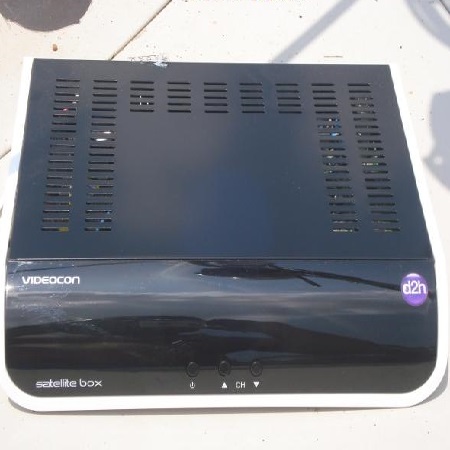
    At least one player yesterday announced that it had taken up the gauntlet: electronics major Videocon Industries. Director Anirudh Dhoot told Press Trust of India that his company is planning to set up a one million STB manufacturing plant by end-2014. Dhoot told PTI that the plant is likely to be set up in either Punjab or Madhya Pradesh. 


    The Videocon group also runs Videocon d2h – one of the fastest growing DTH players in India. 


    The digitisation of cable TV in phase III and phase IV towns is expected to require around 80 million STBs; of which 60 million will likely be rolled out this year itself, totting up to a business potential of an estimated  Rs 7,500 crore at factory prices. The second and third phases of digitisation are scheduled to be completed by end 2014, but everyone in the industry expects a delay of about three to six months. If Videocon manages to get its plant to start churning out STBs by end this year, it could meet some of that demand. 


    The Indian cable TV industry has deployed around 22 million STBs during the first and second phase of digitisation; even as DTH players have deployed around 45-50 million STBs collectively over the years since DTH launched in India.


    Most of these were imports. Videocon, on its part, upped the capacity at its existing STB plant from 700,000 per annum to one million during the festival season last year. Now it plans to set up a new plant. Other players who are involved in the manufacture of STBs domestically include: Noida-based Dixon Technologies and Kortek Electronics.

  • National MSOs to meet in Mumbai on gross billing issue

    National MSOs to meet in Mumbai on gross billing issue

    MUMBAI: The national multi-system operators (MSOs) are meeting on 3 January in Mumbai to discuss the smooth rollout of gross billing in Maharashtra. While the deadline set by the Telecom Regulatory Authority of India (TRAI) to achieve 100 per cent customer application forms (CAFs) for phase II cities and submitting compliance report for gross billing for phase I cities came to an end on 31 December 2013, the MSOs have been unable to start gross billing in Maharashtra. The meeting has been called to discuss on the matter and come up with ways to ensure that gross billing begins in the state.

    “Since the issue of entertainment tax, which is supposed to be included in the bills generated to the consumer, is in the Bombay High Court, we cannot start gross billing in the state. We will be meeting on Friday to discuss issues at hand,” informs a MSO who will be attending the meeting.

     The MSOs are claiming to have achieved 90-95 per cent CAF and also submitted the compliance report for Delhi and Kolkata to TRAI. “But, the situation is a little different in Maharashtra,” admits the MSO.

    While no independent MSO will be a part of the meeting, the national players operating in Maharashtra: Hathway Cable & Datacom, DEN Networks, SitiCable and InCable will meet tomorrow.

    But, the last mile operators (LMOs) have decided to not allow gross billing in Maharashtra. “The case is anyways in the Bombay High Court and so the MSOs cannot start gross billing in the state. Though Hathway has verbally agreed to give partial access to its subscriber management system (SMS) to the LMOs and said that while it will bill the LMOs, the latter can bill the subscriber, thus being the owner of its subscriber, there has been no response from DEN and IMCL on the same,” informs Maharashtra Cable Operators Federation (MCOF) president Arvind Prabhoo.

    “We will not allow gross billing to start in Maharashtra till all the issues are resolved,” adds Prabhoo.

  • TRAI releases its 2013 report card

    TRAI releases its 2013 report card

    MUMBAI: The year 2013 saw the Telecom Regulatory Authority of India (TRAI) cracking its whip on the broadcasters as well as every other party within the industry for its betterment. It released several papers and regulations in order to do so. The Regulator that released its activity report for the year gone by as the New Year kicked off, said that consumer interest has been one of its main mandates.

    To ensure good consumer experience, in 2013, TRAI amended ‘standards of quality of service (duration of ads in TVs)” of 2004. And what came into effect was the regulation that restricts advertising air time to 12 minutes for a clock hour. The regulator says that this practice is not uncommon in several countries and also goes along with the provisions of the Cable TV Network Rules (1994). “Excessive advertisement adversely affects the quality of viewing experience of the consumer. The objective behind the issue of these regulations was to ensure a better quality of experience for the consumer,” says the TRAI’s activity paper.

    But even after this amendment, not all the broadcasters have been following it and the current fate of the ad cap is in a limbo. Several broadcasters have even challenged it in the Delhi High Court including the News Broadcasters Association (NBA). When channels openly did not follow the rule, TRAI started prosecuting them for it. Complaints were filed against 14 broadcasters for non compliance with the regulation. With this, TRAI disappointed many channels as the regulation came at a time when advertising rates were dipping and digitisation had not even entered phase II.

    TRAI also came up with The Telecommunication (Broadcasting and Cable) Services Tariff Orders for cable TV and DTH services that provides standard tariff packs for supply and installation of STBs to consumers in DAS areas and Customer Premises Equipment (CPE) to DTH consumers.

    When India’s oldest DTH operator, Dish TV went to the regulator for extension of its 10 year licence that was to expire on 30 September, it woke up to the fact there were no guidelines/rules on  extension. The new consultation paper is reportedly coming out this month and meanwhile Dish TV has been allowed to continue on its existing terms and conditions.

    The issue of media ownership was also addressed with the Regulator coming out with a consultation paper that discussed points related to ownership of a media outlet, disqualification from the media sector and rules for mergers and acquisitions in the sector. Media monopoly issues were also taken up when the Ministry of Information and Broadcasting (MIB) asked TRAI to examine whether there was a requirement of restrictions on MSOs and LCOs to prevent them from monopolising cable TV markets.

    The TAM brouhaha that saw adamant broadcasters unsubscribe to its ratings system led to the TRAI coming up with its guidelines defining parameters for ratings agencies and ratings systems.

    Major steps were taken to strengthen the process of digitsation. Multi-system Operators (MSOs) and Local Cable Operators (LCOs) were ordered to bring a proper subscriber management system (SMS) in place and disconnect signals for those whose details were not entered.

    Pay TV channels were asked to have written interconnect agreements with MSOs. One of the provisions that protected broadcasters was that an MSO could not demand signals for a particular channel under the ‘must provide’ clause and ask for carriage fee.

    As India is progressing towards digitisation, a la carte channels should also be available along with packages, so that subscribers can opt for either a la carte or bouquets or a combination of both. 14 LCOs and a MSO were also taken to court for not following DAS regulations.

  • India-A hotbed for news channels

    India-A hotbed for news channels

    “To improve is to change, to be perfect is to change often.” This quote from Winston Churchill is in my opinion the best way to describe 2013 for the Indian television market scenario and BBC Global News, the parent company of BBC World News and bbc.com.

    Let’s first take a broad look at the changes in the Indian market.  While regulation forced the industry to adopt digitisation, it is commendable that the industry responded and today MSOs have had around 70 to 80 per cent success in seeding STBs in phase I and phase II. Digitisation has happened and is progressing – but at the moment that is only the technical side. Addressability remains a concern. But large changes such as this in markets as humongous and diverse as India are bound to take time. Our outlook is positive and we are hoping that once business models start to take shape, this change will be positive for all stakeholders. But there is no doubt that traditional models are being disrupted. The cable industry will have to look at differentiation, quality of service and value added services to drive revenue growth. The capacity constraint that drove carriage revenues is likely to moderate with digitization. There is demand for niche content. New launches are happening in the super-niche format. The demand for Pay-TV is growing with increase in the availability of premium content. Consumers are willing to pay for HD content. Cable operators have also started offering HD-enabled STBs.

    The other major change is the pattern of consumption of content. Viewing has become personal with the consumer demanding and expecting flexibility in terms of timing, volume of content consumed and place of consumption. Increasing mobile & broadband penetrations and affordability of smarter devices are offering alternative digital distribution platforms. Consumption of live TV on-the-go and catch up TV is on the rise.  All these are very positive changes that signal well for the robust growth of the industry.

    It has also been a year of evolution for BBC Global News. We moved into state of the art brand new studios in the heart of Central London in what is easily the world’s largest and most advanced newsroom. Both in anticipation and in response to audience trends, we have successfully converged our news operations to deliver the best multimedia, multi platform international news. Our improved look on TV, our website, our apps – all these make for a greatly enhanced experience for the consumer. Our new brand campaign ‘Live the Story’ is not just an advertising tool, it is an ethos for the way we approach content and we want to reinforce that message in the market. It is in recognition of this ethos that World News America received an Emmy award for “Best continuing coverage of a news story” for Ian Pannell and Paul Wood’s reports from Syria. And among our many editorial highlights was the 100 women season with Mishal Husain’s exclusive interview with Malala featuring not just on BBC World News but across all BBC platforms domestic and international. Indeed one of the catalysts for 100 Women was the Delhi gang rape attack in December last year.

    It is great to see the audience responding to us. In India, BBC World News has maintained its status as the leading international English news channel among the country’s affluent, influential opinion leaders, business decision makers and frequent international travellers, according to the latest Ipsos PAX survey. BBC World News also beats India’s domestic news channels to take the number one spot amongst the highly desirable, upscale audience.  BBC Global News, including BBC World News and bbc.com is the only news brand across TV, online and mobile to show quarter on quarter growth. Social media is equally important for us to improve our engagement and we continue to achieve important audience milestones on Twitter. @bbcworld now has more than 5 million followers and @bbcbreaking has passed the 8 million follower mark.

    As economics and politics in India become even more interesting with the country entering election mode, we have just announced a season of programmes focusing on India to air in February 2014. India Direct will delve behind the headlines to bring audiences insight on our country as we strive to be significant player on the global stage. The India Direct season will give BBC audiences around the world the opportunity to see everyday life in India. Through programmes like Fast TrackOne Square Mile and Working Lives, the BBC’s unrivalled network of journalists explore the issues faced by people here – from the economic opportunities and challenges to living life at every level of society; from its traditions and history to future plans and innovations.  We are looking forward to what promises to be a really insightful coverage of India. We also hope to bring an international perspective to the coverage of the elections. As the world focuses on India, our journalists will also showcase India to the rest of the world with our global coverage.

    The world of media and journalism is very dynamic and India is a vibrant market. We believe that the changes in the media landscape are all positive; we ourselves are steadily progressing in tandem with global trends and certainly have a very positive outlook for India. We believe that the market respects and appreciates our content and that our ability to provide superior international news content on multiple platforms will differentiate us and keep us growing.

    (Preet Dhupar is BBC Global News COO for India. The views expressed in the above article are the author’s personal views)

  • Helios Media elevates Bala Iyengar as COO

    Helios Media elevates Bala Iyengar as COO

    MUMBAI: Helios Media, a specialty services company for the broadcast sector, recently completed two years in operations. And with the television industry undergoing critical developments with digitisation, regulations in inventory management, growth of niche genres and evolving dynamics of how viewers consume entertainment, the media brands are exploring newer avenues for engaging with audiences while advertisers are on a constant search for platforms to maximise reach. Traditional practices are being reviewed and the market is in a constant state of innovation.

     “With the changing social fabric, growth of internet penetration and the change in consumer behaviour, the means to reach the viewer have increased manifold. As we move forward, our focus will be on getting into deeper partnerships with relevant platform creators to enhance the solutions we offer our clients. A TV channel is not just for TVCs anymore, and we will work with them in the overall revenue management space, going beyond traditional commercial inventory. In addition to inventory sales, we have enhanced our teams to include talent in the areas of content syndication, custom events, celebrity management and strategic digital initiatives. To take this scale of operations forward, it’s only natural that Bala steps up to take charge of our complete offering and provide seamless service to our clients”, says Helios Media founder & MD Divya Radhakrishnan.

    Commenting further on his elevated role and plans ahead, Helios Media chief operating officer Bala Iyengar added, “The team has been groomed as idea generators and solutions providers who can offer expert advice on how to connect the advertiser with the audience. And this has helped us bring in the 150+ advertisers on MTunes HD, develop a market strategy for Channel X, exponentially increase the revenue base for FoodFood and set to motion the revenue agenda for FTV India. We will shape ourselves to be the go-to destination for advertisers seeking innovative ways to connect with audiences, and for channels seeking breakthrough strategies to boost revenue.”

    The company was launched with a vision to provide broadcasters with business critical expertise in the areas of revenue management, brand consulting and creative development. And has demonstrated results for brands such as MTunes HD, Channel X, FoodFood and Fashion TV.

  • “There’s a lot of mileage in pay TV news”

    “There’s a lot of mileage in pay TV news”

    As the country sheds tears over  onion prices, cringes about the skyrocketing cost of LPG, cribs for a better system in place for tackling the ever-growing crime incidents and hopes for the 2014 general elections to change things, the news channels are gearing up to catch all the action live. 

    And when all the international and domestic news channels are at it, why should the Beeb – the world’s biggest pubcaster that reaches over 360 million households globally; 12 per cent of which are from India – miss a chance to report on the political battle of the world’s so-called largest democracy? 

    BBC Global News CEO Jim Egan, who was in Mumbai to launch its India Direct series, reveals that the channel is looking at grabbing more eyeballs during the election season. The channel plans to scale up the coverage on India in the coming months.

     
    And he gave some time to Indiantelevision.com’s Vishaka Chakrapani on the sidelines of the launch, to talk about the BBC World News’ India gameplan, its global digital push wherein it aims to melt the barriers between broadcast and online news. Egan emphasised that India is an important market for BBC in terms of pay TV and digital advertising. Excerpts from the interview:

    What is the benefit of investing in the news business in India?

    When I say investment I’m not talking about corporate investment, it’s about editorial investment. It’s been a good year for us in India. Digitisation has been broadly good for us and we are seeing our household penetration increase. 

    What is the growth in reach that you have experienced due to digitisation?

    It has grown steadily in single digit millions and has reached 30 million now, which means one in four homes. Digitisation is moving at a different pace in different parts of India. We would like to be bigger but we are addressing a relatively niche population in the English language and thus we are never going to be a mainstream news channel in the country.

     
    With so many international channels making a mark in India, how will BBC World News differentiate itself and stay on top?

    We are looking at doing product and editorial investments to the extent we can afford it. Other operators are well resourced such as CCTV in China is well financed, so is Al Jazeera. If we are going to get into a spending arms race, BBC won’t be able to get there. We will capitalise on our reputation and emphasise on being different. Being successful is not about spending a lot as some qualities cannot just be bought.

    Why has the industry been hit with a bout of layoffs happening across the world?

    The last five to 10 years have been very difficult for journalism. It’s coming to terms with internet and digitisation. In  print, it has been a very difficult time, but not so much in India. A lot of broadcast journalism has been buffeted by the internet, particularly in international news. You see lots of retrenchment and people closing bureaus. BBC is slightly different because we have both public and commercial funding that has helped us expand and maintain ourselves. We are swimming against the tide but we are doing it deliberately because we think having a well funded and well resourced international network of correspondents is what success is about.  

    What about the entry of many international news channels in the market? Could that also be a reason that’s leading to increased competition?

    There’s been a bit of fragmentation but I don’t see demand for news going down. Demand for news is going in different directions. But as long as you are prepared from the editorial and corporate points, there’s good business to be made. It’s just at slightly different places these days.  

    We would like to be bigger but we are addressing a relatively niche population in the English language and thus we are never going to be a mainstream news channel in the country…

    In the future, would having multilingual skills be an important criteria for journalists?

    That’s an interesting one. I don’t think we would hire someone just because they can speak many languages but the ability to broadcast and write digital content in those languages is something we are seeking to develop and nurture. We are going to have a dedicated Asian edition of our website with front page stories about India and China. There will be global programmes to improve the profile and output of bilingual journalists such as the ones in India. We are producing more relevant and easier to find content for our websites.  

    How important is India on a global scale for BBC World News?

    India has been and will be important for us. There is huge digital consumption that is growing in the mobile sector here. India is the fourth biggest market in terms of traffic, the first three being the US, Australia and Canada in that order. We need a big English speaking market to do well for us, and I’m leaving the UK out of this. One thing particularly exciting about India is that in the other markets digital penetration is nearing saturation point but in India there is a lot of room for growth in the mobile sector.

    In the recent years, the budget of BBC has been cut by 20 per cent. Does that affect the investment?

    The 20 per cent cut is due to TV licence fee being frozen for a period of five years, taking inflation into account. Internationally, we are funded through advertisements while domestically we are run by public money which is an involuntary payment of about $200 a year. We have the challenge and the freedom to earn commercial revenues. 

     
    Original content on mobile is what people seem to be asking for. Is that something you are looking to cash on?

    We are not doing that in mobile because on this platform the key for us is about following news from screen to screen. It’s about trying to make news consumption something that people can take with them with their screens and stay up to date on their mobile phones. That’s the editorial idea. The product idea is to get more video content on mobile. One line growing more steeply than mobile is ‘video on mobile’ as people’s devices become better, internet packs get cheaper and network availability becomes more reliable.  From the commercial point of view, it is working with the advertising community for digital. 

    How big is mobile advertising given that mobile marketing forms a relatively small part of the marketing budgets in India?

    I don’t think mobile marketing in India is necessarily small compared to other countries. In most countries, mobile advertising has lagged behind mobile consumption of media. That’s another area where you are seeing rapid change and the amount of money we are generating from mobile globally has come a long way in the last four months. India is one of the biggest growth markets for mobile apart from sub Saharan Africa where mobile device consumption is also increasing.

      
    Do you see threat from OTT in the country?

    When I’m in India I haven’t till date heard people worrying about OTT. TV adoption is still growing as well as pay TV penetration, although not so drastically. Too many people have written of TV news as something people want to consume and as well as pay for. But I think there’s quite a lot of mileage left in pay TV news.  

    How do you deal with carriage fees in the country?

    I’m glad to say we don’t pay for carriage but we rather earn from it. I wouldn’t say we haven’t had a problem with it but it’s been a business policy. We don’t think we should have to pay people to carry us. We are very proud of the quality of BBC World News. Our business policy is often questioned.

     When do we get to see BBC HD TV in India?

    One of the new features of the new office in London is its native HD transmission from glass to glass, ie camera to screen. In a number of markets in Asia we are introducing BBC World News in HD. We would love to launch in HD here but we don’t have any active discussions underway. The markets in the world where we are present in HD, like Singapore, have given us good feedback and we believe HD would be a good value addition to our distributors.


    We will capitalise on our reputation and emphasise on being different. Being successful is not about spending a lot as some qualities cannot just be bought…

     Looking at a possibility if FDI norms are eased in India, do you see a Hindi news channel from BBC?

    I don’t think we will set up a corporate vehicle here to be honest. We have a Hindi show called Global India on ETV so it is a content supply set of arrangement. We’d like to be bigger in Hindi and other languages but I don’t see us making a corporate investment in the Hindi news business.

    Do you see the possibility of a JV in India?

    We were examining a possibility of doing a JV in the Hindi language but it didn’t work out due to issues such as FDI regulations and MIB stipulation around editorial. The concept of editorial content is very hard to share.

    There is also a financial reason. We are not in a position to make capital investment into a JV that will be successful and have an impact in one of the world’s highly contested news landscape. We are never going to be better at covering Indian news than the Indian news providers themselves.

    We will cover Indian news to show them globally but not try to outdo the local competition. That is something that you cannot do because it is an extremely dangerous and expensive game. 

    Will we see BBC World News going regional?

    We always talk about relevance more than presence. Although we won’t be a part of the Indian domestic news landscape, we want to be relevant to audiences here. There are financial limitations to such a prospect too. We can’t tailor everything for 100 different markets around the world. So, instead we always think from our broadcast centres as to where is the peak audience at that point of time that will view the channel. 

    How many Indian advertisers do you have and how have they been doing lately?

    We have about 10-20 advertisers from India such as Karnataka tourism, Bharati Airtel, Micromax and airlines who want to reach an international audience through TV as well as online. Our Europe market was hit badly due to recession but Asia stayed better. However, this year has seen a slowdown from our Indian advertisers.

  • “There’s a lot of mileage in pay TV news”:BBC GLOBAL NEWS CEO JIM EGAN

    “There’s a lot of mileage in pay TV news”:BBC GLOBAL NEWS CEO JIM EGAN

    As the country sheds tears over  onion prices, cringes about the skyrocketing cost of LPG, cribs for a better system in place for tackling the ever-growing crime incidents and hopes for the 2014 general elections to change things, the news channels are gearing up to catch all the action live. 

    And when all the international and domestic news channels are at it, why should the Beeb – the world’s biggest pubcaster that reaches over 360 million households globally; 12 per cent of which are from India – miss a chance to report on the political battle of the world’s so-called largest democracy? 

    BBC Global News CEO Jim Egan, who was in Mumbai to launch its India Direct series, reveals that the channel is looking at grabbing more eyeballs during the election season. The channel plans to scale up the coverage on India in the coming months. 

    And he gave some time to Indiantelevision.com’s Vishaka Chakrapani on the sidelines of the launch, to talk about the BBC World News’ India gameplan, its global digital push wherein it aims to melt the barriers between broadcast and online news. Egan emphasised that India is an important market for BBC in terms of pay TV and digital advertising.

    Excerpts from the interview:

    What is the benefit of investing in the news business in India?

    When I say investment I’m not talking about corporate investment, it’s about editorial investment. It’s been a good year for us in India. Digitisation has been broadly good for us and we are seeing our household penetration increase. 

    What is the growth in reach that you have experienced due to digitisation?

    It has grown steadily in single digit millions and has reached 30 million now, which means one in four homes. Digitisation is moving at a different pace in different parts of India. We would like to be bigger but we are addressing a relatively niche population in the English language and thus we are never going to be a mainstream news channel in the country. 

    With so many international channels making a mark in India, how will BBC World News differentiate itself and stay on top?

    We are looking at doing product and editorial investments to the extent we can afford it. Other operators are well resourced such as CCTV in China is well financed, so is Al Jazeera. If we are going to get into a spending arms race, BBC won’t be able to get there. We will capitalise on our reputation and emphasise on being different. Being successful is not about spending a lot as some qualities cannot just be bought.

    Why has the industry been hit with a bout of layoffs happening across the world?

    The last five to 10 years have been very difficult for journalism. It’s coming to terms with internet and digitisation. In  print, it has been a very difficult time, but not so much in India. A lot of broadcast journalism has been buffeted by the internet, particularly in international news. You see lots of retrenchment and people closing bureaus. BBC is slightly different because we have both public and commercial funding that has helped us expand and maintain ourselves. We are swimming against the tide but we are doing it deliberately because we think having a well funded and well resourced international network of correspondents is what success is about.  

    What about the entry of many international news channels in the market? Could that also be a reason that’s leading to increased competition?

    There’s been a bit of fragmentation but I don’t see demand for news going down. Demand for news is going in different directions. But as long as you are prepared from the editorial and corporate points, there’s good business to be made. It’s just at slightly different places these days.  


    We would like to be bigger but we are addressing a relatively niche population in the English language and thus we are never going to be a mainstream news channel in the country…

    In the future, would having multilingual skills be an important criteria for journalists?

    That’s an interesting one. I don’t think we would hire someone just because they can speak many languages but the ability to broadcast and write digital content in those languages is something we are seeking to develop and nurture. We are going to have a dedicated Asian edition of our website with front page stories about India and China. There will be global programmes to improve the profile and output of bilingual journalists such as the ones in India. We are producing more relevant and easier to find content for our websites.  

    How important is India on a global scale for BBC World News?

    India has been and will be important for us. There is huge digital consumption that is growing in the mobile sector here. India is the fourth biggest market in terms of traffic, the first three being the US, Australia and Canada in that order. We need a big English speaking market to do well for us, and I’m leaving the UK out of this. One thing particularly exciting about India is that in the other markets digital penetration is nearing saturation point but in India there is a lot of room for growth in the mobile sector.

    In the recent years, the budget of BBC has been cut by 20 per cent. Does that affect the investment?

    The 20 per cent cut is due to TV licence fee being frozen for a period of five years, taking inflation into account. Internationally, we are funded through advertisements while domestically we are run by public money which is an involuntary payment of about $200 a year. We have the challenge and the freedom to earn commercial revenues.  

    Original content on mobile is what people seem to be asking for. Is that something you are looking to cash on?

    We are not doing that in mobile because on this platform the key for us is about following news from screen to screen. It’s about trying to make news consumption something that people can take with them with their screens and stay up to date on their mobile phones. That’s the editorial idea. The product idea is to get more video content on mobile. One line growing more steeply than mobile is ‘video on mobile’ as people’s devices become better, internet packs get cheaper and network availability becomes more reliable.  From the commercial point of view, it is working with the advertising community for digital. 

    How big is mobile advertising given that mobile marketing forms a relatively small part of the marketing budgets in India?

    I don’t think mobile marketing in India is necessarily small compared to other countries. In most countries, mobile advertising has lagged behind mobile consumption of media. That’s another area where you are seeing rapid change and the amount of money we are generating from mobile globally has come a long way in the last four months. India is one of the biggest growth markets for mobile apart from sub Saharan Africa where mobile device consumption is also increasing.  

    Do you see threat from OTT in the country?

    When I’m in India I haven’t till date heard people worrying about OTT. TV adoption is still growing as well as pay TV penetration, although not so drastically. Too many people have written of TV news as something people want to consume and as well as pay for. But I think there’s quite a lot of mileage left in pay TV news.  

    How do you deal with carriage fees in the country?

    I’m glad to say we don’t pay for carriage but we rather earn from it. I wouldn’t say we haven’t had a problem with it but it’s been a business policy. We don’t think we should have to pay people to carry us. We are very proud of the quality of BBC World News. Our business policy is often questioned.

     When do we get to see BBC HD TV in India?

    One of the new features of the new office in London is its native HD transmission from glass to glass, ie camera to screen. In a number of markets in Asia we are introducing BBC World News in HD. We would love to launch in HD here but we don’t have any active discussions underway. The markets in the world where we are present in HD, like Singapore, have given us good feedback and we believe HD would be a good value addition to our distributors.


    We will capitalise on our reputation and emphasise on being different. Being successful is not about spending a lot as some qualities cannot just be bought…

     Looking at a possibility if FDI norms are eased in India, do you see a Hindi news channel from BBC?

    I don’t think we will set up a corporate vehicle here to be honest. We have a Hindi show called Global India on ETV so it is a content supply set of arrangement. We’d like to be bigger in Hindi and other languages but I don’t see us making a corporate investment in the Hindi news business.

    Do you see the possibility of a JV in India?

    We were examining a possibility of doing a JV in the Hindi language but it didn’t work out due to issues such as FDI regulations and MIB stipulation around editorial. The concept of editorial content is very hard to share.

    There is also a financial reason. We are not in a position to make capital investment into a JV that will be successful and have an impact in one of the world’s highly contested news landscape. We are never going to be better at covering Indian news than the Indian news providers themselves.

    We will cover Indian news to show them globally but not try to outdo the local competition. That is something that you cannot do because it is an extremely dangerous and expensive game. 

    Will we see BBC World News going regional?

    We always talk about relevance more than presence. Although we won’t be a part of the Indian domestic news landscape, we want to be relevant to audiences here. There are financial limitations to such a prospect too. We can’t tailor everything for 100 different markets around the world. So, instead we always think from our broadcast centres as to where is the peak audience at that point of time that will view the channel. 

    How many Indian advertisers do you have and how have they been doing lately?

    We have about 10-20 advertisers from India such as Karnataka tourism, Bharati Airtel, Micromax and airlines who want to reach an international audience through TV as well as online. Our Europe market was hit badly due to recession but Asia stayed better. However, this year has seen a slowdown from our Indian advertisers.
  • Bindass climbs the rating ladder with content that connects

    Bindass climbs the rating ladder with content that connects

    MUMBAI: It seems content and digitisation has helped Bindass in a big way. The channel climbed the TV ratings ladder in week 46 of TAM TV ratings with 20,533 GVTs, leaving its rivals MTV and Channel [V] far behind with 14,160 and 16,576 GVTs respectively.


    “Both our content as well as digitisation has helped our channel to a great extent. It has helped us reach out to our core TG which is the youth,” says Disney executive director content media networks Indrajit Ray.


    Digitisation, according to Ray, has led to democratisation of channels. “Earlier there was limited penetration of channels and thus only the popular channels with better resources could reach every household. Digitisation has helped us to increase our reach,” he says.


    According to the ratings provided by Bindass, the top five shows for the week in the youth space were: Yeh Hai Aashiqui (1,852 TVTs), Channel [V] Gumraah Season 3 (1,056 TVTs), Emotional Atyachaar on Bindass (882 TVTs), MTV Webbed (628 TVTs) and [V] Crazy Stupid Love (208 TVTs).


    The channel has been working towards improving its GVTs for a long time now. “It is not a week’s work, but a long process. The ratings are not a result of one single promotional activity,” remarks Ray, attributing the growth in ratings to Yeh Hai Aashiqui. He also informs that the channel’s team has formulated an aggressive plan to offer more. “Currently, we have two hours of original content, we plan to increase this,” he adds.


    The growing number of GVTs is an indication for the channel that brand Bindass is being accepted among newer audiences. “We believe this was largely on account of its popular mass narrative based on youth themes,” remarks Ray, who also thinks that the channel has been able to strike a chord with its audience because the content reflects the thought of today’s youth in the best way. “Our content is a reflection of what the youth feels today. Relationships, which are the most important part of any youngster’s life has been underserved,” adds Ray, emphasising that Bindaas is a platform for many youngsters to raise their concerns on issues that interests them.


    Talking about the reach, Ray says, “We have a fair equitable reach in the Hindi speaking market. We are strong in the north and now have also become popular in west and central India. Our core TG is between 15-24 years, but we do not restrict our programming to this age group. Our shows also cater to older people.”


    Bindass, for Ray, is a channel that brings to the fore issues that are brushed under the carpet. “We do not sensationalise but reflect the truth,” he says with hope that the channel will continue to be on the growth trajectory.