Tag: digitisation

  • By imposing digitisation, government is giving away the market to DTH: BP Rath

    By imposing digitisation, government is giving away the market to DTH: BP Rath

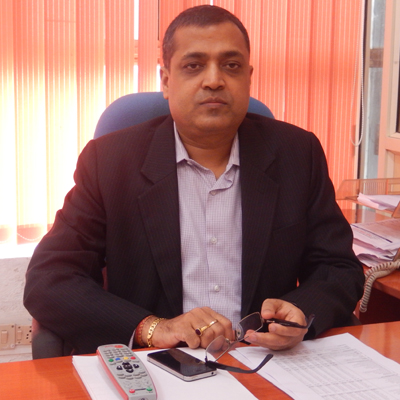
    When he is not actively focused on growing the business of the company, he is a family man.  He spent eight years at his current group’s parent company– Indian Metals and Ferro Alloys and then driving the group’s venture into cable and television in 1998. Currently the president and CEO of Ortel Communications, Bibhu Prasad Rath has ensured that the company not just grows, but becomes one of the big players in the country.


    From finance to marketing and then to the cable business, he has seen it all for the company headed by Jay Panda and Jagi Mangat Panda. By taking a cue from the US cable TV  biz, he and his team at Ortel looked at consolidating the fragmented mom-and-pop Indian cable TV industry.


    Rath took out some time to talk to indiantelevision.com’s Vishaka Chakrapani about Ortel’s future business plans, rollout of digitisation and the key areas of growth and development in the coming few years. Excerpts:


    What is the philosophy at Ortel?


    The core philosophy of Ortel is to have access to the consumers’ homes. We want to be a communication pipe to consumers’ homes which is capable of delivering a wide range of related services in future. To achieve this we decided right from the beginning that we would have last mile ownership, because in cable TV, video services are one way, and data is two way. Two way services are extremely sensitive to network parameters.


    In the traditional B2B model where the MSO reaches out to the LCO and then to the consumer, close to 80 per cent of the work is done by the LCO. The MSO does very little and so there is no quality uniformity and many times the LCO lacks the right equipment. Workmanship matters a lot in any communication network. It is a choice that we made from the beginning that we wouldn’t deal with any LCOs. Our business is B2C.


    Many people tell us that our model is unique. We, at Ortel, follow the international model by having a network that is capable of delivering both the services- cable and data.


    The biggest advantage of this model is that we can build a network and also provide data services.  The disadvantage is that because you are doing last mile, it is capex heavy. So you can’t do the kind of large spread operation that an MSO-LCO model can do.


    What is your reach?


    We are now operating in four states- Odisha, Chattisgarh, West Bengal and Andhra Pradesh. On an overall basis we have a network capacity of 800,000 homes but the subscriber base is 520,000 of which 80 per cent is concentrated in Odisha and the rest in the other states.


    We want to expand a lot more in other states but we haven’t been able to raise money. We look forward to raising capital in the next one year. Then our focus will be to expand in our existing and other neighbouring states such as Madhya Pradesh. Our focus is also to expand geographically to other states and more in Chattisgarh and Andhra Pradesh. Our idea is to build a regional last mile play. We do not intend to go national now.


    What is the status of your IPO?


    Right now, though the markets are improving and we hope that they continue to do so for next three to four years, we are not actively looking at it. We are looking at other means of fund raising such as private equity as well as international strategic options. The likelihood of opting for private equity is definitely higher.


    What has been your progress in digitisation?


    We have been digitising for nearly five years now, much before the mandate came in. We don’t have an under-declaration issue. We have to digitise because it enhances the capacity by getting more number of channels so that we can effectively compete with DTH operators.


    Odisha comes mostly in phase III and IV. Kolkata came in phase I and Vishakhapatnam (Vizag) in phase II. Our digital base is 15 per cent of our total subscribers. Analogue has always been a fixed price model. In every city you have different sections of consumers with different needs for content and different paying abilities. In digital you can offer customised products to customers. Digital is an important tool to tier the service. There are four markets in Odisha where we have been digitising- Bhubaneswar, Cuttack, Rourkela and Jharsuguda, apart from Kolkata and Raipur.


    Which are your key investment areas for digitisation?


    We are doing three kinds of investments. One is backend. We have five headends in Bhubaneswar, Jharsuguda, Rourkela, Kolkata and Raipur. We don’t intend to set up any more headends. What we are looking at now is intercity connect through infrastructure providers (IPs), mainly RailTel. Wherever we do digital we will take the feed from Bhubaneswar. At present, we give the feed to Vizag through RailTel.


    The next area for investment is the network. We have a fully digital network which is broadband ready so that isn’t an issue.


    The third cost is the set top boxes (STB). Currently we get a STB for Rs 1700. The box vendor asks for only half the amount and we pay the rest in installments, while we charge consumer only Rs 500 per box. We are looking at raising money for geographical expansion.


    What is your current ARPU?


    Our analogue ARPU is Rs 150 plus taxes, digital is about Rs 185 plus taxes and broadband is about Rs 375 plus taxes.


    Then we also get 15 per cent to 20 per cent incremental customers.


    How digitisation ready are you?


    In our case, SMS, encryption, billing, tiering and CAF for every digital customer and encryption, billing, and CAF for analogue customers is already in place since the past 15 years. We have a billing database where every customer’s data is entered. A collection team of nearly 700 people on contract basis go to all the neighbourhoods at the beginning of the month and collect money by providing a bill and receipt. We have a call centre where customers can lodge complaints and the locally situated service centres take care of their complaints. So the entire B2C backend is already in place.


    Our main challenge now is to seed the STBs. It isn’t possible to complete that by 31 December at the pace at which it’s happening right now. Our current focus is not on spread but on depth. Our biggest market is Bhubaneswar which is already 65 per cent digital. By 31 December about half of our entire subscribers should be digital.


    What do you have to say about TRAI’s digitisation mandate?


    We don’t believe digitisation is mandatory, it needs to be voluntary. When you go to smaller markets, digitisation becomes unviable. The main issue is how do you take the signal to homes? It’s either by setting up a headend or RailTel.


    In smaller markets the number of people is less, so the cost per person increases and becomes unviable. We have spoken to regulators that going forward, smaller markets are going to be difficult and by imposing digitisation, they are giving away the market to DTH which isn’t fair to the cable industry.


    We also intend to explain this to the government. They need to do a further cut off for phase III and IV, say half or quarter million population. Below these population numbers, we require either an exemption from mandatory digitisation or even longer time until the market situation stabilises and costs come down and people start getting returns to invest for digitising the less populated areas.


    What is your subscriber churn?


    We are facing around 1 per cent churn every month but on net basis it is positive. Churn happens because people shift their house to another city or maybe in the same city, some due to timings such as exam time, and I’m sure some due to bad service. On an average we also get around 500 DTH converts per month.


    What is the status of your broadband offering and what are your plans for the same?


    Broadband has been a key focus area at least at a mental level. 10 years ago, TV was the only thing in life. Now people are slowly moving to browsing and watching videos on smartphones. The TV set as a device at home is going to see a reduced utility over a period of time and internet is going to be used more. Ultimately we see this business as a broadband business and not just as a TV business. Whether this will happen in 10 or 20 years, I don’t know but it’s going to be business of broadband, not so much of analogue or digital.


    Out of our entire network capacity, we can give broadband to 400,000 homes. But our actual subscriber base for broadband is 11 per cent of total TV subscribers, that’s about 55,000. This 11 per cent gives 20 per cent to 22 per cent of overall revenue.


    Our focus is to increase broadband penetration from 11 per cent to 25 per cent.


    What broadband services do you offer?


    We are currently operating on DOCSIS 2.0. The same cable that goes to a consumer’s house is split inside for TV and for PC. We also have wired and wireless modem services for using many devices. In retail we provide speeds ranging from 512 kbps to 2 mpbs.


    What is your main focus now for Ortel Communications?


    Our main focus for the next few years will be digital and broadband. Any other service rides on broadband or digital. The only other service we have been trying to get in the past also, but it isn’t working out due to regulatory issue, is the voice service.


    Our aim is to go from the current subscriber base to 30,00,000 in the next three to five years.


    How has your growth come? Organically or through LCO acquisitions?


    We have acquired about 1000 LCOs since 2008. Half of our growth is organic and half is inorganic.


    Initially our growth was only organic and in competition with LCOs. Subsequently, since 2008, we switched to the LCO acquisition model. We acquire the LCO, dismantle the network and lay our own network.


    The LCO exits the business with a revenue share. We buy out the LCO with a structured payment where part of money is paid at the time of buying and the rest is given over a longer period of time ranging from 5 to 7 years. So the LCO owner gets more than what was originally committed because he gets a revenue share. The LCO’s owner does not go back and start competing with us.


    The key difference is that in the organic model when you are competing, you need a longer time to reach critical mass. If you are acquiring then it happens right at time of acquisition. Depending upon what works best for a situation, we follow either model.


    How has your revenue grown?


    Last year our revenue was Rs 132 crore, while this year we expect it to reach Rs 155 crore. The EBIDTA margins are usually 32 per cent to 33 per cent.
  • ICRA rerates Network18 and TV18

    ICRA rerates Network18 and TV18

    MUMBAI: Barely a week after independent and professional investment and credit rating agency ICRA revised ratings for Network 18 media and investments (N18) and TV 18 Broadcast (TV18), it has once again upgraded the two companies ratings for enhanced amounts.


    Note: Short Term Instruments (All instruments with original maturity within one year) with ICRA A1 rating are considered to have very strong degree of safety regarding timely payment of financial obligations. Such instruments carry lowest credit risk. Modifiers {“+” (plus) / “-“(minus)} can be used with the rating symbols for the categories [ICRA]AA(SO) to [ICRA]C(SO). The modifiers reflect the comparative standing within the category.


    N18


    The short- term rating for Rs 230 crore of ICRA A1+ and long-term rating for Rs 10 crore of ICRA A on enhanced banking facilities of Rs 240 crore (up from Rs 140 crore) has been assigned to N18. The outlook on the long-term rating is ‘positive’.


    Additionally, N18’s commercial paper of Rs 100 crore has been assigned as ICRA A1+. The assigned ratings take into account the strong growth in operating profits of N18 (consolidated) in 2013-14 over the previous year, significant reduction in net losses by virtue of favourable impact of cable digitisation, internal cost compression measures and more than halving of interest costs.


    The rating agency says “ICRA draws comfort from the diversified offerings of the broadcasting business across genres and expects that the addition of ETV regional channels, post the recent acquisition, will further strengthen the overall operational profile of the company on a consolidated basis. ICRA notes that the Network18’s non-broadcasting businesses continue to experience weak profitability/ losses while some of its existing bouquet of channels may also continue to face profitability pressures arising from rising competitive intensity. Also, in the broadcasting business, there is likely to be recurring need to fund gestation losses in select new channels as also additional investments that may have to be put in for the ETV bouquet of channels.”


    TV18


    The Rs 200 crore commercial paper programme of TV18 Broadcast has been assigned short-term rating of ICRA A1+. 


    The assigned ratings take into account the strong growth in operating profits of TV18 (consolidated) in 2013-14 over the previous year, increase in net profits to Rs 85.6 crore in 2013-14 from a net loss of Rs 42.2 crore in 2012-13 by virtue of favourable impact of cable digitisation, internal cost compression measures and more than halving of interest costs. The ratings continue to draw support from the diversified offerings of the company’s content bouquet across genres and strong market position of the key news and entertainment channels.


    Says the rating agency, “ICRA expects that the recent addition of ETVs regional channels into TV18’s content bouquet will further strengthen the overall operational profile of the company. TV18 (consolidated) currently derives a large proportion of its revenues through advertisement income, a revenue stream that tends to be volatile and is a function of economic environment and corporate advertisement budgets. However, the enactment of regulatory framework for digitisation of cable TV Systems in India is expected to increase the quantum and proportion of the relatively more stable subscription income for TV18, going forward. Already, TV18 (consolidated) has seen a strong positive traction in net distribution income having increased to Rs 178 crore in 2013-14 (excluding ETV channels) from minus (-) Rs 102 crore in 2011-12.”


    It also states that while TV18’s (consolidated) cash generation is likely to be supported by higher subscription revenues and lower carriage costs by virtue of cable digitisation, it expects continued profitability pressures arising from rising competitive intensity in key business segments, the need to fund gestation losses in select new channels as also additional investments that may have to be put in for the ETV bouquet of channels.

  • M&E industry to meet I&B Minister next week

    M&E industry to meet I&B Minister next week

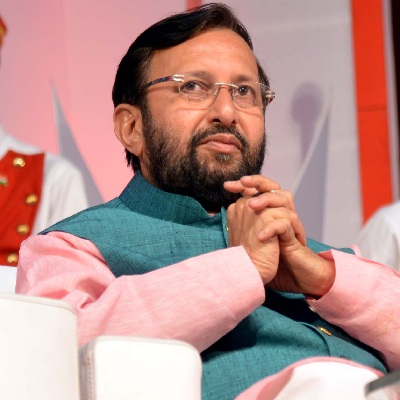
    MUMBAI: After the mammoth election, the new BJP-led NDA government took charge on 26 May and since then, the new Information & Broadcasting Minister, Prakash Javadekar, has been a busy man. From attending press conferences and ceremonies to meeting the various stakeholders, he has been on the move since he took the oath.


    The Minister has been vocal about his thoughts on what he expects from the industry and what needs to be done. On day one itself, he had announced his commitment towards freedom of press and there is no intention of regulating the media. This has given new hopes to the media industry which is currently caught-up in policy hurdles, implementation delays and controversies.


    As per industry sources, the Minister will be meeting the various associations of the Media & Entertainment industry together early next week.


    Though the dates aren’t clear yet and so is the agenda, but the various sources have hinted upon the following topics which will be discussed over the table.


    Digitisation – With the phase I & II over and III & IV in the pipeline, it will be one of the hot topic. The Minister, couple of days back had said that in a step to boost employment and small-scale industry, efforts will be made to encourage indigenisation of set-top boxes. The stakeholders could also discuss carriage fees, opportunities in the DTH and how digitisation can help broadcasters.


    Licences – More the merrier has been the slogan for large media houses. With more and more channels being launched by networks, many pending licence files have been gathering dust in the numerous Ministry offices.


    FDI – The Ministry is already looking for inputs from various stakeholders on whether to allow 100 per cent FDI in News media. Currently, the FDI allowed is up to 26 per cent in news and current affairs media, while 100 per cent is allowed in non-news media like trade publications and entertainment channels.


    Way forward – The industry has been in a limbo for a long say highly placed industry sources who are betting that the new Minister will be able to hurry up things and set a positive tone for the coming years.


    “The meeting is all about the big picture. Everyone has been wanting to meet the new Minister and discuss the grievances and hurdles they face,” says a source who believes a little pep talk and a push is needed to take things in a positive trend.


    Agreeing, another industry source adds, “Everyone will come with their own wish list in a hope to get things to work in their benefit and economically do better than what it has been doing so far.”


    One thing is clear that in the meeting set to be held early next week, the new I&B Minister will have his platter full, with M&E industry handing him a checklist.

  • Government to look at law for preventing attacks on press

    Government to look at law for preventing attacks on press

    MUMBAI:Prakash Javadekar has been making a lot of appearances since he took over as the new Information and Broadcasting Minister. For a man who is aiming to be a media-friendly rather than a media-shy I&B Minister,  Javadekar took the centrestage at the Red Ink Awards held in Mumbai on 7 June, to send across a message from the government to the media fraternity.


    He started off by stating that the essence of democracy is the freedom of press and the Modi government is fully committed to the full freedom of media and it is their cardinal principle. While he questioned whether press meant owners, editors, the journalists or the readers and viewers, he also reminded the media that “society expects accuracy, balance and fairness from the media.”


    According to Javadekar, self-regulation is better than censorship. “I don’t like the word regulation. It should be self-restraint. Media needs to think whether it will play only what the public is interested in viewing or if it will also play what is in the public’s interest,” he said.


    Attacks on the press are not unknown of and Javadekar in his speech did not fail to acknowledge it. “This needs to be prevented. We will surely see if there is a possibility of a central law for prevention of attacks on press,” he stated.


    Expectations from the new Minister are high and he is in no hurry to come up with a game plan on the various issues. “There are many issues pending such as foreign direct investment in media, FM news, social media, digital media, digitisation etc. These are issues we will talk to all the stakeholders and then come to a consensus. We don’t want to thrust some decision on the whole sector but evolve it by consensus.”


    He also stated that both the  print and the electronic media will flourish in the upcoming years. 

  • TRAI warns MSOs and LMOs to speed up billing in DAS areas

    TRAI warns MSOs and LMOs to speed up billing in DAS areas

    MUMBAI: Even after several deadlines being issued in January regarding implementation of billing in DAS areas, the Telecom Regulatory Authority of India (TRAI) has not seen much progress on this front.  And to now address the issue, the Regulator had called for a meeting of the multi system operators (MSOs) and last mile owners (LMOs) in Mumbai on 3 June.


    Taking note of all the issues being faced by both the parties, TRAI has asked both the MSOs and LMOs to resolve their issues and start the billing process as soon as possible. The Regulator has also taken inputs from them and will conduct an internal meeting soon.


    TRAI has directed the two parties to sign proper inter connect agreements with each other to ensure that money collected from subscriber goes through the right channel. “Because of their revenue sharing problem, the consumer is affected. If the two parties haven’t signed any agreement, how can they collect money from the consumer?” asks a TRAI official who was present in the meeting.


    Show cause notices have been sent to MSOs operating in Delhi and those in DAS phase II cities regarding billing process. “Channel aggregation is done by MSO and he also has the subscriber management system. So ideally he should be doing the work of billing,” says the official.


    The tug of war between MSOs and LMOs over ownership of subscribers has not yet been resolved. However, the official says that a subscriber is no one’s property and is free.


    The meeting comes a few days after TRAI issued a directive to MSOs to start billing in DAS phase I cities such that the bill reaches the consumer within 45 days by either hand, post or email along with an option to pay the money online.


    TRAI will look at holding such meetings in other parts of the country as well.  

  • Reporting news the ‘Prudent’ way!

    Reporting news the ‘Prudent’ way!

    MUMBAI: Think Goa and what comes to mind is idyllic surroundings but never the frenzied pace of a news channel. However, the reality is that there are not one but five news channels in the tiny state whose area measures just 3,702 km.

     
    Of the five, only one manages to call the shots i.e. Prudent Media, which is based out of Panjim and owned by powerful business conglomerate, Fomento. Having started operations in 2007, the news channel has already made it to being the market leader, according to media planners.  

     
    Prudent Media has an experienced editor in Pramod Acharya, who has been with the group for five years. In his 11 years of journalism, Acharya has worked with India’s premier news channel CNN-IBN, prior to which he was with local dailies Sunaparant and Rastramath. Other anchors include Suyash Gavnekar and Priyanka Prabhu Chodnekar who host news bulletins in English and Konkani.


    The channel has a 60-strong team including 10 journalists based outside Goa who are stringers. Many of the journalists double as video journalists. Six news bulletins are telecast every day and the channel uses Panasonic 102 and PD 170 cameras to capture news imagery for the same. Some of Prudent Media’s signature shows are Head On and The Debate. In Head On, the host takes on the guest, usually a local politician, with some hard questions. The Debate, as suggested by the name, is in a debate format. Among other shows are Sattagraha, Gajali, Hello Career, Simply Sport, Lokshay Hai Hai, Just Imagine and Counter Point.


    Through a barter system with CNN IBN, Prudent Media gets footage of national and international issues from the former in return for local news feeds. Currently, the channel is available on two multi system operators (MSOs) – Future Digital Infotainment and Indusind Media and Communications Limited as well as eight to 10 smaller cable operators. The state has an interesting phenomenon of duopoly system, where viewers subscribe to both DTH and local cable operators. In the beach belt where tourism flourishes, hoteliers mostly subscribe to DTH.

    While Goa has a population of 14-15 lakh, according to Prudent Media editor Pramod Acharya, the channel has a viewership of 7-9 lakh. “This is based on half yearly surveys our channel conducts,” he says. In terms of advertisers, both local and national brands are on-board the channel in a ratio of around 70:30, respectively. Among national brands, Amul is a recent entrant. According to highly placed industry sources, the ad rates for a 10 second slot could vary from anything between to Rs 300 to Rs 800.


    In terms of digital presence, Prudent Media has an Android app which when launched on 15 August last year witnessed over 1,000 downloads in 48 hours. As of now, the channel’s Facebook page has 16,036 likes, while it has 2,303 followers on Twitter. The channel website offers live streaming of shows to audiences in India and abroad.


    While Prudent Media in particular and the news industry in Goa in general are still far from their regional counterparts, once digitisation kicks in, this nascent industry may well start getting its due recognition.
     

  • TRAI issues directions to MSOs to comply with rules relating to billing for each customer

    TRAI issues directions to MSOs to comply with rules relating to billing for each customer

    NEW DELHI: Directions have been issued by the Telecom Regulatory Authority of India (TRAI) to multi-system operators (MSOs) covered under the first phase of digital addressable system (DAS) to ensure delivery of bill to each subscriber by hand or post or email, as may be opted by the subscriber and provide within 45 days, online payment option in its subscriber management system (SMS) for payment of bill by the subscriber.


    In a direction issued under section 13, read with sub-clauses (i) and (v) of clause (b) of sub-section (1) of section 11, of the TRAI Act 1997 and regulation 24 of the Standards of Quality of Service (DAS Cable TV Systems) Regulations, 2012, the regulator has also said that the MSOs must ensure within 30 days that an electronic acknowledgement is sent to the subscriber, on his registered mobile number or the e-mail address, immediately on his making any payment to the service provider.


    The action comes after a study by a joint team consisting of the representatives of the Authority and Broadcast Engineers Consultants, a public sector unit of the Information and Broadcasting Ministry, to inspect and audit the head- end and the subscriber management system of the MSO providing cable TV services in the National Capital Territory of Delhi.


    The Authority also held meetings with the representatives of the local linked cable operators and the MSOs on 16 April and 17 April.


    During the inspection, the Authority noted non-compliance of the provisions of the regulations by the service providers.


    The direction said the representative of MSO or its linked LCO who collects the payment from the subscriber shall forward the details of the subscriber and the payment made in front of subscriber through his mobile phone to the subscriber management system. The SMS on receipt of this information, shall send an automatic acknowledgement of the payment received to the subscriber either on his registered mobile number or his email address.


    TRAI said regulation 24 of the Standards of Quality of Service (Digital Addressable Cable TV Systems) Regulations 2012 provides that the Authority may, by order or direction, from time to time, intervene, for the purpose of protecting the interest of the subscribers or monitoring or performance of Quality of service standards of the MSO or its linked local cable operator   or for ensuring compliance of the provisions of these regulations and reads as under:-


    TRAI had on 2 December 2013 directed the MSOs to offer cable TV services to its subscribers on both pre-paid and post-paid payment options and generate bills for subscriber; give to every subscriber the bill, on regular basis, for charges due and payable for each month or for any other agreed period and the bill for the period ending the 30 November 2013 latest by 15 December 2013, according to the billing cycle agreed between the parties.


    The MSOs were also to give itemised bill to the subscriber clearly indicating the price of channels or bouquet of channels along with the name of channels in the bouquet, charges for basic tier and channels comprised therein, charges for set-top-box, charges for value added service, the details of taxes along with the rate of taxes and Service Tax registration number and Entertainment Tax registration number; ensure that a proper receipt is given to the subscriber by it or its linked local cable operator for every payment made by the subscriber; and provide to the pre-paid subscriber, at a reasonable cost, the information relating to the itemised usage charge showing actual usage of service. A compliance report had to be submitted by 31 December 2013 for the areas of the National Capital Territory of Delhi, Municipal Council of Greater Mumbai and Kolkata Metropolitan area.

  • The New Government and Indian Media: Agenda for Reform

    The New Government and Indian Media: Agenda for Reform

    I will begin by taking a cue from a catchphrase Mr. Modi used frequently in his stump speeches through the electioneering. “More Governance. Less Government.”


    If PM Modi follows this through in all those facets of the government that media industries deal with, he will simultaneously:


    • Strengthen plurality of voices and reinforce the media’s ‘Fourth Estate’ role as our democracy’s watchdog and first line of defence

    • Unlock investment interest, domestic and FDI, and quickly create thousands of new jobs in the people-intensive creative content sector

    • Give fillip to revenue growth for the centre and state governments

    • Allow freer play of market forces to accelerate growth in the still nascent media sector

    Let us look at specific examples of each of these:

    • It is nearly two decades since FM radio was first opened up to private broadcasters. Even today, licence conditions prohibit radio broadcasters from news and current affairs. In a laughable concession they are, however, permitted to retransmit, without any editing or alteration, All India Radio news bulletins. In the meanwhile, television, which reaches a much larger slice of the population, has a whole, officially recognised and duly licensed ‘news’ genre. Apart from a visceral fear of real free speech in both the legislative and administrative arms of the government, there seems to be no justification for this position. The Supreme Court admitted a public interest litigation on 17 October 2013 seeking the abrogation of this restriction. Can the new government show us that its heart is in the right place when this matter next comes up for hearing?

    • While restrictions on foreign investment in the news business are nearly universal for easily understood reasons, the government will soon be hearing petitions from several players in the electronic news media about the dire straits they are in. While clearly appreciating the need to ensure that a clear majority in a news business must remain in Indian hands, could the government not consider pushing up FDI to 49 per cent? Similarly, the related-party restrictions on investments in the cable & satellite distribution plant (DAS, DTH, HITS etc.) impede the path for many natural investors. Given the ambitious path laid out to analog sunset at the end of this year, the sector is crying out for more investment and the progress of the digitisation project to date is evidence enough for the consumer and content creator benefits it brings in its wake.

    • A very important reason for mandatory digitisation is that it lays to rest the unregulated analogue cable plant, which from the beginning, has operated in a twilight zone beyond the reach of the state. An unfortunate outcome, for central and state governments, is that incomes and profits of businesses in this segment of the media industry have stayed in the informal, ‘black’ economy. Given turnovers in tens of thousands of crore, the loss to the exchequer over the last several years is evidently sizable. The future, however, looks better. Now if the government acts to open FDI pathways into the distribution plant, this future of big service and entertainment tax revenues might be even closer at hand.

    • The Telecom Regulatory Authority of India (TRAI) was an accidental invitee to the television industry. Once it got in, though, it behaved like the well-known fable about the Arab and the Camel. On a cold night in the desert, the camel requests the Arab if it can only get its freezing nose into the tent. One thing leads to another and soon the camel is in the tent and the poor Arab is freezing out in the open. TRAI has chosen to build a complex framework to regulate tariffs between content providers and distribution platforms with all sorts of caps and restrictions. Interestingly enough, it appears that the regulations work only to protect distribution interests while doing little or nothing for the final consumer. With a multiplicity of content providers and distribution platforms, the likelihood of any player or group of players being able to exert monopolistic or even oligopolistic economic power leading to extortionate impositions on the consumer now appear far-fetched. Under the circumstances, it may be time to wind down this onerous framework. In any case, an erstwhile TRAI chairman Pradeep Baijal, had indicated that regulation would make way for forbearance soon as the last-mile was competitive. How much more competitive can it get with half a dozen DTH players, hundreds of DAS platforms and indications of other initiatives like HITS in the pipeline?

    The country has given an unequivocal mandate to Mr. Modi, his party and coalition. Expectations are stratospheric and everything that accelerates the wheels of business and commerce should be music to his and his government’s ears. BBC’s stated mission “To enrich people’s lives with programmes and services that inform, educate and entertain” is a great encapsulation of the mission of the entire media industry itself. Support this industry and you unleash a catalysing force of good, Mr. Modi.

    Because ultimately, as the Clinton Campaign in 1992 put it pithily, it’s “The Economy, stupid.”

    (These are purely personal views of Provocateur Advisory principal Paritosh Joshi and indiantelevision.com does not subscribe to these views)

  • Indian copyright law is one of the strongest in the world: USTR report

    Indian copyright law is one of the strongest in the world: USTR report

    NEW DELHI: Despite vehement and exhaustive submissions arraying the strength of the Indian IP regime, India continues to be on the watch list in the United States Trade Representative (USTR) 2014 Special 301 Report.


    Others in the list are China, Russia, Algeria, Argentina, Chile, Indonesia, Pakistan, Thailand and Venezuela.


    The report, however, commends India for its achievements like digitisation and upgradation of IP offices and active copyright enforcement by the Delhi High Court through injunctive relief, to name a few. In the report, the US has also recognised the role of bilateral engagements between US and India to resolve concerns relating to Intellectual Property.


    “FICCI in its response to Hearing Testimony of India before USTR had strongly asserted that India has a well-established legislative, administrative and judicial framework to safeguard IPRs which meets its obligations under TRIPS, and has withheld the test of severe international scrutiny. We are glad to note that India has not been given the Priority Country status as this could have had serious ramification on economic, political and trade sanctions”, according to FICCI secretary general Dr A Didar Singh.


    “Indian IP law is TRIPS Compliant and more. Indian copyright law is one of the strongest and best in the world. India protected computer programmes by copyright much earlier than the US. The Indian Copyright Act 2012 law is in full conformity with international treaties of WIPO. The legislative and statutory measures are supplemented by appropriate administrative measures by the Governments both at the Centre and in the States for enforcement of IPRs; this includes Inter-Ministerial Committee on Enforcement of IPR laws, Copyright Enforcement Advisory Council (CEAC), Enforcement Cells, Intellectual Property Appellate Board (IPAB) and Automated Recording and Targeting System (ARTS) portal of Central Board of Excise and Customs (CBEC).”


     The national IP strategy gives utmost importance to IPR Portfolios. Recent upgradation of the Intellectual Property Offices in accordance with the international standards has been one of the significant steps taken by the Indian government to make it more service oriented and user friendly.


    With effect from 15 October 2013, Intellectual Property Office (IPO) has also started functioning as International Search Authority (ISA) and International Preliminary Examining Authority under PCT.

  • MCOF conclave stresses on importance of broadband for LMOs

    MCOF conclave stresses on importance of broadband for LMOs

    MUMBAI:  It has been touted as one of the leading get together of the last mile owners (LMOs) in Maharashtra. The Maharashtra Cable Operators Federation (MCOF) National Conclave on Broadband and Cable (NCBC) 2014 saw its president Arvind Prabhoo put his best foot forward in trying to get the LMOs to buy into his vision of a digitised cable TV India where they are also prospering. Apart from formally launching Synergy Cable Operators Private Limited (SCOPE), the first Cable Virtual Networks Operator (CVNO), Prabhoo and a handful of industry vets and consultants, stressed on the importance of broadband and how LMOs could increase their business five-fold, using this tool.


    Prabhoo pointed out that number of active broadband subscribers in India is expected double in the next two to three years according to a Telecom Regulatory Authority of India report.  In Mumbai alone, the figure is expected to go up from the current 1.2 million to 4.5 million in the next couple of years. “Broadband will grow, and we need to utilize this opportunity,” Prabhoo said.


    Drawing comparisons with the US where 50 per cent of broadband services are provided by cable operators, he said, “We need to implement the same in India. As things stand, only a fraction of the broadband subscriber base is delivered by cable operators.”


    Apart from the emphasis on broadband, day one of NCBC 2014 saw heated debate over the existing three models i.e. MSO:LMO, HITS and the newly-minted CVNO, which seeks to provide white label cable TV services to smaller operators in phase III and phase IV.


    Presided over by indiantelevision.com founder, CEO and editor-in-chief Anil Wanvari, the session had all parties putting forth their points of view. The panel comprised Kulbhushan Puri of BR Cable Network, Atul Saraf of ABS Seven Star, Vynsley Fernandes of Castle Media, and Prabhoo.


    During the discussion, Wanvari expressed the view that the full rewards of digitisation have yet to trickle down to the broadcaster, MSO or LMO – as they viewed each other with suspicion, though things have improved in recent times. “There is a need for greater communication and understanding among the stakeholders,” said Wanvari. “The LMOs and MSOs need to understand that broadcasters are investing in content and they need to recoup that investment.  Broadcasters need to understand MSOs are investing in setting up infrastructure and that LMOs want a sustainable future. The cable ecosystem also needs to understand that broadband can be extremely rewarding as compared to simple video signals where subscribers tend to be wary of price increases.”


    To this, Prabhoo invited all stakeholders to come together to discuss issues and take the industry forward while benefitting everyone. “Proper constructive pricing model can be worked out if broadcasters, MSOs and LMOs discuss issues on the same platform,” he said.


    Fernandes, who is involved in the upcoming HITS project of the Hinduja Group, said, “Packaging of content should be in the hands of the LMOs. Additionally, the LMOs need to invest in set top boxes which they will deliver to their subscribers so that ownership stays with them. And this is what the HITS project is set to do.”


    Prabhoo said that while there will be areas covered by the CVNO in phase III and IV of DAS called Headend on the Ground (HOGS), there would be some covered by HITS (Headend In The Sky). “There could also be areas where HITS and HOGS can work together to take digitisation forward,” proposed Prabhoo.


     Saraf said the future of DAS phase III and IV lay in MPEG4 and not MPEG2 STBs that were currently being seeded by operators. On the issue of low ARPUs in phase I and II, he said, “ARPUs can go up only by introducing value added services like Video on Demand (VOD), Movie on Demand and YouTube. We need hybrid STBs, which can provide both cable and internet services.”