Tag: digitisation

  • Dish TV sharpens focus on Tamil Nadu

    Dish TV sharpens focus on Tamil Nadu

    MUMBAI: Despite having substantial share across all markets in South India, direct-to-home (DTH) operator Dish TV is currently focusing on Tamil Nadu as the market there affords a big pay TV opportunity. Moreover, the state is also going through digitisation, which has created more avenues for DTH players to increase their subscriber base in the state.

    Recently, Dish TV announced a plan to come up around 30 popular Tamil channels on its platform with an aim to leave customers with wider choice. In an interaction with Indiantelevision.com, Dish TV India SVP marketing Sukhpreet Singh said that Tamil Nadu has always been important for the company and is one of the top markets for the company.

    “We are a major player in every market, including the South Indian market. We have a substantial share in Karnataka, Andhra Pradesh and Telangana, too. But we are focusing more on the Tamil market because there is more content available. At this point of time, we are focusing on the Tamil market as it is going through digitisation,” he said when asked about the company’s plan to focus on other South Indian markets.

    However, he said that being a pan-India brand, it is not fair to focus on one market over another. The company keeps figuring out what customers want in a particular state, if there’s need of more content, subscription packages or services. Currently, they are doing this for Tamil Nadu.

    Being a multi-dimensional market, Tamil Nadu has several segments of audience. One of the segment watches Tamil channels only while another one watches other South Indian language channels along with Tamil channels. Then, there are other two segments that demand Hindi and English content. The company tries to reach each of the four segments with subscription packs applicable for a particular segment.

    “We continuously keep coming up with subscription packages; recently, we launched an annual subscription package for Tamil Nadu,” Singh said. The primary means of attracting more users to the platform is providing more content. Along with that, content has to be packaged and priced correctly.

    Through promotional programmes and advertisements, Dish TV wants to keep its customers aware of all the plans. For building up the subscriber base, it is expanding distribution as well.

    “We do unique things. For example, Dish TV is the only brand that provides the option of topping of your pack with single channels also,” he said. “If a customer who basically watches Tamil content and want some English channels, they don’t have to opt for the mega pack. They can pick channels at Rs 8.5 under ‘Mera Apna Pack’ initiative. This initiative has attracted a lot of customers.”

    To increase market share, the long-term strategy is always based on better customer experience. Brand loyalty has a direct bearing on market share.

    “The number of people subscribing to our VAS (value-added services) has increased dramatically,” he added when asked about how VAS was helping Dish TV’s business.

    During the various digitisation phases, Dish TV acquired a number of customers in the state. Now, as the market has matured, like all the brands, Dish TV is also experimenting with new strategies.

  • DTH’s year of consolidation

    DTH’s year of consolidation

    MUMBAI: It would be safe to say that this was the year of the big DTH challenge. India’s cable TV multi system operators (MSOs) could not go into many phase IV areas and DTH stepped in wherever analogue broadcast signals were switched off following the crossing of the digital addressable system (DAS) deadline. Whether it was Tata Sky, FreeDish, Videocon d2h, Airtel Digital TV, Sun Direct or Dish TV, they all played a part.

    The going, however, was not as smooth as it could have been. High capex and opex and low ARPUs continued to dog the video distribution vertical making it an extremely low or no-margin business. While in the early days customer acquisition was the driver for most distribution platform operators, currently their eye has been on cost-efficiencies. This was evident from the ongoing overtures three of the players were making to others. Dish TV and Videocon d2h were already going through the throes of merging, the Anil Ambani-owned Reliance Big DTH was shopping around having conversations with almost every player, and there were talks of Airtel and Tata Sky possibly getting into bed with each other.

    The first nearly came to pass in 2017 with the two companies getting clearances from all quarters—government, courts and company law board—but getting stuck over the year end because of a technical difficulty. Reliance Big TV was sold to an IT and electronics company Veecon that sells security scanners and tablets–the wealth of its promoters is rumoured to be from selling religious lockets. Veecon said it would renew the Big TV licence by giving the requisite bank guarantees and ensure TV continuity for its approximately 1.2 million customers and jobs for nearly 500 people. It also announced that it would take Reliance Big DTH free to air (FTA) and announced a partnership with Sri Adhikari Brothers to launch a clutch of channels that would prove to be drivers of the platform. How Veecon will pay off Big TV’s payments to broadcasters was not clear at the time of writing and will decide whether the platform will ever take off.

    However, its announcement came at a time when the government had shut the door for private broadcasters and DD FreeDish, which had shown gee whiz growth rates, had come up as a powerful DTH player. New Ministry of Information and Broadcasting (MIB) minister Smriti Irani refused to make channel renewals for which several broadcasters took it to the Telecom Disputes Settlement Appellate Tribunal (TDSAT). An interim order gave the channels, whose licence was soon to expire, relief that they could continue by paying similar prices till Prasar Bharat came up with an alternative proposal and a convincing explanation to throw out private TV channels off DD Free Dish. It is expected that Prasar Bharati will formulate its new policy akin to the FM radio auction wherein 50 per cent of revenue is shared, apart from the bid amount, in e-auctions. Talk internally is that none of this would happen and DD Free Dish is most likely going to be used solely to relay government channels.

    Media reports also said sometime in the second half of the year that there could be more synergies between the Tatas and News Corp-promoted Tata Sky and Airtel Digital TV with possible merger talks taking place. That hasn’t happened as of now but the Airtel group did end up buying out certain telecoms asset of the Tatas.

    Also, private equity firm Warburg Pincus announced its decision to own 20 per cent stake in Airtel Digital TV for $350 million, leaving 80 per cent with Airtel’s promoters. That valued the Mittal-owned DTH service at a whopping $1.7 billion, which was mouthwatering news for the DTH pioneers. By September, Airtel claimed ownership to 14 million subscribers with revenue of $550 million.

    The year was significant for the fact that the DTH operators led by Tata Sky and Airtel Digital decided they had to take a tour of the court. The Harit Nagpal-led operator challenged the Telecom Regulatory Authority of India’s (TRAI) order on tariff and the reference interconnect regulations. The order stated that all stakeholders must abide by rates fixed by broadcasters. Joining Tata Sky in court was Airtel.

    Dish TV, the oldest DTH player in the country, appointed Anil Dua as its new CEO even as the company’s integration with Videocon d2h was on the anvil. Dish TV’s CMD Jawahar Goel raised an alarm over Star India’s monopoly in cricket events that, after its acquisition of the rights for the Indian Premier League (IPL), would force DTH players to include Star Sports channels and result in the broadcaster pricing the sports channels exorbitantly. No government reaction was forthcoming on this issue. Dish TV also took Star channel Life Ok to the TDSAT claiming that it could not rebrand itself as an FTA from a pay channel without sufficient intimation. Life Ok is today Star Bharat and a leading channel in BARC viewership ratings, riding on the expanded viewership courtesy Doordarshan’s FTA KU-band platform called DD FreeDish.

    For the quarter ended 31 March 2017, not only did subscriber additions dip drastically, but were also the lowest for a quarter in the financial year 2016-17. Airtel, Dish TV and Videocon saw total addition of just 8.33 per cent to 41.13 million for the concerned financial year. By 30 September 2017, there were just 2.47 million additions to the DTH industry as per TRAI, which was way below the 3.37 million it gained in the same six months in 2016. Moreover, active subscribers added in the July-September quarter were just 0.78 million, half of the figure from the corresponding quarter a year ago. Dish TV, Airtel DTH and Videocon d2h make up 63-65 per cent of the total active subscribers while Tata Sky holds about 21 per cent and Sun Direct 11 per cent. DD Free Dish is estimated to have 22 million subscribers and is expected to touch 40 million in two to three years.

    The second half of the year saw the introduction of the goods and services tax (GST) that gave a breather to those consuming cable and DTH services. Whereas customers once paid anything between 10-30 per cent as entertainment tax as well as a 15 per cent service tax, it was now fixed at 18 per cent. The Punjab government also announced that it would be adding a new entertainment tax to cable and DTH connections with the latter having to bear Rs 5 a month.

    Sun Direct is a major DTH player in the south holding about 40 per cent of the area. It also makes up 97 per cent of its total subscribers. Sun Direct took up an HEVC media solution from Harmonic to increase its HD channel number to 80.

    Profit after tax (PAT) for Videocon stood at Rs 168 million for the quarter ended 30 September 2017, which was just Rs 12 million for the previous quarter and Rs 148 million for the corresponding quarter a year ago. Dish TV, however, was in the red with net loss of Rs 178.7 million for the quarter as against PAT of Rs 689.6 million for the same quarter a year ago. During the quarter ended 30 September 2017, Airtel reported PAT of Rs 12,990 million down from Rs 27,350 million from a year ago.

    Videocon d2h and Airtel showed good average revenue per user (ARPU) numbers in 2017. The former raked in Rs 212 for the quarter ended 30 September 2017 from 13.25 million subscribers (a 0.21 million increase from the previous quarter). The ARPU for the previous quarter was Rs 198 while a year ago quarter was Rs 209. Dish TV’s ARPU for the same quarter was Rs 149, a rupee higher than the trailing quarter. It had a total of 15.1 million subscribers. ARPU for Airtel Digital TV stood at Rs 233 in the respective quarter, up from Rs 228 in the previous quarter and Rs 232 in the year ago quarter. Tata Sky does not release its financial numbers but analysts pinpoint its ARPU to be close to Rs 300.

    Dish TV introduced numerous value-added services (VAS) to encourage more viewers such as the Dance Active and Disney Active series, cardless STBs, 32 educational channels under Swayam Prabha. Early on in the year, it cut the rate of its base pack to Rs 33 a month to counter the free services by DD Free Dish. It even went to the extent of allowing people to curate their own packs by picking individual channels. Dish TV added 23 channels, which included nine HD ones.

    Tata Sky came up with a Make My HD pack for as low as Rs 30 per month and a regional HD Access pack at Rs 50 per month for users subscribed to regional SD channels. The channel targeted the south market with a South special pack at Rs 290. Dish TV campaigned for HD in all homes by removing the access fee on it and advertising a cost as low as Rs 169 per month (excluding taxes). Countering DD Free Dish, the oldest DTH player also introduced an FTA pack with a price translating to Rs 32 a month.

    On the technology front, Airtel’s hybrid STB was officially the first to launch in the market, bringing to consumers the best of both worlds–satellite channels and content available on the internet. The STB also came preloaded with Netflix and YouTube allowing even a regular TV to turn ‘smart’ courtesy an inbuilt wi-fi feature and Google voice search. Dish TV launched its new card-less security feature with Verimatrix as well as an artificial intelligence-enabled chatbot called ADI.

    For the coming year, the industry will likely see the outcome and growth of the first merger between Dish TV and Videocon and the synergies they bring to the industry. FreeDish is expected to be a big player in the remote parts of the country, especially with FTA broadcasters dancing to their tune. DTH operators have to still work hard to increase ARPU and maintain profitability.


  • Parliamentary panel pushes for TRAI’s empowerment

    Parliamentary panel pushes for TRAI’s empowerment

    MUMBAI: Parliament’s Standing Committee on Information Technology and Communications (SCIT) wants more regulations for the broadcast industry. Finding the current powers given to the Telecom Regulatory Authority of India (TRAI) inadequate, it has recommended that either the scope of its authority be increased or the broadcast industry be given its own regulator.

    In the committee’s report on ‘Status of Cable TV Digitisation and Interoperability of Set-top Boxes’, it noted that since 2004, when the TRAI was entrusted with the responsibility to oversee the broadcast sector, the industry has seen enormous growth in the number of satellite TV channels, DTH services, digitisation of cable TV networks, and TV ratings agencies. With its limited ability, TRAI has efficiently handled issues to bring about transparency and non-discrimination, improve the quality of service and allow the sector to grow.

    It noted that TRAI recommendations were the basis for the government to form several policy decisions. “The committee is, however, constrained to note that TRAI at present has got very limited powers due to which enforcement of its regulations, directions and tariff orders becomes difficult,” the panel mentioned.

    Several services providers have freely violated TRAI orders and cases against them were filed in pertinent courts. The committee doesn’t find this an effective way to get the broadcast industry to fall in line with rules. The TRAI’s recommendations of modifications to its Act are under consideration by the government.

    The committee has suggested the government to evaluate the need for a separate regulator for the broadcast industry and, until such a time, the TRAI be empowered for effective enforcement of its regulations.

    It appreciated the efforts taken by TRAI to regulate pricing of set top boxes, but strongly recommends for unbundling of hardware and associated services and making provision for itemised billing for hardware as well as associated services such as installation, activation and maintenance and providing more option to the customer to procure similar compatible hardware from the open market.

    The TRAI’s effort on addressing carriage fee details was also lauded by the committee. It stated that “despite extreme reluctance on the part of broadcasters to share the details of the carriage fee”, it has now addressed the issue in its new regulatory framework capping it at 20 paise per subscriber per channel and which is expected to further decrease till zero when 20 per cent of subscribers will be available on the platform who choose the channel. Though this decision is being scrutinised at the High Courts of Delhi and Chennai, the committee hoped the TRAI’s efforts will go a long way in addressing the issue to the satisfaction of all stakeholders.

    Also read:

    TRAI on carriage fee, other issues in draft interconnect guidelines

    TRAI tariff order’s impact on the industry

  • MIB directs states to ensure TV digitisation & action against defaulters

    MIB directs states to ensure TV digitisation & action against defaulters

    NEW DELHI: Noting that it has been receiving a number of complaints alleging analogue signals were still being transmitted by some cable operators, the ministry of information and broadcasting (MIB) has directed local administrations in the country to crack down on such errant LCOs and report back on the actions taken.

    This move comes within days of a notice to around 180 multi-system operators — granted provisional licenses — who had failed to comply with requirements of the government regarding digitisation, including updating information on the number of digital boxes seeded in their areas of operation.

    In a letter to all state chief secretaries, MIB additional secretary Jayashree Mukherjee reiterated the government had mandated only digital encrypted signals can be carried on the cable TV networks in the country from 1 April 2017 and carriage of analogue signals and/or unencrypted signals after that date was a violation of the Cable Television Network (Regulation) Act 1995 for which authorised local level officers had powers under the law to seize the equipment of the defaulting cable operators.

    The letter also pointed out that no reports were being received from the authorised local officials on action taken on complaints forwarded by the MIB, which had also prepared a check list for inspection of MSOs and sent it to officials of various local administrations on 25 April 2017. The directive was simple: plan regular inspection and take prompt action against the defaulters.

    “Very poor response on carrying out of inspection by the authorised officers has been received,” the MIB letter rued, requesting various state chief secretaries to direct their colleagues to be more active on this front against defaulters.

    ALSO READ:

    MIB show-causes MSOs on incomplete digitization info

    MIB seeks all new MSO applications online

  • MIB show-causes MSOs on incomplete digitisation info

    MIB show-causes MSOs on incomplete digitisation info

    NEW DELHI: Ministry of Information and Broadcasting (MIB) has issued show-cause notices to those MSOs who have failed to provide digitization details to the government, including the number of boxes seeded in their areas of operation.

    Quoting earlier government directives, MIB told the errant MSOs today in an official note that they had not submitted details of their headends, subscriber management system, number of mandatory TV channels being carried on their networks, apart from the total number of boxes seeded in the market. This information was to have been uploaded by MSOs at a designated place earmarked by MIB.

    “Whereas you have failed to furnish the said details to the Ministry within the stipulated time frame…why not your MSO registration be terminated/canceled?” the government has asked, directing the MSOs to provide the details within 15 days from 31 August 2017.

    Officially, the whole country was deemed digital on 1 April 2017, but in private both the government and industry stakeholders opine that pockets of analog TV distribution still persist and boxes are still being seeded in phase IV areas comprising small towns and villages primarily in rural areas and India’s hinterland.

    ALSO READ:

    DAS: MSOs, LCOs give low figure of STB seeding, official sources admit it’s under 80%

    Arasu DAS licence: Stakeholders fear flurry of similar requests & permissions

  • Guest Column: 5 Trends lending the Power to Believe in Indian TV industry

    Guest Column: 5 Trends lending the Power to Believe in Indian TV industry

    The four pillars influencing the M&E sector are: Infrastructure, Government policies, Devices and Digital Technologies. Growing consumer demand is inviting policy support driving innovation and resulting in increasing investments in the sector.

    There are 5 identifiable trends which lend television industry the power to dream and the analysts the power to believe.  These are:
    1. Positive Government Directives
    2. Surge in Digital consumption
    3. Consolidation the new buzzword
    4. Rural India beckons
    5. Data undergirds everything

    1. Positive Government Directives
    The M&E industry is expected to leap forward after a slow 2016. 2016 experienced two large government directives which affected the TV industry in negative ways for the short term. 

    Demonetisation came as a bolt from the blue and shaved off around 2% of ad revenues for the TV industry. 

    GST as another one to rationalise taxation across the M&E industry. While challenges abound initially, overall M&E industry is however a beneficiary for two reasons:
    • Availability of input credits across the board and inclusion of entertainment tax within the ambit of GST are both positive developments.
    • Formalisation of economy and widening of tax base will result in overall positive impact on GDP and thereby resultant positive impact on ad spends.

    public://guest.jpg

    Both Demonetisation and GST will however give a further boost to GDP in the long run. Over and above these, Cable digitisation is already creating a paradigm shift as a game changer with ARPU on an uptrend post digitisation.  Even as it is delayed, the same is expected to be completed in 2017.  

    2. Surge in Digital Consumption 
    The surge in digital consumption is compelling existing players to take a hard look at their business models.  OTT VOD is emerging as a parallel platform along with TV broadcast.   Entry of Netflix, Amazon Prime as global leaders; VOOT, OZEE, Hotstar and Sony Liv as broadcast network backed platforms; and Jio Apps and Airtel Wynk as telecom companies backed platforms joining the game with syndicated content offerings. 

    Development of a sustainable digital ecosystem will be required in the long run to address credible measurement and limited monetisation models.

    3. Consolidation the new buzzword
    Consolidation is gaining momentum across the value chain.  Even as there have been less number of transactions, the good news is that they are of higher value.  The three biggest ones are Dish TV and Videocon merger, Ten Sports acquisition by Sony and Reliance ADAG TV broadcast business takeover by Zee. 

    4. Rural India beckons
    Post commencement of rural measurement by BARC, the big story has bene that of the high levels of TV viewing habits of rural India. This has resulted in higher advertising spending in rural HSMs, introduction of new FTA channels and realignment of content focus for mass tastes.

    5. Data undergirds everything
    Along with the data dividends of digital becoming visible, BARC viewership data has led to consumer analytics becoming indispensable thereby leading to changes in content, distribution and ad strategies.

    Conclusion
    The long-term future for the television industry is very robust with CAGR projections above 14% for both segments of ad revenues and subscription revenues. The Indian Media & Entertainment industry is on the ball with Television leading the charge. 

    public://Untitled-3_17.jpg

    (Piyush Sharma, a global tech, media and entrepreneurial leader, created the successful foray of Zee Entertainment in India and globally under the ‘Living’ brand. The views expressed here are of the writer’s and Indiantelevision.com may not subscribe to them.)

  • LCOs to get unique TRAI number to ensure fair deals, says advisor Gupta

    NEW DELHI: Despite claims of major achievements in all parts of the country in digital addressable system, a meet held recently in Chandigarh presented a dismal picture with many local cable operators complaining that the switching off of analogue had badly affected their business.

    In the seminar organised by the Telecom Disputes Settlement Appellate Tribunal, even Tribunal chairman Justice Shiva Kirti Singh said the operators should approach the government for solutions.

    Information and broadcasting ministry joint secretary (broadcasting) Manoj Kumar Pingua talked about the achievements of digitisation and referred to the transparency leading to greater tax collections by the centre as well as state governments.

    The seminar, on ‘Digitisation: Achievements Issues and the Way Forward’, was attended by the judges of different courts, lawyers, multi-system operators broadcasters and LCOs.

    Telecom Regulatory Authority of India principal advisor S K Gupta said there was a plan to issue a unique number to each LCO and keep a track of his Interconnection Agreements to ensure he gets a fair deal.

    One LCO from the Chamba in Himachal Pradesh said that he had lost all his business because broadcasters had switched off analogue signals and multisystem operators were not prepared to supply him digital signals.

    Another LCO from Punjab said his investments of Rs seven million in a HITS headend and STBs have gone waste as Jain HITS has closed its business. The government has made no policy to compensate cable operators in such conditions. He said that HITS was not working in the present circumstances as broadcasters create hurdles in providing content.

    Earlier, Zee HITS had also closed down. Now only NeXT Digital of Hindujas is operating but he said LCOs were losing faith in the technology.

    Another LCO said MSOs were not giving signed copy of the Interconnection Agreement to LCOs and exploited them every now and then by raising subscriptions. He said there is no security in the business, and since all regulations are challenged in the courts, even the regulator is unable to help.

    While GST had been cleared and Cable and DTH services will attract 18% tax and STBs and other digital equipment will be taxed at 28%, the speakers said they were worried about the negative impact of GST on the business as neither ‘Make in India’ will succeed nor the dream of a ‘Digital India’ will be fulfilled.

  • Dish TV expects significant growth from DAS P III & IV markets

    MUMBAI: Even as India’s consolidating MSOs race ahead to digitise India’s cable TV infrastructure — albeit in fits and starts — in smaller towns and villages, direct to home platform (DTH) owners expect to capture a slice of the action there. Amongst those who have been pushing in the heartlands include state-owned pubcaster’s DD FreeDish. And, it has registered some gains there. Dish TV — which is slated to complete its merger with Videocon d2h later this year — is also hoping to partake the TV subscriber harvest in heartland India.

    “We are anticipating that 70 per cent of the new connections over the next two years would come from those living in small towns and rural markets,” Dish TV CEO Arun Kapoor told PTI, adding that, “it would be primarily because of implementation of Digital Addressable System (DAS) in Phase III and IV.” Of Dish TV’s 15.5 million subscriber base at present, around 35 per cent are from top 100 cities, and the remainder from small towns and rural markets.

    Dish TV is expecting the Average Revenue Per User (ARPU) of the DTH industry to grow over two-fold in the next five years to Rs. 450-500. ARPU would increase from the current industry average of Rs. 150-160. This would be primarily driven by growth in number of HD channels, Value Added Services on DTH platform and implementation of DAS,” Kapoor added.

    Dish TV, the Zee group DTH service arm, is hoping to formally complete the merger with Videocon Group’s DTH arm Videocon d2h by October 2017 after receiving the required regulatory approvals. The merged company would have a subscriber base of 27.2 million, making it the largest DTH service provider in the industry. The merged entity will be renamed as Dish TV Videocon Ltd., the total revenue of Dish TV and Videocon d2h together was Rs. 5,915.8 crore on a pro-forma basis for the fiscal ended 31 March, 2016.

    Dish TV has an active subscriber base of 15.5 million, while that of Videocon d2h stands at around 12.2 million. The DTH industry has around 62 million active subscribers.

    Kapoor said it was soon expecting approvals from regulatory bodies such as National Company Law Tribunal, the Competition Commission of India, and stock exchanges.

    According to Kapoor, the DTH industry, which has players such as Sun Direct, TataSky, Airtel digital TV, Reliance Digital, has a current growth rate of 10 to 12 per cent.

    Also Read  :

    Migrate registration to GST regime, DishTV persuades distributors & trade partners

    DishTV expands its portfolio by 23 channels

    Active DTH subscriber growth subdued in Oct-Dec’16 quarter

  • DAS: Even official figures show cable TV digitisation is incomplete

    DAS: Even official figures show cable TV digitisation is incomplete

    NEW DELHI: Almost two weeks after the formal switch-off of analogue in all parts of the country except Tamil Nadu, a majority of multi-system (MSOs) and local cable operators (LCOs) claimed that the seeding of set-top boxes in Phase III is just over 40 per cent, and likely to be less in Phase IV areas where people cannot afford the boxes.

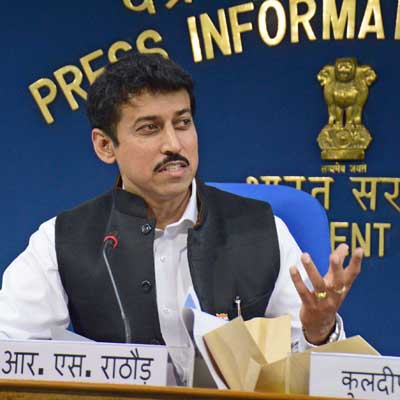
    In sharp contrast, the minister of state for information and broadcasting Rajyavardhan Rathore told the Parliament in mid-March that around 67 per cent seeding of set-top boxes had been achieved in Phase III and IV combined, while it was absolute in the first two phases (minus Tamil Nadu).

    All India Digital Cable Federation Secretary General Saharsh Damani told indiantelevision.com that reports of Phase III received from MSOs indicated that around 43 million STBs had been seeded even as the government had said that the total affected population in Phase III was just over 33 million.

    Furthermore, he said many MSOs said they had ample boxes lying with them, and so were stopping import of more boxes.

    With no clear picture emerging yet even as the country formally completes full digitisation of cable television, an information and broadcasting ministry official claimed told indiantelevision.com that the figure had already crossed 75 per cent in the final two phases. However, he admitted that some extensions had been allowed in some areas, and analogue was continuing in these areas though time limits had been set.

    Meanwhile an MSO who did not want to be named said people in rural areas could not afford boxes and monthly payments, and so they may opt for direct-to-home TV. Adding that MSOs were not doing ‘charity’ but involved in business, he said the chances were that they would take Doordarshan’s FreeDish as a cheaper option.

    Maharashtra Cable Operators Federation office-bearer Arvind Prabhoo told indiantelevision.com that the estimates received by him from Phase IV areas in his state showed just over 20 per cent cable TV homes had gone digital. He also said that, while the situation in Andhra Pradesh and Telangana with regard to Phase IV was very bad, his understanding was that these two states had achieved 60 per cent seeding of which most was in Phase III. Both states have already sought extensions from the centre.

    He added that, though he had no figures, the position in Uttar Pradesh and Madhya Pradesh was very bad – particularly in Phase IV.

    Interestingly, forseeing the DD FreeDish challenge, some DTH platforms have assured subscribers that, at a minimum sum fixed by them, it will be ensured that there is no stoppage of signals to them since DTH is in any case digital.

    About plans to help the poor acquire STBs, the ministry official said the Telecom Regulatory Authority of India had already announced schemes of payments in installments.

    Meanwhile a meeting of the Task Force for the final two phases held two weeks before total switch-off was told by the advisor (DAS) Yogendra Pal that registered operators in Phase III and Phase-IV areas had reported 64.4 million STBs, excluding Tamil Nadu, which came to 67% of the total requirement.

    While giving region-wise figures, he said that there was need to sit together and chalk out a plan for successful implementation of Cable TV digitisation across the country.

    It was decided that a meeting would be held in the office of the Indian Broadcasting Foundation and an action plan would be worked out in the presence of representatives of MSOs.

    Additional secretary Jayashree Mukherjee asked the members to outline the problems being faced by them in Phase IV areas and also their preparedness.

    A representative from SITI Cable stated that they have been facing some problems with regard to carrying of signals as the telecom bandwidth available in remote areas of Phase-IV is poorly served and can only be utilized by one or two MSOs and quality of service is affected. He again raised the issue of infrastructure sharing and wanted to know progress made in this regard.

    The ministry wanted to know if the MSOs had any proposal, noting that no such proposal had been received so far.

    A representative from GTPL Hathway stated they have no problem in Implementing digitization in Phase-IV areas. He further stated that some push-up from the State Government is also required.

    Mukherjee asked the DTH representative what initiatives have been taken by them to cover those areas where cable connectivity is not available. The representative stated that they are in the process of addressing the problems commercially as well.

    Representatives of national MSOs raised the issue of continuance of analogue signals in some areas, particularly in Telangana State and suggested that all broadcasters are required to undergo for total discontinuation of analogue signals.

    The IBF asked the MSOs for specific complaints in this regard so that immediate necessary action can be taken. He mentioned IBF has already issued Circulars/Notices to all their members to switch off analog signals in Phase III areas.

    The representatives from the State Governments outlined their readiness and action being taken by them with regard to successful implement of Digitization. They mentioned that they are holding meetings with stakeholders.

    All the stakeholders also said they have enough inventories of STBs to be seeded in Phase IV areas. No major issue is pending with regard to Cable TV Digitisation in Phase IV areas to be addressed.

    Also Read :

    DAS: MSOs, LCOs give low figure of STB seeding, official sources admit it’s under 80%

    Final phase STB seeding is 35% even as deadline nears

    DAS deadline extension ruled out, govt claims 66% seeding done


  • MIB’s Ajay Mittal allays media industry fears, paints positive picture

    MUMBAI: Ministry of Information and Broadcasting (MIB) secretary Ajay Mittal today expressed faith in the strength of Indian institutions to withstand the challenges in the Indian media sector that have arisen out of fringe elements at play.

    Pointing out that MIB and the other government departments have taken several positive initiatives for the upliftment of the Indian media and entertainment sector, Mittal said, “Have faith in the strength of the Indian Constitution and various institutions to take on the challenges created by fringe groups (on creative freedom).”

    His comments on informal and fringe censorship issues came about as they were raised by Star India Chairman and CEO and Ficci Entertainment & Media Committee chairman Uday Shankar in his theme address earlier. Shankar criticized the fringe elements trying to bring about parallel censorships and media curbs in a modern India and which was detrimental to realizing the dream of Digital India.

    Mittal, who was delivering the Inaugural Address at the 18th edition of the Ficci-Frames 2017 here, said that while the country’s rich traditions have ample scope to provide base for varied content, it’s time for distribution and monetization of content to step in and take industry’s growth to the next level.

    The Indian M&E sector’s CAGR of 14.3 per cent by 2020 would be “almost double the growth” of global trends, Mittal reeled out some figures in his address, saying that the government is fully aware of the importance of the digital media that has shown a growth of 35 per cent.

    The secretary also pointed out that to further ease doing business in India, the government has created a separate category of visas for foreigners under ‘film visa’ so more films, etc could be shot in India.

    Dwelling on IPR and taxation issues, two vexed matters of the media industry, Mittal said that the government’s endeavor was to work with various stakeholders so IPR could be adequately and effectively protected. “Apart from IPR, we have also held discussions with various State governments on tax matters,” he added.

    As part of MIB initiatives, Mittal listed out work on digitization, radio FM, incentivizing film production, streamlining government support for print medium, amongst many other achievements, firmly adding that the government’s effort to “liberalize” media industry “cannot be denied.”