Tag: digitisation

  • Project Management Unit set up in MIB to monitor DAS

    Project Management Unit set up in MIB to monitor DAS

    NEW DELHI: A project management unit has been set up in the Information and Broadcasting Ministry to monitor digitisation of cable television networks in the country.

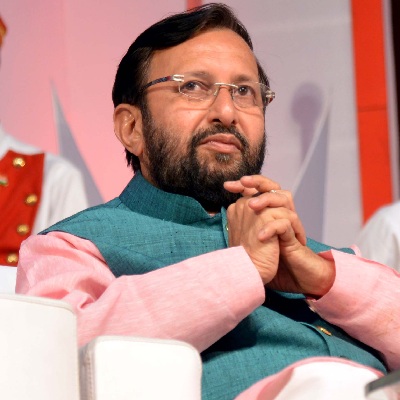
    Information and Broadcasting Minister Prakash Javadekar told Lok Sabha that this is in addition to the task force constituted earlier to steer phase III and phase IV of digital addressable systems, which has to be completed by December, this year.

    He said intensive monitoring of digitisation was undertaken by the Ministry earlier with the support of Prasar Bharati officials and the Broadcasting Engineering Consultants India (BECIL).

    The first phase was set at March 2012 covering the four metros (though DAS was later stayed in Chennai) under the Cable TV Networks (Regulation) Amendment Ordinance 2011, which is an amendment of the Cable TV Networks (Regulation) Act 1995.

    The target date for completely digitising cable sector in cities with population of more than one million was 30 March 2013, all urban areas by 30 September 2014, and the whole country by 31 December 2014.

  • NDTV channels to soon go off air on IMCL

    NDTV channels to soon go off air on IMCL

    MUMBAI: Subscribers of MSO IndusInd Media & Communications Limited (IMCL) will soon not be able to view NDTV channels.


    A scroll running on the home page of the MSO warns subscribers that ‘Public notice: NDTV channels namely NDTV 24X7, NDTV Profit, NDTV Goodtimes and NDTV Hindi are liable to be switched off due to non payment.’ If customers want to continue viewing the channels then they can either call up IMCL’s toll free number or send an email.


    An executive from NDTV’s distribution team said that the network’s deal with IMCL was up for renewal but the MSO was asking for an exorbitant amount of carriage fees. The broadcaster on the other hand is not willing to give in to the demands.


    “IMCL has lost huge ground in Mumbai and some other areas because of digitisation and despite that they are asking for such high carriage fees. They don’t want to negotiate a lower price and neither do we have the intent to pay more. So, most probably we won’t be renewing the deal,” says an executive from the network.


     IMCL has approximately 10 lakh set top boxes in Mumbai and the surrounding areas that come under digital addressable system (DAS) I.


    Another executive from the network said, “They don’t have value for money. If they want to disconnect, then it’s up to them. If the subscribers want the channel, they will ask for it, if they don’t then also it won’t bother us much.”


     IMCL executives were unavailable for comment on the issue. 

  • Only 70 per cent of the Indian pay-TV market will be digitised by 2023: MPA report

    Only 70 per cent of the Indian pay-TV market will be digitised by 2023: MPA report

    MUMBAI: The process of digitisation in India currently seems to be stuck in limbo. Even with several deadlines being set, the country doesn’t seem to have progressed much even in digital addressable systems (DAS) phase II, let alone phases III and IV. A new report from Media Partners Asia (MPA) has predicted key findings about the cable and DTH industry in India between 2013 and 2023.


    It expects the next five years to be a period of robust growth of India’s pay-TV market. MPA projects that the pay TV industry in the country will grow from $7.4 billion in revenue in 2013 to $12.3 billion by 2018.


    The growth in revenue will be equal to an average annual growth rate of 11 per cent between the years 2013 to 2018. By 2023, it expects the industry to generate revenues of approximately $ 16.4 billion. The findings by MPA were published in the report ‘India Pay-TV and Broadband-Future Trends’.


    The study states that by the end of 2013, India had approximately 65 million paying digital subscribers. MPA projections indicate that only 70 per cent of the Indian pay-TV market will be digitised by 2023.


    The total number of TV households in India is currently pegged at around 160 million with nearly 20 million on terrestrial only. This will be the growth opportunity for alternative platforms as cable and DTH will find it unviable to penetrate into the interiors of the country. The Ministry of Information and Broadcasting (MIB) has given a deadline of 31 December 2014 for completion of digitisation. If one goes by the MPA report, India has a long way to go for 100 per cent digitisation.


    From 2015 to 2017 will see an upward trend as DAS will take off in phase III and IV areas. After 2017, the time will be for consolidation and monetisation as subscriber growth will decelerate.


    While the growth during 2009 to 2013 was driven by volume, the next five years will be led by average revenue per user (ARPU). At the end of the 2018, pay TV subscribers will hit 165 million and by 2023, it will be 180 million. This implies a long term penetration of 80 per cent.


    The growth will also give wide space for alternative platforms such as Doordarshan-owned Free Dish, headend-in-the-sky (HITS) and over-the-top media (OTT) apart from cable and DTH, which will address the need gap between TV households and pay TV subscribers.


    DTH industry revenues are expected to reach $4 billion by 2018 and $5.5 billion by 2023. This will be due to healthy subscriber additions from 2014 to 2016 and by improved churn and suspension management. The active DTH subscriber base is expected to grow from 37 million in 2013 to 60 million by 2018 and 70 million by 2023. Thus, DTH will have a 39 per cent share of the pay-TV market by 2023 and 56 per cent share of the digital market.


    MPA predicts that the total digital cable subscribers will be 50 million by 2018 and 55 million by 2023. Digital cable conversion will shoot up from 29 per cent in 2013 to 48 per cent by 2018 and 50 per cent by 2023. This will enable growth in cable broadband. It expects share of cable in the fixed broadband market to grow from 6 per cent to nearly 15 per cent from 2013 to 2023.


    The projected total pay-TV channel revenues for broadcasters, including advertising and subscription will grow from $3.3 billion in 2013 to $6 billion by 2018 and $8.3 billion by 2023.


    Meanwhile the pay-TV ad market is expected to grow at 8.6 per cent CAGR over 2013 to 2023 while broadcaster subscription revenues are expected to grow at 11.3 per cent over the same period. This will be due to improved macro-economic conditions, sub-segmentation of existing genres and new advertiser categories.


    “The Indian market is important because of its accessibility for global media distributors and investors and its high levels of pay-TV penetration. Ever changing regulations are destabilising but the government’s DAS mandate will be an important catalyst while improved supply side factors, including healthy financial markets and investments from international strategists are also critical,” says MPA India VP Mihir Shah.

  • Is India ready for HD HEVC set top boxes?

    Is India ready for HD HEVC set top boxes?

    MUMBAI: India may be struggling with completing the strenuous task of digitising the close to 9.4 crore cable TV homes, but when it comes to keeping pace with technology as compared to the rest of the world, we are not very far behind.

    While it was direct to home (DTH) player Videocon d2h which first announced that it was working out to launch its 4K Ultra HD service, Tata Sky followed soon. And with this, came the one big question: is the country ready for a technology such as this? Answers Broadcom Corporation associate product line director Brett Tischler, “The consumer is ready for 4K technology, which gives a clearer, sharper and brighter viewing experience. When people see it, they want it.”

    Worldwide, when the first 4K Ultra HD TV was launched, it cost close to $20,000. “This has now come down to $1000. This makes the TV much more affordable. The premium consumer is quick to respond,” he adds.

    The chip making company, Broadcom has forayed into 4K technology as well. And if sources are to be believed, it is Broadcom’s chip that has been used in the 4K Ultra HD set top boxes (STBs) introduced by both Videocon d2h and Tata Sky.

    While one may feel that there is not enough 4K content available the world over, Tischler feels otherwise. According to him, 4K content can be made available on Over the Top (OTT) platforms or through Live TV, Video on Demand (VOD) and web based content. Sports and movies are the two genres which will be popular in 4K. “There are a few Hollywood movies which are being made in 4K. Also the last three or four 2014 FIFA World Cup matches were broadcast in 4K in South America,” adds Tischler.

    Broadcom, in the past had also telecast the winter Olympics using 4K technology. According to Broadcom managing director Rajiv Kapur 4K will be adopted faster world over.

    Ultra HD filming, transmission and broadcast requires a significant increase in bandwidth. “Our Ultra HD video decoder solutions with integrated high efficiency video codec (HEVC) technology reduces bandwidth usage by 50 per cent, allowing users to download Ultra HD content in half the time,” informs Tischler.

    Both Kapur and Tishler are of the view that HEVC is the standard that the industry will move towards now. And if the duo is to be believed, the operators in India will soon move towards HD HEVC set top boxes (STBs), since the technology compresses the content and reduces the bandwidth needed to half.

    “India has the potential. We have developed an optimised technology that works well in the country. It is an exciting time for the country,” opines Tischler.

    Content today is generally produced and transmitted in 8 bit but HEVC take it up to 10 bit, giving a wider colour gamut. And so a lot of the content creators will now be looking at adopting this technology. “Most producers and broadcasters know that they will need to create content in 10 bit for better experience, but if they make it in 8 bit, even that will work,” informs Tischler.

    On the flip side, with Indian DTH operators facing transponder space constraints, will the technology be accepted? Answers Tischler, “HEVC content at the same resolution is about half the size. So the 10 megabit AVC content can be reduced to 5 megabit HEVC content, without having any effect on the quality of the content. HD moving to 4K is a multiplier by four and by using the HEVC, this can be halved, and so it’s a multiplier by two.”

    For both Kapur and Tischler, cable satellite and IP TV operators either have definite plans to move to HEVC or are planning to move to it. “It is a better codec for them to use. They are already putting it in their next generation equipments,” says Kapur.

    4K Ultra HD is a premium service, which according to Kapur will start as VOD and then move to OTT and then to full channels.

    The primary obstacle for introducing 4K is gone. With TV sets being sold, the operator cannot ask the consumer to first go and buy TV and then launch the service. “TVs are selling and  the service can’t be far behind. 4K initially will be a premium product, but HEVC as an HD codec, applies to everybody. So some operators who are doing HD will go right into HEVC, and will only do HD in HEVC. So we see HEVC being adopted by some of the biggest and most developed DTH operators in the world and also some of the emerging markets which are going into digitisation,” opines Tischler.

    HEVC is future-proof and will give better returns on investment. “We have a range of HEVC chips, but the 4K p60 10 bit HEVC chip is what we are planning to put in people’s houses,” adds Kapur.

    If the operator chooses to do VOD in HEVC, they can do it using half the bandwidth. According to Kapur, the early decision of deploying boxes by the operators will now play a critical role, since changing the boxes, after the operator has installed them over a large subscriber base will be a tedious task. 

    The HEVC boxes will move into production this year and will be available by 2015. “We are right at the cusp of these developments,” informs Tischler.

    Both Tischler and Kapur are of the view that the phase III and phase IV markets in India will not be using HEVC, since MPEG 2 SD boxes will dominate these markets. “Currently, the operators are looking at grabbing as many subscribers as possible. So they want to push as many and cheapest boxes as possible. It is only later they will introduce newer technology boxes. Then they will try to grow their revenue and give more services to their consumers,” opines Kapur.

    Unlike DTH, the cable TV market in India is still dominated by the SD STBs. Will that also see introduction of HD HEVC boxes? Says Kapur, “DTH also took decades to grow from basic SD boxes to some of the latest technologies. Cable will go through similar evolution.”

    Broadcom which has some 70 offices worldwide, invests heavily on R&D. The company which has close to 35 R&D offices, spends close to 21-23 per cent of its total revenue on R&D.

  • Cable digitisation to increase tax collection: Economic Survey

    Cable digitisation to increase tax collection: Economic Survey

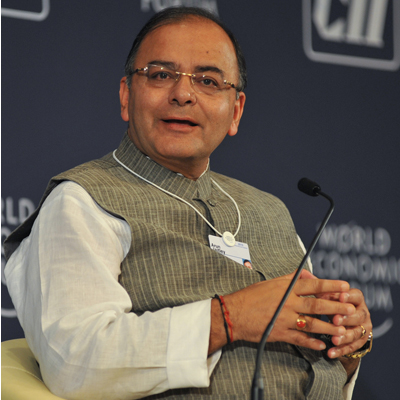
    MUMBAI: The Economic Survey for 2013-14 that was tabled by the Finance Minister Arun Jaitley shows that both the centre and the state governments will benefit from the digitisation of the cable TV industry in India because of the increase in tax collection from it.


    Jaitley in Parliament said, “Preliminary data from the state governments show that there is already two to three fold increase in entertainment tax collections.” The transparency in the subscriber base is set to add to the manifold increase in tax collection.


    Due to digitisation, opportunities are being created for the domestic manufacturers to delve into more set top box (STB) production. It stated that over three crore STBs have already been installed in the eight metros and 36 cities of the phase I and II of digitisation. The deadline for complete digitisation (phase III and IV) has been set to 31 December 2014.


    India has nearly 16 crore TV households with nearly 800 channels. Also there are 88 teleports. However, the benefits of digitisation are yet to kick in even in the phase I and phase II markets with only a few cities being billed as per the rules. Uneven and high entertainment tax is an issue that all the stakeholders including DTH, MSOs and broadcasters are standing up to and urging the government to look into and provide them relief. DTH operators are double taxed as they also have to pay a service tax apart from the entertainment tax.


    While DTH operators are adding 10 lakh customers each year, the government has also allowed two more operators to provide services through headend-in-the-sky (HITS) system. Effects of digitisation are already visible on film exhibition where 95 of the big screens are now digitised and the sector is ‘poised for buoyant growth in the long run.’


    The survey also stated that the media and entertainment industry has had tremendous growth and according to a FICCI-KPMG report, it is expected to touch Rs 1,78,600 crore by 2018. However, piracy remains a big challenge for the film industry and the government has approved an anti-piracy plan to combat it through legal methods.

  • Esha Media Research sees surge in demand of Railway Budget 2014 news clips

    Esha Media Research sees surge in demand of Railway Budget 2014 news clips

    KOLKATA: As the Union Railway Minister Sadananda Gowda started presenting his maiden Rail Budget in Lok Sabha on 8 July, Esha Media Research, a media monitoring and research company, saw an increase in inquiries, seeking news clips of the Railway Budget.


    The enquiries were for news clips in parts or as a whole from different stakeholders and interested parties across the ecosystem including big information technology (IT) companies and foreign direct investors (FDIs). The BJP-led government has mooted railway digitisation and foreign investment to improve the country’s railway system.


    Esha Media Research says that it currently monitors 140 channels across the nation in all languages. “We are tracking the entire railway budget and also certain areas like IT, FDI, freights in parts,” Esha Media Research managing director R S Iyer informed indiantelevision.com.


    “Tracking for railways is more as compared to last year,” Iyer said. “Apart from business houses, we are also receiving inquiries from media agencies tracking the economic content,” he added. Without mentioning the names of the clients and agencies, he revealed that there are some forums across the world that are interested to know and analyse the seriousness of the Prime Minister Narendra Modi-led BJP government.


    “We have been tracking from morning all the government interviews across channels, and they will continue to take place till the end of prime time today, maybe until 11pm. We have also started uploading the files,” Iyer informed.


    Gowda, during his budget presentation, said that his Ministry would seek cabinet approval for allowing foreign direct investment in the state-owned network, but passenger services would be excluded.


    The Railway Minister proposed work stations in select trains as a pilot project this year apart from offering technology for automatic closing of doors both in main line and suburban sections.


    He also said that the e-ticketing mechanism would be strengthened to allow 120,000 simultaneous bookings. The proposed overhaul of the e-ticketing system would support 7,200 tickets per minute as against the current 2,000 tickets per minute


    The budget also talked about the expansion scope of online booking, including streamlining of booking on mobiles, and providing Wi-Fi in A1 and A category stations and in select trains. E-procurement would be made compulsory for procurements worth Rs 25 lakh and more said Gowda.


    “Overall the budget was crisp and concise and the government played safe by not hiking the fare on the day of the budget but two weeks before it,” said a financial expert.


    Stock markets have not reacted very favourably to the railway budget-the BSE closed 562 points down at 4pm today as compared to the its pre-opening at 9am. The NSE CNX Nifty index also closed 2.11 per cent lower than its opening today.

  • I&B Ministry-bashing unwarranted, says NDTV’s Narayan Rao

    I&B Ministry-bashing unwarranted, says NDTV’s Narayan Rao

    MUMBAI:  For the past one and a half years, India has been undergoing stomach churning change in the television industry thanks to the government mandated rollout of digitisation. With the due date to complete digitisation nationwide getting closer (31 December), much needs to be done. Now, with a new government in place and new Information and Broadcasting (I&B) Minister Prakash Javadekar assuring the industry that digitisation will be implemented, expectations are only rising.


    The recent CII meeting that took place with Javadekar saw industry stalwarts express their woes and wish-lists to the minister. They also expressed their displeasure at the inefficiency of the I&B bureaucracy.


    I&B joint secretary of broadcasting Supriya Sahu and I&B secretary Bimal Julka were targets of accusations of delays in clearances and permissions.


    Some other industry leaders – while appreciating the fact that the I&B Ministry  pushed through DAS, whereas CAS in 2006-2007 just fell through –  have lambasted even the TRAI – along with the I&B Ministry – at industry  gatherings over the past six months for not moving fast and determinedly enough on many issues that have impacted their businesses.


     NDTV vice chairperson and News Broadcasters Association president KVL Narayan Rao thinks that industry needs to keep a cool head and not resort to bureaucracy bashing. Narayan Rao has nearly 30 years work experience; half of that was spent in the bureaucracy with the Indian Revenue Service (1979-1994); the other half has been with the news network NDTV.


    Says he: “I think the attack on the bureaucracy, particularly that on the I&B Ministry, was quite unfair. We currently have some highly efficient officials at the I&B Ministry who have shown a lot of understanding of our issues and have tried to do all they can to solve them. Supriya Sahu and Bimal Julka come immediately to mind.”


    At the CASBAA India 2014 conference in New Delhi earlier this year, Sahu made a detailed presentation on the progress and benefits of digitisation stating that only 10 broadcasters had shared data with the Ministry. She appealed to other broadcasters to share revenue data with them so that the government could ascertain whether the digitisation dividend was really coming the way of industry.


    If one harks back to 2012 almost everyone was cynical that the government mandated digital addressable system (DAS) rollout would ever become a reality. Almost everyone scoffed at even the suggestion. But it was a determined ministerial secretariat led by the then secretary Uday Kumar Varma and his team which consisted of Supriya Sahu and her directors Reijemon who pushed it through – along with the TRAI. Julka who replaced Varma has been following the same narrow strait.


    Hence Rao feels that constant hurling of barbs at ministry officials is unpalatable. Says he:  “Please remember that this is virtually the same lot of officials who ensured the implementation of the first two phases of digitisation which isn’t an easy task at all, who also issued the notification on ratings agencies, a long pending demand of the industry, and issued over 400 permissions for channels and who have allowed self/independent regulation to prevail. Yes there have been delays now and then but how much of that can be attributed to the bureaucrats is debatable.”


    Indeed, several initiatives were taken by the I&B mandarins. Officials regularly met (at one time it was almost weekly) with industry executives – whether from broadcasting, MSOs, or LCOs – to asses digitisation’s progress. The security clearance check that directors of various channels were subject to – which pained many a broadcaster – came at the behest of the Ministry of Home Affairs.


    When a large grouping from the broadcasting industry  rose against the only TV ratings agency TAM, it was the I&B Ministry that took note of it and came up with policy guidelines for TV viewership monitoring. It was the Ministry which also pushed the institution of Broadcasting Audience Research Council, which the industry had kept in cold storage for almost half a decade.


    After the Saradha chit fund scam, the Ministry quickly stepped in and did a check of the shareholding pattern of various channels to prevent repeats of a similar nature.


    When TRAI came out with the 10+2 ad cap regulation, the Ministry supported the broadcasters’ view in keeping it at bay till digitisation pans out, though nothing concrete has come out of it as yet.


    Additionally, while the Ministry did use the stick, it also doled out carrots by extending DAS deadlines on more than a few occasions – keeping in mind the realities on the ground – to give it a reasonable chance at success. Despite the long rope extended by both TRAI and the I&B Ministry, industry at the cable TV and MSO level has yet to begun physical billing for DAS subscribers even in some phase I cities. Forget about phase II.


    Says a media observer: “Agreed for the last three or four months of the UPA regime the Ministry’s focus was on the election; industry issues were not a high priority. It was not a fault of the civil servants alone; the Ministry itself and the government on the whole could not move, thanks to the losses in the New Delhi state elections, and the stigma of corruption which kept hitting the Congress I in its face. I can understand some sections of the industry getting edgy, nervous and agitated for many a broadcaster’s, DTH operator’s business plans are linked to digitisation’s success and the fact that bureaucrats and ministries don’t throw a spanner in the works.”


    She adds: “But we have to remember we have a new government led by Narendra Kumar Modi who has a lot more freedom than the previous regime. There’s a lot of positivity around, even though there are economic challenges on hand. The industry should look ahead, and not back. Things can only get better, and with experienced officials in the Ministry at helm, it will be easier to push through things. New ones could end up taking longer as they will have to come to grips with the sector – and that takes time.”


    That’s a piece of advice which the irate members of the industry can ponder upon.

  • Digitisation has failed to show increase in ARPUs: Deloitte

    Digitisation has failed to show increase in ARPUs: Deloitte

    NEW DELHI: Although carriage fees saw a reduction of 15-20 per cent after the first two phases of digitisation, the delay in implementation of the various phases of digitisation means the promised jump in subscription revenues and average revenue per user (ARPU) has not materialized.


    The recently launched Digitization and Mobility: Next frontier of growth for M&E, report by Deloitte states, “One year into the implementation of digitisation, the cable and broadcast sector is still trying to iron out creases and get systems in place. The key goal of digitisation was addressability, which was expected to plug leakages in the system. While cable subscribers have been increasing, rampant under-declaration meant, Multi-System Operators (MSOs) that transmitted the signals to cable operators earned little from the large subscriber base.”


    In 2014, Deloitte predicts that the digital TV distribution space – both digital cable and Direct-to-Home (DTH) would find ample room for growth given the catalysing effect of digitisation and the headroom for growth provided by non-TV households in the country.


    The report prepared for the ASSOCHAM annual M&E meet says about 12 million set-top boxes have been seeded and 80 per cent consumer application forms have been received as of December 2013. The Telecom Regulatory Authority of India (TRAI) claims 100 per cent digitisation in DAS phase II.


    TRAI has also said recommendations on the new DTH licences would be brought out very soon.


    HITS licenses which have been issued to two players, is expected to enable digitisation in phase III and phase IV markets.


    Meanwhile, the report notes, “Complaints have poured in against set-top boxes. People in the city are complaining about digital set-top boxes installed in their houses and offices. Visual and sound disturbances coupled with channels going off air from time to time have left viewers unhappy.”


    It also notes that “in the haste to install set-top boxes in the city, cable operators have overlooked a crucial step – that of filling in the Cable Access Form (CAF) before installation of the device. The purpose behind mandating DAS was to identify the actual number of cable viewers in the country. But with most customers not filling in the form, the purpose still remains defeated.”


    “With penetration of TV in India standing at approximately 65 per cent, at present, the country has close to 80 million non-TV households, which presents a key opportunity for the television distribution players. This low level of penetration holds a great potential for players to increase their subscribers and revenues. Drivers such as rising incomes, decreasing household size, multi TV phenomenon and rising urbanisation would only provide a further fillip.”


    Noting that the government’s digitisation mandate is “slowly but steadily progressing towards its target,” the report says the television distribution space is abuzz with prospects, albeit it would call for investments and improvements, especially from the digital cable players. All metros except Chennai have been largely digitised and the phase II of digitisation, which covers 38 cities, is also nearing completion. Phase III and IV of digitisation targets December 2014 for their completion. This would mean digitisation of additional 40 to 50 million households in the balance towns.”


    The report also says that phase III aims to focus on digitisation of all urban areas (municipal areas). Given the extensive coverage of MSOs and LCOs in such areas, digital cable is expected to make the most in the relatively densely populated areas, notwithstanding the churn of subscribers to DTH. In the first phase of digitisation, DTH operators were able to grab 20 per cent of subscribers converting them from analog to digital.


    Phase IV aims to focus on digitisation for the rest of India, which predominantly aims at rural areas and tier II cities. DTH is expected to gain the most in areas with sparse population and inadequate cable infrastructure.


    Digitisation phases, scope and affected subscribers

    Digitisation phase               Scope                                        Subscribers affected (million)

    Phase I                            Delhi, Mumbai, Kolkata, Chennai        8-10

    Phase II                           All cities with population > 1 million   12-14

    Phase III                          All urban areas (Municipal areas)        30-35

    Phase IV                         Rest of India                                               22-25

    Source: Industry discussions


    DTH, as a sector, had started off by concentrating on rural areas, which were deprived of cable infrastructure and gradually also entered the urban markets. However, they are still strong in rural markets.


    Given the complexity of the exercise across the country and the rate at which television penetration is growing (MPA expects India to have 183 million pay-TV homes by 2020); the scale of undertaking of digitisation will be a big challenge.  


    But it says analysts and sector professionals agree the future looks promising with the lessons learnt from phases I and II.

  • “The country cannot afford to have tens of millions of bad STBs deployed”

    “The country cannot afford to have tens of millions of bad STBs deployed”

    For a company that was founded just about 23 years ago, Broadcom Corp has indeed come a long way. Founded by a student-professor combo, it is expected to announce financial toplines in excess of $8.5 billion this year. But more than that it is a market leader in providing chips for technologies such as enterprise networking, set-top boxes, and mobile connectivity functions.


    Earlier this year Broadcom president & CEO Scott McGregor had announced that both China and India are critical markets for the company at a conference in Shanghai. He had highlighted that Broadcom’s investments in research and development in India are probably the highest outside of the US. 

    Broadcom executive vice-president & general manager of broadband communications group Daniel Marotta had stated at the same conference that the company sees huge opportunities in the digitisation of the Indian cable TV business and that it had developed a special chip for the market as the ARPUs in the country are low. 


    Indiantelevision.com’s Sandhya Sutodia got in touch with Broadcom India managing director Rajiv Kapur to get further insights into how he views the progress of India’s government mandated digitisation and the opportunities available to his firm.


    Excerpts:


    What is the current state of digitisation in the country and Broadcom’s role in it?


    Digitisation has just about begun with phase III and IV still ahead of us. The new government seems to be putting its focus on various forward looking initiatives. We expect digitisation to continue with a high momentum.


    As Broadcom, we have prepared a variety of STB platforms providing a range of solutions for operators to offer to their subscribers. These range from the very basic cost sensitive SD zappers to entry HD platforms to higher end PVR and server class solutions. We offer several unique market differentiating features in each of these platforms, allowing subscribers and operators to enjoy the best of digital TV.


    Broadcom also invests heavily in hybrid solutions enhancing live TV with interactivity and over the top content and applications. Our lowest end SD solution offers USB and Ethernet interfaces at market competitive prices.


    We have a host of suppliers ready with STBs designed, both in the country and abroad, ready to ship as operators place future orders for the next wave of digitisation they are preparing for.


    How do you see the growth in the next two years?


    We expect the high growth in STB sales to continue beyond the digitisation deadlines. First reason is that subscribers may stagger their purchases of STBs for their second and third TVs in some homes.  Then, continued sales of TVs drives a healthy demand for more STBs in a market where TVs are always recycled to another room or home. Third, and most importantly, operators will continue to catch up with additional technologies and applications we invent on a continuous basis to drive improved user experiences and in turn higher retention and ARPUs for themselves.


    How are the dynamics of the business changing since the past couple of years in the Indian market?


    One visible change is a rising interest in local design and manufacturing. We are finally seeing supplies for the national optical fiber network (NOFN) which demanded a large percentage of made in India products. Small entrepreneurs are stepping up to design and manufacture electronics products locally. Operators are showing more acceptance of locally manufactured products.


    What are Broadcom’s recent innovations and solutions for the cable industry?


    We have implemented an almost complete turnkey solution for the low end cable TV market which includes a ready hardware and software stack to go along. This is so optimised that the memory footprint is very small, thus reducing costs. Additionally, market differentiating features like fast channel change have been added to enhance the user experiences in a digital world.


    We also invested in a range of STB solutions that have a unique technology that allows operators to manage their networks with high quality of service. The end-users benefit with better video and service at lower costs and faster response times.


    We have also invented new architectures for broadband on coax that are designed for deep finer, low density networks. This lowers costs of installation for operators so more customers can enjoy high speed broadband despite lack of subscriber density.


    Please share some of the latest developments at Broadcom for the STB space?


    We keep innovating on market differentiating features. With a large R&D team in India, we take advantage of the local resources to invent new features for the country. We named a few above. There are many others. For example, we automatically can adjust the volume of programs to levelize them across ads or channels. Or we can automatically reformat video received on live TV for viewing on a mobile screen in the same room or for take away. Many more examples exist.


    What concerns you about digitisation in India over the recent past?


    Rapid paced digitisation is always risky. Additionally, quality of hardware and services are critical, not just for now but for a long life of hardware ahead. I am particularly concerned about some of the suppliers that are shipping into India.


    For example, most STBs in India face a high risk of lightning or surge burn out. Operators have been experiencing this. We strongly recommend all STBs imported into the country be specified to meet a high protection standard to reduce risks and damage commonly seen here.


    Additionally, the harsh conditions in India make it important that performance of each STB is predictable and consistent for years to come despite physical damage, moisture etc. Legacy CAN tuners in TVs are known to have a varying performance from STB to STB, and over the years.


    The country cannot afford to have tens of millions of bad quality STBs deployed. We cannot waste energy and resources to replace STBs in a few years. The quality of every STB is critical.

  • DEN Networks selects STMicroelectronics for STBs

    DEN Networks selects STMicroelectronics for STBs

    MUMBAI: Enhancing its set top boxes (STBs) and gateways for its six million subscribers, DEN Networks has tied up with STMicroelectronics (ST), the global semiconductor manufacturer and supplier of system on chip (SoC) ICs.


    Using this technology in DEN’s new HD zapper boxes, it is looking at growing its customer base and revenues as well. The STiH273 (Palma) integrates a field-proven and widely deployed digital video broadcast-cable (DVB-C) demodulator that has been optimised to work with high-performance external controller area networks (CANs) and silicon tuners to meet the stringent RF-performance requirements of the Indian cable networks.


    The STiH273 (Palma) also delivers high-quality Faroudja video, 3DTV support, connectivity, and advanced security schemes with all the latest conditional access system (CAS) support, including NSK2.


    Manufactured in 40nm process technology, the chipset supports an enhanced processing engine with integrated on-chip features that simplify set-top box design, enable operators to take advantage of lower-cost memories, and minimize system power consumption.


    “Our new high-definition digital set-top boxes leverage STMicroelectronics’ feature-packed and flexible SoC ICs, providing an ideal platform for us to deliver innovative value-added services to our customers,” said DEN Networks COO MG Azhar.


    He further added: “The STiH273 SoC is clearly the right choice for our latest generation of set top boxes with the right power, versatility, and features to meet our market needs. We are confident that the chipset will help us in creating both enhanced customer satisfaction and sustaining our leadership edge in India.”


    “As a leading Cable MSO in India, DEN Networks sets the trend for technology, modernisation, and radical transformation, and ST is proud to contribute to DEN’s strategic intent. DEN Networks’ selection of ST’s technology underlines our core competencies and reiterates our commitment to this fast-growing market through localization and cooperation with our India partners,” said STMicroelectronics regional vice president for greater China and south Asia region and director for India Design Center Vivek Sharma.