Tag: digitisation

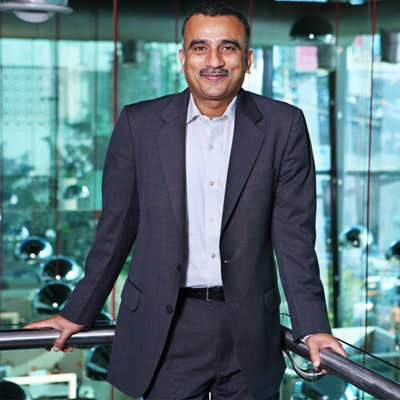
  • “We have to drive BARC to measure outside of TV, on different screens”: Sudhanshu Vats

    “We have to drive BARC to measure outside of TV, on different screens”: Sudhanshu Vats

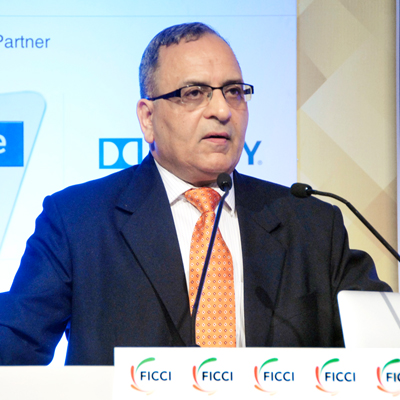
    NEW DELHI: Mobile phones today define the life of the youth. Kids watch all kinds of programmes, sometimes on TV and sometimes not on TV. And this, according to CII chairman national committee on media and entertainment and group CEO Viacom 18 Media Sudhanshu Vats, is not an urban phenomena but an Indian one. The consumers are moving fast, but the question currently is if the regulator and the regulations are moving fast enough?


    Reflecting his thoughts on consumer behavior at the recently concluded CII Big Picture Summit 2014, Vats said that the industry hasn’t made much progress in the area. Talking sector wise in the media and entertainment sector he first spoke of radio. “Today private news is splashed across print, television, internet and then there is news available through tweets and other formats on mobile, but private news is still not available on the radio,” he informed. Through the forum he appealed to the Information and Broadcasting  Minister Prakash Javadekar (I&B) to take this into account during the phase III of FM.


    In the film sector, Vats informed that the number of screens that China has is three times the number that India has. Not only this, while the biggest film in India is close to $50 million, the biggest local Chinese film is close to about $150 dollars today. And Hollywood films tend to be bigger. “There is a need to reduce taxation in ticketing and entertainment. If this happens, we will expand volumes and if volumes expand, we will grow in this country, giving a boost to films which are the best ambassadors of our culture. Both in India and abroad,” he said.


    The third sector he spoke about was events, which currently are not much spoken about. “This can become a hotspot for tourism. Single window clearance is needed,” he added.


    Vats also touched upon the most talked about issue of digitisation. “There is a need to look at digitisation holistically and take strides firmly in one direction. What is happening is that in phase I and phase II, we have done something and not done something. Addressability is still not there. The entire start-stop is not helping,” he opined.


    According to Vats, this new India needs new thinking and it needs new rules and principle. “The time for this is ‘now.’ “We are open to looking at this, but we need to make radical, important strides,” he said while putting forth four new principles to address this new thinking.


    The first is the consumer or viewer. “We need to start the story with the viewer. We need to realise that media and entertainment industry is a consumer industry. The question is:  are our regulations or business models tailored to consumers? The answer is no,” he said.


    The second principle that he stressed upon was on collaboration. “It is extremely important that we start collaborating, both within the industry and by the government with the industry in India and other countries as well.”


    Measurement was the third principle he highlighted. “This aspect is extremely important as audience and viewer is moving very fast. Are we being able to measure it the way we want to, currently the answer is no. But the Broadcast Audience Research Council (BARC) India, which is a joint industry body, is the first step in this area. We have to see how we drive it further so that BARC measures outside of television; on different screens and how it is there for other media as we move forward from the point of view of measurement,” Vats said.


    The final principle that he spoke of was capacity. This refers to human capacity and talent. “Are we recognising media and entertainment as a serious industry? Are we developing it as a curriculum which can be brought about, at least in high schools, so that we start facilitating some of the work which happens. So human capacity building and physical infrastructure capacity building like broadband, digital cable etc needs to be worked upon,” he informed.


    According to Vats, a few years down the line, the distinction between the creator and the consumer will narrow down. Not just this, different sectors of media and entertainment will come together. “Converged India will thrive in a connected world,” he opined.


    India is bubbling with creativity and we can pride ourselves in freedom of thought. “Let’s create in India for the world, make in India, show the world,” concluded Vats.  
  • Government notifies new dates of phase III and phase IV of DAS

    Government notifies new dates of phase III and phase IV of DAS

    NEW DELHI: The Government has finally issued the notification postponing the dates of phase III and phase IV of implementation of digital addressable system (DAS) to December 2015 and December 2016 respectively.


    Indiantelevision.com was the first to break the news about the postponement of the dates for DAS phase III and IV. Speaking to indiantelevision.com I&B secretary Bimal Julka had confirmed that ‘the government had decided to delay the digitisation deadline by a full year in order to give all those involved enough opportunity to overcome all the unseen hurdles that had come up after the UPA government mandated  DAS and the various analogue sunset dates.’


    The notification says that the change has been done ‘on being satisfied to do so in public interest’.


    The DAS notification has been issued by way of amendment to the notification issued on 11 November 2011 which had made it “obligatory for every cable operator to transmit or re-transmit programmes of any channel in encrypted form through digital addressable system.”


    Although the Government had announced its decision to postpone DAS in phase III and phase IV to encourage greater indigenisation of set top boxes, no action could be taken until issuance of the notification.


    Until now, the deadline for phase III was September 2014 and for phase IV December 2014.


    In the first two phases of digitisation, which included cable TV households in the four metros and other major cities, most of the STBs that were installed had been imported from other countries.


    After he took over as Information and Broadcasting Minister, one of the major areas of focus of Prakash Javadekar has been indigenisation of STBs and Ministry sources said the new dates are in keeping with inputs supplied to the Minister in this connection.


    The ministry has made efforts to get STBs declared as Telecommunication Network Equipment which will enable domestic manufacturers to get exempted from certain taxes, an official said.


    Nearly 110 million STBs are required to be installed in cable TV households in the remaining two phases of digitisation and the extended deadline will ensure that the domestic manufacturers prepare themselves and meet this demand, officials said.

  • Govt. reconstitutes task force for DAS phases III and IV

    Govt. reconstitutes task force for DAS phases III and IV

    MUMBAI: Days after Information and Broadcasting (I&B) Minister Prakash Javadekar announced that digitisation in the country will progress as per the new deadlines; the government has come up with a reconstituted task force for implementation of digital addressable system (DAS) in phases III and IV.


    The new task force will constitute I&B additional secretary chairperson, Telecom Regulatory Authority of India (TRAI) principal advisor for broadcast and cable satellite, I&B Ministry joint secretary broadcasting, representative from the MSO Alliance, five independent MSOs one each from north, south, east, west and north east regions, five registered LCO associations one each from north, south, east, west and north east regions, representatives from the Indian Broadcasting Foundation, News Broadcasters Association, Association of Regional Television Broadcasters of India, DTH Association, FICCI, CII, ASSOCHAM, CEAMA, Department of Telecommunications, Department of Electronics and Information Technology, DG: Doordarshan, DG: All India Radio, BECIL, BIS, five prominent consumer organisations one each from north, south, east, west and north east regions and 33 state level nodal officers one each from the states/union territories governments.


    The task force would act as an interface between the government and the industry in matters related to implementation of DAS in the cable TV sector and monitor the implementation of DAS. It also will have to analyse the roadblocks that may come in the way of digitisation and suggest measures.

  • Local STB manufacturers confident of meeting target of DAS phase III and IV

    Local STB manufacturers confident of meeting target of DAS phase III and IV

    NEW DELHI: The Information and Broadcasting (I&B) Ministry has been assured by manufacturers of domestic set top boxes (STBs) that they will be able to meet the demand of 11 crore STBs needed for the final two phases of cable television digitisation.


    This assurance was given to I&B Ministry secretary Bimal Julka over the weekend with manufacturers to check the status of indigenous manufacturing of STBs.


    I&B Minister Prakash Javadekar had recently told that it was unfortunate that good quality STBs were being exported overseas and poor quality STBs from overseas were being installed.


    Earlier, he had said that the Ministry will take steps to solve problems of local manufacturers including those relating to taxation.


    The manufacturers appreciated the efforts of the government for resolving their long pending demand of C-form. They said that they have sufficient installed capacity to meet the full demands of STBs locally and said the government’s initiative would help give employment to about 50,000 people and would attract an investment of about Rs 500 crore. It would generate local support facility for repair of STBs and would also help in smooth implementation of digitisation initiative in the country. 

    The Finance Ministry had on 13 August extended the facility of Form ‘C’ under section 8(3) (b) of Central Sales Tax (CST) Act 1956 to STBs thus fulfilling the major demand of the domestic STB manufacturers who would charge CST @ 2 per cent against VAT of 12-14 per cent being paid earlier. 

    The phase III of digitisation to be completed by December 2015 would cover all other urban areas (municipal corporations/ municipalities) which were not covered in first two phases. Phase IV to be completed by December 2016 would cover the rest of India.


    The meeting was attended by the members of the consumer electronics and appliances manufacturers association (CEAMA) and representatives from STB manufacturers such as My Box Technologies, Dixon Technology, Videocon, Jabil, One-Eight Technologies, Skyworth Digital, Spectra Innovations, Indieon, Logic Eastern and Simmtronics.

  • Govt sending wrong signals to foreign investors by delaying digitisation: Rahul Khullar

    Govt sending wrong signals to foreign investors by delaying digitisation: Rahul Khullar

    MUMBAI: Recently, a letter written by Telecom Regulatory Authority of India (TRAI) chairman Rahul Khullar pointed out that the government was committing a mistake by extending the deadline for digitisation. Khullar has many more points to present on the regulator and the industry.


    In a conversation with Bloomberg, he said that his views on digitisation were very clear. “It is a very bad decision to defer it. It is bad for digital India, broadband delivery and not in public interest,” he said.


    While the government says that its main aim is to push indigenous production of seven crore set top boxes (STBs) in two years, Khullar feels that this is a ‘pipe dream.’


    Khullar said that last year several investors met him and conveyed that it was a miracle that they managed to get two crore boxes digitised. They also asked that by when will digitisation be completed because they are desperately interested in investments in cable. “By delaying digitisation, you are sending a signal to foreign investors that India isn’t ready for investment yet. This does great harm to public credibility,” he said.


    Meanwhile, rumours are afloat that the government is mulling creation of a ‘super regulator’ that will oversee the communications sector. Khullar believes that it is necessary to keep content and carriage separate. “If your aim is to strengthen TRAI then you don’t need a super regulator, just empower the existing one. But if it is to regulate carriage and content, this is an experiment that hasn’t succeeded in the world,” he said.


    According to him, issues concerning content immediately ‘stir up a hornet’s nest’ that usually involves freedom of speech. “My own sense would be to keep carriage and content separate and ensure that the content regulator has nothing to do with the government. Then you have some sort of fighting chance of regulatory survival,” he said.


    Broadband is a growing medium of revenue that is catching the attention of all in media space. The TRAI is due to come out with a paper on ‘policy issues relating to broadband’ in the next 10 days. “Broadband and convergence is still five to 10 years away. If we are to deliver broadband we need to know how to do it in the cheapest way, who should be involved, what to be done in terms of application and software development,” he highlighted. It will focus on building infrastructure and delivering content.

  • Siti Cable to roll out DOCSIS 3 broadband in Delhi and NCR in Q2-2015

    Siti Cable to roll out DOCSIS 3 broadband in Delhi and NCR in Q2-2015

    MUMBAI: Siti Cable, the multi system operator (MSO) from the Essel group is looking at expanding its business in other parts of the country. In a document given to investors, it has asked shareholders for approval to increase its authorised share capital, give authority to the board of directors to create charges/mortgages in respect of borrowings and issuance of equity shares or securities convertible into equity share of up to $100 million.


    The company says that the reason for loss was under declaration of subscriber base and low average revenue per user (ARPU). With digital addressable system (DAS) being implemented, the MSO hopes to generate higher revenue from subscription. Siti Cable also has already become EBIDTA positive this year.


    For digitisation implementation, it has procured and deployed large number of set top boxes (STBs), leading to periodical amortization, leading to inadequate profits.


    In order to improve its situation, the MSO has proposed a few measures. It is looking at expanding its business in north, south and central India, apart from its stronghold of east India. It is preparing strategies for increasing its digital market share and becoming a strong player in DAS areas. The company is rolling out its value added services (VAS) plans across the country in phased manner. Broadband services are intended to be rolled out on advance DOCSIS 3 technology in Delhi and NCR in Q2-2015, besides having broadband subscriber base in eastern region.


    Meanwhile, the increase in productivity will be measured in terms of EBIDTA margin, rationalisation of expenses, standardisation of process and systems to shift focus from individual centric approach to system driven approach and additional incremental profit by rolling out VAS.


    The BOD is asking for approval to “create such charges, mortgages and hypothecations on all or any part of assets or immovable properties of the Company wherever situated, both present and future, and/or whole or part of the undertaking(s) of the Company of every nature and kind whatsoever together with power to take over the management of the business and concern of the Company in certain events, to or in favour of banks, financial institutions, any other lenders or other investing agencies and trustees for the holders of debentures, bonds, other instruments to secure rupee/foreign currency loans hereinafter collectively referred to as “loans”) to secure the amount(s) borrowed or to be borrowed by the company from time to time for due repayment of the principal together with interest, charges, costs, expenses and all other monies payable by the company in respect of such borrowings.”


    It is also seeking approval for authorisation of loan and investments by the company. The BOD is asking approval for “giving any loan to any person or other body corporate, giving any guarantee or providing security in connection with a loan taken by any other body corporate or person; and/or acquiring whether by way of subscription, purchase or otherwise, the securities of any other body corporate; up to financial limit of Rs 1000 crore over and above limits available under Section 186 of the Companies Act, 2013, notwithstanding that the aggregate of the investments and loans so far made or to be made and the guarantees so far given or to be given by the company and securities so far provided and to be provided, exceeds the limits/will exceed the limits laid down under Section 186 of the companies act, 2013 read with companies (meeting of board and its powers) rules 2014.”


    For issuing shares, it is seeking approval to “offer, issue and allot in one or more tranches, to investors whether Indian or foreign, including foreign institutional investors, financial institutions, non-resident Indians, corporate bodies, mutual funds, banks, insurance companies, pensions funds, individuals or otherwise whether shareholder(s) of the company or not, through an issue of equity shares or bonds, debentures and/or any other securities including foreign currency convertible bonds or depository receipts convertible into equity shares of the company at the option of the company or the holder of such security, including by way of qualified institutional placement (QIP) to qualified institutional buyers (QIB) in terms of chapter VIII of the SEBI regulations, through one or more placements of equity shares (hereinafter collectively referred to as ‘Securities’), in domestic and/or one or more international markets whether by way of private placement or otherwise, in one or more tranches, so that the total amount raised through such issue(s) of securities shall not exceed Rupee equivalent of $ 100 million.”


    It has also appointed VD Wadhwa as the executive director for a period of three years from 12 August 2014.

  • Arasu Cable to now foray into broadband service with Railtel

    Arasu Cable to now foray into broadband service with Railtel

    MUMBAI: Tamil Nadu Chief Minister J Jayalalithaa owned Arasu Cable may be struggling with getting the licence to operate in the digital addressable system (DAS) areas, but it is now gearing up to launch its broadband service in collaboration with Railtel Corporation of India.


    With this, the Chennai based multi system operator (MSO) will give its customers affordable broadband services, through cable TV connection.


    It was in August, when during the Assembly session, Jayalalithaa declared that Arasu Cable, which currently provides cable TV connections at Rs 70 per month to its close to 70 lakh customers, will foray into broadband.


    The service, according to Tamil Nadu Information department secretary T K Ramachandran will start in a couple of months.


    The interested cable operators are currently being trained about the new service. The government plans to complete the training in every district by the end of the month.


    The pilot project was conducted in Vellore with around 1,000 subscribers being given access to the service. The tariffs have not yet been fixed, but the schemes are in place. 

  • I&B Ministry issues new deadlines for DAS phase III and IV

    I&B Ministry issues new deadlines for DAS phase III and IV

    NEW DELHI: It is official now. The new dates for digitisation of cable television in the entire country have been announced. While indiantelevision.com was the first to write about the extension in the date given for digitisation of phase III and IV, Information and Broadcasting Ministry officials have said that while phase III has been postponed to December 2015, phase IV can be completed by December 2016. The move has been taken to allow great indigenisation of production of Set Top Boxes (STB) to meet the demands of digital addressable system (DAS).


    Earlier, the government had set 31 December 2014 as the date by which the cable sector across the country would be completely digitised.


    In the first two phases of digitisation, which included cable TV households in the four metros and other major cities, most of the STBs that were installed had been imported from other countries.


    After he took over as Information and Broadcasting Minister, one of the major areas of focus of Prakash Javadekar has been indigenisation of the digitisation drive and Ministry sources said the new dates are in keeping with inputs supplied to the Minister in this connection.


    The Ministry has made efforts to get STBs declared as Telecommunication Network Equipment which will enable domestic manufacturers to get exempted from certain taxes, an official said.


    Nearly 110 million STBs are required to be installed in cable TV households in the remaining two phases of digitisation and the extended deadline will ensure that the domestic manufacturers prepare themselves and meet this demand, officials said. 

  • Digitisation extension 2015: MSOs, LMOs smile; broadcasters sigh

    Digitisation extension 2015: MSOs, LMOs smile; broadcasters sigh

    MUMBAI: It was a decision that most had been anticipating would be taken. But when it did come, it came as a bolt from the blue. Four months before cable TV digitisation had to be completed pan India, the government – through information and broadcasting (I&B) secretary Bimal Julka – announced to industry via indiantelevision.com that a decision had been taken to extend it to December 2015.


    (While this is what Julka has told us, certain sections in the industry have suggested that end-2015 is the analogue sunset date for phase III towns and villages; the date for phase IV regions may end up being December 2016.)


    Earlier this year, the previous UPA government’s Information and Broadcasting (I&B) Minister Manish Tewari had held a task force meet with all the stakeholders to state that digitisation was to go on as planned with phases III and IV being merged. The deadline was December 2014 to implement digitisation in digital addressable system (DAS) phase III and IV while simultaneously implementing billing in phase I and II, which was to have been done much earlier.


    However, the new advancement of the deadline by the current BJP government, comes across as a breather to the beleaguered and unprepared  cable TV industry that claims to be facing a shortage of funds to execute the seeding of 75 million boxes.


    The MSO and LCO fraternity is heaving a sigh of relief following the extension. Says Den Networks CEO SN Sharma: “After long, the government’s commitment is visible and there is clarity of date. For phase I and II we had built the tempo and campaign well in time and now with this announcement, things for phase III and IV will also fall in place. The government is also keen to push indigenous production of set top boxes which will bring out a 15 per cent reduction in prices. These next two phases constitute about 70 per cent of the cable TV base. We are now waiting for STB producers to tell us they can deliver the demand.”


    The new I&B Minister Prakash Javadekar has time and again reiterated the government’s intention to give a fillip to indigenously produced STBs.


    LCOs seem to be a happy lot. Says Maharashtra Cable Operators Foundation (MCOF) president Arvind Prabhoo, “This gives time for the last mile operator (LMO) to plan for a year and execute it as mandated by the Telecom Regulatory Authority of India. Our association will educate LMOs about the benefits of digitisation. We will be able to rope in more investors and manufacturers to come up with schemes for executing voluntary digitisation.”


    Digitisation in DAS I and II areas has also not yet been implemented in the way as had been envisaged. Billing and conditional access systems (CAS) have yet to take off in several DAS I and II towns.


    IMCL managing director and group CEO Tony D’silva feels that the extension does not make much of a difference if the government’s resolve is not strong enough. “Just by postponing or sticking to a date does not change the speed of digitisation. It has to be a much more detailed and flushed out action plan on how the MSO, LCO, broadcaster and the government will be brought together. It is great that they have clarified their position, now there needs to be an actionable plan by putting together a core committee,” he opines.


    However, the most unhappy of the lot are the broadcasters because it delays their dreams of getting higher subscription revenues from MSO, cable ops, and the subscriber by a year. Most feel that the one year delay will lead to everyone in the ecosystem slackening the pace, with delays hitting the process and spread of digitisation once again.


    Colors CEO Raj Nayak is of a similar opinion. Says he, “We were really looking forward to phase III and IV to be completed by December as after much delay and deliberation the sunset date was arrived at. Our business plans were geared accordingly. I am sure there must have been a good reason to postpone and a three month extension would have been understood, but postponement by one whole year is slightly disappointing.


    “Having said this we are glad that the digitisation process is on track and looking at it through a positive lens I am sure this would give the industry an opportunity to learn from the mistakes of phase I and II and hopefully put better systems and processes in place so that the respective stakeholders including the broadcasters get our fair share.”


    News broadcasters are most pained by the excessive carriage fees that are being demanded of them, even as revenues continue to sag. News Broadcasters Association president and NDTV executive vice chairperson KVL Narayan Rao is disappointed with the extension. “Complete digitisation will bring transparency to TV broadcast distribution while delays will only affect that goal,” he states.


    Various reports predict different dates of completion of digitisation in India. Amongst the most recent ones brought out by Singapore-based Media Partners Asia (Indiantelevision.com’s partner for the annual pay TV gathering India Digital Operators Summit)  has stated that by 2017 only 70 per cent of the pay TV market in India will be digitised. 


    We, at indiantelevision.com, believe there are several other measures that could be put in place by the government (read I&B ministry), the regulator, and the industry:


    *For starters, changing the mindset of the cable TV ecosystem that digitisation and true pay TV is useful to all those in it, and not harmful, needs to be communicated effectively.


    *Second, the government could set up a digitisation transition fund, which helps educate, train and provide seed capital to and rewards cable TV operators who walk that path.


    * Third, it puts in place policing and penalising measures to cane those who don’t.


    *Fourth, they need to ensure that valid and correct subscriber information is collected by every cable TV operator or MSO and recorded in their SMS and possibly made available to the authorities.


    * Fifth, once this is done, ensure that a legitimate bill is issued to every subscriber.


    * Sixth, the ministry, the TRAI and the government could announce future-proof (at least for a three to four year period) technical specifications and standards for set top boxes, so that garbage zapper boxes are not dumped on India and on an unknowing and unsuspecting home viewer.


    * Seventh, leave pricing to the market place, rather than mandating 10-15 per cent price increases. Sure broadcasters want to increase subscription revenues, but they would not be so foolish so as to price their channels so high that they drive away consumers, and in the process their collections. Some might choose to have stiff price tags, but their business plans, obviously, will have factored that in, to have a smaller niche subscriber base. Does the government mandate how much a pair of Armani jeans can be priced at?


    * Let cable TV operators be drawn in to deliver broadband – provide them technology, assistance, funding – so that they can be one of the constituents who will help fulfil the Modi government’s grand plan to digitise the country.

    While there are many other measures that could be drawn up and while some may not approve of what we have prescribed, we have decided to stick our necks out and made some suggestions. We would love to hear different perspectives from our readers. Please feel free to let us and others in the industry know by posting your comments below.

  • DAS deadline extended to December 2015

    DAS deadline extended to December 2015

    NEW DELHI: The deadline for the digitisation of cable television systems in the entire country has been put off to December 2015.


    While Phase I of digital addressable system (DAS) came into effect in March last year and Phase II later in the year, the entire process was supposed to be completed by December this year.


    Information & Broadcasting Ministry secretary Bimal Julka speaking exclusively to  indiantelevision.com said that the government had decided to delay the digitisation deadline by a full year in order to give all those involved enough opportunity to overcome all the unseen hurdles that had come up after the UPA government mandated  DAS and the various analogue sunset dates.


    He said that the previous UPA  government had failed to complete all the required work with regard to regulations, licences, permissions etc and so the current NDA government’s  I&B Minister Prakash Javadekar – after consulting all the stakeholders – has decided to put off the final date by one year.


    Julka was confident that digitisation would be completed  well before the end of 2015, but said the new last date had been set keeping in mind the various issues that need resolution.


    Earlier, the Ministry had said Phase III covering all urban areas (Municipal Corporations/Municipalities) would be digitised by 30 September 2014 and Phase IV covering the rest of India would be digitised by 31 December 2014.


    The DAS process had led to several problems including court cases in various parts of the country. In the first phase for the four metros, Chennai could not be covered because of a stay by the Madras High Court. The second phase covered 38 cities with populations of more than one million. However, reports say that analogue systems are still working not only in the metros but also in these cities.


    Furthermore, cable operators feel that the set top boxes being imported are of inferior quality with very few facilities for servicing. The MSOs went to the Telecom Disputes Settlement & Appellate Tribunal (TDSAT) challenging the ratio of profit sharing between the various stakeholders. And TDSAT has been flooded with litigation involving broadcasters, MSOs, LCOs and DTH operators over the past year and a half – coinciding with the government’s thrusting digitisation down the throats of those involved in India’s relatively unorganised cable TV ecosystem. 


    Julka said that all these issues had been taken into consideration before taking the decision to put off DAS by a year.