Tag: digitisation

  • “Govt needs to look at broadcast as an important sector”: Uday Shankar

    “Govt needs to look at broadcast as an important sector”: Uday Shankar

    MUMBAI: It was in September that Star India’s Uday Shankar was once again handed over the reins of Indian Broadcasting Foundation (IBF), and since then, he has been working on a three-point agenda.


    Says the man who has been very vocal about his views on digitisation in India, “When you are heading an organisation like IBF, there are three things that we all need to look at. First and foremost is digitisation. It is the most fundamental thing that the industry requires and so we need to ensure that we engage with government and put the digitisation road map back on track.”


    The second is the carriage fees for both big and small channels, particularly for niche channels which are dying under the weight of this. He points out that the investment done by niche channels on content is totally destroyed because they don’t have the money. “Most of them are going bankrupt and carriage fee is the single biggest destructive influence on the industry. The key objective of digitisation was that it would expand carriage capacity and the carriage fees will get substantially reduced or would go away. That has not happened. We need to work on that,” he says.


    Thirdly, the foundation needs to make sure that the new government looks at broadcast as an important sector. “The government is genuinely reviewing it also,” he adds.


    The view at the IBF , currently, is that broadcast will play a huge role in the Narendra Modi government’s agenda of creating more jobs, creating more opportunities, entrepreneurship and wealth for people. “We as IBF want to take the plan to the government and tell them the way we can carry forward the government’s agenda,” says Shankar.


     With a view to benefit the industry and the customer, the foundation aims to work closely with all its synergies as well as other bodies like BARC India.   

  • Ali Corporation aims to sell 20 million chipsets by December 2016

    Ali Corporation aims to sell 20 million chipsets by December 2016

    KOLKATA: Taiwan-headquartered Ali Corporation, a set top box (STB) solution provider, is looking at an order size of between 15 to 20 million chipsets by the end of December 2016.


    “India is a big market and we are looking at it keenly. Compared to other countries, it is different because branding which is important here. Our focus is to build around the brand and the technology in India. In phase III and IV of digitisation, we are eyeing between 15 million and 20 million chipsets,” Ali Corporation country manager Shivani Pratap Singh exclusively told indiantelevision.com.


    Singh was extremely gung-ho about the potential in India as the country’s television ecosystem digitises fully by December 2016.


    With India’s transition from analogue to digital service, many consumers need new, full-featured set-top boxes (STBs) for home viewing. This represents a major opportunity for regional operators and STB manufacturers, as only a portion of the roughly 100 million STBs in consumers’ homes have already been digitised according to published government figures.


    Adding to the STB growth is the trend of consumers placing more than one TV in their homes, as well upgrading from standard definition to high definition.


    The government had previously set a target of digitising the cable TV services in the entire country by December 2014. However Information and Broadcasting Ministry recently issued a notification as per which the deadline for the areas which came in phase III was extended from 30 September 2014 to 31 December 2015 and phase IV for December 2016 as was also first broken by indiantelevision.com.


    “By December 2014, we were looking at 5 million chipsets. Due to the delay in digitisation, the clients also delayed it,” he said. If an order of 2 lakh had been placed, clients have picked up nearly 10000 to 20000 chipsets and left the remaining for later.


    Demand had grown down due to digitisation delay but Singh says that it is always balanced by the international market demand.


    The company supplies chipsets to most of the big players in the industry.


    “We at Ali, have our own system in place; our chip sets are reliable, cost effective and when the technology is upgraded, we keep on updating ourselves,” concluded Singh.

  • Digitisation to offer great opportunity for advanced services, says CDAC

    Digitisation to offer great opportunity for advanced services, says CDAC


    MUMBAI: With the new government focusing on connecting every village with broadband and digitisation of analog cable TV, Centre for Development and Advanced Computing (CDAC) has come up with a number of opportunities for advanced interactive services.

    Set up in 1988, CDAC already provides a number of products and services catering to a large market ranging from health care systems, datawarehousing, multimedia and multilingual technologies, networking solutions to technical consultancy, training and e-governance solutions.

    The company set up a Graphics and Intelligence based Script Technology (GIST) group soon after its origin which built the Indian Language Computing Solutions. Porting of Indian languages onto the video medium with subtitles, this technology is being used by tickers and banners on TV stations, news channels, cable operators, etc.

    Now with the onset of digitisation in India, CDAC-GIST is coming up with new services to broaden the reach of channels by supplementing content in local languages.

    Speaking at Broadcast India conference, CDAC- GIST technical officer Shubhanshu Gupta said, “Digitisation has offered us a great opportunity for advanced services that will offer the viewers day to day information as and when it comes. Our main aim is to enrich the experience of Indian viewers in the grassroot level.”

     “Multilingual subtitle and caption will address the viewers with diverse linguistic background. We plan to transfer television into a multi-lingual university and provide a solution to educate the country in the most cost-effective way. The device will do sub-titling for national as well as some private channels.” he added.

    The company is also planning to facilitate distance learning, public information and alerts, health education on television.

    With a lot of education content already online on various platforms available for e-learning, CDAC will provide a way to re-use the content and disseminate it through television.

    “Our technology will provide the already available content on television through set top boxes. It would also include test whose results could be given to UGC for evaluation and analysis,” revealed Gupta.

    “We also propose getting information regarding the diseases, new medicine, and latest news in the health sector on television with the press of a button to improve the quality of healthcare in the country and keep the citizens more informed,” he added.

    Recently, Doordarshan launched a new channel, DD Kisan, dedicated to farmers, as an extension to their daily programme, Krishi Darshan. It provides full time updates on the latest news on farming. Gupta reckoned that CDAC-GIST will enable interactivity on the programmes.

    “Our technology will give the farmer all relevant information like local market prices, weather information etc in their local languages to help enhance the reach and to incentivize them to use the channel more,” he opined.
    “We are also doing pilot of our Language Independent Programme Subtitles (LIPS) on air digital at four Doordarshan metro DD centres to proliferate Indian language through broadcast media,” he adds.

    LIPS Live technology has made it possible to subtitle movies and programs in Indian languages. Several products like MOVE CG 2001 simplify the titling of video programs with high resolution aesthetic fonts.  

    Another CDAC product MultiPrompter is a solution for teleprompting in Indian languages for TV channels that are mushrooming in the Indian subcontinent.

    CDAC also helped government in launching the bharat domain name in devanagri script covering several languages including Hindi, Bodo, Dogri, Mailthali, Marathi, Konkani, Nepali and Sindhi.

    If a person from Maharashtra opens the website, the home page will automatically open in Marathi while if a person from Tamil Nadu tries, it will open in Tamil, he reveals.

    C-DAC has also helped in establishing standards such as ISCII, Unicode, ISFOC, etc. for Indian language applications on computers and electronic media. It is also working for standardization of W3C (Languages on Web), Internationalized Domain names, Governance, linguistics formats, storage, input, display fonts, etc.

    C-DAC was set up to built Supercomputers in context of denial of import of Supercomputers by USA. Since then C-DAC has been undertaking building of multiple generations of Supercomputer starting from PARAM with 1 GF in 1988.

    It set up National Centre for Software Technology (NCST) in 1985 that initiated work in Indian Language Computing around the same period.

    Similarly C-DAC started its education & training activities in 1994 as a spin-off with the passage of time and it grew to large efforts to meet the growing needs of Indian Industry for finishing schools.


  • LCO forums appeal to Minister Javedekar for their inclusion in new task force

    LCO forums appeal to Minister Javedekar for their inclusion in new task force

    KOLKATA: The local cable operators (LCOs) have once again appealed to the Minister for Information & Broadcasting Prakash Javedekar that the last mile owners (LMOs) associations/federations from all the four corners of the country must be a part of the new task force.


    The task force was set up for the implementation of digitisation in the country and particularly to oversee the execution of the last two phases of digital addressable system (DAS).


    It should be noted that on 8 October, when all the stakeholders met, the LCOs expressed their view of not being given a voice in the task force.


    “We have requested our president Arvind Prabhoo to communicate to the Minister and to ensure that MCOF be a part of the new task force and that LMO associations/federations from north, south, east and west of India must be part of the new task force,” said Maharashtra Cable Operators Foundation (MCOF) core committee member Bobby Shah.


    He added, “The Minister himself has noticed and mentioned that more than two to four LMO association/federation must be in the task force.”


    Reiterating the new government’s plan to transform the country into Digital India with the ideology ‘saabke sath saabke liye’, Kolkata-based Cable & Broadband Operators’ Welfare Association’s secretary Swapan Chowdhury said the forum has sought government’s intervention to the system, which would work in a transparent manner with a scope of protecting the livelihood of millions of people of our country.


     “We appreciate government’s endeavors to re-look and re-construct the digital addressable cable TV system and accordingly take up time to reconstruct the task force,” the LCOs said.


  • Citizens’ Charter of MIB makes commitments for ensuring certain services

    Citizens’ Charter of MIB makes commitments for ensuring certain services

    NEW DELHI: The Information and Broadcasting Ministry today undertook to facilitate sustained annual growth rate of 13 percent for the media and entertainment sector and ensure free flow of information to the public and safeguard freedom of press and media.


    In a Citizen’s Charter released by it, the Ministry also said the aim was to effectively disseminate information on the policies, programmes and achievements of government using emerging technologies, promote development of broadcasting industry in India; strengthen the public service broadcaster and work towards universal digitisation of broadcasting by 2017.


    The aim was also to expand FM radio network to all cities of 100,000 and above by 2014-15 and community radio service for empowering local communities.


    The Ministry undertook to create a policy framework for the development of value based content for healthy entertainment of people of all ages; and restore, digitalise, preserve and enhance public access to the archival wealth of films, video and audio resources.


    It would support digital conversion of Indian films by 2016-17 and upscale human resources development and set up centers of excellence for the media and entertainment sector.


    The Charter not only contains the names and contact details of officers concerned but also the maximum time limit for various activities being handled by it, documents required and the entry fee. It also includes details of service standards, number of months to be taken for various activities, and the addresses of media units.  


    The Ministry said the aim was to create an enabling environment for sustained growth of media and entertainment sector, facilitate value based wholesome entertainment and effectively disseminate information on government policies, programmes and achievements.


    The services mentioned in it include issue of Issue of license for providing DTH services to prospective licensee, Issue of License to Multi System Operators, Issue of license for providing HITS services to prospective licensee, Registration of Television Rating Points (TRP) Agencies to operate in India, Setting up teleports by TV Channels for up linking/ down linking, Issue of permission for Up linking/ Down linking of TV Channels uplinked from India, Issue of Permission for Down linking of TV Channels uplinked from Abroad.


    The details have been placed on the website of the Ministry mib.nic.in.


  • “Carriage fees make the market place beyond reach in India”: Derek Chang

    “Carriage fees make the market place beyond reach in India”: Derek Chang

    Shy and reserved is what you could use to describe him. Open minded is another term. But Scripps Networks Interactive (SNI) managing director of APAC operations Derek Chang is far from shy about growing his network of lifestyle oriented content for TV and internet in the region.


    Chang has delved in all parts of the media industry with companies such as DirecTV, Charter Communications, The Yankees Entertainment and Sports Network, GlobalCenter and TCI Communications/AT&T Broadband.


    While SNI has successfully created niche content in the US, it has yet to enter India and Chang is well aware of the restrictions and regulations of the country. His network produces over 2000 hours of original lifestyle programming annual put out on channels Food Network, HGTV, Travel Channel, DIY Network, Cooking Channel and Great American Country.


    In a freewheeling chat with indiantelevision.com’s Sandhya Sutodia, on the sidelines of Indian Digital Operators’ Summit (IDOS) 2014, Chang spoke about the network’s future plans to grow itself in the country and the region.


    What is the spread of SNI in Asia Pacific?


    Scripps Networks owns and operates four channels across the Asia Pacific region including Asian Food Channel, Food Network, Travel Channel and HGTV, which will be launched at the end of the year. HGTV will debut on StarHub in Singapore as the first regional channel dedicated to the growing home and lifestyle category in Asia. Our preparations for the launch of the channel are very simple. Talks are on with distributors to launch it across the whole of Asia along with other operators. Scripps Networks launched HGTV in the US 20 years ago, and the network has grown markedly since then. It is now the number one upscale network for women. We have seen an increasing demand for high-quality lifestyle content all around the world and are excited to continue the HGTV brand’s global expansion, starting with the Asian region.  


    How do you market the channels in APAC?


    We work with distribution partners to help market our products. They help us market our product and run events in creating interests, on air promotion for our content. I am responsible for designing and executing growth strategies in the Asia Pacific region for Food Network and Travel Channel, both of which are available to viewers in selected Asian markets. My focus is on leveraging the Scripps brand across all distribution platforms in the region as well as managing regional programming and marketing strategies.


    Scripps Networks Interactive has ambitious goals to significantly broaden its presence in Asia, including wider distribution of our lifestyle brands and programming capabilities.


    How important is the APAC region for the company? What is your model of operation?


    We originated in US and that is the most significant market for us. Now we are investing globally and nationally. Right now the US contributes most of the revenue to the company. Asia Pacific is a wholly owned subsidiary of the US based company and contributes a small per cent to the overall international business. Asia Pacific is a small business. We have not set any targets from this market yet. However we see attractive growth opportunities.  In the UK, our channel UKTV is a 50:50 JV with BBC Worldwide. In Canada, we have a partnership with Shaw Media. In some places we work in partnerships and it is not always necessarily a subsidiary of the US-based company.


    Are you looking at any such partnerships in India?


    We are evaluating our strategy in Asia and in India too. It depends on how we see the potential market and the success model. The potential market has its own characteristics and challenges and we have faith in our brands and content.


    Content is what drives the media industry across the world but in India it is not yet content. Are you looking at increasing your advertising subscription?


    Yes, we try to increase our advertising subscription wherever we work. With growing demand for high quality home lifestyle entertainment in Asia, we keep looking for better revenues.


    How do you view the digitisation drive in India?


    It seems to me that India has been talking about digitisation from quite some time. And the industry is addressing all the challenges. Executives with lots of experience pointed out the challenges at the IDOS sessions. Slow work but yet progress is there.


    Carriage fees is a factor that is crippling Indian broadcasters? How would you deal with it?


    I have not experienced it yet so I would not be able to comment on it well. The hope is that it goes down and that would reduce one of the barriers for us. We have a unique situation here as it increases the investment of programmers and broadcasters and it is a challenge. It makes the market place beyond reach for many. We have to believe that it will come down.


    Given the diversity of languages in India, what would be your choice of language when you enter?


    The content would be in English and after exploring other markets and if we feel that the content would be attractive to that particular market, we might think of other languages. We have not made any decision about what we want to do in India. We want to see the demographics first.


    Tell us something about existing Asian Food and Travel Channels?

    As a leader in lifestyle programming, Scripps Networks Interactive owns the food category in Asia with iconic lifestyle brands such as Asian Food Channel and Food Network. People are drawn here because of the rich food culture, and AFC (Asian Food Channels) is a platform that celebrates all that the region has to offer. AFC has built a strong viewership across Asia and we will continue to fulfill our viewers’ demands with new and exciting original content and initiatives, which is in line with plans to expand our presence in the region.


    They will serve the company well as we invest in the channels, work to broaden their distribution on all platforms, and explore new business relationships throughout the region.


    Tell us more about the programmes on HGTV?

    HGTV will premiere with a robust line up of top-rated programs about property, hybrid construction, design and extreme spaces. Hit programs such as Property Brothers, Kitchen Cousins and The High Low Project, will entertain and inspire viewers with fresh ideas and authentic stories on how to find and love their own dream home. As a continued commitment to cater to local audiences, Scripps Networks will also produce localised original short-form content exclusively for the launch of HGTV in Asia, based on the popular series, Extreme Homes.

  • IDOS 2014: Niche content to play a critical role in digitised era

    IDOS 2014: Niche content to play a critical role in digitised era

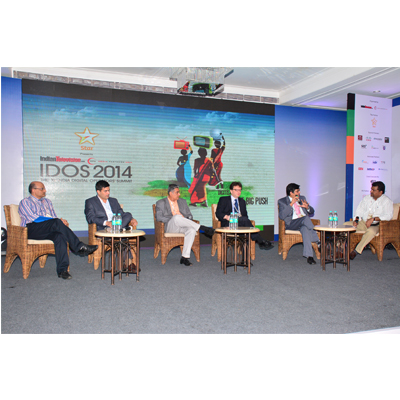
    KOLKATA: With more consumers looking at content tailor-made for them and with TV consumption growing on multiple screens, niche content is likely to work as a pivotal differentiator in a digital universe. The viewership for special content has grown substantially, and with digitisation at a growing trajectory in the country, broadcasters with niche channels bet on the growth.


    Speaking at a session titled ‘Specialised content and channels in the digital ecosystem’, at IDOS 2014, FoodFood CEO SK Raj Barua said, “TV penetration has reached the masses and the lifestyle category is improving. I think there is a lot of opportunity in terms of capacity in the next phases of digitisation. We see a great opportunity for us. With new media on the rise, demand for food content has gone up by more than 200 per cent.”


    On the other hand Insync founder and managing director Ratish Tagde, a classical music channel, said: “There is a huge demand for classical music and the audience is looking for Sufi music. When we talk about niche channel, it is all about content. The digital era is likely to monetise content. There are many new platforms and niche content has a good future.”


    Apart from FoodFood and Insync, A+E Networks is also slowly growing its footprint in the country. A+E Networks APAC VP sales and operations Saugato Banerjee said that the ability to create local content is main for niche channels. He added that A+E Networks, that operates with Network 18 in India, can’t depend on advertising and sales for everything it does. “Growing audience share is our target and there is a lot of optimism here,” he said.


    While Videocon d2h deputy CEO Rohit Jain said that one needs to look at niche channels from an economic point of view. “If any new channel is launched in the market, we have to have the whole push model so that the customer gets a chance to see the content first. Every channel has its own audience base,” he said.


    While AsiaSat, that leads in the satellite broadcasting and telecommunications sector in Asia Pacific region, believes the same what Indian broadcasters feel about niche channels. AsiaSat senior regional manager Paulus Chau said that the broadcasters are looking at launching more channels. “We are also looking at the opportunity because regulation is India is not simple,” he said.


    Scripps Networks, a US-based media company, specialising in lifestyle content like food, home and travel categories, is evaluating its strategy in Asia and India. Scripps managing director APAC Derek Chang said that India is a huge market for the company as compared to other markets. He hinted that Scripps might look at the Indian market for launching its niche content related to lifestyle. “It could translate into partnerships. It depends on how we see the potential market. It has its own characteristics and challenges,” he said.

     
    All the panelists agreed that niche content providers have to invest in the content and said the broadcasters have to understand that niche in India has various definitions considering the national and regional clients.


    While talking about the challenges faced by the channels, Barua said that carriage fees have gone up. “In the process, the business model has to be slightly different. We do research for content creation for particular people,” he said.


    Tagde however felt that the niche channels involve too much of research and investment. “We are struggling with the issues of technology like reaching out to people overseas. The content is owned by us and we have to invest in marketing too. There is a hope that we will get support from distributors,” Tagde said.


    Niche channels are not cheap to create: tremendous funds are needed to do research, and programming teams to implement concepts for informative channels.


    While the digital world is changing phenomenally, a bouquet of channels, with some mainstream entertainment channels and other niche channels, will soon adapt to the change.
    Viewership will be segmented leading to an increase in the number of niche channels.


    Going niche is the future of television as it helps to target specific viewers and in terms of revenue generation from advertisers, it is much more focused.


  • Govt will provide all facilities to local STB manufacturers for DAS: Javadekar

    Govt will provide all facilities to local STB manufacturers for DAS: Javadekar

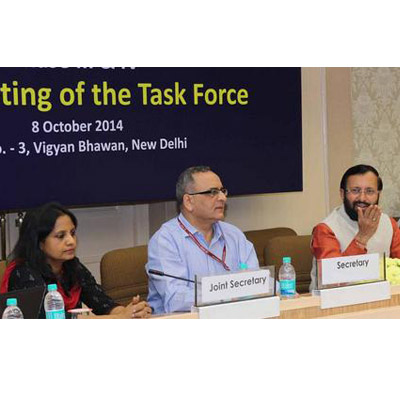
    NEW DELHI: Information and Broadcasting Minister Prakash Javadekar today clarified that the new dates for Phase III and IV for digital addressable system were the outer limits but all attempts would be made to achieve the target well before that.


    Reiterating that the main aim of the new deadlines was to encourage DAS with use of India-made set top boxes, he told the first meeting of the DAS task force for the final two phases here today that the Government has facilitated C form issue for indigenous manufacturers.


    At the outset, he said the entire digitisation programme was an integral part of Prime Minister Narendra Modi’s Digital India plan.


    He also pointed out that he represented the viewer and consumer, who had no voice unlike the other stakeholders who were present at the meeting.


    Javadekar said the cable TV digitisation process aimed at providing the consumer with greater choices and affordable and qualitative options. The overall objective was to be sensitive to the needs and choice of the consumer. The choice of the consumer was paramount in defining the inputs, strategies and roadmap for the remaining phases of the digitisation process.


    He called upon the manufacturers to innovate and explore new technologies for addressing the different consumer tastes and needs.


    The Minister added that in the next phase of digitisation, the price mechanism offered to the consumer would be a key determinant of the process, particularly as DAS was being extended to rural areas. As a consequence, it was mandatory for all stakeholders to sensitise the consumers on the benefits of the process in view of the rural outreach of the programme. 

    Regarding the indigenisation of STBs, the Minister said that the concerns of the industry had been taken up with the Finance and Communications and IT Ministries and STBs were declared as part of ‘telecommunication network’.


    The Minister said the task force ought to identify timelines for implementation so as to ensure the timely completion of Phase III and Phase IV. All issues concerning the key stakeholders needed to be debated at length so as to ensure the mainstreaming of the process with the existing policy. The need of portability of set top boxes so as to provide the option of interoperability to the consumers was an issue that could be looked into by the concerned stakeholders.


    Every meeting of the task force was critical as it identified critical inputs so as to ensure the effective implementation of the timelines and processes. Every viewer should be able to get the best viewing experience over the next two years, he added.


    He also wanted portability for STBs on the lines of portability for mobile phones and said the government and the task force will study this issue.


    Earlier speaking on the occasion, I and B secretary Bimal Julka said the task force provided an important platform to debate and overview issues related to the digitisation implementation. It also provided an opportunity to understand the concern of stakeholders.


    The experience of such meetings during the first and second phase of implementation of the programme had been extremely useful in streamlining the roadmap for effective implementation. He said the consumer is the judge of what he gets to see and content rules. He said a lot of complaints had been received from stakeholders during the implementation of the first two phases but he hoped to get more suggestions as well.


    The meeting saw various stakeholders raise issues concerning them. Taxation was raised by STB manufacturers and auditing was requested by consumer groups. The broadcaster suggested that the deadline should be reduced to 2015 for both phases. No TRAI member attended the meeting.


    Javadekar also assured that there will be sub committees that will monitor the process of digitisation.  

  • DAS task force to meet on 8 October amidst protests

    DAS task force to meet on 8 October amidst protests

    NEW DELHI: Almost a month after its constitution, the task force set up for the implementation of digitisation in the country and particularly overseeing the execution of the last two phases of Digital Addressable System (DAS) is expected to meet on 8 October at 10:30 in Delhi.


    However, local cable operators who have already expressed their protest at not being given a voice in the Task Force have not been invited to the meeting.


    Talking about the meeting, Information and Broadcasting Ministry secretary Bimal Julka told indiantelevision.com that all the stakeholders named in the task force order of 12 September had been nominated and are expected to be at the meeting. Although an official of the Information and Broadcasting Ministry denied this.


    LCOs who form the backbone of the cable television system in the country said no organisation of LCOs had been included in the task force or invited in the meeting.


    Meanwhile, ASSOCHAM Media and Entertainment Committee co-chairman Sujatha Dev informed the industry body that she is unaware of how a representative of ASSOCHAM was nominated to the task force.  


    National Cable & Telecommunication Association president Vikki Choudhry has in a letter to the I&B Minister Prakash Javadekar alleged that “In spite of all your endeavours taken to clean up the mess that had been created on account of DAS by the previous UPA government, few officials still attached to the MIB are bent on misleading and misguiding you on this much controversial DAS issue.”


    He has also pointed out that certain categories had not been invited to the task force meeting despite them being directly involved in implementation of DAS which included five Independent MSOs one each from North, South, East, West and North East region, five registered LCO associations one each from North, South, East, West and North East regions, a representative of the Association of Regional Television Broadcasters of India/ Regional News Broadcasters Association, five prominent consumers organisations, one each from North, South, East, West and North East regions, a representative of ASSOCHAM and a representative of Telecom Equipment Manufacturers Association of India (TEMA).


    Choudhry added that while there had been mention of these in the order of 12 September constituting the task force, no persons had been nominated for these categories.


    Additionally, he also revealed that there was no representation / invitation sent to Conditional Access System Vendors (an integral part of the entire DAS) and Subscriber Management System (SMS) that controls the entire DAS ecosystem after integration with the CAS.


    According to the 12 September order, the new task force was to be headed by I&B additional secretary as chairperson, with Telecom Regulatory Authority of India (TRAI) principal advisor for broadcast and cable satellite, I&B Ministry joint secretary broadcasting, representatives from the MSO Alliance, five independent MSOs one each from north, south, east, west and north east regions, five registered LCO associations one each from north, south, east, west and north east regions, representatives from the Indian Broadcasting Foundation, News Broadcasters Association, Association of Regional Television Broadcasters of India, DTH Association, FICCI, CII, ASSOCHAM, CEAMA, Department of Telecommunications, Department of Electronics and Information Technology, DG: Doordarshan, DG: All India Radio, BECIL, BIS, five prominent consumer organisations one each from north, south, east, west and north east regions and 33 state level nodal officers one each from the states/union territories governments.

    The task force was to act as an interface between the government and the industry in matters related to implementation of DAS in the cable TV sector and monitor the execution of DAS. It also will have to analyse the roadblocks that may come in the way of digitisation and suggest measures.


    While NBA and IBF will be participating in the meeting, representatives of cable operators associations from different states are protesting against the exclusion of LCOs and MSOs from the meeting. 


  • IDOS 2014: Are STBs high on QC?

    IDOS 2014: Are STBs high on QC?

    GOA: As high as 38 million set top boxes (STBs) have been rolled out in phase I and II of digitisation, but as for the quality, a lot of these boxes were described as ‘dabbas’. Of the total number of boxes, a tiny percentage was high definition boxes and even of those, several were found faulty. The session on ‘Technology Shifts in Indian Pay TV’ during the recently concluded India Digital Operators’ Summit (IDOS) 2014 at Goa, started with these crucial facts.


    The government has decided to push digitisation of phase III and phase IV to December 2015 and December 2016 respectively, citing indigenous manufacturing of boxes as the main reason for the extension. The big question now is, ‘Are the Indian manufactures ready for the 100 million boxes needed in the next 24-30 months?’


    “Contrary to the expectations of many, yes, we are ready,” said Mybox executive director Amit Kharbanda.


    With the ‘Make in India’ concept, the government is not just promoting the Indian manufactures, but is asking the international manufacturers to come to India and create hardware here. “When you talk of manufacturing of STBs, the basic requirement, after the components, is the capacity for big production. According to our calculation, if there is a requirement for 100 million boxes, and we break it to 40-45 million boxes per year, the SMT capacity required is 26 machines, and if we remove all the big international manufactures, India will still have SMT capacity with an availability of 46 machines,” informed Kharbanda.


    The next question which many have been asking is how has the extension benefited the STB manufacturers? “We have been growing from the time we entered the manufacturing space. After digitisation, we knew we had to supplement the market and so we increased our capacity by about 30-40 per cent. Right now we have the capacity of 5 million boxes per annum, of which 60 per cent is utilised by our captive customers and 40 per cent is for other consumers. But considering the experience we have, we can easily expand our capacity,” said Videocon Group head trend electronics Jagdish Bangad.


    The question, according to Kharbanda is not about if we can manufacture 45 million STBs in one year, the question is, considering there are 300 components in a STB, “will we have those many Broadcom or other chips makers in India, and this, keeping in mind that we are not the only country buying it?” Kharbanda questioned.   


    For Broadcom MD Rajiv Kapur, the chip output is extremely high. “We produce more than two billion chips annually. The issue is not production of chips, neither is capacity an issue. The main thing now is that we should be a little careful about our expectations. One doesn’t want to go down the path of over preparing and over- producing and compromising on the maturity which is needed to develop quality in a supply chain,” said Kapur.


    He also cautioned the industry, that in order to achieve the target of the 100 million boxes in the given time frame, one should not start cutting the corners on quality.  


    Cisco, which works closely with a number of multisystem operators (MSOs) in the country and also the STB manufacturers, is agnostic to whether the boxes are made in India, China or Korea. “We welcome the move that the Indian government is keen to promote manufacturing locally,” said Cisco director John McCorkindale adding that they haven’t changed their strategy for the country with delayed digitisation.  


     According to Logic Eastern CTO Vineet Wadhwa, one needs to keep the backend support ready. “One of the key points is that most of us are just concentrating on the manufacturing skills or strengths. But, this is just a part. More thoughts need to go when one plans on scaling,” he said adding that the industry needs funding.


    “We are dealing with tier II and tier III markets. The amount of support needed for tier II and III markets don’t help me when I go to tier IV MSOs. For every three or four tier III MSOs, one needs at least one or two support personnel and for every five support personnel, you need one support manager,” informed Wadhwa.


    He also highlighted that with the different types of CAS, boxes, networks etc, the complexity of managing a network 500-2000 km away over mobile phone is difficult. This means that the manufacturers will also need to set up a support team. “They will have to have deep pockets,” he added.


    A very crucial point that came out during the session moderated by Castle Media director Vynsley Fernandes was that while the capability and technology exists in India, the fundamental challenge is that tier III and IV markets have huge pricing issues. One needs to understand from the LMOs, how much their subscribers will be ready to pay.


    Kharbanda pointed out that the industry which has a target of manufacturing 100 million boxes, if it could even produce 50-60 million boxes, will start a cycle that will help them in the long run. “The fact is that we have to come together as an industry and we need support from the MSOs as well,” said he.


    According to McCorkindale tier III and IV MSOs want to control everything on their own. “They want good quality and want more power to increase their ARPU,” he said.


    For Kapur, delayed digitisiation is actually good. “I feel we were going too fast. The benefit of this delay is that now we can look at the experience of the first 20-30 million boxes which have been deployed. The common approach from vendors in the first two phases was of cutting corners, while only thinking of price and compromising on the quality,” he said.


    MSOs, according to Kapur, have learnt a lot from the first two phases and are now upping their specs. “The difference in pricing of high quality and low quality boxes is not a very big dollar amount. One only needs to know what specs are needed for its STBs,” he added.  


    Another point which was highlighted during the session was that in the rush to seed boxes, no field trials were done in the first two phases. “This led to bad quality boxes being rolled out. Now we have the time to do all this and control the quality,” opined Kharbanda.


    A very important component of the STB cost is the warranty and the support charge per hour from the box company, CAS company and SMS company etc. “And my belief is that the MSOs of tier II and tier III will not compromise on the quality of the box. But they might not be able to afford the dollar per hour charges for support,” said Wadhwa.


    Kapur, is a firm believer that the STBs should have a long lifecycle. “India is a nation where TV moves from house to house but is never thrown, so we can’t be producing 100 million boxes, which are bad quality ones, with no support and element of future proof for different markets,” he said.

    The session concluded with the remark: It is time we move away from speed and cost.