Tag: digitisation

  • CVNO Alert: Kolkata LMOs sign MoU with Meghbela

    CVNO Alert: Kolkata LMOs sign MoU with Meghbela

    KOLKATA: The Cable Virtual Network Operator (CVNO) in Kolkata is moving fast in order to meet its 15 December launch deadline. In the latest, more than 200 Kolkata based last mile owners (LMOs) have signed a Memorandum of Understanding (MoU) with city-based multi-system operator (MSO) Meghbela Cable & Broadband Services.


    The MoU, which will see Meghbela provide the infrastructure to the LMOs will be valid for 36 months.  


    “Yes, the MoU is signed and now based on this, we can initiate our work.  Around 205 LMOs have come together so far,” confirmed Cable Operators Sangram Committee general secretary Apurba Bhattacharya to indiantelevision.com.


    “Our brand name will be Meghbela, since the MSO is a DAS license holder. The watermarked logo of the MSO will also be displayed on the TV screen,” he further added.


    The nature of agreement is based on the Telecom Regulatory Authority of India’s (TRAI) regulations as well as on the demand and requirements of both the parties.


    The CVNO model, according to the LMOs will operate in all areas of Kolkata. “The MSO will levy a minimum price against every set top box (STB),” informed a LMO, who is part of the business model. 


    Talking on the cable TV tariff, Bhattacharya said, “While the package rates will be the same but the LMOs will have the freedom to allow discounts from their pocket to subscribers.”


    Meghbela Cable has already installed around 1.26 lakh STBs in Kolkata DAS I areas. While in places which fall under DAS III and IV like Haldia, Bankura, Arambagh and Hooghly, the MSO offers 9-10 lakh cable TV connections, majority of which is analogue.


    The CVNO model is set to empower LMOs to give their subscribers the choice of channels according to affordability.
  • After Tamil Nadu, Karnataka state govt eyes cable TV business

    After Tamil Nadu, Karnataka state govt eyes cable TV business

    MUMBAI: Even though the demand for getting the Digital Addressable System (DAS) licence for J Jayalalithaa run Tamil Nadu Arasu Cable TV Corporation (TACTV) is still pending with the Information and Broadcasting Ministry (I&B), there is another state government that is looking at entering the cable TV industry.

    The Karnataka state government Minister for Information, Public Relations and Infrastructure R Roshan Baig has been making headlines after his conference where he expressed interest in setting up cable television system, provided the Centre permitted it.  In the meeting, the Minister said that the Ministry has been receiving complaints from consumers who have to pay Rs 400-Rs 500 for cable TV service.

    Baig in the conference, while applauding the model of Arasu Cable in Tamil Nadu, said that the Karnataka government will also apply the same module, where consumers won’t be paying more than Rs 100 per month for the cable TV channels.  
    In response to the statement, Karnataka State Cable TV Operators’ Association (KSCOA) met the Minister to apprise him of the situation. “We told him that in the Rs 70 that Arasu charges for its services, it gives only free to air and regional channels, while the others give all the leading channels, which is what the consumers want,” informs Karnataka State Cable TV Operators’ Association spokesperson Sudhish Kumar adding that they have also addressed the matter to Telecom Regulatory Authority of India (TRAI) chairman Rahul Khullar.

    “Khullar in his address to the media has already made it clear that any government body or agency getting into the cable TV or distribution business is against the rules,” adds Kumar.

    “But, if it still happens, we will move the court,” he states.

    The association has suggested that the government could through DD Freedish give cable services at a lower tariff.

    The multi system operators (MSOs) in the region are shocked with even the new Tamil Nadu Chief Minister O Panneerselvam backing the demand for DAS licence for Arasu Cable.

    In order to ensure that the Karnataka government does not get the nod from the Centre, the South Indian Federation will be meeting the I&B Minister Arun Jaitley. “We are seeking his appointment and could be meeting him between 21 January to 23 January,” informs Kumar while adding that they want the I&B Minister to come out with his clear statement on the matter.


  • Govt does not have details of revenue generated by sale of CAS, DAS: Rathore

    Govt does not have details of revenue generated by sale of CAS, DAS: Rathore

    NEW DELHI: The Government has said that there was no provision under the present digital addressable system regulations or the Cable Television Networks (Regulation) Act 1995 for any assistance or relief to cable TV subscribers to buy set top boxes (STBs).

     
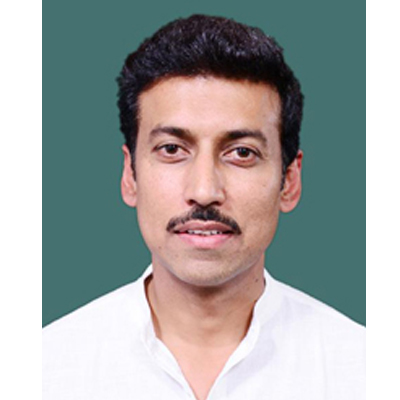
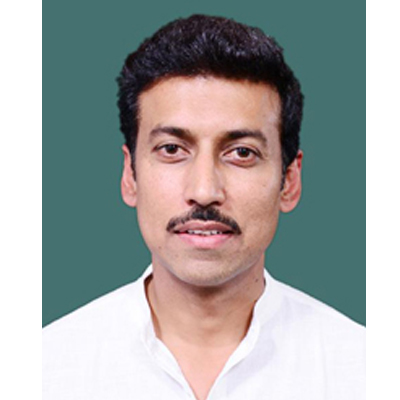
    Minister of State for Information and Broadcasting Rajyavardhan Singh Rathore has told the Parliament that the Ministry had assessed the requirement of STBs to be installed at the customer premises, based on Population Census 2011.

     
    Thus, a total of 140 million STBs were required to implement cable TV digitisation in the country. Out of this, 30 million STBs had already been installed under phase I and phase II and the balance 110 million are required to be installed in the remaining two phases which are under implementation.

     
    He said the Ministry does not make any assessment with regard to quantum of revenue generation arising out of sale of CAS and DAS.

     
    He said according to a notification issued on 11 November 2011 issued by the Ministry, digitisation of cable TV in India is to be completed in four phases. Phase I and phase-II of digitisation have already been completed.

     
    Phase III is to be completed by 31 December 2015 whereas phase IV is to be completed by 31 December 2016.


  • DD moving to digitisation through Freedish and DTT: Rathore

    DD moving to digitisation through Freedish and DTT: Rathore

    NEW DELHI: The percentage of rural viewers who are accessing Doordarshan through its terrestrial network is 7-8 per cent of 170 million TV households, Parliament was told today.


    Minister of State for Information and Broadcasting Rajyavardhan Singh Rathore addressing the Parliament said that 28.73 per cent of the total expenditure of Doordarshan was spent on terrestrial distribution in the year 2013-14.

     
    Prasar Bharati has informed that it has decided upon progressive digitisation of Doordarshan’s transmission network by way of expansion of DD Freedish and setting up of a commercially viable Digital Terrestrial Transmitter (DTT) platform in harmony with the recommendations of the Expert Committee.

    In order to gain experience in digital transmission technology, Doordarshan had set up four digital transmitters, one each at Delhi, Mumbai, Kolkata and Chennai in January 2003 on an experimental basis using DVB-T system. 

    Four digital HPTs (HDTV) have been installed at Delhi, Mumbai, Kolkata and Chennai which are ready for commissioning. Prasar Bharati has informed the Ministry that 40 digital HPTs (DVB-T2) under 11th Plan and 23 digital HPTs (DVB-T2) under 12th Plan have been approved as part of digitisation schemes. Out of 40 digital HPTs, 19 are presently under implementation. 


    The 19 digital transmitters include two each in Madhya Pradesh and Maharashtra. The other states apart from Delhi are Assam, Bihar, Chhatisgarh, Gujarat, Jammu and Kashmir, Jharkhand, Kerala, Karnataka, Odisha, Punjab, Tanil Nadu, Telengana, Uttar Pradesh, and West Bengal.


  • Bibhash Jha quits Star Sports, joins Siti Cable

    Bibhash Jha quits Star Sports, joins Siti Cable

    MUMBAI: Multi system operator (MSO) Siti Cable has roped in Bibhash Jha as its head-content & carriage. Jha in his capacity will provide a fillip to the growth momentum of Siti Cable. The MSO is taking giant strides in this exciting phase of digitisation and Jha will play an instrumental role in this leap from analog to absolute digitisation.


    Jha has over 20 years of distribution work experience with 15 years at Star Sports India, where he played an instrumental role in the transition of ESPN channel to Star Sports India. In 2007, he played a key role in the launch of new sports channel Star Cricket. Under his ambit, a separate vertical of MSO business was created which was profitable in its very first year of operation. He was also responsible for the distribution of sports channel for Star on pan India basis.


    Siti Cable executive director and CEO VD Wadhwa said, “We are delighted to have Bibhash Jha on board. With his rich experience of broadcasting & distribution business, he brings to us a competitive edge in strategizing business and accomplishing organisational goals.”


    Jha will be based at the Corporate Office of Siti Cable, Noida.


  • Kolkata LMOs in talks with STB and headend vendors

    Kolkata LMOs in talks with STB and headend vendors

    KOLKATA: The last mile owners (LMOs) in Kolkata are gearing up to stake claim on their subscribers. Apart from uniting and setting up their own control room and tie-ups with existing DAS license holders, the LMOs have initiated talks with the STB and headend suppliers and other vendors in India and as well as abroad.


    The LMOs have already made an agreement with a DAS license holder, who will levy a minimum price against every set top box (STB). “Recently, more than 150 LMOs signed the deal. And thousands of LMOs from different MSOs are also showing interest to join in this mission,” says a LMO on the condition of anonymity.


    “The LMOs have already formed a company as they intend to counter the MSO business. We are also trying to take control over our business,” informs Cable Operators Sangram Committee general secretary Apurba Bhattacharya.


    He adds, “It is a survival battle; either we set up our own headend or partner with MSOs. As for the investment, every LMO will put in the amount according to their pockets. In fact, some financiers are also ready to invest in it.” He further explained that the investment would be based on the size of LMO’s network.


    Tying up with existing license holders ensures LMOs power of billing to subscribers, distribution of package according to the choice of subscribers, share of carriage fee and ownership of STBs.


    There are some DAS license holders who might go ahead and increase their topline and bottomline by strengthening their presence.


  • HSBC raises Hathway’s target price to Rs 432

    HSBC raises Hathway’s target price to Rs 432

    MUMBAI: HSBC Securities and Capital Markets’ latest report on multi system operator (MSO) Hathway Cable & Datacom has improved its rating from ‘normal’ to ‘overweight’.


    While it continues to value Hathway using a DCF based approach, it has raised the target price from Rs 276 to Rs 432. This is on the assumption of 12.5 per cent WACC, cost of equity of 13.5 per cent and cost of debt of 11 per cent.


    One of the main reasons for this is the expectation of increase in Average Revenue Per User (ARPU). HSBC expects gross billing to increase in phase I markets by around 15 per cent and phase II by around 10 per cent over the next two quarters. Gross ARPU is estimated to grow at 16 per cent CAGR from its earlier 8 per cent.


    Increase in ARPU would mean a near 10 to 20 per cent rise in cost, despite the incentives that are being offered by Star’s new RIO deals. The report also says that moving to prepaid would be necessary, even if it is restricted to Star  channels for now as in the long run it would allow MSOs to scale up to full prepaid gradually over the next 18-24 months.


    “LMOs will need to move to a prepay backend. Both these factors are positive for the sector and in our view build a long-term case for ARPU improvement, fewer bad debts, reducing friction between MSO and LMO relations, improving the industry structure and allowing the industry to benefit from sector consolidation,” it states.


    The report also highlights that if Star is successful in reaping benefits out of its new RIO policy, other big networks may follow suit, though not in the immediate 12 months.


    This apart, HSBC also sees broadband ARPUs increasing with a more robust DOCSIS 3.0 platform but with a slight concern on the slow pace of subscriber net addition. The delay in digitisation is positive for cable TV industry to consolidate market share in the first two phases. Side by side, issues such as revenue share and prepaid billing can be sorted and easily applied in phases III and IV.


    HSBC has raised its medium- term EBITDA estimates by 11 per cent (FY16e-21e CAGR of 13.5 per cent), cable TV ARPU assumptions by 12 per cent (FY16e-21e CAGR of 11 per cent) and broadband ARPU by 8 per cent for the same period.


  • Delhi based cable operators form new body to represent case of smaller LCOs

    Delhi based cable operators form new body to represent case of smaller LCOs

    NEW DELHI: Soon after the south based independent multi system operators (MSOs) decided to come together as one to ensure that they were well represented and could reap the benefits of digitisation, the Delhi based cable operators have decided to follow their path.

    A total of 16 registered associations of Delhi cable operators have jointly formed the Cable Operators Welfare Federation. While A S Kohli from west Delhi has been elected chairman, Bhai Surjeet Singh will be the president of the newly formed association.


    Singh told indiantelevision.com that the body had been formed to give a better representation to smaller LCOs so that the government does not ignore their pleas for justice while implementation of digital addressable system.


    It is also learnt that a memorandum will be sent shortly to Information and Broadcasting Minister Arun Jaitley seeking a common tariff for the rates charged by the multi-system operators in Delhi. Furthermore, the memorandum is expected to point out that while the MSOs receive carriage fee, the LCOs should get a share of this, and the LCOs should also be paid a share by broadcasters of pay channels who are earning huge revenue through advertisements.


    The vice-presidents of the association are Raj Kumar Thappa, Dharmesh, Ashok Pandit, Kuldeep Rawal and Satish Bhatia. Vineet Kumar is the general secretary while the joint secretaries are Sudhir Kumar, Narinder Bhagdi, Prem, and Rajesh Pandit. Ramesh Duggal has been appointed as the treasurer.


     The legal advisors are A K Uppadhay, Romesh Zadoo and Jayant Chadda and the media advisors are Parveen Arora, Ram Kishen Tomar and Sanjeev Bhatti.


  • South-based independent MSOs come together as South Indian Federation

    South-based independent MSOs come together as South Indian Federation

    MUMBAI: The independent multi system operators (MSOs) from the southern part of the country are working towards getting their act right in order to be able to successfully complete digitisation and also reap maximum benefits from it.

    In the latest, the independent MSOs from Bengaluru, Telangana, Andhra Pradesh, Tamil Nadu and Kerala met in the IT city to discuss issues relating to digitisation, deals with broadcasters and the carriage fees.  

    In the same meeting, the independent MSOs decided to form a South Indian Federation, which will be officially launched in Kerala in December.

    “The broadcasters deal differently with national MSOs and the regional independent MSOs. So, we have decided to come together as one team,” informs Sagar E Technologies executive director Sudhish Kumar.

    The federation will have 20 headends under it, currently catering to 30 lakh subscribers across Bengaluru, Telangana, AP, Tamil Nadu and Kerala.  “We have realised that coming together will not only help us get better deals from the broadcasters, but we can have representation even in the DAS task force,” he says.

    This group of independent MSOs is also looking at getting the value added services (VAS) on one platform, using one middleware. “A technical team has already been formed for this and they are working on getting the service in place,” says Kumar adding that having small number of VAS is not profitable. “If we come together, then we can attract bigger partners for VAS, which is an added revenue stream,” he informs.

    The independent MSOs in the south have realised that broadband is the biggest revenue spinner. “The ultimate goal of coming together is having a strong broadband infrastructure and consumer base,” concludes Kumar.


  • MSOs not ordering STBs, say manufacturers

    MSOs not ordering STBs, say manufacturers

    MUMBAI: The former Information & Broadcasting (I&B) Minister Prakash Javadekar had emphasised the need for bringing in indigenous Set Top Boxes (STBs) and the new administration is also keen to do the same. It was with this in mind that I&B secretary Bimal Julka held a meeting with indigenous STB manufacturers recently.

    Julka said that the issue of C-Form had already been addressed by the government to ensure level playing field for the domestic manufacturers as compared to imported STBs. The meeting was to assess the readiness of the manufacturers to meet the 11 million STB requirements since they had stated that sufficient capacity had been installed.

    A meeting had also been held with the Prime Minister regarding availability of conditional access system (CAS). The issue of interoperability of STBs was also being scrutinised and a task force meeting on the same had also been held.

    The STB manufacturers informed that they have been in touch with operators for their requirements but their response has not been encouraging. According to them the operators are anticipating change in timeline of digitisation and a change in policy, leading to their slow uptake.

    The manufacturers stated that they are prepared to go head on with the imported boxes as well as have a penal clause on penalty. Since no order was coming from operators, it was a difficult task to prepare production since time was needed to receive the components from suppliers.

    Therefore, they manufacturers have requested the Ministry to facilitate a process so that MSOs look at indigenous STBs for phases III and IV of digitisation. A joint meeting between the three could be held to resolve concerns.

    Julka clarified that 2015 and 2016 are the final dates for digitisation, so there needs to be no apprehension on that front. Monitoring of the digitisation programme would be scaled up in accordance with the implementation strategy being set in the Ministry.