Tag: digitisation

  • India ready for 4K & hybrid technology: Broadcom Corp

    India ready for 4K & hybrid technology: Broadcom Corp

    KOLKATA: Broadcom Corp, one of the market leaders in providing chips for technologies such as enterprise networking, set-top boxes, and mobile connectivity functions, believes that the Indian market is ready for concepts like value added services (VAS), 4K, and hybrid technology.


    Broadcom interacted with more than 50 companies including satellite operators, cable operators, CAF players and OEM (original equipment manufacturers’) at the recently concluded 23rd Convergence India 2015 Expo, largest South Asian platform for Telecom, Broadcast and Digital Media. After participating in the fair, themed ‘Connecting India’, the company said it has got overwhelming response from the industry and trade visitors. 


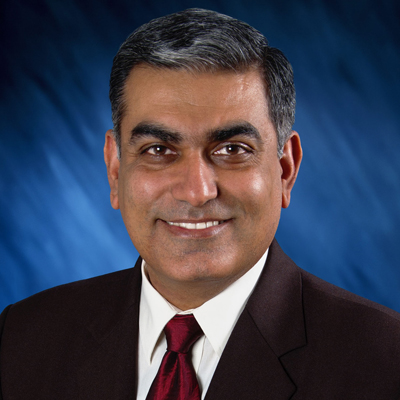
    “Newer concepts like VAS, 4K, and hybrid technology are of interest across the broader audience,” said Broadcom India managing director Rajiv Kapur.


    “We spent time and discussed about our products and services with top 30 players of the industry apart from interacting with mid-sized companies,” informed Kapur.


    While India is a large market for Pay TV and broadband, till some years ago, the technology platform was almost missing for stakeholders to gather at a platform and address the issues, challenges and scope of working.


    “Broadcom spent quality time with big players. Even small players were interested in using and leveraging our services,” he said.


    Kapur said that the company is eyeing further growth from Indian R&D centre. “Apart from executing ideas gathered from this meet at our global R&D centre, we would execute some ideas at our research centre in India,” he concluded.

  • Infrastructure status for b’cast industry, reduce customs duty on STBs: FICCI budget wish-list

    Infrastructure status for b’cast industry, reduce customs duty on STBs: FICCI budget wish-list

    NEW DELHI: The Broadcasting industry should be granted infrastructure status to push the digitisation agenda of the government. 


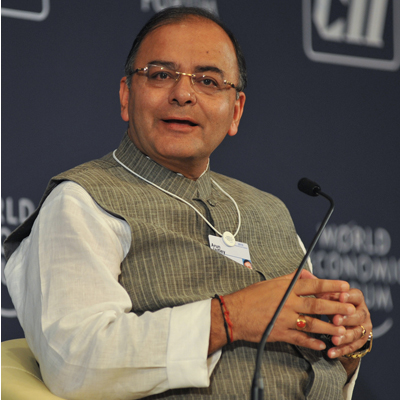
    In its wish-list submitted to Finance Minister Arun Jaitley – who also holds the Information and Broadcasting portfolio – the entertainment wing of the Federation of Indian Chambers of Commerce and Industry (FICCI) said that in the present era of convergence, the distinction between Telecom, IT and Broadcasting sectors is getting blurred. 


    The Telecom sector is already treated as “infrastructure service” and so giving the infrastructure service status to broadcasting will provide a level playing field to the sector.


    Broadcasters and distributors will be aided with better and affordable financing options in the very capital intensive growth phase. 


    The FICCI wish-list covers television and radio broadcasting, cinema and animation and gaming, apart from suggestions relating to advertising in the media. 


    At the outset, FICCI says the Indian media and entertainment industry grew from Rs 821 billion in 2012 to Rs 918 billion in 2013, registering an overall growth of 11.8 per cent. Given the impetus introduced by digitisation, continued growth of regional media, new government formation, strength in the film sector and fast increasing new media businesses, the industry is estimated to achieve a growth rate of 15.3 per cent in 2014 to touch Rs 1059 billion. The sector is projected to grow at a healthy CAGR of 14.2 per cent to reach Rs 1786 billion by 2018. 


    Television clearly continues to be the dominant segment, but strong growth has been posted by new media sectors, whereas gaming and digital advertising recorded a strong growth of 25.5 per cent and 38.7 per cent compared to the previous year. The music sector has shown a decreasing growth (-9.9 per cent growth in 2013 over 2012 compared to 18 per cent growth in 2012 over 2011) despite strong content and digitisation.


    Radio is anticipated to see a spurt in growth after the roll-out of Phase III licensing. The benefits of Phase I cable digital access system (DAS) rollout, and continued Phase II rollout are expected to contribute significantly to strong continued growth in the TV sector revenues and its ability to invest in and monetize content. 


    The sector is expected to grow at a compounded annual growth rate (CAGR) of 18.1 per cent over the period 2013 to 2018.


    Set Top Boxes 


    It said the expected investment in set top boxes alone is around Rs 20,000 to Rs 25,000 crore and therefore wants the customs duty levied on STBs to be on the transactional value and not the maximum retail price. Basic customs duty should be reduced to five per cent if not zero per cent as this will help push digitisation faster, which would lead to transparency which will result in manifold increase in the tax revenues from Service Tax, Entertainment tax and Income-Tax. 


    Television Sector


    Referring to tax withholding on Transponder hire charges (Section 9(1)(vi) Explanation 6 of Income Tax Act, 1961), FICCI pointed out that the Finance Act 2012 amended the section to retrospectively include payment for transponder hire and other charges as royalty. However FICCI wanted a clarification to be issued that Transponder hire charges are not “royalty” as Courts in India have held that such charges are not ‘royalty’ or ‘Fee for Technical Service’ (FTS). The law was retrospectively amended to nullify the effect of the judicial decisions. This is an artificial deeming provision hurting industry. These are standard services and no transfer of technology. OECD commentary also does not treat such payments as “royalty” or “FTS”. 


    On tax withholding rate on Royalty (Section 115A (1) (A) & (B) of Income Tax Act, 1961), FICCI said the Finance Act 2013 increased withholding rate from 10 per cent to 25 per cent. However, it wanted that the 10 per cent withholding rate should be restored as most of the Tax Treaties have 10 per cent or 15 per cent rate and most of the contracts are on ‘grossed up’ basis leading to 37 per cent tax burden on Indian payer. This assumes almost 100 per cent profit on the payment at current corporate tax rate and is absurd, says FICCI. The change will also reduce the cost to Indian business/consumer and would benefit Broadcasting, DTH and HITS sectors. 


    Section 72A of the Income Tax Act 1961 allows carrying forward of losses in case of amalgamation or merger for service industry. Currently, all industrial undertakings in the Manufacturing, Software, Electricity, Telecom, etc. sectors are allowed carry forward of losses in case of merger /amalgamation, but the services industry undertaking in general is not allowed such carry forward. Section 72A(7)(aa) should be amended to include Broadcasting, Media and Entertainment sector if not all services sector undertakings to ensure a level playing field with other services industry like Telecom, Software etc. as this will encourage consolidation for rapid growth.


    Credit under the ‘Served From India Scheme’ under the Foreign Trade Policy is currently available as set off against excise and customs duty liability and the period of utilisation of SFIS credit is two year and is not transferable. Therefore, the SFIS credit should be allowed as set off against Service Tax liability in addition to Excise and Customs Duty liability. SFIS credit should be made transferable or tradable outside the group entities similar to DEPB scheme. The period of utilization of SFIS credit should be increased from two to five years. FICCI says that for the purpose of CENVAT credit, there is no distinction between Service Tax and Excise duty and not all companies have import requirement and thus the benefit of the scheme is not really received by such company. Making SFIS credit transferable will give level playing field with DEPB and other incentives schemes.


    Doordarshan 


    FICCI wants Doordarshan to launch DD Kids, a channel dedicated to kids’ content in “digital terrestrial” space as it would promote intellectual property creation in India in the field of animation and other content for children. 


    Radio 


    Referring to radio, the industry body said it wanted reduction of customs duty on radio broadcasting equipment to four per cent especially on transmitters, consoles etc which are not produced in India. It said there is no justification for the high CVD and additional CVD being charged and India has one of the highest import duty rates for transistors. 


    It wanted a removal of the service tax on advertisement in radio since it competes with newspapers at local level even though there is no service tax on advertisement on newspapers. This will also provide a level playing field to radio. 


    Referring to FM Radio Phase III, FICCI wanted assistance to raise money, provide priority Provide tax holiday for five years for new capital investment in Phase III and provide a fiscal sector lending sector status so that radio industry is able to access easier availability of finance at with lower interest rates. This was because a large amount of capital is required for the roll out of phase III of FM radio privatization.
  • Cisco Video Technologies India bullish on growth in phase III & IV of cable TV digitisation

    Cisco Video Technologies India bullish on growth in phase III & IV of cable TV digitisation

    KOLKATA: Cisco Video Technologies India, an information technology (IT) company, which had garnered a market share of around 51 per cent in the first two phases where more than 40 million cable TV homes were digitised in India, is looking at achieving the same market share in the remaining phases of digitisation, i.e. phase III and IV, which is mandated to be completed by end of December 2016.


    The company is bullish on growth from the Indian cable TV digitisation market, said a company official in Kolkata.


    Talking about the trends of digitisation taking place in phase III and IV, which includes rural places and non-metro locations, an official from the US-based technology major said that there are certain pockets in the country, which are looking for high end services and are not just eager to install set top boxes (STBs).


    Speaking on the sidelines of the Cable TV Show 2015 in Kolkata, Cisco senior product manager Aunindo Ghosh said, “In the next two phases there is a requirement of 75 million homes to be digitised and if not more, we will aim to maintain the same market share of around 51 per cent.”


    Also, with the demand of digitisation coming from municipal and rural areas in the phase III and IV across the country, the headend market is redefining itself in India. Cisco, in order to cater to these two phases, has done several innovations to enhance the consumer experience.


    Cisco Videoscape transforms the video technologies around the world by providing high-impact video experiences. “With Cisco Videoscape customers can not only compete, but have the potential to lead the market as it will help them to grow their business by attracting more revenue per user with spectacular video experiences. Cisco recognises that each market and subscriber base calls for different subscriber experiences and therefore, includes a range of end-to-end solutions,” said Ghosh.


    Highlighting the challenges in phase III and IV, Ghosh said that it would be a bit difficult for the company to spread awareness, while stressing on the fact that these phases are low ARPU markets.


    Talking about the phase I and II of digitisation of cable TV, he said those two phases were implemented in the right frame of mind. “The players adhered to the MIB rules. Phase I and II were well coordinated,” Ghosh said.


    Some of the clients of Cisco are Siticable, Hathway, Den, KCBPL-GTPL, and Patna-based Darsh among others. Cisco is also looking at offering its “Videoscape Express” – integrated services to cable TV operators by upgrading its existing networks.

  • Chrome Data: Insignificant gain in week seven

    Chrome Data: Insignificant gain in week seven

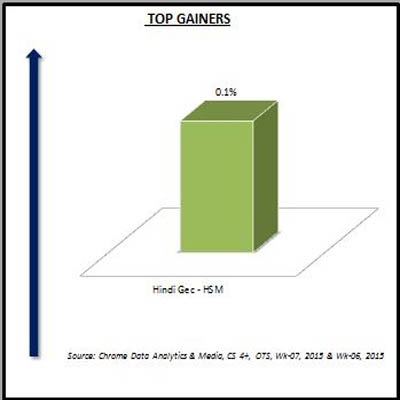
    MUMBAI: In week seven of opportunity to see (OTS) collated by Chrome Data Analytics & Media, the only gainer were Hindi general entertainment channels (GECs) in the Hindi speaking market (HSM). 


    The genre saw an insignificant jump of 0.1 per cent with DD National topping the chart with 96.7 per cent OTS.


    As for the losers, the eight metros saw the maximum fall. English Entertainment channels in the eight metros led the way with 2.7 per cent fall. Comedy Central with 55.1 OTS topped the genre.


    Kids channels across the country witnessed a drop of one per cent with Cartoon Network continuing its reign in the genre with 80.2 per cent OTS.


    English Movies and English News both saw a drop of 1.8 per cent in the eight metros. Movies Now with 65.5 per cent OTS and Times Now with 77.3 per cent OTS topped their respective genres.

  • Q3-2015: Den Network reports 18 per cent y-o-y growth in cable subscription revenue

    Q3-2015: Den Network reports 18 per cent y-o-y growth in cable subscription revenue

    BENGALURU: Den Networks Ltd’s (Den Networks) cable business subscription revenues net off LCO share grew 18 per cent, up 11 per cent y-o-y to Rs 116 crore in the current quarter from Rs 97 crore in Q3-2014 and its cable business operation margin was maintained at 19 per cent q-o-q.


    Den added 1,97,000 set top boxes (STB) in Q3-2015, taking the total STBs deployed to approximately 68 lakh. The company said that its current digital subscriber base in phase 1 and 2 is approximately 50 lakh. Digital subscribers are expected to increase significantly with acceleration in non-DAS market informs the company. 


    Note: 100,00,000 = 100 lakh = 10 million = 1 crore


    Den Networks TIO at Rs 269.82 crore in Q3-2015 fell two per cent from Rs 274.26 in Q3-2014 and fell 7.9 per cent from Rs 291.72 crore in the preceding quarter. However, TIO in 9M-2015 at Rs 859.34 crore was 5.5 per cent more than the Rs 814.83 crore in HY-2014.


    Den Networks recently launched its high speed broadband service, which is gaining great traction having achieved an average ARPU of Rs 740 per month in Q2-2015. This quarter, Den says that ARPU has improved to Rs 748 per month.


    The company also says that its joint venture (JV) with Snapdeal.com has been received extremely well. Within the first month, Den Network claimed in Q2-2015 that the company has clocked an annualised Gross Merchandise Value (GMV) in excess of Rs 50 crore based on the annualised latest daily run rate and was expected to scale significantly as the channel gets distributed across networks. For Q3-2015, the company says that the market place based model now reaches 1.9 crore homes clocking Gross Merchandise Value (GMV) of Rs 100 crore.


    Let us look at the other numbers reported by Den Networks:


    Total expense (TE) in Q3-2015 at Rs 316.75 crore (117.8 per cent of TIO) was 32.7 per cent more than the Rs 238.63 crore (87 per cent of TIO) in Q3-2014 and was 6.4 per cent more than the Rs 297.81 crore (102.1 per cent of TIO) in Q2-2015. In 9M-2015, TE at Rs 899.48 crore (104.7 per cent of TIO) was 29.8 per cent more than the Rs 692.75 crore (85 per cent of TIO) in 9M-2014.


    The company’s content cost in Q3-2015 at Rs 1100.96 crore (40.9 per cent of TIO) was 15.5 per cent more than the Rs 95.33 crore (34.8 per cent of TIO) in Q3-2014 and was 1.1 per cent more than the Rs 108.91 crore (37.3 per cent of TIO) in the immediate trailing quarter. For 9M-2015, content cost at Rs 325.39 crore (37.9 per cent of TIO) was 20.1 per cent more than the Rs 270.88 crore (33.2 per cent of TIO) in 9M-2014.


    Den’s placement fee in Q3-2015 at Rs 8.86 crore was 76.1 per cent more than the Rs 5.03 crore in Q3-2014 and 57.4 per cent more than the Rs 5.63 crore in Q2-2015. 9M-2015 placement fee at Rs 19.81 crore was 19.1 per cent more than the Rs 16.64 crore in 9M-2014.


    Den’s other expense in Q3-2015 increased 68.6 per cent to Rs 123.32 crore (45.9 per cent of TIO) from Rs 73.15 crore (26.7 per cent of TIO) in the corresponding year ago quarter and was 45.9 per cent more than the Rs 78.61 crore (26.9 per cent of TIO) in the preceding quarter. For 9M-2014, other expense at Rs 272.40 crore (31.7 per cent of TIO) was 27.6 per cent more than the Rs 213.51 crore (26.2 per cent of TIO) in 9M-2014.


    Den’s EBIDTA (without considering other income) in Q3-2015 fell to just Rs 0.28 crore as compared to the EBIDTA of Rs 72.26 crore (26.3 per cent of TIO) in Q3-2014 and the Q2-2015 EBIDTA of Rs 40.94 crore (14 per cent of TIO). EBIDTA for 9M-2015 fell by 2.33 times to Rs 98.38 crore (11.4 per cent of IO) from Rs 228.98 crore in 9M-2014.


    Other Income for the periods under consideration is as follows: Q3-2015 – Rs 23.94 crore; Q2-2015 – Rs 22.47 crore; Q3-2014 – Rs 22.98 crore; 9M-2015 Rs 64.96 crore; 9M-2014 – Rs 34.42 crore.


    The company reported a loss of Rs 62.60 crore in Q3-2015 as against a profit after tax (PAT) of Rs 16.08 crore. The loss in the current quarter was more than thrice the loss of Rs 20.45 crore reported for Q2-2015. The company reported loss of Rs 81.93 crore in 9M-2015 as compared to a PAT of Rs 28.35 crore in 9M-2014.

  • Subscription rates in DAS phase III & IV expected to be half of that in first two phases

    Subscription rates in DAS phase III & IV expected to be half of that in first two phases

    NEW DELHI: The subscription revenue from phase III and IV areas of Digital Addressable System (DAS) is expected to be between 20 to 30 per cent as compared to 70 to 80 per cent from phase I and phase II areas.


    Therefore, channel pricing in phase I and II areas need to be decided for areas under phase III and phase IV so that multi-system operators can plan operation in these areas.


    This was stated during the fifth Task Force meeting on phase III and IV held recently under the chairmanship of Information and Broadcasting Ministry additional secretary J S Mathur and attended among others by DAS adviser Yogendra Pal.


    Pal informed the meeting that while the centre had sought from all states and union territories (UT) the district wise data of urban areas to be covered in phase III with number of households, only Chhatisgarh and Uttar Pradesh had responded.


    Similarly, only around 15 states and UTs had responded to the query about nodal officers, both at State level and district level.


    Only Gujarat had responded to the query about nomination of one LCO association from each State and UT for the LCO sub-group.


    The states of Maharashtra and Andhra Pradesh are still to respond to the query about nomination of a local cable operator association to the Task Force.


    Mathur directed that copies of the letters written to State Governments in this regard may be provided to the nodal officers present in the meeting to expedite the pending nominations/data.


    Referring to procurement plans and stock of Set Top Boxes (STB) requirements of phase III, the MSOs said they had limited inventory of STBs. Procurement of STBs is taking place according to earlier orders and no new orders have been placed by the national MSOs either with foreign suppliers or indigenous STB companies.


    The MSOs stated that they are making arrangements for finances for procurement of STBs for phase III. The position with regard to availability of funds would be clear by the end of February.


    At the outset, Mathur said digitisation in phase I and II has been possible due to active cooperation and support of State Governments.


    A Representative of Consumer Electronics and Appliances Manufacturers Association stated that they had called a meeting with MSOs in December 2014 but the response was not good. None of the major MSOs attended this meeting. He mentioned that indigenous STB manufacturers are ready to discuss all issues with MSOs anywhere and anytime.


    Mathur advised the MSOs to have a meeting with indigenous STB manufacturers to sort out all the issues. He said the Ministry was also planning to hold a meeting with the Small Industries Development Bank of India (SIDBI) on the demand of long-term financing.


    When MSOs raised the difficulty of signing agreements with broadcasters, a representative of the Telecom Regulatory Authority of India (TRAI) stated that broadcasters cannot deny signal to MSOs once they are DAS compliant. He suggested MSOs should make a formal written request to the broadcasters for the signal according to the regulations. He added that broadcasters should enter into agreements with MSOs for distribution of content without waiting for the cutoff date.


    A representative of a consumer forum stated that computerized billing was not happening in phase I and II areas. He added that CAF forms should be filled before installation of an STB.


    For publicising the extension in date for applying for MSO registration for operation in phase III areas, it was suggested that broadcasters run a scroll on their channels. It was also suggested that MSOs download a video spot made by the Ministry and play it on their local channels.


    The MSO representatives were told to share the data of existing MSOs operating in analogue regime with the Ministry. The representative of ASSOCHAM wanted that the broadcasters should be apprised for the same.


    Regarding publicity campaign, Joint Secretary (Broadcasting) R Jaya said all stakeholders must contribute in spreading awareness about ongoing digitisation in the country. She suggested MSOs should run audio visual ads on their local channels. She also suggested spreading awareness through handbill or printed ads on monthly bills issued by LCOs to the consumers. She called upon broadcasters to plan publicity campaign on their channels.


    FICCI, Cll and ASSOCHAM were asked to draw up a plan for workshops for public awareness campaign.


    Mathur re-emphasized the need to mount an awareness campaign by all stakeholders particularly the broadcasters. He also asked all the MSOs to begin discussions with indigenous STB manufacturers to meet the deadlines of phase III of December 2015 and phase IV of December 2016.

  • Den Networks appoints Manish Dawar as Group CFO

    Den Networks appoints Manish Dawar as Group CFO

    MUMBAI: Multi system operator (MSO) Den Networks has appointed Manish Dawar as its group chief financial officer (CFO) as the company steps up its transformation into a diversified B2C enterprise.


    Dawar joins Den from the Vedanta Group where he served as CFO for Konkola Copper Mines since September 2012.


    He has occupied board level positions since 1997 and has extensive experience ranging from start-ups to turnaround environments, listed and private companies, change management, dealing with regulators and corporate governance amongst others areas.


    Den chairman and managing director Sameer Manchanda said, “It is our pleasure to welcome a veteran professional like Manish in our fold. His rich experience with some of the world’s largest consumer goods companies will be invaluable as Den embarks on a trajectory of rapid growth in digital cable, broadband internet and new initiatives and transforms itself into a B2C brand.”


    He is a qualified Chartered Accountant and Company Secretary with over two decades’ experience in various senior level finance and business roles primarily in consumer oriented companies. He has served across geographies covering both India and global markets.


    Dawar has spent over 10 years at Reckitt Benckiser, a diversified multinational consumer goods company operating in the health, hygiene and home products segments, where he was the senior vice president – group controller based out of the company’s corporate headquarters in the UK. Prior to this, he served as the regional finance director for Reckitt’s South Asia business and the CFO and company secretary for its Indian operations.


    Before this, he spent nearly seven years at Reebok where he served as country manager and was responsible for the launch of the Rockport brand in India and South Asia. He also served as the CFO and company secretary for Reebok in India following a stint as regional controller for Reebok’s New Markets region. He started his career at Hindustan Unilever where he spent over five years in various roles.

  • Chrome Data: Only Religious channels gain in week 5

    Chrome Data: Only Religious channels gain in week 5

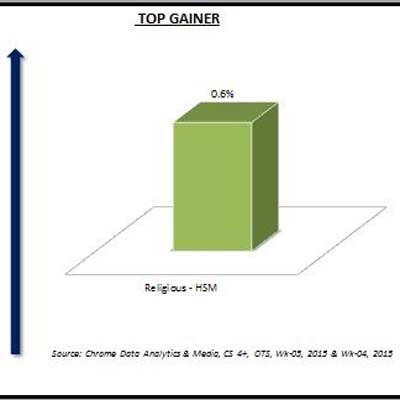
    MUMBAI: Week 5 of 2015 saw more fall than rise in the opportunity to see (OTS) collated by Chrome Data Analytics & Media.


    The only genre to see a rise was Religious in the Hindi Speaking Market (HSM). In the category, which saw a marginal jump of 0.6 per cent, Aastha channel continued its supremacy with 97.1 per cent OTS.


    As for the losers, the maximum drop was witnessed by English Movies channels in the eight metros. It fell by 4.4 per cent. Movies Now with 66.4 per cent OTS topped the chart in the genre.


    Business News in the eight metros saw a drop of 3.4 per cent followed by English News with 2.3 per cent drop.


    CNBC Awaaz with 81.4 per cent OTS and Times Now with 78.1 per cent OTS topped their respective genres.


    In the eight metros, English Entertainment channels too saw a drop of 1.4 per cent. However, Comedy Central with 56.6 per cent OTS remained on top.

  • Calcutta HC extends Digicable Comm interim stay till 6 April

    Calcutta HC extends Digicable Comm interim stay till 6 April

    KOLKATA: Granting relief to Digicable Comm once again, the Calcutta High Court has extended the interim stay till 6 April 2015.

    Previously, the Calcutta High Court had put the stay order on the cancellation of the registration of Kolkata-based multi-system operator (MSOs) till 17 January 2015, citing that Digicable Comm, having been in business for quite some time and would suffer irreparable loss and injury, unless appropriate ad-interim protection is granted to them.

    Jishnu Saha, a senior advocate for the petitioners, did hope for an extension of the interim order. An extension was also sought to file the affidavit-in reply since affidavit-in-opposition had been filed out of time. “Interim order already granted is extended till 6 April, 2015 or until further order, whichever is earlier,” said DigiCableComm Services operations and technology VP Lokesh Agarwal, quoting the letter.

    As hoped, time to file affidavit-in-reply has been extended till 27 January, 2015, he further said.

    It should be noted that in July last year, the Ministry of Information and Broadcasting (MIB) had cancelled the registration of Digicable Comm. Services.

    Digicable Comm, a joint venture (JV) between Digicable (51 per cent) and Kolkata-headquartered Multicar Group (49 per cent) was formed in the year 2009, to gain the foothold in the West Bengal market.

    Digicable Comm is hopeful that after appealing to the Ministry of Home Affairs (MHA) and moving to the High Court, the decision would be in favour of the MSO. “We are happy to get the stay order extended from the High Court. Slowly we will expand in the region,” added Agarwal.

    MHA cancelled the company’s permanent registration on 18 July due to denial of security clearance.

    Cable TV experts when asked to comment on the reason for the denial of security clearance by authorities said this might be due to Amit Nag who was the then chief executive officer (CEO) and on the board and the application for DAS (digital addressable system) had his signature.

    Now, going forward what happened with the MSO here is not hidden from anyone. Nag not only resigned from Digicable but had convinced around 412 of the 600 cable operators affiliated to Digi Cable to switch to Hathway along with him. More than 400 LCOs affiliated to DigiCable when switched to Hathway did not think that they would have to spend sleepless nights and some even behind bars, cable TV sources said.

    At present, Digicable Com which boasted more than four lakh connections in the KM area is left with less than 50,000 set top boxes (STBs).

    “We will follow the mandates. We are hopeful that the authorities would consider the minute details presented by us,” said Agarwal.

  • Convergence India: Verimatrix to share digitisation revenue security strategies

    Convergence India: Verimatrix to share digitisation revenue security strategies

    MUMBAI: Verimatrix, the specialist in securing and enhancing revenue for multi-network, multi-screen digital TV services around the globe, will update attendees on revenue security solutions tailored for phase III and IV of India’s TV digitalisation roll-out at Convergence India 2015 to be held on 21-23 January in New Delhi.


    The company’s marketing VP Steve Christian will also participate in the “Post Digitalisation: Explore new business opportunities for DTH, Cable and IPTV video services” panel on 21 January. During the session, Christian will explore the advantages of an advanced cardless security approach when compared with legacy smart card solutions.


    Verimatrix will also host several demonstrations in its stand to highlight how optimised DVB cardless security solutions have proven to save costs and enhance revenues as operators digitise TV and video services. The VCAS for DVB cardless revenue security solution is immediately available across the majority of MPEG-2 SD, MPEG-4 SD, MPEG-HD and hybrid set-top-boxes, including those from LG CNS and DTV Research, which will be included in the demonstration during the show.


    It will also highlight how its new VCAS Ultra solution offers pay-TV operators an agile multi-network revenue security approach with the flexibility and scalability required to meet their future goals for growth. The solution enables service providers to take full advantage of next-generation UHD services and deploy in physical or virtualized environments via an ecosystem of tightly integrated cloud-based components, including enhanced security profiles to meet MovieLabs’ UHD video service requirements, with multi-network video watermarking and TrustZone support.