Tag: digitisation

  • DAS phases face problems; Parliamentary Committee asks Govt. to make amends

    DAS phases face problems; Parliamentary Committee asks Govt. to make amends

    NEW DELHI: Even as there are consistent delays on the Home Ministry’s part to examine security clearances for multi system operators (MSOs) and complaints of non-availability of reliable set top boxes (STBs), a Parliamentary Standing Committee has said suitable steps should be taken proactively to address the concerns of all the stakeholders in achieving the final phases of digitization within the envisaged time frame.


    The Committee in its recent report said that about 50 per cent of the further demand of 110 million STBs required under the final phases of digitization is likely to be met by the domestic manufacturers, which is certainly an encouraging proposition.


    Noting that the Telecom Regulatory Authority of India (TRAI) had found interoperability of STBs expensive and recommended financial interoperability, the Committee wanted to know the progress in getting inexpensive STBs as it had been informed that indigenous STBs would be made available in sufficient number.


    Regulations notified by TRAI provide an exit option for a subscriber to change the operator/platform for any reason. The Committee said it had also been informed that the Department of Information Technology had issued a Request for Proposal (RFP) for the development of an indigenous Conditional Access System (CAS) to make interoperability of STBs possible and an Indian CAS is expected to be ready in about a year’s time.


    The Committee noted the process of digitisation under Phase I and Phase II was not smooth as there was strong opposition from cable operators’ associations, non-acceptance of revenue sharing arrangements between cable operators and MSOs, and between MSOs and broadcasters, delay in filling of Consumer Application Forms, monopoly of few selected STBs manufacturers and service providers and opposition from some State Governments.


    It had been informed that the Task Force for the final two phases will provide policy direction and take stock of the progress on a regular basis in order to implement the final phases in a professional manner.


    The Committee noted that out of the four metro cities planned to be digital, digitization has been near total in Delhi, Mumbai and Kolkata. Chennai is yet to undergo the digital transition due to several pending court cases. Phase II of digitization was concluded by 31 March, 2013 in 38 cities spanning 14 states and one union territory. The Phase III and IV digitization process is now planned to be completed by December 2015 and December 2016 respectively.


    The Committee noted that during Phase I and Phase II of the Cable TV digitization, the indigenous manufacturers were able to supply only 15 per cent of the total requirement of STBs and the rest were imported from various countries, mainly from China. As a result, complaints were received about the poor quality of STBs, their non-compliance to BIS standards, and absence of service/repair centres for STBs.


    In this regard, to meet the growing demand of STBs in the country, the Ministry has reportedly taken a number of steps to promote the indigenous manufacturing of STBs, which include increasing import duty on imported STBs from five to 10 per cent, declaring STBs as a part of ‘Telecommunications Networks’ by the Department of Telecommunications on 30 June, 2014 and confirmation by the Department of Revenue on 13 August, 2014 by extension of the same under Sec 8(3) (b) of the Central Sales Tax, 1956 thus fulfilling the major demand of the indigenous STBs manufacturers for the creation of a level playing field vis-?-vis importers.


    Moreover, the Department of Electronics and Information Technology had made it mandatory for the STBs to be BIS compliant for safety certification with effect from January 2014. The Information Technology Department had also entered into a contract with a domestic company to develop CAS domestically vide its order dated 24 July, 2014, which would be made available to the domestic vendors at $ 0.5 as against the current value of $2 or more.


    The Committee also noted that in order to give time to the domestic manufacturers of STBs, the Government had extended the cut-off dates of digitisation, which for Phase III has been extended from 30 September, 2014 to 31 December, 2015 and for Phase IV from 31 December, 2014 to 31 December, 2016.

  • I&B Ministry urges Home Ministry to expedite security clearances for MSOs

    I&B Ministry urges Home Ministry to expedite security clearances for MSOs

    NEW DELHI: Keeping in view the continuing delays in multi-system operators (MSOs) failing to get security clearance, the Information and Broadcasting Ministry (I&B) has send a fresh reminder to the Home Ministry in this regard.


    Speaking to Indiantelevision.com, I&B secretary Bimal Julka said that a meeting has also been sought with concerned officials of the Home Ministry to sort out issues, if any.


    He said that the process of digitisation will not be affected, but agreed that several proposals by private MSOs have remained pending for long periods either with the I&B or the Home Ministry.


    The I&B Ministry holds open house meetings on a regular basis with MSO representatives so that any queries can be answered.


    The Ministry had itself conceded that a proposal by Reliance Jio Media for registration as a multi-system operator under the digital addressable system was sent to the Home Ministry in February last year for security clearance and has still not been returned.


    The representative of Reliance Jio, Abhishek Soni, was told that the Home Ministry would take some time to furnish comments/security clearance.


    CAT Vision was told that a reminder was being sent to the Home Ministry in its case. Signum Digital Network was also given the same assurance.


    Digirevo Networks received a similar response to its query at the open house meeting held early this month.  


    Other MSOs received similar replies in meetings held during February and March this year include Goldy Dishnet, Citv Television Network, Sri Udav Satvision, and General Entertainment.


  • HD, premium channels, VAS help increase ARPUs for DTH: FICCI-KPMG

    HD, premium channels, VAS help increase ARPUs for DTH: FICCI-KPMG

    The growth of average revenue per user (ARPU) in the Direct To Home (DTH) sector continues, even as digital cable is still struggling to roll out channel packages. As per the FICCI- KPMG 2015 report, due to sustained increase in ARPU, the sector had a healthy revenue growth despite a muted subscriber addition in 2014.


    In 2014, DTH operators saw an increase of around 12 to 15 per cent in ARPUs. While some of the ARPU increase was driven by DTH operators’ ability to continue to push price hikes (there was a price increase in April 2014 of an approximate eight to nine per cent), the more promising trend is that DTH operators were able to increase collections from customers by providing additional services such as High Definition (HD) channels, premium channels and other value added services (VAS).


    As phase III and IV of digitisation draws near, the battle will be closely contested by MSOs and DTH operators. In phase I and II, DTH operators managed to gain 20 to 30 per cent of the subscriber base converting to digital. Two factors, namely an inherent technology advantage and stronger balance sheets, will give DTH players the bonus advantage to take on MSOs, especially the smaller players, in the year ahead. However, in order to gain a bigger piece of the pie, they will have to re-jig their channel packages, in sparsely populated areas so that it becomes affordable for subscribers in Phase III and IV.


    Dish TV’s sub-brand Zing is all set to tackle digital cable players at the regional level. The brand addresses various linguistic needs of subscribers and offers regional specific channels as part of all available packs, while the other channels can be added based on the customer’s choice. It has been launched West Bengal, Tripura, Odisha, Maharashtra, Telangana and Andhra Pradesh.


    When one compares Zing’s package prices, they are cheaper than those of digital cable. For example, the base package of Zing costs Rs 99 per month versus Rs 220 per month for digital cable. Its mid level package carries a price tag of Rs 249 versus Rs 270 per month for digital cable. Besides the content, even the advertising and other marketing activities are done in the regional languages, while customer support services will be at the local level through trade partners, similar to the cable TV model.


    While digital cable operators are still grappling with securing their business model right, DTH operators have focused on increasing monetisation by providing additional value to their subscribers either through innovative services or STBs, such as those with unlimited recording and technology revolution like 4K.


    According to the report, there are four million HD subscribers, accounting for 10 per cent of all DTH subscribers, while 15 to 20 per cent of incremental subscribers in 2014 were HD subscribers. HD adoption continues to drive ARPU growth for DTH players with the average ARPU of a HD subscriber at an approximate 1.5 to 2x the ARPU of a non-HD subscriber.


    Compared to 6.5 million units of panel television sets (LCD, LED and plasma TVs) sold in 2013 in India, eight million units were expected to be sold in 2014, of which 55 per cent was expected to have been HD panel TV sales. The share of HD and 4K TV sales is expected to further increase over the next five years, reaching 80 per cent by 2019. While HD adoption will continue to be a key growth driver for DTH ARPUs over the next few years, adoption of 4K STBs is expected to pick up in India, though lack of 4K content can be a major problem.


    Currently only Videocon d2h and Tata Sky offer 4K services. Live sports action is expected to be one of the enablers of HD adoption, with the recently concluded ICC Cricket World Cup 2015, likely to be a key trigger in 2015.


    All major DTH operators namely Tata Sky, Dish TV, Videocon D2H and Airtel Digital have launched ‘TV Everywhere’ apps on mobiles and tablets through, which subscribers can watch live TV, catch up TV and video on demand (VoD) for an additional monthly fee. While there are several players along the media value chain who have launched online platforms for on-demand content to capture the surging viewer base, DTH operators have a key advantage in monetising these viewers through their ‘TV Everywhere’ apps, given their already existing payment relationships with subscribers.

  • Catvision to manufacture 15 lakh STBs by 2017

    Catvision to manufacture 15 lakh STBs by 2017

    KOLKATA: Catvision, a manufacturer, re-seller and system integrator, aims to manufacture 15 lakh set top boxes (STBs) by 2017 fiscal end.


    The company has set sights on this goal as the cable TV sector prepares for phase III and IV of digitisation. Catvision is looking at capturing a market share of one per cent with this.


    Speaking to Indiantelevision.com, Catvision managing director Athar Abbas said, “With the extension in the deadline for cable TV digitisation, the industry will be able to cater to all the needs of the fragmented markets. By the end of 2015-16, we are looking at five lakh STBs and by 2016-17 we aim to manufacture another one million STBs.”


    Talking about Phase I and II, Abbas said that India could achieve an ambitious target as the digitization process as a whole was well executed in these two phases. “No one expected that Phase I and II would be done on time but India did it. However, in the remaining phases, the biggest challenge would be fragmented markets,” Abbas said, when queried about the challenges the locations, falling under Phase III and IV, might pose.


    Speaking on the delay that digitization Phase III and IV have encountered, Abbas said that the government was keen on STBs being manufactured in the country. “The delay will give employment opportunities to many and keep a check on the balance. The industry is happy as the VAT has been reduced from 12.5 per cent to two per cent,” he said.


    Catvision was promoted in 1985 by professionals, who earlier worked in senior positions with the HCL group of companies – India’s largest computer and IT conglomerate. In 1986 Catvision started installing complete CATV systems in company townships and hotels – the first cable TV network in India.


    In 1990, it became the exclusive agent of CNN for a period of five years. The first Gulf War, captured live on CNN, triggered commercial cable TV in India. In 1995, the company made a public issue of stock. At present the company’s stock is listed at the Bombay Stock Exchange (BSE). The company has its head office at Noida, and manufacturing unit at Dehradun.

  • I&B Ministry open to discussion with M&E sector: Rajyavardhan Singh Rathore

    I&B Ministry open to discussion with M&E sector: Rajyavardhan Singh Rathore

    MUMBAI: The India media and entertainment (M&E) sector is undergoing rapid changes and has huge potential to take its content across the globe. However, in order to achieve this, the sector will need the support of the Information and Broadcasting (I&B) Ministry.


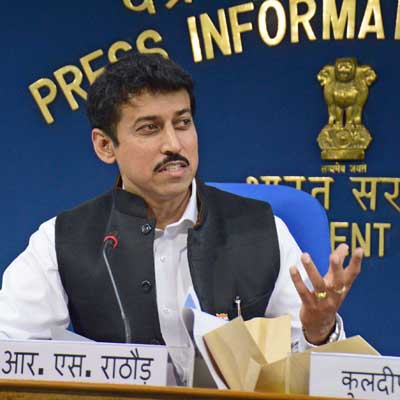
    “The country has the power to become a super power in M&E and as government, we want to interact with the different sectors in the M&E industry. We want to hear about the bottlenecks and the suggestions. We are keen to iron them out to do business,” said Minister of State Information & Broadcasting Rajyavardhan Singh Rathore.


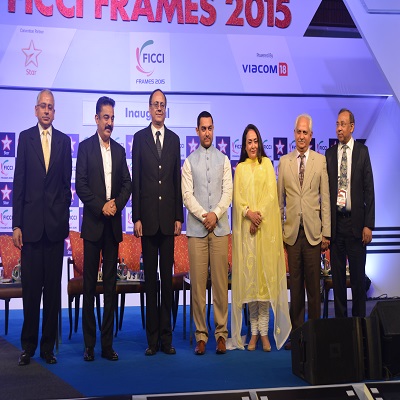
    Rathore, who was talking at the just concluded FICCI Frames 2015, said that the Indian M&E sector had the ability to reach out to the world. “India is poised to be a global phenomena. We just need to come up with content that can create a foothold in any country,” said Rathore.


    He added that Indian content can be targeted at larger audiences and not just the Indian diaspora. “This we can learn from the US, which has been able to push across its culture across boundaries,” he said.


    The I&B Ministry, under the aegis of Prime Minister Narendra Modi’s government, has been working hard towards improving the media unit. “The Prime Minister has been able to popularize radio, which is now expanding. In a year or so, close to 800-900 cities will have either one or multiple FM Radio stations,” he informed.


    Talking about film certification, Rathore said that the Central Board of Film Certification (CBFC) has be a certification board and not censorship body. “They need to give certification based on content,” he said, adding that the Ministry has decided to have a re-look at the Cinematography Act.


    The Ministry is also looking at improving the Film and Television Institute of India (FTII). “Script is important for any movie and that is what is currently lacking. There is no structure. This facility needs to be improved. Film and TV industry should partner with FTII,” he said.


    Talking about the other initiatives, which the Ministry is undertaking, Rathore said that a National Centre of Excellence for the Animation, Visual, Gaming and Comic (AVGC) is being set up. “We want this centre to be a benchmark for all centres that come later. But to do this, the government will need the support of the industry. It is the industry, which can give life to this project. Become a partner with us,” urged Rathore.


    The MoS is of the view that the country’s culture can be promoted though the films. “The content that is being put out should carry our culture,” he said.


    Speaking on how the M&E sector could become a ‘Soft Power’ of the 21st century, Rathore said, “Currently, the M&E sector is working on individual efforts. We need to join forces and interact more to understand the strengths and move in a certain direction.”


    Rathore concluded by assuring the sector that the Ministry will, with open arms, help the M&E sector grow. “We need to develop a degree of trust to grow,” he concluded.


  • TV industry to touch Rs 975 billion in 2019: FICCI KPMG Report

    TV industry to touch Rs 975 billion in 2019: FICCI KPMG Report

    MUMBAI: There is some good news for Indian broadcasters, who even after digitisation of phase I and II cities, have not been able to reap its full benefits. According to the ‘FICCI KPMG Indian Media and Entertainment Industry Report 2015,’ the sector will see a higher subscription revenue growth, which will outstrip advertising revenue increases.


    The report, which was released on 25 March highlights that the subscription revenue will grow at an annualized 16 per cent; higher than ad revenue’s 14 per cent annualised growth. This will be on account of better monetisation, courtesy digitsation. According to the FICCI KPMG report, television industry in India, which is estimated at Rs 475 billion in 2014, will grow at a CAGR of 15.5 per cent to reach Rs 975 billion in 2019. 


    Highlights of the report: 


    Paid C&S penetration of TV households 


    The number of TV households in India increased to 168 million in 2014, implying a TV penetration of 61 per cent, even as the Cable and Satellite (C&S) subscribers increased by 10 million in 2014, to reach 149 million. Excluding DD Freedish, the number of paid C&S subscribers is estimated to be 139 million, implying a paid C&S penetration of 82 per cent. The paid C&S subscriber base is expected to grow to 175 million by 2019, representing 90 per cent of TV homes. 


    DTH ARPU Growth


    While subscriber addition for direct to home (DTH) operators was muted in 2014, they had a healthy revenue growth due to sustained increase in the average revenue per user (ARPU). DTH operators have seen an ARPU increase of around 12 to 15 per cent in 2014. While some of the ARPU increase was driven by DTH operators’s ability to continue to push price hikes, the more promising trend is that DTH operators are able to increase collections from customers by providing additional services such as HD channels, premium channels and other value added services (VAS).


    There are close to four million HD subscribers, accounting for 10 per cent of all DTH subscribers, while 15 to 20 per cent of incremental subscribers in 2014 were HD subscribers. 


    Broadcasting


    Television advertising revenue bounced back in 2014 led by the Indian general elections and the improved macro economic outlook due to a stable government at the centre. 


    The total TV advertising market is estimated to have grown at 14 per cent in 2014 to Rs 155 billion. Going forward, TV advertising in India is expected to grow at a CAGR of 19 per cent to reach Rs 299 billion by 2019. 


    In 2014, the subscription revenues for broadcasters grew at only 10 per cent to Rs 75 billion. This is expected to grow at a CAGR of 22 per cent from 2014 to 2019 to Rs 201 billion. 


    The increase in declared subscriber base and increase in revenue share of broadcasters of the subscription pie is expected to drive up the share of subscription to total broadcaster revenue from 33 per cent in 2014 to 40 per cent in 2019.


    Content Production


    The size of Indian TV content production industry is RS 30 billion, excluding news, animation and sports. Of this, Hindi language content contributes to two-third of the market, with regional languages contributing the rest. 


    Digital Media


    Digital ad spends accounted for 10.5 per cent of the total ad spends of Rs 414 billion in 2014. Digital media advertising in India grew around 45 per cent in 2014, and continues to grow faster than any other ad category.


    The number of internet users in India is closing on to 300 million, thus dethroning USA as the second largest internet enabled market, the largest being China. The year on year growth stands at 31 per cent. 


    The total number of wired internet connection stands at 20 million, whereas there are 210 million wireless internet connections in the country. Smartphone penetration is 10 per cent, which is lower than the average global penetration which stands at 25 per cent. Driven by reduction in tariffs of 2G, 3G and introduction of 4G, the number of wireless internet connections is estimated to reach 402 million by 2017 and 528 million by 2019. 


    It is estimated that 52 million new internet users will login to the digital world by mid-2015. India is expected to reach 640 million internet users by 2019. 


    Internet users to grow faster than TV viewers


    In 2014, the number of TV viewers in India was 825 million, as compared to the number of internet user at 281 million. The CAGR for TV viewership is estimated to be around three per cent from 2014 to 2019, whereas the number of internet users is expected to grow by 18 per cent during the same period.


  • India could have 1000 radio FM channels by 2016: JS Mathur

    India could have 1000 radio FM channels by 2016: JS Mathur

    MUMBAI: By the year 2016, India could have close to 1000 radio FM channels. Speaking at the FICCI Frames 2015 convention in Mumbai, Information and Broadcasting Ministry additional secretary JS Mathur said, “It is an exciting time for the radio industry. The FM radio expansion in the country, which has also got the nod of the government of India, will see the first batch of phase III e-auction very soon. This will be covering 69 cities and 135 channels.”


    Mathur added that while it is was exciting time for the industry, but with that also comes challenges. “The new government needs to meet these challenges and meet them in best possible manner,” he said.


    During his address, he agreed that there were issues of content diversification as also of newer business and revenue models. “For the new government under Prime Minister Narendra Modi, these are exciting times as there are things, which have started rolling out, while the others that have been proposed, needs to be rolled out,” he opined.


    He said that while the digitisation of phase I and II has been completed, the rollout of phase III and IV will digitise the entire country. “It is a major step forward. There is a lot at stake for all the stakeholders, which includes the broadcaster, the consumer and the platform providers. Everyone will have to ensure that the consumer gets the best product, while every stakeholder gets his due,” said Mathur.


    While congratulating the media for the great work, Mathur emphasized the role of the media as well. “Media can play an important role in spreading awareness about critical issues amongst consumers,” he opined.


    Mathur concluded by showing hope in the new government. “The Narendra Modi led government is prompt in ensuring that the M&E sector grows,” he concluded.

  • I&B asks stakeholders to arrive at consensus on difficult issues for successful digitisation

    I&B asks stakeholders to arrive at consensus on difficult issues for successful digitisation

    NEW DELHI: Information and Broadcasting Ministry (I&B) additional secretary J S Mathur, who heads the Task Force for Phase III and IV of Digital Addressable Systems (DAS) for cable television has urged all stakeholders to come together and resolve issues, if targets have to be met.


    Noting in the sixth meeting held on 13 March that only seven out of 100 multi-system operators (MSOs) had given the seeding plans for Phase Ill areas.


    The data provided by them indicated that about 3.1 million set top boxes had been seeded by them with about 550,000 STBs in their stock and about 2.35 million STBs under orders of purchase. He remarked that the seeding so far was very low vis-a-vis the target.


    He said, “Each day counts towards progress in digitisation.” He also said that progress would be slow without public awareness campaign by the stakeholders.


    He said there was lack of mutual connect between broadcasters and MSOs with each stakeholder wanting to maximize self interests. There was need for coming to a consensus.


    He added that the data on subscription revenue and carriage fee from the Indian Broadcasting Foundation and News Broadcasters Association was still awaited, despite assurances.


    He emphasised that broadcasters have to contribute by mounting awareness campaign on their channels as was done by them during Phase I and Phase II and the MSOs have to contribute in this campaign. He said broadcasters should start a dialogue with MSOs immediately.


    He welcomed the initiative taken by Telecom Regulatory Authority of India (TRAI) to hold a meeting with broadcasters and MSOs to resolve the issue of interconnect agreements.


    However, the stakeholders should themselves get their act together and put in their utmost effort to ensure that such issues do not come in the way of achieving the goal of digitisation.


    He said that as pointed out by some members of the Task Force, digitisation has begun to benefit all stakeholders. Activity on the ground needs to be accomplished from now itself as it is not a matter that can be put in place overnight.


    Representative of MSOs said there were issues of content costing, due to which they were finding it difficult to plan digitisation in new areas. Seeding plans can be firmed up by MSOs only after knowing content cost. Till then, the MSOs can only give their seeding projections instead of seeding plans.


    They also stressed that revenue from Phase Ill and Phase IV areas is about 20 to 30 per cent of the total revenue from the country. So content cost in Phase Ill and Phase IV areas cannot be same as that in Phase I and Phase II areas and this has to be taken into account by all stakeholders.


    MSOs also complained that broadcasters were not entering into interconnect agreements with the MSOs for Phase Ill areas.


    Unless the input cost is known, MSOs cannot educate the consumers about the rates and there are issues of local taxation levied by some State Governments apart from local cable operators switching over to analogue when the digital signal to them is cut off by the MSO.


    Broadcasters’ representatives on the other hand said MSOs had not approached the broadcasters for entering into interconnect agreements in new areas. The broadcasters felt that this was because MSOs do not have concrete plans.


    Seeding was done by MSOs in Phase I and Phase II without first entering into interconnect agreements with broadcasters and this should not be an issue now, some of the broadcasters said.


    They claimed that channel prices had gone up due to technical upgradation from SD to HD, but there had been no increase in the advertisement rates.


    A TRAI representative said that according to a TDSAT judgment, MSO/LCO providing cable TV services were free to provide digital cable service in new areas unless it trespasses other areas. He impressed upon the broadcasters to enter into interconnect agreements with MSOs who approach them for content in Phase Ill and Phase IV areas.


    Representative of consumer forums mentioned that pricing is the main issue which the consumers are facing. He added that consumers should know the price before he switches over to digital.


    Representative  of  CEAMA  stated  that  they  approached  as  many  MSOs  as possible to clear their doubts about indigenous set top boxes. However the response from the MSOs has not been encouraging. He reiterated that they have the capacity to meet the requirements of Phase Ill and Phase IV.


    A representative of the Uttar Pradesh Government mentioned that CAF forms should be filled by the MSOs before changing to digital mode in Phase Ill and Phase IV areas. He added that the State Government was not having complete seeding data of Phase II cities.


    The representative of Jammu and Kashmir wanted consumers to be informed about the set top box price. 

  • “Ad cap should have been restricted to only pay channels”: Yogesh Radhakrishnan

    “Ad cap should have been restricted to only pay channels”: Yogesh Radhakrishnan

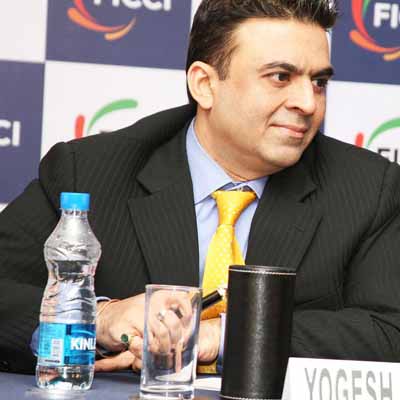
    A veteran in the cable TV industry, someone who dabbled in the sector almost three decades back, Yogesh Radhakrishnan, now the MD and CEO of Pioneer Channel Factory, has seen the sector grow from the scratch.


    Known for setting up businesses, Radhakrishnan has been the man behind building IndusInd Media and Communication Limited, ETC and ETC Punjabi, rejuvenating Zee Cinema, setting up Zee Middle East, launching the first HD movies channel with Times Television Network – Movies Now and the first HD music channel – MTunes.


    Radhakrishnan, who has seen the sector emerge from a mere video-tape business to entering the digital era, talks to Indiantelevision.com’s Seema Singh about the emergence of cable TV in India, the first satellite channel, the emerging music sector and more…


    Excerpts:


    How did you get into the cable industry? How was the sector then? Why did you move out of it?


    In an era when the only form of entertainment was Doordarshan, I was fascinated how it could capture loyal viewership despite old, dusted black and white movies they telecast. I sensed that if people were given the option of better quality of movies on their own TV sets without the hassle of VCR or cassette which was prohibitively expensive there would be a huge demand for it. Thus was born the idea of launching cable TV in India. However re distribution of home video cassettes was illegal so in the year 1988, I pioneered the launch of India’s first copyrighted cable content with my three other partners under the brand name Cable Master. This gave the entire cable TV trade a flip and a legal straw to hold on to as the Government was yet to announce licensing policy for cable TV operators.

    In the next stage of evolution from cable to satellite TV, in the year 1992, we were all geared to launch a channel but lost out the lone transponder on Asiasat 1 to Zee. Those were the days  of quotas and licence raj and we had to partner with an established business house to do business in India.


    At that time the Hinduja group was on the verge of launching IndusInd, and so we partnered with them to create a media division and that is how the IndusInd Media Communications was created as a joint venture.

    Incable emerged to be the largest consolidator at that time to bring in the economies of scale in a city like Mumbai which had more than 8000 cable operators. We were the biggest players across most of the states in the country.

    Under IndusInd, we launched India’s first cable channel In Mumbai and a 24 hour movie channel CVO.

    Recognising the strength of ground distribution that our company had, we got many offers for joint ventures from the likes of HBO, Time Warner Cable, TCI etc. A huge multi million dollars offer from Rupert Murdoch didn’t go through due to valuation differences between the Hinduja’s and News Corp.


    In 1997, the cable industry got into a turmoil and that was the day I decided to move out of cable.


    You went on to launching ETC which you later sold to Zee? What’s the story behind that? How did Movies Now and the distribution venture with BCCL happen?

    In the year 1998, the concept of a 24 hour music channel was a need I saw and that is when I launched ETC, a channel focusing on new releases, as has been established nowadays the exposure of songs on TV plays a big role in the box office success of a film. ETC became the number one Hindi music channel followed by MTV, which was then a Hinglish channel.


    ETC was the second listed company after Zee and after the successful launch of the channel, we also pioneered the daily live telecast by securing the rights to the telecast of Gurbani from the Golden temple and thus ETC Punjabi was born which went on to become the No.1 Punjabi channel and continues to be in that position till date in its other avatar PTC Punjabi.


    After music and Punjabi channels, we saw the gap for 24 hour Hindi news channel, and that is how ETC News was conceived even before Aaj Tak was launched. But Technology wasn’t in place at that time a camera cost Rs 20 lakh, which today is close to Rs 50,000. Editing equipment, bandwidth for news feeds had to be sourced from DD, all in all, it was an expensive proposition. Hence, a 24 hour news channel had to be put on hold.


    Subsequently in 2002 when we got a good offer from Subhash Chandra, we sold ETC Networks to Zee.


    And then my association with Zee began, which was also an exciting time. I was a partner with Zee Middle East. Subsequently, I went on to build a strong company in Zee Middle East, which till date is one of the strongest markets for ZEEL.


    In 2008, I sold back my equity to Zee and wanted to return back to India where the action really was. Former Times Television Network CEO English channels Ajay Trigunayat, was in Dubai then. We got together with our project to launch India’s first ever English Movie channel in HD.


    I had discussions with BCCL MD Vineet Jain and a JV was formed in 2010 to launch four channels and then we further got into launching a distribution venture together called Prime Connect.


    Movies Now was one of most successful TV channel launch. It went on to becoming the No. 1 channel in the first week of its launch. Finally, in 2012, I exited the company by selling my equity back to BCCL.


    Then you moved on to setting up Pioneer Channel Factory? How is MTunes doing?
     

    Following the trend of people wanting to go to multiplexes for the pleasure of enjoying quality production of Hindi cinema and their desire to watch songs in its full glory, I set out to launch MTunes, india’s first Bollywood music channel in HD on the premise of Bollywood music like never seen before. Our songs were carefully selected to ensure they lived up to the channel premise.
     

    Acknowledgement from advertisers came as we got many campaigns exclusively on our channel due to its HD premise. Today, MTunes delivers far greater HD audiences than English movie, entertainment or even sports for that matter.


    Our second music channel Music Express resonates well with the industry, we package music with Glamour and Gupshup. Bhakti Sagar is our foray into the spiritual space.


    How will digitisation help the music channel industry?

    In analogue what was important was opportunity to see (OTS). In digital, all the channels are blocked in one category. The advantage for us is that we are in HD and so we got the advantage of the four million eyeballs. Our reach is good in HD and we are also available on SD. So for our advertisers it is a win win situation.


    How big is the music channel industry currently?


    If you take 14 music channels on an average, advertising and promo put together, we would be around Rs 700-Rs 900 crore.


    Unless and until you can differentiate yourself, you will not be able to grow majorly. If you see the broadcast business, be it GEC, sports or music, it’s very unfortunate that you are operating in the world’s cheapest advertising market (CPT) and cheapest pay TV market and this growth is slow.


    What is your take on music channels turning into youth general entertainment channel? Are you looking at foraying in the youth space?
     

    No way. It is a lovely genre to be in and is growing. Youth programming will drive this market to a large extent.


    But I don’t look at great economics that really works in any GEC space, unless and until there is good subscription that one is getting. If you strip off the subscription from all these channels and make them play pure advertising driven GECs I think each of them will lose money.


    Where do you see the music channel industry heading, considering music is easily available, you think there is still a market for music channels?

    Linear television will always have its market. Music will continue to be in a market where there is a television population which is very huge. There are a lot of people who watch content online and for them we are present online. There is still a large market and it will continue to be that way.


    Television is larger than life, especially music channels like MTunes which is very current and new and which plays new music and promos and that is what people look forward to rather than online where you need to make searches for content, while here content just keeps flowing.


    Why did music and news channels not follow 10+2 ad cap?


    US is such a free market and FCC is very strict in terms of regulation, but they do not have an advertising cap. Why should the government intervene on how much of advertising air time one should carry. For a moment Pay channels could be directed but definitely not the FTA channels. And that’s what we argued in the court. In short people will not watch your channel, if you put too much of advertising. So why is it that the government wants to intervene with channels and that too for free to air channels. We are not charging customers any money, its free.


    If we put in excess advertising, anyways our ratings will fall as no one would watch the channel, and that would affect our business.


    Ad cap should have been restricted to only pay channels, as India is the only country, where the pay channels are getting paid from both subscription and advertising.

    Government needs to create level playing field. Currently as independent networks, it is a difficult situation.


    How do you think music channels can start generating more revenue?
     

    Carriage is the biggest drainer. Network channels have the advantage of either not paying carriage or less carriage. Advertising is stuck in the low rate game. Cartelization is a good experiment that we all can get into in order to get decent rates. But, with the plethora of channels available, advertisers have a lot of options.

    It’s not just the music channels, but with new GEC launches, competition is getting tough even in the GEC space.
     

  • GTPL-KCBPL increases HD channels to 32; to go off free model

    GTPL-KCBPL increases HD channels to 32; to go off free model

    KOLKATA: Kolkata-based multi-system operator (MSO) GTPL-KCBPL, which was offering around 22 High Definition (HD) channels, has increased the offering to 32 channels now. The company, which is airing these HD channels for free now, is looking at charging its 15,000 customers either towards the end of March or in the beginning of the next fiscal (2015-16).


    GTPL- KCBPL managing director Bijoy Kumar Agarwal told Indiantelevision.com that the channels launched by the MSO are Star Sports 3HD, Star Ports 4HD, Animal Planet HD, Sony HD, Sony Six HD, Sony Pix HD, &Pictures HD and TLC World HD.


    High definition is a different standard of digital television broadcasting, which offers sharper, more detailed pictures and surround sound. Only viewers with an “HD Ready” television set, a special HD set top box receiver and reception of a high definition service will experience true HD programming. High definition programmes are also specially shot.


    In 2005, a group of 160 cable operators in a unique manner turned themselves into shareholders and made KCBPL a successful MSO in Kolkata Metropolitan Area (KMA). While in the year 2010, KCBPL entered into a joint venture with GTPL, which has enabled this new entity to gain strong foothold in the state of West Bengal.


    At present the company has more than five lakh set top boxes (STBs) seeded in West Bengal. “We are also betting on increasing the HD boxes from 15,000 currently installed by us,” Agarwal said.


    According to Agarwal, there is a lot of scope of increasing HD boxes in certain pockets of the city. “Digitisation of television industry has always been at the centre of our strategies,” he added.


    The company’s technology partners include Cisco, Skyworth, Nagravision, Newland and Magnaquest amongst others. “We are in touch with our partners on a regular basis so we can always update and offer latest technology to our customers,” he said.


    “After the rollout of digitisation in KMA, which is in first and second phase of digitisation drive, we believe, our partners and viewers stand to benefit from more opportunities, products and value. We are soon going to roll out broadband services in KMA to begin with, which will create more opportunities for our business partners and at the same time with state of the art technologies we will be bringing the best of the services,” he concluded.