Tag: digitisation of cable TV

  • Television needs to reposition as convergence source with digitisation

    Television needs to reposition as convergence source with digitisation

    MUMBAI: Digitisation of cable TV has provided television broadcasting industry an opportunity to reposition itself as a convergence source. The future is full of opportunities for everyone, according to Telecom Regulatory Authority of India member R K Arnold.


    Every stakeholder will benefit once the process of digitisation is complete. Thirty per cent of cable TV homes have been digitised in Phase I and Phase II.


    “There are (a total of) 100 million cable TV homes. Once all these homes are digitised, we will be able to provide broadband services,” said Arnold said in his keynote address at the CASBAA India Forum 2014.


    Arnold is confident of achieving 100 per cent digitisation in 2014 itself.


    Arnold also spoke on the Direct-to-Home (DTH) players. “While DTH has grown along with digitisation, they do not have two-way communication as required for broadband,” he said.


    The first two phases of digitization has brought the multi-system operators in direct contact with 30 million customers. “This makes it necessary that we are more customer oriented. We need to beef up customer service delivery, and that is a challenge,” said Hathway Cable & Datacom MD & CEO Jagdish Kumar.


    According to Indian Broadcasting Foundation (IBF) secretary general Shailesh Shah, deploying infrastructure is challenging but is doable. “For full digitisation, analogue switch offs are needed,” said Shah.


    Shah expects digitisation to be completed only by the middle or towards the end of 2015. Phase III of digitisation is mandated to be completed by the end of September 2014 and Phase IV by the end of December 2014.


    One of the biggest challenges for multi-system operators in achieving digitisation in phase III and phase IV is that they will need to reach cable TV homes in the smaller towns and villages, unlike in the top 42 cities in Phase I and Phase II where they already had substantial presence.


    “Connectivity is a huge challenge,” said Hathway’s Kumar.


    The MSOs have in all seeded 30 million Set Top Boxes (STBs) in phase I and phase II. “As a community, we have spent close to Rs 3,000 crore. When any industry makes such a huge investment, the repayment time is 4-5 years. We are trying to change the system, and it will not happen in a year or two,” informed Kumar.


    Turner International India south Asia MD Siddharth Jain feels broadcasters will have the fruits of digitisation only after a beginning is made for signing deals on the basis of per STB.

    “The broadcasters currently do not have the count of STBs. There needs to be complete transparency,” Jain said.


    The total funding needed for deploying STBs in phase III and IV is Rs 14,000 crore. “It is impossible to expect the MSOs to invest in both the STBs and optical fibre. The government has to help in this infrastructure,” said MyBox Technologies CEO Amit Kharabanda.


    To promote better content carriage in the rural areas, the government is implementing a National Optical Fibre Network (NOFN) project to connect all the 2.5 lakh gram panchayats.


    “When we had a meeting with the MSOs, we found several gaps. Now NOFN is planning to expand its network from the district level to the block level and then panchayats. If this happens, in the next 2 years, we will see different ways of carrying content,” said Ministry of Information & Broadcasting joint secretary-broadcasting Supriya Sahu.


    The industry stakeholders speaking at the CASBAA India Forum also suggested that for smooth completion of digitisation, phase III and phase IV digitization should not be taken up simultaneously.

  • Ministry seeks data on impact of digitisation from IBF, NBA

    Ministry seeks data on impact of digitisation from IBF, NBA

    NEW DELHI: Digitisation of cable TV in the top four metros has resulted in 20-25 per cent fall in carriage fees paid and a 200-300 per cent rise in subscription charges earned by broadcasters, said Ministry of Information and Broadcasting (MIB) joint secretary-broadcasting, Supriya Sahu.


    Sahu said the impact of phase I digitisation on the revenues of broadcasters was based on a report submitted by the News Broadcasters Association (NBA) for 10 news broadcasters.


    But, Sahu was quick to also add, that while the broadcasters have given the report for phase I, they have expressed that the result in phase II of digitisation in 38 cities has not been too good.


    “We have asked both the IBF (Indian Broadcasters Foundation) and the NBA to give us reports for phase II. Broadcasters need to share their data with the ministry to help us understand if the carriage fees have gone down or not,” said Sahu.”And to assess better the effectiveness of our digitisation programme.”


    Sahu was addressing CASBAA India Forum 2014,  in New Delhi, an annual event to explore the Indian cable and broadcasting markets in the context of the global economy and challenging regulatory regime. She emphasised that everyone involved in the TV value chain has gained – broadcasters, MSOs, local cable operators, and even state governments – thanks to the digitisation drive the government has enforced over the past 18-24 months.


    Making an extremely detailed presentation replete with statistics and numbers, she pointed out that the tax collected by the Delhi government from phase I digitisation areas was three-times the pre-digitisation level. “While in August 2012 the tax revenue collected by government was Rs 55 lakh, in August 2013, the revenue collected is close to Rs 3 crore,” informed Sahu.


    According to data received by the ministry from one of the national multi-system operator, the carriage fee received by it per channel from broadcasters in Delhi has fallen to Rs 3.79 lakh after digitization from Rs 12.33 lakh in the pre-digitisation era. In Mumbai, the carriage fee per channel has fallen to Rs 2.16 lakh from Rs 6.51 lakh in pre-digitisation ear.


    Similarly, the subscription fee paid to broadcasters by the MSO in Delhi has gone up to Rs 597.06 lakh from Rs 438.57 lakh before digitisation. In Mumbai, the subscription fee paid to broadcasters by the MSO rose to Rs 183.13 lakh from Rs 116.79 lakh before digitisation.

    She pointed out that only 10 broadcasters have come forward o share data about the impact of digitisation on their business and beseeched more of them to do so.


    Summarising the total number of cable TV homes, Sahu said, “As per 2011 census, the total number of cable TV homes is 11.65 crore. The total number of set top boxes required, after adding 20 per cent for multiple TVs in houses and TVs in offices and shops, a total of 14 crore STBs are needed. While a total of 3 crore STBs have been seeded in phase I and II collectively, more 11 crore STBs are needed for phase III and phase IV.”


    Sahu acknowledged that there could be tough times in digitisation of cable TV homes in phase III and phase IV markets. “77 per cent of the phase III and phase IV falls in 10 states like Tamil Nadu, Andhra Pradesh, UP, Maharashtra, Kerala, etc. The MIB will initially focus on these 10 states. If this is achieved, achieving the deadline for digitising phase III and phase IV will be easy,” she said. “There are a lot of learnings we have got from the first two phases; there are roadblocks we have understood we need to overcome. All our learnings wlll be put to practical use as we move into phase III and phase IV in a serious manner.”


    The ministry is also looking at conducting an impact assessment survey to study the how digitisation has affected the local cable operators. “We will start this in the next couple of months,” concluded Sahu.

  • Implementation of first two phases of cable TV digitisation has taught valuable lessons: Tewari

    Implementation of first two phases of cable TV digitisation has taught valuable lessons: Tewari

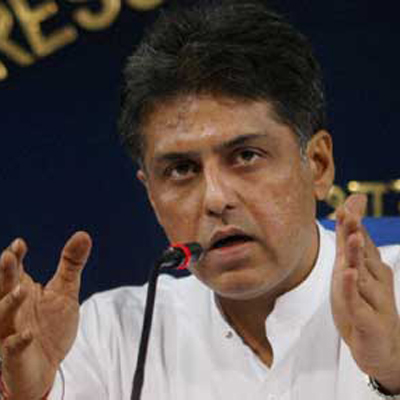
    NEW DELHI: Information and Broadcasting Minister Manish Tewari has said the first two phases of digitisation of cable television provided a learning experience as far as implementation of the process was concerned.


    Speaking at the 8th Indian Magazine Congress in the capital on the theme “Winning through Innovation”, he said these lessons would be incorporated while implementing the remaining two phases. The Minister reiterated that Digitisation was bound to be a game changer for the sector and would define contours of orderly growth.


    While providing qualitative choices to the consumer, digitisation would also ensure that the subscription revenues and skewed business models are rectified. The Government has already decided to merge phases III and IV and complete the entire process by December this year.


    While the first phase of digitisation covering the four metros had come into effect from November 2012 (though it was stayed in Chennai following a court order and was implemented marginally in Kolkata after initial reluctance), the second phase covering 39 cities was implemented by 31 March 2013.


    The Government is still considering the proposal to merge Phase III covering all urban areas (Municipal Corporations/Municipalities) and Phase IV covering rest of India to 31 December 2014. The present dates for these two phases are 30 September 2014 and 31 December 2014 respectively.


    Ministry sources told indiantelevision.com that if the government achieves its target, it will overtake countries like the United States and the United Kingdom which set long deadlines.